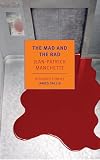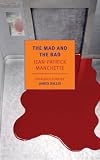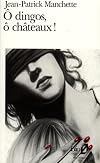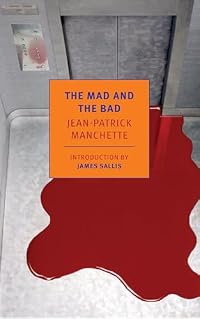
The Mad and the Bad
by Jean-Patrick Manchette
On This Page
Description
"Michel Hartog, a sometime architect, is a powerful businessman and famous philanthropist whose immense fortune has just grown that much greater following the death of his brother in an accident. Peter is his orphaned nephew--a spoiled brat. Julie is in an insane asylum. Thompson is a hired gunman with an ulcerated gut. Michel, known for his kindly interest in the disadvantaged, hires Julie to look after Peter. And he hires Thompson to kill them. Julie and Peter escape. Thompson, gut show more groaning, pursues. Hunter and hunted make their way across France to the remote mountain estate to which Michel has retreated. Bullets fly. Bodies accumulate. The craziness is just getting started. Like Jean-Patrick Manchette's celebrated Fatale, The Mad and the Bad is a clear-eyed, cold-blooded, pitch-perfect work of creative destruction"-- show lessTags
Recommendations

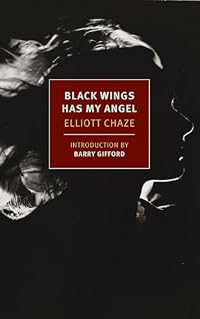
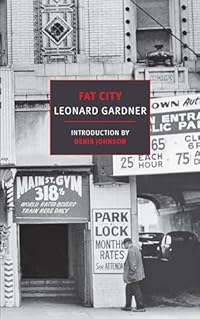
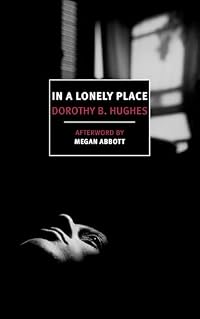
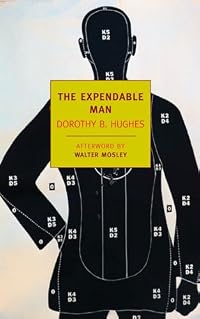















Member Reviews
Dashiell Hammett’s 1929 novel “Red Harvest” features a California town turned into a bullet-riddled blood bath. One prime French counterpart to this bloody harvest of corpses is Jean-Patrick Manchette’s 1972 “The Mad and the Bad,” a novel featuring a host of ultra-violent characters, among others, super-wealthy architect, hired killer and gal fresh from the mental hospital. In keeping with the author’s rat-tat-tat hard-edged cinema-like prose, below are eight bullets fresh from my ThinkPad Helix 3698-4SU:
Detail of objects
Cars, guns, desks, chairs, clothing are labeled and described crisply. “Cupboards and shelves were covered by a fine-grained white plastic laminate. Likewise the bed, which had a red blanket. There was show more no bedspread. A white table and a white chair in the middle of the room completed the décor.” All that whiteness reminds me of the old people’s home in Albert Camus’ “The Stranger.” Alienation, anyone?
Violence as a mode of being
Like that diner scene in the film “Pulp Fiction?” If so, you are in for a treat as in:
“The man grabbed him by the collar of his safari jacket, jerked him out of the Lincoln, and threw him to the ground.
“Stop! Stop!” shouted Julie.
The brute paid her no mind, took a run-up and kicked Hartog in the ribs. Hartog groaned. The blood drained from his face. Julie got back in the Lincoln and opened the compartment with the revolver. She trained the weapon on White Raincoat through the car’s open door.”
Firearms and violence as the unquestioned baseline of how life is lived; the novel’s characters breath and act in the raw with none of those irksome reflections or philosophic musing, thank you.
Alcohol, coffee, cigarettes and pills
But having to contend with and defend yourself from alienating objects and coarse, loathsome people pushes architect, hired killer, gal and their supporting cast to a constant imbibing; I mean, who could ever think of living for a minute without booze, caffeine, nicotine, uppers, downers, stomach soothers? Get with it, gang - sure, you are reading descriptions of sickness and vomiting on every other page, but you have to admit, these people are hip.
They’re Maoists!
At one point during an outbreak of public violence, someone shouts, “They’re Maoists!” And there are several other oblique references to the political, very much in keeping with the author’s direct involvement with Marxism and politics prior to becoming a novelist. This political dimension is one we do not encounter in Jean-Patrick Manchette’s American forerunners: Chandler, Hammett, Cain, Thompson.
All the blood and killing is exciting!
And speaking of Marxism, recall the Marxist dictum: ‘Be happy in your work.” Well, hired killer Thomson is very happy in his work as per this snippet when he is in the middle of his job:
“He bounded down an aisle, knocking over an old woman who began to wail in terror. He trotted by Boys Apparel, his mouth full of bile. He heard a deafening explosion and assumed that Coco had decided to open up. Fragments of plastic flew from a display. The store was filled by an immense tumult. This is exciting. I am enjoying this, Thompson told himself as he spat gastric juice on the ground.” Ah, enjoyment! What life is all about.
Life imitates art
One character observes how what they are doing is exactly what a film star did in one of their favorite movies. Funny, reading this novel, I had the distinct feeling the author was filtering life through an action film – art imitating art imitating life; or is it art imitating art imitating life imitating art?
Duel Plot in minimalist mode
Unlike the other 2 novels I read by the author, where every chapter following the one main character, “The Mad and the Bad” features parallel plots, alternating between hired killer Thompson and hunted gal, Julia -- a most effective narrative technique, especially at the end when the chapters pop back and forth, culminating in a, you guessed it, hyper-violent conclusion.
If you think New York Review Books (NYRB) is publishing nothing but stuffy classics, here is a gem that will take your misguided notion and shoot it full of holes. In the mood for a juiced-up fast read? This J-P M is your book. show less
The Mad and the Bad. Jean-Patrick Manchette. 1972. New York Review Classics. Good Grief. This needs to be a Quention Tarrantino movie! I don’t if I have ever read a book that combines so much slap-stick comedy with violence! Hartag, a rich businessman who hires Julie from an insane asylum to look after his spoiled bratty nephew and then contracts with Thompson, a hired killer with an ulcer to kill them. Julie and the nephew escape and a chase, worthy of Smokey and the Bandit ensues! What a crazy book! Oh, he is a French writer; Francophiles will enjoy the descriptions of the French countryside.
How could anyone resist a classic French noir called The Mad and the Bad? I couldn't and for the most part Jean-Patrick Manchette's novel lived up to my expectations. Published in 1972, Manchette was influenced by American hard-boiled tales and wrote one of his own, adding a certain French sensibility to the genre.
Julie is released from a psychiatric institute in order to care for the nephew of a creepy, entitled businessman who ended up in charge of both the nephew and an enormous fortune when his brother dies. Julie's not someone one would naturally choose as the caregiver to a young child. There's that whole "just been released from a psychiatric institute" thing, but also her tendency to drink or take any drugs she finds available show more and an apparent lack of any nurturing skills. In her first encounter with the admittedly uncharming Peter, she slaps him while his guardian stands back and observes. This is not a book where the characters will bare their feelings or anything heartwarming will occur. And, sure enough, by the following day the reader is treated to a full helping of bad events when Julie and Peter are kidnapped.
There's a cinematic feel to this book, with chase scenes set inside supermarkets and large countryside houses that seem designed for film. There's not much down time, with some really bad guys chasing a surprisingly adaptable young woman and her charge through the south of France, bullets flying. This is a noir in the classic sense, with lots of attention paid to what's happening and less to the motivations, reasons and development of the characters involved. show less
Julie is released from a psychiatric institute in order to care for the nephew of a creepy, entitled businessman who ended up in charge of both the nephew and an enormous fortune when his brother dies. Julie's not someone one would naturally choose as the caregiver to a young child. There's that whole "just been released from a psychiatric institute" thing, but also her tendency to drink or take any drugs she finds available show more and an apparent lack of any nurturing skills. In her first encounter with the admittedly uncharming Peter, she slaps him while his guardian stands back and observes. This is not a book where the characters will bare their feelings or anything heartwarming will occur. And, sure enough, by the following day the reader is treated to a full helping of bad events when Julie and Peter are kidnapped.
There's a cinematic feel to this book, with chase scenes set inside supermarkets and large countryside houses that seem designed for film. There's not much down time, with some really bad guys chasing a surprisingly adaptable young woman and her charge through the south of France, bullets flying. This is a noir in the classic sense, with lots of attention paid to what's happening and less to the motivations, reasons and development of the characters involved. show less
Great little noir novella that you will want to read in one sitting. Manchette's prose is sharp and exact. In very few words he gives you an idea of who or what or where. Even his metaphor is terse. Short sentences. Cinematic at times like a montage in film. Snapshots even when the action gets hot.
Rich architect hires a pretty young woman that hates men who he knows is schizophrenic to be the nanny for his precocious but ill mannered nephew. In fact all his servants have a handicap of some sort. On the surface he seems charitable but we know from the narrator that he's an asshole. What is going on here? Hired guns, bad friends, and kidnappers fill out the roster. Everyone has baggage from the past but in most cases Manchette only hints show more at what it might be leaving the reader to guess at motivation. The nanny is no sucker but she's crazier than bat shit and deadlier than a snake but can she get it together long enough to keep her and the nephew alive?
Great little book. show less
Rich architect hires a pretty young woman that hates men who he knows is schizophrenic to be the nanny for his precocious but ill mannered nephew. In fact all his servants have a handicap of some sort. On the surface he seems charitable but we know from the narrator that he's an asshole. What is going on here? Hired guns, bad friends, and kidnappers fill out the roster. Everyone has baggage from the past but in most cases Manchette only hints show more at what it might be leaving the reader to guess at motivation. The nanny is no sucker but she's crazier than bat shit and deadlier than a snake but can she get it together long enough to keep her and the nephew alive?
Great little book. show less
The title is appropriate. This is a pretty unhinged, mostly chase, thriller about a dying killer, a somewhat deranged nanny, a rich architect and his ward, a few more killers, and a lot of innocent bystanders. The little details about places and things, together with the nonstop action and excellent writing (and translation) make this an enjoyable romp. Despite the level of violence, the treatment makes it less dark and serious than the other Manchette books I have recently read. But in any case, he was a master.
You have to love it when the only character diagnosed as mentally ill turns out to be the only sane character in a book! Jean-Patrick Manchette is referred to as the French version of Raymond Chandler or Dashiell Hammett. This was my first experience with Manchette, and I am so impressed by his dynamic storytelling. I always have to be careful discussing use of language when reading a translated piece of literature, but I really liked the language of this novel.. It is a violent tale highlighting the absurdity of the lifetime criminal, the pettiness of envy, and in some respects the naivete and purported resilience of children. Julie, the insane character, and Peter, a child in her care, are kidnapped and the criminal romp and killing show more spree go from there. Sounds awful, but it reads very well, a tribute to the writer and translator! show less
Dashiell Hammett’s 1929 novel Red Harvest features a California town turned into a bullet-riddled blood bath. One prime French counterpart to this bloody harvest of corpses is Jean-Patrick Manchette’s 1972 The Mad and the Bad, a novel featuring a host of ultra-violent characters, among their number: a super-wealthy architect, a thuggish hired killer and an attractive gal fresh from the mental hospital. In keeping with the author’s rat-tat-tat hard-edged cinema-like prose, below are eight bullets fresh from my Toshiba Satellite L-55:
DETAIL OF OBJECTS
Cars, guns, desks, chairs, clothing are labeled and described crisply. “Cupboards and shelves were covered by a fine-grained white plastic laminate. Likewise the bed, which had a red show more blanket. There was no bedspread. A white table and a white chair in the middle of the room completed the décor.” All that whiteness reminds me of the old people’s home in Albert Camus' The Stranger. Alienation, anyone?
VIOLENCE AS A MODE OF BEING
Like that diner scene in the film Pulp Fiction? If so, you are in for a treat as in:
“The man grabbed him by the collar of his safari jacket, jerked him out of the Lincoln, and threw him to the ground.
“Stop! Stop!” shouted Julie.
The brute paid her no mind, took a run-up and kicked Hartog in the ribs. Hartog groaned. The blood drained from his face. Julie got back in the Lincoln and opened the compartment with the revolver. She trained the weapon on White Raincoat through the car’s open door.”
Firearms and violence as the unquestioned baseline of how life is lived; the novel’s characters breath and act in the raw with none of those irksome reflections or philosophic musing, thank you.
ALCOHOL, COFFEE, CIGARETTES, PILLS
But having to contend with and defend yourself from alienating objects and coarse, loathsome people pushes architect, hired killer, gal and their supporting cast to a constant imbibing; I mean, who could ever think of living for a minute without booze, caffeine, nicotine, uppers, downers, stomach soothers? Get with it, gang - sure, you are reading descriptions of sickness and vomiting on every other page, but you have to admit, these people are hip.
THEY'RE MAOISTS!
At one point during an outbreak of public violence, someone shouts, “They’re Maoists!” And there are several other oblique references to the political, very much in keeping with the author’s direct involvement with Marxism and politics prior to becoming a novelist. This political dimension is one we do not encounter in Jean-Patrick Manchette’s American forerunners: Chandler, Hammett, Cain, Thompson.
ALL THIS BLOOD AND KILLING IS EXCITING!
And speaking of Marxism, recall the Marxist dictum: ‘Be happy in your work.” Well, hired killer Thomson is very happy in his work as per this snippet when he is in the middle of his job:
“He bounded down an aisle, knocking over an old woman who began to wail in terror. He trotted by Boys Apparel, his mouth full of bile. He heard a deafening explosion and assumed that Coco had decided to open up. Fragments of plastic flew from a display. The store was filled by an immense tumult. This is exciting. I am enjoying this, Thompson told himself as he spat gastric juice on the ground.” Ah, enjoyment! What life is all about.
LIFE IMITATING ART
One character observes how what they are doing is exactly what a film star did in one of their favorite movies. Funny, reading this novel, I had the distinct feeling the author was filtering life through an action film – art imitating art imitating life; or is it art imitating art imitating life imitating art?
DUEL PLOT IN MINIMALIST MODE
Unlike the two other novels I read by the author, where every chapter following the one main character, The Mad and the Bad features parallel plots, alternating between hired killer Thompson and hunted gal, Julia -- a most effective narrative technique, especially at the end when the chapters pop back and forth, culminating in a, you guessed it, hyper-violent conclusion.
If you think New York Review Books (NYRB) is publishing nothing but stuffy classics, here is a gem that will take your misguided notion and shoot it full of holes. In the mood for a juiced-up fast read? This J-P M is your book.
Jean-Patrick Manchette (1942-1995) show less
Members
- Recently Added By
Published Reviews
ThingScore 100
The implication is that there is no such thing as generosity or commitment, that we are always in it for our own self-interest, that beneath (or even on) the surface, every interaction is tainted, stained. That’s as true of the so-called good guys as it is of the bad guys; in this novel, nobody walks away clean....“The Mad and the Bad” is so dark it
redefines noir: bleak and pointed, yes, show more but also infused with an understanding that what passes between us is not only compromised but more often faithless, less a matter of commitment or connection than a kind of unrelenting animal need. show less
redefines noir: bleak and pointed, yes, show more but also infused with an understanding that what passes between us is not only compromised but more often faithless, less a matter of commitment or connection than a kind of unrelenting animal need. show less
added by ozzer
Lists

Noirvember: Potential Reads
23 works; 1 member
Author Information

41+ Works 3,005 Members
Some Editions
Awards and Honors
Series
Belongs to Publisher Series
Work Relationships
Is contained in
Common Knowledge
- Canonical title
- The Mad and the Bad
- Original title
- The Mad and the Bad
- Alternate titles
- Ô dingos, ô châteaux !
- Original publication date
- 1972
- People/Characters
- Michel Hartog; Peter; Julie; Thompson
- Related movies
- Folle à tuer (1975)
- First words
- The man whom Thompson was supposed to kill--a pederast guilty of seducing the son of a businessman--entered his bedroom.
- Last words
- (Click to show. Warning: May contain spoilers.)He went off to play cowboys and Indians.
- Original language
- French
Classifications
- Genres
- Fiction and Literature, Mystery, General Fiction
- DDC/MDS
- 843.914 — Literature & rhetoric French & related literatures French fiction 1900- 20th Century 1945-1999
- LCC
- PQ2673 .A452 .O313 — Language and Literature French, Italian, Spanish and Portuguese literatures French literature Modern literature 1961-2000
- BISAC
Statistics
- Members
- 337
- Popularity
- 93,552
- Reviews
- 16
- Rating
- (3.89)
- Languages
- English, French, German, Italian
- Media
- Paper, Ebook
- ISBNs
- 9
- ASINs
- 3