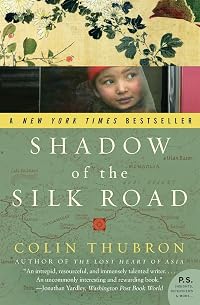
Shadow of the Silk Road
by Colin Thubron
On This Page
Description
A journey along the greatest land route on earth: out of the heart of China into the mountains of Central Asia, across northern Afghanistan and the plains of Iran and into Kurdish Turkey, Colin Thubron covers some seven thousand miles in eight months. Making his way by local bus, truck, car, donkey cart and camel, he travels from the tomb of the Yellow Emperor to the ancient port of Antioch. The Silk Road is a huge network of arteries splitting and converging across the breadth of Asia. To show more travel it is to trace the passage not only of trade and armies but also of ideas, religions and inventions. But alongside this rich and astonishing past, this book is also about Asia today: a continent of upheaval. One of the trademarks of Thubron's travel writing is the beauty of his prose; another is his gift for talking to people and getting them to talk to him.--From publisher description. show lessTags
Recommendations



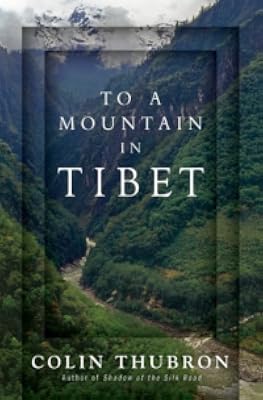
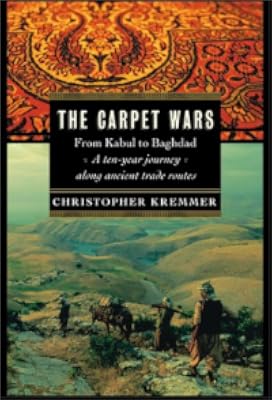
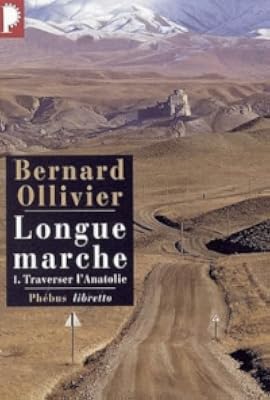

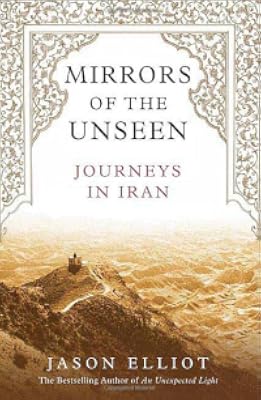


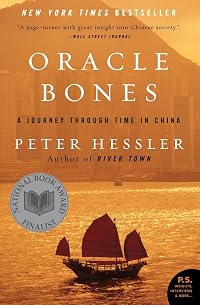
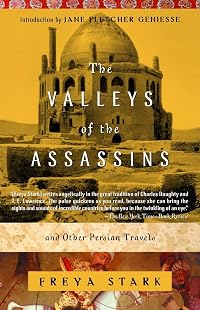

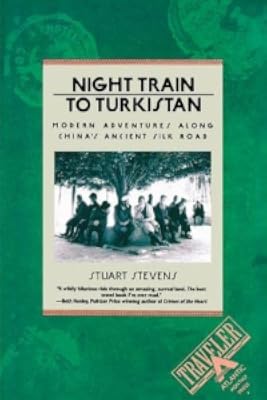
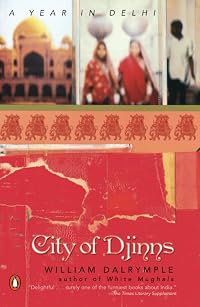

Member Recommendations


Member Reviews
Very interesting - Thubron is clearly a very hardy and monastic soul seemingly perfectly suited to this lonely trip. He treats all the people he meets with genuine interest and gentle humour and copes with rugged conditions without over romanticising them, taking pain and privation without seeming to notice. Its a melancholy book; the former glories of the region are recalled and placed in stark contrast to the realities of today - or rather to 5 or 6 years ago. One suspects that some of the route might be more depressing today. And yet although Thubron is occasionally surprised by changes to places he's visited before (particularly in China) he is never sniffy about modernisation (as for example, Paul Theroux often is) and seems to be show more comfortable with change.
I hadn't read any of Mr Thubron's travel writing in book form before (i have read short pieces in Granta) but I have a couple of his novels. But so enjoyable is his company that I will be buying more at the earliest opportunity show less
I hadn't read any of Mr Thubron's travel writing in book form before (i have read short pieces in Granta) but I have a couple of his novels. But so enjoyable is his company that I will be buying more at the earliest opportunity show less
Setting out from Xian, the author travels overland, taking in Tibetan monks; Yongchang (where he explores a fascinating tale of a Roman army division being sent out to fight the Parthians in 50 AD...and the sometimes 'European looking' locals...meets the Uighur, on the edge of the Gobi desert, Ends up in a SARS quarantine camp, through Krgyzstan and Samarkand...and into Afghanistan, still ravaged by war, the silenced people of Iran, and through the Elburz Mtns to Antioch.
It's masterly writing. I was glad to nget to the end but that's in no way a reflection of a beautifully written travel narrative.
It's masterly writing. I was glad to nget to the end but that's in no way a reflection of a beautifully written travel narrative.
Colin Thubron has written a number of travel books; this is my first read by him. I have been to China so the book held an interest for me.
In 2006 he began his trek from China to Turkey, taking eight months and 7,000 miles. Thubron began in the heart of China and went through Central Asia, Afghanistan, Iran, and then to Turkey.
Such an interesting book about the people he met, people he already knew, foods he ate, places he slept, problems, danger and historical places he visited. I kept wondering why he would want to do this. Colin Thubron traveled by way of bus, car, ferry, boat, donkey cart, camel and his feet.
The book introduces the reader to places the average person will never see.
I gave it a 5 star rating and a book I would show more re-read.
There were maps which helped to follow his journey.
Contents:
Author's Notes
1. Dawn
2. The Capital
3. Mantra
4. The Last Gate Under Heaven
5. The Southern Road
6. Kashgar
7. The Mountain Passage
8. To Samarkand
9. Over the Oxus
10. Mourning
11. The Mongol Place
12. To Antioch
Timeline
Index show less
In 2006 he began his trek from China to Turkey, taking eight months and 7,000 miles. Thubron began in the heart of China and went through Central Asia, Afghanistan, Iran, and then to Turkey.
Such an interesting book about the people he met, people he already knew, foods he ate, places he slept, problems, danger and historical places he visited. I kept wondering why he would want to do this. Colin Thubron traveled by way of bus, car, ferry, boat, donkey cart, camel and his feet.
The book introduces the reader to places the average person will never see.
I gave it a 5 star rating and a book I would show more re-read.
There were maps which helped to follow his journey.
Contents:
Author's Notes
1. Dawn
2. The Capital
3. Mantra
4. The Last Gate Under Heaven
5. The Southern Road
6. Kashgar
7. The Mountain Passage
8. To Samarkand
9. Over the Oxus
10. Mourning
11. The Mongol Place
12. To Antioch
Timeline
Index show less
It is a privilege to go on a journey with Colin Thubron. Thubron is not only extremely well-versed in local history and culture, but he has a knack for languages as well. I knew the author spoke fluent Russian from reading "In Siberia" only to discover that he speaks enough Mandarin to make himself understood most of the time during his travels in China. The best part about this book and other Thubron travel books is when he is actually traveling. His descriptions are precise. His casual encounters with ordinary people are interesting, particularly when he arrives in Iran toward the end of his trip. Occasionally, the book bogs down when Thubron digresses into one of the many historical anecdotes. While I cannot help but be mpressed by show more the author's knowledge and research, I often found these passages frustrating because they were often too long and detailed (and some too obscure to be of general interest) that they detracted from the journey itself. Thubron has clearly established himself as one of the leading contemporary writers of travel literature, but I couldn't help but think that that reputation may have cowed his editors into allowing long weary passages slip by. show less
Thubron travels the length of the Silk Road, at least one of its many traces, and uncovers traces of what has the feel of lost history. Wonderfully written, Thubron's book intermingles contemporary observations with deep and rich historical asides. The breadth of his knowledge is humbling and brings to mind the like erudition that Patrick Fermor brought to A Time Of Gifts and Between The Woods And The Water. Thubron's acerbic tone sometimes echoes the travel writing of Paul Theroux.
Colin Thubron went back to cross from China via Central Asia and Afghanistan to Iran and Eastern Turkey, to travel the ancient Silk Road. He published “Shadow of the Silk Road” in 2006, the book, but more so his journey, an extraordinary feat, given the threat from SARS in China and the hostilities in Afghanistan at the time. All the more striking, then, that Mr Thubron, quiet and relaxed as always, just does his own thing, finds his own way, often ignoring official directions if he thinks they are useless and ineffective. He may get arrested, so once in a while, but it doesn’t seem to bother him that much. As I have observed in other books of Mr. Thubron, he has a special way of observing, not necessarily focusing on the tourist show more highlights, but often on more obscure, somewhat irrelevant yet interesting aspects of the region he travels through. Helped by his linguistic skills, he travels off the beaten track, and he meets people, mostly ordinary people. All very interesting, yet, it seldom gets very exciting – which does not, in any way, diminish the respect I have for this man, who wrote his first travel book in the 1960s!
The last part of the book deals with Iran, which he traverses along the northern route, like Dervla Murphy did. Unlike Ms Murphy, Thubron is strong on historical context, which is interspersed with his own travel experiences, past tombs and towns, Teheran and Tabriz. Like Ms Murphy, he also observes the striking difference between Iran’s Persian population, and the large swath of Azerbaijani Iranians, who are culturally quite different. Although Mr Thubron stuck me earlier as quiet and relaxed, during his passage through Afghanistan for the first time some fear shimmers through his travelogue, when he realizes he is the only Westerner, except for the occasional foreign soldiers, in the wide surroundings, in an area where even the locals don’t want to tread – resulting in him taking a plane to Herat, instead of his usual overland travel. But back in Iran, he is his usual self again, back to what I called earlier “a special way of observing, not necessarily focusing on the tourist highlights, but often on more obscure, somewhat irrelevant yet interesting aspects of the region he travels through”. In fact, I enjoyed the latter part of the book more than the earlier, Chinese and Central Asian part. show less
The last part of the book deals with Iran, which he traverses along the northern route, like Dervla Murphy did. Unlike Ms Murphy, Thubron is strong on historical context, which is interspersed with his own travel experiences, past tombs and towns, Teheran and Tabriz. Like Ms Murphy, he also observes the striking difference between Iran’s Persian population, and the large swath of Azerbaijani Iranians, who are culturally quite different. Although Mr Thubron stuck me earlier as quiet and relaxed, during his passage through Afghanistan for the first time some fear shimmers through his travelogue, when he realizes he is the only Westerner, except for the occasional foreign soldiers, in the wide surroundings, in an area where even the locals don’t want to tread – resulting in him taking a plane to Herat, instead of his usual overland travel. But back in Iran, he is his usual self again, back to what I called earlier “a special way of observing, not necessarily focusing on the tourist highlights, but often on more obscure, somewhat irrelevant yet interesting aspects of the region he travels through”. In fact, I enjoyed the latter part of the book more than the earlier, Chinese and Central Asian part. show less
This wasn't quite what I was expecting. I have a strong interest in textiles and thought that silk would be the focus of the book. Not so. The author has apparently covered this territory before and this book is the narrative of a second journey along this route. There is some interesting comparison with is past experience and a lot of introspection as he makes his way across this inhospibable route. The quality of his writing is meditative at many points and includes reflections on ancient history of the cultures and religions through the region.
Members
- Recently Added By
Published Reviews
Yet in “Shadow of the Silk Road” Thubron departs from his countrymen in important respects. This is not his first trip across these deserts and mountains, and he saw many of these places before the collapse of the Soviet Union. Because he travels without a camera, Thubron never compares snapshots, only memories. In this, he is more poetic than his predecessors; the passage of time is his show more book’s most interesting feature. show less
added by John_Vaughan
Lists

Best Travel Writing - Non-Fiction
110 works; 6 members

Non-Fiction Worth Reading
1,025 works; 264 members

Central Asia
59 works; 2 members

Books Read in 2019
4,052 works; 110 members

Wishlist
99 works; 1 member
Author Information

31+ Works 6,950 Members
Colin Thubron is the prizewinning, bestselling author of several travel books.
Awards and Honors
Common Knowledge
- Canonical title
- Shadow of the Silk Road
- Original title
- Shadow of the Silk Road
- Original publication date
- 2006
- People/Characters
- Prester John; Marco Polo
- Important places
- Silk Road; Xian, China; Kashgar, Xinjiang; Kyrgyzstan; Afghanistan; Iran (show all 8); Antioch; Samarkand, Uzbekistan
- Dedication
- For Paul Bergne
- First words
- In the dawn the land is empty.
- Last words
- (Click to show. Warning: May contain spoilers.)But to west and east the sky was not the blue calm of my imagined homecoming, but a troubled cloudscape that swept the sea in moving gleams and shadows.
- Original language
- English
Classifications
Statistics
- Members
- 1,282
- Popularity
- 19,137
- Reviews
- 22
- Rating
- (3.85)
- Languages
- 9 — Dutch, English, French, German, Italian, Norwegian (Bokmål), Polish, Portuguese, Spanish
- Media
- Paper, Audiobook, Ebook
- ISBNs
- 30
- ASINs
- 9