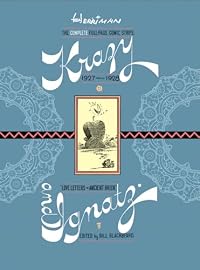
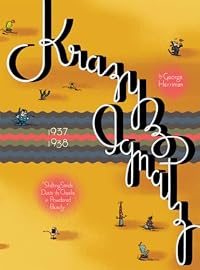
Krazy & Ignatz 1927-1928: "Love Letters in Ancient Brick"
by George Herriman
Krazy and Ignatz: The Complete Sunday strips (1927-1928)
On This Page
Description
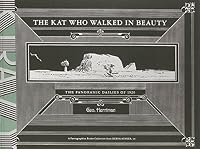
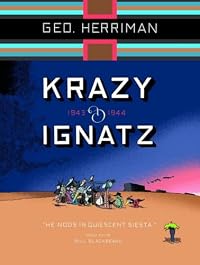
Krazy Kat is a love story, focusing on the relationships of its three main characters. Krazy Kat adored Ignatz Mouse. Ignatz Mouse just tolerated Krazy Kat. Offisa Pup loved Krazy and sought to protect "her". Featuring selections of the Krazy Kat comic strip series that ran in newspapers from 1913 to 1944.Tags
Recommendations




Member Reviews
Compilation of classic newspaper strips from the late twenties.
Krazy Kat shouldn't really work, at least not beyond a few strips, as the 'plot' is so thin. Essentially, Krazy Kat loves Ignatz the mouse, who only wants to throw a brick at him, while Officer Pupp (as suggested by the name, a dog) tries to prevent this crime show more or punish the culprit.
While it shouldn't work, it does. The execution being so successful that when the Comics Journal, in 1999, listed the 100 best American comics and comic strips of the 20th century Herriman's creation was top of the pile.
As an illustrator Herriman approachable initially appears quite simplistic but look more closely and you can see how clever it is - full of visual jokes, subtle variations, the expert use of detail and, as importantly, no detail. Like the best art it repays repeated viewings. Herriman, the writer, is very playful - utilising a significant amount of alliteration, punning, deliberate mis-spellings and mis-understandings. It is fun and witty, and complements the visuals perfectly.
The sophistication of Herriman's creation can be seen in how he is able to work variations again and again on the same theme - we, the reader, know that the payoff is Ignatz throwing the brick and hitting Krazy on the head, and Krazy believing it to be a manifestation of love. (I'm surprised no-one has written an essay on the nature of Krazy and Ignatz's relationship as symbolic of domestic violence). Much of the enjoyment is in the anticipation of the brick, which may never be thrown or miss; sometimes Ignatz will get arrested even though he has done nothing, sometimes he gets away with his crime - this is something very human about the tripartite relationship the main characters are trapped in. And occasionally Herriman will produce a strip of poignant lyricism that transcends the media of the cartoon strip.
If you get a chance to visit Coconino Country then it is well worth a visit show less
"In Krazy Kat the poetry originated from a certain lyrical stubbornness in the author, who repeated his tale ad infinitum, varying it always but sticking to its theme. It was thanks only to this that the mouse's arrogance, the dog's unrewarded compassion, and the cat's desperate love could arrive at what many critics felt was a genuine state of poetry, an uninterrupted elegy based on sorrowing innocence."
Umberto Eco
Krazy Kat shouldn't really work, at least not beyond a few strips, as the 'plot' is so thin. Essentially, Krazy Kat loves Ignatz the mouse, who only wants to throw a brick at him, while Officer Pupp (as suggested by the name, a dog) tries to prevent this crime show more or punish the culprit.
While it shouldn't work, it does. The execution being so successful that when the Comics Journal, in 1999, listed the 100 best American comics and comic strips of the 20th century Herriman's creation was top of the pile.
As an illustrator Herriman approachable initially appears quite simplistic but look more closely and you can see how clever it is - full of visual jokes, subtle variations, the expert use of detail and, as importantly, no detail. Like the best art it repays repeated viewings. Herriman, the writer, is very playful - utilising a significant amount of alliteration, punning, deliberate mis-spellings and mis-understandings. It is fun and witty, and complements the visuals perfectly.
The sophistication of Herriman's creation can be seen in how he is able to work variations again and again on the same theme - we, the reader, know that the payoff is Ignatz throwing the brick and hitting Krazy on the head, and Krazy believing it to be a manifestation of love. (I'm surprised no-one has written an essay on the nature of Krazy and Ignatz's relationship as symbolic of domestic violence). Much of the enjoyment is in the anticipation of the brick, which may never be thrown or miss; sometimes Ignatz will get arrested even though he has done nothing, sometimes he gets away with his crime - this is something very human about the tripartite relationship the main characters are trapped in. And occasionally Herriman will produce a strip of poignant lyricism that transcends the media of the cartoon strip.
If you get a chance to visit Coconino Country then it is well worth a visit show less
Compilation of classic newspaper strips from the late twenties.
"In Krazy Kat the poetry originated from a certain lyrical stubbornness in the author, who repeated his tale ad infinitum, varying it always but sticking to its theme. It was thanks only to this that the mouse's arrogance, the dog's unrewarded compassion, and the cat's desperate love could arrive at what many critics felt was a genuine state of poetry, an uninterrupted elegy based on sorrowing innocence."
Umberto Eco
Krazy Kat shouldn't really work, at least not beyond a few strips, as the 'plot' is so thin. Essentially, Krazy Kat loves Ignatz the mouse, who only wants to throw a brick at him, while Officer Pupp (as suggested by the name, a dog) tries to prevent this crime or show more punish the culprit.
While it shouldn't work, it does. The execution being so successful that when the Comics Journal, in 1999, listed the 100 best American comics and comic strips of the 20th century Herriman's creation was top of the pile.
As an illustrator Herriman approachable initially appears quite simplistic but look more closely and you can see how clever it is - full of visual jokes, subtle variations, the expert use of detail and, as importantly, no detail. Like the best art it repays repeated viewings. Herriman, the writer, is very playful - utilising a significant amount of alliteration, punning, deliberate mis-spellings and mis-understandings. It is fun and witty, and complements the visuals perfectly.
The sophistication of Herriman's creation can be seen in how he is able to work variations again and again on the same theme - we, the reader, know that the payoff is Ignatz throwing the brick and hitting Krazy on the head, and Krazy believing it to be a manifestation of love. (I'm surprised no-one has written an essay on the nature of Krazy and Ignatz's relationship as symbolic of domestic violence). Much of the enjoyment is in the anticipation of the brick, which may never be thrown or miss; sometimes Ignatz will get arrested even though he has done nothing, sometimes he gets away with his crime - this is something very human about the tripartite relationship the main characters are trapped in. And occasionally Herriman will produce a strip of poignant lyricism that transcends the media of the cartoon strip.
If you get a chance to visit Coconino Country then it is well worth a visit. show less
"In Krazy Kat the poetry originated from a certain lyrical stubbornness in the author, who repeated his tale ad infinitum, varying it always but sticking to its theme. It was thanks only to this that the mouse's arrogance, the dog's unrewarded compassion, and the cat's desperate love could arrive at what many critics felt was a genuine state of poetry, an uninterrupted elegy based on sorrowing innocence."
Umberto Eco
Krazy Kat shouldn't really work, at least not beyond a few strips, as the 'plot' is so thin. Essentially, Krazy Kat loves Ignatz the mouse, who only wants to throw a brick at him, while Officer Pupp (as suggested by the name, a dog) tries to prevent this crime or show more punish the culprit.
While it shouldn't work, it does. The execution being so successful that when the Comics Journal, in 1999, listed the 100 best American comics and comic strips of the 20th century Herriman's creation was top of the pile.
As an illustrator Herriman approachable initially appears quite simplistic but look more closely and you can see how clever it is - full of visual jokes, subtle variations, the expert use of detail and, as importantly, no detail. Like the best art it repays repeated viewings. Herriman, the writer, is very playful - utilising a significant amount of alliteration, punning, deliberate mis-spellings and mis-understandings. It is fun and witty, and complements the visuals perfectly.
The sophistication of Herriman's creation can be seen in how he is able to work variations again and again on the same theme - we, the reader, know that the payoff is Ignatz throwing the brick and hitting Krazy on the head, and Krazy believing it to be a manifestation of love. (I'm surprised no-one has written an essay on the nature of Krazy and Ignatz's relationship as symbolic of domestic violence). Much of the enjoyment is in the anticipation of the brick, which may never be thrown or miss; sometimes Ignatz will get arrested even though he has done nothing, sometimes he gets away with his crime - this is something very human about the tripartite relationship the main characters are trapped in. And occasionally Herriman will produce a strip of poignant lyricism that transcends the media of the cartoon strip.
If you get a chance to visit Coconino Country then it is well worth a visit. show less
Ratings
Members
- Recently Added By
Author Information

118+ Works 3,166 Members
Awards and Honors
Distinctions
Series

Work Relationships
Is contained in
Common Knowledge
- Canonical title
- Krazy & Ignatz 1927-1928: "Love Letters in Ancient Brick"
- Original publication date
- 2002
Classifications
- Genre
- Graphic Novels & Comics
- DDC/MDS
- 741.5973 — Arts & recreation Drawing & decorative arts Drawing Comic books, graphic novels, fotonovelas, cartoons, caricatures, comic strips History, geographic treatment, biography North American United States (General)
- LCC
- PN6728 .K7 .H4 — Language and Literature Literature (General) Literature (General) Collections of general literature Comic books, strips, etc.
- BISAC
Statistics
- Members
- 220
- Popularity
- 147,745
- Reviews
- 2
- Rating
- (4.36)
- Languages
- English
- Media
- Paper
- ISBNs
- 1