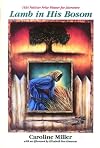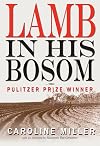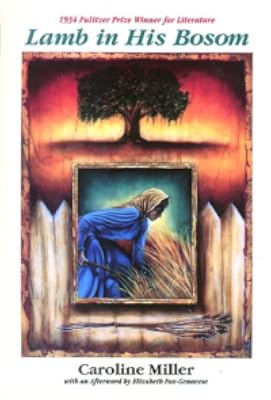
Lamb in His Bosom
by Caroline Miller
On This Page
Description
The backwoods of Georgia during the antebellum era provides the setting for a family saga.Tags
Recommendations

















Member Reviews
Lamb in His Bosom is Caroline Miller’s Pulitzer prize-winning novel centered on poor farmers in the pre-Civil War South. My reaction to this novel was visceral. I am proud to say that my own heritage is rooted in just such rural people and that I could indeed see traces of my own great-uncles, grandmother and grandfather in the characters of the hard-working men and women portrayed here. It is, however, the women who capture my heart and make this novel sing personal songs to me. Cean, her mother Seen, and Margot who leaves a physically easier but morally deficient life to join them in the wilderness that borders the Okefenokee swamp, are the ones who make endurance and joy possible, bring life into being, nurture the living and show more prepare the dead for burial.
I could not help thinking of my own grandmother who bore eleven children and buried three of them either at birth or within a year of it. I can remember how hard-scrabble her life was, even when I was young and it must have seemed so much easier and “convenient” to her. Miller’s descriptions are vivid and detailed, so that it is easy to imagine these people at the hard labor of butchering, plowing, milking, cooking, sewing, and living. She pulls us into a world where birth and death are intimately linked and life is either a blessing or a curse depending on how capricious you believe God to be. It is also easy to find in the pages and characters the love and pleasures that are drawn from the simplest of things.
The religious element in these lives is what essentially propels them forward during the unbelievable hardships they must bear. The promise of another world that is less cruel and in which they can meet again with those they have lost energizes and motivates them to live.
“Seen would throw that promise back into God’s eternal face in the weak song of her lips. He had promised and repromised to bear her like a lamb in His bosom, never, no, never, no, never to forsake her.” One might ask where God is during all the horrors that visit these people, but one would be better to ask how they would ever have endured their lives without the promise that He was there and providing for them as they left this world for the next.
What stuck me deeply was the difference between our lives and theirs. How removed we are from everything around us compared to the way they lived within their world and part of it. Nature is their intimate provider and their constant threat. Rattlesnakes and panthers assault them, but blooming flowers enthrall them and the creatures of the woods feed them. When death comes, it is a presence. They sit with the dead, they touch them, they clean them, they dig the graves and lower the coffins. They do not assign their care to a hospice or call for a mortician.
Finally, there is the theme of home and family that runs through this story beginning to end. Seen and Vince leave Carolina to settle in Georgia because of the promise of a longer growing season and an easier life. They do not find that, but what they do find is a separation that is almost unbearable from the family and world they have left behind. Lias longs to leave this place of his birth, but in the end it is always homeward he looks. He wants those at home to always be looking for him to come and never to know of his death, because he wants never to be forgotten. In his own way, he proves the wisdom of his wish, for he is himself carrying alive in his heart the souls of those who have already passed from the earth in his absence. Cean mourns Cal’s death in the war more cruelly because he is so far from home when he meets his end. “But mayhap somebody dug a hole for him to rest in, away from their (buzzards) greedy beaks. Never did she know, and it was a sorrow to her; death is bad enough at its best, when ye can bury a body and lovingly tend the earth that lies above it…”.
Miller has a wonderful grasp of the people she portrays and uses their language with the loving touch of one who has heard these words tripping from the tongues of real people. She says she mined these stories over time from elderly people she knew, and it is obvious to me that a current of reality runs through her writing that cannot be denied. I am amazed that I had never come across this novel nor heard of it, despite its having won the 1934 Pulitzer and having inspired Margaret Mitchell’s writing of Gone With the Wind. I am grateful to the Goodreads member who suggested it as a group read and thus brought it to my attention. show less
I could not help thinking of my own grandmother who bore eleven children and buried three of them either at birth or within a year of it. I can remember how hard-scrabble her life was, even when I was young and it must have seemed so much easier and “convenient” to her. Miller’s descriptions are vivid and detailed, so that it is easy to imagine these people at the hard labor of butchering, plowing, milking, cooking, sewing, and living. She pulls us into a world where birth and death are intimately linked and life is either a blessing or a curse depending on how capricious you believe God to be. It is also easy to find in the pages and characters the love and pleasures that are drawn from the simplest of things.
The religious element in these lives is what essentially propels them forward during the unbelievable hardships they must bear. The promise of another world that is less cruel and in which they can meet again with those they have lost energizes and motivates them to live.
“Seen would throw that promise back into God’s eternal face in the weak song of her lips. He had promised and repromised to bear her like a lamb in His bosom, never, no, never, no, never to forsake her.” One might ask where God is during all the horrors that visit these people, but one would be better to ask how they would ever have endured their lives without the promise that He was there and providing for them as they left this world for the next.
What stuck me deeply was the difference between our lives and theirs. How removed we are from everything around us compared to the way they lived within their world and part of it. Nature is their intimate provider and their constant threat. Rattlesnakes and panthers assault them, but blooming flowers enthrall them and the creatures of the woods feed them. When death comes, it is a presence. They sit with the dead, they touch them, they clean them, they dig the graves and lower the coffins. They do not assign their care to a hospice or call for a mortician.
Finally, there is the theme of home and family that runs through this story beginning to end. Seen and Vince leave Carolina to settle in Georgia because of the promise of a longer growing season and an easier life. They do not find that, but what they do find is a separation that is almost unbearable from the family and world they have left behind. Lias longs to leave this place of his birth, but in the end it is always homeward he looks. He wants those at home to always be looking for him to come and never to know of his death, because he wants never to be forgotten. In his own way, he proves the wisdom of his wish, for he is himself carrying alive in his heart the souls of those who have already passed from the earth in his absence. Cean mourns Cal’s death in the war more cruelly because he is so far from home when he meets his end. “But mayhap somebody dug a hole for him to rest in, away from their (buzzards) greedy beaks. Never did she know, and it was a sorrow to her; death is bad enough at its best, when ye can bury a body and lovingly tend the earth that lies above it…”.
Miller has a wonderful grasp of the people she portrays and uses their language with the loving touch of one who has heard these words tripping from the tongues of real people. She says she mined these stories over time from elderly people she knew, and it is obvious to me that a current of reality runs through her writing that cannot be denied. I am amazed that I had never come across this novel nor heard of it, despite its having won the 1934 Pulitzer and having inspired Margaret Mitchell’s writing of Gone With the Wind. I am grateful to the Goodreads member who suggested it as a group read and thus brought it to my attention. show less
This isn't any novel, it's a cultural masterpiece. In a world where thrills are cheap, or as Bukowski puts it ''a place where the masses elevate fools into rich heroes'', this book is humbling.
A timeless classic.
My review is this. Turn off your TV, turn off your phone. Read this book and then go for a walk and look for whatever wildflowers are in season.
A timeless classic.
My review is this. Turn off your TV, turn off your phone. Read this book and then go for a walk and look for whatever wildflowers are in season.
How could a book like this exist and no one told me? It will have to be added to my All Time Favorites shelf. Ms. Miller didn’t just write this book, she crafted it. She is a wordsmith. Every paragraph, every sentence, every word has been worked and re-worked and re-worked to perfection. I don’t know how any of the popular hack writers of today could read a book like this and still consider themselves ‘writers’.
If you like a lot of snappy dialogue and a fast moving, action packed plot that moves forward at the speed of light, this is not for you. In fact, I’m not sure there is a plot. I was so lost in the prose I didn’t notice.
This is a beautiful but grueling book. It’s the story of an extended family of settlers in show more Georgia, in the decades leading up to and at the time of the Civil War, trying to eke out a living on the land, with nothing much between themselves and the harshness of nature except what they and their families had learned the hard way.
But the prose, the world, the sheer not-Gone-With the Wind-ness of it, are reason enough to read it. show less
If you like a lot of snappy dialogue and a fast moving, action packed plot that moves forward at the speed of light, this is not for you. In fact, I’m not sure there is a plot. I was so lost in the prose I didn’t notice.
This is a beautiful but grueling book. It’s the story of an extended family of settlers in show more Georgia, in the decades leading up to and at the time of the Civil War, trying to eke out a living on the land, with nothing much between themselves and the harshness of nature except what they and their families had learned the hard way.
But the prose, the world, the sheer not-Gone-With the Wind-ness of it, are reason enough to read it. show less
I will come back to this one, some day. Perhaps.
I just didn't feel any magic, after 40 pages or so, and it's much too hot to be reading a song of the south that doesn't deliver from the get-go, when it's 40C in the shade!
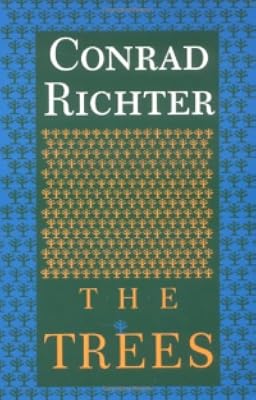
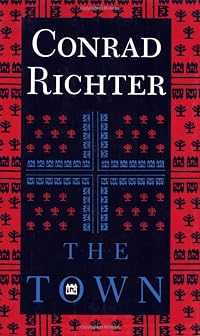
My mind kept drifting towards Conrad Richter's Awakening Land trilogy, (which also won the Pulitzer) and how I fell into it like a cool drink of water; this one was merely tepid.
Like Cean in the novel, "I be thinkin' on it sum a'fore I set my min' to it agin."
I just didn't feel any magic, after 40 pages or so, and it's much too hot to be reading a song of the south that doesn't deliver from the get-go, when it's 40C in the shade!
My mind kept drifting towards Conrad Richter's Awakening Land trilogy, (which also won the Pulitzer) and how I fell into it like a cool drink of water; this one was merely tepid.
Like Cean in the novel, "I be thinkin' on it sum a'fore I set my min' to it agin."
Beautiful prose and dialectally engaging so that you truly felt the happiness, heartache, excitement and dread of this farm family lead by the main character Cean. The book reminded me a lot of Conrad Richter's Awakenings trilogy - the pioneering family of the early to mid 19th century. What struck me about Cean is her reluctance to have children - despite the fact of giving birth to more than a dozen! Some of the plot twists develop rather abruptly but effectively nonetheless. Definitely of the strong pioneering women genre.
Cean Carver weds Lonzo Smith on a fine Spring day in 1832, and they leave her parents’ home for the six-mile journey by ox cart to their new homestead. This 1934 Pulitzer winner deals with a backwoods country existence in rural Georgia, following the Carver / Smith families until shortly after the Civil War. Over the course of several decades, the book explores what life was like for these farmers of pre-Civil War America. They battle weather, wild animals, disease, and injuries. And, when called, the men leave to fight a war they never wanted, and have no stake in.
It takes a little while to get used to the language and style, but it’s a wonderful book. At times it’s plodding, but there are extraordinary moments of brilliant show more writing. Descriptions so vivid you can feel the heat, smell the blood, hear the birds or the wail of panthers. It is a simple story, of simple people, but their lives are anything but simple.
Cean Carver Smith is the focus of much of the novel. Over the course of the book she gives birth to fourteen children, mourns the death of several of her family members, endures moments of panic, and perseveres with courage and dignity. She is steadfast in her resolve to provide for her family, to love her husband and parents, and to endure.
What is so special about the book is that it gives voice to the majority of rural farmers of this era. People with limited education, no slaves, many children, and a deep faith that hard work would reap rewards. Miller was the first Georgia writer to win the Pulitzer, and the success of this novel prompted the publisher to go seeking other Southern writers. Thus, was Margaret Mitchell’s Gone With the Wind discovered. That book quickly surpassed this one in popularity, and more’s the pity in my opinion.
(NOTE: Review updated on second reading, Sept 2017) show less
It takes a little while to get used to the language and style, but it’s a wonderful book. At times it’s plodding, but there are extraordinary moments of brilliant show more writing. Descriptions so vivid you can feel the heat, smell the blood, hear the birds or the wail of panthers. It is a simple story, of simple people, but their lives are anything but simple.
Cean Carver Smith is the focus of much of the novel. Over the course of the book she gives birth to fourteen children, mourns the death of several of her family members, endures moments of panic, and perseveres with courage and dignity. She is steadfast in her resolve to provide for her family, to love her husband and parents, and to endure.
What is so special about the book is that it gives voice to the majority of rural farmers of this era. People with limited education, no slaves, many children, and a deep faith that hard work would reap rewards. Miller was the first Georgia writer to win the Pulitzer, and the success of this novel prompted the publisher to go seeking other Southern writers. Thus, was Margaret Mitchell’s Gone With the Wind discovered. That book quickly surpassed this one in popularity, and more’s the pity in my opinion.
(NOTE: Review updated on second reading, Sept 2017) show less
Life in Southern Georgia among poor white farmers between the War of 1812 and the Civil War. So little is available about life of white nonslaveowners in the South prior to the Civil War that this book provided a delightful insight. The author actually interviewed the rural people who lived around the small Georgia town in which she lived, getting stories of those times. Thus she was able to weave a real account of what that life was like and how different it was from the picture drawn by Gone With The Wind.
Members
- Recently Added By
Lists

Pulitzer Prize Winners for Fiction
102 works; 54 members

Pleasant Surprises: Books That Exceeded Our Expectations
418 works; 143 members

Books Set in Georgia
11 works; 4 members

Best Books of 1926-1935
403 works; 10 members

Literary Travelogue of the United States Challenge
133 works; 6 members

Publisher's Weekly Bestsellers Part I - 1895-1939
399 works; 8 members
Author Information

2 Works 326 Members
Some Editions
Awards and Honors
Awards
Distinctions
Notable Lists
Series
Belongs to Publisher Series
Belfond, Vintage (2)
Work Relationships
Is contained in
Common Knowledge
- Canonical title
- Lamb in His Bosom
- Original title
- Lamb in his bossom
- Original publication date
- 1933; 1934 (1e édition originale américaine) (1e édition originale américaine); 1935 (1e traduction par L. Legros et édition française, Hachette) (1e traduction par L. Legros et édition française, Hachette); 2013-01-10 (Nouvelle traduction française par Michèle Valencia et édition, Vintage Belfond) (Nouvelle traduction française par Michèle Valencia et édition, Vintage Belfond); 2022-03-24 (Réédition française, Vintage, Belfond) (Réédition française, Vintage, Belfond)
- People/Characters
- Cean; Lonzo
- Important places
- Georgia, USA
- Dedication
- For Wi'D and little Bill and Nip 'n' Tuck
- First words
- Cean turned and lifted her hand briefly in farewell as she rode away beside Lonzo in the ox-cart.
- Last words
- (Click to show. Warning: May contain spoilers.)It might have comforted Cean to know that Lias's heart was untroubled as he slept whilst she was here with Dermid. And upon his head where it lay encased in peace there was not one thread of white; all his hair was the color of topazes and autumn-flowering saffron and gold leaf made of beaten gold--like the pleasing color of Fairby's hair.
- Original language*
- Anglais (Etats-Unis) (Etats-Unis)
*Some information comes from Common Knowledge in other languages. Click "Edit" for more information.
Classifications
- Genres
- Fiction and Literature, General Fiction, Historical Fiction
- DDC/MDS
- 813.52 — Literature & rhetoric American literature in English American fiction in English 1900-1999 1900-1945
- LCC
- PS3525 .I517 .L3 — Language and Literature American literature American literature Individual authors 1900-1960
- BISAC
Statistics
- Members
- 315
- Popularity
- 101,769
- Reviews
- 12
- Rating
- (3.84)
- Languages
- Chinese, English, French
- Media
- Paper, Ebook
- ISBNs
- 14
- ASINs
- 14