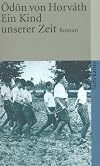
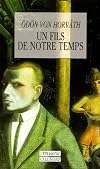
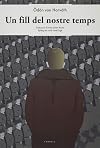
A Child of Our Time
by Ödön von Horváth
On This Page
Description
The novel A Child of Our Times represents Horváth's literary legacy. Just as the novel was going to press, the author was killed by a falling tree branch during a thunderstorm on the Champs Elysées. This volume explains the genesis of the novel from two early precursors and through three different drafts and includes a definitive final version.Tags
Recommendations





























Member Reviews
Read in english (it's called "Child of Our Time"). Sort of wavered between 3 and 4 stars, as a story it's pretty basic but as a rebuke of fascism and the disregard of the individual by the state capitalists it works well and has some great quotes.
Story wise I don't really understand the role the captain's wife plays. The religious themes were a little confusing to me eg the symbols on the soup kitchen, the nurse - purely just as a counterpart to disregard of the individual of fascist society? I'll also say the ending is a bit of a cop out to avoid dealing with the moral issue ofkilling an individual for indirectly killing someone else - instead he just kills himself... kind of. it's a little weird
In general though it's a good show more examination of the fascist mentality eg the appeal of being a soldier and why you'd leave that and how awful both fascism and the dominant liberal capitalist order destroy the individual.
I'll just leave some good quotes to give you a feel for it
"I love my Fatherland since it has won back its honor. For now, I have my own back, too. I don’t have to beg any more. I needn’t steal. Everything’s different today – will always be different.
Next time there’s a war, we shall win it. Guaranteed!
All our leaders extol peace – but my comrades and I wink at one another. Our leaders are cunning and shrewd, they’ll get the better of the others, for they’ve mastered the art of lying like none of the rest.
Without lies, life is impossible.
And we’re getting readier every day."
"He’s another that looks away when he sees us on the march. He can’t stand us soldiers, because he hates the armament industry – as if it were the most anxious problem in the world whether an armament manufacturer should make profits or not!
If he supplies the right goods, let him. First-class cannon, munitions and the rest. For us today there’s no longer a problem there. For we have recognized that the highest thing in human life is the Fatherland. There is nothing of greater significance. All else is nonsense – or at best very near it.
When things are going well with the Fatherland, they’re going well with every one of its children. If they’re going badly, perhaps it doesn’t mean that everybody is in a bad plight, but the few exceptions can’t make money for long out of the suffering of the living body of the State.
And things only go well with the Fatherland if its name is feared, if it has its own sharp weapon.
We are its weapons. I too am part of them."
"For we no longer need a blessed eternity since we’ve learned that the individual doesn’t count. Only when he’s in line with the rest does he count for anything. For us, there is only one eternity – the life of our people. And only one divine duty – to die for the life of our people All the rest is out of date now."
"“Well, the individual doesn’t count.”
It was I who gaped now.
Doesn’t count?
Hadn’t I said that myself once? How senseless it sounded!
“We’ve got to make our business pay, and business competition is the same thing as war, my friend, and as you ought to know, you can’t win a war with gloves on!”"
"It should not be that the individual counts for nothing, even if she’s the humblest of the humble. Whoever believes that should be blotted out" show less
Story wise I don't really understand the role the captain's wife plays. The religious themes were a little confusing to me eg the symbols on the soup kitchen, the nurse - purely just as a counterpart to disregard of the individual of fascist society? I'll also say the ending is a bit of a cop out to avoid dealing with the moral issue of
In general though it's a good show more examination of the fascist mentality eg the appeal of being a soldier and why you'd leave that and how awful both fascism and the dominant liberal capitalist order destroy the individual.
I'll just leave some good quotes to give you a feel for it
"I love my Fatherland since it has won back its honor. For now, I have my own back, too. I don’t have to beg any more. I needn’t steal. Everything’s different today – will always be different.
Next time there’s a war, we shall win it. Guaranteed!
All our leaders extol peace – but my comrades and I wink at one another. Our leaders are cunning and shrewd, they’ll get the better of the others, for they’ve mastered the art of lying like none of the rest.
Without lies, life is impossible.
And we’re getting readier every day."
"He’s another that looks away when he sees us on the march. He can’t stand us soldiers, because he hates the armament industry – as if it were the most anxious problem in the world whether an armament manufacturer should make profits or not!
If he supplies the right goods, let him. First-class cannon, munitions and the rest. For us today there’s no longer a problem there. For we have recognized that the highest thing in human life is the Fatherland. There is nothing of greater significance. All else is nonsense – or at best very near it.
When things are going well with the Fatherland, they’re going well with every one of its children. If they’re going badly, perhaps it doesn’t mean that everybody is in a bad plight, but the few exceptions can’t make money for long out of the suffering of the living body of the State.
And things only go well with the Fatherland if its name is feared, if it has its own sharp weapon.
We are its weapons. I too am part of them."
"For we no longer need a blessed eternity since we’ve learned that the individual doesn’t count. Only when he’s in line with the rest does he count for anything. For us, there is only one eternity – the life of our people. And only one divine duty – to die for the life of our people All the rest is out of date now."
"“Well, the individual doesn’t count.”
It was I who gaped now.
Doesn’t count?
Hadn’t I said that myself once? How senseless it sounded!
“We’ve got to make our business pay, and business competition is the same thing as war, my friend, and as you ought to know, you can’t win a war with gloves on!”"
"It should not be that the individual counts for nothing, even if she’s the humblest of the humble. Whoever believes that should be blotted out" show less
Kürzlich hab ich eine Dokumentarfilm gesehen indem sie Männer interviewt haben, die in der Wehrmacht gedient haben. Natürlich wurden sie gefragt "Haben sie von den Verbrechen gewusst?"
Einige sagen 'Nein' und sind erbost über diese falschen Behauptungen. Schielßlich haben sie nur das gemacht was man ihnen befohlen hat. Der Kampf für das Vaterland und gegen die Bolschewiken. Wieder andere erzählen von Hinrichtungen und Ermordungen von Zivilisten. Es ist daher fast unglaublich, wie treffend der Schluss dieses Buches von 1938 ist:
"Und wenn du ganz groß sein wirst, dann wirds vielleicht andere Tage geben, und deine Kinder werden dir sagen: dieser Soldat war ja ein gemeiner Mörder - dann schimpf nicht auch auf mich.
Bedenk es doch: er show more wußt sich nicht anders zu helfen, er war eben ein Kind seiner Zeit." show less
Einige sagen 'Nein' und sind erbost über diese falschen Behauptungen. Schielßlich haben sie nur das gemacht was man ihnen befohlen hat. Der Kampf für das Vaterland und gegen die Bolschewiken. Wieder andere erzählen von Hinrichtungen und Ermordungen von Zivilisten. Es ist daher fast unglaublich, wie treffend der Schluss dieses Buches von 1938 ist:
"Und wenn du ganz groß sein wirst, dann wirds vielleicht andere Tage geben, und deine Kinder werden dir sagen: dieser Soldat war ja ein gemeiner Mörder - dann schimpf nicht auch auf mich.
Bedenk es doch: er show more wußt sich nicht anders zu helfen, er war eben ein Kind seiner Zeit." show less
En Un hijo de nuestro tiempo Horváth se convierte en fiel cronista de su época. Es capaz de reproducir los usos del lenguaje fascista tanto a nivel militar como civil y de mostrarnos a través de ellos cómo el individuo de a pie adopta sin más los tonos por los que ya se ha dejado seducir. Si en Juventud sin Dios el maestro tenía una sensación ambivalente respecto a ello, el soldado de Un hijo de nuestro tiempo está entusiasmado con los usos del Estado fascista y habla siguiendo el modelo ideal de lenguaje tipificado por los nacionalsocialistas. Esta novela, escrita en 1937, es un brillante retrato de aquellas personas que durante años obedecieron, admiraron y ejecutaron las consignas del nazismo.
Jul 30, 2020Spanish
Das Buch beschreibt die Entwicklung eines Soldaten, der sich infolge von Armut und Arbeitslosigkeit immer mehr mit dem Gedankengut eines diktatorischen Regimes (Nationalsozialismus) identifiziert und sich am Ende davon abwendet.
Horvath zeichnet mit kurzen einfachen Sätzen die traurige Realität der Zwischenkriegszeit und des Kriegsbeginns.
Horvath zeichnet mit kurzen einfachen Sätzen die traurige Realität der Zwischenkriegszeit und des Kriegsbeginns.
Oct 11, 2009German
”En el espejo arde una ciudad”, A. Muñoz Molina, Babelia, 29.02.2020 https://elpais.com/cultura/2020/02/26/babelia/1582712971_040656.html
Feb 29, 2020Spanish
Ratings
Members
- Recently Added By
Author Information

128+ Works 1,826 Members
Awards and Honors
Series
Belongs to Publisher Series
suhrkamp taschenbuch (0099)
Common Knowledge
- Canonical title
- A Child of Our Time
- Original title
- Ein Kind unserer Zeit
- First words*
- Ein Kind unserer Zeit: Ich bin Soldat.
Vorarbeiten und Varianten: Es war einmal ein Soldat. - Last words*
- (Click to show. Warning: May contain spoilers.)Ein Kind unserer Zeit: Bedenk es doch: er wusst sich nicht anders zu helfen, er war eben ein Kind seiner Zeit.
(Click to show. Warning: May contain spoilers.)Vorarbeiten und Varianten: Eine grosse Hand nimmt mich in die Hand und hebt mich auf.
*Some information comes from Common Knowledge in other languages. Click "Edit" for more information.
Classifications
- Genres
- Fiction and Literature, General Fiction
- DDC/MDS
- 830 — Literature & rhetoric German & related literatures German literature and literatures of related languages
- LCC
- PT2617 .O865 .K5 — Language and Literature German, Dutch and Scandinavian literatures German literature Individual authors or works 1860/70-1960
- BISAC
Statistics
- Members
- 122
- Popularity
- 268,286
- Reviews
- 5
- Rating
- (4.05)
- Languages
- 6 — Catalan, Czech, English, French, German, Spanish
- Media
- Paper, Ebook
- ISBNs
- 24
- ASINs
- 5