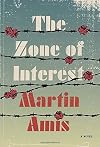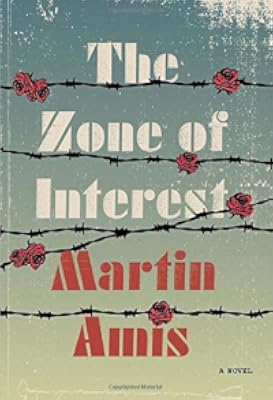
The Zone of Interest
by Martin Amis
On This Page
Description
"From one of England's most renowned authors, an unforgettable new novel that provides a searing portrait of life-and, shockingly, love-in a concentration camp. Once upon a time there was a king, and the king commissioned his favorite wizard to create a magic mirror. This mirror didn't show you your reflection. It showed you your soul-it showed you who you really were. The wizard couldn't look at it without turning away. The king couldn't look at it. The courtiers couldn't look at it. A show more chestful of treasure was offered to anyone who could look at it for sixty seconds without turning away. And no one could. The Zone of Interest is a love story with a violently unromantic setting. Can love survive the mirror? Can we even meet each other's eye, after we have seen who we really are? In a novel powered by both wit and pathos, Martin Amis excavates the depths and contradictions of the human soul"-- show lessTags
Recommendations
















Member Reviews
Livro absolutamente brilhante, narração em três vozes cada qual contribuindo para a absorção da banalidade do mal pelo leitor. Desde pela perspectiva da pilhéria (a figura patética do Comandante), a perspectiva que tinha sim nazis cultos ao contrário do que o alto escalão burro feitos uma porta faz parecer (Thomsen) e a perspectiva judaica, porém breve (o professor).
É um livro muito interessante em termos psicológicos, é uma ficção histórica que usa livros de não ficção para ser escrita com maestria, inclusive toda a bibliografia está presente ao final da edição, me parece que Amis pode apreender muito da complexidade do que ocorreu aos alemães naquela década e é sempre muito bom termos acesso a esse tipo de show more perspectiva psicológica inteligente da história.
Plus: Martin Amis morreu há exatamente um ano, no dia da estreia do filme do Jonathan Glazer em Cannes. show less
É um livro muito interessante em termos psicológicos, é uma ficção histórica que usa livros de não ficção para ser escrita com maestria, inclusive toda a bibliografia está presente ao final da edição, me parece que Amis pode apreender muito da complexidade do que ocorreu aos alemães naquela década e é sempre muito bom termos acesso a esse tipo de show more perspectiva psicológica inteligente da história.
Plus: Martin Amis morreu há exatamente um ano, no dia da estreia do filme do Jonathan Glazer em Cannes. show less
Amazing evocation of Arendt's "the banality of evil" - while you never sympathize with the concentration camp overlords, you feel the deep ordinariness of how they've come to see their work. More disturbing in today's era, you see how easily people "just do their jobs" of destruction by demonizing and then condemning the other. Chilling.
Martin Amis has written a harrowing and chilling novel about the organisation and running of a concentration camp in Poland in the Second World War. Told through the testimony of three people: Golo Thomsen, a liaison office between the military and the commercial companies based at the camp; Paul Doll, the camp commandant; and Szmul, a Jewish prisoner of the Sonderkommando, charged with reassuring new inmates and then stripping corpses, the book explores the brutality and ultimate futility of the Nazi’s Final Solution.
Amis’ prose dissects the dehumanising conditions of the camp and how this affects the mental balance of the officers in charge and captures their blind and unswerving belief in the aims of the Third Reich. And yet in show more this chilling and desensitising atmosphere the re can be glimmers of feeling. For a few, small acts of kindness have profound effects upon the recipients and that even amid all this cruelty, there is the possibility of respect for others.
It makes for a disturbing and different book and one that has a great effect upon the reader. show less
Amis’ prose dissects the dehumanising conditions of the camp and how this affects the mental balance of the officers in charge and captures their blind and unswerving belief in the aims of the Third Reich. And yet in show more this chilling and desensitising atmosphere the re can be glimmers of feeling. For a few, small acts of kindness have profound effects upon the recipients and that even amid all this cruelty, there is the possibility of respect for others.
It makes for a disturbing and different book and one that has a great effect upon the reader. show less
I skipped the last Amis as it felt too familiar but this was worth coming back to. Set at a concentration camp but told mostly from the POV of the Germans, Amis has never been accused of avoiding controversy. He is unafraid of using humour and other wholly inappropriate devices to tell a tale of the death camps but his boldness never overshadows the awe and horror that the Holocaust inspires.
I don't think this book is quite as successful as Time's Arrow, but Amis's continued grappling with man's inhumanity to man is the mark of a fine novelist and a mensch.
I don't think this book is quite as successful as Time's Arrow, but Amis's continued grappling with man's inhumanity to man is the mark of a fine novelist and a mensch.
That the new Martin Amis novel, The Zone of Interest, is set in a World War II German concentration camp likely reduces the size of the book’s potential audience because many readers are simply not willing to peer very closely into that degree of darkness and depravity. In fact, publishers in France and Germany have been reluctant to even take on the book – although, finally, a small French publisher has decided to release it in late 2015. (The Germans apparently believe that the novel places some of the Nazi administrators in too positive a light.)
It is more than the subject matter, however, that will make it difficult for some readers to finish the novel, it is also the general approach that Amis takes in telling his story – he show more uses satire and, of all things, humor, to portray how a culture as sophisticated and “civilized” as Germany’s allowed something like the Holocaust happen. Throw in a somewhat twisted love story, and you have the makings of an off-putting novel, one to which some will be reluctant to give a chance.
This, for instance, is typical of the humor Amis sometimes uses in the novel’s dialogue. In conversation with another officer, one camp officer justifies inclusion of Jewish women and children in the overall slaughter this way:
“Those babes in arms will grow up and want revenge on the Nazis in about 1963. I suppose the rationale for the women under forty-five is that they might be pregnant. And the rationale for the older women is while we’re at it.”
Amis uses three very different narrators in The Zone of Interest: Golo Thompsen, Paul Doll, and a man called Szmul. Thompsen, a German officer and the nephew of Hitler’s private secretary, Martin Bormann, plays a minor role in the camp’s day-to-day activities. Doll is the camp’s mentally unstable commandant who is slowly breaking under pressure from Berlin to dispose of the camp’s inmates at what seems to him an impossible rate. Szmul is one of Doll’s Jewish inmates, a man who has stayed alive only by working hard at “salvaging” the valuables of those designated for extermination – even down to the gold in their teeth and the hair on their heads.
The Zone of Interest is part love story, part horror novel. One of the most telling aspects of the effectiveness of Martin Amis’s approach is that, as I read the story, I was more shocked by the casualness with which the Nazis killed than by the actual details of what went on inside the camp. I was appalled by the thought that the whole thing, for camp administrators, became more of an engineering problem than a realization that they were murdering human beings. It was all about the process: how to dispose of the leftover bodies of thousands upon thousands of people, and how to kill more of them in the most efficient manner possible. It was all about processing “material.”
The Zone of Interest is not a novel I will soon forget. show less
It is more than the subject matter, however, that will make it difficult for some readers to finish the novel, it is also the general approach that Amis takes in telling his story – he show more uses satire and, of all things, humor, to portray how a culture as sophisticated and “civilized” as Germany’s allowed something like the Holocaust happen. Throw in a somewhat twisted love story, and you have the makings of an off-putting novel, one to which some will be reluctant to give a chance.
This, for instance, is typical of the humor Amis sometimes uses in the novel’s dialogue. In conversation with another officer, one camp officer justifies inclusion of Jewish women and children in the overall slaughter this way:
“Those babes in arms will grow up and want revenge on the Nazis in about 1963. I suppose the rationale for the women under forty-five is that they might be pregnant. And the rationale for the older women is while we’re at it.”
Amis uses three very different narrators in The Zone of Interest: Golo Thompsen, Paul Doll, and a man called Szmul. Thompsen, a German officer and the nephew of Hitler’s private secretary, Martin Bormann, plays a minor role in the camp’s day-to-day activities. Doll is the camp’s mentally unstable commandant who is slowly breaking under pressure from Berlin to dispose of the camp’s inmates at what seems to him an impossible rate. Szmul is one of Doll’s Jewish inmates, a man who has stayed alive only by working hard at “salvaging” the valuables of those designated for extermination – even down to the gold in their teeth and the hair on their heads.
The Zone of Interest is part love story, part horror novel. One of the most telling aspects of the effectiveness of Martin Amis’s approach is that, as I read the story, I was more shocked by the casualness with which the Nazis killed than by the actual details of what went on inside the camp. I was appalled by the thought that the whole thing, for camp administrators, became more of an engineering problem than a realization that they were murdering human beings. It was all about the process: how to dispose of the leftover bodies of thousands upon thousands of people, and how to kill more of them in the most efficient manner possible. It was all about processing “material.”
The Zone of Interest is not a novel I will soon forget. show less
A shocking and memorable read - as horrible a story as you can imagine, but you just keep on reading it ti see what happens. One of the amazing things it portrays is the complete dissassociation by the Nazis of what they were actually doing - the dissasociation of the people who perpetrated the crimes from the actual human cost which was clear as day, and being actively ignored. . It comes as no surprise that many were consuming large quantities of drugs like methamphetamine, while drinking heavily to overcome the vestiges of guilt (and to ignor the ongoing defeat which at the time of the novel's action is clear) that might have seeped through. A focus on the relationship of a German officer and the wife of the camp commandant serves to show more highlight the incomprehensible discord between what was going on and how it was actually percieved by the instigators. Also of note are the many passages which use puns, and other language humor (actually turns out to be horrible, inexcuusable black humor in this case) in modalities, in counterpoint to the war crimes, the effect is to amplify the horrible monstrosities of operation of the camps - masking them as everyday business for the Reich. show less
Well then. Right.
You know when you're halfway through a rather bad book and you have that debate raging at the back of your brain: put it down, don't put it down, put it down - life is too short, don't put it down - you'll never know what happens or if it ends up being marvelous?
The Zone of Interest is not, in fact, a rather bad book. I did however still have a debate raging throughout because, as about every other review written about Amis' Zone mentions, it's a disturbing read. It's a read I found myself having to take a few steps away from with regularity.
This being my first go at an Amis novel, I can't really speak to much concerning the author. I will say that if there wasn't talent there, this book wouldn't have been nearly as show more hard to get through. Amis' satire reeks with putrefied banality of evil a la Hannah Arendt, in a good way. I haven't read a lot about the Holocaust other than a few histories and survivor stories. What I have read has been devastating. And when you experience that devastation, it's all too easy to remove yourself emotionally so that you can bear with it, get through it.
Amis' use of humor, that reeking ripening satire, keeps you turned to the flame as it were. It keeps the intensity up because humor as conduit often weakens one's defenses just enough to keep you in the thick of things. I think it's Amis' talent with satire that makes this such a disturbing read.
On a shallower bent, I did wish that I knew a bit more about various concentration camps and those that ran them in order to not be so puzzled in the beginning of this book. While it was pretty easy to recognize some names, there are things I felt the desire to look up throughout so that I'd have a better handle on things. Amis doesn't expend much energy on explaining the world he fleshes out in his Zone, so further research during the book and reading his afterword was immensely helpful. show less
You know when you're halfway through a rather bad book and you have that debate raging at the back of your brain: put it down, don't put it down, put it down - life is too short, don't put it down - you'll never know what happens or if it ends up being marvelous?
The Zone of Interest is not, in fact, a rather bad book. I did however still have a debate raging throughout because, as about every other review written about Amis' Zone mentions, it's a disturbing read. It's a read I found myself having to take a few steps away from with regularity.
This being my first go at an Amis novel, I can't really speak to much concerning the author. I will say that if there wasn't talent there, this book wouldn't have been nearly as show more hard to get through. Amis' satire reeks with putrefied banality of evil a la Hannah Arendt, in a good way. I haven't read a lot about the Holocaust other than a few histories and survivor stories. What I have read has been devastating. And when you experience that devastation, it's all too easy to remove yourself emotionally so that you can bear with it, get through it.
Amis' use of humor, that reeking ripening satire, keeps you turned to the flame as it were. It keeps the intensity up because humor as conduit often weakens one's defenses just enough to keep you in the thick of things. I think it's Amis' talent with satire that makes this such a disturbing read.
On a shallower bent, I did wish that I knew a bit more about various concentration camps and those that ran them in order to not be so puzzled in the beginning of this book. While it was pretty easy to recognize some names, there are things I felt the desire to look up throughout so that I'd have a better handle on things. Amis doesn't expend much energy on explaining the world he fleshes out in his Zone, so further research during the book and reading his afterword was immensely helpful. show less
Members
- Recently Added By
Published Reviews
ThingScore 100
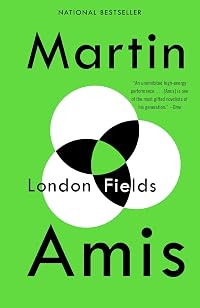
The Zone of Interest is nothing like his great early novels, but it is the best thing he has written since London Fields. The book's postwar coda is enormously moving, the sections describing the "silent boys" of Chełmno almost unreadably sad, the figure of Szmul brilliantly rendered – at once admirable and horrifying in his desperate drive to survive. Facing the Medusa's head of Auschwitz show more has had a salutary effect on Amis's writing, the ethical rigours of the subject matter sloughing off the flippant and inessential. He has, yet again, been overlooked for the Man Booker prize, but this is a novel that will endure. show less
added by charl08
Lists

1001 Books You Must Read Before You Die
1,448 works; 1,134 members

Top Five Books of 2014
1,064 works; 397 members

Dublin Literary Award Longlist 2016
148 works; 4 members

Folio Prize 2015 Longlist
79 works; 2 members

Walter Scott Prize Winners and Shortlist
66 works; 6 members

To Read
617 works; 7 members
Author Information

58+ Works 29,753 Members
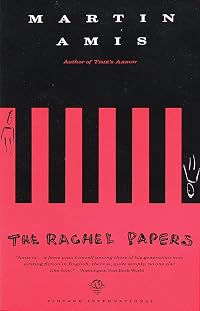
Martin Amis, son of the novelist Kingsley Amis, was born August 25, 1949. His childhood was spent traveling with his famous father. From 1969 to 1971 he attended Exeter College at Oxford University. After graduating, he worked for the Times Literary Supplement and later as special writer for the Observer. Amis published his first novel, The Rachel show more Papers, in 1973, which received the prestigious Somerset Maugham Award in 1974. Other titles include Dead Babies (1976), Other People: A Mystery Story (1981); London Fields (1989), The Information (1995), and Night Train (1997). Martin Amis has been called the voice of his generation. His novels are controversial, often satiric and dark, concentrating on urban low life. His style has been compared to that of Graham Greene, Philip Larkin and Saul Bellow, among others. He is currently Professor of Creative Writing at the Centre for New Writing at the University of Manchester. In 2008, The Times named him one of the 50 greatest British writers since 1945. (Bowker Author Biography) show less
Some Editions
Awards and Honors
Awards
Distinctions
Notable Lists
Series
Belongs to Publisher Series
Llibres Anagrama (16)
Work Relationships
Has the adaptation
Common Knowledge
- Canonical title
- The Zone of Interest
- Original publication date
- 2014
- Important places
- Auschwitz concentration camp, Oświęcim, Lesser Poland, Poland
- Important events
- Holocaust
- Related movies
- The Zone of Interest (2023 | IMDb)
- Original language
- English
Classifications
Statistics
- Members
- 865
- Popularity
- 31,449
- Reviews
- 32
- Rating
- (3.61)
- Languages
- 10 — Catalan, Danish, Dutch, English, French, German, Italian, Polish, Portuguese (Portugal), Spanish
- Media
- Paper, Audiobook, Ebook
- ISBNs
- 43
- ASINs
- 12