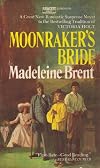
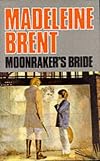
Moonraker's Bride
by Peter O'Donnell
On This Page
Description
Born in a mission in China, Lucy Waring now finds herself with 15 small children to feed. How she tackles this task gets her thrown into the grim prison of Chengfu, where she meets a man about to die. He asks her a cryptic riddle, and its mystery echoes through all that befalls Lucy in the months that follow, even when she is brought to England, trying to make a new life with the Gresham family. Unused to English ways, she is constantly in disgrace and is soon involved in the long and bitter show more feud between the Greshams and the family who live across the valley in the house called Moonrakers. In England Lucy discovers danger, romance, heartache, and mystery as strange events lead her to doubt her own senses. It is only when Lucy returns to China that she finds the answers to the mysteries of her past. It is there, at the moment when all seems lost, that she finally finds where her heart belongs. show lessTags
Recommendations























Member Reviews
https://fromtheheartofeurope.eu/moonrakers-bride-by-madeleine-brent/
It’s a romantic adventure story about young Lucy, abandoned in an orphanage in China, who finds herself sucked into a bizarre English feud between two neighbouring families over lost Chinese treasure. There are some vey effective fish-out-of-water moments for Lucy when she first arrives in England. The plot twists are pretty absurd, as hidden relatives turn up everywhere and Lucy returns to China to skip through the Boxer Rebellion, and yet I kept on being sucked back into it to find out what would happen next. I’m sure that the Chinese details are as wobbly as I know the English historical details are; but I admit that I was entertained anyway.
It’s a romantic adventure story about young Lucy, abandoned in an orphanage in China, who finds herself sucked into a bizarre English feud between two neighbouring families over lost Chinese treasure. There are some vey effective fish-out-of-water moments for Lucy when she first arrives in England. The plot twists are pretty absurd, as hidden relatives turn up everywhere and Lucy returns to China to skip through the Boxer Rebellion, and yet I kept on being sucked back into it to find out what would happen next. I’m sure that the Chinese details are as wobbly as I know the English historical details are; but I admit that I was entertained anyway.
Moonraker's Bride by Madeleine Brent is a romance set during the time of the Boxer Uprising in China (sometime during 1898-1903). So it is later than most of the historical fiction I read. The heroine, Lucy Waring, has grown up in rural China in a mission orphanage. At the beginning of the story, as the oldest of the orphans, she tries to keep everyone fed when the elderly lady who is all that remains of the original staff falls ill and money runs out. However, she soon meets not one (Robert Falcon), but two (Nicholas Sabine), English men, both apparently trying to solve a riddle that will lead to treasure. Her life becomes entangled in theirs and the quest, as she is sent to England to help still a third gentleman (Mr. Gresham) solve show more the riddle from the comfort of his own home, thanks to his awful deductive powers.
It is an interesting blend of romance, comedy, drama, and scenery. Being unfamiliar with Chinese history and culture, I can't speak to the accuracy of her portrayal of turn-of-the-century peasant life, sociopolitical context, British colonial situation, etc. I can say that it certainly all appeared good to me; nothing struck me as particularly jarring or unrealistic. When confronted with the foibles and hypocrisy of a well-bred Victorian family of leisure after being bundled halfway around the world, her culture shock and grievous social missteps (and accompanying isolation and loss of identity) were both amusing and sad. The contrast with the local Bohemian family was also quite vivid.
In all, it is a charming story with a sympathetic protagonist. The plot has a few twists, and it all resolves quite neatly with a bow on top (not that I really consider this a positive). In fact, it practically feels like predestination, how everything in her life seems to lead inevitably to the resolution. It was generally worth reacquiring. I have one major pet peeve with it, which I can't really reveal without a spoiler. I think this is what motivated its departure from my life earlier (well, okay, an intertwined pet peeve). show less
It is an interesting blend of romance, comedy, drama, and scenery. Being unfamiliar with Chinese history and culture, I can't speak to the accuracy of her portrayal of turn-of-the-century peasant life, sociopolitical context, British colonial situation, etc. I can say that it certainly all appeared good to me; nothing struck me as particularly jarring or unrealistic. When confronted with the foibles and hypocrisy of a well-bred Victorian family of leisure after being bundled halfway around the world, her culture shock and grievous social missteps (and accompanying isolation and loss of identity) were both amusing and sad. The contrast with the local Bohemian family was also quite vivid.
In all, it is a charming story with a sympathetic protagonist. The plot has a few twists, and it all resolves quite neatly with a bow on top (not that I really consider this a positive). In fact, it practically feels like predestination, how everything in her life seems to lead inevitably to the resolution. It was generally worth reacquiring. I have one major pet peeve with it, which I can't really reveal without a spoiler. I think this is what motivated its departure from my life earlier (well, okay, an intertwined pet peeve). show less
In my search for books to get myself out of a 6-month reading slump, I stumbled upon someone (a hardcore Madeleine fan, I presume, for their persistent mention of the name) recommending me the works of Madeleine Brent (a pseudonym of the man better known as Peter O’Donell). Despite having made quite a name for herself (won and shortlisted twice for the Romantic Novelist Association’s Novelist of the Year award), her legacy does not seem to extend into the 21st century as gothic romance has fallen out of favour. Faced with various choices, I picked up Moonraker’s Bride for its popularity, intriguing premise and catchy title; I must say I do not regret that decision one bit.
Moonraker’s Bride was a delight, albeit with definite show more highs and lows. The story begins in Tsin-kai-feng, China, where 17-year-old Lucy (or Lu-tsi, as the locals call her) Waring runs a Mission housing abandoned young girls. This Mission used to be run by the bedridden Miss Prothero, whose saving has run out a long time ago, leaving the children to fend for themselves (and fend they did, for poor Lucy has oftentimes resorted to stealing in the faraway town of Chengfu). Her latest thieving endeavour, however, would forever change her life (fortunately it is not mutilation).
With the premise out of the way, I shall discuss what I found enjoyable about this book. We cannot discuss Moonraker’s Bride without talking about its leading star, Miss Lucy Waring. In my opinion, Lucy is a very well written characters who is an excellent and strong role model despite all her deeply human mistakes and flaws. She is not a strong female character merely because she has lived through a lot but moreso because of 1. her agency and 2. ability to perverse through the toughest of situations. Throughout the story, she is inclined to play a passive role due to societal norms and other surrounding circumstances; nevertheless, when the situation calls for it, she is not afraid of making snap decisions in the face of authority, of danger, against others’ protest, even against her mind’s “sound” advice. Onto her peversation, this peversation can be best summed up by what Miss Prothero once told her: “When you don’t know what to do, just do whatever comes next and go from there.” Much of what she achieves would have been impossible but for dumb luck; however, do not mistake her accomplishments for sheer miracles. If she had given up prematurely, if she had never struggled despite all, if she had never taken a chance on fate then none of this would have ever happened. Even then, she is not always in luck’s favour: she often feels discouraged by fate’s cruel script, but it doesn’t actually discourage her from doing whatever comes next. It’s hard not to feel a deep sense of respect and admiration for this young woman as we peer into her psyche and see a frightened and hopeless soul, yet her actions on the page say otherwise - she carries on, even if with a bit of hesitancy. However, to define her as “just a strong female character” would be doing a disservice to her multi-faceted personality. As a result of a lifetime enshrouded in poverty and hardships, Lucy is a brutally practical person. This side of her is heartbreakingly demonstrated in the following excerpt:
"I lingered for a moment to watch Yu-lam change the napkin. She was a very pretty girl and had a kind nature. Not for the first time I thought what a pity it was that Miss Prothero would not let me sell Yu-lan as a labourer or concubine. She would become one or the other anyway, when she left the Mission, and we could not keep her much longer now. The money would have solved many problems for months to come, and I knew that old Mr. Chuan, who lived in the big house across the river, would gladly have bought her for a good price, for he had told me so."
Despite having been these young girls’ caregiver for a long time, Lucy still cannot help but adopt Chinese society’s view of women as commodities. Her dehumanising perspective does not even stem from being embittered by the burden of having to look after these younglings, for Lucy genuinely love each and every one of them. In truth, she simply feels disillusioned with the idea of challenging the status quo: all her life, she has seen girls come and go and they all end up one way or another - such is the fate of the Chinese woman, so may as well make the best of it. Had she not been a “foreign devil”, she may well have sold herself off to some rich old geezer.
One of the many recurring themes in Madeleine Brent’s stories is the trope of “female leads in foreign lands”. In my opinion, this trope is very well-utilised in Moonraker’s Bride. Despite having lived in China all her life, her indisputably English features make her a target for discrimination, which can range from foul gossip or general distrust to not being able to beg on streets. Such universal condemnation of her mere existence and the many ways in which it handicaps her social life as well as livelihoods undoubtedly do a number on her self-confidence; not to mention that excessive self-effacement is essential to the survival of a female “foreign devil” in China. It is nothing short of amazing to see her growing more sure of herself day by day, in Britain, where she is distanced from the sources of her shame. Of course, Britain is no Shangri-La and she is met with different sorts of problems there. A great chunk of the plot is dedicated to Lucy’s many struggles in adapting to her new family, the Greshams - consisting of mainly stuck-up upper class people. The head and patriarch of the house, Charles Gresham, is a man of jerky movements, short-lived whims, great ego and utter ignorance of the world beyond his sphere. His latest obsession is the treasure that his father and John Falcon once found and hid in China. To find the treasure, he needs to decode John Falcon’s riddle - for which Charles needs a young girl fluent in Chinese culture and the English language. His wife and Emily are shallow and serve little purposes than to spell trouble in their presence. The only two family members who do not either see her as a tool which needs feeding or hold her in contempt are Amanda and Edmund. Amanda is of little note, other than that her naivete lends itself to a lack of prejudice and judgement towards Lucy. The most interesting character here is Edmund Gresham, the eldest son of the Gresham household. A budding young lawyer, he is extremely trustworthy if a bit cold for the most part, though occasionally we would catch glimpses of his outward emotions, be it when he is playing Anagram with his family or when he hears of Nick’s execution - to hear of the execution of one of the only people he feels affection for must have not been easy and thus Edmund’s usually cool voice betrays his genuine feeling.
The main love interest, or shall I call him Lucy’s husband, is none other than Nick, Nicholas Sabine. A man whose eyes house dancing devils, Nick is a gambler by nature and the living definition of “recklessness”. I think he has great chemistry with Lucy and their interactions are very sweet and bounce off one another. Despite being very fond of Nick, I have little to say about him. I found the premise, the foundation of his character, that is his “recklessness” very intriguing; sadly, the novelist did not fully capitalise on this trait and further flesh out Nick’s character - instead opting for the much dreaded and clichéd plot device of miscommunication. One notable thing about Nick is his rivalry with Robert Falcon, for good reasons. Robert is the missing piece of the puzzle, Edmund’s bully, a “Moonrakers” zealot and a psychopath. His character creates a much needed sense of suspense and thrill throughout the story, especially during the very last part. I must admit that my attention span was an accomplice in keeping his acts under my radar, for I could not connect the dots and trace them back to him; I’m also grateful for my overlooking Robert since it makes the twists all the more impactful. To be frank, Madeleine does effectively make use of the entire story being told through Lucy’s fragmented point of view, which obscure just the right bits for the story to work and still feel believeable - there are enough clues that readers can guess correctly and those who do not, will not feel blindsided by the twists and turns.
I do have some gripes with the story. While the author has a knack for describing scenery, her prose does not really grasp me. Her writing is competent, no doubt, but it is far from vivid and can even feels repetitive at times (she thought up the symbolism of dancing devils in Nick’s eyes and ran with it). The plot of Moonraker’s Bride may have all of its loose ends tied up but it is still far from a tight novel, as there are many issues with the pacing. Some parts should have been shortened, or just done away with together. And with these parts gone, we could have gotten a more fully realised Nick Sabine, or see the love between him and Lucy blossoms without curtness. The romance between Nick and Lucy only feels well earned because it happens near the end, after both characters together with the readers have been through so much that any light-hearted consolation would be much appreciated. And yes, I am very aware that Moonraker’s Bride is first and foremost an Adventure novel, but a little character and relationship development can go a long way in improving a story, Adventure or not. Madeleine’s middling prose does not help either - it does not actively make the story feels like a chore to get through but it does not try to mask the blatant fillers either. show less
Moonraker’s Bride was a delight, albeit with definite show more highs and lows. The story begins in Tsin-kai-feng, China, where 17-year-old Lucy (or Lu-tsi, as the locals call her) Waring runs a Mission housing abandoned young girls. This Mission used to be run by the bedridden Miss Prothero, whose saving has run out a long time ago, leaving the children to fend for themselves (and fend they did, for poor Lucy has oftentimes resorted to stealing in the faraway town of Chengfu). Her latest thieving endeavour, however, would forever change her life (fortunately it is not mutilation).
With the premise out of the way, I shall discuss what I found enjoyable about this book. We cannot discuss Moonraker’s Bride without talking about its leading star, Miss Lucy Waring. In my opinion, Lucy is a very well written characters who is an excellent and strong role model despite all her deeply human mistakes and flaws. She is not a strong female character merely because she has lived through a lot but moreso because of 1. her agency and 2. ability to perverse through the toughest of situations. Throughout the story, she is inclined to play a passive role due to societal norms and other surrounding circumstances; nevertheless, when the situation calls for it, she is not afraid of making snap decisions in the face of authority, of danger, against others’ protest, even against her mind’s “sound” advice. Onto her peversation, this peversation can be best summed up by what Miss Prothero once told her: “When you don’t know what to do, just do whatever comes next and go from there.” Much of what she achieves would have been impossible but for dumb luck; however, do not mistake her accomplishments for sheer miracles. If she had given up prematurely, if she had never struggled despite all, if she had never taken a chance on fate then none of this would have ever happened. Even then, she is not always in luck’s favour: she often feels discouraged by fate’s cruel script, but it doesn’t actually discourage her from doing whatever comes next. It’s hard not to feel a deep sense of respect and admiration for this young woman as we peer into her psyche and see a frightened and hopeless soul, yet her actions on the page say otherwise - she carries on, even if with a bit of hesitancy. However, to define her as “just a strong female character” would be doing a disservice to her multi-faceted personality. As a result of a lifetime enshrouded in poverty and hardships, Lucy is a brutally practical person. This side of her is heartbreakingly demonstrated in the following excerpt:
"I lingered for a moment to watch Yu-lam change the napkin. She was a very pretty girl and had a kind nature. Not for the first time I thought what a pity it was that Miss Prothero would not let me sell Yu-lan as a labourer or concubine. She would become one or the other anyway, when she left the Mission, and we could not keep her much longer now. The money would have solved many problems for months to come, and I knew that old Mr. Chuan, who lived in the big house across the river, would gladly have bought her for a good price, for he had told me so."
Despite having been these young girls’ caregiver for a long time, Lucy still cannot help but adopt Chinese society’s view of women as commodities. Her dehumanising perspective does not even stem from being embittered by the burden of having to look after these younglings, for Lucy genuinely love each and every one of them. In truth, she simply feels disillusioned with the idea of challenging the status quo: all her life, she has seen girls come and go and they all end up one way or another - such is the fate of the Chinese woman, so may as well make the best of it. Had she not been a “foreign devil”, she may well have sold herself off to some rich old geezer.
One of the many recurring themes in Madeleine Brent’s stories is the trope of “female leads in foreign lands”. In my opinion, this trope is very well-utilised in Moonraker’s Bride. Despite having lived in China all her life, her indisputably English features make her a target for discrimination, which can range from foul gossip or general distrust to not being able to beg on streets. Such universal condemnation of her mere existence and the many ways in which it handicaps her social life as well as livelihoods undoubtedly do a number on her self-confidence; not to mention that excessive self-effacement is essential to the survival of a female “foreign devil” in China. It is nothing short of amazing to see her growing more sure of herself day by day, in Britain, where she is distanced from the sources of her shame. Of course, Britain is no Shangri-La and she is met with different sorts of problems there. A great chunk of the plot is dedicated to Lucy’s many struggles in adapting to her new family, the Greshams - consisting of mainly stuck-up upper class people. The head and patriarch of the house, Charles Gresham, is a man of jerky movements, short-lived whims, great ego and utter ignorance of the world beyond his sphere. His latest obsession is the treasure that his father and John Falcon once found and hid in China. To find the treasure, he needs to decode John Falcon’s riddle - for which Charles needs a young girl fluent in Chinese culture and the English language. His wife and Emily are shallow and serve little purposes than to spell trouble in their presence. The only two family members who do not either see her as a tool which needs feeding or hold her in contempt are Amanda and Edmund. Amanda is of little note, other than that her naivete lends itself to a lack of prejudice and judgement towards Lucy. The most interesting character here is Edmund Gresham, the eldest son of the Gresham household. A budding young lawyer, he is extremely trustworthy if a bit cold for the most part, though occasionally we would catch glimpses of his outward emotions, be it when he is playing Anagram with his family or when he hears of Nick’s execution - to hear of the execution of one of the only people he feels affection for must have not been easy and thus Edmund’s usually cool voice betrays his genuine feeling.
The main love interest, or shall I call him Lucy’s husband, is none other than Nick, Nicholas Sabine. A man whose eyes house dancing devils, Nick is a gambler by nature and the living definition of “recklessness”. I think he has great chemistry with Lucy and their interactions are very sweet and bounce off one another. Despite being very fond of Nick, I have little to say about him. I found the premise, the foundation of his character, that is his “recklessness” very intriguing; sadly, the novelist did not fully capitalise on this trait and further flesh out Nick’s character - instead opting for the much dreaded and clichéd plot device of miscommunication. One notable thing about Nick is his rivalry with Robert Falcon, for good reasons. Robert is the missing piece of the puzzle, Edmund’s bully, a “Moonrakers” zealot and a psychopath. His character creates a much needed sense of suspense and thrill throughout the story, especially during the very last part. I must admit that my attention span was an accomplice in keeping his acts under my radar, for I could not connect the dots and trace them back to him; I’m also grateful for my overlooking Robert since it makes the twists all the more impactful. To be frank, Madeleine does effectively make use of the entire story being told through Lucy’s fragmented point of view, which obscure just the right bits for the story to work and still feel believeable - there are enough clues that readers can guess correctly and those who do not, will not feel blindsided by the twists and turns.
I do have some gripes with the story. While the author has a knack for describing scenery, her prose does not really grasp me. Her writing is competent, no doubt, but it is far from vivid and can even feels repetitive at times (she thought up the symbolism of dancing devils in Nick’s eyes and ran with it). The plot of Moonraker’s Bride may have all of its loose ends tied up but it is still far from a tight novel, as there are many issues with the pacing. Some parts should have been shortened, or just done away with together. And with these parts gone, we could have gotten a more fully realised Nick Sabine, or see the love between him and Lucy blossoms without curtness. The romance between Nick and Lucy only feels well earned because it happens near the end, after both characters together with the readers have been through so much that any light-hearted consolation would be much appreciated. And yes, I am very aware that Moonraker’s Bride is first and foremost an Adventure novel, but a little character and relationship development can go a long way in improving a story, Adventure or not. Madeleine’s middling prose does not help either - it does not actively make the story feels like a chore to get through but it does not try to mask the blatant fillers either. show less
2nd, 3rd or 4th reading? Not sure. I read this book back when I was a teenager when I was first discovering romantic fiction.
I came to Madeleine Brent via Merlin's Keep, which I loved so much I immediately devoured the rest of her books. Imagine my surprise when I learned decades later that Madeleine Brent was a pseudonym for Peter O'Donnell. He wrote such strong female leads, young women who weren't afraid to break the rules and who saved the day - and often their male love interests.
Moonraker's Bride is my second favorite of his romance novels (second to Merlin's Keep). A young English woman, born and raised in China at the turn of the 20th century, is burdened with running a mission orphanage. She meets two dashing young show more Englishmen, desperate rivals in pursuit of a hidden treasure, and her life is turned upside down. The story includes mystery, intrigue, and adventure, and is an utterly compelling read. show less
I came to Madeleine Brent via Merlin's Keep, which I loved so much I immediately devoured the rest of her books. Imagine my surprise when I learned decades later that Madeleine Brent was a pseudonym for Peter O'Donnell. He wrote such strong female leads, young women who weren't afraid to break the rules and who saved the day - and often their male love interests.
Moonraker's Bride is my second favorite of his romance novels (second to Merlin's Keep). A young English woman, born and raised in China at the turn of the 20th century, is burdened with running a mission orphanage. She meets two dashing young show more Englishmen, desperate rivals in pursuit of a hidden treasure, and her life is turned upside down. The story includes mystery, intrigue, and adventure, and is an utterly compelling read. show less
Set in 1899 in China, this romantic adventure takes place during the Boxer Rebellion when the Society of the Righteous and Harmonious Fists sought to expel all foreigners and Christians from their land. Lucy Waring was born to missionary parents who died when she was a year old. Now seventeen, Lucy runs the mission and struggles to care for the fifteen children who rely on her. On a mission to steal money for food, Lucy encounters two Englishmen—first, Robert Falcon, who is on a quest to find treasure. Second, Nicolas Sabine, who is being held in prison. Both men want to use Lucy’s knowledge of China to solve an ancient riddle that might lead them to hidden riches. Full of action and intriguing plot twists, Lucy faces staggering show more peril yet remains true to herself and eventually finds true love. show less
I love, love, love this book! I first read it as a teenager, but I think I love it more now as an adult. This is another marriage of convenience novel, but it is fresh and original.
I love Lucy's character- she refuses to be anything other than herself, although she tries to fit in. I also love how she is loyal and steadfast.
Great novel- if you can find it, read it!
I love Lucy's character- she refuses to be anything other than herself, although she tries to fit in. I also love how she is loyal and steadfast.
Great novel- if you can find it, read it!
this was slightly more enjoyable than i thought it would be
(slightly is an underexaggeration)
(slightly is an underexaggeration)
Members
- Recently Added By
Author Information

352+ Works 7,833 Members
Peter O'Donnell was born in London on April 11, 1920. During World War II, he served in a signal regiment in the British Army, assigned to France, Persia (now Iran), Iraq, Syria, Lebanon, Egypt, Italy and Greece. He began drawing comic strips for children as a teenager, and after the war he wrote a number of different strips including Dr. No, show more Garth, and Romeo Brown on a freelance basis. He created the Modesty Blaise comic strip, which was published in The London Evening Standard from 1963 to 2001. During his lifetime, he wrote more than 20 Modesty Blaise novels including Sabre-Tooth, A Taste for Death and The Night of the Morningstar, two short stories collections, and a play entitled Mr. Fothergill's Murder. He wrote a series of 19th-century romance novels under the pseudonym Madeleine Brent. He also wrote for television, film, women's magazines and children's papers. He died on May 3, 2010 at the age of 90. (Bowker Author Biography) show less
Some Editions
Work Relationships
Common Knowledge
- Canonical title
- Moonraker's Bride
- Original title
- Moonraker's Bride
- Original publication date
- 1973
- People/Characters
- Lucy Waring; Nicholas Sabine; Robert Falcon
- Important places
- China; England, UK
- Important events
- Boxer Rebellion
- First words
- On that morning of that day in March, in the Year of the Boar, when the ugly stranger came to Tsin Kai-feng, I opened my eyes at dawn and felt a pang of despair to find nothing had changed.
- Last words
- (Click to show. Warning: May contain spoilers.)"Just never change, and I'll go on being the luckiest man in the world."
Classifications
Statistics
- Members
- 365
- Popularity
- 86,071
- Reviews
- 9
- Rating
- (4.13)
- Languages
- 6 — English, Finnish, German, Italian, Spanish, Swedish
- Media
- Paper, Ebook
- ISBNs
- 19
- ASINs
- 11