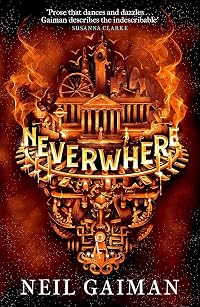
On This Page
Description
"Neil Gaiman is undoubtedly one of the modern masters of fantasy writing....For those who have not read Neverwhere, the new edition is the one to read, and is a fitting introduction to Gaiman's adult fiction....American readers can experience this spellbinding, magical world the way that Neil Gaiman wanted us to all along." —Huffington PostThe #1 New York Times bestselling author's ultimate edition of his wildly successful first novel featuring his "preferred text"—and including his show more special Neverwhere tale, "How the Marquis Got His Coat Back".
Published in 1997, Neil Gaiman's darkly hypnotic first novel, Neverwhere, heralded the arrival of a major talent and became a touchstone of urban fantasy.
It is the story of Richard Mayhew, a young London businessman with a good heart and an ordinary life, which is changed forever when he discovers a girl bleeding on the sidewalk. He stops to help her—an act of kindness that plunges him into a world he never dreamed existed. Slipping through the cracks of reality, Richard lands in Neverwhere—a London of shadows and darkness, monsters and saints, murderers and angels that exists entirely in a subterranean labyrinth. Neverwhere is home to Door, the mysterious girl Richard helped in the London Above. Here in Neverwhere, Door is a powerful noblewoman who has vowed to find the evil agent of her family's slaughter and thwart the destruction of this strange underworld kingdom. If Richard is ever to return to his former life and home, he must join Lady Door's quest to save her world—and may well die trying.
. show less
Tags
Recommendations

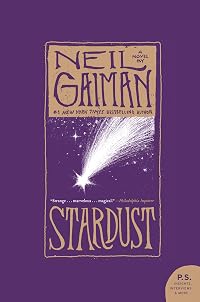
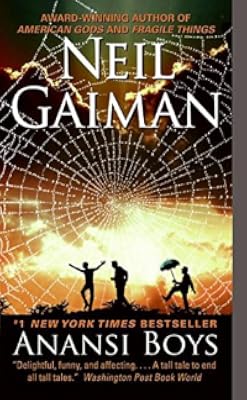

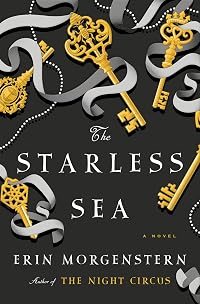
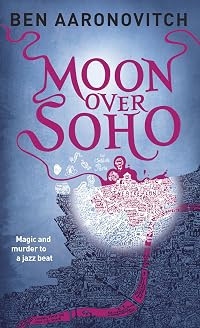
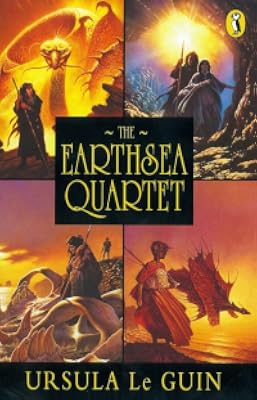
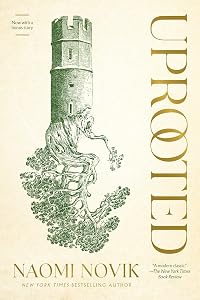

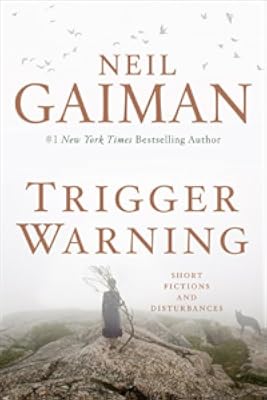
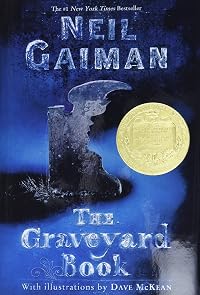

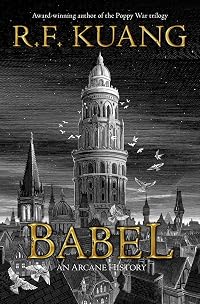
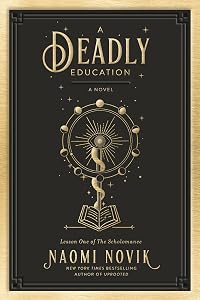
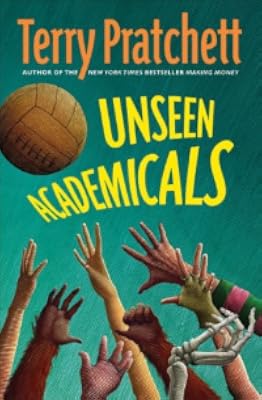
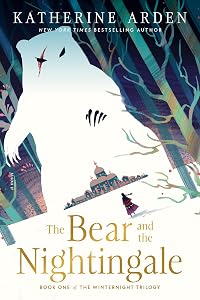
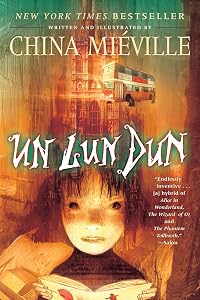
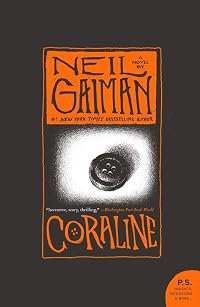
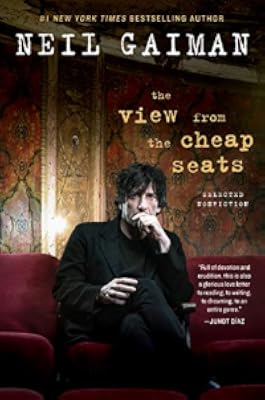
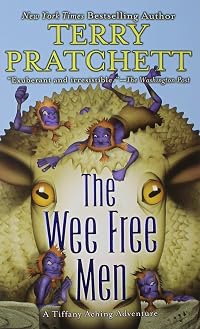
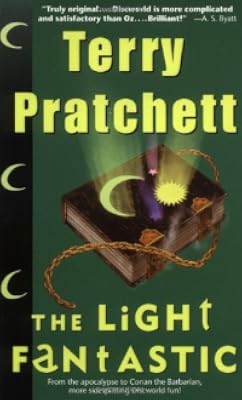
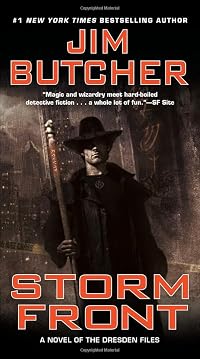
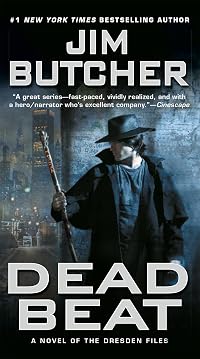
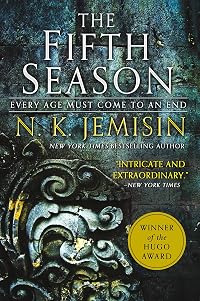
Member Recommendations
charlie68 Same setting
Member Reviews
4.5 stars
Richard Mayhew leads a boring life in many ways. He works in a bland office job, is engaged to a rather whiny and obnoxious woman, and lives in an average apartment in London. Then one day, on his way to dinner with his fiancée, he finds a young woman (or girl, it’s never clear how old she is at the time) lying wounded on sidewalk and begging for his help. Richard’s decision to rescue the girl, changes his life completely, and flings him into the midst of the London underworld (literally). Neverwhere is a highly imaginative blend of creepy fairy tale and urban fantasy.
I loved this book. I listened to it as an audiobook narrated by the author. I generally like fantasy books and really liked the concept of a London show more underworld populated by people who have fallen through the cracks. I liked that Richard was not your traditional hero and that the women in the book were clever and strong. It always bugs me in fantasy books when they throw a perfectly ordinary person into a crazy world and all of a sudden they are amazingly courageous and heroic. Gaiman’s version of a hero in this book is much more believable. This was probably my favorite Gaiman book. I was sucked into the story from page 1 and the narration was so fabulous that I felt like I was right there with the quirky characters.
I highly recommend the audio version of this book! show less
Richard Mayhew leads a boring life in many ways. He works in a bland office job, is engaged to a rather whiny and obnoxious woman, and lives in an average apartment in London. Then one day, on his way to dinner with his fiancée, he finds a young woman (or girl, it’s never clear how old she is at the time) lying wounded on sidewalk and begging for his help. Richard’s decision to rescue the girl, changes his life completely, and flings him into the midst of the London underworld (literally). Neverwhere is a highly imaginative blend of creepy fairy tale and urban fantasy.
I loved this book. I listened to it as an audiobook narrated by the author. I generally like fantasy books and really liked the concept of a London show more underworld populated by people who have fallen through the cracks. I liked that Richard was not your traditional hero and that the women in the book were clever and strong. It always bugs me in fantasy books when they throw a perfectly ordinary person into a crazy world and all of a sudden they are amazingly courageous and heroic. Gaiman’s version of a hero in this book is much more believable. This was probably my favorite Gaiman book. I was sucked into the story from page 1 and the narration was so fabulous that I felt like I was right there with the quirky characters.
I highly recommend the audio version of this book! show less
I read this book because it came very highly recommended from a coworker and holy crap, it was good.
Ever since I read American Gods years ago, I have been of the opinion that Gaiman is a master world builder. He gives us enough views into the various corners of his world for us to begin to understand how things work, but not enough to uncover all the shadows.
The world in this particular book was very interesting in the ways that it reflected "real" London and yet captured points of past London.
The characters themselves were absolutely fantastic. The Marquis had me flip-flopping on whether or not he could be considered a "good guy" because he never seemed to be telling the whole truth and when he went with Door to her father's study, I show more thought he was stealing stuff. I ended up really liking him and thought of him as good guy in the end, though a little gruff.
Door was interesting, mainly because of her abilities, but she seemed a little pale in comparison to the plethora of side characters we saw.
Speaking of side characters, they all were unique and a testament to Gaiman's ability to create even side characters that stand way out.
Another character (or set, in this case) that I really liked were the baddies, Mr. Croup and Mr. Vandemar. I loved the "polished" way they spoke, like murderous, evil gentlemen. Their method of violence was terrible of course, but they were amazing evil guys. Their ultimate end actually had me laughing a little.
The ending of the story didn't really come as a surprise to me. I've read others that end in a similar manner, but more than anything, I really empathized with Richard. He just came to the end of an absolutely amazing, terrifying, but fun adventure that was so different from his standard, dull life, that when he eventually gets back to said life, he can't tolerate it. He finds himself longing for the wonderful strangeness of London Below. I love how he manages to get back to it, as well as the fact that it was the Marquis who leads him back. "Well, are you coming?" show less
Ever since I read American Gods years ago, I have been of the opinion that Gaiman is a master world builder. He gives us enough views into the various corners of his world for us to begin to understand how things work, but not enough to uncover all the shadows.
The world in this particular book was very interesting in the ways that it reflected "real" London and yet captured points of past London.
The characters themselves were absolutely fantastic. The Marquis had me flip-flopping on whether or not he could be considered a "good guy" because he never seemed to be telling the whole truth and when he went with Door to her father's study, I show more thought he was stealing stuff. I ended up really liking him and thought of him as good guy in the end, though a little gruff.
Door was interesting, mainly because of her abilities, but she seemed a little pale in comparison to the plethora of side characters we saw.
Speaking of side characters, they all were unique and a testament to Gaiman's ability to create even side characters that stand way out.
Another character (or set, in this case) that I really liked were the baddies, Mr. Croup and Mr. Vandemar. I loved the "polished" way they spoke, like murderous, evil gentlemen. Their method of violence was terrible of course, but they were amazing evil guys. Their ultimate end actually had me laughing a little.
The ending of the story didn't really come as a surprise to me. I've read others that end in a similar manner, but more than anything, I really empathized with Richard. He just came to the end of an absolutely amazing, terrifying, but fun adventure that was so different from his standard, dull life, that when he eventually gets back to said life, he can't tolerate it. He finds himself longing for the wonderful strangeness of London Below. I love how he manages to get back to it, as well as the fact that it was the Marquis who leads him back. "Well, are you coming?" show less
In his introduction to this book, Neil Gaiman writes that he wanted Neverwhere to do for adults what Alice in Wonderland, Narnia and The Wizard of Oz do for kids. At first, this is pleasant enough, but about halfway through the penny drops and you realise a grown man has written a whimsical, defeat-the-evil plot involving talking rats and hand-waving magic for other adults.
This might be fine if the writing was especially keen, or the story was original, but for something that is all about plumbing depths, Neverwhere is far too shallow. The world-building is a sort of free-association riff rather than a considered construction, and the writing style is like a more sedate Terry Pratchett but without any of the intelligent backing of show more Gaiman's erstwhile collaborator. The characters are underdeveloped, and Gaiman skims through the plot with great haste (mysteries, double-crosses, set-piece fights and riddles are solved and resolved perfunctorily whenever they occur; the ominous 'Ordeal' was so tame I actually screwed my face up in puzzlement).
This off-the-cuff, fantastical approach to storytelling makes the book a very quick read, but if you pause for just a moment it sinks the entire piece. The 'London Below' in which the story takes place is populated with people who "fell through the cracks in the world" (pg. 126), but this promising social conscience lasts about half a page – our protagonist, Richard, cannot fight it but will "just have to make the best of it". Richard is not even one of those who 'fell through the cracks'; he is the ordinary guy in the safe office job with the nice apartment who is pulled into the London Below in order to be its 'saviour'. (This is, in my opinion, wish-fulfilment on the same level as Bella from Twilight.) He returns from his quest to find a promotion, a penthouse suite and an eager young woman waiting for him.
When Richard is told by a work colleague that people who fall through the cracks don't go to a magical London Below but instead "sleep in shop doorways" and "freeze to death in the winter" (pg. 368), the book seems to expect us to side with Richard. Dissatisfied with his safe, easy life, Richard asks a homeless woman, "Have you ever got everything you ever wanted? And then realized it wasn't what you wanted at all?" (pg. 370), before jumping back into his fantasy land. The complacent Blairite vibe might be inevitable in a book written in and about 90s London, but it is harsher in hindsight when read in a modern Britain still trying to overcome the hangovers seeded by the 'I'm-posh-and-I'm-bored' mentality of the New Labour years.
'Alice in Wonderland for adults' sounds like an appealing literary conceit, until you realise that nowadays we just call it YA, and market it aggressively towards teenagers who'll never get the sort of life opportunities Richard tosses away. For them, the fantasy world is not a choice; it's the only escape, however fleeting. Neverwhere throws in a few murdered corpses and says 'fuck' once or twice, but it remains the literary equivalent of what Martin Scorsese meant when he said Marvel movies are like theme-park rides. Fast, safe and superficially entertaining, but hardly worth queuing up for. show less
This might be fine if the writing was especially keen, or the story was original, but for something that is all about plumbing depths, Neverwhere is far too shallow. The world-building is a sort of free-association riff rather than a considered construction, and the writing style is like a more sedate Terry Pratchett but without any of the intelligent backing of show more Gaiman's erstwhile collaborator. The characters are underdeveloped, and Gaiman skims through the plot with great haste (mysteries, double-crosses, set-piece fights and riddles are solved and resolved perfunctorily whenever they occur; the ominous 'Ordeal' was so tame I actually screwed my face up in puzzlement).
This off-the-cuff, fantastical approach to storytelling makes the book a very quick read, but if you pause for just a moment it sinks the entire piece. The 'London Below' in which the story takes place is populated with people who "fell through the cracks in the world" (pg. 126), but this promising social conscience lasts about half a page – our protagonist, Richard, cannot fight it but will "just have to make the best of it". Richard is not even one of those who 'fell through the cracks'; he is the ordinary guy in the safe office job with the nice apartment who is pulled into the London Below in order to be its 'saviour'. (This is, in my opinion, wish-fulfilment on the same level as Bella from Twilight.) He returns from his quest to find a promotion, a penthouse suite and an eager young woman waiting for him.
When Richard is told by a work colleague that people who fall through the cracks don't go to a magical London Below but instead "sleep in shop doorways" and "freeze to death in the winter" (pg. 368), the book seems to expect us to side with Richard. Dissatisfied with his safe, easy life, Richard asks a homeless woman, "Have you ever got everything you ever wanted? And then realized it wasn't what you wanted at all?" (pg. 370), before jumping back into his fantasy land. The complacent Blairite vibe might be inevitable in a book written in and about 90s London, but it is harsher in hindsight when read in a modern Britain still trying to overcome the hangovers seeded by the 'I'm-posh-and-I'm-bored' mentality of the New Labour years.
'Alice in Wonderland for adults' sounds like an appealing literary conceit, until you realise that nowadays we just call it YA, and market it aggressively towards teenagers who'll never get the sort of life opportunities Richard tosses away. For them, the fantasy world is not a choice; it's the only escape, however fleeting. Neverwhere throws in a few murdered corpses and says 'fuck' once or twice, but it remains the literary equivalent of what Martin Scorsese meant when he said Marvel movies are like theme-park rides. Fast, safe and superficially entertaining, but hardly worth queuing up for. show less
Richard Mayhew lives an ordinary life in London. He works a normal job, has a normal (if overbearing and condescending) fiance, pays his bills on time; just a pretty generally sensible person. All this changes when he quite literally stumbles upon a bleeding, semi conscious girl (Door) on the way to an important dinner function one Friday evening. Against the protestations of his fiance Jessica, Richard comes to the young woman's aid. She insists on no hospital, so he helps her back to his apartment to get cleaned up and rested. Little does Richard know, doing so entangles himself in the peculiar world of London Below and Doors quest to find her family's killer, while avoiding being killed themselves.
As I said before, this book was show more most definitely my favorite Gaiman read by far. For me, discovering London Below along with Richard was something akin to a dream come true. Being a lover of fantasy and magic myself, seeing that come alive for a character like Richard, who's life is so relatable in its mundaneness, was thrilling (and gave me a little hope that maybe there is some magic within our ordinary lives). The whole quest to find the killer was very "Labyrinth-esque" to me and the entire world of London Below was utterly fascinating. It was dark and ethereal but magical and enticing all the same. The ending of the book was PERFECT, even better than what I had been expecting (don't worry no spoilers here!). The various trials and tribulations Door and Richard encounter run the gambit of tense and frightening to comical and clever. I cannot recommend this one enough! show less
As I said before, this book was show more most definitely my favorite Gaiman read by far. For me, discovering London Below along with Richard was something akin to a dream come true. Being a lover of fantasy and magic myself, seeing that come alive for a character like Richard, who's life is so relatable in its mundaneness, was thrilling (and gave me a little hope that maybe there is some magic within our ordinary lives). The whole quest to find the killer was very "Labyrinth-esque" to me and the entire world of London Below was utterly fascinating. It was dark and ethereal but magical and enticing all the same. The ending of the book was PERFECT, even better than what I had been expecting (don't worry no spoilers here!). The various trials and tribulations Door and Richard encounter run the gambit of tense and frightening to comical and clever. I cannot recommend this one enough! show less
In fairytales the overlooked, usually youngest son or daughter in a family commits an act of kindness that allows him or her to succeed where the other brothers or sisters didn't. Sometimes the act of kindness is misplaced, as in the Arabian Nights tale of the genie in the bottle, and potential disaster follows. In this fantasy Scotsman Richard Mayhew comes to London and rescues a young woman from her pursuers, as a result of which his life is changed forever. He passes into London Below, supposedly the bourn from which no traveller returns. This is an Otherworld, reminiscent of Tudor or Restoration London, which has successfully reappeared in various modern guises, in Michael Moorcock's Gloriana for example, Andrew Sinclair's Gog, and show more more recently in Miéville's fantasies such as Kraken.
Neverwhere's strengths largely lie in those fairytale motifs that much good fantasy draws from--the innocent protagonist from elsewhere, the acts of charity, the fairytale realm where the dimensions of time and space are not as ours, the Helpful Companions, the ogre figures and so on. Gaiman's talents are to update and transform the settings in which these motifs take place, to make the quaint old folktales, told round a fire, narratives more relevant to our times and tastes.
Speaking of tastes, Gaiman's whimsy with names and characters doesn't appeal to all. Whimsy is one of those aspects of storytelling that requires great skill to carry off. Simply turning the names of putative London Underground stations into characters (the Angel Islington, Old Bailey and so on) isn't enough, they have to be turned into believable individuals, something that Gaiman mostly does, especially with the more disreputable figures. The Marquis de Carabas is a particularly memorable character, arguably the best in these pages, who deserves a sequel all to himself (perhaps his appearance in Puss in Boots could be regarded as a prequel). Croup and Vandemar (who most remind me of the Fox and the Cat in Pinocchio) are the most chilling of Gaiman's creations here, and may be the direct ancestors of those other nightmare creatures, Goss and Subby in Kraken.
I'm not the first to be rather less enamoured of the protagonist, Richard Mayhew, who comes across as weakly reactive and, on the few occasions he is proactive, mistaken. But that's a weakness that can be levelled at many another successful novel and, of course, many of the fairytale heroes and heroines that inspire modern fantasy. In this 'Author's Preferred Text' edition we are gifted a 'final' version of the tale following its previous incarnations as TV script and in various international editions, plus the extras that a DVD generation has come to expect.
There is also a hint that the Neverwhere characters and the Below world that the author suggests exists under other cities may make another appearance in that rarest of works, the Gaiman sequel. I do hope the Marquis de Carabas features in that.
http://calmgrove.wordpress.com/2012/05/30/neverwhere/ show less
Neverwhere's strengths largely lie in those fairytale motifs that much good fantasy draws from--the innocent protagonist from elsewhere, the acts of charity, the fairytale realm where the dimensions of time and space are not as ours, the Helpful Companions, the ogre figures and so on. Gaiman's talents are to update and transform the settings in which these motifs take place, to make the quaint old folktales, told round a fire, narratives more relevant to our times and tastes.
Speaking of tastes, Gaiman's whimsy with names and characters doesn't appeal to all. Whimsy is one of those aspects of storytelling that requires great skill to carry off. Simply turning the names of putative London Underground stations into characters (the Angel Islington, Old Bailey and so on) isn't enough, they have to be turned into believable individuals, something that Gaiman mostly does, especially with the more disreputable figures. The Marquis de Carabas is a particularly memorable character, arguably the best in these pages, who deserves a sequel all to himself (perhaps his appearance in Puss in Boots could be regarded as a prequel). Croup and Vandemar (who most remind me of the Fox and the Cat in Pinocchio) are the most chilling of Gaiman's creations here, and may be the direct ancestors of those other nightmare creatures, Goss and Subby in Kraken.
I'm not the first to be rather less enamoured of the protagonist, Richard Mayhew, who comes across as weakly reactive and, on the few occasions he is proactive, mistaken. But that's a weakness that can be levelled at many another successful novel and, of course, many of the fairytale heroes and heroines that inspire modern fantasy. In this 'Author's Preferred Text' edition we are gifted a 'final' version of the tale following its previous incarnations as TV script and in various international editions, plus the extras that a DVD generation has come to expect.
There is also a hint that the Neverwhere characters and the Below world that the author suggests exists under other cities may make another appearance in that rarest of works, the Gaiman sequel. I do hope the Marquis de Carabas features in that.
http://calmgrove.wordpress.com/2012/05/30/neverwhere/ show less
In Neverwhere, Gaiman creates a picaresque fantasy in the tradition of L. Frank Baum and Lewis Carroll but with dark undertones and brutal violence, a vision of the Londoners who "fall through the cracks" and their fabulous, astounding, frightening, and magical city. Though I know this is one of Gaiman's most famous books, I knew very little about it going in, except that it took place in an alternate version of London, and I think my experience was greatly enriched by jumping in almost blind--I was constantly startled and exhilarated by the places and people he creates.
The plot is clearly based on The Wizard of Oz and Alice in Wonderland: an "ordinary" person (in this case, a young Scottish financial analyst named Richard Mayhew) is show more pulled into a magical world and spends the book seeking to get "home," by traveling through a succession of odd adventures that take place in strange and fabulous locations and meeting eccentric characters who help or hinder them on their way. Like Alice and Dorothy, Richard at first seems to have no agency of his own but is pulled inexorably forward by the choices of other people. However, around the 2/3 mark, he has a couple near-death experiences that reveal his inner strength, which comes as a surprise to Richard. These experiences shape his actions for the rest of the book and make him into much more than just a proxy for the reader, going bemusedly along for the ride. By the end his character has made a profound change that allows him to reorient his priorities and exercise his power of compassionate observation of the world.
I have read a few books by Gaiman and have always enjoyed them, but in Neverwhere I was astounded by the sheer brilliance of his world making and his frank homage to so many writers and artists who came before him. There is the evident influence of Baum and Carroll (and humorous, knowing references to them) but Gaiman also scans the more pragmatic, investigatory social work of Victorian authors and artists such as Gustave Dore, John Thomson, and Henry Mayhew (who I'm assuming must be the inspiration for Richard's last name). There are so many layers to his allusions--references to Shakespeare, Milton, and medieval lais jostle alongside The Jam's "Down in the Tube Station at Midnight" and urban legends of sewer alligators--that I'd need to read the book a few times to glean even half of them. And I think this will be one that I read and reread in my life. A fabulous, twisty, fun, and frightening book about my favorite city in the world--what could be better?
Updated January 2025: I originally wrote this review in December 2023. My admiration for Neverwhere stands, but I'm not sure I'll ever be able to read another book by Gaiman again. I wish I could separate the author from the art, but I can't do that right now. Nevertheless, I think my review is worth keeping up, in case it helps someone decide if the book is worth reading on its own merits. show less
The plot is clearly based on The Wizard of Oz and Alice in Wonderland: an "ordinary" person (in this case, a young Scottish financial analyst named Richard Mayhew) is show more pulled into a magical world and spends the book seeking to get "home," by traveling through a succession of odd adventures that take place in strange and fabulous locations and meeting eccentric characters who help or hinder them on their way. Like Alice and Dorothy, Richard at first seems to have no agency of his own but is pulled inexorably forward by the choices of other people. However, around the 2/3 mark, he has a couple near-death experiences that reveal his inner strength, which comes as a surprise to Richard. These experiences shape his actions for the rest of the book and make him into much more than just a proxy for the reader, going bemusedly along for the ride. By the end his character has made a profound change that allows him to reorient his priorities and exercise his power of compassionate observation of the world.
I have read a few books by Gaiman and have always enjoyed them, but in Neverwhere I was astounded by the sheer brilliance of his world making and his frank homage to so many writers and artists who came before him. There is the evident influence of Baum and Carroll (and humorous, knowing references to them) but Gaiman also scans the more pragmatic, investigatory social work of Victorian authors and artists such as Gustave Dore, John Thomson, and Henry Mayhew (who I'm assuming must be the inspiration for Richard's last name). There are so many layers to his allusions--references to Shakespeare, Milton, and medieval lais jostle alongside The Jam's "Down in the Tube Station at Midnight" and urban legends of sewer alligators--that I'd need to read the book a few times to glean even half of them. And I think this will be one that I read and reread in my life. A fabulous, twisty, fun, and frightening book about my favorite city in the world--what could be better?
Updated January 2025: I originally wrote this review in December 2023. My admiration for Neverwhere stands, but I'm not sure I'll ever be able to read another book by Gaiman again. I wish I could separate the author from the art, but I can't do that right now. Nevertheless, I think my review is worth keeping up, in case it helps someone decide if the book is worth reading on its own merits. show less
Ever since I read American Gods years ago, I have been of the opinion that Gaiman is a master world builder. He gives us enough views into the various corners of his world for us to begin to understand how things work, but not enough to uncover all the shadows.
The world in this particular book was very interesting in the ways that it reflected "real" London and yet captured points of past London.
The characters themselves were absolutely fantastic. The Marquis had me flip-flopping on whether or not he could be considered a "good guy" because he never seemed to be telling the whole truth and when he went with Door to her father's study, I
Door was interesting, mainly because of her abilities, but she seemed a little pale in comparison to the plethora of side characters we saw.
Speaking of side characters, they all were unique and a testament to Gaiman's ability to create even side characters that stand way out.
Another character (or set, in this case) that I really liked were the baddies, Mr. Croup and Mr. Vandemar. I loved the "polished" way they spoke, like murderous, evil gentlemen. Their method of violence was terrible of course, but they were amazing evil guys. Their ultimate end actually had me laughing a little.
The ending of the story didn't really come as a surprise to me. I've read others that end in a similar manner, but more than anything, I really empathized with Richard. He just came to the end of an absolutely amazing, terrifying, but fun adventure that was so different from his standard, dull life, that when he eventually gets back to said life, he can't tolerate it. He finds himself longing for the wonderful strangeness of London Below. I love how he manages to get back to it, as well as the fact that it was the Marquis who leads him back. "Well, are you coming?"
Members
- Recently Added By
Lists

London Urban Fantasy
33 works; 6 members

Books Read in 2016
4,666 works; 199 members
Books Read in 2015
3,299 works; 129 members

First Novels
373 works; 17 members

Books Read in 2019
4,052 works; 110 members

Books Read in 2024
4,727 works; 128 members
Author Information

848+ Works 450,668 Members
Neil Gaiman was born in Portchester, England on November 10, 1960. He worked as a journalist and freelance writer for a time, before deciding to try his hand at comic books. Some of his work has appeared in publications such as Time Out, The Sunday Times, Punch, and The Observer. His first comic endeavor was the graphic novel series The Sandman. show more The series has won every major industry award including nine Will Eisner Comic Industry Awards, three Harvey Awards, and the 1991 World Fantasy Award for best short story, making it the first comic ever to win a literary award. He writes both children and adult books. His adult books include The Ocean at the End of the Lane, which won a British National Book Awards, and the Locus Award for Best Fantasy Novel for 2014; Stardust, which won the Mythopoeic Award as best novel for adults in 1999; American Gods, which won the Hugo, Nebula, Bram Stoker, SFX, and Locus awards; Anansi Boys; Trigger Warning: Short Fictions and Disturbances; and The View from the Cheap Seats: Selected Nonfiction, which is a New York Times Bestseller. His children's books include The Day I Swapped My Dad for Two Goldfish; Coraline, which won the Elizabeth Burr/Worzalla, the BSFA, the Hugo, the Nebula, and the Bram Stoker awards; The Wolves in the Walls; Odd and the Frost Giants; The Graveyard Book, which won the Newbery Award in 2009 and The Sandman: Overture which won the 2016 Hugo Awards Best Graphic Story. (Bowker Author Biography) show less
Some Editions
Awards and Honors
Notable Lists
Series

Work Relationships
Contains
Is an expanded version of
Common Knowledge
- Canonical title
- Neverwhere: The Author's Preferred Text
- Original title
- Neverwhere
- Original publication date
- 1996
- People/Characters
- Richard Mayhew; Lady Door; Marquis de Carabas; Mr. Croup; Mr. Vandemar; Angel Islington (show all 8); Old Bailey; Jessica
- Important places
- London Below, London, England, UK
- Related movies
- Neverwhere (TV series | 1996)
- Epigraph
- I have never been to St. John's Wood. I dare not. I should be afraid of the innumerable night of fir trees, afraid to come upon a blood red cup and the beating of the wings of the Eagle.--The Napoleon of Notting Hill, G. K. C... (show all)hesterton
If ever though gavest hosen or shoon
Then every night and all
Sit thou down and put them on
And Christ receive thy soul
This aye night, this aye night
Every night and all
Fire and fleet and candlelight
If ever thou gavest meat or drink
Then every night and all
The fire shall never make thee shrink
And Christ receive thy soul
--The Lyke Wake Dirge (traditional) - Dedication
- For Lenny Henry, friend and colleague, who made it happen all the way; and Merrilee Heifetz, friend and agent, who makes everything IK.
- First words
- The night before he went to London, Richard Mayhew was not enjoying himself.
- Last words
- (Click to show. Warning: May contain spoilers.)And they walked away together through the hole in the wall, back into the darkness, leaving nothing behind them; not even the doorway.
- Original language
- English, UK
Classifications
Statistics
- Members
- 5,330
- Popularity
- 2,552
- Reviews
- 102
- Rating
- (4.16)
- Languages
- English
- Media
- Paper, Audiobook, Ebook
- ISBNs
- 12
- ASINs
- 6