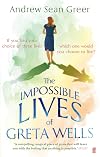
The Impossible Lives of Greta Wells
by Andrew Sean Greer
On This Page
Description
From the critically acclaimed author of the New York Times bestseller The Confessions of Max Tivoli comes The Impossible Lives of Greta Wells, a rapturously romantic story of a woman who finds herself transported to the "other lives" she might have lived.After the death of her beloved twin brother and the abandonment of her long-time lover, Greta Wells undergoes electroshock therapy. Over the course of the treatment, Greta finds herself repeatedly sent to 1918, 1941, and back to the show more present. Whisked from the gas-lit streets and horse-drawn carriages of the West Village to a martini-fueled lunch at the Oak Room, in these other worlds, Greta finds her brother alive and well—though fearfully masking his true personality. And her former lover is now her devoted husband...but will he be unfaithful to her in this life as well? Greta Wells is fascinated by her alter egos: in 1941, she is a devoted mother; in 1918, she is a bohemian adulteress.
In this spellbinding novel by Andrew Sean Greer, each reality has its own losses, its own rewards; each extracts a different price. Which life will she choose as she wrestles with the unpredictability of love and the consequences of even her most carefully considered choices?
. show less
Tags
Recommendations







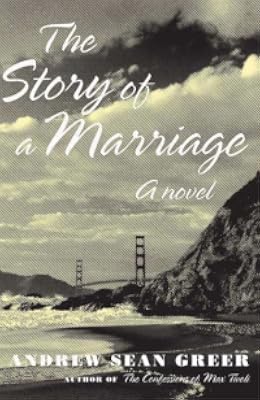

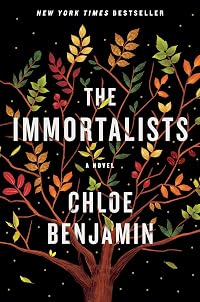
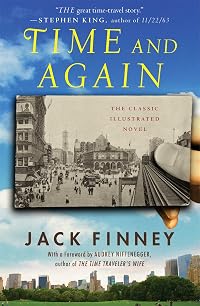


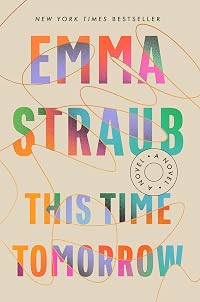














Member Recommendations

by cransell
Member Reviews
From the first sentence ("The impossible happens once to each of us"), I was completely drawn in, ready to be enchanted, and The Impossible Lives of Greta Wells delivered. I read it in one great gulp, and it's already on my "to reread" list; because the time period changes, a slower (or second) read could help keep all the details and different storylines straight.
The book begins with Greta in late October of 1985. Due to her twin brother Felix's death of AIDS and her longtime lover Nathan's leaving, she is suffering from depression, and is undergoing a course of electroconvulsive therapy. As a result of this, Greta wakes up in 1918 - in the same apartment in the same city, her aunt Ruth nearby, her brother Felix still alive. show more
Eventually, it becomes apparent that there are three different Gretas, cycling through each other's times and lives: 1918, 1941, and 1985. We follow only the original 1985 Greta, though the other Gretas leave traces of their activities behind, little things changed. In each time, the same characters appear: Felix, Ruth, and Nathan, as well as Felix's love interest Alan and Greta's love interest Leo.
Each of the Gretas is receiving her time period's equivalent to electroconvulsive therapy, so that the three Gretas rotate times on a schedule (a day in 1918, a week in 1941, etc.). However, when one Greta misses a treatment, the other two switch places (instead of cycling through all three) until she returns.
As the original 1985 Greta nears the end of her treatments, she must decide where she will be happiest, and where she is most needed - in the present, or in the past.
Greer's writing is beautiful but not showy, and the story could be described as spare without this writing style: when one pauses, there is so much to wonder about and untangle. Greer, however, seems less interested in the details of how a woman from 1985 would fit into a life in 1918 or 1941, and more concerned with the personal relationships in each era, and the different versions of Greta and everyone around her - of how people are shaped by their time. ("I knew that not all lives are equal, that the time we live in affects the person we are, more than I had ever thought. Some have a harder chance. Some get no chance at all....I saw so many people born in the wrong time to be happy." (260))
Quotes
Who would ever guess? Behind the gates, the doors, ivy. Where only a child would look. As you know: That is how magic works. It takes the least likely of us, without foreshadowing, at the hour of its own choosing. It makes a thimblerig of time. And this is exactly how, one Thursday morning, I woke up in another world. (4)
...my mind unlatched, and then I found myself elsewhere. Don't bring me back, I remember thinking: Take me away. (17)
Who are we when we're not ourselves? (17)
My aunt sat very still and regarded me with the simplicity of someone who is deciding whether to take you either very seriously, or not seriously at all; there is no halfway anymore. (20)
How awful, to sense that everybody knows the thing that would change your life, and yet no one is friend enough to tell you! (39-40)
I was not borrowing these other Gretas; I was becoming them. (62)
What was most wonderful about my journeys, I now believe, was that I alone could appreciate the beauty of those worlds....I was that visitor who comes to a country and finds it charming and ridiculous all at once. (65)
...and yet of course we forget that when the dead come back to life, they come back with all the things we didn't miss....They aren't fixed; they're just back. (71)
"It's easy to say something is all in your head. It's like saying a sunset is all in your eyes." (81)
But no...I realized that being this close to peace, to the end of all that horror, was not like being close to the end of a novel; you could not weigh the final pages in your hand. They did not know....That very soon the war would end. (91)
A shift in weather, and we are a different person. The split of an atom, and we change....It takes so little to make us different people. (104)
How selfish love is, though we never think of it that way. We think of ourselves as heroes, saving a great work of art from destruction, running into the flames, cutting it from its frame, rolling it up and fleeing through the smoke. We think we are large hearted. As if we were saving it for anyone but ourselves, and all the time we don't care what burns down, as long as this is saved. The whole gallery can fall to ashes for all we care. That love must be rescued, beyond all reason, reveals the madness at the heart of it. (106-107)
...and what vicious Cassandra could shout there was another coming? Who would even dare? Perhaps they knew. There is always another coming... (110)
The heart will hear only one sound. (112)
Strange how briefly life is worth the pain. (114)
Our heart is so elastic that it can contract to a pinpoint...but expand almost infinitely... (115)
Women must be careful what we say to one another. We are almost all we have. (141)
I had fooled myself into thinking that, as a planet with water implies some kind of life, a world in which husbands stayed implied some kind of loyalty. But a minor miracle is needed for life... (145)
I suppose she was a woman who saw through absolutely everything, and bore the burden of it. How frustrating it must have been, to watch the rest of us blind to it all, or pretending to be blind, when it was all so obvious if one just looked directly at each person, and listened precisely to what they said, and watched what they did, and cared enough to imagine their lives. (147)
"We're so breakable, and we never guess it." (158)
...every moment is changeable. How strange, for the present to change the past! In just this way, I lived in these worlds knowing something like the future: a sense of how things could be. Isn't this the time traveler's curse? I did not see what was to come, but I saw the possibilities. (213)
Even lovers can't know; an angel in their mind flies back and rewrites the past to make it perfect....It had happened before, was happening in another time, and I alone knew that here it would happen again. (226)
When has a woman every been forgiven? Can you even imagine it? (241)
But how do you say good-bye to someone who does not know it is good-bye, will never know? (246)
What is a perfect world except for one that needs you? (282) show less
The book begins with Greta in late October of 1985. Due to her twin brother Felix's death of AIDS and her longtime lover Nathan's leaving, she is suffering from depression, and is undergoing a course of electroconvulsive therapy. As a result of this, Greta wakes up in 1918 - in the same apartment in the same city, her aunt Ruth nearby, her brother Felix still alive. show more
Eventually, it becomes apparent that there are three different Gretas, cycling through each other's times and lives: 1918, 1941, and 1985. We follow only the original 1985 Greta, though the other Gretas leave traces of their activities behind, little things changed. In each time, the same characters appear: Felix, Ruth, and Nathan, as well as Felix's love interest Alan and Greta's love interest Leo.
Each of the Gretas is receiving her time period's equivalent to electroconvulsive therapy, so that the three Gretas rotate times on a schedule (a day in 1918, a week in 1941, etc.). However, when one Greta misses a treatment, the other two switch places (instead of cycling through all three) until she returns.
As the original 1985 Greta nears the end of her treatments, she must decide where she will be happiest, and where she is most needed - in the present, or in the past.
Greer's writing is beautiful but not showy, and the story could be described as spare without this writing style: when one pauses, there is so much to wonder about and untangle. Greer, however, seems less interested in the details of how a woman from 1985 would fit into a life in 1918 or 1941, and more concerned with the personal relationships in each era, and the different versions of Greta and everyone around her - of how people are shaped by their time. ("I knew that not all lives are equal, that the time we live in affects the person we are, more than I had ever thought. Some have a harder chance. Some get no chance at all....I saw so many people born in the wrong time to be happy." (260))
Quotes
Who would ever guess? Behind the gates, the doors, ivy. Where only a child would look. As you know: That is how magic works. It takes the least likely of us, without foreshadowing, at the hour of its own choosing. It makes a thimblerig of time. And this is exactly how, one Thursday morning, I woke up in another world. (4)
...my mind unlatched, and then I found myself elsewhere. Don't bring me back, I remember thinking: Take me away. (17)
Who are we when we're not ourselves? (17)
My aunt sat very still and regarded me with the simplicity of someone who is deciding whether to take you either very seriously, or not seriously at all; there is no halfway anymore. (20)
How awful, to sense that everybody knows the thing that would change your life, and yet no one is friend enough to tell you! (39-40)
I was not borrowing these other Gretas; I was becoming them. (62)
What was most wonderful about my journeys, I now believe, was that I alone could appreciate the beauty of those worlds....I was that visitor who comes to a country and finds it charming and ridiculous all at once. (65)
...and yet of course we forget that when the dead come back to life, they come back with all the things we didn't miss....They aren't fixed; they're just back. (71)
"It's easy to say something is all in your head. It's like saying a sunset is all in your eyes." (81)
But no...I realized that being this close to peace, to the end of all that horror, was not like being close to the end of a novel; you could not weigh the final pages in your hand. They did not know....That very soon the war would end. (91)
A shift in weather, and we are a different person. The split of an atom, and we change....It takes so little to make us different people. (104)
How selfish love is, though we never think of it that way. We think of ourselves as heroes, saving a great work of art from destruction, running into the flames, cutting it from its frame, rolling it up and fleeing through the smoke. We think we are large hearted. As if we were saving it for anyone but ourselves, and all the time we don't care what burns down, as long as this is saved. The whole gallery can fall to ashes for all we care. That love must be rescued, beyond all reason, reveals the madness at the heart of it. (106-107)
...and what vicious Cassandra could shout there was another coming? Who would even dare? Perhaps they knew. There is always another coming... (110)
The heart will hear only one sound. (112)
Strange how briefly life is worth the pain. (114)
Our heart is so elastic that it can contract to a pinpoint...but expand almost infinitely... (115)
Women must be careful what we say to one another. We are almost all we have. (141)
I had fooled myself into thinking that, as a planet with water implies some kind of life, a world in which husbands stayed implied some kind of loyalty. But a minor miracle is needed for life... (145)
I suppose she was a woman who saw through absolutely everything, and bore the burden of it. How frustrating it must have been, to watch the rest of us blind to it all, or pretending to be blind, when it was all so obvious if one just looked directly at each person, and listened precisely to what they said, and watched what they did, and cared enough to imagine their lives. (147)
"We're so breakable, and we never guess it." (158)
...every moment is changeable. How strange, for the present to change the past! In just this way, I lived in these worlds knowing something like the future: a sense of how things could be. Isn't this the time traveler's curse? I did not see what was to come, but I saw the possibilities. (213)
Even lovers can't know; an angel in their mind flies back and rewrites the past to make it perfect....It had happened before, was happening in another time, and I alone knew that here it would happen again. (226)
When has a woman every been forgiven? Can you even imagine it? (241)
But how do you say good-bye to someone who does not know it is good-bye, will never know? (246)
What is a perfect world except for one that needs you? (282) show less
Sometimes I wonder what my life would have been like had I made different decisions at key points in time. There are many books that take that curiousity and use it as a plot device. But how many of them actually posit multiple universes where the same people live in vastly different time periods? A multitude of Kristens living in different historical times. This oddly intriguing idea is the premise in Andrew Sean Greer's newest novel, The Impossible Lives of Greta Wells.
In 1985, Greta Wells is clinically depressed after the loss of her beloved twin brother, Felix, to AIDS; the imminent loss of Felix's partner, Alan, also to this terrible plague; and the breakup of her long time relationship with partner Nathan. She tries everything show more she can to overcome the depression but in the face of failure after failure finally agrees to try electroconvulsive therapy or ECT. Her doctor reassures her that there will be no side effects other than a lessening of the depression and a sleepiness.
But after Greta's first procedure, she wakes up to find herself in 1918 rather than 1985. She's still Greta from 1985 though she's inhabiting Greta from 1918's body. In this universe, she's married to Nathan although he's off fighting the last days of WWI and seeing the ravages of the flu epidemic. This Greta is a lonely one who is flirting with a young actor named Leo in her husband's absence and being encouraged in this by her unconventional aunt Ruth. More importantly to Greta, in this universe, her brother Felix is still alive and engaged to a senator's daughter. 1918 Greta is undergoing psychiatric treatment too and 1985 Greta wakes up following the 1918 treatment to discover that she is now in 1941, also still Greta but in still another version of her life. She is married to Nathan in this version as well, and they have a small son named Felix, after his uncle, again still alive, who is also married with an infant. This Greta is undergoing treatment after a terrible accident that rent her world and left her grief stricken. And so with each electrical shock, these three Gretas cycle through each others' lives.
The narration follows 1985 Greta throughout her cycle through the different time periods giving her more modern perspective on the lives that the other, earlier Gretas are living. As each of the Gretas are suffering, hence the need for psychiatric intervention, rather than waiting and holding on until the treatments take her back to her own time, 1985 Greta is determined to fix what she sees as being wrong in each of the others' lives. Ostensibly the other Gretas are doing the same thing so that there are three women who feel like they know what to change about the other lives they periodically lead. The greatest of these fixes is that 1985 Greta wants to tell her beloved Felix, in both 1918 and 1941, that he should live as himself, a gay man, regardless of the time period, social strictures, and danger of doing so. But she does not only interfere with Felix's life, she also makes decisions that reverberate with profound results through the other Gretas' lives as well.
Greer's vision of multiple concurrent universes is an interesting one. Each of the characters maintains a similar core being in each universe although the ways in which they interact with their society differs and does forge differences in them from one time to another. In essence, they are each many versions of the same person and that makes their choices in each time period fascinating. 1985 Greta is clearly searching for the things that are most important to her as she lives these other lives. Having a more modern character dropped into historical situations allows Greer to not have to focus on anachronistic behavior, because of course she'd act anachronistically. Each era is well written and despite Greta's desire to impose her modern ideas on the people around her in each one, Greer has presented the reality and the social mores of each time quite well. The choice of these particular time periods and the parallels between them are also nicely echoed in the different and yet still recognizable lives of each Greta.
The novel is filled with longing on the part of each of the different Gretas and it is very reflective in nature as 1985 Greta seeks to understand and improve her life as well as her alter egos' lives. But the perspective of the other Gretas, aside from small statements made by her colorful Aunt Ruth to the modern Greta each time she returns to her own time, is completely missing from the novel. It would have been fascinating to see the differences in her character wrought by the time periods in which they lived although that inclusion, would, of course, have made this a very different novel. As 1985 Greta becomes more accustomed to the other historical time periods of her life, her impact on each during her visits becomes more involved and intentional. The cyclical nature of the novel keeps the reader turning pages to see how everything is going to play out but there are moments where the pacing stretches like taffy with the reader ready to move on and the character still reflecting. In general though, this is a considered look at the nature of time, fulfillment, and love seen through a unique and creative lens. show less
In 1985, Greta Wells is clinically depressed after the loss of her beloved twin brother, Felix, to AIDS; the imminent loss of Felix's partner, Alan, also to this terrible plague; and the breakup of her long time relationship with partner Nathan. She tries everything show more she can to overcome the depression but in the face of failure after failure finally agrees to try electroconvulsive therapy or ECT. Her doctor reassures her that there will be no side effects other than a lessening of the depression and a sleepiness.
But after Greta's first procedure, she wakes up to find herself in 1918 rather than 1985. She's still Greta from 1985 though she's inhabiting Greta from 1918's body. In this universe, she's married to Nathan although he's off fighting the last days of WWI and seeing the ravages of the flu epidemic. This Greta is a lonely one who is flirting with a young actor named Leo in her husband's absence and being encouraged in this by her unconventional aunt Ruth. More importantly to Greta, in this universe, her brother Felix is still alive and engaged to a senator's daughter. 1918 Greta is undergoing psychiatric treatment too and 1985 Greta wakes up following the 1918 treatment to discover that she is now in 1941, also still Greta but in still another version of her life. She is married to Nathan in this version as well, and they have a small son named Felix, after his uncle, again still alive, who is also married with an infant. This Greta is undergoing treatment after a terrible accident that rent her world and left her grief stricken. And so with each electrical shock, these three Gretas cycle through each others' lives.
The narration follows 1985 Greta throughout her cycle through the different time periods giving her more modern perspective on the lives that the other, earlier Gretas are living. As each of the Gretas are suffering, hence the need for psychiatric intervention, rather than waiting and holding on until the treatments take her back to her own time, 1985 Greta is determined to fix what she sees as being wrong in each of the others' lives. Ostensibly the other Gretas are doing the same thing so that there are three women who feel like they know what to change about the other lives they periodically lead. The greatest of these fixes is that 1985 Greta wants to tell her beloved Felix, in both 1918 and 1941, that he should live as himself, a gay man, regardless of the time period, social strictures, and danger of doing so. But she does not only interfere with Felix's life, she also makes decisions that reverberate with profound results through the other Gretas' lives as well.
Greer's vision of multiple concurrent universes is an interesting one. Each of the characters maintains a similar core being in each universe although the ways in which they interact with their society differs and does forge differences in them from one time to another. In essence, they are each many versions of the same person and that makes their choices in each time period fascinating. 1985 Greta is clearly searching for the things that are most important to her as she lives these other lives. Having a more modern character dropped into historical situations allows Greer to not have to focus on anachronistic behavior, because of course she'd act anachronistically. Each era is well written and despite Greta's desire to impose her modern ideas on the people around her in each one, Greer has presented the reality and the social mores of each time quite well. The choice of these particular time periods and the parallels between them are also nicely echoed in the different and yet still recognizable lives of each Greta.
The novel is filled with longing on the part of each of the different Gretas and it is very reflective in nature as 1985 Greta seeks to understand and improve her life as well as her alter egos' lives. But the perspective of the other Gretas, aside from small statements made by her colorful Aunt Ruth to the modern Greta each time she returns to her own time, is completely missing from the novel. It would have been fascinating to see the differences in her character wrought by the time periods in which they lived although that inclusion, would, of course, have made this a very different novel. As 1985 Greta becomes more accustomed to the other historical time periods of her life, her impact on each during her visits becomes more involved and intentional. The cyclical nature of the novel keeps the reader turning pages to see how everything is going to play out but there are moments where the pacing stretches like taffy with the reader ready to move on and the character still reflecting. In general though, this is a considered look at the nature of time, fulfillment, and love seen through a unique and creative lens. show less
A sarcastic, cynical female protagonist, history, and time travel? Yes please! I jumped at this immediately when it went on sale.
I have this bad habit of quickly scanning through the first few reviews on Goodreads when I first add a book. I know I shouldn’t do it, and I know I have what you could call an “easily influence-able personality”. But it’s hard to stop myself, and I did it again with this book. And reviews were mixed. And I went into the book with a heavy heart, not wanting to again be let down by a female-driven story. Especially written by a man.
But I’ve just come out on the other side and I am pleased to report this book lived up to my excited expectations. It is dark and grisly, not only emotionally, but also show more when dealing with war and illness and death. It does a fantastic job of illustrating the different lived experiences of a woman in 1918, 1941, and 1984 and contrasting them with how Greta deals with them. Not that it’s heavy on feminist theory (you get a feeling Greta would call herself a feminist, but it’s not her focus), but due to the issues she deals with in each time period, it’s noticeable.
It would be easy to say this book was written by one of those people that think “I would have rather been alive in the 20s!” and that’s where the story ends, but I think there is more to this story than that. There are nuances about twin siblings, about the AIDS epidemic, about war, about heartbreak, about friendship, about stereotypes, about choices. They are all simmering underneath. The only reason I can think that someone wouldn’t enjoy this book is because none of these things are fully realized - but I think that’s fair enough. Because these are all things Greta is dealing with and no one fully realizes anything in one calendar year of their lives (no matter the time period).
Either that or they don’t like where she ended up, which is ludicrous, because she absolutely made the right choice. show less
I have this bad habit of quickly scanning through the first few reviews on Goodreads when I first add a book. I know I shouldn’t do it, and I know I have what you could call an “easily influence-able personality”. But it’s hard to stop myself, and I did it again with this book. And reviews were mixed. And I went into the book with a heavy heart, not wanting to again be let down by a female-driven story. Especially written by a man.
But I’ve just come out on the other side and I am pleased to report this book lived up to my excited expectations. It is dark and grisly, not only emotionally, but also show more when dealing with war and illness and death. It does a fantastic job of illustrating the different lived experiences of a woman in 1918, 1941, and 1984 and contrasting them with how Greta deals with them. Not that it’s heavy on feminist theory (you get a feeling Greta would call herself a feminist, but it’s not her focus), but due to the issues she deals with in each time period, it’s noticeable.
It would be easy to say this book was written by one of those people that think “I would have rather been alive in the 20s!” and that’s where the story ends, but I think there is more to this story than that. There are nuances about twin siblings, about the AIDS epidemic, about war, about heartbreak, about friendship, about stereotypes, about choices. They are all simmering underneath. The only reason I can think that someone wouldn’t enjoy this book is because none of these things are fully realized - but I think that’s fair enough. Because these are all things Greta is dealing with and no one fully realizes anything in one calendar year of their lives (no matter the time period).
Either that or they don’t like where she ended up, which is ludicrous, because she absolutely made the right choice. show less
“The Impossible happens once to each of us.”
I warn you now, I’m going to gush.
The speaker of the above sentiment is the eponymous Greta Wells, the first-person narrator of Andrew Sean Greer’s fourth novel. We are introduced to her as the story opens. It’s New York City, circa 1985, the height of the AIDS crisis. She has just lost her twin brother, Felix—to whom we are introduced in a flashback that occurs not long before his death—at the age of thirty-two. Greta’s grief is almost more than she can bear. When, a few months later, her long-term relationship dissolves, it is more than she can bear. A pervading sadness leads her eventually to the door of Dr. Cerletti, who will administer a course of 25 electroconvulsive show more therapy (ECT) treatments over a span of 12 weeks. The doctor warns she “might experience some disorientation afterward.”
What Greta experiences is more migration than disorientation. She awakens in a different time, a different life. A different Greta. After her first treatment, Greta finds herself in 1918. World War I is nearly over. Just as she finds herself inhabiting an altered version of herself there, so too she discovers alternate versions of the most important people in her life: Nathan, the lover who left her; her beloved, bohemian aunt, Ruth; and her brother, Felix. Alive.
After her second ECT treatment, Greta awakens in yet another version of her life. It is 1941, and America is about to go to war. Here again are versions of those she loves and a new version of herself and the life she might have lived. So the months pass, spending a day or a week rotating through these different lives in 1985, 1918, and 1941, each with its own joys and sorrows. Because, as Greta learns, no life is perfect.
That is the set-up of this moving masterpiece of a novel. Mr. Greer is rather brilliant in his choice of time periods. The beginning of a war is juxtaposed with the end of a war. The plague of AIDS is juxtaposed with the Spanish influenza of 1918. Changing social mores are examined, and our protagonist gets to explore the lives she might have known if some of her fondest wishes and greatest fears came true. Ultimately, it is up to her to decide the life she will lead, in an eerie echo of her lover’s words, “I leave it to you.” Greer writes:
“A shrew, a wife, a whore. Those seemed to be my choices. I ask any man reading this, how could you decide whether to be a villain, a worker, or a plaything? A man would refuse to choose; a man would have that right. But I had only three worlds to choose from, and which of them was happiness? All I wanted was love. A simple thing, a timeless thing. When men want love they sing for it, or they smile for it, or pay for it. And what do women do? They choose. And their lives are struck like bronze medallions. So tell me, gentlemen, tell me the time and place where it was easy to be a woman?”
At times, I found it difficult to believe this novel was written by a man, so convincing was the voice of his female protagonist. I’m not sure how much I related to Greta, but I believed in her—despite a premise that required significant suspension of disbelief. And I didn’t have to love her, because I fell in love with those she loved, none more so than warm and colorful Aunt Ruth, a veritable Mrs. Madrigal of a woman, complete with kimonos. And I was deeply moved by the relationship of these fraternal twins, so eloquently conveyed by the author, a twin himself.
There are many echoes in this brief book. Echoes of other novels—though Greer’s tale is unique. I found myself reflecting upon stories as diverse as Ken Grimwood’s Replay, Jack Finney’s Time and Again, and even Baum’s Oz! Greta’s life had echoes of other lives, with lines of dialogue recurring like motifs in entirely different circumstances:
“When you were a little girl, was this the woman you dreamed of becoming?”
“I understood nothing! But it was a great show!”
“If only we just loved who we’re supposed to love.”
These are brief quotes, but I want to pull long passages from this novel. Greer’s prose is so beautiful it hurts. Indulge me once more:
“They say there are many worlds. All around our own, packed tight as the cells of your heart. Each with its own logic, its own physics, moons, and stars. We cannot go there—we would not survive in most. But there are some, as I have seen, almost exactly like our own—like the fairy worlds my aunt used to tease us with. You make a wish, and another world is formed in which that wish comes true, though you may never see it. And in those other worlds, the places you love are there. Perhaps in one of them, all rights are wronged and life is as you wish it. So what if you found the door? And what if you had the key? Because everyone knows this:
That the impossible happens once to each of us.”
I was very fortunate to receive a review copy of this extraordinary novel from the publisher in late 2012. I held on to it and made it my very first read of 2013. Will it make my top 10 list for the year? Absolutely. Will it be the single best novel I read in 2013? Very likely. But more than that, this is the book I will be foisting on friends 20 years from now. My love of Greta Wells will last a lifetime. show less
I warn you now, I’m going to gush.
The speaker of the above sentiment is the eponymous Greta Wells, the first-person narrator of Andrew Sean Greer’s fourth novel. We are introduced to her as the story opens. It’s New York City, circa 1985, the height of the AIDS crisis. She has just lost her twin brother, Felix—to whom we are introduced in a flashback that occurs not long before his death—at the age of thirty-two. Greta’s grief is almost more than she can bear. When, a few months later, her long-term relationship dissolves, it is more than she can bear. A pervading sadness leads her eventually to the door of Dr. Cerletti, who will administer a course of 25 electroconvulsive show more therapy (ECT) treatments over a span of 12 weeks. The doctor warns she “might experience some disorientation afterward.”
What Greta experiences is more migration than disorientation. She awakens in a different time, a different life. A different Greta. After her first treatment, Greta finds herself in 1918. World War I is nearly over. Just as she finds herself inhabiting an altered version of herself there, so too she discovers alternate versions of the most important people in her life: Nathan, the lover who left her; her beloved, bohemian aunt, Ruth; and her brother, Felix. Alive.
After her second ECT treatment, Greta awakens in yet another version of her life. It is 1941, and America is about to go to war. Here again are versions of those she loves and a new version of herself and the life she might have lived. So the months pass, spending a day or a week rotating through these different lives in 1985, 1918, and 1941, each with its own joys and sorrows. Because, as Greta learns, no life is perfect.
That is the set-up of this moving masterpiece of a novel. Mr. Greer is rather brilliant in his choice of time periods. The beginning of a war is juxtaposed with the end of a war. The plague of AIDS is juxtaposed with the Spanish influenza of 1918. Changing social mores are examined, and our protagonist gets to explore the lives she might have known if some of her fondest wishes and greatest fears came true. Ultimately, it is up to her to decide the life she will lead, in an eerie echo of her lover’s words, “I leave it to you.” Greer writes:
“A shrew, a wife, a whore. Those seemed to be my choices. I ask any man reading this, how could you decide whether to be a villain, a worker, or a plaything? A man would refuse to choose; a man would have that right. But I had only three worlds to choose from, and which of them was happiness? All I wanted was love. A simple thing, a timeless thing. When men want love they sing for it, or they smile for it, or pay for it. And what do women do? They choose. And their lives are struck like bronze medallions. So tell me, gentlemen, tell me the time and place where it was easy to be a woman?”
At times, I found it difficult to believe this novel was written by a man, so convincing was the voice of his female protagonist. I’m not sure how much I related to Greta, but I believed in her—despite a premise that required significant suspension of disbelief. And I didn’t have to love her, because I fell in love with those she loved, none more so than warm and colorful Aunt Ruth, a veritable Mrs. Madrigal of a woman, complete with kimonos. And I was deeply moved by the relationship of these fraternal twins, so eloquently conveyed by the author, a twin himself.
There are many echoes in this brief book. Echoes of other novels—though Greer’s tale is unique. I found myself reflecting upon stories as diverse as Ken Grimwood’s Replay, Jack Finney’s Time and Again, and even Baum’s Oz! Greta’s life had echoes of other lives, with lines of dialogue recurring like motifs in entirely different circumstances:
“When you were a little girl, was this the woman you dreamed of becoming?”
“I understood nothing! But it was a great show!”
“If only we just loved who we’re supposed to love.”
These are brief quotes, but I want to pull long passages from this novel. Greer’s prose is so beautiful it hurts. Indulge me once more:
“They say there are many worlds. All around our own, packed tight as the cells of your heart. Each with its own logic, its own physics, moons, and stars. We cannot go there—we would not survive in most. But there are some, as I have seen, almost exactly like our own—like the fairy worlds my aunt used to tease us with. You make a wish, and another world is formed in which that wish comes true, though you may never see it. And in those other worlds, the places you love are there. Perhaps in one of them, all rights are wronged and life is as you wish it. So what if you found the door? And what if you had the key? Because everyone knows this:
That the impossible happens once to each of us.”
I was very fortunate to receive a review copy of this extraordinary novel from the publisher in late 2012. I held on to it and made it my very first read of 2013. Will it make my top 10 list for the year? Absolutely. Will it be the single best novel I read in 2013? Very likely. But more than that, this is the book I will be foisting on friends 20 years from now. My love of Greta Wells will last a lifetime. show less
Excellent.
Beautifully written, thought provoking, and deep.
Greta's journey in this book is incredible.
First her twin brother dies, leaving her heartbroken because he was her closest friend. When he dies, it's like a piece of her is missing. If that alone wasn't bad enough, she now has to deal with the end of her ten year long relationship with her boyfriend Nathan. Her parents are long gone and the only one she has left in the world is her Aunt Ruth.
Greta goes for therapy, the doctors keep trying to help and one day decide on the most extreme course of treatment. Greta is giving a treatment like electric shock therapy that she's warned may cause delusions.
After the first treatment, Greta wakes in 1918. After her second treatment she show more wakes in the 1940's. Each body she inhabits is also a Greta, each one has a Nathan, but the other Greta's both still have their brother.
Greta gets fairly accustomed to this new cycle, floating back and forth between these lives and her current day. She's not delusional, she's actually another version of herself in each of these lives.
She's faced with some tough decisions, one of them being whether to go back to her real life or stay in one of these alternate lives.
Can you imagine? Her brother isn't dead, her boyfriend hasn't left her, but everything else is different. Could she be happy in her real life without her brother Felix? Is she even supposed to be with Nathan? And how will each decision she makes affect the lives of the other Greta's?
I loved it. Very unique. The characters are so well written and each experience and emotion so well described that you feel like you're part of Greta's journey too. show less
Beautifully written, thought provoking, and deep.
Greta's journey in this book is incredible.
First her twin brother dies, leaving her heartbroken because he was her closest friend. When he dies, it's like a piece of her is missing. If that alone wasn't bad enough, she now has to deal with the end of her ten year long relationship with her boyfriend Nathan. Her parents are long gone and the only one she has left in the world is her Aunt Ruth.
Greta goes for therapy, the doctors keep trying to help and one day decide on the most extreme course of treatment. Greta is giving a treatment like electric shock therapy that she's warned may cause delusions.
After the first treatment, Greta wakes in 1918. After her second treatment she show more wakes in the 1940's. Each body she inhabits is also a Greta, each one has a Nathan, but the other Greta's both still have their brother.
Greta gets fairly accustomed to this new cycle, floating back and forth between these lives and her current day. She's not delusional, she's actually another version of herself in each of these lives.
She's faced with some tough decisions, one of them being whether to go back to her real life or stay in one of these alternate lives.
Can you imagine? Her brother isn't dead, her boyfriend hasn't left her, but everything else is different. Could she be happy in her real life without her brother Felix? Is she even supposed to be with Nathan? And how will each decision she makes affect the lives of the other Greta's?
I loved it. Very unique. The characters are so well written and each experience and emotion so well described that you feel like you're part of Greta's journey too. show less
A few weeks ago I attended a lecture/discussion disguised as a religious service. The topic was free will, and the speaker, quoting Sam Harris extensively, was adamant that there was no such thing. Every decision we make, he argued (or rather, he allowed San Harris to argue for him) is 100% preordained by history, past experiences, and biochemistry.
I don't care too much about whether free will actually exists or not except as it relates to how we treat those who wrong us, and in particular how our criminal justice system is organized, but I suppose it's an interesting discussion. I lean toward a hybrid view influenced by process thought à la Alfred North Whitehead in which our experiences and our physiology and every atom in the show more universe at this moment and in all of history all limit the choices we have in each moment but that there still remains at least a tiny bit of choice, and that tiny bit of choice adds up over time into something resembling what we consider free will. Reading this novel, I suspect that Andrew Sean Greer---or at least Greta Wells---might have a similar view of free will.
The premise of the novel was not unique. There have been many discussions about all possible realities spinning off infinitely and perhaps even more discussion about people being born into the wrong time---an innovator ahead of her time, someone with the principles of a bygone era---but this novel is an interesting narrative take on these ideas. With three Gretas navigating three different time periods with their individual experiences and acquired personality traits from their own time, the novel plays with the idea of Self and how much Self is (or isn't) distinct from our nature and our nurture. Greer adds the extra twist of Greta being able to choose which existence best suits her.
This novel was a quick, enjoyable read, and one for which I was willing to spend a day homeschooling and running errands and refereeing arguments on only four hours of sleep. This is the second novel I've read in less than a month that was written by a man from a woman's perspective. I'm not opposed to this (although I am a little uncomfortable with the literary tradition of male authors speaking with the voices of women while women writers weren't being taken seriously regardless of whose voice they spoke with), nor am I opposed to women writing from a male perspective or really anyone writing from anyone's perspective, but I do wonder why Greer chose to write this novel from Greta's perspective. Couldn't a similar novel be written from, say, Felix's perspective (a little earlier in his life, of course) or from Nathan's? What makes a male writer choose to write from the point of view of a female character, especially considering the history of the practice as a sort of literary mansplaining? show less
I don't care too much about whether free will actually exists or not except as it relates to how we treat those who wrong us, and in particular how our criminal justice system is organized, but I suppose it's an interesting discussion. I lean toward a hybrid view influenced by process thought à la Alfred North Whitehead in which our experiences and our physiology and every atom in the show more universe at this moment and in all of history all limit the choices we have in each moment but that there still remains at least a tiny bit of choice, and that tiny bit of choice adds up over time into something resembling what we consider free will. Reading this novel, I suspect that Andrew Sean Greer---or at least Greta Wells---might have a similar view of free will.
The premise of the novel was not unique. There have been many discussions about all possible realities spinning off infinitely and perhaps even more discussion about people being born into the wrong time---an innovator ahead of her time, someone with the principles of a bygone era---but this novel is an interesting narrative take on these ideas. With three Gretas navigating three different time periods with their individual experiences and acquired personality traits from their own time, the novel plays with the idea of Self and how much Self is (or isn't) distinct from our nature and our nurture. Greer adds the extra twist of Greta being able to choose which existence best suits her.
This novel was a quick, enjoyable read, and one for which I was willing to spend a day homeschooling and running errands and refereeing arguments on only four hours of sleep. This is the second novel I've read in less than a month that was written by a man from a woman's perspective. I'm not opposed to this (although I am a little uncomfortable with the literary tradition of male authors speaking with the voices of women while women writers weren't being taken seriously regardless of whose voice they spoke with), nor am I opposed to women writing from a male perspective or really anyone writing from anyone's perspective, but I do wonder why Greer chose to write this novel from Greta's perspective. Couldn't a similar novel be written from, say, Felix's perspective (a little earlier in his life, of course) or from Nathan's? What makes a male writer choose to write from the point of view of a female character, especially considering the history of the practice as a sort of literary mansplaining? show less
So often, stories about time travel are all about the “What if?” and the many ways that people try and change events both past and present. Those are fascinating to me, and I enjoy all of the different possibilities. But in “The Impossible Lives of Greta Wells”, the author looks more at the different possibilities that arise in personality and temperament than in events. This proves, fascinating as well, and makes for a remarkable story about love and human emotion – and how each can be altered so much by the times and circumstances in which we live.
Greta Wells is deeply depressed, mourning the loss of her twin brother. She is unable to see a way forward in her life, unable to imagine what of her is left with the losses she show more has suffered. She is unable to draw enough of her own will, her own being, if you will, to make a life for herself. And so, through a series of treatments, this woman of 1985, AIDS epidemic New York, finds herself thrown into other versions of her. One in 1918, one in 1941. Both similar to her in family members, lovers, lifestyle…but utterly different at the same time. Given this escape from her current life, she (and the other Greta’s) learns a great deal about who they are and who they could be.
The writing is very well done and each era comes across very distinctly and very well drawn. As great reacts with a lover as the 1918 version of herself: “And he did not move, just stared at me, his eyes taking in each aspect of me, one by one, both hands and arms, every part of my face and hair. There was no part of me he was not seeing, now. I smiled, but he did not smile. Leo just stood there and took me in. Who knows what battle raged inside him? It went on, in outward silence, for only a few seconds, but I’m sure it was a long struggle as he inventoried the woman he loved, the bits of her he could not live without, the words she said, the promises and lies and truths, the hope she gave him before one side won at last.”
As Greta cycles through each of these time periods, she gains and loses those she loves. She learns more about them and more about herself. She has to make choices that she knows will affect not only her own life, but so many other lives. Her actions or inactions will cause a great ripple, and she grows to understand the impact of each of her decisions. Throughout the story, she knows that her time is limited in these worlds, and that there will be a final choice to be made. Some things she and the other Greta’s will be forced to give up, forced to endure once the cycle is over.
“Is it better to hear of death or witness it? For I had suffered both and could not tell you. To have a person vanish in your arms is too real for life, a blow to the bones, but to hear of it is to be utterly blind: reaching, stumbling about, hoping to touch the truth. Impossible, unbearable, what life has planned for each of us.”
This was a wonderful book – one that examines the heart of a woman and how who she is can be defined not only by the choices she makes, but by those she loves and those who love her. Once her choice is made, she asks, “For is my story really so unusual? To wake each morning as if things had gone differently – the dead come back, the lost returned, the beloved in our arms – is it any more magic than the ordinary madness of hope?”
I loved that phrase – “the ordinary madness of hope”. In the darkest of hours, it is that madness we feel as we wish fervently to change our lives or ourselves…but so rarely can we do so. This book gives the reader a brief glimpse of one woman who was able to do so – in an otherworldly and beautiful way. show less
Greta Wells is deeply depressed, mourning the loss of her twin brother. She is unable to see a way forward in her life, unable to imagine what of her is left with the losses she show more has suffered. She is unable to draw enough of her own will, her own being, if you will, to make a life for herself. And so, through a series of treatments, this woman of 1985, AIDS epidemic New York, finds herself thrown into other versions of her. One in 1918, one in 1941. Both similar to her in family members, lovers, lifestyle…but utterly different at the same time. Given this escape from her current life, she (and the other Greta’s) learns a great deal about who they are and who they could be.
The writing is very well done and each era comes across very distinctly and very well drawn. As great reacts with a lover as the 1918 version of herself: “And he did not move, just stared at me, his eyes taking in each aspect of me, one by one, both hands and arms, every part of my face and hair. There was no part of me he was not seeing, now. I smiled, but he did not smile. Leo just stood there and took me in. Who knows what battle raged inside him? It went on, in outward silence, for only a few seconds, but I’m sure it was a long struggle as he inventoried the woman he loved, the bits of her he could not live without, the words she said, the promises and lies and truths, the hope she gave him before one side won at last.”
As Greta cycles through each of these time periods, she gains and loses those she loves. She learns more about them and more about herself. She has to make choices that she knows will affect not only her own life, but so many other lives. Her actions or inactions will cause a great ripple, and she grows to understand the impact of each of her decisions. Throughout the story, she knows that her time is limited in these worlds, and that there will be a final choice to be made. Some things she and the other Greta’s will be forced to give up, forced to endure once the cycle is over.
“Is it better to hear of death or witness it? For I had suffered both and could not tell you. To have a person vanish in your arms is too real for life, a blow to the bones, but to hear of it is to be utterly blind: reaching, stumbling about, hoping to touch the truth. Impossible, unbearable, what life has planned for each of us.”
This was a wonderful book – one that examines the heart of a woman and how who she is can be defined not only by the choices she makes, but by those she loves and those who love her. Once her choice is made, she asks, “For is my story really so unusual? To wake each morning as if things had gone differently – the dead come back, the lost returned, the beloved in our arms – is it any more magic than the ordinary madness of hope?”
I loved that phrase – “the ordinary madness of hope”. In the darkest of hours, it is that madness we feel as we wish fervently to change our lives or ourselves…but so rarely can we do so. This book gives the reader a brief glimpse of one woman who was able to do so – in an otherworldly and beautiful way. show less
Members
- Recently Added By
Published Reviews
ThingScore 25
„Was wäre, wenn?“ Eine Frage, die interessante und verrückte Ideen zu Tage bringen kann. Ein unmögliches Leben ist das Szenario einer in der Zeit ‚verrückten‘ Frau: Eine genetisch gleiche, 36jährige Greta Wells gibt es jeweils in den Jahren 1985, 1918, 1941. Drei Existenzen, die hier miteinander verschlungen werden. Was wäre, wenn eine Frau all diese Leben in all diesen Zeiten show more erleben könnte? Was wäre anders? Was wäre gleich? Und die wichtigste Frage: Wäre es ein besseres Leben? show less
added by tigerelfe
Lists

Top Five Books of 2013
1,562 works; 715 members

Top Five Books of 2015
811 works; 241 members

Books Read in 2014
2,343 works; 89 members

Books Read in 2015
3,299 works; 126 members

KayStJ's to-read list
1,616 works; 11 members
Author Information

14+ Works 9,704 Members
Andrew Sean Greer was born in Washington, D.C. on November 5, 1970. He received a bachelor's degree from Brown University and a master of fine arts degree from the University of Montana. His collections of stories, How It Was for Me, was published in 2000. His novels include The Path of Minor Planets, The Story of a Marriage, and The Impossible show more Lives of Greta Wells. The Confessions of Max Tivoli received the California Book Award and the New York Public Library Young Lions Award for an author under 35 and Less received the Pulitzer Prize for fiction in 2018. (Bowker Author Biography) show less
Common Knowledge
- Canonical title*
- Les Vies parallèles de Greta Wells
- Original title
- The Impossible Lives of Greta Wells
- Original publication date
- 2013-06-17 (1e édition originale américaine, HarperCollins) (1e édition originale américaine, HarperCollins); 2014-01-02 (1e traduction et édition française, Editions de l'Olivier) (1e traduction et édition française, Editions de l'Olivier)
- People/Characters
- Greta; Nathan Michelson; Felix Wells; Alan Tandy; Ruth
- Important places
- Greenwich Village, New York, New York, USA; Patchin Place, Manhattan, New York, New York, USA
- Important events
- World War I; World War II; AIDS epidemic; Spanish Flu
- Epigraph*
- /
- Dedication
- For my mothers, grandmothers, and all the women in my life.
- First words
- The impossible happens only once to each of us.
- Quotations
- The possibilities. Is there any greater pain to know what could be, and yet be powerless to make it be?
I knew that not all lives are equal, that the time we live in affects the person we are, more than I had ever thought. Some have a harder chance. Some get no chance at all. With great sadness, I saw so many people born in the... (show all) wrong time to be happy.
How often in life do people make that awful sacrifice, that murder of possibilities?
"When you were a little girl, madam," he said, gesturing to her, "was this the woman you dreamed of becoming?"
Her eyes roamed over my face like someone reading a book; I must have been that open and obvious in the hours after my procedure. She picked up the cup and saucer. "There are two kinds of people, I think," she said, and the b... (show all)ird sang through the pause she placed there. The apostrophe between her eyes deepened, then softened. "There are the ones who wake up in the middle of the night and see a woman in a wedding dress sitting by the window, and they think to themselves, 'Oh my God, it's a ghost!' That's the first. Someone who feels something real, and believes it is real. And there are the ones who see the phantom and think, 'I don't know what I've seen, but it's not a ghost because ghosts don't exist.' In my life, I've learned those are the two kinds."
She took a sip from her teacup, then simply set it on its saucer, smiling. "And nobody is the second kind."
We had not seen each other for months, and before that very little after Felix's death. It was another sadness in my life, but I think we avoided each other, as criminals avoid the scene of a crime.
the dying have a way of looking at the rest of us in this strange way, as if we were the ones merely mortal.
It seemed so possible that I could be somewhere else, again, that each morning would unfold anew like a pop-up book of possible lives.
"You're a smoker," I said.
Nathan squinted at me queerly and stroked my forehead again. "You just rest." As he moved, its lavender smoke wrote in cursive all around his body.
Left alone, I looked around the room with the sensitive eyes of a detective inspecting a murder scene, looking for clues to this world.
Two Felixes, two Ruths, a new Nathan, and now this Leo person. I was someone switching television channels, trying to keep all the characters straight.
Is it better to hear of death or witness it? For I had suffered both and could not tell you.
Isn't this the time traveler's curse? I did not see what was to come, but saw the possibilities. And the pain of seeing life and happiness in people I knew to be dead in other times, it was like that sad sense of the past, wh... (show all)en the glass warps how we perceive things.
She found herself saying, "No. Don't fight for me."
But who on earth would say no? Who on earth would not long to be fought for? Is this not the very heart of human existence, to be worth fighting for, worth losing everyth... (show all)ing for?
A MISTAKE, MADE in another world. And here: It could be righted. There was so little time—only six procedures left—and here we all were: with me grasping for Felix, for Alan, before my world killed them again: another bri... (show all)nging Nathan once more into my life, to understand him, to have him in all worlds: and this one: She was trying to pull Leo back through the ether. Each of us: to fix the mistakes we'd made. To say the right words, do the right actions, before the porthole closed.
So tell me, gentlemen, tell me the time and place where it was easy to be a woman?
"Thank you," I said. "Thank you," and I said it the second time as one double-ties a knot, to ensure that it will stay.
Only in brief flashes does it come to us that we may never see someone again. It is an absurd thought; a car crash or heart attack or rare disease may take anyone, and the last may be that matinee you sneaked to together, or ... (show all)the tipsy lunch, or the silly phone argument that one more meeting would dilute; equally, the melodramatic moments in hospitals and airports and apartment doorways are no assurance of an ending.
I watched him lying there so bleached of emotion. - Last words
- (Click to show. Warning: May contain spoilers.)And so, as always: tomorrow.
- Blurbers
- Irving, John; Orringer, Julie; Chabon, Michael; McCann, Colum; Cunningham, Michael; Phillips, Jayne Anne
- Original language*
- Anglais (Etats-Unis) (Etats-Unis)
*Some information comes from Common Knowledge in other languages. Click "Edit" for more information.
Classifications
- Genres
- Fiction and Literature, Science Fiction, General Fiction, Historical Fiction
- DDC/MDS
- 813.54 — Literature & rhetoric American literature in English American fiction in English 1900-1999 1945-1999
- LCC
- PS3557 .R3987 .I57 — Language and Literature American literature American literature Individual authors 1961-
- BISAC
Statistics
- Members
- 822
- Popularity
- 33,442
- Reviews
- 61
- Rating
- (3.44)
- Languages
- 5 — English, French, German, Italian, Portuguese
- Media
- Paper, Audiobook, Ebook
- ISBNs
- 21
- ASINs
- 6