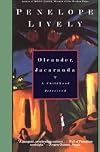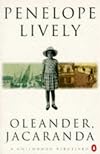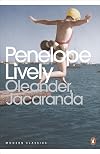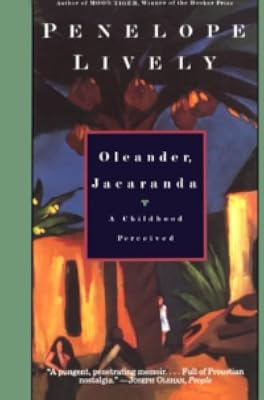
Oleander, Jacaranda: A Childhood Perceived
by Penelope Lively
On This Page
Description
A poignant and bittersweet memoir from the distinguished British fiction writer Penelope Lively, "Oleander, Jacaranda" evokes the author' s unusual childhood growing up English in Egypt during the 1930s and 1940s. Filled with the birds, animals and planets of the Nile landscape that the author knew as a child, "Oleander, Jacaranda" follows the young Penelope from a visit to a "fellaheen" village to an afternoon at the elegant Gezira Sporting Club, one milieu as exotic to her as the other. show more Lively' s memoir offers us the rare opportunity to accompany a gifted writer on a journey of exploration into the mysterious world of her own childhood. show lessTags
Recommendations














Member Recommendations
Member Reviews
This is a wonderfully insightful book, not only about Ms. Lively's childhood, but also about a journey back in time. Lively's ecvocative writing demonstrates both a retrospective on a life remembered, as well as place and circumstance reinterpreted by a mature mind.
In my view, I was greatly impressed at her approach and philosophical acceptance of how the land and, to some extent, the culture had changed. She encapsulated that sense of "you can never 'go home' again" without falling into sadness or recriminations about the situation. It was delightful to read about memories being re-processed and made alive again. Highly recommended.
In my view, I was greatly impressed at her approach and philosophical acceptance of how the land and, to some extent, the culture had changed. She encapsulated that sense of "you can never 'go home' again" without falling into sadness or recriminations about the situation. It was delightful to read about memories being re-processed and made alive again. Highly recommended.
4 ½ stars, rounded up.
An intriguing combination of memoir and reflection on memory. Growing up English in Egypt in the late 1930's and early 1940's (she returned to live in England in 1945), Lively's memories offer something out of the ordinary (in my reading, anyway) thanks to their historical and social aspects, but I'm sure she could make even an ordinary suburban childhood interesting. The questions of how clearly we remember things from our childhoods, why we remember certain things, how those memories get jumbled and mixed, how later knowledge and events may affect memories, and so on are intertwined with her stories, which are placed in context with modest amounts of historical background. The book offers an engaging invitation show more to readers to sift through the fragments of their own childhood memories and ponder how pieces fit together, how “factual” various memories might be, and how their adult selves see places, people, and events differently (or not) from the way they remember perceiving those things in childhood. An enjoyable, thought provoking little book. show less
An intriguing combination of memoir and reflection on memory. Growing up English in Egypt in the late 1930's and early 1940's (she returned to live in England in 1945), Lively's memories offer something out of the ordinary (in my reading, anyway) thanks to their historical and social aspects, but I'm sure she could make even an ordinary suburban childhood interesting. The questions of how clearly we remember things from our childhoods, why we remember certain things, how those memories get jumbled and mixed, how later knowledge and events may affect memories, and so on are intertwined with her stories, which are placed in context with modest amounts of historical background. The book offers an engaging invitation show more to readers to sift through the fragments of their own childhood memories and ponder how pieces fit together, how “factual” various memories might be, and how their adult selves see places, people, and events differently (or not) from the way they remember perceiving those things in childhood. An enjoyable, thought provoking little book. show less
Oleander, Jacaranda. A childhood perceived is not so innocent as it sounds. Penelope Lively writes that she conceived the title from her experience as a child in car rides, observing the blossoming shrubs, alternatingly planted along the road: Oleander, Jacaranda, Oleander, Jacaranda, Oleander, Jacaranda. Flowers you don't see much in England.
Although Penelope Lively may have many beautiful memories of Cairo and Egypt, the memoir consists of a mix of impressions, through the lens of the mature author. These memoirs are based on actual memories, and memories induced through photos, and a visit to Cairo. These three views are all mingled, and present the memoir with a great deal of nostalgia. All familiar sights find a place, although show more some are introduced very late, so that "Groppi" isn't mentioned until page 80, or so.
Naturally, the home, with the garden and a small pond are all lively in the author's memory, although she wonders how memory plays games, as the size of the pond is incorrectly remembered, probably because to a small child the pond appeared bigger. This distortion works through at various levels. Moreover, the reality of the present day is different from that forty years ago. Then, the children could swim in the harbour of Alexandria, as the water was clean.
Oleander, Jacaranda. A childhood perceived is a wonderful memoir for readers who get a fuzzy feeling of nostalgia about British imperial past. The memoir breathes the air of nostalgia, and celebrates the expat / colonial lifestyle, with its white superiority over the local population. show less
Although Penelope Lively may have many beautiful memories of Cairo and Egypt, the memoir consists of a mix of impressions, through the lens of the mature author. These memoirs are based on actual memories, and memories induced through photos, and a visit to Cairo. These three views are all mingled, and present the memoir with a great deal of nostalgia. All familiar sights find a place, although show more some are introduced very late, so that "Groppi" isn't mentioned until page 80, or so.
Naturally, the home, with the garden and a small pond are all lively in the author's memory, although she wonders how memory plays games, as the size of the pond is incorrectly remembered, probably because to a small child the pond appeared bigger. This distortion works through at various levels. Moreover, the reality of the present day is different from that forty years ago. Then, the children could swim in the harbour of Alexandria, as the water was clean.
Oleander, Jacaranda. A childhood perceived is a wonderful memoir for readers who get a fuzzy feeling of nostalgia about British imperial past. The memoir breathes the air of nostalgia, and celebrates the expat / colonial lifestyle, with its white superiority over the local population. show less
This is an autobiographical memoir of Penelope Lively's childhood which was mostly spent in Cairo - she "returned" to Britain, a country she barely knew, when she was 12 at the end of the second world war. It's not the exotic setting that makes it fascinating as much as the implications of its subtitle "A Childhood Perceived". Lively has almost as much to say about the nature of our memories of our childhoods as she does about the life her family lived in Egypt. Really enjoyable!
This is an enjoyable book about the author's first twelve years of life growing up in Egypt in the mid 1930's to about the end of WW2. The writing is superb with delicious descriptions and some humour thrown in. It is also a retrospective on childhood in general.
her childhood in Egypt; excellent photographs
Ratings
Members
- Recently Added By
Author Information

73+ Works 14,576 Members
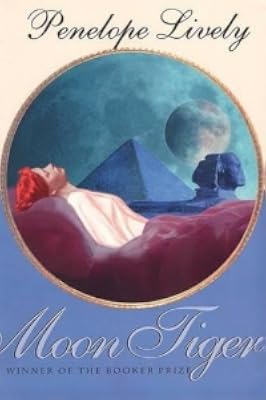
Penelope Lively has written over 18 books for children, and over 15 titles for adults, distinguishing herself on both levels. Among the awards she has received are the coveted Booker Prize for the adult novel "Moon Tiger" (1987) and the Carnegie Medal for the highly acclaimed juvenile work, "The Ghost of Thomas Kempe" (1973). In Lively's writing, show more for both adults and children, the recurrent theme is interpreting the past through exploring the function of memory. "My particular preoccupation as a writer is with memory. Both with memory in the historical sense and memory in the personal sense." Beginning her writing career in the early 1970's, Lively wrote exclusively for children for over a decade. Because children have limited memories, devices were used to explore their perceptions of the past, such as ghosts in "Uninvited Ghosts and Other Stories" (1985), and a sampler in "A Stitch in Time' (1976). Lively's first adult novel, "The Road to Lichfield" (1977) was the result of turning to an older audience when she felt inspiration running out. Her adult novels include "Passing On" (1995), the story of a mother's legacy to her children and 'Oleander, Jacarandi: A Childhood Perceived' (1994) which is a memoir of Lively's childhood. Penelope (Low) Lively, born March 17, 1933 in Cairo, Egypt, had a most unusual childhood. She grew up in Cairo with no formal education until age 12, when her family put her in boarding school in England. After earning a B.A. in history at Oxford in 1955, she married Jack Lively, a university professor, whom she calls her most useful critic. They have a son and a daughter, Adam and Josephine. (Bowker Author Biography) show less
Common Knowledge
- Original publication date
- 1994
- People/Characters
- Penelope Lively
- Important places
- Cairo, Egypt
- First words
- This is a book about childhood.
- Last words
- (Click to show. Warning: May contain spoilers.)I sniffed the liberation of maturity, and grew up a little more, there amid the wrekckage of London and the seething spires of willowherb.
Classifications
Statistics
- Members
- 267
- Popularity
- 121,208
- Reviews
- 6
- Rating
- (3.86)
- Languages
- English
- Media
- Paper, Audiobook, Ebook
- ISBNs
- 8
- ASINs
- 3