On This Page
Description
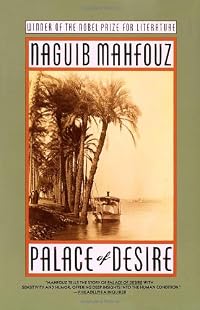
Continuing the story of al-Sayyid Ahmad and his family, this is a fascinating look at Egypt in the 1920s. Increased personal freedoms mix tenuously with traditions of family control, as two of Ahmad's sons court alluring women. Sequel to "Palace walk" and second story in "The Cairo trilogy."Tags
Recommendations





























Member Recommendations
Member Reviews
This book feels drastically different from its predecessor, both in tone and in content. Palace Walk balanced its drama among the whole family, giving you a sense of a living, breathing household interacting with (and reflecting) a world in transition. Palace of Desire retreats into a smaller, dimmer space. The focus is almost entirely on the family’s (surviving) men—their lusts, self-delusions, and indulgences—which narrows the world down to something far less engaging. What had felt like a broad social and moral canvas now feels confined and, frankly, tedious.
I had enjoyed the symbolic subtext of the previous book as well, and I suppose there’s still some of that here, if you’re inclined to dig for it. The characters’ show more actions and conversations do seem to echo larger cultural trends—a shift toward Western moral frameworks, growing secularism, the rise of feminism, etc.—but that subtext is so buried under obsessive descriptions of female anatomy and masculine indulgence, I really just couldn’t be bothered.
Kamal’s obsessive infatuation with Aida is a prime example. I’ve heard him described as the main character of this novel, and I suppose he is. But his fixation doesn’t illuminate anything about him, and doesn’t even provide him with an arc (in spite of the structure of an arc in the events that transpire between them). Honestly, it just drains him of personality, to the point that even his explicit moral and intellectual struggles are overshadowed by his adolescent fascinations.
Al-Sayyid Ahmad and Yasin are no better. Their contradictions have lost their sharpness; they no longer feel like a commentary on social roles so much as the pathetic meanderings of men past their primes. What I kept wondering was: Where are the women? We never get to spend any time with Amina, who was such an anchor for the first book. Neither do Khadija or Aisha actually matter to this book, and it’s certainly less rich for their absence.
Where Palace Walk captured a family—and a society—in motion, Palace of Desire feels like that same family stalled, circling endlessly around its appetites and regrets. Whatever insight Mahfouz intended to reveal through that repetition gets dulled by the sheer tedious weight of it. show less
I had enjoyed the symbolic subtext of the previous book as well, and I suppose there’s still some of that here, if you’re inclined to dig for it. The characters’ show more actions and conversations do seem to echo larger cultural trends—a shift toward Western moral frameworks, growing secularism, the rise of feminism, etc.—but that subtext is so buried under obsessive descriptions of female anatomy and masculine indulgence, I really just couldn’t be bothered.
Kamal’s obsessive infatuation with Aida is a prime example. I’ve heard him described as the main character of this novel, and I suppose he is. But his fixation doesn’t illuminate anything about him, and doesn’t even provide him with an arc (in spite of the structure of an arc in the events that transpire between them). Honestly, it just drains him of personality, to the point that even his explicit moral and intellectual struggles are overshadowed by his adolescent fascinations.
Al-Sayyid Ahmad and Yasin are no better. Their contradictions have lost their sharpness; they no longer feel like a commentary on social roles so much as the pathetic meanderings of men past their primes. What I kept wondering was: Where are the women? We never get to spend any time with Amina, who was such an anchor for the first book. Neither do Khadija or Aisha actually matter to this book, and it’s certainly less rich for their absence.
Where Palace Walk captured a family—and a society—in motion, Palace of Desire feels like that same family stalled, circling endlessly around its appetites and regrets. Whatever insight Mahfouz intended to reveal through that repetition gets dulled by the sheer tedious weight of it. show less
'You're a failure as a father. Your best son has died, the second's a loss and the third is headstrong'
By sally tarbox on 21 Feb. 2014
Format: Paperback
The superb follow-up to 'Palace Walk' resumes the family saga five years on. Patriarch Ahmad is slightly less of a tyrant since the tragedy:
'It was not out of the question at such a moment for Kamal to ask his father politely ''When will custody of Ridwan revert to his father, Papa?" In that way he demonstrated the dramatic transformation of his relationship to his father.
Al -Sayidd Ahmad had replied "When he turns seven" instead of screaming "Shut up, you son of a bitch!"
Wife Amina enjoys permission to venture out - a little - and has even started speaking her mind on occasion. With the show more daughters married off, the principal action in this volume comes from the menfolk, notably youngest son Kamal, who has fallen desperately in love with the sister of a wealthy schoolfriend. His pure and obsessive adoration for Aida is utterly compelling, as we follow his maturing and his changes in beliefs.
Older brother Yasin meanwhile continues a life of loose-living; and after a period of abstinence Ahmad too has taken to nights out again, and a new mistress...
Absolutely unputdownable; Mahfouz leaves us on a cliffhanger that means you just have to start on volume 3! show less
By sally tarbox on 21 Feb. 2014
Format: Paperback
The superb follow-up to 'Palace Walk' resumes the family saga five years on. Patriarch Ahmad is slightly less of a tyrant since the tragedy:
'It was not out of the question at such a moment for Kamal to ask his father politely ''When will custody of Ridwan revert to his father, Papa?" In that way he demonstrated the dramatic transformation of his relationship to his father.
Al -Sayidd Ahmad had replied "When he turns seven" instead of screaming "Shut up, you son of a bitch!"
Wife Amina enjoys permission to venture out - a little - and has even started speaking her mind on occasion. With the show more daughters married off, the principal action in this volume comes from the menfolk, notably youngest son Kamal, who has fallen desperately in love with the sister of a wealthy schoolfriend. His pure and obsessive adoration for Aida is utterly compelling, as we follow his maturing and his changes in beliefs.
Older brother Yasin meanwhile continues a life of loose-living; and after a period of abstinence Ahmad too has taken to nights out again, and a new mistress...
Absolutely unputdownable; Mahfouz leaves us on a cliffhanger that means you just have to start on volume 3! show less
(4) This is the 2nd book in the author's Cairo trilogy. Works mentioned along side some of my most favorite historical fiction literature such as Scott's 'The Raj Quartet,' and Farrell's 'Empire Trilogy.' Though this book is written by an Egyptian as opposed to someone from Great Britain talking about the colonized or formerly colonized lands. I liked this book both more and less than the first book, 'Palace Walk.' More, as the author is revealed to me as someone less old school Islamic and more liberated and all encompassing in his views. He is just talented in that his writing is not from an omniscient standpoint, but instead he disappears inside his characters. I see that now. Less enjoyable as there was alot more tedious, show more introspective parts. Jeez, Kamal and his crush - I wanted to smack him. But yet, I see the brilliance of the author really inhabiting what it means to be 18 and idealistic and lovelorn and disillusioned. Soul-crushing for Kamal even though the older reader is exasperated.
I now can see why the Islamic brotherhood or whatever crazy Islamic fundamentalist group of the day was calling fatwa on Mahfouz. Some of Kamal's musings really shine a ridiculous light on religion and the predicament of how to live a good and meaningful life when you no longer believe. So the writing is powerful, if not at times tedious. Some characters continue to piss one off such as Yasin and the father who I will never warm up to. The scene is set for the next book - tragedy is hinted at and the reader feels so sucked into these lives that one knows you will read on.
However, a break is needed. As this is dense, often repetitive, often stream of consciousness. I am not sure the casual reader would enjoy, but I sense myself growing more enamored as the pages go by similar to how I felt about 'The Raj Quartet.' Sucked into a different world and time which is not always enjoyable but yet you must keep reading - as if a spell has been cast over you. I can hear the distant sounds of both a tamborine and the call to prayer. show less
I now can see why the Islamic brotherhood or whatever crazy Islamic fundamentalist group of the day was calling fatwa on Mahfouz. Some of Kamal's musings really shine a ridiculous light on religion and the predicament of how to live a good and meaningful life when you no longer believe. So the writing is powerful, if not at times tedious. Some characters continue to piss one off such as Yasin and the father who I will never warm up to. The scene is set for the next book - tragedy is hinted at and the reader feels so sucked into these lives that one knows you will read on.
However, a break is needed. As this is dense, often repetitive, often stream of consciousness. I am not sure the casual reader would enjoy, but I sense myself growing more enamored as the pages go by similar to how I felt about 'The Raj Quartet.' Sucked into a different world and time which is not always enjoyable but yet you must keep reading - as if a spell has been cast over you. I can hear the distant sounds of both a tamborine and the call to prayer. show less
The family of Al-Sayyid Ahmad Abd al-Jawad was devastated five years earlier by the death of beloved middle son Fahmy in a revolutionary uprising. Egypt is still loosely under the control of the English but tensions have eased making way for changes to come. Fahmy's sisters are both married now and play a smaller role in this book as does Amina, the long-suffering wife and mother. The remaining men of the family eventually find their way out of grief through their incessant thoughts of women. Ahmad continues to rule his family by day, although with less zeal than in the first book of the trilogy, and haunt the bars and brothels by night. 28-year-old Yasin is a chip off the old block. His particular pattern is marriage and divorce. They show more both are susceptible to a woman's charms without considering the consequences.
There is a sharp contrast in the behavior of Kamal who has done a lot of growing up since his role of family prankster and all-around brat in the last book. He is a sensitive young man of 17 now who seeks truth and beauty in his life as a young scholar with a keen interest in philosophy and politics. He is in love for the first time, but his is an idealized love that is pure to the point of idolatry. Unfortunately, this love was not returned and he compared the beloved Aida to Egypt with these words: "Has she dismissed the one man she could trust at a time when he was busy defending her rights?" There are hints of political strain in the background of the many lover's quarrels setting the stage for Part Three of the excellent Cairo Trilogy. show less
There is a sharp contrast in the behavior of Kamal who has done a lot of growing up since his role of family prankster and all-around brat in the last book. He is a sensitive young man of 17 now who seeks truth and beauty in his life as a young scholar with a keen interest in philosophy and politics. He is in love for the first time, but his is an idealized love that is pure to the point of idolatry. Unfortunately, this love was not returned and he compared the beloved Aida to Egypt with these words: "Has she dismissed the one man she could trust at a time when he was busy defending her rights?" There are hints of political strain in the background of the many lover's quarrels setting the stage for Part Three of the excellent Cairo Trilogy. show less
And the saga continues. If the first book's theme song was "Hypocrisy, thy name is Al-Sayyid Ahmad al-Jawad", the second book in the trilogy can go by "the center can not hold". With the advance of years Ahmid's children slip into adulthood and his grip on his family lessens. His own age (read: mid-life crisis) shakes his confidence. There is also the increasingly modern world seeping in through friends and ideas, which threatens the ancient way of life in the Palace Alleys.
I'm still enjoying the saga! The middle book in a trilogy has the difficult task of propelling the story while still leaving room for a big finish. On to the thrid and final book!
I'm still enjoying the saga! The middle book in a trilogy has the difficult task of propelling the story while still leaving room for a big finish. On to the thrid and final book!
De auteur werd in 1911 in Caïro geboren en bleef daar bijna zijn hele leven. Zelfs toen hij in 1988 de Nobelprijs voor Literatuur won, reisde hij niet naar het buitenland. Zijn dochters namen zijn prijs in ontvangst. Omdat schrijvers in Egypte bijna niets verdienen, werkte hij als ambtenaar.
Zo vergaat het ook het hoofdpersonage in dit boek: Kamaal. Tegen de wil van zijn tirannieke vader in kiest hij voor de lerarenopleiding, omdat hij filosofie, literatuur, wetenschap enz. wil bestuderen om later een boek te schrijven.
De welgestelde Hoessein is de enige vriend die zijn mening deelt. Hassan kiest voor de studie rechten, net zoals zijn vader, wat hem aanzien en rijkdom zal verschaffen. Zo kan hij zich verloven met de zus van Hoessein, show more Ajida, op wie Kamaal stiekem verliefd is. Hoessein, Ajida en Hassan bewandelen de voor hen uitgestippelde paden en vertrekken naar het buitenland. Kamaal is de enige die in Egypte blijft.
We volgen de evolutie van de diepgelovige jonge Kamaal naar een volwassen man en leren ook het dubbelleven van zijn vader, Ahmed Abd al-Gawwaad, een koopman, kennen.
De beschrijvingen van Nagieb Mahfoez zijn zo goed dat het voelt alsof je zelf in Caïro rondloopt.
Dit boek is het tweede deel van een trilogie, maar het is geen probleem als je het eerste "tussen 2 paleizen" nog niet gelezen hebt.
Eigenlijk meer dan 4 sterren waard, maar net geen 5. Verdiende winnaar van de Nobelprijs. Wereldklasse! show less
Zo vergaat het ook het hoofdpersonage in dit boek: Kamaal. Tegen de wil van zijn tirannieke vader in kiest hij voor de lerarenopleiding, omdat hij filosofie, literatuur, wetenschap enz. wil bestuderen om later een boek te schrijven.
De welgestelde Hoessein is de enige vriend die zijn mening deelt. Hassan kiest voor de studie rechten, net zoals zijn vader, wat hem aanzien en rijkdom zal verschaffen. Zo kan hij zich verloven met de zus van Hoessein, show more Ajida, op wie Kamaal stiekem verliefd is. Hoessein, Ajida en Hassan bewandelen de voor hen uitgestippelde paden en vertrekken naar het buitenland. Kamaal is de enige die in Egypte blijft.
We volgen de evolutie van de diepgelovige jonge Kamaal naar een volwassen man en leren ook het dubbelleven van zijn vader, Ahmed Abd al-Gawwaad, een koopman, kennen.
De beschrijvingen van Nagieb Mahfoez zijn zo goed dat het voelt alsof je zelf in Caïro rondloopt.
Dit boek is het tweede deel van een trilogie, maar het is geen probleem als je het eerste "tussen 2 paleizen" nog niet gelezen hebt.
Eigenlijk meer dan 4 sterren waard, maar net geen 5. Verdiende winnaar van de Nobelprijs. Wereldklasse! show less
Palace of Desire continues the epic story begun in the first book of Nobel Laureate Naguib Mahfouz’s highly acclaimed Cairo Trilogy. It picks up five years after the end of the first book. The Sayid family is undergoing great change, much like the country of Egypt in which it is set, and this book appears to serve as a transition volume. Although it was not as compelling a read as Palace Walk, its transitional role has me very eagerly anticipating the last book of the trilogy, Sugar Street.
The family is still grieving the death of son Fahmy that provided the shocking conclusion to the first book, but the tyrannical patriarch, who has thankfully eased his stranglehold on the lives of his wife and children, has reverted to the nightly show more carousing that he had stopped during the five years since Fahmy’s death. Son Yasin, continues in his father’s footsteps with a twist: he is not happy with any woman he marries so he divorces, twice, and is proving to be an embarrassment to his family.
Mahfouz’s shimmering prose continues to impress as he derides Yasin’s poor choices:
”Matters quickly sorted themselves out, probably faster than he had imagined possible. He had gone along with her, thinking that the novelty of her charms would be enough to sustain her appeal for several weeks or a month, but he must have miscalculated. Although her appearance was seductive, it had caused him to commit the greatest folly of a life littered with them. Her years lay concealed behind that beauty like a fever disguised by rosy cheeks. The pounds and pounds of flesh treasured in layers under the folds of her clothes were, as he put it, not quite as appealing when seen stripped naked, for nothing records the effects of a sad life so graphically as the human body.” (Page 129)
The book’s title comes from the house that Yasin inherits from his deceased mother. Although the house does not play a large role in the story, it is a complete dichotomy from the staid residence that his father maintains. Younger son Kamal is heartsick over the loss of a girl and disappoints his father by deciding to become a teacher and attend the lowly Teachers’ College rather than go on to a career in law. The novel ends with the death of Egyptian leader Sa'd Zaghlul, and the spread of a typhoid epidemic, producing uncertainty about Egypt’s future.
You would not be able to enjoy this novel had you not read the first novel in the trilogy. I don’t believe it would make much sense to a reader unfamiliar with Palace Walk. But as a bridge to the last book, it is very well done and provides an interesting transition piece as the dynamics of the family, and of Egypt, change. Highly recommended. show less
The family is still grieving the death of son Fahmy that provided the shocking conclusion to the first book, but the tyrannical patriarch, who has thankfully eased his stranglehold on the lives of his wife and children, has reverted to the nightly show more carousing that he had stopped during the five years since Fahmy’s death. Son Yasin, continues in his father’s footsteps with a twist: he is not happy with any woman he marries so he divorces, twice, and is proving to be an embarrassment to his family.
Mahfouz’s shimmering prose continues to impress as he derides Yasin’s poor choices:
”Matters quickly sorted themselves out, probably faster than he had imagined possible. He had gone along with her, thinking that the novelty of her charms would be enough to sustain her appeal for several weeks or a month, but he must have miscalculated. Although her appearance was seductive, it had caused him to commit the greatest folly of a life littered with them. Her years lay concealed behind that beauty like a fever disguised by rosy cheeks. The pounds and pounds of flesh treasured in layers under the folds of her clothes were, as he put it, not quite as appealing when seen stripped naked, for nothing records the effects of a sad life so graphically as the human body.” (Page 129)
The book’s title comes from the house that Yasin inherits from his deceased mother. Although the house does not play a large role in the story, it is a complete dichotomy from the staid residence that his father maintains. Younger son Kamal is heartsick over the loss of a girl and disappoints his father by deciding to become a teacher and attend the lowly Teachers’ College rather than go on to a career in law. The novel ends with the death of Egyptian leader Sa'd Zaghlul, and the spread of a typhoid epidemic, producing uncertainty about Egypt’s future.
You would not be able to enjoy this novel had you not read the first novel in the trilogy. I don’t believe it would make much sense to a reader unfamiliar with Palace Walk. But as a bridge to the last book, it is very well done and provides an interesting transition piece as the dynamics of the family, and of Egypt, change. Highly recommended. show less
Members
- Recently Added By
Lists

Novels featuring siblings
133 works; 8 members

Books Read in 2013
1,629 works; 51 members

Global Reads: Books Set in the Middle East and North Africa
50 works; 8 members

Books written in uncommon languages
97 works; 8 members
Talk Discussions
Past Discussions
Palace of Desire by Naguib Mahfouz in Reading Globally (August 2012)
Author Information

329+ Works 19,092 Members
Naguib Mahfouz was born in Cairo, Egypt on December 11, 1911. He received a degree in philosophy from the University of Cairo. He took on several civil service and government department jobs to supplement his income while writing, but retired from that career in 1971. During his lifetime, he wrote more than 30 novels including The Games of Fate, show more The Cairo Trilogy, Children of Gebelawi, The Thief and the Dogs, Autumn Quail, Small Talk on the Nile, and Miramar. He received numerous awards including the Egyptian State Prize, the Presidential Medal from the American University in Cairo, and the Nobel Prize for Literature in 1988. He died as a result of a head injury on August 30, 2006 at the age of 94. (Bowker Author Biography) show less
Some Editions
Series

Belongs to Publisher Series
Keltainen kirjasto (279)
Work Relationships
Is contained in
Common Knowledge
- Canonical title
- Palace of Desire: The Cairo Trilogy II; Palace of Desire
- Original title
- رادوبيس
- Original publication date
- 1957
- People/Characters
- Ahmad; Kamal; Aida; Yasin
- Important places
- Cairo, Egypt
- First words
- Al-Sayyid Ahmad Abd al-Jawad closed the door behind him and crossed the courtyard of his house by the pale light of the stars.
- Last words
- (Click to show. Warning: May contain spoilers.)Starting to leave, Yasin replied, "God willing. And I hope you sleep soundly."
- Original language
- Arabic
Classifications
- Genres
- Fiction and Literature, General Fiction, Historical Fiction
- DDC/MDS
- 892.736 — Literature & rhetoric Asian Literature Afro-Asiatic literatures Arabic (Egypt, Lebanon, Palestine, Saudi Arabia, Sudan) Arabic fiction 1945–2000
- LCC
- PJ7846 .A46 .Q313 — Language and Literature Oriental languages and literatures Oriental philology and literature Arabic Arabic literature Individual authors or works
- BISAC
Statistics
- Members
- 1,561
- Popularity
- 14,550
- Reviews
- 24
- Rating
- (3.99)
- Languages
- 15 — Arabic, Dutch, Egyptian, English, Finnish, French, German, Greek, Italian, Norwegian (Bokmål), Norwegian, Portuguese, Slovenian, Spanish, Swedish
- Media
- Paper, Audiobook, Ebook
- ISBNs
- 62
- UPCs
- 1
- ASINs
- 13