On This Page
Description
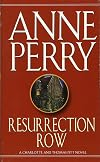
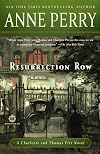
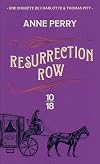
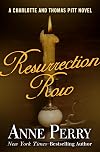
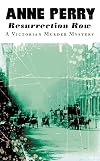
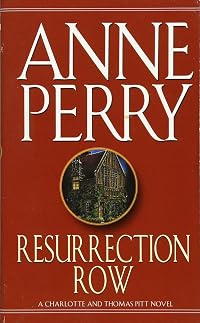
Bodies that won't stay buried-is it a practical joke? Or murder? Lord Fitzroy-Hammond of Resurrection Row has been dead and buried three weeks when he turns up sitting atop a hansom cab. Grave robbing, though a crime, isn't Inspector Thomas Pitt's usual fare. But when the macabre joke is repeated, and the man's corpse is found sitting in the family pew the Sunday following his second interment, Pitt begins to wonder if perhaps there's some message in it. The case grows increasingly bizarre show more as other disinterred bodies appear. A new mother, Charlotte Pitt only takes a cursory interest in the grave robbing case until she hears Thomas mention the name of her late sister's husband, Dominic Corde, as a possible suspect. As Pitt follows leads into the slums and rookeries, Charlotte, too, is drawn into the politics and horrors of greed and exploitation. For Pitt and Charlotte, what begins as a mysterious case of musical corpses, becomes a deadly pursuit through the London underworld of pornographic photographers, brothels, and sweatshops. show lessTags
Recommendations








Member Reviews
An interesting mystery involving seemingly random corpses popping up where they definitely did not belong, during the reading of which I thought, "There had better be a really good explanation for all of this." I thought, "You'd have to be a special kind of brilliant to come up with a plot that makes sense of so much exhuming and reinterring!"
Then I reached the explanation and found out that it was not really good, or even regular good. It took the easy way out. Plus it wasn't even believable. Sigh, what a disappointment.
Still - Anne Perry's denouements are about one and a half paragraphs long, and that's when she's feeling wordy. For the rest of the duration of this book I really enjoyed it, and remain in awe at her entirely immersive show more picture of Victorian London. The fog! The gaslights! The clopping hooves! If I live long enough to see time travel become a popular vacation feature, I will go immediately to late 19th-century London. show less
Then I reached the explanation and found out that it was not really good, or even regular good. It took the easy way out. Plus it wasn't even believable. Sigh, what a disappointment.
Still - Anne Perry's denouements are about one and a half paragraphs long, and that's when she's feeling wordy. For the rest of the duration of this book I really enjoyed it, and remain in awe at her entirely immersive show more picture of Victorian London. The fog! The gaslights! The clopping hooves! If I live long enough to see time travel become a popular vacation feature, I will go immediately to late 19th-century London. show less
I am on a Ferris wheel that cannot stop, and therefore I have finished number 4 of the Charlotte and Thomas Pitt series. Charlotte plays a very minor role in this story, but Aunt Vespasia returns. The story centers on corpses tuning up in unlikely place, and one poor corpse must be buried 3 times. Thomas must find the grave robber and the reason for this ghastly deed. Perry evicts talking of fashion in this novel, but spends much time on the plight of the uneducated and poor that frequent the workhouses. When one of the corpses happens to be an artist thought to be visiting Paris, the investigation sizzles. Perry omits much in this novel that sets her apart, such as characterization and setting. The emphasis rests on a few wealthy show more people attempting to pass legislation to aid the poor citizens of England. show less
A murder mystery set in the Victorian period in London and, I discovered, part of a series about police inspector Thomas Pitt and his wife Charlotte. Resurrected bodies start turning up, the first propped on the box of a hansom cab, and confusion follows with mis-identification adding to the Inspector's problems.
A strong thread in the story is the appalling conditions in the homes of the urban poor and the workhouses where they are forced to go if they reach bottom - with women prepared to turn part-time prostitute to avoid taking their children to such places. The Victorian setting is well evoked, not only the squalor and destitution but also the struggle of the respectable working classes such as the Inspector's family; the cold and show more wet and the difficulty of heating a home, and the balancing of household budgets so that bacon for breakfast means having to take the omnibus or walk rather than take a cab. Charlotte is from a prosperous family and has married beneath her, this apparently being the subject of an earlier book in the series, so she has to teach herself household skills. Unlike most married couples of the period, she and Thomas enjoy a fairly equal partnership, with Thomas having to bite his lip when his so-called betters express misogynistic views. For this is an era when deference to the upper classes holds sway and even the police must avoid upsetting them or risk losing their jobs.
Throughout the story Pitt has to deal with the upper classes with all the difficulties this entails, although he enjoys a more relaxed relationship with 'Aunt Vespasia', an elderly intelligent woman who is related to Charlotte through the marriage of her sister Emily. The story deals with the scandals that some of the privileged are involved in and the lengths to which they will go to prevent disclosure.
Where it fell down for me is in the denouement. Given the prejudices and the difficulties Pitt has already had in pursuing the case, with his superiors anxious not to give offence to the rich and powerful, I found it incredible that he is able to arrest the guilty party.The only witness to the case is a lower class woman - two strikes against her credibility with a jury, who in those days would be exclusively male and drawn from at least the lower middle class and upwards at that. And to compound matters, she runs a brothel, so they just wouldn't believe her. Given the wealth and connections of the accused and the number of favours he could call in, I couldn't believe that any corroboration provided by his bank would carry weight; couldn't he arrange for a friend to say he had been meaning to sell a property to the accused, but then changed his mind, hence the money going in and out of the bank? There was no other material evidence: perhaps it's a matter of public record that he owns a certain building, but that doesn't put him in the frame, given that the only witness to the date and time (the body having not been discovered for a few weeks) is the brothel madam . With all that, it would surely have been much more credible to have it as one of those cases where the police know who did it, but can't bring it to court?
That lack of believability seriously undercut my enjoyment by the end, given that I also didn't find it very credible when we find out who was responsible for the 'resurrections'. Why did the person concerned go to so much trouble;wouldn't it have been simpler just to hide the murder victim, given that they hid another body for weeks before bringing it to public attention?
All in all, good evocation of setting and the main protagonist and his wife are likeable characters, but the lack of a strong convincing plot means this can only rate 3 stars, and does not encourage me to try the series again. show less
A strong thread in the story is the appalling conditions in the homes of the urban poor and the workhouses where they are forced to go if they reach bottom - with women prepared to turn part-time prostitute to avoid taking their children to such places. The Victorian setting is well evoked, not only the squalor and destitution but also the struggle of the respectable working classes such as the Inspector's family; the cold and show more wet and the difficulty of heating a home, and the balancing of household budgets so that bacon for breakfast means having to take the omnibus or walk rather than take a cab. Charlotte is from a prosperous family and has married beneath her, this apparently being the subject of an earlier book in the series, so she has to teach herself household skills. Unlike most married couples of the period, she and Thomas enjoy a fairly equal partnership, with Thomas having to bite his lip when his so-called betters express misogynistic views. For this is an era when deference to the upper classes holds sway and even the police must avoid upsetting them or risk losing their jobs.
Throughout the story Pitt has to deal with the upper classes with all the difficulties this entails, although he enjoys a more relaxed relationship with 'Aunt Vespasia', an elderly intelligent woman who is related to Charlotte through the marriage of her sister Emily. The story deals with the scandals that some of the privileged are involved in and the lengths to which they will go to prevent disclosure.
Where it fell down for me is in the denouement. Given the prejudices and the difficulties Pitt has already had in pursuing the case, with his superiors anxious not to give offence to the rich and powerful, I found it incredible that he is able to arrest the guilty party.
That lack of believability seriously undercut my enjoyment by the end, given that I also didn't find it very credible when we find out who was responsible for the 'resurrections'. Why did the person concerned go to so much trouble;
All in all, good evocation of setting and the main protagonist and his wife are likeable characters, but the lack of a strong convincing plot means this can only rate 3 stars, and does not encourage me to try the series again. show less
Another fabulous Pitt mystery by Anne Perry, the fourth in the series. And the reader is off to the races beginning on the first page when two of the folks hailing a cab get more than they bargained for, an astonished horse and a corpse who’s been there, done that, now dug up, and posed as a cabby. A creative if improbable beginning. And the reader settles in. Not only are the dead again exposed, but the manners and mores, the pretenses and hypocrisies of Victorian society.
As is always the case with a Perry mystery, history is meticulously researched, a sense of place evoked in rich detail, and all characters memorable. Thomas and Charlotte Pitt are richly drawn as is Aunt Vespasia making her second appearance, and playing a greater show more role, teaming up with Charlotte to help Pitt’s investigation. In the last sentence of the book, the perp is arrested.
This was one of my favorite reads in the Thomas and Charlotte Pitt mystery series, couldn’t put it down, and any mystery lover interested in Victorian England will love it. show less
As is always the case with a Perry mystery, history is meticulously researched, a sense of place evoked in rich detail, and all characters memorable. Thomas and Charlotte Pitt are richly drawn as is Aunt Vespasia making her second appearance, and playing a greater show more role, teaming up with Charlotte to help Pitt’s investigation. In the last sentence of the book, the perp is arrested.
This was one of my favorite reads in the Thomas and Charlotte Pitt mystery series, couldn’t put it down, and any mystery lover interested in Victorian England will love it. show less
A typical tale of blackmail leading to murder except....how delightfully wonderful to have all of these macabre bodies popping up all around town! Of course today many of us have seen the "Body Museum" on exhibit around the nation, so perhaps we can take it in better stride than the Victorians. How great of Perry to be ahead of the game in her plotting.
This book also introduces us to the horrors of the "workhouses" and "sweatshops" and the political awareness movement to eradicate these evils.
Aunt Vespasian is also further developed, and Charlotte moves a bit more into society, giving glimpses of the woman she is becoming. I imagine she will be fully integrated by the end of the series, but perhaps that is being too hopeful of British show more society in the 19th century. show less
This book also introduces us to the horrors of the "workhouses" and "sweatshops" and the political awareness movement to eradicate these evils.
Aunt Vespasian is also further developed, and Charlotte moves a bit more into society, giving glimpses of the woman she is becoming. I imagine she will be fully integrated by the end of the series, but perhaps that is being too hopeful of British show more society in the 19th century. show less
I'm not sure the characters actions were quite logical but Perry has a nice mix of things going on in Victorian London. She made her point about workhouses by showing things not going off onto sermons. Made me think about third world conditions today.
I have been reading Anne Perry for years and enjoying all of her characters very much. This one was just fun. A body continually disinterred, another in a top hat sitting atop a headstone...Mr. Pitt has his hands full with all the bodies in this one. As always, a very enjoyable read!
Members
- Recently Added By
Author Information

199+ Works 55,124 Members
Anne Perry was born Juliet Hume on October 28, 1938 in Blackheath, London. Sent to Christchurch, New Zealand to recover from a childhood case of severe pneumonia, she became very close friends with another girl, Pauline Parker. When Perry's family abandoned her, she had only Parker to turn to, and when the Parkers planned to move from New Zealand, show more Parker asked that Perry be allowed to join them. When Parker's mother disagreed, Perry and Parker bludgeoned her to death. Perry eventually served five and a half years in an adult prison for the crime. Once she was freed, she changed her name and moved to America, where she eventually became a writer. Her first Victorian novel, The Cater Street Hangman, was published in 1979. Although the truth of her past came out when the case of Mrs. Parker's murder was made into a movie (Heavenly Creatures), Perry is still a popular author and continues to write. She has written over 50 books and short story collections including the Thomas Pitt series, the William Monk series, and the Daniel Pitt series. Her story, Heroes, won the 2001 Edgar Award for Best Short Story. Her title's Blind Justice and The Angel Court Affair made The New York Times Best Seller List. (Bowker Author Biography) show less
Some Editions
Series

Belongs to Publisher Series
Work Relationships
Common Knowledge
- Canonical title
- Resurrection Row
- Original title
- Resurrection Row
- Alternate titles*
- Die roten Stiefeletten
- Original publication date
- 1981-10-01
- People/Characters
- Thomas Pitt; Charlotte Pitt; Vespasia Cumming-Gould (Lady); Desmond Cantley; Gwendoline Cantley; Lord August Fitzroy-Hammond (show all 20); Alicia Fitzroy-Hammond; Verity Fitzroy-Hammond; Somerset Carlisle; Hester St. Jermyn; Dominic Corde; Virgil Smith; Jemima Pitt; William Wilberforce Porteus; Edward St. Jermyn; Godolphin Jones; Dollie Jenkins; Horatio Snipe; Bertha Mulligan; Maizie Snipe
- Important places
- London, England, UK
- Important events
- Victorian Era (1837 | 1901)
- Dedication*
- Für MEG
für ihre Hilfe - First words*
- Der Nebel wallte dicht und nasskalt durch die Strasse, verschleierte ihre Konturen und liess die Gaslaternen über ihr nur gedämpft leuchten.
- Last words*
- (Click to show. Warning: May contain spoilers.)"Edward St. Jermyn", sagte er formell, "im Namen der Königin verhafte ich Sie wegen vorsätzlichen Mordes an Godolphin Jones, Kunstmaler in der Resurrection Row."
- Original language*
- Englisch
*Some information comes from Common Knowledge in other languages. Click "Edit" for more information.
Classifications
Statistics
- Members
- 885
- Popularity
- 30,497
- Reviews
- 19
- Rating
- (3.69)
- Languages
- 6 — English, French, German, Italian, Portuguese, Spanish
- Media
- Paper, Audiobook, Ebook
- ISBNs
- 36
- ASINs
- 12