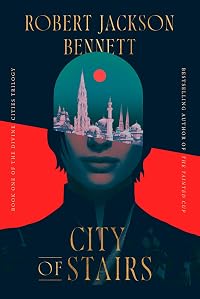
On This Page
Description
An atmospheric and intrigue-filled novel of dead gods, buried histories, and a mysterious, protean city--from one of America's most acclaimed young fantasy writers. The city of Bulikov once wielded the powers of the gods to conquer the world, enslaving and brutalizing millions--until its divine protectors were killed. Now Bulikov has become just another colonial outpost of the world's new geopolitical power, but the surreal landscape of the city itself--first shaped, now shattered, by the show more thousands of miracles its guardians once worked upon it--stands as a constant, haunting reminder of its former supremacy. Into this broken city steps Shara Thivani. Officially, the unassuming young woman is just another junior diplomat sent by Bulikov's oppressors. Unofficially, she is one of her country's most accomplished spies, dispatched to catch a murderer. But as Shara pursues the killer, she starts to suspect that the beings who ruled this terrible place may not be as dead as they seem--and that Bulikov's cruel reign may not yet be over. show lessTags
Recommendations


















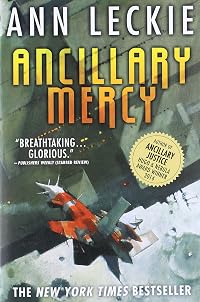
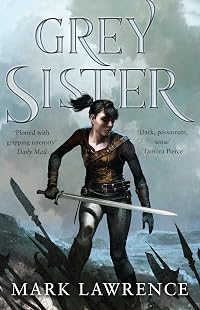


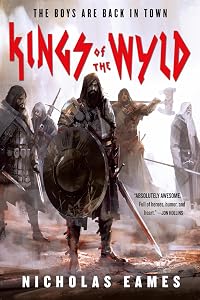

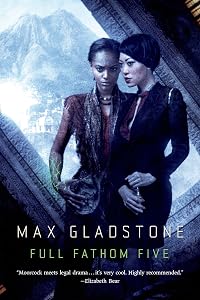


Member Recommendations
calmclam Similar themes of empire and colonialism as well as wars against/between the gods.
20
davisfamily A mystery within a unique setting. Interesting mix of Religion and Politics.
Euryale Another immersive, secondary-world urban setting.
Nova_Mortem Both are set "after" what many stories would make the main feature.
Member Reviews
Stunning World Building, Complicated Characters, & a Refreshing Take On Religion
(Full disclosure: I received a free copy of this book for review through Library Thing's Early Reviewers program.)
More than a thousand years ago, the Divinities stepped out of their world to walk among humans. They were six - Olvos, Kolkan, Jukov, Voortya, Ahanas, and Taalhavras - and among their godlike powers was the ability to alter the very fabric of reality; to bend the laws of nature to suit their desires - and the needs of their followers. The Divinities found an eager and devoted flock on the Continent, which they carved up into six spheres of influence, each governed by the ruling Divinity's own rules and realities. For their allegiance, the show more Continentals became the Divinities' chosen ones, destined to rule over their godless neighbors.
For nearly five hundred years, the Divinities and their followers fought amongst themselves. Seemingly overnight, and perhaps realizing the strength to be found in numbers, the Divinities gathered in the central city of Bukilov - thenceforth known as the Seat of the World - for the Night of the Convening, during which they agreed upon a treaty. This led to the onset of the Continental Golden Age, during which time the Continent experienced a surge in outward expansion as the allied Continentals raided, colonized, and subjugated the people of other countries, including those of Saypur.
Around this time, and apparently spurred by her disapproval of the other Divinities' increasingly harsh actions, Olvos - arguably the most compassionate and enlightened of the otherwise barbaric gods - withdrew from the world.
For eight hundred years, the Continent ruled over the nation of Saypur, enslaving its citizens and exploiting their natural resources.
And then, in 1631, a mentally disabled girl was executed for burning paper - pages from the Taalvashtava, the sacred book of Tallhavras, found in a broken-down wagon by the side of the road. This final injustice proved to be the spark that lit the Saypuri rebellion.
Led by Avshakta si Komayd - known to history simply as the Kaj - the Saypuris overthrew their Continental masters by doing the unthinkable: assassinating their gods. Within eight years the Kaj had killed four of the remaining six Divinities, using a special weapon whose secrets died with him. As the Divinities dropped, their unique realities crumbled with them: Taalhavras the builder's temples, steeples, and fountains collapsed, collided, and vanished outright; the many miracles the gods had crafted to suit their followers' needs ceased to function; and the Continent's weather patterns reverted to their previous dreary climes.
In Bukilov, the shifting realities caused a tragic phenomenon known as the Blink: seemingly in an instant, much of the infrastructure of the city simply vanished. Along with it, millions of its citizens, never to be seen again. All that remains of the Divinities are the miraculous walls surrounding Bukilov, and the giant staircases leading to nowhere.
In the wake of their victory, Saypur passed the Worldly Regulations, outlawing the possession and use of miraculous objects, the worshiping of the Divinities - even any mention of gods and and miracles became grounds for a fine. (Or worse.) Having been oppressed by the Continentals and their gods for almost a millennia, Saypuris are understandable wary of anything even hinting of the Divine.
Into this morass steps Dr. Efrem Pangyui, ostensibly visiting Bukilov to study and document its history - a slap in the face to people prohibited from doing so themselves. When his body is discovered, beaten to a pulp, it's up to agent Shara Komayd - great-granddaughter of the famed Kaj - to investigate her former asset's murder. The mystery leads her deep into the heart of Bukilov, where she will discover that history more often than not is a series of lies fabricated by the victors - and that hints of the sacred still live under the depths of the city.
I waffled a bit before requesting this book on Library Thing - science fiction/fantasy stories with strong religious elements are a real hit-or-miss for me - but I knew of Robert Jackson Bennett from his previous book, American Elsewhere, which I enjoyed immensely. As it turns out, City of Stairs? Even better!
Let's start with the world-building, which is stunning in its breadth and complexity. Some early reviewers noted that the first half of the book is heavy on exposition. While this is certainly true, I can't say that I minded or was bored for even a second. The history of Saypur and the Continent - each the oppressed and oppressor at varying points throughout time - is as fascinating as it is detailed. I could have read excerpts from Efrem's journals and published papers for hours.
And oh, the characters: so complicated and conflicted and not always altogether likable! The cast is stunningly diverse; Shara, with her short stature and brown skin, is characteristic of Saypuris, while the light-skinned, red-haired Volka looks classically Continental. (Although, as Shara points out to a racist Continental, their people historically looked quite similar. It was only after the Divinities altered the climate of the Continent that the Continentals developed a fairer complexion.) While the story takes place on the Continent, many of the protagonists are Saypuri, leading to a racially diverse cast.
Likewise, Bennett tackles issue of sexuality and homophobia in Volka, who has spent the last two decades struggling with his sexuality. In his home city of Bukilov, Kolkan's influence can still be felt: in the reigning puritanical attitudes towards sex, including virulent homophobia; in its strict, sexist gender roles; in its dislike of all that is deemed excessively pleasurable. (The Edicts of Kolkan includes 378 pounds of text on dancing alone.) There's a reason why, of all the Divinities, Kolkan was known as THE JUDGE. (He's very Old Testament that way.)
Bennett's take on religion is refreshing and insightful as well. As Shara and Efrem make/reveal their discoveries about the symbiotic relationship between the Divinities and the Continentals, they come to realize that the gods were as beholden to their followers as humans were to the Divine. Kolkan punished his flock in no small part because they desired his punishment.
Ostensibly a work of fantasy, City of Stairs is really an eclectic beast: there's lots of magic here, peppered with science fiction ("reality static"), philosophy, and just a touch of steampunk (mysterious sky ships). Don't let the length deter you; the nearly 500 pages flew right by.
Five out of five stars. City of Stairs is definitely one of my favorite 2014 releases.
http://www.easyvegan.info/2014/08/29/city-of-stairs-by-robert-jackson-bennett/ show less
(Full disclosure: I received a free copy of this book for review through Library Thing's Early Reviewers program.)
More than a thousand years ago, the Divinities stepped out of their world to walk among humans. They were six - Olvos, Kolkan, Jukov, Voortya, Ahanas, and Taalhavras - and among their godlike powers was the ability to alter the very fabric of reality; to bend the laws of nature to suit their desires - and the needs of their followers. The Divinities found an eager and devoted flock on the Continent, which they carved up into six spheres of influence, each governed by the ruling Divinity's own rules and realities. For their allegiance, the show more Continentals became the Divinities' chosen ones, destined to rule over their godless neighbors.
For nearly five hundred years, the Divinities and their followers fought amongst themselves. Seemingly overnight, and perhaps realizing the strength to be found in numbers, the Divinities gathered in the central city of Bukilov - thenceforth known as the Seat of the World - for the Night of the Convening, during which they agreed upon a treaty. This led to the onset of the Continental Golden Age, during which time the Continent experienced a surge in outward expansion as the allied Continentals raided, colonized, and subjugated the people of other countries, including those of Saypur.
Around this time, and apparently spurred by her disapproval of the other Divinities' increasingly harsh actions, Olvos - arguably the most compassionate and enlightened of the otherwise barbaric gods - withdrew from the world.
For eight hundred years, the Continent ruled over the nation of Saypur, enslaving its citizens and exploiting their natural resources.
And then, in 1631, a mentally disabled girl was executed for burning paper - pages from the Taalvashtava, the sacred book of Tallhavras, found in a broken-down wagon by the side of the road. This final injustice proved to be the spark that lit the Saypuri rebellion.
Led by Avshakta si Komayd - known to history simply as the Kaj - the Saypuris overthrew their Continental masters by doing the unthinkable: assassinating their gods. Within eight years the Kaj had killed four of the remaining six Divinities, using a special weapon whose secrets died with him. As the Divinities dropped, their unique realities crumbled with them: Taalhavras the builder's temples, steeples, and fountains collapsed, collided, and vanished outright; the many miracles the gods had crafted to suit their followers' needs ceased to function; and the Continent's weather patterns reverted to their previous dreary climes.
In Bukilov, the shifting realities caused a tragic phenomenon known as the Blink: seemingly in an instant, much of the infrastructure of the city simply vanished. Along with it, millions of its citizens, never to be seen again. All that remains of the Divinities are the miraculous walls surrounding Bukilov, and the giant staircases leading to nowhere.
In the wake of their victory, Saypur passed the Worldly Regulations, outlawing the possession and use of miraculous objects, the worshiping of the Divinities - even any mention of gods and and miracles became grounds for a fine. (Or worse.) Having been oppressed by the Continentals and their gods for almost a millennia, Saypuris are understandable wary of anything even hinting of the Divine.
Into this morass steps Dr. Efrem Pangyui, ostensibly visiting Bukilov to study and document its history - a slap in the face to people prohibited from doing so themselves. When his body is discovered, beaten to a pulp, it's up to agent Shara Komayd - great-granddaughter of the famed Kaj - to investigate her former asset's murder. The mystery leads her deep into the heart of Bukilov, where she will discover that history more often than not is a series of lies fabricated by the victors - and that hints of the sacred still live under the depths of the city.
I waffled a bit before requesting this book on Library Thing - science fiction/fantasy stories with strong religious elements are a real hit-or-miss for me - but I knew of Robert Jackson Bennett from his previous book, American Elsewhere, which I enjoyed immensely. As it turns out, City of Stairs? Even better!
Let's start with the world-building, which is stunning in its breadth and complexity. Some early reviewers noted that the first half of the book is heavy on exposition. While this is certainly true, I can't say that I minded or was bored for even a second. The history of Saypur and the Continent - each the oppressed and oppressor at varying points throughout time - is as fascinating as it is detailed. I could have read excerpts from Efrem's journals and published papers for hours.
And oh, the characters: so complicated and conflicted and not always altogether likable! The cast is stunningly diverse; Shara, with her short stature and brown skin, is characteristic of Saypuris, while the light-skinned, red-haired Volka looks classically Continental. (Although, as Shara points out to a racist Continental, their people historically looked quite similar. It was only after the Divinities altered the climate of the Continent that the Continentals developed a fairer complexion.) While the story takes place on the Continent, many of the protagonists are Saypuri, leading to a racially diverse cast.
Likewise, Bennett tackles issue of sexuality and homophobia in Volka, who has spent the last two decades struggling with his sexuality. In his home city of Bukilov, Kolkan's influence can still be felt: in the reigning puritanical attitudes towards sex, including virulent homophobia; in its strict, sexist gender roles; in its dislike of all that is deemed excessively pleasurable. (The Edicts of Kolkan includes 378 pounds of text on dancing alone.) There's a reason why, of all the Divinities, Kolkan was known as THE JUDGE. (He's very Old Testament that way.)
Bennett's take on religion is refreshing and insightful as well. As Shara and Efrem make/reveal their discoveries about the symbiotic relationship between the Divinities and the Continentals, they come to realize that the gods were as beholden to their followers as humans were to the Divine. Kolkan punished his flock in no small part because they desired his punishment.
Ostensibly a work of fantasy, City of Stairs is really an eclectic beast: there's lots of magic here, peppered with science fiction ("reality static"), philosophy, and just a touch of steampunk (mysterious sky ships). Don't let the length deter you; the nearly 500 pages flew right by.
Five out of five stars. City of Stairs is definitely one of my favorite 2014 releases.
http://www.easyvegan.info/2014/08/29/city-of-stairs-by-robert-jackson-bennett/ show less
 This review was written for LibraryThing Early Reviewers.
I went into City of Stairs completely blind. I'm not sure what I was expecting but it wasn't a spy thriller/mystery set in one a highly imaginative fantasy interpretation of what seems to be late 19th century India and Russia.
Welcome to Bulikov! Once home to gods and their miracles, the now-conquered city is a shade of its former self with its citizens subjugated and its history suppressed. Officially, Cultural Ambassador Shara Komayd has been sent to the city to investigate a murder. Unofficially? Shara has her work cut out for her to figure it all out.
The story is a slow burn. Bennett takes his time setting the stage and introducing us to his characters. Each step along the way is revealed slowly and deliberately as we gradually learn show more that there is a lot more going on in the city than first meets the eye. The story eventually gains momentum and it turns into one long roller coaster ride with a few unexpected twists and drops in the second half.
What impressed me with the setting is how much history and age the author was able to give to Bulikov. As I wandered the city with Shara and her, ah, secretary Sigurd, it feels like I'm wandering the streets of a city that's been around for hundreds of years.
I liked the main character, Shara, and her secretary immensely. Shara and Sigurd make for an odd pair that work together fabulously. Shara is highly intelligent and plays the spy game as a master. Sigurd is a bit of an enigma with an interesting skill set and I hope we learn more about his character in the rest of the trilogy.
This story could be read as stand alone as all major plot points are tied up by the end. I like these characters and this world enough that I'm looking forward to finding out what is in store for Shara next. show less
Welcome to Bulikov! Once home to gods and their miracles, the now-conquered city is a shade of its former self with its citizens subjugated and its history suppressed. Officially, Cultural Ambassador Shara Komayd has been sent to the city to investigate a murder. Unofficially? Shara has her work cut out for her to figure it all out.
The story is a slow burn. Bennett takes his time setting the stage and introducing us to his characters. Each step along the way is revealed slowly and deliberately as we gradually learn show more that there is a lot more going on in the city than first meets the eye. The story eventually gains momentum and it turns into one long roller coaster ride with a few unexpected twists and drops in the second half.
What impressed me with the setting is how much history and age the author was able to give to Bulikov. As I wandered the city with Shara and her, ah, secretary Sigurd, it feels like I'm wandering the streets of a city that's been around for hundreds of years.
I liked the main character, Shara, and her secretary immensely. Shara and Sigurd make for an odd pair that work together fabulously. Shara is highly intelligent and plays the spy game as a master. Sigurd is a bit of an enigma with an interesting skill set and I hope we learn more about his character in the rest of the trilogy.
This story could be read as stand alone as all major plot points are tied up by the end. I like these characters and this world enough that I'm looking forward to finding out what is in store for Shara next. show less
The city knows. It remembers. Its past is written in its bones, though the past now speaks in silences.
The [b:City of Stairs|20174424|City of Stairs (The Divine Cities, #1)|Robert Jackson Bennett|https://i.gr-assets.com/images/S/compressed.photo.goodreads.com/books/1394545220l/20174424._SY75_.jpg|28030792] is a wonderful book. The start is remarkably dense, dropping you into the deep end of a complicated world with flavors I at least wasn't as familiar with where Proper Nouns abound and the rules are uncertain--even to those living therein.
The worldbuilding and descriptions and writing style are fantastic.
Yet now Ashara—or just Shara, usually—finally sees. The stairs lead everywhere, nowhere: there are huge mountains of stairs,show more
suddenly rising out of the curb to slash up the hillsides; then there will be sets of uneven stairs that wind down the slope like trickling creeks; and sometimes the stairs materialize before you like falls on whitewater rapids, and you see a huge vista crack open mere yards ahead.… The name must be a new one. This could have only happened after the War. When everything … broke. So this is what the Blink looks like, she thinks. Or, rather, this is what it did.…
The City of Stairs. A War. The Blink. Dead gods. So many things that make you want to learn more and such a beautiful, eerie way of describing a broken world.
However, just because something is impossible does not mean that the people of Saypur should not expect it to be done: after all, before the War, didn’t impossible things happen on the Continent every hour of every day? Is that not why Saypur, and indeed, the rest of the world, sleeps so poorly every night?
One thing that at once amused me and pulled me out of my immersion in the book is the swearing. There are a number of 'shits' and 'fucks' throughout, used in a purely modern feel. They fit but they don't and it's jarring when normally I expect worlds to have developed their own ways of cursing.
“That biography of Thinadeshi is shit, just so you know,” she said.
“Is it?”
“Yes. The writer has an agenda. And his references are suspect.”
“Ah. His references. Very important.”
“Yes.” He flipped a page. “Incidentally,” he asked, “did you ever give much thought to the thing I said about fucking?”
“Shut up.” He smiled.
Right. Probably not the best book for young readers.
I love the characters. Especially Shara, she's a tea drinking secret agent(ish) with an interest in history and magic. She's in way over her head, but will that stop her? No. She's going to meet the world head on, drink some tea, and do what needs to be done.
A corrupt politician, thinks Shara. What a wildly unconventional idea. After all, one can’t mount the last few steps on the ladder without a lot of nasty compromises.
Also: Sigrud.
"Those damages were done, after all, by a Ministry employee."
That man works for the Ministry? For you? But he's a Dreyling, isn't he? Haven't they all become savages and pirates since their little kingdom collapsed?
"Maybe so," says Shara, "but he saved your life."
Badass noble savage heir to a kingdom, fiercely devoted bodyguard, and all around mover and shaker. I sorely hope to see more of him in the sequels. Also, his people are the Dreylings. This amuses me greatly (and you'll either know me well enough to know why or you won't).
Overall: highly recommend. Make it past the crazy dense intro and you're in for quite a ride. show less
Refreshingly brilliant
My goodness, am I a happy reader or what? This book is complex, mature, heartbreaking. It is also quite a wild ride. The world-building starts off slowly, and then the speed just keeps increasing. By the end, it’s a landslide – an excellent way to plot your novel.
The world is impressive – and so are the themes the author tackles. We begin by seeing everything through the conqueror’s lens. Yet nothing is black and white. The oppressed (they have endured hundreds of years of slavery, hundreds of years of horrors) became the oppressors, and the once powerful people are now the oppressed. Look, see what is does to both. The new conquerors have ended gods. They have outlawed magic and brought… well, they have show more brought progress: plumbing, running water, science, gender equality, etc, etc. The conquerors have also erased history, robbed people of their heritage, their culture, their stories. So, which team are you cheering for, dear reader? You are on the side of progress, I suppose, but how much should progress cost?
“Historians, I think, should be keepers of truth. We must tell things as they are – honestly, an without subversion. That is the greatest good one can do.”
And if the “good guys”, aren’t really all that good, what shape will your journey of realization take, how will it begin?
“But you must know that if the corruption is powerful enough, it’s not corruption at all – it’s law.”
I also love what Robert Jackson Bennett does with organized religion, faith, and the relationship between people and their gods. It’s wise and it hits you hard.
But I did mention the landslide and a wild ride? Yes, there are also deadly spy games, assassins, ancient horrors come to life, crazy magic, and (last but not least) cool characters with great backstories.
I’m team Shara in many things – you’re awesome, Shara! – and this includes tea.
“Coffee refreshes the body,” says Shara. “Tea refreshes the soul.” (And then you’re all set for saving cities and whatnot.)
Sigrud is one of those characters that you’d love to have at your side when having an adventure. I would like to thank my buddy readers for pointing out that he is basically a Murderbot. There is lots of lovely Sigurd action. Everyone: OMG, monster, help, run, what do we do... Sigrud: “I can kill it.” And then he does.
The ending is a great setup for the next book, but not a cliffhanger to make you run after it. I like that, it gives this book time to settle in my mind, put down roots, make me think some more.
(Just a very minor thing: I didn’t quite understand what the deal was with the absolutely ridiculous pseudo-Russian names. Adding flavour to your world is fine, but may I recommend more than one Google search?) show less
My goodness, am I a happy reader or what? This book is complex, mature, heartbreaking. It is also quite a wild ride. The world-building starts off slowly, and then the speed just keeps increasing. By the end, it’s a landslide – an excellent way to plot your novel.
The world is impressive – and so are the themes the author tackles. We begin by seeing everything through the conqueror’s lens. Yet nothing is black and white. The oppressed (they have endured hundreds of years of slavery, hundreds of years of horrors) became the oppressors, and the once powerful people are now the oppressed. Look, see what is does to both. The new conquerors have ended gods. They have outlawed magic and brought… well, they have show more brought progress: plumbing, running water, science, gender equality, etc, etc. The conquerors have also erased history, robbed people of their heritage, their culture, their stories. So, which team are you cheering for, dear reader? You are on the side of progress, I suppose, but how much should progress cost?
“Historians, I think, should be keepers of truth. We must tell things as they are – honestly, an without subversion. That is the greatest good one can do.”
And if the “good guys”, aren’t really all that good, what shape will your journey of realization take, how will it begin?
“But you must know that if the corruption is powerful enough, it’s not corruption at all – it’s law.”
I also love what Robert Jackson Bennett does with organized religion, faith, and the relationship between people and their gods. It’s wise and it hits you hard.
But I did mention the landslide and a wild ride? Yes, there are also deadly spy games, assassins, ancient horrors come to life, crazy magic, and (last but not least) cool characters with great backstories.
I’m team Shara in many things – you’re awesome, Shara! – and this includes tea.
“Coffee refreshes the body,” says Shara. “Tea refreshes the soul.” (And then you’re all set for saving cities and whatnot.)
Sigrud is one of those characters that you’d love to have at your side when having an adventure. I would like to thank my buddy readers for pointing out that he is basically a Murderbot. There is lots of lovely Sigurd action. Everyone: OMG, monster, help, run, what do we do... Sigrud: “I can kill it.” And then he does.
The ending is a great setup for the next book, but not a cliffhanger to make you run after it. I like that, it gives this book time to settle in my mind, put down roots, make me think some more.
(Just a very minor thing: I didn’t quite understand what the deal was with the absolutely ridiculous pseudo-Russian names. Adding flavour to your world is fine, but may I recommend more than one Google search?) show less
Pros: intricate world-building, fascinating plot, diverse characters, thought provoking
Cons:
Three hundred years ago the people of Saypur rebelled against the Continent, killing its Gods and enslaving the populace as they had been enslaved. Continental history has been suppressed and any mention of the Gods and Their Miracles is considered a criminal act. With tensions high in the ancient capital of Bulikov, it’s not surprising when a Saypuri professor is killed while studying the history of the Continent. Shara Thivani, an intelligence officer with an unhealthy interest in said history, goes there to investigate, and finds more than a simple murder.
The idea that the Continent’s people were chosen of the Gods is central to the book. show more What does it mean when you’re backed by divine right? And conversely, what does it mean to those you enslave, that they are not? Turning the tables on their oppressors, the Saypuri have become what they once hated. It’s clear that despite the time that has passed both sides are still heavily influenced by their past, even if the people no longer have a proper understanding of their history. Old tensions and hatreds cloud modern judgement and ensure that the people of Saypuri keep those on the Continent in poverty, rather than letting them rebuild and start over.
Though the core cast of the book is fairly small, there’s a large enough supporting cast to give the book a grand, epic, feel. The cast is nicely diverse, with several people having visible disabilities (a limp, a missing eye, a facial scar), there’s a prominent homosexual who must hide what he is in the still ultra-conservative Bulikov, and the people of Saypur, we are told, are a dark skinned people. The Saypuri are an equal opportunity country with women in numerous positions of power, though the protagonist is still referred to as ‘my girl’ by an older gentleman of her nation, showing that not everyone there is progressive.
The book did a remarkable job of showing world building through subtleties rather than overt references or gratuitous scenes.
This is a brilliant novel, the kind of book aspiring authors should read over and over again to see how Bennett made his characters and places come alive. If you like intense world-building of the style used in Frank Herbert’s Dune or Max Gladstone’s Three Parts Dead, pick this up. If you’ve been looking for diverse characters, pick this up. Seriously, pick this book up. You won’t regret it. show less
Cons:
Three hundred years ago the people of Saypur rebelled against the Continent, killing its Gods and enslaving the populace as they had been enslaved. Continental history has been suppressed and any mention of the Gods and Their Miracles is considered a criminal act. With tensions high in the ancient capital of Bulikov, it’s not surprising when a Saypuri professor is killed while studying the history of the Continent. Shara Thivani, an intelligence officer with an unhealthy interest in said history, goes there to investigate, and finds more than a simple murder.
The idea that the Continent’s people were chosen of the Gods is central to the book. show more What does it mean when you’re backed by divine right? And conversely, what does it mean to those you enslave, that they are not? Turning the tables on their oppressors, the Saypuri have become what they once hated. It’s clear that despite the time that has passed both sides are still heavily influenced by their past, even if the people no longer have a proper understanding of their history. Old tensions and hatreds cloud modern judgement and ensure that the people of Saypuri keep those on the Continent in poverty, rather than letting them rebuild and start over.
Though the core cast of the book is fairly small, there’s a large enough supporting cast to give the book a grand, epic, feel. The cast is nicely diverse, with several people having visible disabilities (a limp, a missing eye, a facial scar), there’s a prominent homosexual who must hide what he is in the still ultra-conservative Bulikov, and the people of Saypur, we are told, are a dark skinned people. The Saypuri are an equal opportunity country with women in numerous positions of power, though the protagonist is still referred to as ‘my girl’ by an older gentleman of her nation, showing that not everyone there is progressive.
The book did a remarkable job of showing world building through subtleties rather than overt references or gratuitous scenes.
This is a brilliant novel, the kind of book aspiring authors should read over and over again to see how Bennett made his characters and places come alive. If you like intense world-building of the style used in Frank Herbert’s Dune or Max Gladstone’s Three Parts Dead, pick this up. If you’ve been looking for diverse characters, pick this up. Seriously, pick this book up. You won’t regret it. show less
City of Stairs is incredible! The holy city of Bulikov was built by the Divines, a gleaming metropolis of miracles that ruled over an immense empire. Ruled, in the past tense, because a man in one of the enslaved colonies made a weapon that could kill a god, and led a rebellion. Now, 75 years laters, Bulikov is an immense shattered slum, with large parts of the city's infrastructure vanished with its divine creators, and the former slaves now military occupiers. History is written by the victors, and the Saypuri victors have made it illegal for locals to know their own divine history.
When an academic conducting the first serious study of the history of the continent is murdered, it falls to Shaya Thivani, a Saypuri Operative (with a show more capital O), and her immensely lethal bodyguard Sigurd, to do an investigation. Shaya is a decent person worn down by the cynicism of sixteen years of intelligence work, a woman who loves history and suppresses it, a miracle worker with a library of forbidden tools, a patriot who can never return home. She faces threats from divine revanchists, old lovers, her own allies, and the shallowly buried past, as she investigates the murder of a mentor and new threats to peace.
This is a great fantasy novel, but what really elevates it is the thematic unity of history and remembering the past. Since Tolkien, fantasy has been defined by its imagined history: thousand year empires, powers inherited from the creation of the world, heroic bloodlines and the myths of a world not our own. Bennett goes meta, and turns the nature of the history into the topic of the story. How can people (singular and and the people) lead authentic lives when their origins are suppressed, distorted, or simply lost?
City of Stairs draws immediate comparisons to The Traitor Baru Cormorant (a female protagonist in spycraft) and Gladstone's Craft series (victors over dead gods). I'd rank this first book in the series above both of then. Baru Cormorant is fantastic, but as bleak and unfriendly as its titular character, and I think Bennett has an edge on Dickinson as a descriptive writer. Gladstone is glib and fun, but his magic is a blend of law, finance, and tech, with painfully obvious analogies to our own world. Miracles in City of Stairs feel appropriately strange and miraculous, with the uneven symmetry of Jungian archetypes rather than shopping-list competitionism of a D&D magic item book.
Absolutely recommended. show less
When an academic conducting the first serious study of the history of the continent is murdered, it falls to Shaya Thivani, a Saypuri Operative (with a show more capital O), and her immensely lethal bodyguard Sigurd, to do an investigation. Shaya is a decent person worn down by the cynicism of sixteen years of intelligence work, a woman who loves history and suppresses it, a miracle worker with a library of forbidden tools, a patriot who can never return home. She faces threats from divine revanchists, old lovers, her own allies, and the shallowly buried past, as she investigates the murder of a mentor and new threats to peace.
This is a great fantasy novel, but what really elevates it is the thematic unity of history and remembering the past. Since Tolkien, fantasy has been defined by its imagined history: thousand year empires, powers inherited from the creation of the world, heroic bloodlines and the myths of a world not our own. Bennett goes meta, and turns the nature of the history into the topic of the story. How can people (singular and and the people) lead authentic lives when their origins are suppressed, distorted, or simply lost?
City of Stairs draws immediate comparisons to The Traitor Baru Cormorant (a female protagonist in spycraft) and Gladstone's Craft series (victors over dead gods). I'd rank this first book in the series above both of then. Baru Cormorant is fantastic, but as bleak and unfriendly as its titular character, and I think Bennett has an edge on Dickinson as a descriptive writer. Gladstone is glib and fun, but his magic is a blend of law, finance, and tech, with painfully obvious analogies to our own world. Miracles in City of Stairs feel appropriately strange and miraculous, with the uneven symmetry of Jungian archetypes rather than shopping-list competitionism of a D&D magic item book.
Absolutely recommended. show less
Bennett is one of the few authors that I consistently give five stars. His worlds are well constructed, internally consistent, and always intriguing. His characters are always engaging. And plots have lots of twists. City of Stairs is no exception. Shara and her "secretary" Sigrud are great characters. Mulaghesh has her moments, too.
One of the more fascinating aspects of the story is the role of religion. The Saypuri seem to be entirely secular, but the continent had a half-dozen gods who each had their own city and region, as well as their own character. All are presumed dead, but some may actually still be alive. Olvos and her followers seem to be modeled on Buddhism, Kolkan and his on either a very fundamentalist version of Islam or show more the worst of the Calvinists and Puritans of early America. Jukov is a sort of trickster god. Voortya is a war god (IE?), Taalhavras a builder. Each has a distinct mythology, with its own creation myth, and all of these contradict each other at every turn. Bennett plays with the extent to which they each influence their followers and their followers influence each of them. It makes me think of Xenophanes of Kolophon:
"But if cattle and horses had hands, or lions did,
and they were able to draw with their hands and make works just as men,
horses would draw gods like to horses, cattle like to cattle ..."
(my translation from the Greek)
You could almost use the novel as a textbook in a religion class. But it is also just a really good story. show less
One of the more fascinating aspects of the story is the role of religion. The Saypuri seem to be entirely secular, but the continent had a half-dozen gods who each had their own city and region, as well as their own character. All are presumed dead, but some may actually still be alive. Olvos and her followers seem to be modeled on Buddhism, Kolkan and his on either a very fundamentalist version of Islam or show more the worst of the Calvinists and Puritans of early America. Jukov is a sort of trickster god. Voortya is a war god (IE?), Taalhavras a builder. Each has a distinct mythology, with its own creation myth, and all of these contradict each other at every turn. Bennett plays with the extent to which they each influence their followers and their followers influence each of them. It makes me think of Xenophanes of Kolophon:
"But if cattle and horses had hands, or lions did,
and they were able to draw with their hands and make works just as men,
horses would draw gods like to horses, cattle like to cattle ..."
(my translation from the Greek)
You could almost use the novel as a textbook in a religion class. But it is also just a really good story. show less
Members
- Recently Added By
Lists

Best Fantasy Novels
821 works; 361 members

NPR Summer 2021: 50 Favorite Sci-Fi And Fantasy Books Of The Past Decade
50 works; 8 members

Favourite Fantasy Books of the 21st Century
51 works; 6 members

Stories About Other Worlds
145 works; 13 members

Top Five Books of 2014
1,064 works; 398 members

Best 21st Century Books (So Far)
670 works; 86 members

LGBTQ+ Speculative Fiction
821 works; 51 members
Speculative Fiction to Read
706 works; 32 members

Top Five Books of 2018
802 works; 265 members

SantaThing 2014 Gifts
299 works; 17 members

Strange Cities
30 works; 7 members

KayStJ's to-read list
1,616 works; 11 members
Books Read in 2018
4,360 works; 110 members

Library Books/Loans
37 works; 1 member

2010s
241 works; 3 members

Books Read in 2015
3,299 works; 129 members

Top Five Books of 2015
811 works; 240 members

Genre Benders: Fantasy + Mystery
108 works; 16 members
Author Information

Some Editions
Awards and Honors
Series

Work Relationships
Common Knowledge
- Canonical title
- City of Stairs
- Original title
- City of Stairs
- Original publication date
- 2014-09-09
- People/Characters
- Shara Thivani (aka Ashara Komayd); Sigrud je Harkvaldsson; Vinya Komayd; Turyin Mulaghesh; Efrem Pangyui; Vohannes Votrov (show all 9); Pitry Suturashni; Avshakta si Komayd (aka the Kaj); Volka Votrov
- Important places
- Bulikov
- Dedication
- For Ashlee
who helps me believe in a better tomorrow - First words
- "I believe the question, then," says Vasily Yaroslav, "is one of intent."
- Last words
- (Click to show. Warning: May contain spoilers.)Then she turns and walks to the bow of the ship, to look ahead into the sun and the wind and the bright new waves, and to wait for sight of home.
- Blurbers
- Weeks, Brent
- Original language
- English
Classifications
Statistics
- Members
- 2,410
- Popularity
- 8,122
- Reviews
- 172
- Rating
- (4.13)
- Languages
- 6 — Czech, English, French, German, Hungarian, Turkish
- Media
- Paper, Audiobook, Ebook
- ISBNs
- 21
- ASINs
- 11
