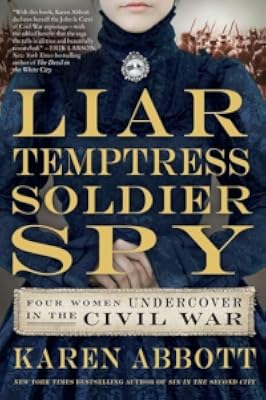
Liar, Temptress, Soldier, Spy: Four Women Undercover in the Civil War
by Karen Abbott
On This Page
Description
Karen Abbott, the New York Times bestselling author of Sin in the Second City and "pioneer of sizzle history" (USA Today), tells the spellbinding true story of four women who risked everything to become spies during the Civil War.Karen Abbott illuminates one of the most fascinating yet little known aspects of the Civil War: the stories of four courageous women—a socialite, a farmgirl, an abolitionist, and a widow—who were spies.
After shooting a Union soldier in her front hall with a show more pocket pistol, Belle Boyd became a courier and spy for the Confederate army, using her charms to seduce men on both sides. Emma Edmonds cut off her hair and assumed the identity of a man to enlist as a Union private, witnessing the bloodiest battles of the Civil War. The beautiful widow, Rose O'Neale Greenhow, engaged in affairs with powerful Northern politicians to gather intelligence for the Confederacy, and used her young daughter to send information to Southern generals. Elizabeth Van Lew, a wealthy Richmond abolitionist, hid behind her proper Southern manners as she orchestrated a far-reaching espionage ring, right under the noses of suspicious rebel detectives.
Using a wealth of primary source material and interviews with the spies' descendants, Abbott seamlessly weaves the adventures of these four heroines throughout the tumultuous years of the war. With a cast of real-life characters including Walt Whitman, Nathaniel Hawthorne, General Stonewall Jackson, detective Allan Pinkerton, Abraham and Mary Todd Lincoln, and Emperor Napoleon III, Liar, Temptress, Soldier, Spy draws you into the war as these daring women lived it.
. show less
Tags
Recommendations
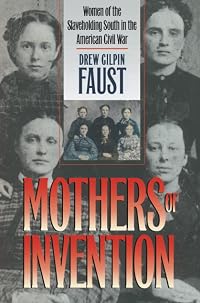
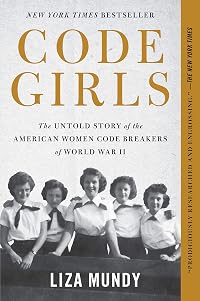
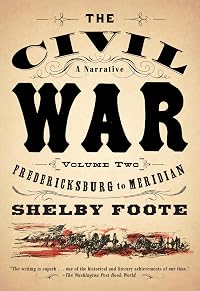
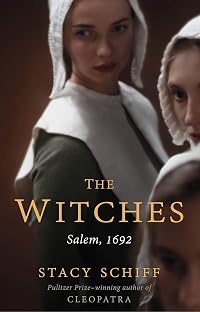


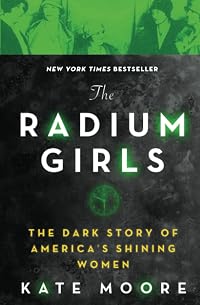
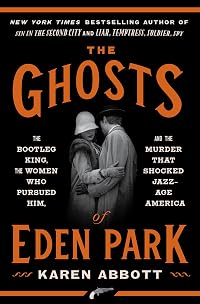
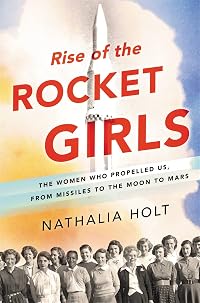
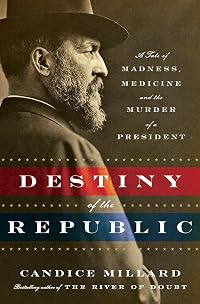



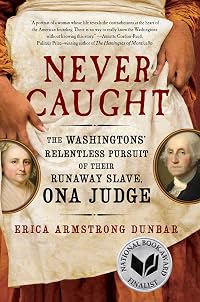
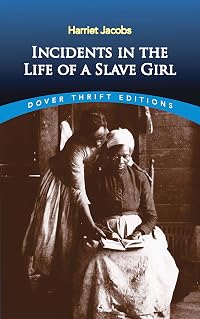
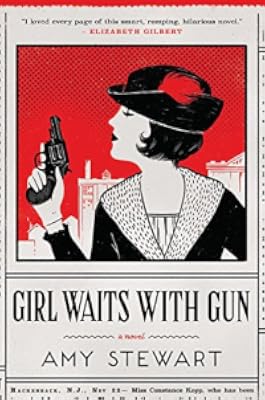
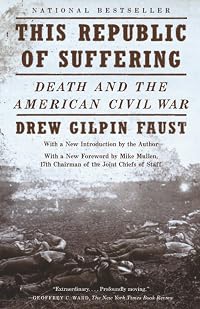
Member Recommendations
norabelle414 Non-fictional accounts of women's roles in the American Civil War
30
Member Reviews
A well-written and engaging novel on the lives of four women who participated in the American Civil War. The women include two for the Union, soldier Emma Edmonds and abolitionist Elizabeth van Lew, and two for the Confederacy, teenager Belle Boyd and attractive widow Rose O'Neil Greenhow, and their lives and actions are intertwined throughout the chapters of this novel.
The biggest issue with this novel is its poor historicity. In literary non-fiction, there are always going to be some liberties taken on the part of the author, but I think that there is a limit. Despite the author claiming that not a single line of dialogue is written without there being a source to take it from and only writing about things that she has evidence of, show more she also writes a detailed description of the emotions of a woman as she drowns. Also, I think that she trusts in her sources to easily, especially those by Boyd and Edmonds, who both sold autobiographies and therefore had reason to embellish their lives, as well as even direct falsehoods that are easily found. Even in the book itself, the author notes a lie told by Edmonds, but this doesn't seem to have a large effect on her trust in Edmonds' tale.
I think that this is a good book for someone who doesn't know a whole lot about the Civil War or who is interested in women's roles during it, as long as they're willing to accept that not everything in this novel is true. show less
The biggest issue with this novel is its poor historicity. In literary non-fiction, there are always going to be some liberties taken on the part of the author, but I think that there is a limit. Despite the author claiming that not a single line of dialogue is written without there being a source to take it from and only writing about things that she has evidence of, show more she also writes a detailed description of the emotions of a woman as she drowns. Also, I think that she trusts in her sources to easily, especially those by Boyd and Edmonds, who both sold autobiographies and therefore had reason to embellish their lives, as well as even direct falsehoods that are easily found. Even in the book itself, the author notes a lie told by Edmonds, but this doesn't seem to have a large effect on her trust in Edmonds' tale.
I think that this is a good book for someone who doesn't know a whole lot about the Civil War or who is interested in women's roles during it, as long as they're willing to accept that not everything in this novel is true. show less
No matter what men might think, women have always been and will always be the driving force behind any major victory – military or otherwise. In Liar Temptress Soldier Spy, Karen Abbott highlights four examples of this fact. These women range in age from seventeen to forty-something and come from varying walks of life. Yet they all distinguish themselves with their courage and willingness to ignore social expectations of its females.
These four women did not necessarily do anything totally extraordinary during a time of war. What makes their efforts so impressive is that they did so during a time when women were considered to be completely inferior and therefore totally incapable of things like spying or setting up one of the largest show more espionage rings in the Confederacy. This society never dreamed that women would want to fight for their country outside of their homes and therefore could not fathom women soldiers. Women were to be trusted and never duplicitous, making it a bit too easy for Belle and Rose to use seduction to elicit secrets that would help their cause. It is a thought process that does not seem as unfathomable today as it perhaps should.
Ms. Abbott has obviously done her homework on her four subjects because she presents their stories with many primary sources, incorporating them seamlessly into the narrative. The trend of fictionalized nonfiction works particularly well in this scenario when the scenes and the expectations for women are so entirely foreign to modern readers. Ms. Abbott is able to make her point without having long expository sections as she is able to incorporate any necessary explanations directly into the ladies’ story lines. As such, the book reads like a good fiction novel, complete with heroes and villains while the primary source material confirms the validity of the stories.
What struck me the most about the four women is how much things have changed. While women continue to struggle with equal pay and equal rights when it comes to things like healthcare and justice, it is always a good thing to remember how things used to be for women. This is important not to convince women to stop the fight but to motivate them to continue to push for equality. Stories like the ones in Liar Temptress Soldier Spy reiterate how capable women are of accomplishing everything men can. These stories even show that women may have more weapons at their fingertips in order to meet their goals. If one gets tired of the constant barrage of headlines about the lack of justice for rape victims or unequal pay for equal work, reading something like Liar Temptress Soldier Spy is a perfect anecdote. show less
These four women did not necessarily do anything totally extraordinary during a time of war. What makes their efforts so impressive is that they did so during a time when women were considered to be completely inferior and therefore totally incapable of things like spying or setting up one of the largest show more espionage rings in the Confederacy. This society never dreamed that women would want to fight for their country outside of their homes and therefore could not fathom women soldiers. Women were to be trusted and never duplicitous, making it a bit too easy for Belle and Rose to use seduction to elicit secrets that would help their cause. It is a thought process that does not seem as unfathomable today as it perhaps should.
Ms. Abbott has obviously done her homework on her four subjects because she presents their stories with many primary sources, incorporating them seamlessly into the narrative. The trend of fictionalized nonfiction works particularly well in this scenario when the scenes and the expectations for women are so entirely foreign to modern readers. Ms. Abbott is able to make her point without having long expository sections as she is able to incorporate any necessary explanations directly into the ladies’ story lines. As such, the book reads like a good fiction novel, complete with heroes and villains while the primary source material confirms the validity of the stories.
What struck me the most about the four women is how much things have changed. While women continue to struggle with equal pay and equal rights when it comes to things like healthcare and justice, it is always a good thing to remember how things used to be for women. This is important not to convince women to stop the fight but to motivate them to continue to push for equality. Stories like the ones in Liar Temptress Soldier Spy reiterate how capable women are of accomplishing everything men can. These stories even show that women may have more weapons at their fingertips in order to meet their goals. If one gets tired of the constant barrage of headlines about the lack of justice for rape victims or unequal pay for equal work, reading something like Liar Temptress Soldier Spy is a perfect anecdote. show less
Review of: Liar Temptress Soldier Spy: Four Women Undercover in the Civil War,
by Karen Abbott
by Stan Prager (12-31-20)
Women are conspicuously absent in most Civil War chronicles. With a few notable exceptions—Clara Barton, Harriet Tubman, Mary Todd Lincoln—female figures largely appear in the literature as bit players, if they make an appearance at all. Author Karen Abbott seeks a welcome redress to this neglect with Liar Temptress Soldier Spy: Four Women Undercover in the Civil War, an exciting and extremely well-written, if deeply flawed account of some ladies who made a significant contribution to the war effort, north and south.
The concept is sound enough. Abbott focuses on four very different women and relates their respective show more stories in alternating chapters. There is Belle Boyd, a teenage seductress with a lethal temper who serves as rebel spy and courier; Emma Edmonds, who puts on trousers to masquerade as Frank Thompson and joins the Union army; Rose O’Neal Greenhow, an attractive widow who romances northern politicians to obtain intel for the south; and, Elizabeth Van Lew, a prominent Richmond abolitionist who maintains a sophisticated espionage ring that infiltrates the inner circles of the Confederate government. Each of these is worthy of book-length treatment, but weaving their exploits together is an effective technique that makes for a readable and compelling narrative.
I had never heard of Karen Abbott—the pen name for Abbott Kahler—a journalist and highly acclaimed best-selling author dubbed the “pioneer of sizzle history” by USA Today. She is certainly a gifted writer, and unlike all too many works of history, her prose is fast-moving and engaging. I was swept along by her colorful recounting of the 1861 Battle of Bull Run, with flourishes such as: “Union troops fumbled backward and the Confederates rammed forward, a brutal and uneven dance, with soldiers felled like rotting trees.” I got so carried away I almost made it through the following passage without stumbling:
Some Northern soldiers claimed that every angle, every viewpoint, offered a fresh horror. The rebels slashed throats from ear to ear. They sliced off heads and dropkicked them across the field. They carved off noses and ears and testicles and kept them as souvenirs. They propped the limp bodies of wounded soldiers against trees and practiced aiming for the heart. They wrested muskets and swords from the clenched hands of corpses. They plunged bayonets deep into the backsides of the maimed and the dead. They burned the bodies, collecting “Yankee shin-bones” to whittle into drumsticks, and skulls to use as steins. [p34]
Almost. But I have a master’s degree in history and have spent a lifetime studying the American Civil War, and I have never heard this account of such barbarism at Bull Run. So I paused and flipped to Abbott’s notes for the corresponding page at the back of the book, where with a whiff of insouciance she admits that: “Throughout the war both the North and the South exaggerated the atrocities committed by the enemy, and it’s difficult to determine which incidents were real and which were apocryphal.” [p442] Which is another way of saying that her account is highly sensationalized, if not outright fabrication.
To my mind, Abbott commits an unpardonable sin here. A little research reveals that there were in fact a handful of allegations of brutality in the course of the battle, including the mutilation of corpses, but much of it anecdotal. There were several episodes of Confederate savagery later in the war, principally inflicted upon black soldiers in blue uniforms, but that is another story. How many readers of a popular history would without question take her at her word about what transpired at Bull Run? How many when confronted with stories of testicles taken as souvenirs would think to consult her citations? Lively paragraphs like this may certainly make for “sizzle”—but where’s the history? Historical novels have their place—The Killer Angels, by Michael Shaara, and Gore Vidal’s Lincoln, are among my favorites—but that is not the same thing as history, which must abide by a strict allegiance to fact-based reporting, informed analysis, and documentation. Apparently, this author demonstrates little loyalty to such constraints.
I read on, but with far more skepticism. Abbott’s style is seductive, so it’s easy to keep going. But sins do continue to accumulate. I have a passing familiarity with three of the four main characters, but fact-checking remained essential. Certainly the best known and most consequential was Van Lew, a heroic figure who aided the escape of prisoners of war and provided key intelligence to Union forces in the field. Greenhow is often cited as her counterpart working for the southern cause. Belle Boyd, on the other hand, has become a creature of legend who turns up more frequently in fiction or film than in history texts. I had never heard of Emma Edmonds, but I came to find her story the most fascinating of them all.
It seems that the more documented the subject—such as Van Lew, for example—the closer Abbott’s portrait comes to reliable biography. Beyond that, the imaginative seems to intrude, indeed dominate. The astonishing tale of Emma Edmonds has her not only impersonating a male Union soldier, but also variously posing as an Irish peddler and in blackface disguised as a contraband, engaged in thrilling espionage missions behind enemy lines! It rang of the stuff that Thomas Berger’s Little Big Man was made of. I was suitably sucked in, but also wary. And rightly so: Abbott’s version of Emma Edmonds’ life is based almost entirely on Edmonds’ own memoir, with little that corroborates it, but the author doesn’t bother to reveal that in the narrative. That Edmonds pretended to be a man in order to enlist seems plausible; her spy missions perhaps only fantasy. We simply just don’t know; a true historian would help us draw conclusions. Abbott seems content to let it play out as so much drama to tickle her audience.
But the worst of all is when the time comes to reveal the fate of luckless Confederate spy Greenhow, who drowns when her lifeboat capsizes with Union vessels bearing down on the steamer she abandoned, the moment where the superlative talent of Abbott’s pen collides with her concomitant disloyalty to scholarship:
She was sideways, upside down, somersaulting inside the wet darkness. She screamed noiselessly, the water rushing in. She tried to hold her breath—thirty seconds, sixty, ninety—before her mouth gave way and water filled it again. Tiny streams of bubbles escaped from her nostrils. A burning scythed through her chest. That bag of gold yanked like a noose around her neck. Her hair unspooled and leeched to her skin, twining around her neck. She tried to aim her arms up and her legs down, to push and pull, but every direction seemed the same. No moonlight skimmed along the surface, showing her the way; there was no light at all. [p389]
Entertaining, right? Outstanding writing, correct? Solid history—of course not! Imagining Greenhow’s final agonizing moments of life with a literary flourish may very well enrich the pages of a work of fiction, but it is nothing less than an outrage to a work of history.
This book was a fun read. Were it a novel I would likely give it high marks. But that is not how it is packaged. Emma Edmonds pretended to be a man to save the Union. Karen Abbott pretends to be a historian to sell books. Both make for great stories. But don’t confuse either with reliable history.
Review of: “Liar Temptress Soldier Spy: Four Women Undercover in the Civil War,” by Karen Abbott https://regarp.com/2020/12/31/review-of-liar-temptress-soldier-spy-four-women-un... show less
by Karen Abbott
by Stan Prager (12-31-20)
Women are conspicuously absent in most Civil War chronicles. With a few notable exceptions—Clara Barton, Harriet Tubman, Mary Todd Lincoln—female figures largely appear in the literature as bit players, if they make an appearance at all. Author Karen Abbott seeks a welcome redress to this neglect with Liar Temptress Soldier Spy: Four Women Undercover in the Civil War, an exciting and extremely well-written, if deeply flawed account of some ladies who made a significant contribution to the war effort, north and south.
The concept is sound enough. Abbott focuses on four very different women and relates their respective show more stories in alternating chapters. There is Belle Boyd, a teenage seductress with a lethal temper who serves as rebel spy and courier; Emma Edmonds, who puts on trousers to masquerade as Frank Thompson and joins the Union army; Rose O’Neal Greenhow, an attractive widow who romances northern politicians to obtain intel for the south; and, Elizabeth Van Lew, a prominent Richmond abolitionist who maintains a sophisticated espionage ring that infiltrates the inner circles of the Confederate government. Each of these is worthy of book-length treatment, but weaving their exploits together is an effective technique that makes for a readable and compelling narrative.
I had never heard of Karen Abbott—the pen name for Abbott Kahler—a journalist and highly acclaimed best-selling author dubbed the “pioneer of sizzle history” by USA Today. She is certainly a gifted writer, and unlike all too many works of history, her prose is fast-moving and engaging. I was swept along by her colorful recounting of the 1861 Battle of Bull Run, with flourishes such as: “Union troops fumbled backward and the Confederates rammed forward, a brutal and uneven dance, with soldiers felled like rotting trees.” I got so carried away I almost made it through the following passage without stumbling:
Some Northern soldiers claimed that every angle, every viewpoint, offered a fresh horror. The rebels slashed throats from ear to ear. They sliced off heads and dropkicked them across the field. They carved off noses and ears and testicles and kept them as souvenirs. They propped the limp bodies of wounded soldiers against trees and practiced aiming for the heart. They wrested muskets and swords from the clenched hands of corpses. They plunged bayonets deep into the backsides of the maimed and the dead. They burned the bodies, collecting “Yankee shin-bones” to whittle into drumsticks, and skulls to use as steins. [p34]
Almost. But I have a master’s degree in history and have spent a lifetime studying the American Civil War, and I have never heard this account of such barbarism at Bull Run. So I paused and flipped to Abbott’s notes for the corresponding page at the back of the book, where with a whiff of insouciance she admits that: “Throughout the war both the North and the South exaggerated the atrocities committed by the enemy, and it’s difficult to determine which incidents were real and which were apocryphal.” [p442] Which is another way of saying that her account is highly sensationalized, if not outright fabrication.
To my mind, Abbott commits an unpardonable sin here. A little research reveals that there were in fact a handful of allegations of brutality in the course of the battle, including the mutilation of corpses, but much of it anecdotal. There were several episodes of Confederate savagery later in the war, principally inflicted upon black soldiers in blue uniforms, but that is another story. How many readers of a popular history would without question take her at her word about what transpired at Bull Run? How many when confronted with stories of testicles taken as souvenirs would think to consult her citations? Lively paragraphs like this may certainly make for “sizzle”—but where’s the history? Historical novels have their place—The Killer Angels, by Michael Shaara, and Gore Vidal’s Lincoln, are among my favorites—but that is not the same thing as history, which must abide by a strict allegiance to fact-based reporting, informed analysis, and documentation. Apparently, this author demonstrates little loyalty to such constraints.
I read on, but with far more skepticism. Abbott’s style is seductive, so it’s easy to keep going. But sins do continue to accumulate. I have a passing familiarity with three of the four main characters, but fact-checking remained essential. Certainly the best known and most consequential was Van Lew, a heroic figure who aided the escape of prisoners of war and provided key intelligence to Union forces in the field. Greenhow is often cited as her counterpart working for the southern cause. Belle Boyd, on the other hand, has become a creature of legend who turns up more frequently in fiction or film than in history texts. I had never heard of Emma Edmonds, but I came to find her story the most fascinating of them all.
It seems that the more documented the subject—such as Van Lew, for example—the closer Abbott’s portrait comes to reliable biography. Beyond that, the imaginative seems to intrude, indeed dominate. The astonishing tale of Emma Edmonds has her not only impersonating a male Union soldier, but also variously posing as an Irish peddler and in blackface disguised as a contraband, engaged in thrilling espionage missions behind enemy lines! It rang of the stuff that Thomas Berger’s Little Big Man was made of. I was suitably sucked in, but also wary. And rightly so: Abbott’s version of Emma Edmonds’ life is based almost entirely on Edmonds’ own memoir, with little that corroborates it, but the author doesn’t bother to reveal that in the narrative. That Edmonds pretended to be a man in order to enlist seems plausible; her spy missions perhaps only fantasy. We simply just don’t know; a true historian would help us draw conclusions. Abbott seems content to let it play out as so much drama to tickle her audience.
But the worst of all is when the time comes to reveal the fate of luckless Confederate spy Greenhow, who drowns when her lifeboat capsizes with Union vessels bearing down on the steamer she abandoned, the moment where the superlative talent of Abbott’s pen collides with her concomitant disloyalty to scholarship:
She was sideways, upside down, somersaulting inside the wet darkness. She screamed noiselessly, the water rushing in. She tried to hold her breath—thirty seconds, sixty, ninety—before her mouth gave way and water filled it again. Tiny streams of bubbles escaped from her nostrils. A burning scythed through her chest. That bag of gold yanked like a noose around her neck. Her hair unspooled and leeched to her skin, twining around her neck. She tried to aim her arms up and her legs down, to push and pull, but every direction seemed the same. No moonlight skimmed along the surface, showing her the way; there was no light at all. [p389]
Entertaining, right? Outstanding writing, correct? Solid history—of course not! Imagining Greenhow’s final agonizing moments of life with a literary flourish may very well enrich the pages of a work of fiction, but it is nothing less than an outrage to a work of history.
This book was a fun read. Were it a novel I would likely give it high marks. But that is not how it is packaged. Emma Edmonds pretended to be a man to save the Union. Karen Abbott pretends to be a historian to sell books. Both make for great stories. But don’t confuse either with reliable history.
Review of: “Liar Temptress Soldier Spy: Four Women Undercover in the Civil War,” by Karen Abbott https://regarp.com/2020/12/31/review-of-liar-temptress-soldier-spy-four-women-un... show less
I've lived the north and south of the Civil War aftermath: born and raised in the DC area, moved to a border state (home of the Dred-Scott decision for most of my adolescence, and then settled here in the South for the past 40 or so years. There are many aspects, besides the politics of the war, that I find fascinating. The fierce loyalty some folks have for their homeland, for instance, or the burning desire to fight for their personal beliefs. To me, fighting means taking an intellectual stand, not the physical personal risks the four women in Liar, Temptress, Soldier, Spy did. The women, each fully dedicated to their cause, are skillfully depicted by Karen Abbott. I heard her talk about the book on NPR, and the interview fascinated show more me so much, I immediately sought out the book.
The four women are very different in personality and approach to how they helped. Belle Boyd was flamboyant, rambunctious, daring in an overt way, very much an extroverted young woman. I found myself wondering what labels a psychiatrist would slap on her were she to end up on a couch today. I suppose as a kid I sometimes fantasized about passing as a boy so that I could have a more rough and tumble life (I grew up in the late 50's), but I am not sure I would have tried to pass as a male and join the Union army, as Emma Edmonds did. It's interesting, also to note, that there are several books out of late about women disguised as men and fighting in the Civil War. Edmonds experience was spurred not by the desire to be next to her sweetheart, unlike most of these women on other books, but to escape a bad home life and put distance between her present and past. Rose O’Neale Greenhow was the only one of the four women I really knew anything about beforehand, some of which I "knew" being incorrect. A clever and cunning spy, she was able to pass messages and information even when under house arrest by the Yankees. Elizabeth Van Lew, who lived in Richmond, was shunned as an abolitionist, while getting valuable information to the North, and aiding the escape of many Union prisoners and Southern slaves.
Oddly, though, the two people I want to read more about are not these four women, but "Little Rose", the youngest daughter of Greenhow, and Mary Elizabeth Bowser, a freed slave that Van Lew helped place in the southern white house as part of her spy ring. Bowser was both educated and possessed of a photographic memory, thus was able to gain access and recall intimate details of the strategy and plans discussed by Jefferson Davis and his officers.
A long, but interesting read.
Tags: heard-about-it-on-npr, nonfiction, places-i-have-been, read, set-in-my-stomping-grounds, set-in-the-south, taught-me-something, thank-you-charleston-county-library show less
The four women are very different in personality and approach to how they helped. Belle Boyd was flamboyant, rambunctious, daring in an overt way, very much an extroverted young woman. I found myself wondering what labels a psychiatrist would slap on her were she to end up on a couch today. I suppose as a kid I sometimes fantasized about passing as a boy so that I could have a more rough and tumble life (I grew up in the late 50's), but I am not sure I would have tried to pass as a male and join the Union army, as Emma Edmonds did. It's interesting, also to note, that there are several books out of late about women disguised as men and fighting in the Civil War. Edmonds experience was spurred not by the desire to be next to her sweetheart, unlike most of these women on other books, but to escape a bad home life and put distance between her present and past. Rose O’Neale Greenhow was the only one of the four women I really knew anything about beforehand, some of which I "knew" being incorrect. A clever and cunning spy, she was able to pass messages and information even when under house arrest by the Yankees. Elizabeth Van Lew, who lived in Richmond, was shunned as an abolitionist, while getting valuable information to the North, and aiding the escape of many Union prisoners and Southern slaves.
Oddly, though, the two people I want to read more about are not these four women, but "Little Rose", the youngest daughter of Greenhow, and Mary Elizabeth Bowser, a freed slave that Van Lew helped place in the southern white house as part of her spy ring. Bowser was both educated and possessed of a photographic memory, thus was able to gain access and recall intimate details of the strategy and plans discussed by Jefferson Davis and his officers.
A long, but interesting read.
Tags: heard-about-it-on-npr, nonfiction, places-i-have-been, read, set-in-my-stomping-grounds, set-in-the-south, taught-me-something, thank-you-charleston-county-library show less
Liar, Temptress, Soldier, Spy is the non-fiction account of four women during the U. S. Civil War: Rose Greenhow, Elizabeth Van Lew, Emma Edmonds, and Belle Boyd (guess which side she was on). Two are Confederates and two Unionists, each spied for the cause they embraced and suffered for doing so.
The first half of the book was quite interesting and read more like fiction than non, with the narrative storylines. But, somewhere around the middle it got bogged down and began to drag. Never a good thing when I am just wondering when I will get to the end. I was surprised that I had not ever heard of any of these women before. I do not remember any of them being mentioned during the Ken Burn’s Civil War series. At least one of them, show more Elizabeth Van Lew, may have had a marked impact upon the outcome of the war. show less
The first half of the book was quite interesting and read more like fiction than non, with the narrative storylines. But, somewhere around the middle it got bogged down and began to drag. Never a good thing when I am just wondering when I will get to the end. I was surprised that I had not ever heard of any of these women before. I do not remember any of them being mentioned during the Ken Burn’s Civil War series. At least one of them, show more Elizabeth Van Lew, may have had a marked impact upon the outcome of the war. show less
This was a much better book than I expected it to be. Karen Abbott took two women from each side of the war and examined their motivations for spying, how they accomplished it, how effective they were, the legal effects of their work, the reactions of neighbors, friends, the military, and the media to spying and theirs in particular if it was known, and the aftermath of the war and how they fared after. I thought it was fascinating that the two Southern women both used their sex and femininity in doing their job, while the two Northern women never considered doing so. Because I've read many books about the civil war, I was somewhat knowledgeable about each of these women, having at least heard of each of them. Belle Boyd was nearly show more infamous, so I knew the most about her. But Abbott gave me lots more to learn about all of them. There was one I did not like, one I grudgingly had respect for (though I did not approve of her or her methods, but understood her feelings and loyalty to her cause), one whose courage and fortitude amazed me, and one whose intelligence, creativity, and resilience was worthy of a book of its own. Recommended. show less
Karen Abbott takes a look at four women of the American Civil War, two Northern and two Southern: Elizabeth Van Lew, Emma Edmonds (aka Frank Thompson), Rose Greenhow, and Belle Boyd. She sheds new light on the roles of women in the Civil War and highlights little-known activities of her subjects. This book shows how some women exploited social mores and beliefs to advance their respective wartime causes.
Elizabeth Van Lew was a wealthy abolitionist living in Richmond who supported Union prisoners from her home. Emma Edmonds disguised herself as a man in order to become a Union soldier. Rose Greenhow, a socialite living in Washington DC, assembled a courier network of southern sympathizers. Belle Boyd used flirtation as a technique for show more obtaining information to pass to the Confederacy.
I listened to the audiobook, read by Karen White in a clipped style. On the plus side, the narrative maintains the reader’s interest throughout. It is filled with period details, intrigue, setups, and daring schemes. It pulls no punches in describing the carnage of this war and gives the reader a sense of how horrible it truly was. On the minus side, the author states that she will point out where the journals do not match facts but does not follow through. As a result, it feels like the book repackages the women’s own memoirs and ends up conveying their biased viewpoints. show less
Elizabeth Van Lew was a wealthy abolitionist living in Richmond who supported Union prisoners from her home. Emma Edmonds disguised herself as a man in order to become a Union soldier. Rose Greenhow, a socialite living in Washington DC, assembled a courier network of southern sympathizers. Belle Boyd used flirtation as a technique for show more obtaining information to pass to the Confederacy.
I listened to the audiobook, read by Karen White in a clipped style. On the plus side, the narrative maintains the reader’s interest throughout. It is filled with period details, intrigue, setups, and daring schemes. It pulls no punches in describing the carnage of this war and gives the reader a sense of how horrible it truly was. On the minus side, the author states that she will point out where the journals do not match facts but does not follow through. As a result, it feels like the book repackages the women’s own memoirs and ends up conveying their biased viewpoints. show less
Members
- Recently Added By
Lists

Top Five Books of 2016
795 works; 228 members

Ulysses S. Grant & the American Civil War
24 works; 1 member

Books Read in 2016
4,666 works; 197 members

Historical Fiction
889 works; 91 members

THE WAR ROOM
813 works; 24 members

Women in War
7 works; 1 member

Recommend the 20 best books you've read in the last five years
2,168 works; 606 members
Author Information

6+ Works 4,243 Members
Karen Abbott was born and raised in Philadelphia, Pennsylvania. She worked as a journalist for several years at Philadelphia magazine and Philadelphia Weekly. She also wrote for Salon.com and other publications. She has written several books including Sin in the Second City and American Rose. (Bowker Author Biography)
Some Editions
Awards and Honors
Distinctions
Common Knowledge
- Original publication date
- 2014
- People/Characters
- Belle Boyd; Sarah Emma Edmonds Seelye; Rose O'Neal Greenhow; Elizabeth Van Lew; Bettie Duvall; Henry D. Wilson (show all 47); Abraham Lincoln; Lizzie Fitzgerald; General Pierre Gustave Toutant-Beauregard; General John Winder; Calvin Huson; General George McClellan; Detective Allan Pinkerton; Thomas Jordan; Captain George Gibbs; Mary Jane Richards; Jerome Robbins; William P. Wood; Dr. Stewart; Hattie Lawton; Captain George Alexander; Thomas Pratt Turner; Dick Turner; George Emack; Erasmus Ross; Alfred Ely; General James Shields; Captain Daniel Keily; Allen Hall; Henry Kyd Douglas; C.W.D. Smitley; Colonel Orlando Poe; Lieutenant Clifford McVay; Lieutenant James Reid; Sarah Rosetta Wakeman; Thomas Carlyle; General Benjamin "Beast" Butler; Napoleon III (Charles-Louis Napoléon Bonaparte); Merritt Rowley; Lieutenant Samuel Hardinge; Colonel Ulric Dahlgren; Captain Philip Cashmeyer; Henry Hotze; Linus Seelye; John Swainston Hammond; Nathaniel Rue High; Ulysses S. Grant
- Important places
- Martisburg, Virginia, USA; Washington, D.C., USA; Manassas, Virginia, USA; Richmond, Virginia, USA; Mansion House Hospital, Alexandria, Virginia, USA; Old Capital Prison, Washington, D.C., USA (show all 13); Fredericksburg, Virginia, USA; Paris, Île-de-France, France; Fort Monroe, Virginia, USA; London, England, UK; New Brunswick, Canada; Fort Scott, Kansas, USA; Flint, Michigan, USA
- Important events
- American Civil War (1861 | 1865); Battle of Bull Run (1861); Trent Affair (1861); Second Battle of Bull Run (1862); Battle of Fredericksburg (1862); Battle of Williamsburg (1862)
- Dedication
- For Chuck, from his unequal half
- First words
- In the town of Martinsburg on the lower tip of the Valley, a seventeen-year-old rebel named Belle Boyd sat by the windows of her wood-frame home, waiting for the war to come to her.
- Quotations
- Their gender allowed them with both a psychological and physical disguise; while hiding behind social mores about women's proper roles, they could hide evidence of their treason on their very person, tucked beneath hoop skirt... (show all)s or tied up in their hair. Women, it seems, were capable not only of significant acts of treason but executing them more deftly than men.
- Last words
- (Click to show. Warning: May contain spoilers.)"We must get these flowers through the lines at once," she said, "for General Grant's breakfast table in the morning," and with the push of the wind she was gone.
- Blurbers
- Foreman, Amanda; King, Gilbert; Abbott, Megan; Korda, Michael; Blum, Deborah
Classifications
Statistics
- Members
- 1,300
- Popularity
- 18,695
- Reviews
- 59
- Rating
- (3.82)
- Languages
- English
- Media
- Paper, Audiobook, Ebook
- ISBNs
- 12
- ASINs
- 7