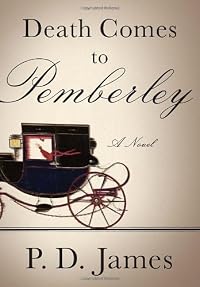
Death Comes to Pemberley
by P. D. James
On This Page
Description
Fiction. Literature. Mystery. Historical Fiction. HTML:A rare meeting of literary genius: P. D. James, long among the most admired mystery writers of our time, draws the characters of Jane Austen’s beloved novel Pride and Prejudice into a tale of murder and emotional mayhem.It is 1803, six years since Elizabeth and Darcy embarked on their life together at Pemberley, Darcy’s magnificent estate. Their peaceful, orderly world seems almost unassailable. Elizabeth has found her footing show more as the chatelaine of the great house. They have two fine sons, Fitzwilliam and Charles. Elizabeth’s sister Jane and her husband, Bingley, live nearby; her father visits often; there is optimistic talk about the prospects of marriage for Darcy’s sister Georgiana. And preparations are under way for their much-anticipated annual autumn ball.
Then, on the eve of the ball, the patrician idyll is shattered. A coach careens up the drive carrying Lydia, Elizabeth’s disgraced sister, who with her husband, the very dubious Wickham, has been banned from Pemberley. She stumbles out of the carriage, hysterical, shrieking that Wickham has been murdered. With shocking suddenness, Pemberley is plunged into a frightening mystery.
Inspired by a lifelong passion for Austen, P. D. James masterfully re-creates the world of Pride and Prejudice, electrifying it with the excitement and suspense of a brilliantly crafted crime story, as only she can write it. show less
Tags
Recommendations
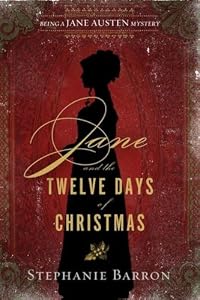
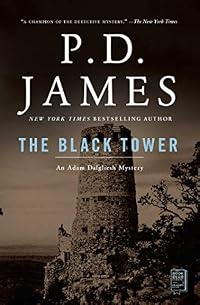
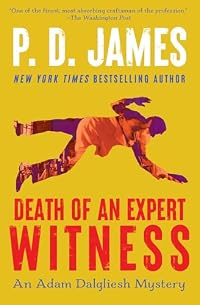
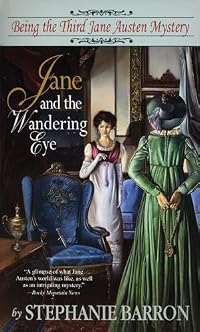
Member Recommendations

Member Reviews
This was just terrible. How terrible? Let me count the ways (POTENTIAL SPOILERS):
1. Why write a follow-up to Pride and Prejudice if you seemingly make little effort to capture the essential essence of the primary characters?
2. Why write a follow-up to Pride and Prejudice that turns Elizabeth into a simpering, boring, obedient little wifey-poo and Darcy into a complete uptight prig (granted, he always kind of was but he was also charming and there is none of that here)?
3. Why write a follow-up to Pride and Prejudice that is a murder mystery and make it SO INCREDIBLY DUMB AND BORING that the reader can barely bring herself to care?
4. Why write a follow-up to Pride and Prejudice that is a murder mystery and include plot holes so big you show more could drive a chaise-and-four through them? Why didn't anyone bother asking Lydia what Wickham and Denny were arguing about?!?!?!
5. Why write anything if you are basically just going to phone it in and tell your story completely through terribly awkward exposition and long speeches?
6. .... I can't go on. I don't know why I bothered to finish this except that maybe because it was on audio. Had it been a "real" book, I am fairly confident I would have just skipped to the last few pages to see whodunnit. Oh, except that would have told me nothing because we learn whodunnit well before the end of the book, after which time, Ms. James just goes on and on about nothing at all and won't let her crappy story die. I wanted to stab myself in the ears by the end of it.
So, yeah, not recommended. show less
1. Why write a follow-up to Pride and Prejudice if you seemingly make little effort to capture the essential essence of the primary characters?
2. Why write a follow-up to Pride and Prejudice that turns Elizabeth into a simpering, boring, obedient little wifey-poo and Darcy into a complete uptight prig (granted, he always kind of was but he was also charming and there is none of that here)?
3. Why write a follow-up to Pride and Prejudice that is a murder mystery and make it SO INCREDIBLY DUMB AND BORING that the reader can barely bring herself to care?
4. Why write a follow-up to Pride and Prejudice that is a murder mystery and include plot holes so big you show more could drive a chaise-and-four through them? Why didn't anyone bother asking Lydia what Wickham and Denny were arguing about?!?!?!
5. Why write anything if you are basically just going to phone it in and tell your story completely through terribly awkward exposition and long speeches?
6. .... I can't go on. I don't know why I bothered to finish this except that maybe because it was on audio. Had it been a "real" book, I am fairly confident I would have just skipped to the last few pages to see whodunnit. Oh, except that would have told me nothing because we learn whodunnit well before the end of the book, after which time, Ms. James just goes on and on about nothing at all and won't let her crappy story die. I wanted to stab myself in the ears by the end of it.
So, yeah, not recommended. show less
I went into *Death Comes to Pemberley* wanting to love it. P. D. James is one of my favorite writers, and I trust her completely when it comes to structure, character, and moral complexity.
But at its core, this is still a continuation of *Pride and Prejudice*, and that underlying world simply does not work for me.
Because I haven’t read Austen, I can’t judge how accurate the continuation is—but knowing James, I assume it’s handled with care and precision. The issue isn’t execution. It’s the framework itself.
The novel operates within a very formal moral system where behavior, reputation, and social rules dominate every interaction. Characters act according to expectation rather than internal truth, and emotional expression show more feels constrained by etiquette. I found this frustrating rather than engaging.
Even with a murder at the center, the story never fully escapes that controlled environment. Instead of tension, I felt distance. Instead of psychological depth, I felt social performance.
This isn’t a flaw in the writing—it’s a mismatch in taste. Readers who enjoy Austen’s world and its codes of behavior will likely appreciate what James does here. For me, the structure itself creates a barrier I couldn’t get past. show less
But at its core, this is still a continuation of *Pride and Prejudice*, and that underlying world simply does not work for me.
Because I haven’t read Austen, I can’t judge how accurate the continuation is—but knowing James, I assume it’s handled with care and precision. The issue isn’t execution. It’s the framework itself.
The novel operates within a very formal moral system where behavior, reputation, and social rules dominate every interaction. Characters act according to expectation rather than internal truth, and emotional expression show more feels constrained by etiquette. I found this frustrating rather than engaging.
Even with a murder at the center, the story never fully escapes that controlled environment. Instead of tension, I felt distance. Instead of psychological depth, I felt social performance.
This isn’t a flaw in the writing—it’s a mismatch in taste. Readers who enjoy Austen’s world and its codes of behavior will likely appreciate what James does here. For me, the structure itself creates a barrier I couldn’t get past. show less
P.D. James is one of the great mystery writers. Her books are psychologically dark and dense, humanely subtle and complex. Long before I started reviewing and writing books, she was the author I had to read each time she published a new book.
Her latest takes a decidedly different direction. Instead of contemporary England, she has set this one at Pemberley estate in 1803, six years after Miss Elizabeth Bennet has married Darcy. That is, P.D. James takes the prose of Jane Austen as her setting.
P.D. James has an excellent ear. When she writes in Austen’s mode, she does so with incredible exactitude. The tone and diction sound as if lifted from the pages of Pride and Prejudice. While I fully recognize the torture I inflicted on teenage show more boys by requiring them to read Pride and Prejudice when I taught high school English, some of us in the world adore Austen. There is something of a cottage industry of imitators of Austen these days. I’ve avoided most of them for one reason or another, mostly time shortage. But when a master like P.D. James joined the cause, I bit. She didn’t disappoint me.
James goes beyond skillful imitation (which would be challenging enough in and of itself), but the hybrid she creates feels at times like strange bedfellows. Even P.D. James admits in her author’s note that death and murder are not the stuff of Austen. James’s customary darkness never feels to me quite at home with the light if cynical tone that Austen strikes even in her most tragic moments. A Picasso set next to a Vermeer are both still delightful to examine, and the juxtaposition can actually illuminate both. Reading Death Comes to Pemberley was a bit like that, two masters at work, but on separate projects that somehow got jumbled together at the publishers. One minute James has you lost in Austen’s language and worldview. The next she’s bent over a bloody corpse or elaborating on police procedures at the opening of the 19th century—not Austen-like at all. One other smaller note: Of such elaborations on various background topics, there were perhaps too many and they were not organically integrated into the flow of the tale. Austen never needs to go into such exegesis, but we understand her world without difficulty. I think James could have trusted us to do without some of this information.
I enjoyed this book, and I recommend it if you happen to love both P.D. James and Austen, but be aware of the disjuncture you may sometimes languish in. Watching a master at work is engaging, especially when she tries something audacious and remarkable. It doesn’t have to be completely successful to be worth the attempt. show less
Her latest takes a decidedly different direction. Instead of contemporary England, she has set this one at Pemberley estate in 1803, six years after Miss Elizabeth Bennet has married Darcy. That is, P.D. James takes the prose of Jane Austen as her setting.
P.D. James has an excellent ear. When she writes in Austen’s mode, she does so with incredible exactitude. The tone and diction sound as if lifted from the pages of Pride and Prejudice. While I fully recognize the torture I inflicted on teenage show more boys by requiring them to read Pride and Prejudice when I taught high school English, some of us in the world adore Austen. There is something of a cottage industry of imitators of Austen these days. I’ve avoided most of them for one reason or another, mostly time shortage. But when a master like P.D. James joined the cause, I bit. She didn’t disappoint me.
James goes beyond skillful imitation (which would be challenging enough in and of itself), but the hybrid she creates feels at times like strange bedfellows. Even P.D. James admits in her author’s note that death and murder are not the stuff of Austen. James’s customary darkness never feels to me quite at home with the light if cynical tone that Austen strikes even in her most tragic moments. A Picasso set next to a Vermeer are both still delightful to examine, and the juxtaposition can actually illuminate both. Reading Death Comes to Pemberley was a bit like that, two masters at work, but on separate projects that somehow got jumbled together at the publishers. One minute James has you lost in Austen’s language and worldview. The next she’s bent over a bloody corpse or elaborating on police procedures at the opening of the 19th century—not Austen-like at all. One other smaller note: Of such elaborations on various background topics, there were perhaps too many and they were not organically integrated into the flow of the tale. Austen never needs to go into such exegesis, but we understand her world without difficulty. I think James could have trusted us to do without some of this information.
I enjoyed this book, and I recommend it if you happen to love both P.D. James and Austen, but be aware of the disjuncture you may sometimes languish in. Watching a master at work is engaging, especially when she tries something audacious and remarkable. It doesn’t have to be completely successful to be worth the attempt. show less
SO disappointing! I've deliberately been avoiding reading the many, many new authors who have picked up Jane Austen's characters and launched them into new adventures. Why? Because it's NOT the characters (at least not taken on their own strength) that make Jane Austen novels so memorable, it's Austen's storytelling prowess and subtle wit - which, if they were so easy to duplicate/imitate, would scarcely explain why the author remains so admired today. However, I was tempted into setting aside my misgivings by the prospect of an Austen mystery written by an author with proven mystery chops. Maybe, I thought, the diversion of a good mystery plot would distract my attention from any potential lapses in technique or wit.
The story picks up show more six years after the marriage of Elizabeth Bennett and Fitzwilliam Darcy, whose highly-entertaining courtship is described in Pride & Prejudice. The plot revolves around Lydia's rogue of a husband, Wickham, who finds himself accused of murder after being present (albeit hopelessly drunk) at the bludgeoning death of a fellow soldier on the Pemberley estate.
Alas, the mystery plot never becomes remotely interesting, which caused me to shift my focus to the storytelling, which doesn't stand up to scrutiny either. I simply don't understand how a writer as competent as James could have committed so many basic storytelling errors: abandoning a major character (Lydia) half-way through the novel; creating a mystery with a resolution that is revealed not through investigation or cleverness but through improbable chance/coincidence; retelling items of plot over and over again (first we hear the info from Elizabeth, then she retells the tale to Jane, then the whole tale gets repeated AGAIN at the inquest ... sheesh!); and, finally, wrapping up the novel with an epilogue that unnecessarily rehashes an episode from Pride & Prejudice that was satisfactorily resolved in the original text and certainly in no need of rehashing here.
Also didn't appreciate inconsistencies in characterization (where has Elizabeth's sardonic wit disappeared to? where has Darcy's haughtiness gone?) or James' attempt to "update" Austen's storytelling by having her characters explicitly discuss their feelings/emotions rather than leaving it to us readers to infer them. This sequel doesn't begin to live up to the subtlety or wit of Austen's original text.
In short, I've learned my lesson: there's only one Jane Austen, and she died in 1817. In future I'll be more disciplined about giving these Austen pastiches a miss. show less
The story picks up show more six years after the marriage of Elizabeth Bennett and Fitzwilliam Darcy, whose highly-entertaining courtship is described in Pride & Prejudice. The plot revolves around Lydia's rogue of a husband, Wickham, who finds himself accused of murder after being present (albeit hopelessly drunk) at the bludgeoning death of a fellow soldier on the Pemberley estate.
Alas, the mystery plot never becomes remotely interesting, which caused me to shift my focus to the storytelling, which doesn't stand up to scrutiny either. I simply don't understand how a writer as competent as James could have committed so many basic storytelling errors: abandoning a major character (Lydia) half-way through the novel; creating a mystery with a resolution that is revealed not through investigation or cleverness but through improbable chance/coincidence; retelling items of plot over and over again (first we hear the info from Elizabeth, then she retells the tale to Jane, then the whole tale gets repeated AGAIN at the inquest ... sheesh!); and, finally, wrapping up the novel with an epilogue that unnecessarily rehashes an episode from Pride & Prejudice that was satisfactorily resolved in the original text and certainly in no need of rehashing here.
Also didn't appreciate inconsistencies in characterization (where has Elizabeth's sardonic wit disappeared to? where has Darcy's haughtiness gone?) or James' attempt to "update" Austen's storytelling by having her characters explicitly discuss their feelings/emotions rather than leaving it to us readers to infer them. This sequel doesn't begin to live up to the subtlety or wit of Austen's original text.
In short, I've learned my lesson: there's only one Jane Austen, and she died in 1817. In future I'll be more disciplined about giving these Austen pastiches a miss. show less
Some years after [b:Pride and Prejudice|1885|Pride and Prejudice|Jane Austen|http://photo.goodreads.com/books/1320399351s/1885.jpg|3060926], Lydia Wickham (nee Bennet) stumbles through the front door of Pemberley in hysterics. There were gunshots in the woods, and she's sure her husband has been murdered. Darcy and some of the other men go out in search, and find Mr. Wickham crouched over Denny's body. He is covered in blood and, upon seeing them, says he killed his friend. Darcy summons the magistrate and then spends the entire rest of the novel thinking anachronistic thoughts and doing absolutely nothing related to the murder investigation. In fact, there really isn't a murder investigation; the most the characters do in regards to show more the murder is sit around the fire talking about whether or not the alleged murderer has the mindset possible to do the deed. No evidence turns up, nor do the characters make any attempt to find any. The full story of the murder is randomly turned up in a deathbed confession, and then another character equally randomly confesses the rest of the plot.
It's a very odd book. Usually a murder mystery involves a long period of finding out clues, or talking to witnesses, or figuring out the motives--and instead the characters just go over the same three facts ad nauseum. For example: we see the discovery of the body through Mr. Darcy's eyes, and then he relives the discovery a few times, and then he recounts the discovery several times to various law enforcement personnel. His story and view of the facts never change, so there's no point to going over it all again almost word-for-word.
It's no good as historical fiction, because although James has clearly done some research into the period (which she infodumps randomly; for example, apropos of nothing, Darcy soapboxes about the need for an appeals court) she doesn't seem to get the underpinnings of Regency society. The characters are worried that they might upset the police by moving the body--even though they would have no reason to expect an autopsy, and the police of the time were a distrustred force of ill-trained, ill-paid, low class dudes who barely existed yet. And even a century later the police wouldn't be going in the front door, let alone questioning rich gentlemen about their alibis in the parlor!
And it doesn't work as a continuation of Pride and Prejudice, either. The spirit and wit of Austen is completely missing, but then I expected that. But the characters are all wrong as well! Elizabeth is a quiet, maternal figure in the background, who has about three scenes total. She and Mr.Darcy hardly speak to each other, except to utter platitudes about how happy they are to have children or to rehash old lines from P&P. Colonel Fitzwilliam gets a complete character assassination--far from the wry, practical man who bantered with Lizzy, here he's a prig who despises her. It doesn't ring true.
[b:Death Comes to Pemberley|12875355|Death Comes to Pemberley|P.D. James|http://photo.goodreads.com/books/1318936579s/12875355.jpg|17822238] just doesn't satisfy on any level. If you're looking for murder mysteries set in the Regency period, I suggest the Julian Kestral series by Kate Ross instead.
(The review I used to have up, before I read the book, was "Ooh, I hope Wickham's been murdered! That child-molesting, predatory lying scumbag.") show less
It's a very odd book. Usually a murder mystery involves a long period of finding out clues, or talking to witnesses, or figuring out the motives--and instead the characters just go over the same three facts ad nauseum. For example: we see the discovery of the body through Mr. Darcy's eyes, and then he relives the discovery a few times, and then he recounts the discovery several times to various law enforcement personnel. His story and view of the facts never change, so there's no point to going over it all again almost word-for-word.
It's no good as historical fiction, because although James has clearly done some research into the period (which she infodumps randomly; for example, apropos of nothing, Darcy soapboxes about the need for an appeals court) she doesn't seem to get the underpinnings of Regency society. The characters are worried that they might upset the police by moving the body--even though they would have no reason to expect an autopsy, and the police of the time were a distrustred force of ill-trained, ill-paid, low class dudes who barely existed yet. And even a century later the police wouldn't be going in the front door, let alone questioning rich gentlemen about their alibis in the parlor!
And it doesn't work as a continuation of Pride and Prejudice, either. The spirit and wit of Austen is completely missing, but then I expected that. But the characters are all wrong as well! Elizabeth is a quiet, maternal figure in the background, who has about three scenes total. She and Mr.Darcy hardly speak to each other, except to utter platitudes about how happy they are to have children or to rehash old lines from P&P. Colonel Fitzwilliam gets a complete character assassination--far from the wry, practical man who bantered with Lizzy, here he's a prig who despises her. It doesn't ring true.
[b:Death Comes to Pemberley|12875355|Death Comes to Pemberley|P.D. James|http://photo.goodreads.com/books/1318936579s/12875355.jpg|17822238] just doesn't satisfy on any level. If you're looking for murder mysteries set in the Regency period, I suggest the Julian Kestral series by Kate Ross instead.
(The review I used to have up, before I read the book, was "Ooh, I hope Wickham's been murdered! That child-molesting, predatory lying scumbag.") show less
Disappointing. There's hardly any mystery here, and no detecting of any kind--what questions there are about the crime are answered entirely through the actions and confessions of those involved. James handles the tone and style of a novel inspired by Jane Austen reasonably well, but the characterization of familiar faces is sometimes competent and other times way off the mark (this, of course, is surely a matter purely of individual taste). The plot seems to plod, with little compelling one to discover what will happen. Information is clumsily repeated, and the book's epilogue takes a good deal of the vim out of Pride and Prejudice by explaining away some of the character peculiarities with which one is still left at the close of that show more novel. (This was very likely an attempt at answering questions and "filling in" missing bits from the source material, which is an appropriate and often very compelling function of retellings, but it fell flat here.) Aside from the general competency at capturing the Regency feel, the early chapters about day-to-day life for Mr. and Mrs. Darcy (and to a lesser extent Mr. and Mrs. Bingley) are the aspects of the novel that would best recommend it. show less
When I read Death Comes to Pemberly in 2013, I must confess I and was not all that engaged. This time is different. I've been so immersed in the regency era for the last year that I am rather awed by James' attention to . . . well . . . everything. Language and atmosphere (a long-windedness we can barely tolerate anymore), details of rank and consequence, of custom, and all the little details of furnishings. James is aware of the slower pace and she even jokes about it describing one of the magistrates who proses on endlessly but would disappoint others if he did not. Different world. Interestingly the story takes place during the little lull in fighting Napoleon, the Treaty of Amiens although hints abound that military men are show more expecting to get back to soldiering. That is so various characters can be present, including poor Captain Denny.
At the same time, the care James took to write authentically led at times to a ponderous feel. I wouldn't attempt write a regency novel that strives to be so authentic because the reading audience wouldn't tolerate it(as I did not the first time around, nor could I do what James did so well.) Once I allowed myself to read it slowly, savouring James' efforts I began to hugely enjoy the book. ****1/2 show less
At the same time, the care James took to write authentically led at times to a ponderous feel. I wouldn't attempt write a regency novel that strives to be so authentic because the reading audience wouldn't tolerate it(as I did not the first time around, nor could I do what James did so well.) Once I allowed myself to read it slowly, savouring James' efforts I began to hugely enjoy the book. ****1/2 show less
Members
- Recently Added By
Published Reviews
ThingScore 100
. . . an excellent period mystery, replete with all manner of mayhem, and a most welcome way to revisit Elizabeth and Darcy. . .
added by 4leschats
Really, gentle reader, there are limits. When mystery grande dame P. D. James felt the mantle of Jane Austen fall on her shoulders, why didn't she simply shrug it off? James places a template of Austen characters and Austen-like language over a traditional mystery plot. The mystery is set in 1803, six years after the wedding of Elizabeth and Darcy, with ample space given to catching us up on show more the recent doings of the Bennet family. On the mystery side, there's plenty of action, from the discovery of Captain Denny's body, through a trial, assorted deceptions and mix-ups, and love affairs. Unfortunately, though, if this is meant as an homage, it's a pretty weak cup of tea. James' many fans will be pleased to see any kind of new book from the 91-year-old author, but discriminating Austen devotees are unlikely to appreciate the move from social comedy to murder. show less
added by kthomp25
Lists

Historical Fiction
889 works; 91 members

Crime and Mysteries to Read
746 works; 31 members

Best 21st Century Books (So Far)
670 works; 86 members

Read the book and saw the movie
1,170 works; 192 members

Novels that you shouldn't waste your time on
94 works; 52 members

Austenland
165 works; 12 members

British Mystery
469 works; 14 members
Literature About Social Class
134 works; 19 members

Detective Stories
343 works; 5 members

Books Read in 2012 (Numbered)
168 works; 6 members

Biggest Disappointments
606 works; 163 members

Best Mysteries With a Historical Setting
292 works; 160 members

Books Read in 2016
4,666 works; 199 members

Books Read in 2017
4,248 works; 129 members

unread and uncatalogued
48 works; 1 member

Books on my Kindle
162 works; 3 members

Books Read in 2012
815 works; 34 members

Watched the Movie, Probably Won't Read the Book
185 works; 34 members

Dishonourable Mentions of 2014
80 works; 23 members

Stories Inspired by Other Fiction
127 works; 24 members

Books Read in 2014
2,341 works; 89 members

Best books I read in 2013
152 works; 3 members

Books Read in 2024
4,623 works; 126 members

Books About Murder
313 works; 7 members
Author Information

154+ Works 69,538 Members
P. D. James, pseudonym of Phyllis Dorothy James White, was born on August 3, 1920 in Oxford, England. During World War II, she served as a Red Cross nurse. She worked in administration for 19 years with the National Health Service. After the death of her husband in 1964, she took a Civil Service examination and became an administrator in the show more forensic science and criminal law divisions of the Department of Home Affairs. She spent 30 years in British Civil Service. She became Baroness James of Holland Park in 1991. Her first novel, Cover Her Face, was published in 1962. She wrote approximately 20 books during her lifetime including the Adam Dalgliesh Mystery series, the Cordelia Gray Mystery series, and Death Comes to Pemberley. She became a full-time writer in 1979. Three titles in the Adam Dalgliesh Mystery series received the Silver Dagger award--Shroud for a Nightingale, The Black Tower, and A Taste for Death. In 2000, she published her autobiography, Time to Be in Earnest. Her dystopian novel, The Children of Men, was adapted into a movie in 2006. She received the Diamond Dagger award for lifetime achievement. She died on November 27, 2014 at the age of 94. (Bowker Author Biography) P. D. James served in the forensic & criminal justice departments of Great Britain's Home Office until her retirement in 1979. She was made a Life Peer in 1991. Her detective novels include "Cover Her Face", "An Unsuitable Job for a Woman", "Death of an Expert Witness", "A Taste for Death", "Original Sin", & "A Certain Justice", many of which have been adapted for television. Her autobiography, "Time to be in Earnest", was published in 2000. (Publisher Provided) show less
Some Editions
Awards and Honors
Awards
Distinctions
Work Relationships
Is a (non-series) sequel to
Has the adaptation
Common Knowledge
- Canonical title
- Death Comes to Pemberley
- Original title
- Death Comes to Pemberley
- Original publication date
- 2011-11-01
- People/Characters
- Elizabeth Bennet Darcy; Fitzwilliam Darcy; Jane Bennet Bingley; Charles Bingley; Lydia Wickham; George Wickham (show all 11); Georgiana Darcy; Colonel Fitzwilliam; Captain Denny; Henry Alveston; Lady Catherine de Bourgh
- Important places
- Pemberley, Derbyshire, England, UK; London, England, UK
- Related movies
- Death Comes to Pemberley (2013 | IMDb | Mini-Series)
- Dedication
- To Joyce McLennan
Friend and personal assistant who has typed my novels for thirty-five years
With affection and gratitude - First words
- It was generally agreed by the female residents of Meryton that Mr and Mrs Bennett of Longbourn had been fortunate in the disposal in marriage of four of their five daughters.
- Quotations
- Author's note:
I owe an apology to the shade of Jane Austen for involving her beloved Elizabeth in the trauma of a murder investigation, especially as in the final chapter of Mansfield Park Miss Austen made her views... (show all) quite plain: 'Let other pens dwell on guilt and misery. I quit such odious subjects as soon as I can, impatient to restore everybody not greatly in fault themselves to tolerable comfort, and to have done with all the rest.' No doubt she would have replied to my apology by saying that, had she wished to dwell on such odious subjects, she would have written this story herself, and done it better.
Here we sit at the beginning of a new century, citizens of the most civilised country in Europe, surrounded by the splendour of its craftsmanship, its art and the books which enshrine its literature, while outside there is an... (show all)other world which wealth and education and privilege can keep from us, a world in which men are as violent and destructive as in the animal world. Perhaps even the most fortunate of us will not be able to ignore it and keep it at bay for ever.
Simon Cartwright’s management of the prosecution was now apparent and Darcy could appreciate its cleverness. The story would be told scene by scene, imposing both coherence and credibility on the narrative and producing in ... (show all)court as it unfolded something of the excited expectancy of a theatre. But what else, thought Darcy, but public entertainment was a trial for murder? The actors clothed for the parts assigned for them to play, the buzz of happy comment and anticipation before the character assigned to the next scene appeared, and then the moment of high drama when the chief actor entered the dock from which no escape was possible before facing the final scene: life or death. This was English law in practice, a law respected throughout Europe, and how else could such a decision be made, in all its terrible finality, with more justice? He had been subpoenaed to be present but, gazing round at the crowded courtroom, the bright colours and waving headdresses of the fashionable and the drabness of the poor, he felt ashamed to be one of them. - Last words
- (Click to show. Warning: May contain spoilers.)Together they got up from the bench and stood watching while Georgiana and Alveston, their happy laughter rising above the constant music of the stream, their hands still linked, came running to them across the shining grass.
- Original language
- English
Classifications
Statistics
- Members
- 5,561
- Popularity
- 2,380
- Reviews
- 341
- Rating
- (3.03)
- Languages
- 12 — Danish, Dutch, English, Finnish, French, German, Hungarian, Italian, Norwegian (Bokmål), Portuguese, Spanish, Swedish
- Media
- Paper, Audiobook, Ebook
- ISBNs
- 72
- ASINs
- 32