On This Page
Description
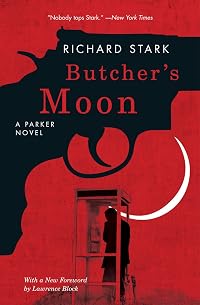
The sixteenth Parker novel, Butcher's Moon is more than twice as long most of the master heister's adventures, and absolutely jammed with the action, violence, and nerve-jangling tension readers have come to expect. Back in the corrupt town where he lost his money, and nearly his life, in Slayground, Parker assembles a stunning cast of characters from throughout his career for one gigantic, blowout job: starting-and finishing-a gang war. It feels like the Parker novel to end all Parker show more novels, and for nearly twenty-five years that's what it was. show lessTags
Recommendations
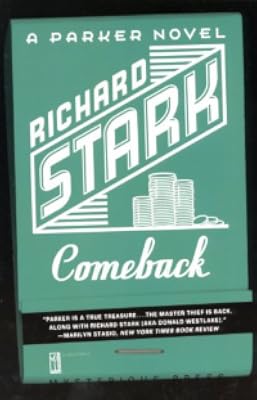
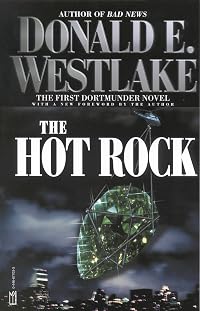
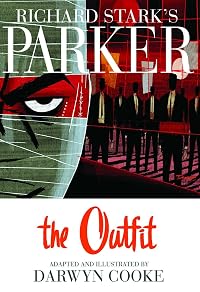






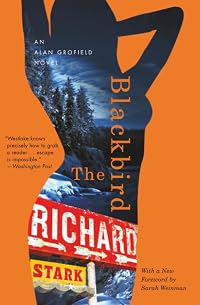



Member Recommendations
JohnWCuluris The first in the series
Member Reviews
“Call him and ask him,” the voice said, “what you should do if you owe some money to a guy named Parker.”
Boom! And off we go! THE Parker book!!! Almost twice the length of the previous books!
Parker, with Grofield, are back at Fun Island Amusement Park to retrieve the money they left behind from the armored car heist in “Slayground”. The local ‘ boss’ , Lozini, is still there too, and he’s still mad! When things get heavy, Parker calls on an army of former “co-workers” - basically everyone who he’s pulled jobs with in the first 15 books! Well, everyone that’s still alive, that is...
I loved this book! It's like a greatest hits volume of the series up until that point! I'd reccommend reading the first 15 books show more before this, but it isn't totally neccessary. Unless, of course, you owe Parker money. Then, you'd better just pay him, as all previous stories have taught us. $73,000 in this book, or $45,000 in the first book. Just pay the man. It just ain't worth it not to...
“I’m only the messenger!”
“Now you’re the message,” Parker told him, and shot him.
THAT’S my Parker! show less
Boom! And off we go! THE Parker book!!! Almost twice the length of the previous books!
Parker, with Grofield, are back at Fun Island Amusement Park to retrieve the money they left behind from the armored car heist in “Slayground”. The local ‘ boss’ , Lozini, is still there too, and he’s still mad! When things get heavy, Parker calls on an army of former “co-workers” - basically everyone who he’s pulled jobs with in the first 15 books! Well, everyone that’s still alive, that is...
I loved this book! It's like a greatest hits volume of the series up until that point! I'd reccommend reading the first 15 books show more before this, but it isn't totally neccessary. Unless, of course, you owe Parker money. Then, you'd better just pay him, as all previous stories have taught us. $73,000 in this book, or $45,000 in the first book. Just pay the man. It just ain't worth it not to...
“I’m only the messenger!”
“Now you’re the message,” Parker told him, and shot him.
THAT’S my Parker! show less
How do you turn bad guys into good guys in fiction? By creating even worse guys.
Donald E. Westlake used this device time after time in his books, especially when writing Parker novels under the name of Richard Stark. “Butcher's Moon” (1974) is a classic Parker novel, longer than most and with a higher body count. The 2011 reprint has a foreword by Lawrence Block, another novelist known for converting bad guys (a burglar and a hit man) into good guys, comparatively speaking.
Parker, a professional thief with barely a soft spot in his character, decides to return to the midwestern city of Tyler to find $73,000 he left hidden there after a heist went bad years before. (Why he left the money behind or why he waited so long to try to show more retrieve it is never explained.) He enlists the aid of another professional, Alan Grofield (a recurring character), in case finding the money isn't as easy as he hopes. It isn't.
Not only isn't the cash where he left it, but he suspects it was found by someone in the organized crime syndicate that runs Tyler. Adding another complication, the Tyler gang is in the midst of a power struggle, a younger man trying to gain control from an older man. Parker and Grofield quickly bring things to a boil. When Grofield is seriously wounded, Parker recruits former associates from around the country to help him get his money and save Grofield, proving he does have a soft spot after all.
The action, like the twists and turns in the plot, is nonstop. Parker may really be a bad guy, but this is a good book. show less
Donald E. Westlake used this device time after time in his books, especially when writing Parker novels under the name of Richard Stark. “Butcher's Moon” (1974) is a classic Parker novel, longer than most and with a higher body count. The 2011 reprint has a foreword by Lawrence Block, another novelist known for converting bad guys (a burglar and a hit man) into good guys, comparatively speaking.
Parker, a professional thief with barely a soft spot in his character, decides to return to the midwestern city of Tyler to find $73,000 he left hidden there after a heist went bad years before. (Why he left the money behind or why he waited so long to try to show more retrieve it is never explained.) He enlists the aid of another professional, Alan Grofield (a recurring character), in case finding the money isn't as easy as he hopes. It isn't.
Not only isn't the cash where he left it, but he suspects it was found by someone in the organized crime syndicate that runs Tyler. Adding another complication, the Tyler gang is in the midst of a power struggle, a younger man trying to gain control from an older man. Parker and Grofield quickly bring things to a boil. When Grofield is seriously wounded, Parker recruits former associates from around the country to help him get his money and save Grofield, proving he does have a soft spot after all.
The action, like the twists and turns in the plot, is nonstop. Parker may really be a bad guy, but this is a good book. show less
Parker is short of cash and pissed. He knows where he had hidden a stash and takes Grofield, the actor/theater director/thief along to help retrieve it from a carnival ride where he had hidden it several years before. Problem is that the money is gone so suspecting it was found by a local mafia boss, Frank Lonzini, he decides to get it back.
Unfortunately, Parker and Grofield find themselves in the midst of a mob leadership fight. All they want is to get their money back and leave town, but events conspire against them leaving them no alternative but to stir up the pot, pit one against the other, and still try for the seventy-three thousand, a number that remains immutable. (Had I been Parker, I would have tacked on many thousands for show more the trouble.)
Some marvelous scenes. A particular favorite was Parker’s method for working out which residents might be gone on an extended vacation as he searches for an apartment to use as a temporary base of operations after Grofield is shot.
The description of the mobster’s office is evocative and vivid, typical of the sardonic wit that permeates the Parker novels. The room was a disaster, a combination of so many misunderstandings and misconceptions that it practically became a work of art all in itself, like the Watts Towers. It was a den, or studio, or office-away-from-office; called by the family “Daddy's room,” no doubt. The walnut-veneer paneling, very dark, made the already small square room even smaller and squarer, darkening it to the point where even a white ceiling and a white rug would have had a hard time getting some light into the room. Instead of which, the ceiling was crisscrossed with Styrofoam artificial wooden beams, à la restaurants trying for an English-country-inn effect, and the two-foot-by-four-foot rectangles between the beams had been painted in a kind of peach or coral color; Consumptive's Upchuck was the color description that came to Grofield's mind. While the floor was covered with an oriental rug featuring dark red figures on a black background, with a dark red fringe buzzing away all the way around. Would there be a kerosene lamp with green glass shade, converted to electricity? Yes, there would, on the mahogany table to the right, along with the clock built into the side of a wooden cannon; above these on the wall were the full-color photographs of The Guns That Won the West lying on beds of red or green velvet. Don’t you love “consumptive upchuck”?
A very entertaining Parker novel, intricate in detail, typical of the other Parkers as things never work out as planned for Parker who has to use his wits to overcome the obstacles. Therein lies their appeal. show less
Unfortunately, Parker and Grofield find themselves in the midst of a mob leadership fight. All they want is to get their money back and leave town, but events conspire against them leaving them no alternative but to stir up the pot, pit one against the other, and still try for the seventy-three thousand, a number that remains immutable. (Had I been Parker, I would have tacked on many thousands for show more the trouble.)
Some marvelous scenes. A particular favorite was Parker’s method for working out which residents might be gone on an extended vacation as he searches for an apartment to use as a temporary base of operations after Grofield is shot.
The description of the mobster’s office is evocative and vivid, typical of the sardonic wit that permeates the Parker novels. The room was a disaster, a combination of so many misunderstandings and misconceptions that it practically became a work of art all in itself, like the Watts Towers. It was a den, or studio, or office-away-from-office; called by the family “Daddy's room,” no doubt. The walnut-veneer paneling, very dark, made the already small square room even smaller and squarer, darkening it to the point where even a white ceiling and a white rug would have had a hard time getting some light into the room. Instead of which, the ceiling was crisscrossed with Styrofoam artificial wooden beams, à la restaurants trying for an English-country-inn effect, and the two-foot-by-four-foot rectangles between the beams had been painted in a kind of peach or coral color; Consumptive's Upchuck was the color description that came to Grofield's mind. While the floor was covered with an oriental rug featuring dark red figures on a black background, with a dark red fringe buzzing away all the way around. Would there be a kerosene lamp with green glass shade, converted to electricity? Yes, there would, on the mahogany table to the right, along with the clock built into the side of a wooden cannon; above these on the wall were the full-color photographs of The Guns That Won the West lying on beds of red or green velvet. Don’t you love “consumptive upchuck”?
A very entertaining Parker novel, intricate in detail, typical of the other Parkers as things never work out as planned for Parker who has to use his wits to overcome the obstacles. Therein lies their appeal. show less
The Parker novel par excellence, returning to the setting and the abandoned money of Slayground and calling on old friends from many of the previous novels. Professional criminal Parker's having a bad streak with jobs going bad or turning up empty, leaving his funds dangerously low. With partner Grofield he goes back to the town where he robbed an armoured car, but was forced to stash the take. The take is gone, and Parker sets out to find. At first, it seems like a variation on The Man With The Getaway Face, as Parker and Grofield put pressure on a local mob by robbing their various joints, but with a takeover being mounted behind the scenes, things soon go badly wrong, Grofield is shot, Parker loses patience, and it all ends in a show more massive series of heists and an explosion of ruthless violence. The Parker books went on a long hiatus after this one, and it's easy to see why. In a series of brilliant, brutal crime novels, this is definitely a high point. show less
Perhaps the best of the Parker series, and what was for many years, his last book. After a series of bad luck robberies and running low on cash, Parker and the sometimes actor Grofield, go back to recover the $73,000, Parker had to abandon in an amusement park, dodging gangsters and dirty cops in Slayground. Unfortunately, the chief gangster doesn't have his money and even after checking with the big city mob boss, decides to ignore Parker, at his own peril. Parker and Grofield strike back, but when Grofield is shot and captured, Parker unleashes his own version of a jihad, by calling in his many friends to wage war against the gangsters/dirty cops, who themselves are mired in their own power struggles. Terrific action, vintage Parker.
I wonder if I would still feel the same sense of closure if I didn’t already know it would be over twenty years before Parker would “comeback.” (Of course this is not counting his appearance as a character in a novel within a Dortmunder novel: Jimmy the Kid; a book I don’t consider a part of the Parker progression but still plan to read one day.) Butcher’s Moon immediately brings to mind The Hunter, where we first met Parker. Somebody has money that belongs to Parker and he’s going to get it back no matter what, a plot element that now brackets the series. Other observations: this is a much thicker book than the others and Westlake also abandons the four part structure.
And it is a reunion of sorts. Half of the take is show more Grofield’s, so he’s there for the recovery attempt. And it becomes complicated enough that more help if needed. Handy McKay comes out of retirement. And others that we’ve met--and Parker hasn’t killed yet--appear. A professional gathering for the thieves and a celebration for us. It was the satisfying ending that Westlake intended. show less
And it is a reunion of sorts. Half of the take is show more Grofield’s, so he’s there for the recovery attempt. And it becomes complicated enough that more help if needed. Handy McKay comes out of retirement. And others that we’ve met--and Parker hasn’t killed yet--appear. A professional gathering for the thieves and a celebration for us. It was the satisfying ending that Westlake intended. show less
Parker and the Crime Spree
Review of the Blackstone Audio Inc. audiobook edition (January, 2013) of the Random House hardcover (1974)
Richard Stark was one of the many pseudonyms of the prolific crime author Donald E. Westlake (1933-2008), who wrote over 100 books. The Stark pseudonym was used primarily for the Parker novels, an antihero criminal who is usually betrayed or ensnared in some manner and who spends each book getting revenge or escaping the circumstances.
Butcher's Moon finds Parker returning to the town of the scene of the crime in Slayground (Parker #14 - 1971) in order to retrieve the lost loot from that heist which he had to abandon in his escape. He believes that it is the local mob that has collected his score. They in show more turn are understandably reluctant to reimburse Parker for his losses. The master heister then proceeds to unleash a horde of his cronies to rob all of the mob's front operations while insisting those scores are just interest on the outstanding debt. The truth of the original lost score is gradually revealed.
Butcher's Moon was the culmination of the first arc of Parker stories from 1962 to 1974, after which Richard Stark retired the character for 25 years until Comeback (Parker #17 - 1997).
Narrator Joe Barrett does a good job in all voices in this audiobook edition.
I had never previously read the Stark/Parker novels but became curious when they came up in my recent reading of The Writer's Library: The Authors You Love on the Books That Changed Their Lives (Sept. 2020) by Nancy Pearl & Jeff Schwager. Here is a (perhaps surprising) excerpt from their discussion with author Amor Towles:
The 24 Parker books are almost all available for free on Audible Plus, except for #21 & #22 which aren't available at all.
Trivia and Links
There is a brief plot summary of Butcher's Moon and of all the Parker books and adaptations at The Violent World of Parker website.
Unlike many of the 2010-2013 Blackstone Audio Inc. audiobook editions which share the same cover art as the University of Chicago Press 2009-2011 reprints, this audiobook DOES include the Foreword by author Lawrence Block. show less
Review of the Blackstone Audio Inc. audiobook edition (January, 2013) of the Random House hardcover (1974)
Richard Stark was one of the many pseudonyms of the prolific crime author Donald E. Westlake (1933-2008), who wrote over 100 books. The Stark pseudonym was used primarily for the Parker novels, an antihero criminal who is usually betrayed or ensnared in some manner and who spends each book getting revenge or escaping the circumstances.
Butcher's Moon finds Parker returning to the town of the scene of the crime in Slayground (Parker #14 - 1971) in order to retrieve the lost loot from that heist which he had to abandon in his escape. He believes that it is the local mob that has collected his score. They in show more turn are understandably reluctant to reimburse Parker for his losses. The master heister then proceeds to unleash a horde of his cronies to rob all of the mob's front operations while insisting those scores are just interest on the outstanding debt. The truth of the original lost score is gradually revealed.
Butcher's Moon was the culmination of the first arc of Parker stories from 1962 to 1974, after which Richard Stark retired the character for 25 years until Comeback (Parker #17 - 1997).
Narrator Joe Barrett does a good job in all voices in this audiobook edition.
I had never previously read the Stark/Parker novels but became curious when they came up in my recent reading of The Writer's Library: The Authors You Love on the Books That Changed Their Lives (Sept. 2020) by Nancy Pearl & Jeff Schwager. Here is a (perhaps surprising) excerpt from their discussion with author Amor Towles:
Nancy: Do you read Lee Child?
Amor: I know Lee. I had never read his books until I met him, but now I read them whenever they come out. I think some of the decisions he makes are ingenious.
Jeff: Have you read the Parker books by Donald Westlake [writing as Richard Stark]?
Amor: I think the Parker books are an extraordinary series.
Jeff: They feel like a big influence on Reacher, right down to the name. Both Reacher and Parker have a singular focus on the task in front of them.
Amor: But Parker is amoral. Reacher is just dangerous.
Jeff: Right. Reacher doesn't have a conventional morality, but he has his own morality. Parker will do anything he has to do to achieve his goal.
Amor: But to your point, Westlake's staccato style with its great twists at the end of the paragraphs, and his mesmerizing central character - these attributes are clearly shared by the Reacher books.
The 24 Parker books are almost all available for free on Audible Plus, except for #21 & #22 which aren't available at all.
Trivia and Links
There is a brief plot summary of Butcher's Moon and of all the Parker books and adaptations at The Violent World of Parker website.
Unlike many of the 2010-2013 Blackstone Audio Inc. audiobook editions which share the same cover art as the University of Chicago Press 2009-2011 reprints, this audiobook DOES include the Foreword by author Lawrence Block. show less
Members
- Recently Added By
Author Information

270+ Works 28,029 Members
Author Donald E. Westlake was born in Brooklyn, New York on July 12, 1933. He attended colleges in New York, but did not graduate. He wrote more than 100 novels and 5 screenplays throughout his lifetime. He also wrote under numerous pseudonyms including Richard Stark, Tucker Coe, and Samuel Holt. Almost 20 of his novels were adapted into films and show more he created the television series, The Father Dowling Mysteries. He is a three-time winner of the Edgar Award from the Mystery Writers of America and was nominated for an Academy Award for his screenplay for The Grifters. He was also named a Mystery Writers of America Grand Master in 1993. He died of a heart attack on December 31, 2008 at the age of 75. (Bowker Author Biography) Donald E. Westlake has won three Edgar Awards & was nominated for an Academy Award for Best Adapted Screenplay for "The Grifters". He lives in upstate New York. (Publisher Provided) show less
Some Editions
Series

Belongs to Publisher Series
Common Knowledge
- Canonical title
- Butcher's Moon
- Original title
- Butcher's Moon
- Original publication date
- 1974
- People/Characters
- Parker; Alan Grofield
- First words
- Running toward the light, Parker fired twice over his left shoulder, not caring whether he hit anything or not.
- Last words
- (Click to show. Warning: May contain spoilers.)"Well," Stan Devers said, "that's a long story."
- Original language*
- Inglés
*Some information comes from Common Knowledge in other languages. Click "Edit" for more information.
Classifications
Statistics
- Members
- 283
- Popularity
- 113,985
- Reviews
- 11
- Rating
- (4.29)
- Languages
- 6 — English, Finnish, French, German, Russian, Spanish
- Media
- Paper, Audiobook, Ebook
- ISBNs
- 13
- ASINs
- 4