On This Page
Description
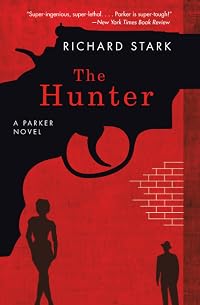
You probably haven't noticed them, but they've noticed you. They notice everything. That's their job. Sitting quietly in a nondescript car outside a bank making note of the tellers' work habits. Lagging a few car lengths behind the Brinks truck on its daily rounds. Surreptitiously jiggling the handle of an unmarked service door at the racetrack. They're heisters. They're pros, and Parker is far and away the best of them. In The Hunter, the first volume in the series, Parker roars into New show more York City, seeking revenge on the woman who betrayed him and on the man who took his money, stealing and scamming his way to redemption. show lessTags
Recommendations


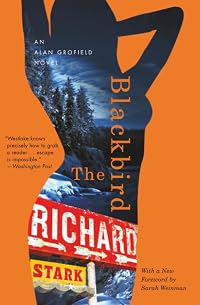








Member Recommendations


Member Reviews
The best compliment I can give the "Parker" novels by Donald E. Westlake is to admit that they've completely hijacked my usual schedule of reading and reviewing contemporary novels for the CCLaP website; originally planned to be a fun airplane diversion when I flew from Chicago to New Orleans and back about three weeks ago, I ended up reading the first book in the series, 1962's The Hunter, from start to finish in just half a day, and have since been greedily devouring the rest at a rate of a book or two every week, blowing off all my other reading commitments no matter how much I realize I shouldn't. (Sorry, all you authors who are patiently waiting for your book to be reviewed at CCLaP.)
That's high praise indeed from someone who show more usually doesn't like crime novels that much, with the key being that the main character is just so utterly fascinating, who like Ayn Rand's Howard Roark is less a real human being and more an example of the "theoretically perfect" version of the philosophy the author is trying to espouse (Stoicism here in the case of Westlake, versus Objectivism in the case of Rand). A professional thief who only pulls off one heist a year (netting him in today's terms somewhere between a quarter-million and a half-million dollars each time), so that he can spend the other 51 weeks lounging poolside at resort hotels and having rough sex with trust-fund blue-bloods with a taste for danger, Parker doesn't give even the tiniest little fuck about anything or anyone that falls outside of this monomaniacal routine, never negotiates nor compromises when it comes to his take or who he'll work with, doesn't have even the slightest hesitation about torturing or killing people who get in his way (yet avoids doing it anyway, simply because physical abuse is the "lazy" way to get what one wants, and being lazy is the first step towards getting caught), and possesses a psychotic distaste for such banal activities like "talking" and "having friends" or "acknowledging the inherent worth of the human race." (A true misanthrope, these pre-PC novels are not for the linguistically faint at heart, filled on every page with dismissive contempt for women, homosexuals, and people of color; although in Parker's "defense," such as it is, he also displays such contempt for most of the straight white males he meets too.)
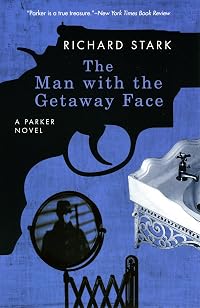
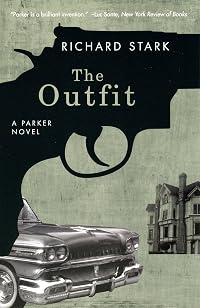
There are 24 novels in the Parker series (which Westlake published under the pen-name "Richard Stark"), most from the '60s and early '70s, the series then activated again in the late '90s and up until Westlake's death in 2008; but the first three form a trilogy of sorts, in that they all concern one overarching storyline that spans from one book to the next, and so make a tidy reading experience for those who are curious about the series but don't want to make a 24-book commitment. (Most of the others are franchise-style standalone stories that each follow a similar blueprint -- Parker decides on his heist for that year, Parker obsessively plans out his heist for that year, then everything goes to hell when Parker actually tries pulling off his heist for that year.) The first, The Hunter, will seem familiar to many because it's been made into a movie so many times (including 1967's Point Blank with Lee Marvin, 1999's Payback with Mel Gibson, and 2013's Parker with Jason Statham); in it, we pick up a year after a heist that went bad because of a duplicitous partner, who needed both his share and Parker's in order to pay back the Mafia for an old job gone bad, the novel itself consisting of Parker basically crisscrossing the country and getting his revenge on every person who had been involved, eventually provoking the ire of the Mafia when he insists that they pay him back the money that had been stolen from him, even though they had nothing to do with the actual theft. The second book, then, 1963's The Man With the Getaway Face, sees Parker get plastic surgery in order to stay out of the glare of the Mafia's nationwide murder contract they now have out on him, just to have his new face divulged to the Mafia at the very end; so then in the third novel, The Outfit from later that same year, Parker decides to get the Mafia off his tail once and for all, enlisting his buddies-in-crime to pull off Mafia-victim heists across the country to the modern tune of ten million dollars in a single month, while he tracks down and kills the head of the entire organization by breaking into a mansion that's been weaponized like a fortress, after affecting a promise from the number-two in charge that he'll end the persecution if Parker does him this "favor."
Like Parker himself, these novels are quick and lean, part of what makes them so obsessively readable; Westlake had a real talent for stripping narratives down to just their bare essentials, then cleverly invented a character for whom this fast-paced minimalism works perfectly, a true human monster but one you can't help but root for anyway, if for no other reason than because he has zero tolerance for the chatty bullshit and regards for acquaintances' feelings that you as a non-psychotic are forced to deal with in your own schmucky non-bank-robbing life. (Stupid schmucky non-bank-robbing life!) Unfortunately my obsessive focus on these books must come to an end soon -- I simply have to get back to the novels I'm "supposed" to be reading, plus I can already tell by the fifth book that this series gets a lot more formulaic as it continues, which I bet will dampen my enthusiasm on its own -- but I couldn't let the opportunity pass by to mention how unexpectedly thrilled I was by at least the first few books in the lineup, picked up on a whim completely randomly but that have turned out to be some of my favorite reading experiences of the entire last year. They come strongly recommended whenever you have some downtime soon, especially to those like me who aren't natural fans of this genre to begin with. show less
That's high praise indeed from someone who show more usually doesn't like crime novels that much, with the key being that the main character is just so utterly fascinating, who like Ayn Rand's Howard Roark is less a real human being and more an example of the "theoretically perfect" version of the philosophy the author is trying to espouse (Stoicism here in the case of Westlake, versus Objectivism in the case of Rand). A professional thief who only pulls off one heist a year (netting him in today's terms somewhere between a quarter-million and a half-million dollars each time), so that he can spend the other 51 weeks lounging poolside at resort hotels and having rough sex with trust-fund blue-bloods with a taste for danger, Parker doesn't give even the tiniest little fuck about anything or anyone that falls outside of this monomaniacal routine, never negotiates nor compromises when it comes to his take or who he'll work with, doesn't have even the slightest hesitation about torturing or killing people who get in his way (yet avoids doing it anyway, simply because physical abuse is the "lazy" way to get what one wants, and being lazy is the first step towards getting caught), and possesses a psychotic distaste for such banal activities like "talking" and "having friends" or "acknowledging the inherent worth of the human race." (A true misanthrope, these pre-PC novels are not for the linguistically faint at heart, filled on every page with dismissive contempt for women, homosexuals, and people of color; although in Parker's "defense," such as it is, he also displays such contempt for most of the straight white males he meets too.)
There are 24 novels in the Parker series (which Westlake published under the pen-name "Richard Stark"), most from the '60s and early '70s, the series then activated again in the late '90s and up until Westlake's death in 2008; but the first three form a trilogy of sorts, in that they all concern one overarching storyline that spans from one book to the next, and so make a tidy reading experience for those who are curious about the series but don't want to make a 24-book commitment. (Most of the others are franchise-style standalone stories that each follow a similar blueprint -- Parker decides on his heist for that year, Parker obsessively plans out his heist for that year, then everything goes to hell when Parker actually tries pulling off his heist for that year.) The first, The Hunter, will seem familiar to many because it's been made into a movie so many times (including 1967's Point Blank with Lee Marvin, 1999's Payback with Mel Gibson, and 2013's Parker with Jason Statham); in it, we pick up a year after a heist that went bad because of a duplicitous partner, who needed both his share and Parker's in order to pay back the Mafia for an old job gone bad, the novel itself consisting of Parker basically crisscrossing the country and getting his revenge on every person who had been involved, eventually provoking the ire of the Mafia when he insists that they pay him back the money that had been stolen from him, even though they had nothing to do with the actual theft. The second book, then, 1963's The Man With the Getaway Face, sees Parker get plastic surgery in order to stay out of the glare of the Mafia's nationwide murder contract they now have out on him, just to have his new face divulged to the Mafia at the very end; so then in the third novel, The Outfit from later that same year, Parker decides to get the Mafia off his tail once and for all, enlisting his buddies-in-crime to pull off Mafia-victim heists across the country to the modern tune of ten million dollars in a single month, while he tracks down and kills the head of the entire organization by breaking into a mansion that's been weaponized like a fortress, after affecting a promise from the number-two in charge that he'll end the persecution if Parker does him this "favor."
Like Parker himself, these novels are quick and lean, part of what makes them so obsessively readable; Westlake had a real talent for stripping narratives down to just their bare essentials, then cleverly invented a character for whom this fast-paced minimalism works perfectly, a true human monster but one you can't help but root for anyway, if for no other reason than because he has zero tolerance for the chatty bullshit and regards for acquaintances' feelings that you as a non-psychotic are forced to deal with in your own schmucky non-bank-robbing life. (Stupid schmucky non-bank-robbing life!) Unfortunately my obsessive focus on these books must come to an end soon -- I simply have to get back to the novels I'm "supposed" to be reading, plus I can already tell by the fifth book that this series gets a lot more formulaic as it continues, which I bet will dampen my enthusiasm on its own -- but I couldn't let the opportunity pass by to mention how unexpectedly thrilled I was by at least the first few books in the lineup, picked up on a whim completely randomly but that have turned out to be some of my favorite reading experiences of the entire last year. They come strongly recommended whenever you have some downtime soon, especially to those like me who aren't natural fans of this genre to begin with. show less
Circled back to this one after reading the next five. Those are all pretty good, but this one bests them all — the language is more vivid, Parker is more raw, and as he himself comments, his old patterns have not reasserted themselves. It also retroactively makes Parker scarier in the sequels; he's never a nice guy, but he's never as vicious later as he is in this book.
One surprise, given that my familiarity comes via Point Break: How little time Parker spends worrying about the money he's owed.
One surprise, given that my familiarity comes via Point Break: How little time Parker spends worrying about the money he's owed.
In the first of the Parker series by Richard Stark—one of prodigiously prolific Donald E. Westlake's many pen names—Parker appears seemingly out of nowhere and makes his way to Manhattan to take his revenge on those who left him for dead after a heist in which some of his partners got too greedy. Originally published in 1962, Westlake clearly redefined the hardboiled genre popularized by Dashiell Hammett and Raymond Chandler with the creation of Parker, a hard-hitting, cold-blooded murdering antihero who makes us believe he's serious when he says he's sworn off love for good. No detective he, but a professional thief—one of the best in the business who lets nothing stand in his way. In this case, the plan being to reclaim the show more money that was stolen from him by "The Outfit", the organized crime gang he takes on singlehandedly so he can secure his future. The bad guys are really creepy and the good guys just don't exist. Fast moving, violent and addictive stuff. show less
Allegedly, Westlake, when writing under the name Stark purposely adjusted the writing style to be “stark.” In other words, its spare and direct just like all the hardboiled noir readers crave.
This is a revenge novel, but we do not get the backstory until chapter six. That makes it interesting writing because for the first five chapters the reader is wide-eyed witness to violence and savagery for no clear reason. The violence in this novel feels ratcheted up from the noir/hardboiled we met in Red Harvest and The Big Sleep.
The offspring, clearly, of Chandler and Hammett and delightfully satisfying for fans of noir and crime fiction. Really not something you hand your sweet Aunt in a book swap, but definitely one you keep in the Gun show more Club Library, the Ship’s Library, and maybe, if you’re witty, the public defender’s office. I will definitely read onward in the series and share that I totally enjoyed this rippin’ tale of gangsters and hustlers. show less
This is a revenge novel, but we do not get the backstory until chapter six. That makes it interesting writing because for the first five chapters the reader is wide-eyed witness to violence and savagery for no clear reason. The violence in this novel feels ratcheted up from the noir/hardboiled we met in Red Harvest and The Big Sleep.
The offspring, clearly, of Chandler and Hammett and delightfully satisfying for fans of noir and crime fiction. Really not something you hand your sweet Aunt in a book swap, but definitely one you keep in the Gun show more Club Library, the Ship’s Library, and maybe, if you’re witty, the public defender’s office. I will definitely read onward in the series and share that I totally enjoyed this rippin’ tale of gangsters and hustlers. show less
This book introduces Parker, a criminal whose combination of street smarts and brute force has enabled him to live comfortably on the proceeds from his thefts. But his life is fundamentally disrupted when a job goes awry and one of his partners double-crosses him. Now Parker is consumed with thoughts of revenge, and he'll do anything to catch up with Mal Resnick, the man who stole both his money and his wife. Parker uses a variety of tactics, including intimidation and murder, to track Mal down; meanwhile, Mal learns that Parker is on his trail and tries desperately to escape his clutches. Parker's task is made more complicated by the fact that Mal is a memeber of an extremely influential crime syndicate called the Outfit, and the show more Outfit isn't inclined to let Parker have his way. In order to exact his revenge, Parker must eventually go up against the whole organization; but will killing Mal sign his own death warrant?
While I enjoy the occasional film noir or con movie, I don't tend to like the noir genre in book form. I tend to prefer my mysteries a little less violent, with a more clearly defined moral code (i.e., the killer is the bad guy). This book has a very cynical tone and a protagonist with few, if any, redeeming qualities. Frankly, I found Parker horrifying, especially in his violent treatment of women and his casual approach to killing anyone who gets in his way. Yet I actually ended up enjoying this book! I liked the writing style, which doesn't waste any words and gets straight to the point. I also really enjoyed watching the story unfold: the book alternates from Parker's story in the present to the story of the job that went wrong. Additionally, it was fascinating to see how Parker's situation changes throughout the novel, as his quest for vengeance against one man turns into a war against the entire Outfit. If I'm ever in the mood for a darker mystery, I may even continue with this series! show less
While I enjoy the occasional film noir or con movie, I don't tend to like the noir genre in book form. I tend to prefer my mysteries a little less violent, with a more clearly defined moral code (i.e., the killer is the bad guy). This book has a very cynical tone and a protagonist with few, if any, redeeming qualities. Frankly, I found Parker horrifying, especially in his violent treatment of women and his casual approach to killing anyone who gets in his way. Yet I actually ended up enjoying this book! I liked the writing style, which doesn't waste any words and gets straight to the point. I also really enjoyed watching the story unfold: the book alternates from Parker's story in the present to the story of the job that went wrong. Additionally, it was fascinating to see how Parker's situation changes throughout the novel, as his quest for vengeance against one man turns into a war against the entire Outfit. If I'm ever in the mood for a darker mystery, I may even continue with this series! show less
Started it last night and just finished it this morning. A great reminder of what it’s like when your eyes move too fast and you start looking ahead at the bottom of a page because you can't wait the ten seconds to see what happens. There are things Parker says that will make you laugh out loud and times when it reads like a parody of crime novels. It's crass, vulgar, and rated R.
And holy cow, if that wasn’t written for Lee Marvin, nothing was.
Also noteworthy in that it obeys the Seinfeld rule of “no learning / no hugging.” Parker isn’t redeemed, we never learn that his puppy was taken away as a child, we never get any sense of his inner life, he is wholly amoral, etc. He sets out to get even and does. (This is not a spoiler, show more as the reader knows this will happen by the end of page 2.) The suspense is never a matter of if--the suspense is all about how. show less
And holy cow, if that wasn’t written for Lee Marvin, nothing was.
Also noteworthy in that it obeys the Seinfeld rule of “no learning / no hugging.” Parker isn’t redeemed, we never learn that his puppy was taken away as a child, we never get any sense of his inner life, he is wholly amoral, etc. He sets out to get even and does. (This is not a spoiler, show more as the reader knows this will happen by the end of page 2.) The suspense is never a matter of if--the suspense is all about how. show less
Richard Stark, a pseudonym for acclaimed crime novelist Donald E. Westlake, created a character named Parker in this novel, and Parker is as stark a creation as the author's nom de plume. The basis of at least two films, including the classic Point Blank of John Boorman and Lee Marvin, the book is gritty, hardboiled in the extreme, and wonderfully paced. To create a character as unappealing as Parker who is, however, fascinating and, in fact, appealing, is a rare achievement. Stark took Parker through a number of books. This one makes me want to read the others. Parker is a hard case, seeking revenge on the man and woman who double-crossed him. That the woman is his wife makes things just that much more intriguing. This is one tough show more book, and a great read. show less
Members
- Recently Added By
Published Reviews
ThingScore 75
Stark’s novels are not only entertaining for what they are—midcentury noirs—but they are also better than a lot of what was coming out back then.
added by Shortride
Lists

Books Read in 2017
4,249 works; 130 members

Catalog
41 works; 2 members

The 100 Best Crime Novels and Thrillers since 1945
100 works; 6 members

Reading Glasses Podcast
410 works; 3 members
Author Information

270+ Works 27,976 Members
Author Donald E. Westlake was born in Brooklyn, New York on July 12, 1933. He attended colleges in New York, but did not graduate. He wrote more than 100 novels and 5 screenplays throughout his lifetime. He also wrote under numerous pseudonyms including Richard Stark, Tucker Coe, and Samuel Holt. Almost 20 of his novels were adapted into films and show more he created the television series, The Father Dowling Mysteries. He is a three-time winner of the Edgar Award from the Mystery Writers of America and was nominated for an Academy Award for his screenplay for The Grifters. He was also named a Mystery Writers of America Grand Master in 1993. He died of a heart attack on December 31, 2008 at the age of 75. (Bowker Author Biography) Donald E. Westlake has won three Edgar Awards & was nominated for an Academy Award for Best Adapted Screenplay for "The Grifters". He lives in upstate New York. (Publisher Provided) show less
Some Editions
Awards and Honors
Notable Lists
Series

Belongs to Publisher Series
Work Relationships
Is contained in
Has the adaptation
Common Knowledge
- Canonical title
- The Hunter
- Original title
- The Hunter
- Alternate titles
- Payback; Point Blank
- Original publication date
- 1962
- People/Characters
- Parker
Classifications
Statistics
- Members
- 1,250
- Popularity
- 19,691
- Reviews
- 61
- Rating
- (3.88)
- Languages
- 7 — English, Finnish, French, German, Italian, Spanish, Swedish
- Media
- Paper, Audiobook, Ebook
- ISBNs
- 35
- ASINs
- 19