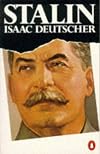
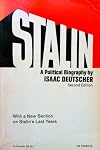
Stalin: A Political Biography
by Isaac Deutscher
On This Page
Description
Follows the step-by-step development of Stalin's career and character, and places events in the context of historical perspective.Tags
Recommendations











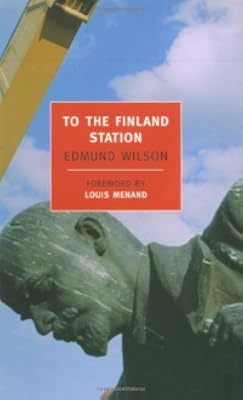

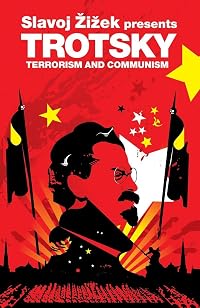


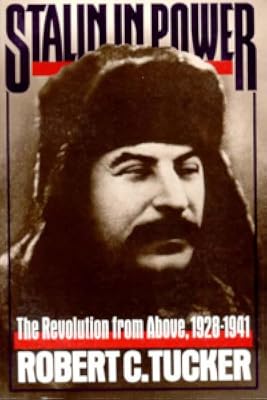

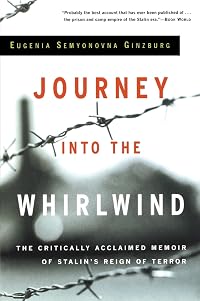




Member Recommendations
Member Reviews
Mr Deutscher makes it clear in his forward to this book that he is no acolyte of Stalin. He also promises not to make the work a destruction of all for which Stalin stood.
I think that he makes an excellent job of this. I have a far greater understanding of the man and the leader than I did before hand. Stalin was an administrator, not a political mentor. He clung to Lenin's works as his guiding star but, practicality meant that he veered further and further from Marxist-Leninist theory.
It is not just Stalin, Lenin before him, had been in favour of rule by the proletariat but, being unable to accept that anyone but himself knew what the people wanted. It is a strange irony that a revolution which was genuinely for the people, almost show more before its activation, began to pare the acceptable voices to whom it was willing to listen. It was Lenin that threw out the Social Democrats and the Mensheviks. Stalin continued to shave the unacceptable members until, there was only himself. In his final years, he purged and re-purged his leadership until no one was safe.
Deutscher could have made this a real hatchet job. He does not so do: he explains how this came about - if Stalin had not pushed the country to the brink of despair, he wouldn't have been able to grow its industrial base at such speed and it is likely that Hitler may have been successful in the Second World War. That Russia was cast aside by the West afterwards was cruel beyond measure. Stalin was left with little choice but to return to a series of punishing five year plans to rebuild the broken country. His distrust of the West, whilst understandable, lead to his putting military strength too far ahead of comfort for the people.
From being the hero of WW II, he rapidly degenerated to a sad, fearsome dictator. show less
I think that he makes an excellent job of this. I have a far greater understanding of the man and the leader than I did before hand. Stalin was an administrator, not a political mentor. He clung to Lenin's works as his guiding star but, practicality meant that he veered further and further from Marxist-Leninist theory.
It is not just Stalin, Lenin before him, had been in favour of rule by the proletariat but, being unable to accept that anyone but himself knew what the people wanted. It is a strange irony that a revolution which was genuinely for the people, almost show more before its activation, began to pare the acceptable voices to whom it was willing to listen. It was Lenin that threw out the Social Democrats and the Mensheviks. Stalin continued to shave the unacceptable members until, there was only himself. In his final years, he purged and re-purged his leadership until no one was safe.
Deutscher could have made this a real hatchet job. He does not so do: he explains how this came about - if Stalin had not pushed the country to the brink of despair, he wouldn't have been able to grow its industrial base at such speed and it is likely that Hitler may have been successful in the Second World War. That Russia was cast aside by the West afterwards was cruel beyond measure. Stalin was left with little choice but to return to a series of punishing five year plans to rebuild the broken country. His distrust of the West, whilst understandable, lead to his putting military strength too far ahead of comfort for the people.
From being the hero of WW II, he rapidly degenerated to a sad, fearsome dictator. show less
I detailed career biography of Stalin from underground international communist revolutionary to calculating, megalomaniacal, cruel head of national communism. post-Cold War is really a postscript here. The Cold War details show evidence of empire building and a view of Russian people that I feel Putin may share:
Russia is taught to distrust and despise the world outside, to glory in nothing but her own genius, to care for nothing but her own self-centered greatness, to rely on nothing but her own selfishness, and to look forward to nothing but the triumphs of her own power. Stalinism tries to annex to Great Russia all the feats that the genius of other nations has had to its credit. It declares it to be a crime for the Russian toshow more
entertain any thought about the greatness, past or present, of any other nation-to 'kow-tow to western civilization' and a crime for the Ukrainian, the Georgian, and the Uzbek not to kow-tow to Great Russia.show less
Megalomania and xenophobia were to cure the people of their sense of inferiority, render them immune to those attractions of the western culture by which generations of the intelligentsia had been spellbound, protect them against the demoralizing impact of American wealth, and harden them for the trials of the Cold War and, if need be, for armed conflict. The heat of the chauvinistic agitation was a measure of the war fever in which the country lived.
I was hoping to get more personal information about Stalin. Maybe I didn't realize the definition of political biography would necessarily leave out his personal life. But still a fascinating read of this giant of Soviet History. I'm glad I never lived in the country while he was leader.
Good read. For someone that had no real knowledge of Stalin before reading the book I found this book to be very imformative. Having had the opportunity to visit Russia it is easy to see the lasting effects that Stalin has left with present-day Russia. Extremely polarizing figure.
Overpraised in the reviews when it came out.
La única biografía que aprobó Stalin en vida
Comprado no Sebo Travessa da Praia em 05/07/2025
Members
- Recently Added By
Lists

All Things Russia
459 works; 11 members
Author Information

52+ Works 2,592 Members
Isaac Deutscher was born in 1907 near Krakow and joined the Polish Communist Party in 1926. After his expulsion in 1932, he maintained his opposition to the general drift of Comintern policy in the 1930s. He moved to London in 1939 and continued his journalistic activity until 1946, devoting the rest of his life to historical research
Awards and Honors
Distinctions
Work Relationships
Common Knowledge
- Canonical title
- Stalin: A Political Biography
- People/Characters
- Joseph Stalin
Classifications
- Genres
- History, Nonfiction, Biography & Memoir, General Nonfiction, Politics and Government
- DDC/MDS
- 947.08420924 — History & geography History of Europe Eastern European Counties and Russia Russian & Slavic History by Period 1855- 1917-1953 ; Communist period 1924-1953 (Stalin)
- LCC
- DK268 .S8 .D48 — History of Europe, Asia, Africa and Oceania Russia. Soviet Union. Former Soviet Republics – Poland History of Russia. Soviet Union. Former Soviet Republics History Soviet regime, 1918-1991
- BISAC
Statistics
- Members
- 536
- Popularity
- 55,980
- Reviews
- 9
- Rating
- (3.57)
- Languages
- 10 — Dutch, English, Finnish, French, German, Hungarian, Italian, Portuguese, Spanish, Swedish
- Media
- Paper
- ISBNs
- 22
- ASINs
- 18