On This Page
Description
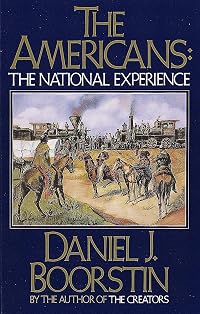
The nation was beginning not at one time or place, but again and again, under men's very eyes. Americans were forming new communities and reforming old communities all over the world expanse of the western world. Explores problems of community and the search for a national identity. Winner of the Francis Parkman Prize.Tags
Recommendations








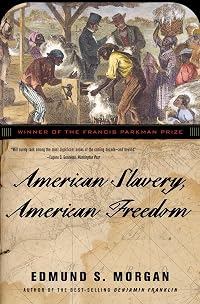
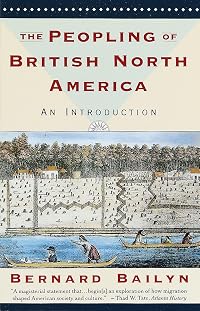
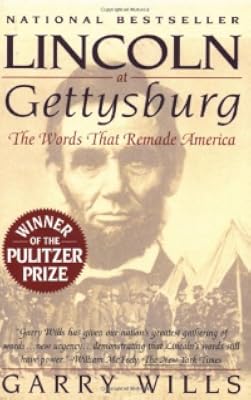
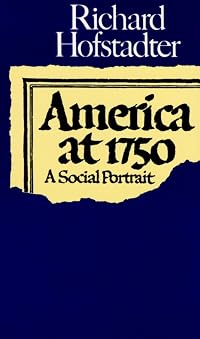
Member Recommendations
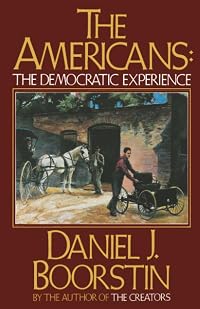
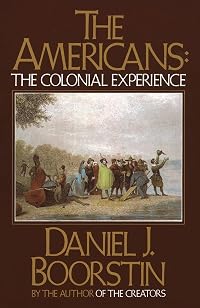
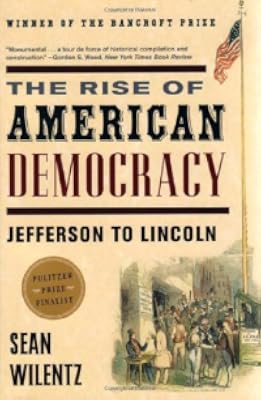
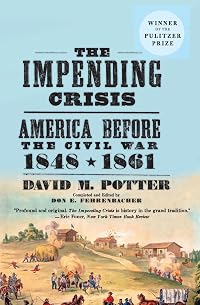
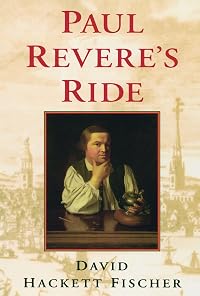
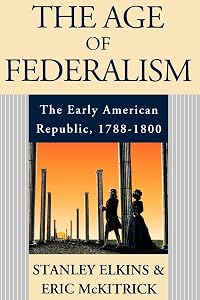
John_Vaughan Daniel Boorstin is an eminently readable author and historian; his trilogy The Americans offers a full outline of Colonial America.
Member Reviews
In the first half of the 19th Century, the United States expanded demographically, geographically, and culturally that it had changed nation on the eve the Civil War. The Americans: The National Experience is the second volume of Daniel J. Boorstin’s trilogy which features the American experience as it politically evolved from thirteen independent states into a continent spanning nation that was societally bring ripped apart by a part of the population and view of what the Union was.
Over the course of 430 pages Boorstin covers everything how communities evolved, expanded geographically, and atrophied in various ways to how nationality was created from borders, language—spoken and written—was shaped, symbols, and finally in show more political views of what the Constitution meant for unionism. There were several takeaways from this volume that I found intriguing, first was that Boorstin popped a whole in myth of the lone individual that pulled himself up by the bootstraps or expanded America knowledge of what was just around the next rise, Boorstin spent several chapters revealing how without a community—whether it be a town, a church, a business, etc.—the individual was lost. The second was how English common law’s silence on slavery allowed it to be planted the colonies and grow in the new nation. Third was the views of the Constitution and Union, which ultimately in conjunction with community and slavery led to a civil war. It was fascinating upon finishing this book to see how Boorstin had constructed it to appear that he was covering various topics that seemed loosely related only to find them essential to one another in the end. The book was unfortunately not perfect as there was several mistakes in dates and one very noticeable anachronism—Boorstin highlights a meeting that included Seventh-Day Adventists in 1840 which was impossible through one might think he meant an Millerite Adventists that worshipped on the Sabbath but that would be really filtered down—that should not have survived so many editions since the book was first published in 1965. Overall, this second volume of Boorstin’s exploration of the American experience is very thought-provoking for anyone interested in reading about a grand view of American history.
The Americans: The National Experience is a view of the country from independence to the eve of civil war written by Daniel J. Boorstin. show less
Over the course of 430 pages Boorstin covers everything how communities evolved, expanded geographically, and atrophied in various ways to how nationality was created from borders, language—spoken and written—was shaped, symbols, and finally in show more political views of what the Constitution meant for unionism. There were several takeaways from this volume that I found intriguing, first was that Boorstin popped a whole in myth of the lone individual that pulled himself up by the bootstraps or expanded America knowledge of what was just around the next rise, Boorstin spent several chapters revealing how without a community—whether it be a town, a church, a business, etc.—the individual was lost. The second was how English common law’s silence on slavery allowed it to be planted the colonies and grow in the new nation. Third was the views of the Constitution and Union, which ultimately in conjunction with community and slavery led to a civil war. It was fascinating upon finishing this book to see how Boorstin had constructed it to appear that he was covering various topics that seemed loosely related only to find them essential to one another in the end. The book was unfortunately not perfect as there was several mistakes in dates and one very noticeable anachronism—Boorstin highlights a meeting that included Seventh-Day Adventists in 1840 which was impossible through one might think he meant an Millerite Adventists that worshipped on the Sabbath but that would be really filtered down—that should not have survived so many editions since the book was first published in 1965. Overall, this second volume of Boorstin’s exploration of the American experience is very thought-provoking for anyone interested in reading about a grand view of American history.
The Americans: The National Experience is a view of the country from independence to the eve of civil war written by Daniel J. Boorstin. show less
LT The Americans: The National Experience, Daniel Boorstin, Vintage Books, 1965, 7/6/22-7/10/21 read in Calabash (second half); recommended by [if anybody], Where is hard copy? BCSA in history section 978-0-394
Theme: the making-of-a-nation history of American COMMUNITY (book one)—the versatiles-New Englanders, the transients-joiners, the upstarts-boosters, the rooted and uprooted-Southeners white and black; NATIONALITY (book two)—the vagueness of the land, American ways of talking, search for symbols, a spacious republic
Type: history with commentary
Value: 1-
Age: college
Interest: 1-
Objectionable:
Synopsis/Noteworthy: like Warmth of Other Suns in showing where today’s country came from
CBC
35 Puritan The pulpit, not the altar, was the show more focus of the congregational church, for Puritans adored the Word
49 boosters Of the new space-free man there were two types: the Transients (or Joiners [one given to joining causes]) and the Upstarts (or Boosters [an enthusiastic promoter, one who tries to get excited by what they are doing]).
52 organizer The genius of a Columbus, a Vasco de Gama, a La Salle, a Magellan, a De Soto, was that of the organizer.
57-9 organizers Men living beyond the jurisdiction of government… …the leader of a traveling community had to be able to get things done… A host of actors combined to give the organizer a power he had seldom before held outside of military life or civil government… …what was needed was a shrewd and effective organizer. The transients’ leader had to bring a community into being and to inspire, wheedle, bribe, or threaten its members to the performance of unfamiliar asks on strange landscapes and against incalculable dangers. Flexibility, warmth, imagination, human breadth, and an encouraging voice were more in order than dignity, respectability or nobility…
65 communities From the beginning, communities existed here before there were governments to care for public needs or to enforce public duties.
66 constitution This same group then adopted a constitution and bylaws which opened in phrases reminiscent of the Federal Constitution and which left no doubt of their intention to establish a political community.
160 community colleges The distinctively American college was neither public nor private, but a community institution.
172-3 factor-wife He even, on occasion, tried to help a lonesome bachelor-planter who offered to marry “on fifteen days sight,” if the factor would ship with his other supplies, a young woman “of an honest family between twenty and twenty-five years of age; of a middle stature and well-proportioned, her face agreeable, her temper mild, her character blameless, her health good, and her constitution strong enough to bear the change of climate.”
174 not written laws This relationship, like so many others in the South, came to be governed by a code of honor, all the more rigid because not written down.
198 black preachers The local autonomy within the Baptist churches, by contrast with that of the Methodists, left the Negro preacher freer, and so helped account for the special appeal of the Baptists…
211 South reputation …while Southern gentlemen in the three decades before the Civil War boasted of their high-minded indifference to “public opinion” or the good opinion of the whole world, they respected nothing more than their local reputation, or the good opinion of their fellow Southern gentlemen.
308 speaking In this first national era, the “great orations” were widely recognized as the levers of American history and the formulae of American purpose…
314 education Education, too, became more and more declamatory as preachers dominated the new denominational colleges…
318 religion Big-city religion was dominated by the rhetoric of magniloquence: evangelical Protestantism, the first distinctively American religious movement of national proportions, made the spontaneous spoken word the key to religious experience.
328-9 literacy Not so in the United States. Here, from colonial times, literacy had been more widespread than in the mother country. … Davy Crockett was the most important and, for some time, the most widely known popular candidate for national hero-worship. … He had little education and little respect for book-learning; the rules of spelling, he said, were “contrary to nature.” As a judge (he did not know the meaning of the word “judiciary”) he “relied on natural-born-sense instead of law-learning.”
355 GW statute “Did anybody ever see Washington nude?” Nathaniel Hawthorne asked in 1858. “It is inconceivable. He has no nakedness, but I imagine he was born with his clothes on, and his hair powdered, and made a stately bow on his first appearance in the world.”
365-6 sum Some of the ablest searchers for symbols of a larger national past turned to biography. The immense popularity of Davy Crockett’s “Autobiography,” Weems’s George Washington, Wirt’s Patrick Henry, Tudor’s James Otis, and similar works, contrasted sharply with the meager demand for books about the whole national past.
369-71 Bancroft speech [George] Bancroft’s theme, as he summarized it in his oration on “The Necessity, the Reality, and the Promise of the Progress of the Human Race” (1854), was universal: The reciprocal relation between God and humanity constitutes the UNITY of the race… Our country is not more the recipient of the men of all countries than their ideas. Annihilate the past of any one nation of the world, and our destiny would have been changed. Italy and Spain, in the persons of COLUMBUS and ISABELLA, joined together for the great discovery that opened America to emigration and commerce; France contributed to its independence; the search for the origin of the language we speak carried us to India: our religion is from Palestine; of the hymns sung in our churches, some were first heard in Italy, some in the deserts of Arabia, some on the banks of the Euphrates; our arts came from Greece; our jurisprudence from Rome; our maritime code from Russia; England taught us the system of Representative Government; the noble Republic of the United Provinces bequeathed to us, in the world of thought, the great idea of the toleration of opinions; in the world of action, the prolific principle of federal union. Our country stands, therefore, more than any other, as the realization of the unity of the race. … Finally, as a consequence of the tendency of the race towards unity and universality, the organization of society must more and more conform to the principle of FREEDOM.
375 holidays In addition to these holidays on which the decisions of the states have coincided, there are at least fifty other days officially designated as legal or public holidays in one or more states…
385-6 Mecklenburg The “Mecklenburg Declaration of Independence” (printed in many newspapers in in 1819) was a document supposedly adopted by a meeting of elected representatives at Charlotte in Mecklenburg County, NC, on March 20, 1775…
390 justification of existence …Americans had begun by assuming that, if there was to be a new nation here, it must be for good reasons and for a good purpose.
399 Burke-sovereignty Too few shared Edmund Burke’s vision of the power of history, of the impossibility of erasing the experience of liberty by the logic of “sovereignty.” “If that sovereignty and their freedom must be reconciled,” Burke warned, “which will they take? They will cast your sovereignty in your face, nobody will be argued into slavery.” Burke was right.
400 congregationalism Congregationalism itself was a plan of confederation. [see p 35]
406 British constitutionalism And there was nothing more definite, nor more uncertain, than the British constitution; it was only another name for the way things really worked.
408 We the people Now approached a crucial test. Again and again political theorists had declared the people to be the source of power, and Americans had adopted the familiar British arguments. Now would Americans practice what they preached? The people, John Adams said, “must be all consulted, and we must realize the theories of the wisest writers, and invite the people to erect the whole building with their hands upon the broadest foundation.”
416 “USA” versus “national” It is no accident that neither “nation” or “national” appears anywhere in the Constitution…
421 USA colonialism The American colonial system, unlike the British, provided a normal progress from imperial control to self-government.
427 geography versus ideology The geographical constituency—not an ideological group nor an interest group—was to be the basic unit of American party politics.
427 federal …the American nation was not the product of any grand national passion, and the Constitution of the US was a precarious and novel arrangement—neither wholly federal nor wholly national.
428 many governmental positions-diffusion The Amercian party system could not have grown without the enthusiasm of thousands of party workers, often inspired by hope for a local office.
430 nationalizing influences … Political parties thus became one of the most effective nationalizing influences in Amercan life.
430 organization As in many other departments of American life—in religion, in education, in the very making of new communities—ideology was displaced by organization. show less
Theme: the making-of-a-nation history of American COMMUNITY (book one)—the versatiles-New Englanders, the transients-joiners, the upstarts-boosters, the rooted and uprooted-Southeners white and black; NATIONALITY (book two)—the vagueness of the land, American ways of talking, search for symbols, a spacious republic
Type: history with commentary
Value: 1-
Age: college
Interest: 1-
Objectionable:
Synopsis/Noteworthy: like Warmth of Other Suns in showing where today’s country came from
CBC
35 Puritan The pulpit, not the altar, was the show more focus of the congregational church, for Puritans adored the Word
49 boosters Of the new space-free man there were two types: the Transients (or Joiners [one given to joining causes]) and the Upstarts (or Boosters [an enthusiastic promoter, one who tries to get excited by what they are doing]).
52 organizer The genius of a Columbus, a Vasco de Gama, a La Salle, a Magellan, a De Soto, was that of the organizer.
57-9 organizers Men living beyond the jurisdiction of government… …the leader of a traveling community had to be able to get things done… A host of actors combined to give the organizer a power he had seldom before held outside of military life or civil government… …what was needed was a shrewd and effective organizer. The transients’ leader had to bring a community into being and to inspire, wheedle, bribe, or threaten its members to the performance of unfamiliar asks on strange landscapes and against incalculable dangers. Flexibility, warmth, imagination, human breadth, and an encouraging voice were more in order than dignity, respectability or nobility…
65 communities From the beginning, communities existed here before there were governments to care for public needs or to enforce public duties.
66 constitution This same group then adopted a constitution and bylaws which opened in phrases reminiscent of the Federal Constitution and which left no doubt of their intention to establish a political community.
160 community colleges The distinctively American college was neither public nor private, but a community institution.
172-3 factor-wife He even, on occasion, tried to help a lonesome bachelor-planter who offered to marry “on fifteen days sight,” if the factor would ship with his other supplies, a young woman “of an honest family between twenty and twenty-five years of age; of a middle stature and well-proportioned, her face agreeable, her temper mild, her character blameless, her health good, and her constitution strong enough to bear the change of climate.”
174 not written laws This relationship, like so many others in the South, came to be governed by a code of honor, all the more rigid because not written down.
198 black preachers The local autonomy within the Baptist churches, by contrast with that of the Methodists, left the Negro preacher freer, and so helped account for the special appeal of the Baptists…
211 South reputation …while Southern gentlemen in the three decades before the Civil War boasted of their high-minded indifference to “public opinion” or the good opinion of the whole world, they respected nothing more than their local reputation, or the good opinion of their fellow Southern gentlemen.
308 speaking In this first national era, the “great orations” were widely recognized as the levers of American history and the formulae of American purpose…
314 education Education, too, became more and more declamatory as preachers dominated the new denominational colleges…
318 religion Big-city religion was dominated by the rhetoric of magniloquence: evangelical Protestantism, the first distinctively American religious movement of national proportions, made the spontaneous spoken word the key to religious experience.
328-9 literacy Not so in the United States. Here, from colonial times, literacy had been more widespread than in the mother country. … Davy Crockett was the most important and, for some time, the most widely known popular candidate for national hero-worship. … He had little education and little respect for book-learning; the rules of spelling, he said, were “contrary to nature.” As a judge (he did not know the meaning of the word “judiciary”) he “relied on natural-born-sense instead of law-learning.”
355 GW statute “Did anybody ever see Washington nude?” Nathaniel Hawthorne asked in 1858. “It is inconceivable. He has no nakedness, but I imagine he was born with his clothes on, and his hair powdered, and made a stately bow on his first appearance in the world.”
365-6 sum Some of the ablest searchers for symbols of a larger national past turned to biography. The immense popularity of Davy Crockett’s “Autobiography,” Weems’s George Washington, Wirt’s Patrick Henry, Tudor’s James Otis, and similar works, contrasted sharply with the meager demand for books about the whole national past.
369-71 Bancroft speech [George] Bancroft’s theme, as he summarized it in his oration on “The Necessity, the Reality, and the Promise of the Progress of the Human Race” (1854), was universal: The reciprocal relation between God and humanity constitutes the UNITY of the race… Our country is not more the recipient of the men of all countries than their ideas. Annihilate the past of any one nation of the world, and our destiny would have been changed. Italy and Spain, in the persons of COLUMBUS and ISABELLA, joined together for the great discovery that opened America to emigration and commerce; France contributed to its independence; the search for the origin of the language we speak carried us to India: our religion is from Palestine; of the hymns sung in our churches, some were first heard in Italy, some in the deserts of Arabia, some on the banks of the Euphrates; our arts came from Greece; our jurisprudence from Rome; our maritime code from Russia; England taught us the system of Representative Government; the noble Republic of the United Provinces bequeathed to us, in the world of thought, the great idea of the toleration of opinions; in the world of action, the prolific principle of federal union. Our country stands, therefore, more than any other, as the realization of the unity of the race. … Finally, as a consequence of the tendency of the race towards unity and universality, the organization of society must more and more conform to the principle of FREEDOM.
375 holidays In addition to these holidays on which the decisions of the states have coincided, there are at least fifty other days officially designated as legal or public holidays in one or more states…
385-6 Mecklenburg The “Mecklenburg Declaration of Independence” (printed in many newspapers in in 1819) was a document supposedly adopted by a meeting of elected representatives at Charlotte in Mecklenburg County, NC, on March 20, 1775…
390 justification of existence …Americans had begun by assuming that, if there was to be a new nation here, it must be for good reasons and for a good purpose.
399 Burke-sovereignty Too few shared Edmund Burke’s vision of the power of history, of the impossibility of erasing the experience of liberty by the logic of “sovereignty.” “If that sovereignty and their freedom must be reconciled,” Burke warned, “which will they take? They will cast your sovereignty in your face, nobody will be argued into slavery.” Burke was right.
400 congregationalism Congregationalism itself was a plan of confederation. [see p 35]
406 British constitutionalism And there was nothing more definite, nor more uncertain, than the British constitution; it was only another name for the way things really worked.
408 We the people Now approached a crucial test. Again and again political theorists had declared the people to be the source of power, and Americans had adopted the familiar British arguments. Now would Americans practice what they preached? The people, John Adams said, “must be all consulted, and we must realize the theories of the wisest writers, and invite the people to erect the whole building with their hands upon the broadest foundation.”
416 “USA” versus “national” It is no accident that neither “nation” or “national” appears anywhere in the Constitution…
421 USA colonialism The American colonial system, unlike the British, provided a normal progress from imperial control to self-government.
427 geography versus ideology The geographical constituency—not an ideological group nor an interest group—was to be the basic unit of American party politics.
427 federal …the American nation was not the product of any grand national passion, and the Constitution of the US was a precarious and novel arrangement—neither wholly federal nor wholly national.
428 many governmental positions-diffusion The Amercian party system could not have grown without the enthusiasm of thousands of party workers, often inspired by hope for a local office.
430 nationalizing influences … Political parties thus became one of the most effective nationalizing influences in Amercan life.
430 organization As in many other departments of American life—in religion, in education, in the very making of new communities—ideology was displaced by organization. show less
香港大學歷史系
Group B1
Group B1
Ratings
Members
- Recently Added By
Lists

Books Read in 2025
4,128 works; 98 members
Author Information

88+ Works 16,405 Members
A prolific writer, Daniel Boorstin is the author of numerous scholarly and popular works in American Studies. Born in Georgia and raised in Oklahoma, Boorstin received degrees from Harvard and Yale universities and was a Rhodes Scholar at Balliol College, Oxford. A member of the Massachusetts Bar, he has been visiting professor of American History show more at the Universities of Rome, Puerto Rico, Kyoto, and Geneva. He was the first incumbent of the chair of American History at the Sorbonne and Pitt Professor of American History and Institutions at Cambridge. He taught at the University of Chicago for 25 years. In 1959 Columbia University awarded him its Bancroft Prize for The Americans: The Colonial Experience (1958), the first volume of his trilogy titled The Americans. In 1966 he received the Francis Parkman Award for the second volume, The Americans: The National Experience (1965), and in 1974 he received the Pulitzer Prize for the third volume, The Americans: The Democratic Experience (1973). Many of Boorstin's books have been translated into Chinese, Japanese, and various European languages. In 1969 Boorstin became director of the National Museum of History and Technology of the Smithsonian Institution. In 1973 he became senior historian at the Smithsonian. Boorstin was appointed Librarian of Congress in 1975 and served in that position with distinction for 12 years, becoming Librarian Emeritus in 1987. (Publisher Provided) show less
Awards and Honors
Series

Belongs to Publisher Series
Vintage Books (V-358)
Work Relationships
Is contained in
Common Knowledge
- Original publication date
- 1965
- Important places
- USA
- Important events
- American Civil War; American Revolution
- Quotations
- A cowboy once remarked "Ranch lingo is perfectly easy to understand. All you've got to do is know in advance what the other fellow means, and then pay no attention to what he says."
Classifications
Statistics
- Members
- 960
- Popularity
- 27,603
- Reviews
- 5
- Rating
- (4.01)
- Languages
- English, Portuguese
- Media
- Paper, Ebook
- ISBNs
- 16
- ASINs
- 13