Roughing It in the Bush
by Susanna Moodie
On This Page
Description
Probably Canada's best known settlement story, this autobiographical account of frontier conditions in the 1830s is a compelling narrative that emphasizes both the tragedies and the triumphs of a sensible and sensitive woman and her family as they come toTags
Recommendations


















Member Recommendations
Cecrow Historical fiction
Member Reviews
Besides the lovely, possibly-toxic green and gilt cloth binding from the 1850s, I had somehow acquired two modern Canadian paperbacks of Roughing it. One was some 200 pages and the other over 500. To explain this baffling discrepancy, I turned to Susan Glickman's afterword in the 543-page New Canadian Library edition of 1989.
In its own time, Roughing it in the Bush was published in several editions. The substantial tome is an unabridged reprint of the "second edition with additions" published in London in 1852 (the English London; the Canadian one was barely an incorporated village at the time). It includes several chapters by Mr John Wedderburn Dunbar Moodie, describing his impressions of the social milieu and local characters as well show more as justifying and bemoaning his bad financial decisions which contributed greatly to his family's dire poverty for the first six years in Canada. There's also a good deal of lengthy poetry which is completely unnecessary to the narrative, let alone to modern tastes in literature, frequently placed at the end of chapters but likely to crop up at any point. Apparently the first American edition omitted much or all of this material, and following this precedent gives a less daunting volume. show less
In its own time, Roughing it in the Bush was published in several editions. The substantial tome is an unabridged reprint of the "second edition with additions" published in London in 1852 (the English London; the Canadian one was barely an incorporated village at the time). It includes several chapters by Mr John Wedderburn Dunbar Moodie, describing his impressions of the social milieu and local characters as well show more as justifying and bemoaning his bad financial decisions which contributed greatly to his family's dire poverty for the first six years in Canada. There's also a good deal of lengthy poetry which is completely unnecessary to the narrative, let alone to modern tastes in literature, frequently placed at the end of chapters but likely to crop up at any point. Apparently the first American edition omitted much or all of this material, and following this precedent gives a less daunting volume. show less
I must admit I was disappointed that there wasn't an overall narrative, the book is a series of sketches and episodes. Entertaining in its way but I wanted more of the camera focused on the Moodies than what was portrayed. But still worth reading, gives a broad picture of life in Ontario in this era. Rough, beautiful and very dangerous at times.
This is one of those classic Canadian books that most Canadians have heard of but I wonder how many have read. I've had this copy in my possession for over 7 years but it was the impetus of Canada's sesquicentennial and the CBC list of 100 True Stories that Make You Proud to Be Canadian that pushed me to pick this as my first read of 2017.
Susanna Moodie and her husband J. W. Dunbar Moodie (JWDM) emigrated from Britain in 1832 to Canada. JWDM had been a captain in the British army and then farmed in South Africa. He received half-pay as a retired captain but when he returned to England and married Susanna Strickland he realized that would not be enough to support a family in England. He had intended to return to South Africa after his show more marriage but Susanna was afraid of the wild beasts there. So they chose to go to Canada where JWDM would receive a grant of 400 acres of land as a British officer. Susanna's brother and her sister were living on land north of Peterborough and that was where JWDM received his grant. They spent seven years living in the bush in total. JWDM's experience farming in South Africa did not do him much good in Canada and Susanna was totally unused to pioneer life. Although Susanna continually bemoans their lack of funds they did have sufficient to always hire a maid for the house and they often also had a farm hand. But it is no doubt that they really did "rough it" during their sojourn in the bush. JWDM was called up to put down William Lyon Mackenzie's rebellion of 1837 and he stayed on with the miliitia for some time after. The salary he received enable him and Susanna to pay down debts accumulated but when his time with the militia came to an end they would again have a hard time. Fortunately (thanks to Susanna writing to the governor) JWDM was offered the job as a sheriff located in the thriving community of Belleville. That was the saving of the family which had then grown to include 5 children.
The style of writing is so old-fashioned. Each chapter is prefaced and concluded with a verse or a complete poem composed by the author or JWDM or, in one instance, Susanna's brother. Although, at the time of writing, the poetry was probably perfectly common it now seems quaint and overdrawn. Then there is the habit of only using the first initial for people's names and even towns. I can understand that the names might belong to people still alive when the book was first written and so, to avoid law suits, they needed to be obscured. However, I can't really understand why the town of Cobourg was shown as C_______ especially when Peterborough was shown in full and the Moodies journeyed north from C______ to Peterborough. Anyone with a map could figure out that the town on Lake Ontario that the Moodies started from could figure out it was Cobourg. Once you get your head around the old-fashioned style it does add some verisimilitude to the story and thus it is a "True Story that Makes You Proud to be Canadian". show less
Susanna Moodie and her husband J. W. Dunbar Moodie (JWDM) emigrated from Britain in 1832 to Canada. JWDM had been a captain in the British army and then farmed in South Africa. He received half-pay as a retired captain but when he returned to England and married Susanna Strickland he realized that would not be enough to support a family in England. He had intended to return to South Africa after his show more marriage but Susanna was afraid of the wild beasts there. So they chose to go to Canada where JWDM would receive a grant of 400 acres of land as a British officer. Susanna's brother and her sister were living on land north of Peterborough and that was where JWDM received his grant. They spent seven years living in the bush in total. JWDM's experience farming in South Africa did not do him much good in Canada and Susanna was totally unused to pioneer life. Although Susanna continually bemoans their lack of funds they did have sufficient to always hire a maid for the house and they often also had a farm hand. But it is no doubt that they really did "rough it" during their sojourn in the bush. JWDM was called up to put down William Lyon Mackenzie's rebellion of 1837 and he stayed on with the miliitia for some time after. The salary he received enable him and Susanna to pay down debts accumulated but when his time with the militia came to an end they would again have a hard time. Fortunately (thanks to Susanna writing to the governor) JWDM was offered the job as a sheriff located in the thriving community of Belleville. That was the saving of the family which had then grown to include 5 children.
The style of writing is so old-fashioned. Each chapter is prefaced and concluded with a verse or a complete poem composed by the author or JWDM or, in one instance, Susanna's brother. Although, at the time of writing, the poetry was probably perfectly common it now seems quaint and overdrawn. Then there is the habit of only using the first initial for people's names and even towns. I can understand that the names might belong to people still alive when the book was first written and so, to avoid law suits, they needed to be obscured. However, I can't really understand why the town of Cobourg was shown as C_______ especially when Peterborough was shown in full and the Moodies journeyed north from C______ to Peterborough. Anyone with a map could figure out that the town on Lake Ontario that the Moodies started from could figure out it was Cobourg. Once you get your head around the old-fashioned style it does add some verisimilitude to the story and thus it is a "True Story that Makes You Proud to be Canadian". show less
In 1832, Moodie along with her husband and baby sailed to Canada to farm. Instead of taking over an establish farm, Moodie's husband was encouraged by land speculators to purchase uncleared land near present day Peterbourgh, Ontario. The result was 6 years of hardship & privation. Moodie is a wonderful writer who makes this an easy and fascinating read. If you have ever wondered how the early pioneers survived the severe Canadian winters, you will find much information here. I was cold just reading her descriptions of walking 20 miles to a neighbour to deliver food or a two day sleigh ride to town. Moodie was also a published poet thus she intersperses her poetry in the text to complement the chapter's content. Her husband was a poet show more and writer as well and some of his work is included in this volume. show less
Excellent true chronical of Susanna Moodie's journey to Canada in 1832 and her first seven years in Canada as one of the first English settlers in Ontario.
A bit of rough sloughing. Didn't read the poetry.
The 'first' Canadian novel.
Members
- Recently Added By
Lists

CBC's 100 True Stories
100 works; 6 members

The Best of Canadian Literature
235 works; 33 members

Most Popular Books Tagged Ontario
35 works; 2 members

New Canadian Library
191 works; 7 members

CBC's Great Canadian Reading List
149 works; 5 members

Books You Read For University
184 works; 3 members

Club Read's Recommended Nonfiction Written by Women
618 works; 30 members

Canadian Historical Fiction 🇨🇦
157 works; 8 members
Talk Discussions
Past Discussions
Victorian Era Abroad: Q1: Roughing it in the Bush by Susanna Moodie in Club Read 2023 (February 2023)
Author Information

15+ Works 718 Members
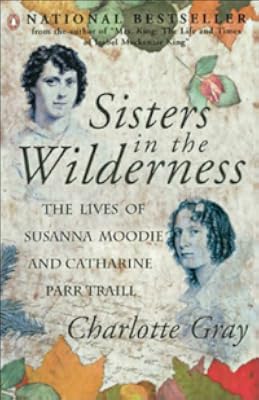
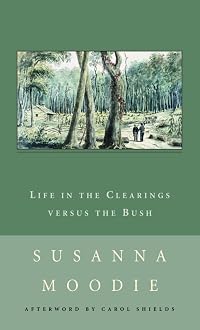
Susanna Moodie, born in Suffolk, England, was the youngest of five daughters, four of whom became writers of fiction and poetry. (Moodie's elder sister, Catharine Parr Traill, a lesser-known British colonial author, wrote The Backwoods of Canada). Before immigrating to Canada, in 1832, Moodie penned numerous poems and stories, all heavily didactic show more and decidedly second-rate. However, once she had settled in Upper Canada (now Ontario) with her husband, John Dunbar Moodie, the harsh life of the settler provoked a more realistic literary response. Her autobiographical Roughing It in the Bush, published in 1852, is a series of sketches stitched into a larger narrative. It is a book expressing the hopes and defeat, the pride and the anger the early settlers felt toward their new home, the Canadian bush. A sequel, Life in the Clearings versus the Bush, appeared in 1853. Throughout her life Susanna Moodie's literary output continued to be prolific. Yet it is the frank and colorful quality of Roughing It that has placed her in the forefront of early Canadian writers. (Bowker Author Biography) show less
Some Editions
Awards and Honors
Notable Lists
Series
Belongs to Publisher Series
Work Relationships
Has the adaptation
Common Knowledge
- Canonical title
- Roughing It in the Bush
- Original title
- Roughing It in the Bush or Life in Canada
- Alternate titles
- Roughing It in the Bush, or, Forest Life in Canada
- Original publication date
- 1852-01-22 (Richard Bentley of London, England) (Richard Bentley of London, England)
- People/Characters
- Susanna Moodie
- Important places
- Upper Canada; Duoro Township, Peterborough, Ontario, Canada; Port Hope, Ontario, Canada; Belleville, Ontario, Canada; Toronto, Ontario, Canada; Suffolk, England, UK (show all 8); Canada; Ontario, Canada
- Epigraph
- I sketch from Nature, and the picture's true;
Whate'er the subject, whether grave or gay,
Painful experience is a distant land
Made it mine own.
I sketch from Nature, and the picture's true;/
Whate'er the subject, whether grave or gay,/
Painful experience in a distant land/
Made it my own. - Dedication
- to Agnes Strickland, Author of "The Lives of the Queens of England" this simple tribute of affection is dedicated by her sister. Su... (show all)sanna Moodie
To Agnes Strickland, Author of "Lives of the Queens of England," This Simple Tribute of Affection is dedicated by her sister Susanna Moodie. - First words
- The dreadful cholera was depopulating Quebec and Montreal, when our ship cast anchor off Grosse Isle, on the 30th of August, 1832, and we were boarded a few minutes after by the health-officers.
The dreadful cholera was depopulating Quebec... - Last words
- (Click to show. Warning: May contain spoilers.)Reader! My task is ended.
Classifications
Statistics
- Members
- 582
- Popularity
- 50,496
- Reviews
- 10
- Rating
- (3.54)
- Languages
- English
- Media
- Paper, Audiobook, Ebook
- ISBNs
- 76
- ASINs
- 12