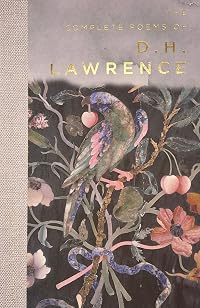
Complete Poems
by D. H. Lawrence, Warren Roberts (Editor)
The Complete Poems of D.H. Lawrence {de Sola Pinto & Roberts} (Collections and Selections — 1-2), The Complete Poems of D.H. Lawrence {The Phoenix Edition} (Collections and Selections — 1-3)
On This Page
Description
With an Introduction and Notes by David Ellis, University of Kent at Canterbury. Lawrence's reputation as a novelist has often meant that his achievements in poetry have failed to receive the recognition they deserve. This edition brings together, in a form he himself sanctioned, his Collected Poems of 1928, the unexpurgated version of Pansies, and Nettles, adding to these volumes the contents of the two notebooks in which he was still writing poetry when he died in 1930. It therefore allows show more the reader to trace the development of Lawrence as a poet and appreciate the remarkable originality and distinctiveness of his achievement. Not all the poems reprinted here are masterpieces but there is more than enough quality to confirm Lawrence's status as one of the greatest English writers of the twentieth century. show lessTags
Recommendations





Member Reviews
A poet is a man who manages, in a lifetime of standing out in thunderstorms, to be struck by lightning five or six times. – Randall Jarrell
D.H. Lawrence was, and remains, a great writer. You can say what you will about his style, his subject matter, or his personal life, but the fact remains that Lawrence was one of the most important writers of the last century. One may not like what Lawrence dug up, but that he broke new ground remains undisputable. As a writer of novels, short stories, essays, and travel pieces, Lawrence reveals his mastery of prose style. But here I only wish to say a few things about his poetry. As the above quotation indicates, inspiration is a rare thing, even among gifted poets. Yet Lawrence seemed not so much show more to wait for lightning to strike, as to give off sparks of his own. His poetry is, admittedly, uneven, but it always retains a certain smell of ozone, the divine charge of stirring soul-fullness. Lawrence, as poet, is much neglected nowadays. This is mostly because people read his Pansies (or, God forbid, Nettles) and think that these collections are all that Lawrence has to offer. I admit to also feeling ambivalent towards these two collections, in which Lawrence seems to have plonked down his thoughts willy-nilly, without due consideration for artistic effect. Unfortunately, they make up a large part of his oeuvre, and give the idea that Lawrence was a bit of a doggerel poetaster. I hope to show in this review that nothing could be further from the truth.
The best way to appreciate someone’s poetry is to read it. Obvious, really. I will therefore quote one of Lawrence’s poems in full. Hopefully, this does not break any copyright laws. I would have liked to quote from Lawrence’s most ambitious, and best, collection, Birds, Beasts and Flowers, but the poems tend to be very long (e.g. many people know his poem, Snake, from this collection, which, although not the longest, is already three pages in length). Therefore I will quote a poem from his Last Poems, the poems collected from manuscript after Lawrence’s early death. Lawrence, who had been sick for a while, was fascinated by death, the main subject of nearly all his last poems. This is one of the best.
Bavarian Gentians
Not every man has gentians in his house
in soft September, at slow, sad Michaelmas.
Bavarian Gentians, big and dark, only dark
darkening the day-time, torch-like with the smoking blueness of Pluto’s gloom,
ribbed and torch-like, with their blaze of darkness spread blue
down flattening into points, flattened under the sweep of white day
torch-flower of the blue-smoking darkness, Pluto’s dark-blue daze,
black lamps from the halls of Dis, burning dark blue,
giving off darkness, blue darkness, as Demeter’s pale lamps give off light,
lead me then, lead the way.
Reach me a gentian, give me a torch!
let me guide myself with the blue, forked torch of this flower
down the darker and darker stairs, where blue is darkened on blueness
even where Persephone goes, just now, from the frosted September
to the sightless realm where darkness is awake upon the dark
and Persephone herself is but a voice
or a darkness invisible enfolded in the deeper dark
of the arms Plutonic, and pierced with the passion of dense gloom,
among the splendour of torches of darkness, shedding darkness on the lost bride and her groom.
The poem really needs to be read aloud to appreciate the cumulative effect of the repetition, the ominous tone, the references to Greek mythology and to Milton… it all builds up to a poem of immense atmosphere and startling depth. Lawrence is contemplating his own death, which seems morbid enough, but there is an artistic detachment here that gives the poem force and originality. Lawrence detested sentimentality, as is obvious from his withdrawal from overly emotional responses to death, especially his own. Lawrence also rebelled against doctrinaire Christianity (perhaps indicated by his reference to ‘slow, sad Michaelmas’?), turning to the religions of other cultures, not as a believer, but as a man who was interested in humanity and the beauty it was capable of. He thus incorporates both Greek and Roman mythology, and even older traditions, like those of the Etruscans. But his incorporation of these myths does not lead to a dilettante’s eclecticism. Rather, Lawrence indicates how death is part of a universal, natural cycle, like the seasons (the Persephone myth is instructive here). How many of us could accept such a dark, dreary destiny with the élan and vitality that Lawrence displays, less than a year before his death?
Lawrence is a life-affirming poet and writer. He would not have given a damn about his detractors. It is, however, a shame that he is not more widely read today. In many ways an English Walt Whitman (whom he admired, but also criticised), Lawrence deserves more recognition as a truly great modern poet. show less
D.H. Lawrence was, and remains, a great writer. You can say what you will about his style, his subject matter, or his personal life, but the fact remains that Lawrence was one of the most important writers of the last century. One may not like what Lawrence dug up, but that he broke new ground remains undisputable. As a writer of novels, short stories, essays, and travel pieces, Lawrence reveals his mastery of prose style. But here I only wish to say a few things about his poetry. As the above quotation indicates, inspiration is a rare thing, even among gifted poets. Yet Lawrence seemed not so much show more to wait for lightning to strike, as to give off sparks of his own. His poetry is, admittedly, uneven, but it always retains a certain smell of ozone, the divine charge of stirring soul-fullness. Lawrence, as poet, is much neglected nowadays. This is mostly because people read his Pansies (or, God forbid, Nettles) and think that these collections are all that Lawrence has to offer. I admit to also feeling ambivalent towards these two collections, in which Lawrence seems to have plonked down his thoughts willy-nilly, without due consideration for artistic effect. Unfortunately, they make up a large part of his oeuvre, and give the idea that Lawrence was a bit of a doggerel poetaster. I hope to show in this review that nothing could be further from the truth.
The best way to appreciate someone’s poetry is to read it. Obvious, really. I will therefore quote one of Lawrence’s poems in full. Hopefully, this does not break any copyright laws. I would have liked to quote from Lawrence’s most ambitious, and best, collection, Birds, Beasts and Flowers, but the poems tend to be very long (e.g. many people know his poem, Snake, from this collection, which, although not the longest, is already three pages in length). Therefore I will quote a poem from his Last Poems, the poems collected from manuscript after Lawrence’s early death. Lawrence, who had been sick for a while, was fascinated by death, the main subject of nearly all his last poems. This is one of the best.
Bavarian Gentians
Not every man has gentians in his house
in soft September, at slow, sad Michaelmas.
Bavarian Gentians, big and dark, only dark
darkening the day-time, torch-like with the smoking blueness of Pluto’s gloom,
ribbed and torch-like, with their blaze of darkness spread blue
down flattening into points, flattened under the sweep of white day
torch-flower of the blue-smoking darkness, Pluto’s dark-blue daze,
black lamps from the halls of Dis, burning dark blue,
giving off darkness, blue darkness, as Demeter’s pale lamps give off light,
lead me then, lead the way.
Reach me a gentian, give me a torch!
let me guide myself with the blue, forked torch of this flower
down the darker and darker stairs, where blue is darkened on blueness
even where Persephone goes, just now, from the frosted September
to the sightless realm where darkness is awake upon the dark
and Persephone herself is but a voice
or a darkness invisible enfolded in the deeper dark
of the arms Plutonic, and pierced with the passion of dense gloom,
among the splendour of torches of darkness, shedding darkness on the lost bride and her groom.
The poem really needs to be read aloud to appreciate the cumulative effect of the repetition, the ominous tone, the references to Greek mythology and to Milton… it all builds up to a poem of immense atmosphere and startling depth. Lawrence is contemplating his own death, which seems morbid enough, but there is an artistic detachment here that gives the poem force and originality. Lawrence detested sentimentality, as is obvious from his withdrawal from overly emotional responses to death, especially his own. Lawrence also rebelled against doctrinaire Christianity (perhaps indicated by his reference to ‘slow, sad Michaelmas’?), turning to the religions of other cultures, not as a believer, but as a man who was interested in humanity and the beauty it was capable of. He thus incorporates both Greek and Roman mythology, and even older traditions, like those of the Etruscans. But his incorporation of these myths does not lead to a dilettante’s eclecticism. Rather, Lawrence indicates how death is part of a universal, natural cycle, like the seasons (the Persephone myth is instructive here). How many of us could accept such a dark, dreary destiny with the élan and vitality that Lawrence displays, less than a year before his death?
Lawrence is a life-affirming poet and writer. He would not have given a damn about his detractors. It is, however, a shame that he is not more widely read today. In many ways an English Walt Whitman (whom he admired, but also criticised), Lawrence deserves more recognition as a truly great modern poet. show less
This was a good collection of poetry. There's a lot of good poetry inside, particularly the poems that are unrhyming. D.H Lawrence proves himself, time and time again, in this collection. Well worth the read.
3.75 stars.
3.75 stars.
Favorite male poet.
Ratings
Members
- Recently Added By
Published Reviews
ThingScore 100
A very great deal survives in Lawrence. He is certainly one of the major poets of the twentieth century, along with Guillaume Apollinaire and William Carlos Williams. He is one of the leaders in the rejection of rhetoric and Symbolism and the return of poetry to colloquial honesty and presentational immediacy. This was one of the remarkable bouleversements in the history of the human show more sensibility. It put to rest once and for all many of the major esthetic quarrels that have dogged literature since Euripides and Sophocles, the conflict of classicism and romanticism, form and content, architecture and emotion, and fulfilled countless programs of the sort promulgated in the preface to Lyrical Ballads or in the Imagist Manifesto. However, the critic whose apparatus prevents him from realizing this is going to have trouble dealing with Lawrence and is hardly the sort of person qualified to introduce his Collected Poems. Vivian de Sola Pinto is as whimsical a choice for such a task as Diana Trilling was for the Viking Portable Lawrence.
Several of his poems in Birds, Beasts and Flowers and his death poem, “Blue Gentians,” are the perfect expression of what in England was called the Imagist esthetic. They are quite the equal of anything by Apollinaire, Reverdy or William Carlos Williams. The only English poem of the period that compares with them is Ford Madox Ford’s “L’Oubli, Temps de Sécheresse.” Lawrence may have been sick, but poetry like this will always be a life-giving metaphor for literature, a mithridate for the young poet. For the layman it will always be a permanently memorable experience, more real than real. That, after all, is all Lawrence wanted. show less
Several of his poems in Birds, Beasts and Flowers and his death poem, “Blue Gentians,” are the perfect expression of what in England was called the Imagist esthetic. They are quite the equal of anything by Apollinaire, Reverdy or William Carlos Williams. The only English poem of the period that compares with them is Ford Madox Ford’s “L’Oubli, Temps de Sécheresse.” Lawrence may have been sick, but poetry like this will always be a life-giving metaphor for literature, a mithridate for the young poet. For the layman it will always be a permanently memorable experience, more real than real. That, after all, is all Lawrence wanted. show less
added by SnootyBaronet
Lists

Harold Bloom - The Western Canon: D. The Chaotic Age
833 works; 24 members
Author Information

903+ Works 60,807 Members
D(avid) H(erbert) Lawrence was born on September 11, 1885. His father was a coal miner and Lawrence grew up in a mining town in England. He always hated the mines, however, and frequently used them in his writing to represent both darkness and industrialism, which he despised because he felt it was scarring the English countryside. Lawrence show more attended high school and college in Nottingham and, after graduation, became a school teacher in Croyden in 1908. Although his first two novels had been unsuccessful, he turned to writing full time when a serious illness forced him to stop teaching. Lawrence spent much of his adult life abroad in Europe, particularly Italy, where he wrote some of his most significant and most controversial novels, including Sons and Lovers and Lady Chatterly's Lover. Lawrence and his wife, Frieda, who had left her first husband and her children to live with him, spent several years touring Europe and also lived in New Mexico for a time. Lawrence had been a frail child, and he suffered much of his life from tuberculosis. Eventually, he retired to a sanitorium in Nice, France. He died in France in 1930, at age 44. In his relatively short life, he produced more than 50 volumes of short stories, poems, plays, essays, travel journals, and letters, in addition to the novels for which he is best known. (Bowker Author Biography) show less
Warren Roberts is professor emeritus of history at the University at Albany, SUNY.
Some Editions
Series

The Complete Poems of D.H. Lawrence {de Sola Pinto & Roberts}
2 works (Collections and Selections — 1-2)

The Complete Poems of D.H. Lawrence {The Phoenix Edition}
3 works (Collections and Selections — 1-3)
Belongs to Publisher Series
Work Relationships
Contains
Common Knowledge
- Canonical title
- Complete Poems
- Original publication date
- 1964
- First words
- The quick sparks on the gorse bush are leaping...
- Quotations
- Orphic farewell, and farewell, and farewell/And the ego sum of Dionysus/The sono io of perfect drunkenness/Intoxication of final loneliness.
-from "Medlars and Sorb-Apples" - Publisher's editor
- De Sola Pinto, Vivian; Roberts, F. Warren
Classifications
Statistics
- Members
- 764
- Popularity
- 36,865
- Reviews
- 3
- Rating
- (4.01)
- Languages
- Czech, English, Norwegian
- Media
- Paper
- ISBNs
- 10
- ASINs
- 5