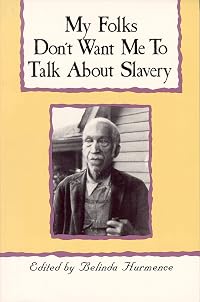
My Folks Don't Want Me to Talk About Slavery
by Belinda Hurmence (Editor)
On This Page
Description
Twenty-one oral histories of former North Carolina slaves.Tags
Recommendations







Member Reviews
As with Hurmence's previous collection (We Lived in a Little Cabin in the Yard), this is a troubling and mind-opening collection of narratives by slaves. Collected as part of the Federal Writer's Project, these stories languished in dusty archives until Hurmence pulled them into the light. This particular collection is from slaves in North Carolina. It is broad-ranging, meaning not all narrators hated slavery and whites. It is an interesting thing to find. One would assume that given the horrors of slavery, there would be much vitriol and bitterness. You do find this, but not as much as I expected. Hurmence does mention that the collectors of the stories were white and this may have skewed the narratives (meaning that even in 1924, show more blacks would not be comfortable criticizing whites to a white person). It is important to remember this when reading these narratives.
This book, and the others in the series, are must-reads for anyone who wants to learn about the history of slavery and racism in the US. They are particularly suited for classroom use, either public or homeschool, and would be okay for children in later elementary and up. show less
This book, and the others in the series, are must-reads for anyone who wants to learn about the history of slavery and racism in the US. They are particularly suited for classroom use, either public or homeschool, and would be okay for children in later elementary and up. show less
Culled from the myriad pages of the Federal Writers' Project Slave Narratives, this slim volume focuses on oral history from ex-slaves interviewed in North Carolina. Done at the time of the Depression, some found speaking to the young, white government workers a time to recall slavery as days better or at least no worst than there then current suffering. One thing consistent when mentioned was how Wheeler's Cavalry, though Confederate, were rapacious, horse-borne criminals. Overall, this is a moving, very human recollection of life-long tragedy and travail and I am certain any sampling from that rich trove of oral history would be, so the No. Carolina connection is merely incidental.
Speaking of "incidental", while reading this book, I show more also listened to the Andre Williams tune "Pass The Biscuits Please". Andre "Mr. Rhythm" Williams started his recording career in Detroit, Michigan on the small but prolific Fortune Records label. Williams recorded upon, or has writing credits upon, in excess of 200 songs - including: "Bacon Fat", "Pig Snoots", "JailBait", "Pass The Biscuits", "Rib Tips" and "The Greasy Chicken". One of the recollections here, of the many about poor food conditions under slavery, declaimed the fact that "Marse" never shared biscuits with the slaves. Thinking of the novelty song and the dialect preserved here, it feels to easy and even possibly stereotypic if not racist humor to unit the two. Thinking more deeply on it, it recalls to mind
Of those interviewed here, few suffered whippings or witnessed them firsthand while most could speak to knowledge of such acute, episodic violent tragedies as corporal punishment, family-separating public sale, etc. But, what emerges is the weight of the small, day-to-day injustices, just like the constant nuisances that may emerge in a novelty song. show less
Speaking of "incidental", while reading this book, I show more also listened to the Andre Williams tune "Pass The Biscuits Please". Andre "Mr. Rhythm" Williams started his recording career in Detroit, Michigan on the small but prolific Fortune Records label. Williams recorded upon, or has writing credits upon, in excess of 200 songs - including: "Bacon Fat", "Pig Snoots", "JailBait", "Pass The Biscuits", "Rib Tips" and "The Greasy Chicken". One of the recollections here, of the many about poor food conditions under slavery, declaimed the fact that "Marse" never shared biscuits with the slaves. Thinking of the novelty song and the dialect preserved here, it feels to easy and even possibly stereotypic if not racist humor to unit the two. Thinking more deeply on it, it recalls to mind
“Man is a creature that can get accustomed to anything, and I think that is the best definition of him.”
― Fyodor Dostoevsky, The House of the Dead
Of those interviewed here, few suffered whippings or witnessed them firsthand while most could speak to knowledge of such acute, episodic violent tragedies as corporal punishment, family-separating public sale, etc. But, what emerges is the weight of the small, day-to-day injustices, just like the constant nuisances that may emerge in a novelty song. show less
Editor Belinda Hurmence’s My Folks Don’t Want Me To Talk About Slavery provides excerpts about the lives of ex-slaves. Much of this narrative originated through the Federal Writers’ Project that was created to provide work for jobless writers and researchers. It initiated a program whereby field workers interviewed ex-slaves wherever they were found. But the contents of this book represented a compilation of stories of ex-slaves in North Carolina.
Each ex-slave’s narrative begins with where he or she was born in North Carolina. A discussion followed and the slaves who were mainly in their “eighties and nineties” described their lives in slavery. They commented about their meagre diets of cornbread, meats, and molasses, and show more their inadequate clothing. They talked about having working in the fields from sun up to sun down, and the whippings they received from their master or mistress when they disobeyed them. The slaves’ rules were often harsh, and based on the whims of the slave holders.
Many ex-slaves were encouraged to attend the church of their master and mistress. They would hear the preacher talk about how they should obey their master. But they were never given the chance to learn from books. For it was against the rules for them to be caught reading a book or a newspaper. These slaves couldn’t even read the Bible. So for the most part, a majority of the ex-slaves didn’t even know how to read or write.
It was however surprising to hear that many of these ex-slaves liked being with their master and mistress. Some of them said that they were well-treated, and they enjoyed their slave holders. On the other hand one wonders if these ex-slaves were only saying what they thought the interviewers wanted to hear. Many of them though thought that even after they were emancipated that their living conditions were worse. This was because they had their freedom, but had no one to care for them with a cabin, food, and clothing. Many of these ex-slaves therefore opted to remain with their slave master and mistress, for they lacked the means to take care of themselves. show less
Each ex-slave’s narrative begins with where he or she was born in North Carolina. A discussion followed and the slaves who were mainly in their “eighties and nineties” described their lives in slavery. They commented about their meagre diets of cornbread, meats, and molasses, and show more their inadequate clothing. They talked about having working in the fields from sun up to sun down, and the whippings they received from their master or mistress when they disobeyed them. The slaves’ rules were often harsh, and based on the whims of the slave holders.
Many ex-slaves were encouraged to attend the church of their master and mistress. They would hear the preacher talk about how they should obey their master. But they were never given the chance to learn from books. For it was against the rules for them to be caught reading a book or a newspaper. These slaves couldn’t even read the Bible. So for the most part, a majority of the ex-slaves didn’t even know how to read or write.
It was however surprising to hear that many of these ex-slaves liked being with their master and mistress. Some of them said that they were well-treated, and they enjoyed their slave holders. On the other hand one wonders if these ex-slaves were only saying what they thought the interviewers wanted to hear. Many of them though thought that even after they were emancipated that their living conditions were worse. This was because they had their freedom, but had no one to care for them with a cabin, food, and clothing. Many of these ex-slaves therefore opted to remain with their slave master and mistress, for they lacked the means to take care of themselves. show less
Somewhere in the Library of Congress there are 10,000 typewritten pages of interviews with former slaves. This archive, known as Slave Narratives, is the result of a government funded project to provide work for some of the unemployed during the depression in the U.S. in the 1930's: The Federal Writers' Project. Out of these stories of 2,000 people, Belinda Hurmence has chosen to edit and publish 21 of these stories, focusing on those who lived in North Carolina. The location was perfect for me because I recently read Emma LeConte's diary of her life in North Carolina during the march of Sherman, written from her perspective as a slave owner. Each chapter is short, around 4 pages, and the interviewers worked from a list of the same show more questions. Because of that I found the stories to be somewhat repetitive at times, but realized this method also provided for a good comparison of attitudes and experiences of different people in similar circumstances. For example, all were asked about their physical care regarding food, clothing, and housing. In this common experience of slavery, there was a variety of stories as some were starved, while others were fed well. Other questions were directed at literacy (non-existent), religion, whipping. No analysis is made of the stories, although there is a good introduction by Hurmence, reminding the reader of the circumstances and timing of the interviews, e.g. during the depression the past may have looked better than it would if you interviewed the same people today. Of course there is the fact that the period following emancipation was a transition period that did not go smoothly. Some met it with joy, others with fear, and others with the common Stockholm Syndrome.
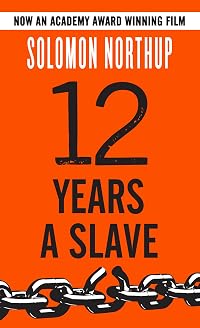
This was interesting, if painful, reading in light of conversations today as we hear responses to current movies such as Django and Twelve Years a Slave, as well as the class wars addressed by Occupy Wall Street. There are some who say that plantations have been replaced by ghettoes, which are just as difficult to escape from. It's difficult for me to understand that comparison when I think about slaves being whipped and starved and separated from their families. Then I think about the racist use of the death penalty today, hunger and poverty in the U.S. today, and the racist use of child protective services and let's don't even get started on who died in Vietnam.
Fascinating if depressing reading, these are stories that deserve to be heard, with a reminder that they were told to white people so need to be followed up by reading African American authors. show less
This was interesting, if painful, reading in light of conversations today as we hear responses to current movies such as Django and Twelve Years a Slave, as well as the class wars addressed by Occupy Wall Street. There are some who say that plantations have been replaced by ghettoes, which are just as difficult to escape from. It's difficult for me to understand that comparison when I think about slaves being whipped and starved and separated from their families. Then I think about the racist use of the death penalty today, hunger and poverty in the U.S. today, and the racist use of child protective services and let's don't even get started on who died in Vietnam.
Fascinating if depressing reading, these are stories that deserve to be heard, with a reminder that they were told to white people so need to be followed up by reading African American authors. show less
During the the 1930's, The Federal Writers' Project was an initiative to create work for jobless writers & researchers. Some of these people were sent out to interview former slaves before they all died. This book is a collection of some of the 170 interviews that were done in North Carolina. It is fascinating to read the different treatment by different masters on the same road. Even more intriguing is the different treatment meted out to slaves on the same plantation by the master & the mistress. Contrary to what you may think, at least two of the memoirs in this volume tell of plantations where the master was a caring man who did not use physical punishment while the mistress was a terror with whip. Some of these men & women look show more back on the slavery period with fondness. They had warm shelter & good clothes both of which they did have after freedom. show less
Who could better describe what slavery was like than the people who experienced it? More than 170 interviews were conducted in North Carolina sponsored by the Federal Writers' Project during the 1930's The collection is now housed in the Library of Congress. The twenty-one voices in this slim volume are between the ages of 80- to 103-years old at the time of their interviews.
21 Oral Histories - most from people living in Raleigh, NC
Members
- Recently Added By
Lists

United States Slave Narratives
28 works; 1 member

Black Authors
384 works; 32 members
Author Information

Series
Belongs to Publisher Series
Common Knowledge
- Canonical title
- My Folks Don't Want Me to Talk About Slavery
- Original publication date
- 1984
- Important places
- Southern States, USA
- Important events
- Slavery in colonial times and after the American Revolution
- Dedication
- For my parents Eula and Warren Watson
- First words
- I reckon that I is a hundred and three or a hundred and four years old.
Sarah Debro, once a slave in Orange County, North Carolina, put it bluntly: "My folks don't want me to talk about slavery." - Last words
- (Click to show. Warning: May contain spoilers.)That is, if the Lord lets me live, and I sure hope He does.
Classifications
- Genres
- Nonfiction, History, Biography & Memoir, General Nonfiction
- DDC/MDS
- 975.6 — History & geography History of North America Southeastern United States (South Atlantic states) North Carolina
- LCC
- E445 .N8 .M9 — History of the United States United States Revolution to the Civil War, 1775/1783-1861 Slavery in the United States. Antislavery
- BISAC
Statistics
- Members
- 309
- Popularity
- 103,424
- Reviews
- 8
- Rating
- (4.11)
- Languages
- English
- Media
- Paper, Ebook
- ISBNs
- 3
- ASINs
- 2