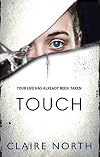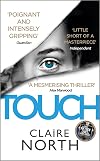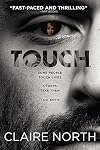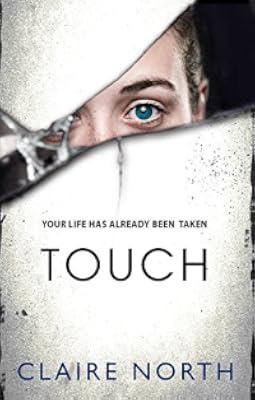
Touch
by Claire North
On This Page
Description
"He tried to take my life. Instead I took his. It was a long time ago. I remember it was dark, and I didn't see my killer until it was too late. As I died, my hand touched his. That's when the first switch took place. Suddenly, I was looking through the eyes of my killer, and I was watching myself die. Now switching is easy. I can jump from body to body, have any life, be anyone. Some people touch lives. Others take them. I do both"--Jacket.Tags
Recommendations










Member Recommendations
Member Reviews
You are a woman on a train. Now a customs official at a border. Now an elderly man hailing a taxi. When all it takes is the barest of touches, skin to skin, for you to move from one host to another, you are, effectively, anyone you want to be. And no-one. Still, it’s a life. Or even if it isn’t a life as such, it’s a kind of life-in-motion. With the right host, ideally a willing host, you can live well for extended periods, though, of course, when you depart your host continues on from the very moment you came onboard, with the accompanying loss of memory for the time they were not, so to be speak, at the helm. When Kepler — Kepler is not necessarily its true name, but it is the name that other people call him/her/it — is show more targeted for assassination and his host is murdered, he/she/it decides not to merely flee through the crowded train station in Istanbul but rather to turn and face her would-be murderer and, at a touch, become him. This sets in motion an extended chase across borders and bodies as Kepler and his sometime associates desperately seek to find who is behind their (because he’s not the only one of his kind who has been marked for elimination) demise. His only clue is the name, “Galileo,” but who or what is that?
Claire North’s high-concept thriller sets its initial conditions quickly and efficiently and then takes its reader on fast-paced ride. It is so well-crafted that you almost fail to notice the remarkable study of identity at work here. For what would count as identity in such a situation? It’s a fascinating question and not one to which there is any simple answer. And maybe, for purposes of a genre novel, it doesn’t really matter. But I suspect it is the opportunity of playing with such philosophical possibilities that drives North’s output. If so, she is doubly lucky as a writer.
Easy to recommend for a thrilling and thoughtful reading adventure. show less
Claire North’s high-concept thriller sets its initial conditions quickly and efficiently and then takes its reader on fast-paced ride. It is so well-crafted that you almost fail to notice the remarkable study of identity at work here. For what would count as identity in such a situation? It’s a fascinating question and not one to which there is any simple answer. And maybe, for purposes of a genre novel, it doesn’t really matter. But I suspect it is the opportunity of playing with such philosophical possibilities that drives North’s output. If so, she is doubly lucky as a writer.
Easy to recommend for a thrilling and thoughtful reading adventure. show less
"Kepler" is a ghost- not a ghost as we think of them, but an entity who can move in and out of the bodies of other people at the touch of skin to skin. The ghost no longer has a body of his/her own and can only survive by entering into a host and naturally the most appreciated hosts and young, fit and healthy. She/he has been doing this for hundreds of years and working as an 'estate agent' finding suitable bodies for others of her/his kind. The novel begins with Kepler's current host being gunned down in a Turkish train station, starting a flight from danger and prompting the discovery that a secret organisation is hunting down and destroying ghosts.
I am really upset about this book as the basic plot is something I had thought up for show more myself as the idea for my great novel. Ho hum. Back to the drawing board for me. The first quarter or so was a little disappointing as the action flitted around time periods and characters, but once it had settled down, this was a good read. I felt that there were themes here that were very similar to other North novels- something of the Pursuit of William Abbey and the Gameshouse, and to keep the story moving there was too many violent encounters. It would have been good to see what normal day to day life would be for an entity who has survived for hundreds of years borrowing the lives and bodies of other people. I'd describe this as highly original and innovative if I hadn't thought of (and now abandoned) a similar concept myself. Imaginative writing, well executed and recommended. show less
I am really upset about this book as the basic plot is something I had thought up for show more myself as the idea for my great novel. Ho hum. Back to the drawing board for me. The first quarter or so was a little disappointing as the action flitted around time periods and characters, but once it had settled down, this was a good read. I felt that there were themes here that were very similar to other North novels- something of the Pursuit of William Abbey and the Gameshouse, and to keep the story moving there was too many violent encounters. It would have been good to see what normal day to day life would be for an entity who has survived for hundreds of years borrowing the lives and bodies of other people. I'd describe this as highly original and innovative if I hadn't thought of (and now abandoned) a similar concept myself. Imaginative writing, well executed and recommended. show less
It all started with a murder - Josephine Cebula was killed at the steps of a station. Except that she was not alone - a ghost was using her body and the bullets were as much for her as they were for the ghost. The ghost managed to jump out and tell us the story (or that would have been an awfully short book).
North seems to be redefining the standard tropes of the genre one by one - the rebirth and reliving lives in her previous book, the possession and ghosts in this one. Ghosts here are not the non-corporal entities we are used to be reading about (well... not exactly anyway) - instead our ghosts are riding people - they move through touch and the host is just loosing the time - sometimes minutes, sometimes hours, sometimes years. And show more just like in the previous book, someone is trying to kill them all.
What follows is a chase through Europe - from one country to another, from one clue to another. The killer, the ones that are getting killed, the ones that are trying to survive. In a way it is the same novel as "The First Fifteen Lives of Harry August" - our main protagonist is trying to stay alive while someone unknown is trying to kill him and his kin while being functionally immortal. Of course that can be told for a lot of thrillers so that is not so surprising. But that comparison adds a layer to Touch that makes it a lot richer novel than it is on the surface.
But the novel is not just a thriller - it is also the story of loss and lack of family - being immortal also means not having a family and jumping between bodies means that having possessions becomes very hard. Under the thrill and the chase is the story of the people that cannot have what we take for a given. And that is what makes the novel actually good.
It is weaker than the previous novel by North but if you had never read the other one, maybe that one will work better. They tackle similar topics under very different circumstances - and while Harry August lived full lives (more than one), Kepler and his kin here live fragmented ones, never at the same person or place for long; while Harry had to live through whatever life throws at him, Kepler could just go to another body. At the same time while Harry knew than he can send a message back or he can change the world the next time he is around, Kepler is moving only forward - mistakes cannot be fixed. In a way the two novels are mirror images of each other - two sides of the coin of immortality.
I will be very interested to see what North does next. show less
North seems to be redefining the standard tropes of the genre one by one - the rebirth and reliving lives in her previous book, the possession and ghosts in this one. Ghosts here are not the non-corporal entities we are used to be reading about (well... not exactly anyway) - instead our ghosts are riding people - they move through touch and the host is just loosing the time - sometimes minutes, sometimes hours, sometimes years. And show more just like in the previous book, someone is trying to kill them all.
What follows is a chase through Europe - from one country to another, from one clue to another. The killer, the ones that are getting killed, the ones that are trying to survive. In a way it is the same novel as "The First Fifteen Lives of Harry August" - our main protagonist is trying to stay alive while someone unknown is trying to kill him and his kin while being functionally immortal. Of course that can be told for a lot of thrillers so that is not so surprising. But that comparison adds a layer to Touch that makes it a lot richer novel than it is on the surface.
But the novel is not just a thriller - it is also the story of loss and lack of family - being immortal also means not having a family and jumping between bodies means that having possessions becomes very hard. Under the thrill and the chase is the story of the people that cannot have what we take for a given. And that is what makes the novel actually good.
It is weaker than the previous novel by North but if you had never read the other one, maybe that one will work better. They tackle similar topics under very different circumstances - and while Harry August lived full lives (more than one), Kepler and his kin here live fragmented ones, never at the same person or place for long; while Harry had to live through whatever life throws at him, Kepler could just go to another body. At the same time while Harry knew than he can send a message back or he can change the world the next time he is around, Kepler is moving only forward - mistakes cannot be fixed. In a way the two novels are mirror images of each other - two sides of the coin of immortality.
I will be very interested to see what North does next. show less
Kate Griffin--excuse me, Claire North--is one of a handful of writers on my 'will probably read everything they write' list (not that this means immediately, mind you. But an interesting and talented enough writer that I'll likely give everything a shot. Probably. With a couple of exceptions). With that in mind, I had bought Touch on the cheap and saved it for a time when I could give it some proper attention.
I was both successful and a failure at this.
Before leaving on a ten-day vacation, I gave the first few chapters of Touch a try, and found it to be utterly engrossing. I forced myself to put the book down and pack it away in my backpack for the plane. Yes, the Kindle was going too. But there's something about a paper book that just show more works for me.
Kate's wonderful verbal imagery is pared down here, not nearly as enveloping as in the Matthew Swift novels, but still evocative and colorful. She's found a narrative that gives her a great chance to exercise those world-building skills in a variety of ways, from brief snapshots of people's lives across time to a multitude of cities in across Europe.
"I ran, my trousers soaking, my stomach empty, a bag of someone else's secrets bumping on my back, past the half-shadowed faces of men with coats pulled across their heads, fighting for a cab, women with umbrellas turned inside-out, hair clinging to their pale, cold faces; teenage girls whose shoes were now too impractical for walking in, holding them by their heels as they waded through the riverine streets."
The story is told in first person, by a narrator with a very unusual skill. Again, Kate--I mean Claire--puts her poet-like skills to work, demonstrating by cadence and format that the narrator has changed bodies.
So what went wrong? I'll tell you what went wrong: children. Children on a flight from Minneapolis, Minnesota, to Miami, Florida. More specifically, the toddler and the kindergartner sitting behind me. Parents, please do the responsible thing, and drug your children before airplane travel. I promise that I will only judge you if you don't.*
The older kid had to pee, and was afraid of the airplane toilet, so initially she settled for kicking my seat. While I can sympathize, I generally just hold it, instead of breaking out hollering in a full-on temper tantrum. And younger brother was clearly a sympathetic screamer. This proved a problem because I was in the last third of the book, and the story was getting quite intense, in a not-gentle kind of way. I put it down for a few minutes, turned my music on--high--and tried to relax. But the story kept niggling at me; I wanted to know what happened. I thought maybe I knew. But did I? Kate--I mean Claire--is not adverse to a little death and destruction. Was this the time that she'd kill a character off? I couldn't resist the siren call of the story, little screaming hellion or no. But it's hard to listen to the cadence of words in my head when my auditory canal insists on transmitting sound waves.
I finished as the plane landed, and think it's a stunner of a book. But was it the moving experience my friend Mimi had? Did I immediately want to read it again, as I did with Kate's other book, Madness of Angels? No. But I think I'll blame the parents on that, and not Kate--I mean Claire.
*There is absolutely nothing wrong with a solid dose of Benadryl. show less
I was both successful and a failure at this.
Before leaving on a ten-day vacation, I gave the first few chapters of Touch a try, and found it to be utterly engrossing. I forced myself to put the book down and pack it away in my backpack for the plane. Yes, the Kindle was going too. But there's something about a paper book that just show more works for me.
Kate's wonderful verbal imagery is pared down here, not nearly as enveloping as in the Matthew Swift novels, but still evocative and colorful. She's found a narrative that gives her a great chance to exercise those world-building skills in a variety of ways, from brief snapshots of people's lives across time to a multitude of cities in across Europe.
"I ran, my trousers soaking, my stomach empty, a bag of someone else's secrets bumping on my back, past the half-shadowed faces of men with coats pulled across their heads, fighting for a cab, women with umbrellas turned inside-out, hair clinging to their pale, cold faces; teenage girls whose shoes were now too impractical for walking in, holding them by their heels as they waded through the riverine streets."
The story is told in first person, by a narrator with a very unusual skill. Again, Kate--I mean Claire--puts her poet-like skills to work, demonstrating by cadence and format that the narrator has changed bodies.
So what went wrong? I'll tell you what went wrong: children. Children on a flight from Minneapolis, Minnesota, to Miami, Florida. More specifically, the toddler and the kindergartner sitting behind me. Parents, please do the responsible thing, and drug your children before airplane travel. I promise that I will only judge you if you don't.*
The older kid had to pee, and was afraid of the airplane toilet, so initially she settled for kicking my seat. While I can sympathize, I generally just hold it, instead of breaking out hollering in a full-on temper tantrum. And younger brother was clearly a sympathetic screamer. This proved a problem because I was in the last third of the book, and the story was getting quite intense, in a not-gentle kind of way. I put it down for a few minutes, turned my music on--high--and tried to relax. But the story kept niggling at me; I wanted to know what happened. I thought maybe I knew. But did I? Kate--I mean Claire--is not adverse to a little death and destruction. Was this the time that she'd kill a character off? I couldn't resist the siren call of the story, little screaming hellion or no. But it's hard to listen to the cadence of words in my head when my auditory canal insists on transmitting sound waves.
I finished as the plane landed, and think it's a stunner of a book. But was it the moving experience my friend Mimi had? Did I immediately want to read it again, as I did with Kate's other book, Madness of Angels? No. But I think I'll blame the parents on that, and not Kate--I mean Claire.
*
I think I've found my next go-to artist for must have reading material.
"Do you like what you see?"
This is like an ultramodern retelling of a vain girl's obsession with appearance versus what belongs solidly beneath the veneer. Of course, how else could you see life when you're without a real body, except those that you steal on contact and flit from norm to norm?
Kepler was truly devoted to doing right by her hosts and loved them in her best way, but she (or he) was always superficial. Janus, on the other hand, eventually moved away from his (or her) obsession with outward beauty to dive right into what really matters deep within, but still failed to get it right.
Galileo, on the other hand, never desired or understood the journey, and show more made a pure mockery of the outward form, eventually becoming northing more than a child that throws away people (in murder) as a spoiled child would mutilate her dolls, with as much care.
The characters are deep and change throughout the novel, and I love them all, but especially our heaviest soul, Kepler. I simultaneously enjoyed the repetition of the need for revenge and got very tired of it. The feel of the novel needed the reminder every once in a while, certainly, because it might have been lost in the everyday progression of survival in the middle of running, but even if I believe it could have been handled better, I damn well don't have a better suggestion beyond what was already done. I still liked every aspect of this tale.
Cole really grew on me, as did the Aquarius group, even if the group was never particularly likeable. The snippets of past and history made me believe, from my deepest heart of hearts, that our dear author is a great student of history.
I fell into the flashbacks as if I were in the ocean, made to ride the waves of time like the gentlest susurrations of water and motion. I really enjoyed the way I was pushed back and forth, and that's high praise because I never really enjoy flashbacks at all.
This novel is a success. If you come into it wanting to have a F/SF tale of love as can only be told by separate embodiments of a mind/body dichotomy, then you're going to get a real treat.
There are no real similarities in plot and historical exploration in regard to The Fifteen Lives of Harry August, but a bit deeper below the surface, it's easy to tell that she's in the same zone. Relationships with others are super important, even when the sense of alienation is paramount. These are damn full of non-repeating discussions of it, and I am left in awe at the damn polished prose.
So, "Do you like what you see?" Oh, yes. Absofuckinglutely. show less
"Do you like what you see?"
This is like an ultramodern retelling of a vain girl's obsession with appearance versus what belongs solidly beneath the veneer. Of course, how else could you see life when you're without a real body, except those that you steal on contact and flit from norm to norm?
Kepler was truly devoted to doing right by her hosts and loved them in her best way, but she (or he) was always superficial. Janus, on the other hand, eventually moved away from his (or her) obsession with outward beauty to dive right into what really matters deep within, but still failed to get it right.
Galileo, on the other hand, never desired or understood the journey, and show more made a pure mockery of the outward form, eventually becoming northing more than a child that throws away people (in murder) as a spoiled child would mutilate her dolls, with as much care.
The characters are deep and change throughout the novel, and I love them all, but especially our heaviest soul, Kepler. I simultaneously enjoyed the repetition of the need for revenge and got very tired of it. The feel of the novel needed the reminder every once in a while, certainly, because it might have been lost in the everyday progression of survival in the middle of running, but even if I believe it could have been handled better, I damn well don't have a better suggestion beyond what was already done. I still liked every aspect of this tale.
Cole really grew on me, as did the Aquarius group, even if the group was never particularly likeable. The snippets of past and history made me believe, from my deepest heart of hearts, that our dear author is a great student of history.
I fell into the flashbacks as if I were in the ocean, made to ride the waves of time like the gentlest susurrations of water and motion. I really enjoyed the way I was pushed back and forth, and that's high praise because I never really enjoy flashbacks at all.
This novel is a success. If you come into it wanting to have a F/SF tale of love as can only be told by separate embodiments of a mind/body dichotomy, then you're going to get a real treat.
There are no real similarities in plot and historical exploration in regard to The Fifteen Lives of Harry August, but a bit deeper below the surface, it's easy to tell that she's in the same zone. Relationships with others are super important, even when the sense of alienation is paramount. These are damn full of non-repeating discussions of it, and I am left in awe at the damn polished prose.
So, "Do you like what you see?" Oh, yes. Absofuckinglutely. show less
Review from Tenacious Reader: http://www.tenaciousreader.com/2015/02/09/review-touch-by-claire-north/
Touch by Claire North is a thrilling and unexpected journey through time and people. It starts with a murder in a crowded train station and quite frankly, just keeps running at full speed.
This is a book about the experience of walking in another’s skins. Literally. Ghosts exist by commandeering the bodies of the living, using their bodies/skins as vessels necessary for their survival. The unsuspecting hosts wake upon the ghosts exit to find themselves with minutes/days/years of their lives gone, with no awareness of the ghost that had inhabited them, or what they had done during this time. The time is just gone.
The jumping from person show more to person is concept that is executed extremely well in this novel. Hearing the ghosts assessment of their current body, finding out what they value in a host and just their attitude towards these people that are unwittingly there for the ghosts survival is quite interesting. Some ghosts take the approach of utmost respect, trying to do what they can to compensate their hosts, possibly even making a pre-discussed arrangement, others see humans more like cattle, or maybe coats. Something disposable to wear until you tire of it or it starts to *gasp* age.
Our main character is one of the respectful ones. Or at least he/she/it tries to be. She sees the beauty in people and becomes quite attached to her skins. When one of them is murdered, she becomes determined to find out why while also being hunted by the same group of people.
While most people in the world are completely oblivious to the existence of ghosts, there are some interesting exceptions (I won’t mention them all, because some things are better read than told in a review).
Wrap this concept around a thriller style plot comprised of a running for survival paired with a quest for answers and a mission of vengeance and you end up with an original and exciting read.
If you follow my reviews, you may know that I struggled a bit with The First Fifteen Lives of Harry August. I always felt so conflicted about this because I could admire North’s writing, but I just couldn’t get in to the plot. I was quite curious how I would respond to a different book and am quite happy to say, I greatly enjoyed her writing and the story in this one. Touch is unlike any other book I’ve read in all the best ways. I love the insight and reflections from experiencing anyone and everyone in a crowd, the unique perspectives given from a ghost living among/within us. Definitely recommend to anyone who enjoys something a bit different and/or thriller stories. show less
Touch by Claire North is a thrilling and unexpected journey through time and people. It starts with a murder in a crowded train station and quite frankly, just keeps running at full speed.
This is a book about the experience of walking in another’s skins. Literally. Ghosts exist by commandeering the bodies of the living, using their bodies/skins as vessels necessary for their survival. The unsuspecting hosts wake upon the ghosts exit to find themselves with minutes/days/years of their lives gone, with no awareness of the ghost that had inhabited them, or what they had done during this time. The time is just gone.
The jumping from person show more to person is concept that is executed extremely well in this novel. Hearing the ghosts assessment of their current body, finding out what they value in a host and just their attitude towards these people that are unwittingly there for the ghosts survival is quite interesting. Some ghosts take the approach of utmost respect, trying to do what they can to compensate their hosts, possibly even making a pre-discussed arrangement, others see humans more like cattle, or maybe coats. Something disposable to wear until you tire of it or it starts to *gasp* age.
Our main character is one of the respectful ones. Or at least he/she/it tries to be. She sees the beauty in people and becomes quite attached to her skins. When one of them is murdered, she becomes determined to find out why while also being hunted by the same group of people.
While most people in the world are completely oblivious to the existence of ghosts, there are some interesting exceptions (I won’t mention them all, because some things are better read than told in a review).
Wrap this concept around a thriller style plot comprised of a running for survival paired with a quest for answers and a mission of vengeance and you end up with an original and exciting read.
If you follow my reviews, you may know that I struggled a bit with The First Fifteen Lives of Harry August. I always felt so conflicted about this because I could admire North’s writing, but I just couldn’t get in to the plot. I was quite curious how I would respond to a different book and am quite happy to say, I greatly enjoyed her writing and the story in this one. Touch is unlike any other book I’ve read in all the best ways. I love the insight and reflections from experiencing anyone and everyone in a crowd, the unique perspectives given from a ghost living among/within us. Definitely recommend to anyone who enjoys something a bit different and/or thriller stories. show less
Pros: fast paced, complex, interesting morally ambiguous characters, thought provoking, several international locales
Cons: took a while to get into
When Josephine Cebula is gunned down at Taksim station, the ghost riding her flesh jumps to a new host in order to follow the man who, though obviously after the ghost and aware it left the body, for some reason made sure that Josephine died. It’s quickly apparent that a secret organization is hunting ghosts, and ‘Kepler’ is their current target.
The book begins with a murder and catapults you through several countries in various bodies as ‘Kepler’ (named so by its hunters) tries to figure out who’s after it and why. Flashbacks to earlier lives show other murder attempts, other show more lives, other ghosts and how they all deal with the flesh they wear.
The idea of beings that can transfer between bodies isn’t a new one, but North does some great things with it. I loved that the ghosts were all individuals, treating their flesh in different ways. Some, like Kepler, are respectful, learning about them, and offering them money and improved circumstances for the time they lose. Others are less concerned with the humans around them, wanting to glory in the achievements, beauty and wealth of others without putting any effort into learning the skills necessary to achieve anything of their own. I liked that the ghosts can’t access the memories or abilities of their flesh, meaning they can pretend to be that person, but only with effort on their part to learn the habits and skills of their borrowed flesh. I also liked that the people they take over have no memory of what’s happened to them. This allows them to be tracked while also making what the ghosts do - stealing time from their hosts - more insidious. Kepler argues at one point that most people don’t care - or are even happy - to lose an hour or two of their lives, especially when working or doing boring tasks. Few people would even notice if they were taken over for a minute or two, long enough for the ghost to get lost in a crowd. But consider the ghost that stays for 6 months or a year. What about 10 years? Or 30? Who’d be ok with losing that amount of their lives?
And what happens when you’re effectively immortal, but unable to have a home, loved ones, possessions? What does that kind of lifestyle do to you after hundreds of years, when you’re constantly moving from body to body, running from hunters or just bored of who you are?
The book asks some tough questions as none of the primary characters - except the main antagonist - is entirely good or evil. There’s so much grey area and you really get to know - and like - the characters that it’s hard to remember that this all started with a murder, and that Kepler, who seems so kind and loving, has done some horrible things in its past - depending on your point of view.
Because there’s so much to learn about the ghosts, the killer and the plot, I found the opening slow. Not in terms of things happening, but in terms of trying to get a handle on everything that was happening. By the time I had a grasp on things I was thoroughly invested in Kepler and so drawn into the story that it was hard to put the book down.
I’d recommend this for book clubs as there’s a lot of discussion possibility here. And if you like action and mystery with body hopping protagonists, give this a try. show less
Cons: took a while to get into
When Josephine Cebula is gunned down at Taksim station, the ghost riding her flesh jumps to a new host in order to follow the man who, though obviously after the ghost and aware it left the body, for some reason made sure that Josephine died. It’s quickly apparent that a secret organization is hunting ghosts, and ‘Kepler’ is their current target.
The book begins with a murder and catapults you through several countries in various bodies as ‘Kepler’ (named so by its hunters) tries to figure out who’s after it and why. Flashbacks to earlier lives show other murder attempts, other show more lives, other ghosts and how they all deal with the flesh they wear.
The idea of beings that can transfer between bodies isn’t a new one, but North does some great things with it. I loved that the ghosts were all individuals, treating their flesh in different ways. Some, like Kepler, are respectful, learning about them, and offering them money and improved circumstances for the time they lose. Others are less concerned with the humans around them, wanting to glory in the achievements, beauty and wealth of others without putting any effort into learning the skills necessary to achieve anything of their own. I liked that the ghosts can’t access the memories or abilities of their flesh, meaning they can pretend to be that person, but only with effort on their part to learn the habits and skills of their borrowed flesh. I also liked that the people they take over have no memory of what’s happened to them. This allows them to be tracked while also making what the ghosts do - stealing time from their hosts - more insidious. Kepler argues at one point that most people don’t care - or are even happy - to lose an hour or two of their lives, especially when working or doing boring tasks. Few people would even notice if they were taken over for a minute or two, long enough for the ghost to get lost in a crowd. But consider the ghost that stays for 6 months or a year. What about 10 years? Or 30? Who’d be ok with losing that amount of their lives?
And what happens when you’re effectively immortal, but unable to have a home, loved ones, possessions? What does that kind of lifestyle do to you after hundreds of years, when you’re constantly moving from body to body, running from hunters or just bored of who you are?
The book asks some tough questions as none of the primary characters - except the main antagonist - is entirely good or evil. There’s so much grey area and you really get to know - and like - the characters that it’s hard to remember that this all started with a murder, and that Kepler, who seems so kind and loving, has done some horrible things in its past - depending on your point of view.
Because there’s so much to learn about the ghosts, the killer and the plot, I found the opening slow. Not in terms of things happening, but in terms of trying to get a handle on everything that was happening. By the time I had a grasp on things I was thoroughly invested in Kepler and so drawn into the story that it was hard to put the book down.
I’d recommend this for book clubs as there’s a lot of discussion possibility here. And if you like action and mystery with body hopping protagonists, give this a try. show less
Members
- Recently Added By
Lists

2016 Hugo Eligible Novels
90 works; 32 members

Recommend the 20 best books you've read in the last five years
2,168 works; 607 members

KayStJ's to-read list
1,616 works; 11 members

Same Title
115 works; 3 members

Books Read in 2017
4,249 works; 130 members

Top Five Books of 2017
757 works; 231 members
Author Information

37+ Works 12,588 Members
Some Editions
Awards and Honors
Distinctions
Common Knowledge
- Canonical title
- Touch
- Original publication date
- 2015
- People/Characters
- Kepler; Galileo; Janus; Nathan Coyle; Johannes Schwarb; Aurangzeb
- Important places
- Istanbul, Turkey; Berlin, Germany; Paris, France; New York, New York, USA; Belgrade, Serbia; Bratislava, Slovakia
- First words
- Josephine Cebula was dying, and it should have been me.
- Last words
- (Click to show. Warning: May contain spoilers.)I am you.
- Original language
- English
Classifications
Statistics
- Members
- 706
- Popularity
- 40,439
- Reviews
- 55
- Rating
- (3.71)
- Languages
- 5 — Dutch, English, French, German, Romanian
- Media
- Paper, Audiobook, Ebook
- ISBNs
- 21
- ASINs
- 8