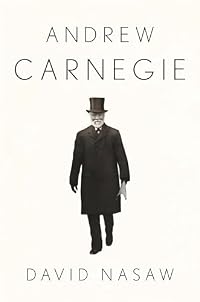
Andrew Carnegie
by David Nasaw
On This Page
Description
Born of modest origins in Scotland in 1835, Andrew Carnegie is best known as the founder of Carnegie Steel ... Carnegie, the son of an impoverished linen weaver, moved to Pittsburgh at the age of thirteen. The embodiment of the American dream, he pulled himself up from bobbin boy in a cotton factory to become the richest man in the world. He spent the rest of his life giving away the fortune he had accumulated and crusading for international peace. For all that he accomplished and came to show more represent to the American public - a wildly successful businessman and capitalist, a self-educated writer, peace activist, philanthropist, man of letters, lover of culture, and unabashed enthusiast for American democracy and capitalism - Carnegie has remained, to this day, an enigma.-http://www.booksinprint.com. show lessTags
Recommendations
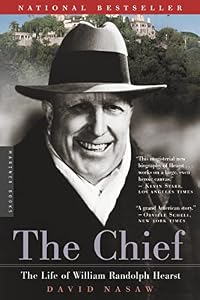
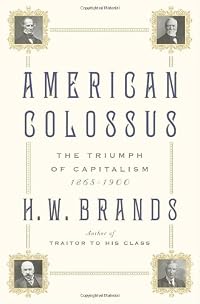
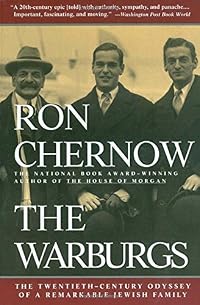
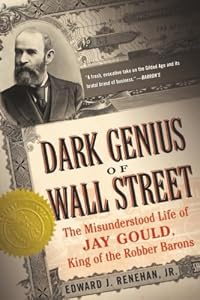


Member Recommendations
Member Reviews
Pretty sharp biography of the ironmaster-turned-philanthropist. The author does a pretty good job of showing that Carnegie's previous tales about his life often were exaggerated, or omitted key details. Nasaw does a good job as well at showing that Carnegie could be a windy, two-faced, manipulative bore. He might have looked a bit like Santa Claus, but he sure didn't act like him. Recommended, definitely.
How to describe Andrew Carnegie? Certainly he would have to be one of the most fortunate individuals to have ever been born. Son of a hardscrabble weaver from a small hamlet near Edinburgh, Scotland, Carnegie and family immigrated to Pennsylvania whan he was a young man. Perhaps never before in history, has a particular man, with certain skills, found himself at the right place, at the right time and under the right circumstances as did Andrew Carnegie in 19th century western Pennsylvania.
Despite having no formal education, Carnegie was certainly a very intelligent man. He educated himself over the years to the extent that he was considered a very philosophical author and sought after speaker on many of the issues of the day. He show more hitched his wagon to the right horse when he became assistant to an up and comer in the Pennsylvania Railroad. From an early age, Carnegie discovered the beauty of dividends and compound interest, money earned not by virtue of labor, but solely by virtue of having money. Due in large part to his connections, he was able to parley inside information into increasingly lucrative investments, to the point that he was soon able to turn over daily operation of his several businesses to very able lieutenants while he enjoyed the good life. These lieutenants, assisted by a series of unique events and developing technologies, made Carnegie the richest man in the world.
While it may sound as if Carnegie was merely an observer and accumulator, he certainly deserves much credit for his success. He was an early pioneer in the concept of cost accounting and through a ruthless system of unit cost reduction, both in the areas of vertical integration and labor cost, was able to successfully grow his business and survive numerous economic downturns which bankrupted his competitors.
Many decry Carnegie's business practices, most notably in the areas of labor/manangement relations and anti-competitive practices. However, this demonstrates a very common failing in many commentators; holding historical personages to current standards. The same people that condemn Carnegie's labor practices, denigrate George Washington for owning slaves, or Harry Truman for making racist comments. Each of these, though immoral by current standards, were men of their times.
Owners of manufacturing entities were expected to battle with labor. Labor, in the mid-late 19th century was heavily connected with the burgeoning socialist movement which was looked upon with disfavor by much of society. In fact, it is no coincidence that those of Carnegie's competitors whose labor forces became organized, were largely those that failed in the repeated economic panics of the day. Carnegie succeeded, and grew, as a result of reinvesting profits and maintaining low unit cost. Ironically, though his Homestead steel works became the symbol for labor/management violence, he considered himself one of the most enlightened managers of the day.
Carnegie is viewed, with Rockefeller, Morgan and Vanderbilt in the class of "Robber Barons" which sprang up during the era, however, Carnegie is vastly different than each of these individuals. While many of his contemporaries benefited and suceeded largely due to watered stock and market manipulation, he was very proud, and quick to point out that he never operated a corporation and never sold a share of stock. He was definitely NOT a monopolist (U.S. Steel was formed as a result of his sale of Carnegie Steel to J. P. Morgan and investors). He was simply a supreme capitalist and the first of his type and scale.
He is condemned by others for taking advantage of political and business connections not available to others. Again, that was common practice in the era. Many things that he did, while legislated against now, were perfectly legal and accepted business practices of the times.
All that having been said, I get the impression, especially in the later parts of the book, that Carnegie could be an insufferable prig. I imagine it becomes easy to view ones self as omnipotent and all wise, when everything one touches turns to gold and one is constantly praised for his good works. However, it is telling that he constantly bragged of being successful while only working 2-3 hours/day, lecturing his many employees to enjoy leisure time, while at the same time instituting a 12 hour/7 day a week work schedule. It seems almost unbelievable that he was unaware of the hypocrisy of some of actions, but after reading the book, I actually believe that he was. By letting his managers do the dirty work of making his money, he was able to "keep his hands clean" and disavow any unpleasantness that might result.
Though hopelessly naive, it is difficult to condemn a man who literally pioneered the concept of philanthropy and spent his last decade in a never flagging crusade for world peace. He tirelessly advocated the formation of a League of Nations/United Nations style world arbitration body, with military enforcement powers, well before any of his contemporaries. While he would doubtless be overjoyed to learn of the existence of the current United Nations, he would nonetheless be less than pleased with its corruption and lack of effective authority.
All in all, a rather good treatment, not just of Carnegie, but of the period itself and many of the historical figures of the era. At times, the book dragged and became tiresome, but not exceedingly so. I would highly recommend the book for anyone interested not just in Andrew Carnegie but in late 19th century American and British history. show less
Despite having no formal education, Carnegie was certainly a very intelligent man. He educated himself over the years to the extent that he was considered a very philosophical author and sought after speaker on many of the issues of the day. He show more hitched his wagon to the right horse when he became assistant to an up and comer in the Pennsylvania Railroad. From an early age, Carnegie discovered the beauty of dividends and compound interest, money earned not by virtue of labor, but solely by virtue of having money. Due in large part to his connections, he was able to parley inside information into increasingly lucrative investments, to the point that he was soon able to turn over daily operation of his several businesses to very able lieutenants while he enjoyed the good life. These lieutenants, assisted by a series of unique events and developing technologies, made Carnegie the richest man in the world.
While it may sound as if Carnegie was merely an observer and accumulator, he certainly deserves much credit for his success. He was an early pioneer in the concept of cost accounting and through a ruthless system of unit cost reduction, both in the areas of vertical integration and labor cost, was able to successfully grow his business and survive numerous economic downturns which bankrupted his competitors.
Many decry Carnegie's business practices, most notably in the areas of labor/manangement relations and anti-competitive practices. However, this demonstrates a very common failing in many commentators; holding historical personages to current standards. The same people that condemn Carnegie's labor practices, denigrate George Washington for owning slaves, or Harry Truman for making racist comments. Each of these, though immoral by current standards, were men of their times.
Owners of manufacturing entities were expected to battle with labor. Labor, in the mid-late 19th century was heavily connected with the burgeoning socialist movement which was looked upon with disfavor by much of society. In fact, it is no coincidence that those of Carnegie's competitors whose labor forces became organized, were largely those that failed in the repeated economic panics of the day. Carnegie succeeded, and grew, as a result of reinvesting profits and maintaining low unit cost. Ironically, though his Homestead steel works became the symbol for labor/management violence, he considered himself one of the most enlightened managers of the day.
Carnegie is viewed, with Rockefeller, Morgan and Vanderbilt in the class of "Robber Barons" which sprang up during the era, however, Carnegie is vastly different than each of these individuals. While many of his contemporaries benefited and suceeded largely due to watered stock and market manipulation, he was very proud, and quick to point out that he never operated a corporation and never sold a share of stock. He was definitely NOT a monopolist (U.S. Steel was formed as a result of his sale of Carnegie Steel to J. P. Morgan and investors). He was simply a supreme capitalist and the first of his type and scale.
He is condemned by others for taking advantage of political and business connections not available to others. Again, that was common practice in the era. Many things that he did, while legislated against now, were perfectly legal and accepted business practices of the times.
All that having been said, I get the impression, especially in the later parts of the book, that Carnegie could be an insufferable prig. I imagine it becomes easy to view ones self as omnipotent and all wise, when everything one touches turns to gold and one is constantly praised for his good works. However, it is telling that he constantly bragged of being successful while only working 2-3 hours/day, lecturing his many employees to enjoy leisure time, while at the same time instituting a 12 hour/7 day a week work schedule. It seems almost unbelievable that he was unaware of the hypocrisy of some of actions, but after reading the book, I actually believe that he was. By letting his managers do the dirty work of making his money, he was able to "keep his hands clean" and disavow any unpleasantness that might result.
Though hopelessly naive, it is difficult to condemn a man who literally pioneered the concept of philanthropy and spent his last decade in a never flagging crusade for world peace. He tirelessly advocated the formation of a League of Nations/United Nations style world arbitration body, with military enforcement powers, well before any of his contemporaries. While he would doubtless be overjoyed to learn of the existence of the current United Nations, he would nonetheless be less than pleased with its corruption and lack of effective authority.
All in all, a rather good treatment, not just of Carnegie, but of the period itself and many of the historical figures of the era. At times, the book dragged and became tiresome, but not exceedingly so. I would highly recommend the book for anyone interested not just in Andrew Carnegie but in late 19th century American and British history. show less
اللَّهُمَّ فَاطِرَ السَّمَاوَاتِ وَالْأَرْضِ عَالِمَ الْغَيْبِ وَالشَّهَادَةِ أَنتَ تَحْكُمُ بَيْنَ عِبَادِكَ فِي مَا كَانُوا فِيهِ يَخْتَلِفُونَ
O Allah, Creator of the heavens and the earth, Knower of the unseen and the seen, You judge between Your slaves concerning wherein they differ
******************************************************************************
Fascinating take on a fascinating subject. Nonetheless too long for the level of depth.
Some have said it's too critical of capitalism but the truth is: Carnegie would not have been able to acquire wealth using the same methods he used toward the turn show more of the past century. Insider trading is illegal now, even in a capitalist economic system, to say nothing of the other tactics he uses to acquire wealth. Calling that out does not display a bias (either for or against) capitalism.
Carnegie's peace activism and concern for those worse off -though limited- remains interesting.
There is not a cohesive narrative. Nor is the telling concise; 284,200 words is too long even for "nonfiction," especially given the amount of insight this book offers (and perhaps has to work with).
To the author's credit, the chronology of Carnegie's history includes many twists and turns. He lived to be 83 and his life extends from before Lincon's leadership of America during its civil war, all the way through Roosevelt's leadership of it through the depression. That context however was scant, and I found myself wondering what might have been happening politically, socially, or in Americans' minds about the opportunities their country offered, or at least how Carnegie's general employees would have reacted to a success such as his. This was after all, the "Gilded Age."
The book didn't seem as critical as it could have been and but for mention of the Homestead events, the working class would have hardly been represented.
This is the story of a man who quickly and increasingly acquired wealth— largely through luck*. Many of the "events" are really business deals and the book is largely a successive chain of buying, selling, acquiring or consolidating, regardless of how much or little the author intervened.
*granted, to say Carnegie was "lucky" or that he was at the right place at the right time, is to ignore the moral grounds which ultimately made insider trading illegal; Gatsbyesque luck. show less
O Allah, Creator of the heavens and the earth, Knower of the unseen and the seen, You judge between Your slaves concerning wherein they differ
******************************************************************************
Fascinating take on a fascinating subject. Nonetheless too long for the level of depth.
Some have said it's too critical of capitalism but the truth is: Carnegie would not have been able to acquire wealth using the same methods he used toward the turn show more of the past century. Insider trading is illegal now, even in a capitalist economic system, to say nothing of the other tactics he uses to acquire wealth. Calling that out does not display a bias (either for or against) capitalism.
Carnegie's peace activism and concern for those worse off -though limited- remains interesting.
There is not a cohesive narrative. Nor is the telling concise; 284,200 words is too long even for "nonfiction," especially given the amount of insight this book offers (and perhaps has to work with).
To the author's credit, the chronology of Carnegie's history includes many twists and turns. He lived to be 83 and his life extends from before Lincon's leadership of America during its civil war, all the way through Roosevelt's leadership of it through the depression. That context however was scant, and I found myself wondering what might have been happening politically, socially, or in Americans' minds about the opportunities their country offered, or at least how Carnegie's general employees would have reacted to a success such as his. This was after all, the "Gilded Age."
The book didn't seem as critical as it could have been and but for mention of the Homestead events, the working class would have hardly been represented.
This is the story of a man who quickly and increasingly acquired wealth— largely through luck*. Many of the "events" are really business deals and the book is largely a successive chain of buying, selling, acquiring or consolidating, regardless of how much or little the author intervened.
*granted, to say Carnegie was "lucky" or that he was at the right place at the right time, is to ignore the moral grounds which ultimately made insider trading illegal; Gatsbyesque luck. show less
David Nasaw, author of the much-honored biography of William Randolph Hurst, "The Chief," sets his sights on another rich titan of the Industrial Age, Andrew Carnegie. The resulting biography, simply titled "Andrew Carnegie," is a massive work, measuring over 800 pages, with another 50 pages of notes and bibliography.
Nasaw presents Carnegie as an almost indomitable force of nature, confident of his own abilities and point of view even as a young man. An immigrant to the United States as a child, along with his mother and brother, Carnegie seems a precocious teenager, eager to work, impressing his bosses with his abilities and work ethic, and evidently invited by them to begin investing in their ventures. Soon enough, Carnegie owns his show more own company, which he parlays over time into the massive Carnegie Steel empire.
Having achieved this vast fortune, Carnegie focused his energies on two other goals, even as he oversaw his industrial company. First, Carnegie desired to become a man of letters, admired for his published writings and sought after for his opinion on economic and political issues. Second, and perhaps as a consequence of the first, Carnegie dreamed of becoming a great philanthropist who, before his death, would give away his entire fortune to benevolent organizations.
Using these three overarching aspects as the framework for Carnegie's biography, Nasaw details the complex relationships he had with many people, including his mother, his brother, his wife, his daughter, and his main business associates, particularly Henry Clay Frick. The portraits of these relationships, and his nuanced presentation of Carnegie as a man who desires to be both esteemed as a colleague and respected as a father-figure, is probably the most successful part of Nasaw's biography.
In addition, Nasaw offers an exhaustive look at Carnegie as a would-be man of letters, drawing not only on Carnegie's published pamphlets and newspaper columns, but on his extensive correspondence, particularly with political leaders in the United States and England. From Nasaw's treatment alone, it would seem that Carnegie achieved the status and respect he craved.
Less successful is the description of Carnegie's rise from immigrant poverty to wealthy industrialist. While Nasaw focuses several chapters on this, it seems unclear how Carnegie actually achieved such wealth. There is an explicit suggestion that his infant iron company benefited from price collusion agreements with Pennsylvania railroad companies, but no real presentation of how Carnegie acquired the capital to start an iron company in the first place. Later stories about how Carnegie relied on the business and technical expertise of those who worked for him suggest that Carnegie's financial success was a result of the decisions of his underlings -- but certainly Carnegie must have possessed significant understandings of both his industry and of the world of finance. Nasaw's treatment is inadequate, to say the least.
It also should be noted that the biography, well written though it is, becomes rather tedious at points. For a while, it felt like the book would never end, and that Nasaw was chronicling a never-ending cycle of Carnegie giving interviews and essays to the press, writing presidents and prime ministers, giving away libraries and church organs, and summering at his Scottish estate.
In the end, Nasaw's biography is a competent, but uneven book. It is detailed, but for its successes in drawing a psychological portrait of Carnegie and his relationships it leaves some important questions about Carnegie's business acumen unanswered. It is at points an enjoyable read, but then also a frustrating and exhausting one. show less
Nasaw presents Carnegie as an almost indomitable force of nature, confident of his own abilities and point of view even as a young man. An immigrant to the United States as a child, along with his mother and brother, Carnegie seems a precocious teenager, eager to work, impressing his bosses with his abilities and work ethic, and evidently invited by them to begin investing in their ventures. Soon enough, Carnegie owns his show more own company, which he parlays over time into the massive Carnegie Steel empire.
Having achieved this vast fortune, Carnegie focused his energies on two other goals, even as he oversaw his industrial company. First, Carnegie desired to become a man of letters, admired for his published writings and sought after for his opinion on economic and political issues. Second, and perhaps as a consequence of the first, Carnegie dreamed of becoming a great philanthropist who, before his death, would give away his entire fortune to benevolent organizations.
Using these three overarching aspects as the framework for Carnegie's biography, Nasaw details the complex relationships he had with many people, including his mother, his brother, his wife, his daughter, and his main business associates, particularly Henry Clay Frick. The portraits of these relationships, and his nuanced presentation of Carnegie as a man who desires to be both esteemed as a colleague and respected as a father-figure, is probably the most successful part of Nasaw's biography.
In addition, Nasaw offers an exhaustive look at Carnegie as a would-be man of letters, drawing not only on Carnegie's published pamphlets and newspaper columns, but on his extensive correspondence, particularly with political leaders in the United States and England. From Nasaw's treatment alone, it would seem that Carnegie achieved the status and respect he craved.
Less successful is the description of Carnegie's rise from immigrant poverty to wealthy industrialist. While Nasaw focuses several chapters on this, it seems unclear how Carnegie actually achieved such wealth. There is an explicit suggestion that his infant iron company benefited from price collusion agreements with Pennsylvania railroad companies, but no real presentation of how Carnegie acquired the capital to start an iron company in the first place. Later stories about how Carnegie relied on the business and technical expertise of those who worked for him suggest that Carnegie's financial success was a result of the decisions of his underlings -- but certainly Carnegie must have possessed significant understandings of both his industry and of the world of finance. Nasaw's treatment is inadequate, to say the least.
It also should be noted that the biography, well written though it is, becomes rather tedious at points. For a while, it felt like the book would never end, and that Nasaw was chronicling a never-ending cycle of Carnegie giving interviews and essays to the press, writing presidents and prime ministers, giving away libraries and church organs, and summering at his Scottish estate.
In the end, Nasaw's biography is a competent, but uneven book. It is detailed, but for its successes in drawing a psychological portrait of Carnegie and his relationships it leaves some important questions about Carnegie's business acumen unanswered. It is at points an enjoyable read, but then also a frustrating and exhausting one. show less
A well written, well researched book spanning Andrew Carnegie's entire life. Had read about the Homestead problem and about his gift of public libraries, but book went far beyond those two areas. Although long, the book covered apparently all facets of his life. Carnegie claimed to be a friend of labor and pro -union, but his actions often seemed contradictory. A multifaceted individual. - one has to wonder how much was an act and how much was the real person that you saw. Definitely worthy of the accolades this book received.
Nasaw took on a difficult personality for a book. He struggles to maintain the humanity of Carnagie in the face of numerous displays of indifference towards others' suffering. Nasaw's subject gets away from him.
This is the story of the American hyper-rich and price others paid on their behalf. It is also the tale of the mess that the good-intentioned rich can make. Many of our current foreign policies have their source in Carnegie's vision of world peace.
An important, but difficult read.
This is the story of the American hyper-rich and price others paid on their behalf. It is also the tale of the mess that the good-intentioned rich can make. Many of our current foreign policies have their source in Carnegie's vision of world peace.
An important, but difficult read.
This is the third biography I read about people that made themselves super rich in the late 1800s in the USA. The other two were [b:Titan: The Life of John D. Rockefeller, Sr.|16121|Titan The Life of John D. Rockefeller, Sr.|Ron Chernow|https://d.gr-assets.com/books/1386925052s/16121.jpg|1312015] and [b:The First Tycoon: The Epic Life of Cornelius Vanderbilt|4839382|The First Tycoon The Epic Life of Cornelius Vanderbilt|T.J. Stiles|https://d.gr-assets.com/books/1320519566s/4839382.jpg|4904634]. That means that it's hard to not review the persons at the same time as I review the book but I will do my best.
Andrew Carnegie grew up in Scotland in a family who were being put out of business by the industrialization. When he was 13 the family show more moved to Pittsburgh and there Andrew made his fortune. The author tells the story mostly chronological, but also thematic with overlap in time between chapters. That works, but it's easy to lose control of the order things happened in. Since everything a person does or experience will affect future actions, the order kind of matters.
The main source of information seems to be letters. Actually, it seems the only source of information is letters and the occasional newspaper clipping. There are some attempts at analysis but nothing very deep. The most critical part is where the author points out the discrepancies between Carnegie's actions towards unions and labour and his outspoken support of labour and unions.
After getting through all the book, I still don't feel like I know him. I got a feeling for Vanderbilt and for Rockefeller, but not so much for Carnegie. Of the three it seemed Andrew Carnegie was the one that was mostly lucky and that mostly spent his time writing letters to pepole about everything.
To start from the beginning, Andrew Carnegie worked hard in the ironworks, telegraph office and railroad and befriended rich and powerful people. By leeching on to them he made a truck load of money out of nothing (because those businesses were corrupt, not illegally so though, and being an insider at the right time at the right place meant you could make a lot of money). With the money he earned and the contacts he had, he started and bought steel plants at a time when the US had huge tariffs for imported steel and at a time when armor, battleships and houses, as well as railroads needed more steel every year.
Carnegie didn't run the businesses himself but he made sure that they focused on low cost (i.e. long days, no salary for workers, and "special" deals with coke and railroad businesses) and high volume (i.e. low prices to keep the plants running).
The money he took he intended to give away and he did give away a lot of money. While John D. Rockefeller did so because he was a religious fanatic, Carnegie seems to have done so because he wanted to improve the world. His focus was on libraries and organs, but of the hundreds (thousands) of billion dollars he accumulated and gave away in todays money there wasn't enough libraries to consume them all, so there were lots of recipients.
The last years of his long life he spent trying to create the United Nations and international courts to prevent war ever again. He failed and that broke him. Instead the world entered World War I...
So the book, if you are very curious about Andrew Carnegie, sure read it, but it's not a literary masterpiece and I think it's also not very unique in sources and material so there might be better books about him. show less
Andrew Carnegie grew up in Scotland in a family who were being put out of business by the industrialization. When he was 13 the family show more moved to Pittsburgh and there Andrew made his fortune. The author tells the story mostly chronological, but also thematic with overlap in time between chapters. That works, but it's easy to lose control of the order things happened in. Since everything a person does or experience will affect future actions, the order kind of matters.
The main source of information seems to be letters. Actually, it seems the only source of information is letters and the occasional newspaper clipping. There are some attempts at analysis but nothing very deep. The most critical part is where the author points out the discrepancies between Carnegie's actions towards unions and labour and his outspoken support of labour and unions.
After getting through all the book, I still don't feel like I know him. I got a feeling for Vanderbilt and for Rockefeller, but not so much for Carnegie. Of the three it seemed Andrew Carnegie was the one that was mostly lucky and that mostly spent his time writing letters to pepole about everything.
To start from the beginning, Andrew Carnegie worked hard in the ironworks, telegraph office and railroad and befriended rich and powerful people. By leeching on to them he made a truck load of money out of nothing (because those businesses were corrupt, not illegally so though, and being an insider at the right time at the right place meant you could make a lot of money). With the money he earned and the contacts he had, he started and bought steel plants at a time when the US had huge tariffs for imported steel and at a time when armor, battleships and houses, as well as railroads needed more steel every year.
Carnegie didn't run the businesses himself but he made sure that they focused on low cost (i.e. long days, no salary for workers, and "special" deals with coke and railroad businesses) and high volume (i.e. low prices to keep the plants running).
The money he took he intended to give away and he did give away a lot of money. While John D. Rockefeller did so because he was a religious fanatic, Carnegie seems to have done so because he wanted to improve the world. His focus was on libraries and organs, but of the hundreds (thousands) of billion dollars he accumulated and gave away in todays money there wasn't enough libraries to consume them all, so there were lots of recipients.
The last years of his long life he spent trying to create the United Nations and international courts to prevent war ever again. He failed and that broke him. Instead the world entered World War I...
So the book, if you are very curious about Andrew Carnegie, sure read it, but it's not a literary masterpiece and I think it's also not very unique in sources and material so there might be better books about him. show less
Members
- Recently Added By
Author Information

11 Works 2,712 Members
David Nasaw is currently a professor of history and director of the Center for the Humanities at the Graduate Center of the City University of New York, he lives in Manhattan. (Bowker Author Biography)
Awards and Honors
Common Knowledge
- Original title
- Andrew Carnegie
- Original publication date
- 2006
- People/Characters
- Andrew Carnegie; Philip Armour; Daniel Drew; James Fisk, junior; Jay Gould; Cornelius Vanderbilt
- Important places
- Dunfermline, Fife, Scotland, UK; Pittsburgh, Pennsylvania, USA; USA
- Disambiguation notice
- 2006 edition: Andrew Carnegie / David Nasaw
Classifications
Statistics
- Members
- 1,053
- Popularity
- 24,299
- Reviews
- 10
- Rating
- (3.78)
- Languages
- English, Korean
- Media
- Paper, Audiobook, Ebook
- ISBNs
- 10
- ASINs
- 8