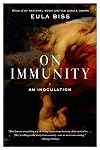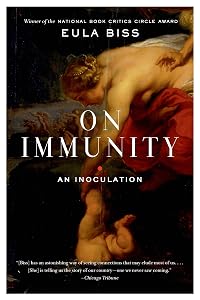
On Immunity: An Inoculation
by Eula Biss
On This Page
Description
Upon becoming a new mother, Eula Biss addresses a chronic condition of fear: fear of the government, the medical establishment, and what is in children's food, mattresses, medicines, and vaccines. Biss investigates the metaphors and myths surrounding the conception of immunity and its implications for the individual and the social body. As she hears more and more fears about vaccines, Biss researches what they mean for her own child, her immediate community, America, and the world.Tags
Recommendations

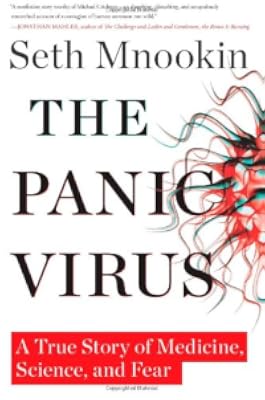
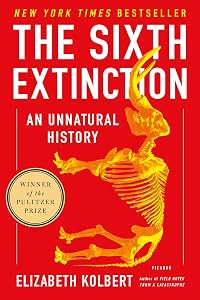
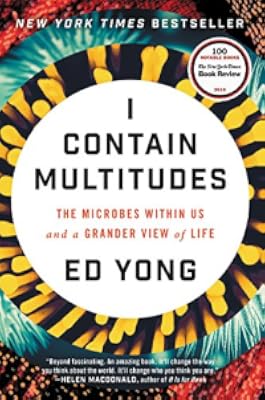
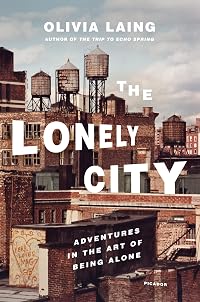
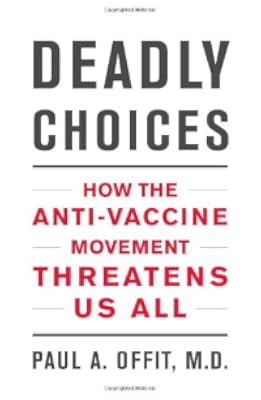

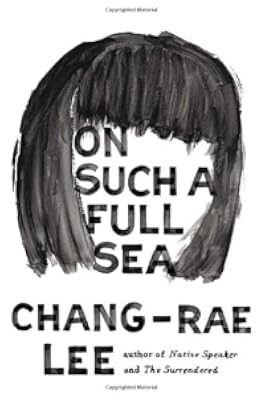
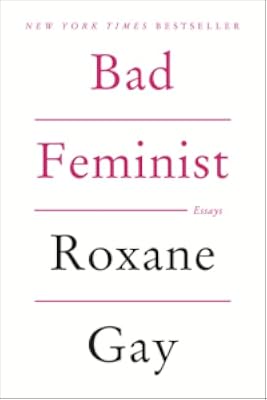

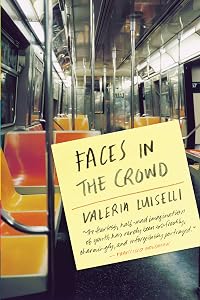
Member Recommendations

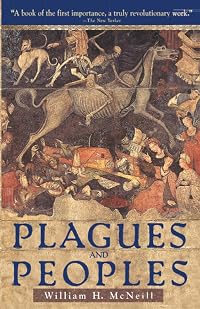
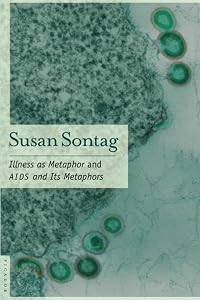
themulhern The 1721 smallpox epidemic in Boston, alluded to in "On Immunity" gets the full historical treatment in "The Fever of 1721". I believe that Stephen Coss's book is the more interesting one; Biss is a more practiced, NPR-style, writer.

themulhern Biss goes on and on about this madly over the top novel in "On Immunity", and everybody should read "Dracula" anyway. It's wild!
Member Reviews
I'd like to start by saying I do not have kids. I think the topic of immunity and vaccination is an incredibly personal one and if you are a mother who is even thinking deeply about these things you are already doing your best you can to care for your kids.
Biss' book is a nonfiction look into the history of vaccination and a discussion of some of the current issues. She presents the information without berating people. I love the details she gives about milkmaids, cowpox, the development of the polio vaccination and so much more. She brings the topic to life by giving it a background and talking about real examples throughout history. She also makes a fascinating connection between disease and Bram Stoker's Dracula. He stands as he show more example of the plague and sickness we fear, sucking our life away
She brings the AIDS crisis into the book to show an example of how the views of disease have become driven by fear and sometimes even a belief that if we do things "right" we can protect ourselves and our children. She talks about her own experiences and the decisions she's made with her child. She presents current CDC or WHO statistics about disease and outbreaks around the world.
One of the most interesting aspects to me was the explanation of herd immunity and the important part it plays in protecting people with compromised immune systems. She pulls no punches when talking about scare tactics that are sometimes used based on no fax or incorrect or false studies that have already been disproved. It really made me think about where we get our information and the tendency that all people have to believe things without fact checking them.
BOTTOM LINE: I wanted to learn more about this issue from a well-researched source and so this book worked well for me. Everyone will approach this issue with their own belief system, so that will obviously affect your view of the material, but I thought she did an excellent job. I especially appreciated how she drew a clear line between what was packed and what was her opinion.
“Wealthier countries have the luxury of entertaining fears the rest of the world cannot afford.” show less
Biss' book is a nonfiction look into the history of vaccination and a discussion of some of the current issues. She presents the information without berating people. I love the details she gives about milkmaids, cowpox, the development of the polio vaccination and so much more. She brings the topic to life by giving it a background and talking about real examples throughout history. She also makes a fascinating connection between disease and Bram Stoker's Dracula. He stands as he show more example of the plague and sickness we fear, sucking our life away
She brings the AIDS crisis into the book to show an example of how the views of disease have become driven by fear and sometimes even a belief that if we do things "right" we can protect ourselves and our children. She talks about her own experiences and the decisions she's made with her child. She presents current CDC or WHO statistics about disease and outbreaks around the world.
One of the most interesting aspects to me was the explanation of herd immunity and the important part it plays in protecting people with compromised immune systems. She pulls no punches when talking about scare tactics that are sometimes used based on no fax or incorrect or false studies that have already been disproved. It really made me think about where we get our information and the tendency that all people have to believe things without fact checking them.
BOTTOM LINE: I wanted to learn more about this issue from a well-researched source and so this book worked well for me. Everyone will approach this issue with their own belief system, so that will obviously affect your view of the material, but I thought she did an excellent job. I especially appreciated how she drew a clear line between what was packed and what was her opinion.
“Wealthier countries have the luxury of entertaining fears the rest of the world cannot afford.” show less
I have a big book crush on Eula Biss now. This book is deep without being difficult. I found it super thought-provoking, especially her thoughts on sympathizing with anti-vax feelings. I admit to harshly judging anti-vaxxers, but it is not totally irrational to fear/distrust the establishment. There is a lot to chew on in terms of who we trust and why.
She is less sympathetic to individualism/exceptionalism. One of my favorite sections from the book is: "I do not need to consult an ethicist to determine that there is something wrong [with making a special exemption just for yourself]." She points out that when we give blood, we are doing it for others, not for ourselves. Getting vaccinated should be seen in this same light.
This was show more published in 2014 and it's still very relevant in 2021 in the midst of COVID vaccinations.
This is also a book that felt deeply relevant to me as the parent of a young child. The fear/anxiety of parenting in the 21st century is almost unbearable to me sometimes. It felt good to read someone as smart as Biss struggle with the same issues and parse their origins. There's a great section on how many parents value "purity" and cleanliness and things that are "natural" in parenting. Our fears are often out of whack with the actual risks.
This is also a book about the "us versus them" mentality both in terms of how we related to germs/viruses (are they foreign invaders or are they part of us?) and how we relate to other humans (do we blame disease on those perceived as other or different?). Metaphors and analogies matter. show less
She is less sympathetic to individualism/exceptionalism. One of my favorite sections from the book is: "I do not need to consult an ethicist to determine that there is something wrong [with making a special exemption just for yourself]." She points out that when we give blood, we are doing it for others, not for ourselves. Getting vaccinated should be seen in this same light.
This was show more published in 2014 and it's still very relevant in 2021 in the midst of COVID vaccinations.
This is also a book that felt deeply relevant to me as the parent of a young child. The fear/anxiety of parenting in the 21st century is almost unbearable to me sometimes. It felt good to read someone as smart as Biss struggle with the same issues and parse their origins. There's a great section on how many parents value "purity" and cleanliness and things that are "natural" in parenting. Our fears are often out of whack with the actual risks.
This is also a book about the "us versus them" mentality both in terms of how we related to germs/viruses (are they foreign invaders or are they part of us?) and how we relate to other humans (do we blame disease on those perceived as other or different?). Metaphors and analogies matter. show less
I spent the week reading this on the subway, which I thought would be a scarier proposition than it was, given the whole Ebola thing… people are wearing breather masks for their commute, for goodness sake. But I found it to be a very smart and measured contemplation of the ways in which we view our bodies, health and illness, our immune systems—the term is recent, a 1970s construct—and particularly the subject of vaccinations. Within that, she brings in a lot of interesting cultural touchpoints: Bram Stoker’s Dracula, Rachel Carson’s Silent Spring, the history of inoculation, and the etymology of the metaphors we use for disease and the body—it’s a little surprising to note how many of the terms come from warfare. Or maybe show more it’s not. As someone who has a very uneasy relationship to doctors and medicine and illness, I found the book surprisingly reassuring. show less
In this brief and beautifully written book Eula Biss explores the meaning and significance of the concepts of inoculation and immunity in the individual and society. Each chapter is written as an essay on various aspects of the topic. It is not presented as technical/scientific information, though there is no paucity of facts in the text. Ten pages of sources and citations at the back of the book are interesting reading by themselves.
Through facts, myths, and metaphor the author points out the importance of a larger understanding of important concepts. She explores how we integrate information into our systems of thought, hence the subtitle: "an inoculation". The result is an attempt to inoculate the reader against quick assumptions show more based on poorly researched facts and an awareness of the impact of metaphorical language on our impressions, opinions, and ultimately our world view.
Through this book, Ms. Biss effectively demonstrates the value of the study of humanities in a world that is currently dominated by technology and sound bites. Kudos to her.
One of my favorite quotes in the book is on p. 128 citing George Orwell's observation that thought can corrupt language and language can corrupt thought:
"Stale metaphors reproduce stale thinking. Mixed metaphors confuse. And metaphors flow in two directions - thinking about one thing in terms of another can illuminate or obscure both. If our sense of bodily vulnerability can pollute our politics, then our sense of political powerlessness must inform how we treat our bodies." show less
Through facts, myths, and metaphor the author points out the importance of a larger understanding of important concepts. She explores how we integrate information into our systems of thought, hence the subtitle: "an inoculation". The result is an attempt to inoculate the reader against quick assumptions show more based on poorly researched facts and an awareness of the impact of metaphorical language on our impressions, opinions, and ultimately our world view.
Through this book, Ms. Biss effectively demonstrates the value of the study of humanities in a world that is currently dominated by technology and sound bites. Kudos to her.
One of my favorite quotes in the book is on p. 128 citing George Orwell's observation that thought can corrupt language and language can corrupt thought:
"Stale metaphors reproduce stale thinking. Mixed metaphors confuse. And metaphors flow in two directions - thinking about one thing in terms of another can illuminate or obscure both. If our sense of bodily vulnerability can pollute our politics, then our sense of political powerlessness must inform how we treat our bodies." show less
I've read a lot of writings by doctors, scientists, and skeptical activists about the misinformation on and public resistance to vaccines, and while many of them are excellent at laying out the facts on the subject, I often come away from them with the sense that they may, by and large, be preaching to the choir, or even taking an approach likely to alienate those most in need of their message.
But then there's this. The best description I can put forward for On Immunity is that it's a book about vaccines aimed at liberal humanities majors, written by one of their own. Which I think might sound like a criticism to some, but it is emphatically not. Eula Biss may be more of a poet than a scientist, but she has very thoroughly done her show more research here -- and not in the shallow, self-confirming sense that far too many people mean when they brag about "doing their own research" -- and she understands the facts and the science commendably well. But she also understands the emotions that real people feel when it comes to their bodies, their societies, and their children, as well as the metaphors we use to think about these things and the effects that those have on us. And she is anything but dismissive of these emotions and instincts and ways of thinking, even as she recognizes where they can fail. Through it all, she draws upon her own deeply personal experiences as a mother, sharing her profound feelings for her child and struggling with her uncertainties about what is best for him. She does all of this eloquently, thoughtfully, and movingly, and, perhaps, in a way that might reach those who find appeals to cold, hard rationality alone to be lacking something important to them.
This was originally published in 2014, and revolves, in part, around the H1N1 epidemic that was ongoing when her son was born, and which first prompted many of her fears and interests around the subjects of immunity and vaccines. But it has only become incredibly more relevant since. I'm only sorry I didn't read it a couple of years ago, so I could have gone around recommending it everywhere then. show less
But then there's this. The best description I can put forward for On Immunity is that it's a book about vaccines aimed at liberal humanities majors, written by one of their own. Which I think might sound like a criticism to some, but it is emphatically not. Eula Biss may be more of a poet than a scientist, but she has very thoroughly done her show more research here -- and not in the shallow, self-confirming sense that far too many people mean when they brag about "doing their own research" -- and she understands the facts and the science commendably well. But she also understands the emotions that real people feel when it comes to their bodies, their societies, and their children, as well as the metaphors we use to think about these things and the effects that those have on us. And she is anything but dismissive of these emotions and instincts and ways of thinking, even as she recognizes where they can fail. Through it all, she draws upon her own deeply personal experiences as a mother, sharing her profound feelings for her child and struggling with her uncertainties about what is best for him. She does all of this eloquently, thoughtfully, and movingly, and, perhaps, in a way that might reach those who find appeals to cold, hard rationality alone to be lacking something important to them.
This was originally published in 2014, and revolves, in part, around the H1N1 epidemic that was ongoing when her son was born, and which first prompted many of her fears and interests around the subjects of immunity and vaccines. But it has only become incredibly more relevant since. I'm only sorry I didn't read it a couple of years ago, so I could have gone around recommending it everywhere then. show less
Summary: A collection of essays about vaccines, immunity, fears, risks, and related concerns about environmental pollutants and other dangers faced by the human community.
A few caveats at the beginning of this review. One is that this book was published in 2014. So it was not written in the context of our current polemics about vaccines to combat COVID-19. Also, the author is not a scientist but a talented writer who has won a number of literary awards and is currently an Artist in Residence at Northwestern University. She is the daughter of an oncolgist. She is also the mother of a child suffering many allergies.
The essays in this work reflect her background as an academic, writer, child of a doctor, and a mother. It is evident that show more she extensively researched this work. She explores the history of vaccination from which we learn that the term comes from the Latin name for the cowpox virus, from which the vaccinated developed immunity to smallpox. She explores how the understanding of immunity developed over the years, earlier issues with the safety of vaccination, and contemporary research and reporting systems that confirm the high level of safety and rarity of risks.
She makes an important point that the effectiveness of vaccines isn’t simply for individuals but for the communities within which they live and travel. Vaccines limit or eliminate infections when a large portion of the population is vaccinated. At one point she challenges the flawed reasoning that one doesn’t need to get vaccinated because others are. This only works when very few think that way, and an ethic that you can’t commend universally runs afoul of Kant’s categorical imperative. She observes, “Immunity is a shared space—a garden we tend together.”
But she is also a mom who wants to do the right thing for her child. Her personal concerns lead her to a sympathetic examination of the fears of others, the sources of reports about autism, and various contaminants in vaccines. She both acknowledge the continuing influence of these reports and how extensive research studies have refuted all of them. She explores the question of risk, and how highly unlikely risks, like a rare side effect that may be attributed to a vaccine, and the much more prevalent and often more serious risks of the disease vaccines are meant to prevent. In the end, she comes down on the side of vaccination–but hardly in an unthinking, “sheeple” fashion. She gently challenges being more afraid of inoculation than disease, and the luxury of entertaining fears that most of the world can’t afford.
She considers other chemicals in our environment from triclosan in our liquid soaps to plastics in our foods, drink bottles, and mattresses. She comes to recognize that there is no absolute immunity we can confer on ourselves or our children from all that could render harm. She experiences this herself when she required transfusion after nearly dying from an inverted uterus during childbirth, and has to trust the safety of the blood she is given. She balances this sense of our vulnerability with our amazing immune system, that can handle multiple vaccines at once because it responds to thousands of threats every day. She asks hard questions, reviews research and doesn’t simply accept authority, but also acts on the best evidence of the science.
The book wanders a bit. It is a collection of essays, not strictly a scientific or history piece. But it is also a human piece, rather than a clinical account or research paper. Biss does what we all need to do–listen, ask questions, be the parent, and learn to discern between flawed and reliable information, and make the best decisions one can. In many ways, this may be a helpful read for those with concerns about vaccines. It challenges us to make decisions not from a place of narcissism but enlightened self interest that also considers the common good. It is written from outside the current polemics, but reflects the concerns so many of us have. show less
A few caveats at the beginning of this review. One is that this book was published in 2014. So it was not written in the context of our current polemics about vaccines to combat COVID-19. Also, the author is not a scientist but a talented writer who has won a number of literary awards and is currently an Artist in Residence at Northwestern University. She is the daughter of an oncolgist. She is also the mother of a child suffering many allergies.
The essays in this work reflect her background as an academic, writer, child of a doctor, and a mother. It is evident that show more she extensively researched this work. She explores the history of vaccination from which we learn that the term comes from the Latin name for the cowpox virus, from which the vaccinated developed immunity to smallpox. She explores how the understanding of immunity developed over the years, earlier issues with the safety of vaccination, and contemporary research and reporting systems that confirm the high level of safety and rarity of risks.
She makes an important point that the effectiveness of vaccines isn’t simply for individuals but for the communities within which they live and travel. Vaccines limit or eliminate infections when a large portion of the population is vaccinated. At one point she challenges the flawed reasoning that one doesn’t need to get vaccinated because others are. This only works when very few think that way, and an ethic that you can’t commend universally runs afoul of Kant’s categorical imperative. She observes, “Immunity is a shared space—a garden we tend together.”
But she is also a mom who wants to do the right thing for her child. Her personal concerns lead her to a sympathetic examination of the fears of others, the sources of reports about autism, and various contaminants in vaccines. She both acknowledge the continuing influence of these reports and how extensive research studies have refuted all of them. She explores the question of risk, and how highly unlikely risks, like a rare side effect that may be attributed to a vaccine, and the much more prevalent and often more serious risks of the disease vaccines are meant to prevent. In the end, she comes down on the side of vaccination–but hardly in an unthinking, “sheeple” fashion. She gently challenges being more afraid of inoculation than disease, and the luxury of entertaining fears that most of the world can’t afford.
She considers other chemicals in our environment from triclosan in our liquid soaps to plastics in our foods, drink bottles, and mattresses. She comes to recognize that there is no absolute immunity we can confer on ourselves or our children from all that could render harm. She experiences this herself when she required transfusion after nearly dying from an inverted uterus during childbirth, and has to trust the safety of the blood she is given. She balances this sense of our vulnerability with our amazing immune system, that can handle multiple vaccines at once because it responds to thousands of threats every day. She asks hard questions, reviews research and doesn’t simply accept authority, but also acts on the best evidence of the science.
The book wanders a bit. It is a collection of essays, not strictly a scientific or history piece. But it is also a human piece, rather than a clinical account or research paper. Biss does what we all need to do–listen, ask questions, be the parent, and learn to discern between flawed and reliable information, and make the best decisions one can. In many ways, this may be a helpful read for those with concerns about vaccines. It challenges us to make decisions not from a place of narcissism but enlightened self interest that also considers the common good. It is written from outside the current polemics, but reflects the concerns so many of us have. show less
A collection of short essays, typically 2-3 pages. Recurrent themes reflect the role of metaphor and perception in medical science, indeed that Western culture repeatedly invokes either vampirism or warfare in discussing medicine and immunization, comparatively recently adding a cybernetic system approach ("immunosemiotics"). Biss intersperses personal anecdotes of health and child immunizations with diversions into myth, ecology, popular fears and prejudices. The essays are neither numbered nor named, but flow as a conversation, now branching out, now rejoining ideas discussed previously.
I first read of herd immunity in these pages, the idea that once a threshold of individual immunizations is reached, the population itself enjoys a show more level of protection previously unattained, including for non-immunized individuals, precisely because vectors were closed down for the virus. Biss also examines variolation, predating vaccination and seemingly of a piece with sympathetic magic, in which pustules from an infected person are introduced into the healthy body of another (often child) to build resistance.
I have doubts that we can vaccinate away our prejudices, or wash our hands of them. There will always be diseases against which we cannot protect ourselves, and those diseases will always tempt us to project our fears onto other people. But I still believe there are reasons to vaccinate that transcend medicine. [158]
Biss discusses Hepatitis B virus, a case example in the way various gender, class, and race experiences prove as relevant to individual decisions for or against immunization. Her discussion effectively illustrates how reality looks to various people with different experiences, rather than pointing out why some people get it wrong or make a bad decision.
These essays offer a considered examination of health in its many facets (for a person, for that person's community), how to attempt a healthy life in the face of so many ambiguous threats to our well being, and an appreciation of our history of attempts. Precisely what I look for in an essay: a reasoned argument, with a sweep taking in disparate ideas and disciplines, driven by curiosity and heart.
//
The first book I've read from Graywolf Press, and its reputation for publishing quality essays and non-fiction is upheld here. show less
I first read of herd immunity in these pages, the idea that once a threshold of individual immunizations is reached, the population itself enjoys a show more level of protection previously unattained, including for non-immunized individuals, precisely because vectors were closed down for the virus. Biss also examines variolation, predating vaccination and seemingly of a piece with sympathetic magic, in which pustules from an infected person are introduced into the healthy body of another (often child) to build resistance.
I have doubts that we can vaccinate away our prejudices, or wash our hands of them. There will always be diseases against which we cannot protect ourselves, and those diseases will always tempt us to project our fears onto other people. But I still believe there are reasons to vaccinate that transcend medicine. [158]
Biss discusses Hepatitis B virus, a case example in the way various gender, class, and race experiences prove as relevant to individual decisions for or against immunization. Her discussion effectively illustrates how reality looks to various people with different experiences, rather than pointing out why some people get it wrong or make a bad decision.
These essays offer a considered examination of health in its many facets (for a person, for that person's community), how to attempt a healthy life in the face of so many ambiguous threats to our well being, and an appreciation of our history of attempts. Precisely what I look for in an essay: a reasoned argument, with a sweep taking in disparate ideas and disciplines, driven by curiosity and heart.
//
The first book I've read from Graywolf Press, and its reputation for publishing quality essays and non-fiction is upheld here. show less
Members
- Recently Added By
Lists

Top Five Books of 2014
1,064 works; 397 members

The 3 Rs Blog 2014 Books of the Year
16 works; 1 member
NYTimes 10 Best of 2014
10 works; 3 members

Club Read's Recommended Nonfiction Written by Women
618 works; 30 members

Vlogbrothers Book Recommendations
307 works; 4 members
Author Information

7+ Works 1,913 Members
Awards and Honors
Awards
Distinctions
Common Knowledge
- Canonical title*
- Vaccini, virus e altre immunità: una riflessione sul contagio
- Original title
- On Immunity: An Inoculation
- Alternate titles*
- Immunità: Vaccini, virus e altre paure
- Dedication
- For other mothers, with gratitude to mine
- First words
- The first story I ever heard about immunity was told to me by my father, a doctor, when I was very young.
- Last words
- (Click to show. Warning: May contain spoilers.)Immunity is a shared space - a garden we tend together.
- Blurbers
- Fadiman, Anne; Solnit, Rebecca; Nelson, Maggie; Li, Yiyun; Manguso, Sarah
*Some information comes from Common Knowledge in other languages. Click "Edit" for more information.
Classifications
- Genres
- General Nonfiction, Nonfiction, Science & Nature, History, Biography & Memoir, Health & Wellness
- DDC/MDS
- 616.079 — Applied science & technology Medicine & health Diseases, Allergies, Skin Conditions Pathology; Diseases; Treatment Pathology Immunology; Immune system
- LCC
- RJ240 .B57 — Medicine Pediatrics Pediatrics Immunization of children (General)
- BISAC
Statistics
- Members
- 995
- Popularity
- 26,358
- Reviews
- 49
- Rating
- (4.01)
- Languages
- 6 — English, French, German, Italian, Portuguese (Portugal), Spanish
- Media
- Paper, Audiobook, Ebook
- ISBNs
- 17
- ASINs
- 8