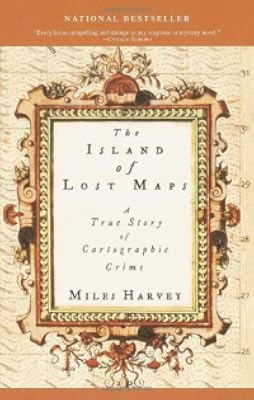
The Island of Lost Maps: A True Story of Cartographic Crime
by Miles Harvey
On This Page
Description
"The Island of Lost Maps" tells the story of a curious crime spree: the theft of scores of valuable, centuries-old maps from some of the most prominent research libraries in the United States and Canada. When all was said and done, Gilbert Joseph Bland, Jr., had become the Al Capone of cartography, the most prolific American map thief in history.Tags
Recommendations

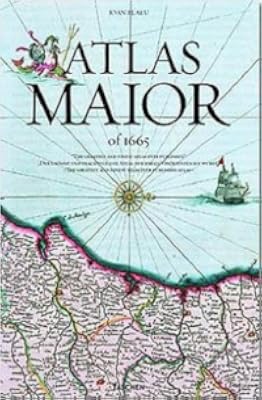




Member Recommendations
The Billionaire's Vinegar: The Mystery of the World's Most Expensive Bottle of Wine by Benjamin Wallace
grizzly.anderson Another current affairs book of crime and an esoteric world of collecting.
30

Member Reviews
This is primarily the story of a map thief, Gilbert Bland, Jr., who stole and sold countless rare maps from libraries all over the United States and even Canada and the author’s efforts to get to the bottom of the why of it. Bland is a difficult person to figure out – he often comes across as a man as bland as his name – but some of the rest of the time he appears like just another greedy, destructive thief. Although Bland displays a lot of nerve as he violates rare books all over the country, from what I read, at least as much blame needs to be placed upon the librarians who have not done enough to protect their books. Neither did they pursue prosecution forcefully enough, justifying their choice because it was too expensive. (Of show more course, I realize that budgets are also at least partly to blame for this problem.)
Harvey pursues the Bland story for years, gathering news stories, conducting interviews and researching the world of map collecting, but never achieving his ultimate goal – an interview with the map thief himself. By the end of the book, Harvey wonders about his pursuit of the story and of his dogged attempts to interview and understand Gilbert Bland. He realizes, eventually, that he is obsessed with him and that it is not a healthy thing. It does not, however, turn him away from the story. He has to follow it through to the end.
Harvey introduces the reader to a variety of collectors and cartomaniacs. I don’t think that I realized before how many really old maps there were or how they were at one time, closely guarded state-secrets. You have to wonder how things would have turned out if Columbus’ brother, Bartolomeo, had not copied several Portuguese maps, (selling them at a tidy profit) and used the revealed knowledge to bolster the whole argument for Christopher’s voyage?
The collection of maps is not an inexpensive hobby; collectible maps cost thousands today. The truly rare can go at auction for significantly more than a million. Harvey writes extensively about a man who I guess is the foremost map dealer in the world (or was back in the 90’s), Graham Arader. Clearly he was helpful to Harvey, but I did not like him. Perhaps it is bad tempered jealousy on my part – Arader’s canny collecting seems to me almost solely responsible for the tremendous hike in antique map prices – but he seemed arrogant and smug. It is hard to like the super rich. And damn it, after reading about all those lovely maps, I kind of wanted one for myself.
Overall a good book. I learned a lot. Oh, yes – as for the physical book itself – I loved reading this edition – the size, the pages, the look – everything was just right. show less
Harvey pursues the Bland story for years, gathering news stories, conducting interviews and researching the world of map collecting, but never achieving his ultimate goal – an interview with the map thief himself. By the end of the book, Harvey wonders about his pursuit of the story and of his dogged attempts to interview and understand Gilbert Bland. He realizes, eventually, that he is obsessed with him and that it is not a healthy thing. It does not, however, turn him away from the story. He has to follow it through to the end.
Harvey introduces the reader to a variety of collectors and cartomaniacs. I don’t think that I realized before how many really old maps there were or how they were at one time, closely guarded state-secrets. You have to wonder how things would have turned out if Columbus’ brother, Bartolomeo, had not copied several Portuguese maps, (selling them at a tidy profit) and used the revealed knowledge to bolster the whole argument for Christopher’s voyage?
The collection of maps is not an inexpensive hobby; collectible maps cost thousands today. The truly rare can go at auction for significantly more than a million. Harvey writes extensively about a man who I guess is the foremost map dealer in the world (or was back in the 90’s), Graham Arader. Clearly he was helpful to Harvey, but I did not like him. Perhaps it is bad tempered jealousy on my part – Arader’s canny collecting seems to me almost solely responsible for the tremendous hike in antique map prices – but he seemed arrogant and smug. It is hard to like the super rich. And damn it, after reading about all those lovely maps, I kind of wanted one for myself.
Overall a good book. I learned a lot. Oh, yes – as for the physical book itself – I loved reading this edition – the size, the pages, the look – everything was just right. show less
This is an absolutely fascinating true crime account of the cartomaniac who stole hundreds of priceless maps from the stacks of such illustrious libraries as The Peabody (at Johns Hopkins University in Baltimore). The aptly named Gilbert Bland Jr used several aliases and was never questioned by security or librarians. He gave every appearance of being a mild-mannered scholar. But he sliced maps out of ancient books, and then sold them to collectors.
Harvey crafts the story like the best true-crime writers. The reader knows the crime and the criminal pretty much at the outset, but it’s the hunt for why? that propels the narrative. Along the way Harvey includes considerable information about map-making and the human fascination with show more maps since ancient times. I was captivated from the opening lines. show less
Harvey crafts the story like the best true-crime writers. The reader knows the crime and the criminal pretty much at the outset, but it’s the hunt for why? that propels the narrative. Along the way Harvey includes considerable information about map-making and the human fascination with show more maps since ancient times. I was captivated from the opening lines. show less
The impetus for this book was a news story about a man, Gilbert Bland, who was caught stealing maps from the Peabody Library in 1995. As it turned out, this was the tip of the iceberg, as he had already hit many other libraries. Miles Harvey became fascinated by the story and tried to learn more about it. This book is the result of his research.
Unfortunately, Harvey was never able to interview Bland to learn more about his life and his motives, because Bland just did not want to talk to anyone. But Harvey does delve deeply into the world of maps. He gives us a detailed history of maps and map making, the recent surge in interest in collecting maps leading to big increases in price, and a history of map theft, which is apparently a very show more long-standing tradition. As it turns out, maps were often state secrets, heavily guarded, and objects for theft by other countries.
Harvey also looks into the problem of theft from libraries. He spoke to several librarians and saw the damage that had been done to rare and valuable books mutilated by the thief. Since he was never able to speak to Bland, he investigates the public records of the man, tracing his history in the army and previous run-ins with the law. He also spoke to map dealers and collectors, to understand the passion for collecting maps. He interviewed psychologists who have studied the psychology of collecting. And he spoke to the FBI who had recovered a lot of the stolen maps and were attempting to return them to the libraries where they belonged--a difficult task, as it turned out. In the end, Harvey learns more about himself than he does about Bland.
I found this to be a fascinating tale, and the history of maps and map theft was just as fascinating. This book might not be everyone's cup of tea, but I certainly recommend it to anyone who has an interest in maps. show less
Unfortunately, Harvey was never able to interview Bland to learn more about his life and his motives, because Bland just did not want to talk to anyone. But Harvey does delve deeply into the world of maps. He gives us a detailed history of maps and map making, the recent surge in interest in collecting maps leading to big increases in price, and a history of map theft, which is apparently a very show more long-standing tradition. As it turns out, maps were often state secrets, heavily guarded, and objects for theft by other countries.
Harvey also looks into the problem of theft from libraries. He spoke to several librarians and saw the damage that had been done to rare and valuable books mutilated by the thief. Since he was never able to speak to Bland, he investigates the public records of the man, tracing his history in the army and previous run-ins with the law. He also spoke to map dealers and collectors, to understand the passion for collecting maps. He interviewed psychologists who have studied the psychology of collecting. And he spoke to the FBI who had recovered a lot of the stolen maps and were attempting to return them to the libraries where they belonged--a difficult task, as it turned out. In the end, Harvey learns more about himself than he does about Bland.
I found this to be a fascinating tale, and the history of maps and map theft was just as fascinating. This book might not be everyone's cup of tea, but I certainly recommend it to anyone who has an interest in maps. show less
history books can often be way too academic with not enough story. this book was written by a journalist so it doesn’t suffer from that.
even though Harvey waxes a bit rhapsodic in places and maybe even melodramatic, it is still a compellingly written book about map stealing and the whole map culture and industry. in addition to the main thread about the map thief Gilbert Bland (almost an oxymoronic aptronym), Harvey relates lots of information about how cartography used to be and is much more than just making maps. the map-makers of the past especially used maps of previously unexplored regions as advertisements and pathways to fame and fortune. maps capture our imagination about what is beyond our understanding and knowledge. they show more represented adventure and enterprise and growth and excitement and bravery.
he never does get a true interview with Bland, the star of his show, but does a decent job of painting a picture of the man albeit from a somewhat blurry distance.
the book is well worth the read if for nothing more than the glimpse into the lives of map-makers modern and ancient and the people who covet, trade, steal, and safeguard them. show less
even though Harvey waxes a bit rhapsodic in places and maybe even melodramatic, it is still a compellingly written book about map stealing and the whole map culture and industry. in addition to the main thread about the map thief Gilbert Bland (almost an oxymoronic aptronym), Harvey relates lots of information about how cartography used to be and is much more than just making maps. the map-makers of the past especially used maps of previously unexplored regions as advertisements and pathways to fame and fortune. maps capture our imagination about what is beyond our understanding and knowledge. they show more represented adventure and enterprise and growth and excitement and bravery.
he never does get a true interview with Bland, the star of his show, but does a decent job of painting a picture of the man albeit from a somewhat blurry distance.
the book is well worth the read if for nothing more than the glimpse into the lives of map-makers modern and ancient and the people who covet, trade, steal, and safeguard them. show less
a good book, at its most interesting when not dealing with its main topic.. Gilbert Bland seemed exactly that, not someone who, like orlean's Orchid Thief got caught up in the details of interesting projects and obsessively crossed lines, but a common thief, looking to make an easy buck . His crimes were horrific and started well before his "map " days. All the other people in the book, librarians, dealers, collectors and law enforcement were interesting and well portrayed
I am still shaking my head about Miles Harvey's "The Island of Lost Maps" -- what a wasted opportunity for an interesting book. I decided to read this one after reading Michael Blandings' excellent and far superior book "The Map Thief" and I just shouldn't have bothered.
The book is supposed to be about map thief Gilbert Bland Jr., who ripped maps out of library books and made a pretty good living at it until he got caught. Harvey clearly doesn't have enough material on Bland for a full-length book so he includes lots of junk that has no bearing on the story. It's like writing a story about a famous doctor and saying, "I had some cashews for breakfast and that takes me back to the main character of my story, because he was nuts." Harvery show more frequently inserts himself into the story in bizarre ways.
The point of no return for me was when Harvey begins describing how the ghost of a dead librarian felt about Bland's thefts. I'm sure this was based on extensive interviews with the ghost of the library. Hello, this isn't supposed to be a fiction! It was impossible to take anything Harvey said seriously after that chapter.
Skip this book and read "The Map Thief" instead... you'll get much more out of it. show less
The book is supposed to be about map thief Gilbert Bland Jr., who ripped maps out of library books and made a pretty good living at it until he got caught. Harvey clearly doesn't have enough material on Bland for a full-length book so he includes lots of junk that has no bearing on the story. It's like writing a story about a famous doctor and saying, "I had some cashews for breakfast and that takes me back to the main character of my story, because he was nuts." Harvery show more frequently inserts himself into the story in bizarre ways.
The point of no return for me was when Harvey begins describing how the ghost of a dead librarian felt about Bland's thefts. I'm sure this was based on extensive interviews with the ghost of the library. Hello, this isn't supposed to be a fiction! It was impossible to take anything Harvey said seriously after that chapter.
Skip this book and read "The Map Thief" instead... you'll get much more out of it. show less
I read this book in one setting. It was thrilling and descriptive and very, very disturbing. The libraries that were the scenes of crimes committed by people who trade in commodified maps were described so beautifully that I wanted nothing more than to travel to them and sit at their tables and read a book and not cut something out.
It is naive to believe that where there is interest a market will not spring to life. However, I found myself absolutely enraged at the clinical nature of the dealings in what I believe are living works of science and art seamlessly blended to communicate information.
Maps are romantic and inspiring and frustrating. The black market in them is no less intriguing and depressing. To deface a book in a library show more is nothing to one who can see only the monetary value in a page. And there is a market for such people and such pages.
This is a well-written, enjoyably read tale of map-sellers and investigative journalism that has very little to do with the science of cartography, although I believe it to be enormously relevant to anyone interested in that science.
It raises ethical and moral questions. It raises questions about the purpose of maps and how they exist in our day-to-day lives and world. The author also, and more immediately, evokes a sense of the sacred in library spaces. I am still inspired to tour the libraries he describes, if only to gaze in their windows and think off all the pages left alone by thieving blades. show less
It is naive to believe that where there is interest a market will not spring to life. However, I found myself absolutely enraged at the clinical nature of the dealings in what I believe are living works of science and art seamlessly blended to communicate information.
Maps are romantic and inspiring and frustrating. The black market in them is no less intriguing and depressing. To deface a book in a library show more is nothing to one who can see only the monetary value in a page. And there is a market for such people and such pages.
This is a well-written, enjoyably read tale of map-sellers and investigative journalism that has very little to do with the science of cartography, although I believe it to be enormously relevant to anyone interested in that science.
It raises ethical and moral questions. It raises questions about the purpose of maps and how they exist in our day-to-day lives and world. The author also, and more immediately, evokes a sense of the sacred in library spaces. I am still inspired to tour the libraries he describes, if only to gaze in their windows and think off all the pages left alone by thieving blades. show less
Members
- Recently Added By
Lists

Really Good Narrative Non-Fiction
65 works; 24 members

Recommend the 20 best books you've read in the last five years
2,168 works; 608 members

Books We Love to Reread
695 works; 299 members
Author Information

Miles Harvey began reporting on Gilbert Bland in 1996 for Outside. He spent over a year on the magazine article and three more years on the book. He has worked for UPI, In These Times, and Outside, where he was the book-review columnist. A graduate of the University of Illinois at Champaign-Urbana (B.S. in Journalism, 1984) and the University of show more Michigan (M.F.A. in English, 1991), he has had a lifelong fascination with maps. (Bowker Author Biography) show less
Some Editions
Series
Belongs to Publisher Series
Common Knowledge
- Canonical title*
- Het eiland van de verloren kaarten
- Original title
- The island of lost maps : a true story of cartographic crime
- Alternate titles*
- Het eiland van de verloren kaarten : een verhaal over diefstal
- Original publication date
- 2000
- People/Characters
- Gilbert Bland; Dutch East Indies Company; Miles Harvey
- Important places
- Peabody Library
- Epigraph
- It is not down in any map; true places never are.
- Dedication
- To Bob, Tinker, and Matthew
The Maps
To Rengia and Azize
The Destinations - First words
- Explorers pin maps to their walls; journalists tape stories to theirs.
- Quotations
- Of what use is eternity without the past?
- Last words
- (Click to show. Warning: May contain spoilers.)It had simply vanished, swallowed by the great unknown.
- Blurbers
- Winchester, Simon; Orlean, Susan
*Some information comes from Common Knowledge in other languages. Click "Edit" for more information.
Classifications
- Genres
- Nonfiction, General Nonfiction, History
- DDC/MDS
- 364.162 — Society, government, & culture Social problems and social services Crime Criminal offenses Crimes of property Theft
- LCC
- Z702 .B58 .H37 — Bibliography, Library Science and Information Resources Libraries The collections. The books Thefts and losses of books and other library materials
- BISAC
Statistics
- Members
- 2,100
- Popularity
- 9,877
- Reviews
- 52
- Rating
- (3.55)
- Languages
- 5 — Dutch, English, German, Italian, Spanish
- Media
- Paper, Ebook
- ISBNs
- 14
- ASINs
- 11