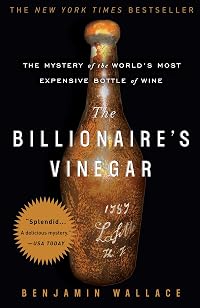
The Billionaire's Vinegar: The Mystery of the World's Most Expensive Bottle of Wine
by Benjamin Wallace
On This Page
Description
Antiques. Cooking & Food. True Crime. Nonfiction. HTML:It was the most expensive bottle of wine ever sold.In 1985, at a heated auction by Christie's of London, a 1787 bottle of Château Lafite Bordeaux—one of a cache of bottles unearthed in a bricked-up Paris cellar and supposedly owned by Thomas Jefferson—went for $156,000 to a member of the Forbes family. The discoverer of the bottle was pop-band manager turned wine collector Hardy Rodenstock, who had a knack for finding extremely old show more and exquisite wines. But rumors about the bottle soon arose. Why wouldn't Rodenstock reveal the exact location where it had been found? Was it part of a smuggled Nazi hoard? Or did his reticence conceal an even darker secret?
It would take more than two decades for those questions to be answered and involve a gallery of intriguing players—among them Michael Broadbent, the bicycle-riding British auctioneer who speaks of wines as if they are women and staked his reputation on the record-setting sale; Serena Sutcliffe, Broadbent's elegant archrival, whose palate is covered by a hefty insurance policy; and Bill Koch, the extravagant Florida tycoon bent on exposing the truth about Rodenstock.
Pursuing the story from Monticello to London to Zurich to Munich and beyond, Benjamin Wallace also offers a mesmerizing history of wine, complete with vivid accounts of subterranean European laboratories where old vintages are dated and of Jefferson's colorful, wine-soaked days in France, where he literally drank up the culture.
Suspenseful, witty, and thrillingly strange, The Billionaire's Vinegar is the vintage tale of what could be the most elaborate con since the Hitler diaries. It is also the debut of an exceptionally powerful new voice in narrative non-fiction.
From the Hardcover edition.. show less
Tags
Recommendations







Member Recommendations

Member Reviews
I really liked this book. A real life mystery reminiscent of The Devil in the White City (not for the subject matter, but for the reality of it), I was totally engaged as much as if I had been reading a good fictional mystery. I happen to be interested in wine, so that helped, although I know next to nothing about wine -- only that I drink what I like and because of what I can afford, my taste in wine is necessarily very modest. Not so these guys in the book. Very interesting. I recommend it to those for whom forgers have a fascination, anyone interested in food and wine, anyone interested in collecting, and anyone who likes a good real-life mystery.
What's that old saying we all learn sometime fairly early in life? Oh yes: when something seems too good to be true, it usually is. And yet stories of people getting taken in crop up all the time. One such is that recounted in Benjamin Wallace's new book The Billionaire's Vinegar: The Mystery of the World's Most Expensive Bottle of Wine (Crown, 2008). Wallace reports on the most famous (not to mention lucrative) wine hoax of all time, the sale of a cache of vintage bottles "discovered" in a Paris cellar and engraved with the initials "Th.J".
In 1985, the first of these bottles to go on the open market (a 1737 Lafite) set a still-standing record for the highest price ever paid at auction for a bottle of wine when it sold at Christie's to show more the family of Malcolm Forbes for the equivalent $156,000. The bottle had been authenticated by Christie's experts as having belonged to (or at least ordered by and engraved for) Thomas Jefferson during his time as the American ambassador to Paris. But even before this sale, doubts surfaced about the authenticity of the bottle, and while Christie's wine department (headed by the great Michael Broadbent) and the bottle's consignor (the somewhat-mysterious German wine collector with the inimitable - if ultimately fictional - name of Hardy Rodenstock) pooh-poohed the concerns of Monticello researchers and others, concerns persisted.
In the intervening two decades, as Rodenstock sold more bottles and continued to find more surprising and unexpected rarities, the doubts mounted and the facade slowly began to crumble. Wallace ably leads his reader through the many twists and turns in the very complicated story, introducing us to Rodenstock and his fellow wine enthusiasts (be they auctioneers, writers, collectors, or just tasters) as well as to the culture of high-end wine collecting and tasting, the sharp rivalries between competitors in the wine world and to the fascinating investigative process (on both scientific and circumstantial fronts) which finally resulted in the discovery of the hoax and the ultimate end of Rodenstock's Icarus-like flights of wine-fancy.
Not knowing much about the rare-wine world at all, I found this book a perfect entreé into the subject; Wallace provided sufficient background to handle the oenocentric portion, and combined that with ample helpings of mystery, historical discussion (of wine-making, Jefferson, forgery, &c.), and journalistic character-sketches and interviews of the characters involved with all aspects of the case. Most fascinating was the cult of gullibility which seemed to develop and Rodenstock and his implausible discoveries: everyone involved so wanted the bottles to be real that they all accepted what Wallace calls the "standard of plausible confirmability" and drank the Rodenstock Kool-Aid (there's a phrase sure to give a true oenophile chills up the spine, I'm sure).
Sure to be one of my top books of 2008. I had to pace myself with it, because I would have read it in one sitting if I wasn't careful.
And, there's more. Patrick Radden Keefe wrote a New Yorker article about the matter last year, and reportedly both his and Wallace's works have been optioned for movies (both would make good ones). Also, word just a few days ago that Bill Koch (who you'll meet near the end of Wallace's book and is playing a major part in ongoing litigation against Rodenstock) claims that new evidence of Rodenstock's business dealings adds fuel to the lawsuits against him. So there are more shoes yet to drop in this utterly compelling case.
http://philobiblos.blogspot.com/2008/06/book-review-billionaires-vinegar.html show less
In 1985, the first of these bottles to go on the open market (a 1737 Lafite) set a still-standing record for the highest price ever paid at auction for a bottle of wine when it sold at Christie's to show more the family of Malcolm Forbes for the equivalent $156,000. The bottle had been authenticated by Christie's experts as having belonged to (or at least ordered by and engraved for) Thomas Jefferson during his time as the American ambassador to Paris. But even before this sale, doubts surfaced about the authenticity of the bottle, and while Christie's wine department (headed by the great Michael Broadbent) and the bottle's consignor (the somewhat-mysterious German wine collector with the inimitable - if ultimately fictional - name of Hardy Rodenstock) pooh-poohed the concerns of Monticello researchers and others, concerns persisted.
In the intervening two decades, as Rodenstock sold more bottles and continued to find more surprising and unexpected rarities, the doubts mounted and the facade slowly began to crumble. Wallace ably leads his reader through the many twists and turns in the very complicated story, introducing us to Rodenstock and his fellow wine enthusiasts (be they auctioneers, writers, collectors, or just tasters) as well as to the culture of high-end wine collecting and tasting, the sharp rivalries between competitors in the wine world and to the fascinating investigative process (on both scientific and circumstantial fronts) which finally resulted in the discovery of the hoax and the ultimate end of Rodenstock's Icarus-like flights of wine-fancy.
Not knowing much about the rare-wine world at all, I found this book a perfect entreé into the subject; Wallace provided sufficient background to handle the oenocentric portion, and combined that with ample helpings of mystery, historical discussion (of wine-making, Jefferson, forgery, &c.), and journalistic character-sketches and interviews of the characters involved with all aspects of the case. Most fascinating was the cult of gullibility which seemed to develop and Rodenstock and his implausible discoveries: everyone involved so wanted the bottles to be real that they all accepted what Wallace calls the "standard of plausible confirmability" and drank the Rodenstock Kool-Aid (there's a phrase sure to give a true oenophile chills up the spine, I'm sure).
Sure to be one of my top books of 2008. I had to pace myself with it, because I would have read it in one sitting if I wasn't careful.
And, there's more. Patrick Radden Keefe wrote a New Yorker article about the matter last year, and reportedly both his and Wallace's works have been optioned for movies (both would make good ones). Also, word just a few days ago that Bill Koch (who you'll meet near the end of Wallace's book and is playing a major part in ongoing litigation against Rodenstock) claims that new evidence of Rodenstock's business dealings adds fuel to the lawsuits against him. So there are more shoes yet to drop in this utterly compelling case.
http://philobiblos.blogspot.com/2008/06/book-review-billionaires-vinegar.html show less
I seem to be drawn to true-life tales of con artists, scoundrels, and scallywags (see my review of the just-released Charlatan and the high rating I have on The Whiskey Robber).
It's not that I admire them, per se; they have all cheated, defrauded, and stolen from both governments and individuals for no higher purpose than their own gain.
But I do have to admit that I can't help but admire their chutzpah--the sheer ballsiness of their schemes. You can't help but wonder what this combination of confidence, nerve, and ambition could accomplish in more legitimate pursuits.
The nervy bastard at the center of The Billionaire's Vinegar is Hardy Rodenstock, a self-made wine connoisseur/dealer from Germany who ascended to the top of the rare wine show more market in the 80s via some incredible "finds" of rare vintages. Chief among these finds was a cache of rare bottles dating from the late 1700s, each engraved "Th:J." implying that they once belonged to Thomas Jefferson.
Despite the fact that questions are raised about the bottles' authenticity (from historical sources outside the wine industry/culture) from the beginning, the Forbes family paid $156,000 for a single bottle of "Jefferson wine" to be displayed along with other Jeffersonian artifacts owned by the family. This purchase sent the market for rare wines into the stratosphere.
Rodenstock was everywhere after this, with a seemingly never-ending supply of the rarest wines, a prickly personality, and a shady background.
Wallace does an excellent job setting up the culture of folks who buy and drink rare wines and how that culture changed once the paradigm shifted from buying rare wines to drink to buying rare wines as an investment or a way to show off (predictably, this vulgarization occurs once the Americans really get involved). He also does an excellent job showing how snobbery, pride, and tradition made supposed experts willfully blind to the idea of fraud.
Definitive answers are hard to come by in books like this; it's difficult to test the wine without ruining it, and no one who's paid an insane amount for a bottle of wine wants to be proved a fool. Still, the circumstantial evidence of fraud is pretty clear, meaning many very, very wealthy people spent outrageous amounts of money for wine not nearly as old or rare as what they thought.
And maybe it makes me a bad person, but it's hard not to take some small measure of satisfaction in snobby rich folks looking like fools. show less
It's not that I admire them, per se; they have all cheated, defrauded, and stolen from both governments and individuals for no higher purpose than their own gain.
But I do have to admit that I can't help but admire their chutzpah--the sheer ballsiness of their schemes. You can't help but wonder what this combination of confidence, nerve, and ambition could accomplish in more legitimate pursuits.
The nervy bastard at the center of The Billionaire's Vinegar is Hardy Rodenstock, a self-made wine connoisseur/dealer from Germany who ascended to the top of the rare wine show more market in the 80s via some incredible "finds" of rare vintages. Chief among these finds was a cache of rare bottles dating from the late 1700s, each engraved "Th:J." implying that they once belonged to Thomas Jefferson.
Despite the fact that questions are raised about the bottles' authenticity (from historical sources outside the wine industry/culture) from the beginning, the Forbes family paid $156,000 for a single bottle of "Jefferson wine" to be displayed along with other Jeffersonian artifacts owned by the family. This purchase sent the market for rare wines into the stratosphere.
Rodenstock was everywhere after this, with a seemingly never-ending supply of the rarest wines, a prickly personality, and a shady background.
Wallace does an excellent job setting up the culture of folks who buy and drink rare wines and how that culture changed once the paradigm shifted from buying rare wines to drink to buying rare wines as an investment or a way to show off (predictably, this vulgarization occurs once the Americans really get involved). He also does an excellent job showing how snobbery, pride, and tradition made supposed experts willfully blind to the idea of fraud.
Definitive answers are hard to come by in books like this; it's difficult to test the wine without ruining it, and no one who's paid an insane amount for a bottle of wine wants to be proved a fool. Still, the circumstantial evidence of fraud is pretty clear, meaning many very, very wealthy people spent outrageous amounts of money for wine not nearly as old or rare as what they thought.
And maybe it makes me a bad person, but it's hard not to take some small measure of satisfaction in snobby rich folks looking like fools. show less
In 1985, Malcolm Forbes and his son paid more than $150,000 for a bottle of wine purported to be owned by Thomas Jefferson. Even before the auction was over, questions started popping up about this bottle and whether it was everything the seller promised it was. The Billionaire's VInegar is the story of fakery and fraud in the world of very old and very expensive wines. There are some real characters involved in the story, and the excesses of this wine - well, obsession really doesn't cover it - are fascinating to read. Besides the juicy story, there's a lot of info about first tier wines, especially very old ones, and the science that went into detecting the fraud is pretty well described too.
Highly recommended, even if you're not a show more wine drinker! show less
Highly recommended, even if you're not a show more wine drinker! show less
The Billionaire’s Vinegar is, at its heart, an account of the record breaking, 1985 auction of the oldest, most famous bottle of existing wine, a 1787 Chateau Lafite, reputedly purchased and owned at one time by Thomas Jefferson. From this event, the author examines the world of wine collecting, wine auctions and chicanery inherent in both.
While the ’87 Lafite is the basis for the story, the chief protagonists are Christie’s director of wines, Michael Broadbent, an oenophile who founded the auction house’s wine department and scoured cellars around the globe to locate and identify what would become the stars of future auctions; and a German fellow by the name of Hardy Rodenstock. Playing supporting roles are obscenely rich wine show more collectors, connoisseurs and wine critics around the globe who supplied, critiqued and vied for Christie’s offerings. Of course, where you have vast sums of money competing for rare collectibles, you can be sure to find rampant fraud and deceit. Wine collecting is no exception.
Rodenstock (an alias, it turns out) ostensibly acquired a trove of “Jefferson bottles” and subsequently sold them to wealthy collectors around the world. From the beginning, the provenance of the bottles was suspect, but inasmuch as virtually everyone involved stood to profit from their validity, the numerous indicators of fraud were conveniently swept aside. Thrown into the limelight by his promotion of the find, Rodenstock went on a twenty year run of fabricating and marketing any number of highly prized offerings, in the process becoming something of a celebrity in the world of wine collecting.
Finally, over time, the indicators of fraud became too numerous and glaring to ignore; such things as old wines in containers of a size not used for the vintage being sold, wine labels utilizing glues not in existence when the wine was purportedly bottled, bottle etchings made by dental drilling equipment. Even in the face of such circumstances, the charade continued for many years, as many of the players, due to reputations at stake (such as Broadbent), civil and criminal liability (such as Rodenstock and numerous dealers) and loss of investment (on the part of the hundreds of collectors who had paid absurd prices for Rodenstock’s fraudulent offerings), refused to publicly disavow the rare collectibles.
This book is an excellent look, not only at the world of rare wines and other such collectibles, but into human nature and the herd mentality that allows such rampant fraud and deceit to occur and flourish, even in the face of overwhelming evidence of its existence. show less
While the ’87 Lafite is the basis for the story, the chief protagonists are Christie’s director of wines, Michael Broadbent, an oenophile who founded the auction house’s wine department and scoured cellars around the globe to locate and identify what would become the stars of future auctions; and a German fellow by the name of Hardy Rodenstock. Playing supporting roles are obscenely rich wine show more collectors, connoisseurs and wine critics around the globe who supplied, critiqued and vied for Christie’s offerings. Of course, where you have vast sums of money competing for rare collectibles, you can be sure to find rampant fraud and deceit. Wine collecting is no exception.
Rodenstock (an alias, it turns out) ostensibly acquired a trove of “Jefferson bottles” and subsequently sold them to wealthy collectors around the world. From the beginning, the provenance of the bottles was suspect, but inasmuch as virtually everyone involved stood to profit from their validity, the numerous indicators of fraud were conveniently swept aside. Thrown into the limelight by his promotion of the find, Rodenstock went on a twenty year run of fabricating and marketing any number of highly prized offerings, in the process becoming something of a celebrity in the world of wine collecting.
Finally, over time, the indicators of fraud became too numerous and glaring to ignore; such things as old wines in containers of a size not used for the vintage being sold, wine labels utilizing glues not in existence when the wine was purportedly bottled, bottle etchings made by dental drilling equipment. Even in the face of such circumstances, the charade continued for many years, as many of the players, due to reputations at stake (such as Broadbent), civil and criminal liability (such as Rodenstock and numerous dealers) and loss of investment (on the part of the hundreds of collectors who had paid absurd prices for Rodenstock’s fraudulent offerings), refused to publicly disavow the rare collectibles.
This book is an excellent look, not only at the world of rare wines and other such collectibles, but into human nature and the herd mentality that allows such rampant fraud and deceit to occur and flourish, even in the face of overwhelming evidence of its existence. show less
Engrossing reading about the old-wine trade in general and the intricacies of one controversial bottle in particular, with interesting information along the way about Jefferson's own wine interests. I do wish that there was a more satisfying conclusion, though that is probably more the fault of the alleged wine faker than the story itself.
I'm more a beer-and-shot guy, so my love of this book took me completely by surprise. The story starts with the auction of a $170,000 bottle of wine --a 1787 Laffite (the right vintage, the right chateaux) that had supposedly been owned by Thomas Jefferson-- and effortlessly takes the reader through a long trail of fascinating subjects: Jefferson's life in France; the science of wine, the bacchanalian proclivities of the ultra-rich (and oft-despicable) wine collectors; mini-histories of the high-end auction houses; the tricks of artifact forgery… All of this entwined in a nice bit of real-life whodunit (if it was indeed dun). A juicy piece of narrative non-fiction rife with jaw-dropping anecdotes and revelations.
Members
- Recently Added By
Lists

Penguin Random House
458 works; 4 members

The Joe Rogan Experience Library
254 works; 3 members
Author Information

4+ Works 1,190 Members
Common Knowledge
- Original publication date
- 2009
- People/Characters
- Thomas Jefferson
- Important places
- Bordeaux, Gironde, Nouvelle-Aquitaine, Francee; Sotheby's, London, England, UK; Christie's Auction House, London, England, UK
- Dedication
- To my parents,
and in memory of Claire Wickham Woodroffe - First words
- A hush had come over the West Room. Photographers' flashes strobed the standing-room-only crowd sliently, and the lone sound was the crisp voice of the auctioneer.
- Last words
- (Click to show. Warning: May contain spoilers.)If a fake wine is served at a tasting and no one notices, would it have mattered if it was real?
Classifications
- Genres
- Nonfiction, Food & Cooking, General Nonfiction, History
- DDC/MDS
- 641.2223 — Applied science & technology Home economics & family management Food, Cooking & Recipes / Meals, Picnics Drinks Wine Kinds of grape wine Red wine
- LCC
- TP548 .W2945 — Technology Chemical technology Chemical technology Fermentation industries. Beverages. Alcohol
- BISAC
Statistics
- Members
- 1,030
- Popularity
- 25,133
- Reviews
- 45
- Rating
- (3.51)
- Languages
- Chinese, English, Portuguese
- Media
- Paper, Audiobook, Ebook
- ISBNs
- 8
- ASINs
- 8