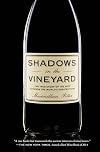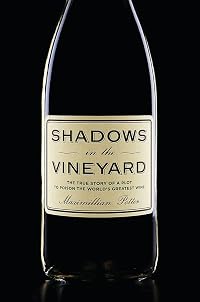
Shadows in the Vineyard: The True Story of the Plot to Poison the World's Greatest Wine
by Maximillian Potter
On This Page
Description
"When Maximilian Potter went to Burgundy to report for Vanity Fair on a crime that could have destroyed the Domaine de la Romanée Conti-the tiny, storied vineyard that produces the most expensive, exquisite wines in the world-he soon found a story that was much larger, and more thrilling, than he had originally imagined. In January 2010, Aubert de Villaine, the famed proprietor of the DRC, received an anonymous note threatening the destruction of his priceless vines by poison-a crime that show more in the world of high-end wine is akin to murder-unless he paid a one million euro ransom. Villaine believed it to be a sick joke, but that proved a fatal miscalculation; the crime was committed and shocked this fabled region of France. The sinister story that Potter uncovered would lead to a sting operation by top Paris detectives, the primary suspect's suicide, and a dramatic trial. This botanical crime threatened to destroy the fiercely traditional culture surrounding the world's greatest wine. Like Midnight in the Garden of Good and Evil, SHADOW IN THE VINEYARD takes us deep into a captivating world full of fascinating characters, small town French politics, an unforgettable narrative, and a local culture defined by the twinned veins of excess and vitality and the deep reverent attention to the land that run through it"-- show lessTags
Recommendations























Member Recommendations
Member Reviews
Aubert de Villaine should have been looking forward to well deserved twilight years. He had capably served for decades as the Director of Domaine de la Romanee-Conti, one of the oldest and most respected vineyards in Burgundy -- and indeed, the world. And then, in 2010, the Grand Monsieur Villaine received a chilling communication: Pay a 1.3M euro ransom or I will poison your vines. Directions to annihilated vines were provided as proof of both ability and serious intent. Thus starts the real life drama, the details of which will horrify any wine lover.
In addition to following the police in their hunt for the oeno-criminal, we are treated interviews with Villaine and other personages, and provided with background on French wine making show more and vineyards. This even includes a fanciful, hair-raising trip through Parisian streets with Louis-Francois de Bourbon, cousin and adviser to King Louis XV. I greatly enjoyed the history and the winemaking. The ‘true crime’ aspects took a back seat, lacking the tension and intrigued I’d anticipated. show less
In addition to following the police in their hunt for the oeno-criminal, we are treated interviews with Villaine and other personages, and provided with background on French wine making show more and vineyards. This even includes a fanciful, hair-raising trip through Parisian streets with Louis-Francois de Bourbon, cousin and adviser to King Louis XV. I greatly enjoyed the history and the winemaking. The ‘true crime’ aspects took a back seat, lacking the tension and intrigued I’d anticipated. show less
 This review was written for LibraryThing Early Reviewers.
The subtitle tells you what half of this book is about. In 2010 a few vines were killed and over a thousand others held ransom at two Côte d' Or vineyards in Burgundy, most of them belonging to Romanée-Conti. Maximillian Potter weaves the story of the crime, the investigation, and the punishment with a history of Burgundy, the Côte d' Or, La Romanée-Conti and the personalities involved.
Along the way the history provides one of the better explanations of the reasons behind the classifications of Burgundy, while not getting into the details of the classifications themselves. Without the side-trips into history and politics the book would be very short indeed. As it is, the historic machinations of Madame de Pompadour, and Louis show more François, Prince of Conti, as well as the more modern business conflicts of Aubert de Villaine and Lalu Leroy pad it out to a reasonable length. They also hint, much like the main story, at stories that could be so much more, but ultimately are not.
Instead of scandal and insurrection, the failed plot resulted in the aristocrats in a distant standoff. Instead of scandal and massive upheaval of the business the former business partners became business rivals with different philosophies. And instead of master criminals an intrigue the police find a sad petty criminal with dreams above his ability who confesses easily and doesn't even make it to trial.
At the end, Potter touches on the illusion of wine, and how easily people are deceived into believing in quality when told a price. Appropriate then that the book hints at many things more elaborate and interesting than they are when telling the story of a failed crime committed against one of the most expensive wines, with a price artificially elevated to the point that most of us will never see a bottle, let alone taste it. show less
Along the way the history provides one of the better explanations of the reasons behind the classifications of Burgundy, while not getting into the details of the classifications themselves. Without the side-trips into history and politics the book would be very short indeed. As it is, the historic machinations of Madame de Pompadour, and Louis show more François, Prince of Conti, as well as the more modern business conflicts of Aubert de Villaine and Lalu Leroy pad it out to a reasonable length. They also hint, much like the main story, at stories that could be so much more, but ultimately are not.
Instead of scandal and insurrection, the failed plot resulted in the aristocrats in a distant standoff. Instead of scandal and massive upheaval of the business the former business partners became business rivals with different philosophies. And instead of master criminals an intrigue the police find a sad petty criminal with dreams above his ability who confesses easily and doesn't even make it to trial.
At the end, Potter touches on the illusion of wine, and how easily people are deceived into believing in quality when told a price. Appropriate then that the book hints at many things more elaborate and interesting than they are when telling the story of a failed crime committed against one of the most expensive wines, with a price artificially elevated to the point that most of us will never see a bottle, let alone taste it. show less
I was interested in 'Shadows in the Vineyard' from the first time I read the brief description on LibraryThing. I had never heard of the poisoning of the vineyard in Burgundy, and this looked to be an interesting read. What I really ended up enjoying about this, however, was the fact that there is so much going on in the book. This covers true crime, mystery and biography, all centering on one of the greatest wine vineyards in the world. Then for added measure, Maximillian Potter has thrown in a good deal of history regarding the region and the wine industry. I love wine, and Potter has been able to explain each step the grapes take, from planting the vines, to the bottle arriving on the store shelf, with everything in between. Along show more with this he has told an incredible story of how the greatest vineyard in Burgundy came into being, and was blackmailed in 2010 with the possibility of all their vines being poisoned. It wasn't even the criminal aspect that made the story interesting, it was the deep connection between the people who work the vineyards with the earth itself, and how that is so much more meaningful than any money the blackmailer could have extorted. This is one of the best books I have read in the last couple years, and I highly recommend it for anyone who enjoys crime stories, wine, history or just a really great read!! show less
This review was written for LibraryThing Early Reviewers.Few topics seem to enflame more passion amongst dedicated food and beverage connoisseurs than when the conversation turns to ranking fine wines. Further, few discussions of fine wine invoke a more reverential tone than when extolling the virtues of the Burgundy region in France. So, when a nefarious plot that threatens the destruction of two of the legendary grand cru vineyards in the world occurs, it is certainly a newsworthy event. In Shadows in the Vineyard, crime journalist Maximillian Potter tells the story of how, in early 2010, a plan to poison the vines at two estates, most notably the incomparable Domaine de la Romanée-Conti (or DRC, as it is more widely known), in the Côte d’Or was first hatched and then quickly show more resolved.
Actually, instead of using the phrase “tells the story” in the preceding sentence, it would be more accurate to say that the author re-tells that story in this book. In fact, Potter originally chronicled this same tale in a 2011 Vanity Fair article titled “The Assassin in the Vineyard”. Thus, what this book represents is a repackaged version of that article with a considerable amount of embellishment to back-fill the historical and social context for both the crime as well as those most affected by it. Since I had not read the initial magazine piece—in fact, I had not even heard of the attack on DRC's vines—this degree of repetition was not a deterrent to my enjoyment of this book. What was a distraction, however, was the overbearing and often disjoint way in which the author used this supplementary material to bulk up an otherwise slim account.
The crime itself was rather straightforward: A disturbed man conceives of a plan to hold two revered vineyards hostage for 1.3 million euros. Over several months, he and his son covertly drill holes in hundreds of vines to create the threat that they have been poisoned and will die unless the ransom is paid. Once the ransom notes are delivered, though, the case is quickly solved and the vines suffer no permanent harm. Recounting these facts takes no more than roughly one-quarter of the 274-page book, meaning that Potter spends most of his time developing myriad side-stories, including an overly fawning biography of Aubert de Villaine (DRC’s proprietor) and his extended family, the political intrigue surrounding Prince de Conti and Madame Pompadour in Louis XV’s court, an aborted English invasion of France during the mid-18th century, the history of the terroir concept and the climat classification system in Burgundy, profiles of the police detectives who solved the case, the wine distribution system in the United States, and so on.
To be sure, some of these departures are interesting and they all appear to be carefully researched and reported. On the other hand, almost none of them are essential or even particularly relevant to the main purpose of the book; for example, the reader does not really need to know that Monsieur de Villaine does not like baseball and had a meaningless blind date while visiting America in the 1960s. Unfortunately, the cumulative effect of these many tangents was to create the impression that the author just did what it took to turn an article he had already written into a full-length book. So, while I am not really sorry that I read the book, I suspect I would have been just as happy if I had just read the original magazine report instead. show less
Actually, instead of using the phrase “tells the story” in the preceding sentence, it would be more accurate to say that the author re-tells that story in this book. In fact, Potter originally chronicled this same tale in a 2011 Vanity Fair article titled “The Assassin in the Vineyard”. Thus, what this book represents is a repackaged version of that article with a considerable amount of embellishment to back-fill the historical and social context for both the crime as well as those most affected by it. Since I had not read the initial magazine piece—in fact, I had not even heard of the attack on DRC's vines—this degree of repetition was not a deterrent to my enjoyment of this book. What was a distraction, however, was the overbearing and often disjoint way in which the author used this supplementary material to bulk up an otherwise slim account.
The crime itself was rather straightforward: A disturbed man conceives of a plan to hold two revered vineyards hostage for 1.3 million euros. Over several months, he and his son covertly drill holes in hundreds of vines to create the threat that they have been poisoned and will die unless the ransom is paid. Once the ransom notes are delivered, though, the case is quickly solved and the vines suffer no permanent harm. Recounting these facts takes no more than roughly one-quarter of the 274-page book, meaning that Potter spends most of his time developing myriad side-stories, including an overly fawning biography of Aubert de Villaine (DRC’s proprietor) and his extended family, the political intrigue surrounding Prince de Conti and Madame Pompadour in Louis XV’s court, an aborted English invasion of France during the mid-18th century, the history of the terroir concept and the climat classification system in Burgundy, profiles of the police detectives who solved the case, the wine distribution system in the United States, and so on.
To be sure, some of these departures are interesting and they all appear to be carefully researched and reported. On the other hand, almost none of them are essential or even particularly relevant to the main purpose of the book; for example, the reader does not really need to know that Monsieur de Villaine does not like baseball and had a meaningless blind date while visiting America in the 1960s. Unfortunately, the cumulative effect of these many tangents was to create the impression that the author just did what it took to turn an article he had already written into a full-length book. So, while I am not really sorry that I read the book, I suspect I would have been just as happy if I had just read the original magazine report instead. show less
This review was written for LibraryThing Early Reviewers.I was so impressed with the extensive research and historical information provided in this very detailed account of a bizarre crime to extort money from the world’s most eminent winery in the world, the Domaine de Romanée-Conti. I really enjoyed the historical depiction of the French Court and how Prince Conti navigated his relationship with the king, as well as his adversary and the king’s mistress, Madame Pompadour. In fact, I later read that Prince Conti’s disdain for Madame Pompadour was so great, that when Madame Pompadour cast her eyes toward acquiring the coveted wine from La Romanée, Prince Conti immediately paid an enormous sum for the winery estate and added his name to it, thereafter being called Romanée-Conti. show more Subsequently, I was also intrigued by the historical transcendence of the winery and how family members came to become keepers of the estate through the generations.
In regard to the extortion and crime, I thought that the author provided extensive information as to how the crime unfolded, and he described the unfortunate background of its key players.
Mostly in this non-fiction work, the author was able to deftly convey the family’s great respect for the terrior of the vineyards, and how this exalted wine is like a divine gift. When the author was given a taste of 2008 La Tâche, his first Burgundy, he described it as ‘like divine, liquefied Pop Rocks that make me feel light headed—the kind of happiness that I felt after I first kissed my wife.’ Such a wine that exuded such perfection was not to be forgotten or taken lightly. show less
In regard to the extortion and crime, I thought that the author provided extensive information as to how the crime unfolded, and he described the unfortunate background of its key players.
Mostly in this non-fiction work, the author was able to deftly convey the family’s great respect for the terrior of the vineyards, and how this exalted wine is like a divine gift. When the author was given a taste of 2008 La Tâche, his first Burgundy, he described it as ‘like divine, liquefied Pop Rocks that make me feel light headed—the kind of happiness that I felt after I first kissed my wife.’ Such a wine that exuded such perfection was not to be forgotten or taken lightly. show less
Shadows in the Vineyard (New York and Boston : Twelve , an imprint of Grand Central Publishing, Hachette Book Group, Inc. ; published July 2014), is Maximillian Potter's story of the attempted extortion in 2010 of the proprietor of the Domaine de la Romanée-Conti [DRC] vineyard in the Côte d'Or department of the Burgundy region in France.
Potter begins his intriguing account with a luxurious description of the Côte d'Or's vineyards and the folks who work them season to season, year after year. The Grand Monsieur of the DRC is Aubert de Villaine, whose felt knowledge of its vines, soils, rain, sunlight, and the wisdom to trust in nature and the Lord, make him, in the eyes of his fellow vintners, the master of those who know how to show more produce, or more accurately, how to let nature produce, the world's finest wines. He is the 'Grand Monsieur' whose heart is in the land – “son coeur est dans la terre” in the words of one of his principal workers.
Underground, literally, is the setting of “Unthinkable”, the book's second chapter, which describes the secret, camouflaged bunker of the extortionist who during the early morning hours when others are asleep, goes into the vineyards to drill minute holes in the roots of vines, inserts chemicals with a syringe, seals the holes with tiny wooden plugs, and covers all with soil. Afterward, the culprit would post ransom notes to Monsieur demanding a million Euros, which if not paid, will result in not receiving the locations of the poisoned vines and the antidote to the poison.
The book's remaining chapters time travel, as it were, from the present day investigations by French police of the extortion, to past times, to wit:
18th-century France and intrigue of Louis-Francois de Bourbon, Prince de Conti, with cousin King Louis XV, that resulted in the prince acquiring the renowned vineyard that today bears his name;
post-World War II, when eight-year old Aubert de Villaine meets his gran-pere, Edmond Gaudin de Villaine, who in 1906 married into a family whose early 19th-century ancestor owned considerable land in the Côte d'Or, to include the Richebourg, Echézeaux, and Grands-Echézeaux vineyards, and who purchased in 1869, the prestigious Romanée-Conti vineyard;
the mid-1860s when Phylloxera bugs infested vineyards in the Rhone region south of Burgundy and devastated vineyards throughout France, with the ironic fix being the grafting of American vines to French ones; and the mid-1840s when two fortune-seeking Frenchmen in California imported Pinot and Sauvignon and Cabernet cuttings from Bordeaux and grafted them onto local vine stock which what would become the largest wine producer in California – Almaden, and the ensuing development of the California wine industry by viticulturist luminaries Masson, Mondavi, Schoonmaker, Wildman, and Winkler;
the 16th century when the Creux de Clos vineyard, first developed by the Order of St.-Vivant and the Benedictines at nearby Citeaux, was sold to defray taxes and a century later ended up in the hands of a Dutch noble who renamed the vineyard La Romanée, the provenance of which remains a mystery.
Meanwhile, our story teller, Maximillian Potter, details the detective work of Burgundy's Finest, with its wild goose chases, false leads, stakeouts, and plain luck. The perp was caught, interrogated, and finally confessed to the extortion. Actually, perps, since the crime involved a father-son team from the Champagne region. Cedric and Jacques Soltys. Son Jacques, we learn, actually got the idea of blackmailing one of the leading wine producers in Burgundy from a fellow prisoner, a wayward son of an aristocratic French family. Irony of ironies.
Notwithstanding Potter's meandering narrative, Shadows in the Vineyard, is a loving, thoughtful description of the most prestigious vineyard in France and perhaps all the world. Wine lovers everywhere will relish the intrigue of the criminals, the persistence of the police in solving the crime, and the cultural complexities of Burgundy and its renowned wines. show less
Potter begins his intriguing account with a luxurious description of the Côte d'Or's vineyards and the folks who work them season to season, year after year. The Grand Monsieur of the DRC is Aubert de Villaine, whose felt knowledge of its vines, soils, rain, sunlight, and the wisdom to trust in nature and the Lord, make him, in the eyes of his fellow vintners, the master of those who know how to show more produce, or more accurately, how to let nature produce, the world's finest wines. He is the 'Grand Monsieur' whose heart is in the land – “son coeur est dans la terre” in the words of one of his principal workers.
Underground, literally, is the setting of “Unthinkable”, the book's second chapter, which describes the secret, camouflaged bunker of the extortionist who during the early morning hours when others are asleep, goes into the vineyards to drill minute holes in the roots of vines, inserts chemicals with a syringe, seals the holes with tiny wooden plugs, and covers all with soil. Afterward, the culprit would post ransom notes to Monsieur demanding a million Euros, which if not paid, will result in not receiving the locations of the poisoned vines and the antidote to the poison.
The book's remaining chapters time travel, as it were, from the present day investigations by French police of the extortion, to past times, to wit:
18th-century France and intrigue of Louis-Francois de Bourbon, Prince de Conti, with cousin King Louis XV, that resulted in the prince acquiring the renowned vineyard that today bears his name;
post-World War II, when eight-year old Aubert de Villaine meets his gran-pere, Edmond Gaudin de Villaine, who in 1906 married into a family whose early 19th-century ancestor owned considerable land in the Côte d'Or, to include the Richebourg, Echézeaux, and Grands-Echézeaux vineyards, and who purchased in 1869, the prestigious Romanée-Conti vineyard;
the mid-1860s when Phylloxera bugs infested vineyards in the Rhone region south of Burgundy and devastated vineyards throughout France, with the ironic fix being the grafting of American vines to French ones; and the mid-1840s when two fortune-seeking Frenchmen in California imported Pinot and Sauvignon and Cabernet cuttings from Bordeaux and grafted them onto local vine stock which what would become the largest wine producer in California – Almaden, and the ensuing development of the California wine industry by viticulturist luminaries Masson, Mondavi, Schoonmaker, Wildman, and Winkler;
the 16th century when the Creux de Clos vineyard, first developed by the Order of St.-Vivant and the Benedictines at nearby Citeaux, was sold to defray taxes and a century later ended up in the hands of a Dutch noble who renamed the vineyard La Romanée, the provenance of which remains a mystery.
Meanwhile, our story teller, Maximillian Potter, details the detective work of Burgundy's Finest, with its wild goose chases, false leads, stakeouts, and plain luck. The perp was caught, interrogated, and finally confessed to the extortion. Actually, perps, since the crime involved a father-son team from the Champagne region. Cedric and Jacques Soltys. Son Jacques, we learn, actually got the idea of blackmailing one of the leading wine producers in Burgundy from a fellow prisoner, a wayward son of an aristocratic French family. Irony of ironies.
Notwithstanding Potter's meandering narrative, Shadows in the Vineyard, is a loving, thoughtful description of the most prestigious vineyard in France and perhaps all the world. Wine lovers everywhere will relish the intrigue of the criminals, the persistence of the police in solving the crime, and the cultural complexities of Burgundy and its renowned wines. show less
This review was written for LibraryThing Early Reviewers.In 2011, the director of the finest vineyard in Burgundy received a letter threatening to destroy the vines unless a substantial ransom was paid. Maximillian Potter's Shadows in the Vineyard tells story of the crime and the investigation. But it's also an interesting history of the Domaine Romanée-Conti and the families who owned and tended this piece of living history.
Potter's a pretty good storyteller; he certainly knows how to bring the Domaine to life. In spite of the blurbs on the cover, this isn't a suspenseful book. But that's ok - it's a delightful read anyway.
Potter's a pretty good storyteller; he certainly knows how to bring the Domaine to life. In spite of the blurbs on the cover, this isn't a suspenseful book. But that's ok - it's a delightful read anyway.
This review was written for LibraryThing Early Reviewers.Members
- Recently Added By
Published Reviews
Expanding on an article first published in Vanity Fair, Potter ushers readers into the Burgundy cellars of Domaine de la Romanée-Conti, one of France’s most prestigious wineries, and introduces its proprietor, the humble Aubert de Villaine, as he outlines a plot to extort a million Euros from him.
added by mysterymax
Lists

What do you know about Food?
13 works; 1 member
Author Information

4+ Works 135 Members
Common Knowledge
- Original title
- Shadows in the Vineyard: The True Story of the Plot to Poison the World's Greatest Wine
- Original publication date
- 2014-07-29
- People/Characters
- Aubert de Villaine
- Important places
- Domaine de la Romanée-Conti
- Dedication
- For Lori and our enfants, True and Jack
- First words
- The sun over Burgundy's seemingly endless expanse of richly green vineyards belonged to late summer.
- Quotations
- The Prince de Conti was the type of renaissance man who continued to engage in picaresque, libidinous adventures, relishing every opportunity to insert himself into affairs of all sorts.
- Last words
- (Click to show. Warning: May contain spoilers.)This much, though, was certain: Regardless of whatever challenges were in store, natural and otherwise, the Domaine will always be the Domaine.
- Blurbers
- Wallace, Benjamin; Hainey, Michael; Ripert, Eric; McDougall, Christopher; Boulud, Daniel
Classifications
- Genres
- Nonfiction, Food & Cooking, General Nonfiction, Politics and Government, History
- DDC/MDS
- 364.16 — Society, government, & culture Social problems and social services Crime Criminal offenses Crimes of property
- LCC
- TP553 .P63 — Technology Chemical technology Chemical technology Fermentation industries. Beverages. Alcohol
- BISAC
Statistics
- Members
- 130
- Popularity
- 249,992
- Reviews
- 21
- Rating
- (3.10)
- Languages
- English
- Media
- Paper, Audiobook, Ebook
- ISBNs
- 9
- ASINs
- 2