On This Page
Description
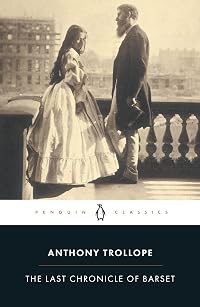
Anthony Trollope's Barsetshire novels are well loved for their wit, satire, and keen perceptions of human nature. This final installment brings back some of his best loved characters: Major Henry Grantly, first met as a boy in The warden; the sparkling Lily Dale and her thwarted lover, Johnny Eames; and the domineering Mrs. Proudie. Barsetshire's latest scandal involves Mr. Crawley, the impoverished curate of Hogglestock, accused of theft when he uses a large check to pay off his debts. show more Unable to remember how he came by the money, he feels himself shamed in the eyes of the community and even begins to question his own sanity. The scandal fiercely divides the citizens of Barsetshire and threatens to tear apart Mr. Crawley's family. Trollope offers a devastating portrait of a man oppressed by poverty, social humiliation, and self-doubt. show lessTags
Recommendations


















Member Reviews
It is unbelievable that Trollope is still read at all by modern readers. I forced myself to finish as it is considered a classic, but what a chore! Every relationship, every scenario, every situation in this meandering pointless tale is fraught with tortured overwrought emotions about trivial, nonsensical matters. A horrid curate whose stubbornness has brought his long suffering family to the brink of not just ruin but starvation is accused of stealing twenty pounds. He is clearly mentally ill and can’t account for the money. This jeopardizes his daughter’s advantageous marriage when he is hauled into court. Tons of extraneous characters wander pointlessly through the story with their own romance, career, money, and social problems. show more Their petty travails are mostly of their own making and their general shallowness keeps the reader from being invested in any of them. Everyone of them might benefit from a high colonic. I wanted to scream that they were all a pack of idiots. What a slog. show less
The Last Chronicle of Barset once again finds would-be lovers separated by circumstances. Widower Henry Grantly has fallen in love with Grace Crawley, the daughter of poor curate Josiah Crawley. Just as Major Grantly is ready to propose, Grace's father, Rev. Crawley, is accused of stealing a check for 20 pounds. Henry is determined that the cloud that hangs over Grace's father won't prevent their marriage, while Grace is equally determined that she cannot marry anyone while her family is disgraced by the accusation against her father. Our old friend, the bishop's wife Mrs. Proudie, makes it her business to see that Rev. Crawley is relieved of his duties (never mind the ecclesiastical laws that apply to the situation). Meanwhile, our old show more friend John Eames, having risen in the world, continues his hopeless pursuit of Lily Dale, which doesn't preclude him from stumbling into an unwanted romantic entanglement with a new London acquaintance. “Happily ever after” for any of the characters is tempered by our final goodbye to Barsetshire.
Barchester Towers charmed me with its humor, and The Last Chronicle of Barset affected me with its pathos. Trollope's perceptive observations of human nature have a timeless quality. I was particularly moved by his description of the elderly and frail Septimus Harding, my favorite Barsetshire resident. Rev. Harding's son-in-law says of him that “he lacked guile, and he feared God,--and a man who does both will never go far astray.” I can't imagine a better epitaph for a life well lived. This series has earned a spot near the top of my all-time favorites list. Highly recommended. show less
Barchester Towers charmed me with its humor, and The Last Chronicle of Barset affected me with its pathos. Trollope's perceptive observations of human nature have a timeless quality. I was particularly moved by his description of the elderly and frail Septimus Harding, my favorite Barsetshire resident. Rev. Harding's son-in-law says of him that “he lacked guile, and he feared God,--and a man who does both will never go far astray.” I can't imagine a better epitaph for a life well lived. This series has earned a spot near the top of my all-time favorites list. Highly recommended. show less
Although The Warden and Barchester Towers are the ones everybody knows, with the most celebrated comic episodes, this is really the strongest and most mature of the Barchester novels. Trollope winds up many of the loose threads from the earlier novels, and we get some great scenes with Mrs Proudie, Archdeacon Grantly, and other old friends, but it's the forceful yet ambiguous Mr Crawley who provides the central driving force for the story. Anyone who can defeat Mrs Proudie fair and square in open combat has got to be worth following for 600 pages...
So the six novels of Barchester have come to an end. Trollope is saying farewell with this brick - the longest of them all - assembling a lot of the characters from previous novels in the series, most notably Josiah Crawley, curate of Hogglestock - from A Small House in Allington.
The main story focus on the mystery whether Crawley stole a check or not. A stern priest with a black mood, hard to love, but not difficult to feel sympathy with. He ruins things for himself and his family with his rigid view of Christian duty. Masterful portrait by Trollope. All the main characters becomes involved one way or the other in this story - Mrs Proudie steps onto the scene again - more sinister than ever - in a class of the wills with Crawley. What show more a confrontation. Oh my. Crawleys daughter Grace who are courted by major Henry Grantly, son of Archdeacon Grantly (The Warden) form the main romance. Unfortunately dull Lily Dale reappears but I already lost interest in her in The Small House at Allington. I liked Johnny Eames and his search to redeem himself in the eyes of Lily. Why is a mystery, but he's much more grown up now.
Trollope also says a beautiful and serene goodbye to old sick Harding The Warden, and it feels like a full circle. Trollope clearly have a hard time letting Barchester go - is that why it's so long? It would have been much stronger if some of the other story-threads had been edited out. But who am I to complain, really? In the company with Simon Vance (audiobook-narrator) and Trollope, listening to the end of a fantastic victorian series.
Goodbye Crawley, goodbye Harding. Goodbye all you dear people of Barchester. On to Palliser, I go. show less
The main story focus on the mystery whether Crawley stole a check or not. A stern priest with a black mood, hard to love, but not difficult to feel sympathy with. He ruins things for himself and his family with his rigid view of Christian duty. Masterful portrait by Trollope. All the main characters becomes involved one way or the other in this story - Mrs Proudie steps onto the scene again - more sinister than ever - in a class of the wills with Crawley. What show more a confrontation. Oh my. Crawleys daughter Grace who are courted by major Henry Grantly, son of Archdeacon Grantly (The Warden) form the main romance. Unfortunately dull Lily Dale reappears but I already lost interest in her in The Small House at Allington. I liked Johnny Eames and his search to redeem himself in the eyes of Lily. Why is a mystery, but he's much more grown up now.
Trollope also says a beautiful and serene goodbye to old sick Harding The Warden, and it feels like a full circle. Trollope clearly have a hard time letting Barchester go - is that why it's so long? It would have been much stronger if some of the other story-threads had been edited out. But who am I to complain, really? In the company with Simon Vance (audiobook-narrator) and Trollope, listening to the end of a fantastic victorian series.
Goodbye Crawley, goodbye Harding. Goodbye all you dear people of Barchester. On to Palliser, I go. show less
The Last Chronicle of Barset, being indeed the last in the Chronicles of Barsetshire series, pulls out all the stops by reuniting characters from the five previous volumes into one grande finale. And I can't imagine anyone other than Anthony Trollope devoting more than 900 pages to a clergyman who may or may not have stolen £20, and making it so utterly delightful. Josiah Crawley is the clergyman, whose initial hearing leads to the case being sent to a higher court. While he is awaiting trial, several other stories unfold, including his daughter Grace's romance with Major Henry Grantly, son of the archdeacon who was a key figure in Barchester Towers. We also see the return of Lily Dale and John Eames, from The Small House at Allington, show more and the clergy couple you love to hate, Bishop & Mrs. Proudie. In addition to these well-known figures, some secondary characters from earlier books assume greater roles, and previously significant characters are often present in the background.
Anyone who picks up The Last Chronicle of Barset would almost certainly already be a Trollope fan and have read previous books in the series. This one will not disappoint; in fact, I completely wallowed in it and did not want the story to end. However, I couldn't help thinking about the modern conveniences we enjoy compared to Trollope's time -- especially as the truth about Crawley's £20 became clear. If only they had telephones, or email, or Facebook! Crawley would not have suffered for so long. But then The Last Chronicle of Barset would have been a much shorter and less pleasurable book. show less
Anyone who picks up The Last Chronicle of Barset would almost certainly already be a Trollope fan and have read previous books in the series. This one will not disappoint; in fact, I completely wallowed in it and did not want the story to end. However, I couldn't help thinking about the modern conveniences we enjoy compared to Trollope's time -- especially as the truth about Crawley's £20 became clear. If only they had telephones, or email, or Facebook! Crawley would not have suffered for so long. But then The Last Chronicle of Barset would have been a much shorter and less pleasurable book. show less
”I know very well that men are friends when they step up and shake hands with each other. It is the same as when women kiss.”And so the long, arduous, fitful, endearing, maddening, and epic-filled Chronicles of Barsetshire are at an end… and it’s a glorious end that my four-star rating can’t truly reflect, unless you’ve read them all in order and in fairly quick succession. It feels, in many ways, like the end of an era; the close of a century.
"When I see women kiss, I always think that there is a deep hatred at the bottom of it.”
As is usual with Trollope, he takes his time to set the stage; but since most of his novels in the Barsetshire series are not as long as this, the last, one, here he takes triple the show more amount of time: where he normally needs about a hundred-or-so pages to set the preliminary characters into motion, in The Last Chronicle it takes him nearly three-hundred pages to do so. Some of this is awkward and clumsy, with quite a bit of redundant scenes toward the beginning of the novel, especially as he attempts to gain the reader’s sympathy for poor Josiah Crawley, a perpetual curate (and an unlikely protagonist for this, but, as it turns out, the perfect one) who is accused of stealing a check for £20.
Many of the characters that populate The Last Chronicle appear in the previous four books, but especially from Framley Parsonage and The Small House at Allington—and, of course, the fire-cracking Mrs. Proudie, whose shenanigans make Barchester Towers the comical tour de force that it is, even though it’s a bit of an outsider when taken with the rest of the Barsetshire books. Lily Dale and John Eames return, Dr. Thorne and Mr. Harding… it’s much fanfare for the swan song, and it’s as thrilling to read this closure to a world that only Trollope could make seem so real as it is to leave it behind, tucked coolly on the bookshelf to delve into in perhaps another decade or so.
Love, romance, deceit, gossip, back-stabbings, and several twists and turns that show Trollope is at his finest, wanting quite obviously—but successfully—to end the series with a flourish and a great deal of lament and remembrance. The sole reason for the four-star rating is the very slow and clumsy start of the book; it seems that Trollope knew exactly what he was doing (when does he not?), but that in dealing with this many characters and more subplots than any previous Barsetshire novel, he couldn’t settle on where the focus was.
While many readers below suggest that this (or any) of the books could be read as standalone novels, I would disagree: one really needs to see the progression of the characters; the different ways and great lengths to which Trollope goes in his world-building of this fictional place that, by the end, feels like such a real world inhabited by real people; and one needs a lot of the backstories from the previous two novels especially to really understand Lily, John, Grace, and some of the other characters’ transformations across time and space. (For a good Trollope standalone, might I suggest The Claverings?)
Definitely read these in order, slowly: this is a series to be savored, and read again and again. This is my second time reading the series; it will definitely not be my last. show less
In closing out his wonderful Chronicles of Barsetshire series, Anthony Trollope decided to focus the narrative on a character first encountered in Barchester Towers and Framley Parsonage: the scholarly, humble, destitute and slightly mad Josiah Crawley, the Perpetual Curate of Hogglestock. He’s been accused of stealing a check for $20 but before we come to a final resolution, we’re taken through a complicated maze of twists and turns.
Trollope also brings back the Lily Dale/John Eames story, originally presented in The Small House in Allington. Mrs. Dale, cousin Bernard, Julia deGuest and the Squire are all there too, rehashing a storyline that everyone hopes will have one resolution and one resolution only.
Bishop and Mrs. Proudie show more are along for the ride too. And of course she sticks her nose in where it has no business at all. All the familiar prelates are there too: Mark Robarts, Archdeacon Grantly and Septimus Harding, our oldest friend of all. And yes, these characters have all become friends over the six volumes, good friends, as a matter of fact. I feel like I’ve known them all my life.
This is a bittersweet novel, as you might expect when a series comes to an end. Just like in real life, though, people die and even when it’s expected or at least accepted, it feels like a sucker punch to the gut. The surprising thing is how deeply affected Trollope is as he writes the final couple of chapters. You can literally feel his pain. He will miss these characters just as much as I will.
”To me Barset has been a real county, and its city a real city, and the spires and towers have been before my eyes, and the voices of the people are known to my ears, and the pavement of the city ways are familiar to my footsteps. To them all I now say farewell. That I have been induced to wander among them too long by my love of old friendships, and by the sweetness of old faces, is a fault for which I may perhaps be more readily forgiven, when I repeat, with solemnity of assurance, the promise made in my title, that this shall be the last chronicle of Barset.”
Farewell Barset. I loved getting to know you. A reread is definitely in my future, but that first time meeting with Trollope’s captivating characters cannot be repeated. I will have to cherish that memory for the rest of my life. show less
Trollope also brings back the Lily Dale/John Eames story, originally presented in The Small House in Allington. Mrs. Dale, cousin Bernard, Julia deGuest and the Squire are all there too, rehashing a storyline that everyone hopes will have one resolution and one resolution only.
Bishop and Mrs. Proudie show more are along for the ride too. And of course she sticks her nose in where it has no business at all. All the familiar prelates are there too: Mark Robarts, Archdeacon Grantly and Septimus Harding, our oldest friend of all. And yes, these characters have all become friends over the six volumes, good friends, as a matter of fact. I feel like I’ve known them all my life.
This is a bittersweet novel, as you might expect when a series comes to an end. Just like in real life, though, people die and even when it’s expected or at least accepted, it feels like a sucker punch to the gut. The surprising thing is how deeply affected Trollope is as he writes the final couple of chapters. You can literally feel his pain. He will miss these characters just as much as I will.
”To me Barset has been a real county, and its city a real city, and the spires and towers have been before my eyes, and the voices of the people are known to my ears, and the pavement of the city ways are familiar to my footsteps. To them all I now say farewell. That I have been induced to wander among them too long by my love of old friendships, and by the sweetness of old faces, is a fault for which I may perhaps be more readily forgiven, when I repeat, with solemnity of assurance, the promise made in my title, that this shall be the last chronicle of Barset.”
Farewell Barset. I loved getting to know you. A reread is definitely in my future, but that first time meeting with Trollope’s captivating characters cannot be repeated. I will have to cherish that memory for the rest of my life. show less
Members
- Recently Added By
Lists

1001 Books You Must Read Before You Die
1,448 works; 1,134 members

The Guardian's 1000 Novels Everyone Must Read
1,005 works; 550 members

Favourite 19th century fiction
257 works; 60 members

Mental health fiction
55 works; 18 members

Top-Rated Books on LibraryThing
272 works; 116 members

Recommend the 20 best books you've read in the last five years
2,168 works; 606 members

19th Century
190 works; 16 members

Books Set in Great Britain
191 works; 13 members

150 Best Novels Selected by Brander Matthews (1883)
150 works; 7 members
Folio Society
831 works; 50 members

Top Five Books of 2014
1,064 works; 397 members

Western World's Greatest Books - Project Gutenberg
295 works; 15 members

Newark Public Library's 1904 List of a Thousand of the Best Novels
95 works; 5 members

Global Reads: Books Set in the United Kingdom and Ireland
109 works; 5 members
Out of Copyright
244 works; 14 members

1,001 BYMRBYD Concensus
723 works; 27 members
Victorian Period
113 works; 10 members

1860s
25 works; 4 members
Books Read in 2016
4,666 works; 197 members

Books mentioned in Julian Symons’ Bloody Murder
438 works; 6 members

Tagged 19th Century
104 works; 7 members
New Lifetime Reading Plan by Fadiman and Major
225 works; 5 members

Top Five Books of 2023
767 works; 317 members

The 150 Greatest Novels of All Time
150 works; 6 members

Top Five Books of 2024
795 works; 264 members

DigitalDreamDoor top 300
300 works; 4 members

Authors' Favourites
18 works; 5 members
Talk Discussions
Past Discussions
Group Read: The Last Chronicle Of Barset by Anthony Trollope in 75 Books Challenge for 2014 (October 2017)
1815: Anthony Trollope - Chronicles of Barsetshire VI: The Last Chronicle of Barset in Literary Centennials (August 2016)
The Last Chronicle of Barset in Trollope lovers unite or fight (June 2012)
Lily Dale in Trollope lovers unite or fight (February 2010)
Chronicles of Barsetshire in Trollope lovers unite or fight (July 2009)
Author Information

Anthony Trollope was born in London, England on April 24, 1815. In 1834, he became a junior clerk in the General Post Office, London. In 1841, he became a deputy postal surveyor in Banagher, Ireland. He was sent on many postal missions ending up as a surveyor general in the post office outside of London. His first novel, The Macdermots of show more Ballycloran, was published in 1847. His other works included Castle Richmond, The Last Chronicle of Barset, Lady Anna, The Two Heroines of Plumplington, and The Noble Jilt. He died after suffering from a paralytic stroke on December 6, 1882. (Bowker Author Biography) show less
Some Editions
Awards and Honors
Notable Lists
Series

Belongs to Publisher Series
Work Relationships
Is contained in
Contains
Has the adaptation
Is abridged in
Has as a reference guide/companion
Common Knowledge
- Canonical title
- The Last Chronicle of Barset
- Original title
- The Last Chronicle of Barset
- Original publication date
- 1867
- People/Characters
- Rev Josiah Crawley; Grace Crawley; Mrs Crawley; Archdeacon Theophilus Grantly; Susan Grantly; Major Henry Grantly (show all 28); Bishop Thomas Proudie; Mrs Proudie; Mr Tempest; Lily Dale; Mrs Dale; Johnny Eames; Adolphus Crosbie; Madalina Demolines; Conway Dalrymple; Septimus Harding; Eleanor Arabin; Dr Thorne; Mrs Thorne; Dobbs Broughton; Clara Van Siever; Mark Robarts; Augustus Musselboro; Mrs Maria Broughton; Sir Raffle Buffle; Thomas Toogood; Mr Soames; Marchioness of Hartletop
- Important places
- Dragon of Wantly, Barsetshire, England, UK; Cosby Lodge, Barsetshire, England, UK; Allington, Barsetshire, England, UK; Barchester, Barsetshire, England, UK; London, England, UK; Gray's Inn, London, England, UK (show all 9); Hook Court, London, England, UK; Porchester Gardens, London, England, UK; Tavistock Square, London, England, UK
- First words
- 'I can never bring myself to believe it, John,' said Mary Walker, the pretty daughter of Mr George Walker, attorney of Silverbridge.
- Last words
- (Click to show. Warning: May contain spoilers.)That I have been induced to wander among them too long by my love of old friendships, and by the sweetness of old faces, is a fault for which I may perhaps be more readily forgiven when I repeat, with some solemnity of assurance, the promise made in my title, that this shall be the last chronicle of Barset.
- Original language
- English
Classifications
Statistics
- Members
- 2,019
- Popularity
- 10,357
- Reviews
- 52
- Rating
- (4.30)
- Languages
- Czech, English, Italian
- Media
- Paper, Audiobook, Ebook
- ISBNs
- 106
- ASINs
- 61