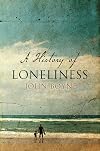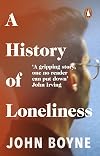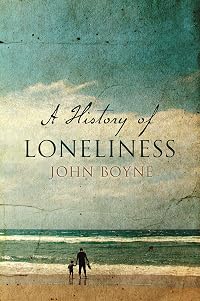
A History of Loneliness
by John Boyne
On This Page
Description
"The riveting narrative of an honorable Irish priest who finds the church collapsing around him at a pivotal moment in its history. Propelled into the priesthood by a family tragedy, Odran Yates is full of hope and ambition. When he arrives at Clonliffe Seminary in the 1970s, it is a time in Ireland when priests are highly respected, and Odran believes that he is pledging his life to "the good." Forty years later, Odran's devotion is caught in revelations that shatter the Irish people's show more faith in the Catholic Church. He sees his friends stand trial, colleagues jailed, the lives of young parishioners destroyed, and grows nervous of venturing out in public for fear of disapproving stares and insults. At one point, he is even arrested when he takes the hand of a young boy and leads him out of a department store looking for the boy's mother. But when a family event opens wounds from his past, he is forced to confront the demons that have raged within the church, and to recognize his own complicity in their propagation, within both the institution and his own family. A novel as intimate as it is universal, A History of Loneliness is about the stories we tell ourselves to make peace with our lives. It confirms Boyne as one of the most searching storytellers of his generation"-- "An honorable priest recalls his life and ultimately confronts his own complicity in the heinous acts of his best friend from the seminary"-- show lessTags
Recommendations








Member Reviews
A HISTORY OF LONELINESS seems an apt title for a book with a priest as the narrator, for I have often thought that a priest's life must necessarily be one of the loneliest imaginable. So there's that. But author John Boyne gives us so much more in this novel of Ireland and the Catholic Church that covers nearly forty years, from the seventies well into the new century. The novel's narrator, Dublin-born Father Odran Yates, tells us from the beginning that he became a priest mostly because his mother TOLD him he had a vocation. He entered seminary at sixteen and spent seven years studying. Because he excelled, his last year of study was spent in Rome, where he acted as night-assistant to the Pope, including the brief papacy of Pope John show more Paul I in the summer of 1978. And this last bit is key, in that Boyne implies that the pope's sudden death after just 33 days in office may not have been from natural causes. But this is primarily a story of family, friendship, and - most of all - Ireland and the Catholic Church, and the early days of the sexual abuse scandals of the Church. Odran Yates is an extremely likable, sympathetic character, who seems perfectly happy in his life as a priest - until, after nearly thirty years of this idyllic post, he is abruptly reassigned from his work as a college teacher/librarian to fill in at a parish where Tom Cardle, another priest and his best friend from seminary days, has been removed, the last of many sudden reassignments. The narrative goes back and forth from the seventies up to 2014 with many stops in between. We learn of tragic events from Odran's childhood, mysterious and dark events from his seminary days, his short-lived obsession with an Italian woman during his year in Rome. And we see him dealing with his change in status as a priest - how people see and treat him - once the sex scandals have become public. Odran himself seems to be a complete innocent in the chain of events that transpire through the years, but is he? A HISTORY OF LONELINESS is a beautifully written and deeply disturbing book, thoroughly Irish, and one of the fiercest indictments of the Catholic Church I have ever read. I knew that John Boyne was a talented writer, having read his novel, THE ABSOLUTIST. I knew too that he gained international fame with his YA novel, THE BOY IN THE STRIPED PAJAMAS (which I have not read). He's written more than a dozen adult novels and other YA books too, and his books have been translated into more than a dozen languages and won numerous awards. So. This guy, who just turned fifty, has really chalked up an impressive resume. But this book is simply such a compelling, riveting story of the sometimes shameful inner workings of the Catholic Church. Beautiful. Moving. Dark. Deeply Disturbing. My very highest recommendation.
- Tim Bazzett, author of the memoir, BOOKLOVER show less
- Tim Bazzett, author of the memoir, BOOKLOVER show less
Odbran Yates goes to seminary to become a priest because his mother insisted. He narrates his life as a priest in Ireland starting in the 2970s. Boyne's prose is descriptive and beautiful and I love reading him. But it is impossible for me to believe that a priest could remain ignorant of the evil, sick behavior of his fellow priests for so long. He naively claims not to understand why his best priest friend has been moved from parish to parish for years and years.Eventually he is forced to admit that he was intentionally blind to his friends misconduct. Loved the writing but found Yates' refusal to admit and acknowledge his friends behavior unconvincing.
To my mind, this is nearly a perfect book. The story and characters are thoroughly absorbing, the tone is close to perfect throughout, the writing is masterful, and the book unfolds beautifully.
So, all that praise in mind, a few things worth noting:
- It is certainly a very dark book, with outcomes ranging from sad to tragic for almost every character. But as I said above, the tone of the book helps elevate it. Without losing a sense of the gravity of what’s happening, there is enough levity to keep it from being a wallow.
- Odran’s credulous innocence does seem like quite a stretch, and there were times I found myself pretty frustrated both with him and with the book. By the end of the story, though, I thought this character flaw was show more both credible and powerfully thought-provoking. It was nothing as simple as saying “Well, he was in denial”—there was something more complicated and interesting at work, and it deepens the novel. As a reader, though, it occasionally took some tenacity for me to put up with it along the way. The fact that I was enjoying the writing is probably the only reason I did so.
- The one part of the book that rang a bit flat was Odran’s time in Rome, especiallythe hinted assassination of the pope . But the exposition that Boyne achieved through those sections helped tie Odran’s story to a much larger narrative, and again, I think it made the novel more powerful overall. And it never bothered me that much, in any case. show less
So, all that praise in mind, a few things worth noting:
- It is certainly a very dark book, with outcomes ranging from sad to tragic for almost every character. But as I said above, the tone of the book helps elevate it. Without losing a sense of the gravity of what’s happening, there is enough levity to keep it from being a wallow.
- Odran’s credulous innocence does seem like quite a stretch, and there were times I found myself pretty frustrated both with him and with the book. By the end of the story, though, I thought this character flaw was show more both credible and powerfully thought-provoking. It was nothing as simple as saying “Well, he was in denial”—there was something more complicated and interesting at work, and it deepens the novel. As a reader, though, it occasionally took some tenacity for me to put up with it along the way. The fact that I was enjoying the writing is probably the only reason I did so.
- The one part of the book that rang a bit flat was Odran’s time in Rome, especially
5 plus stars.' A History of Loneliness' may be my new favorite John Boyne novel, this gave 'The Heart's Invisible Furies' a run for its money. His characters are always flawed and authentic...always relatable which allows you to like them, despite some questionable decisions or actions. Typical Boyne, he starts out light and amusing, then starts building, no person or institution escapes exposure, and you are left wondering, have I ever done what Odran subconsciously has done?
John Boyne, one of my favorite authors, imaginatively explores how one Catholic priest comes to terms with the church's sex scandals and his own career -- in a very believable way.
Odran Yates first learns of his "calling" to the priesthood when, after a family tragedy, his newly-devout mother tells him he is destined to be a priest. A dutiful, faithful, and patient Dublin boy - Odran heads off to seminary in the 1970s, a time when priests were universally respected in Ireland. There, he meets his roommate Tom, and begins a friendship that will last for 40 years.
During his years of religious service, Odran works briefly at the Vatican before spending decades happily serving at a Catholic boys school. That is until the Catholic Church show more assigns him to work as a parish priest, serving a church formerly served by his friend, Tom.
As stories of sexual abuse begin to surface, Boyne looks at how these stories were handled by within the church and how it was that priests managed to continue this criminal behavior, with the overt knowledge and support of the church hierarchy. And Odran witnesses first hand the seismic shift that happens in Ireland -- where priests once considered trustworthy role models are suddenly demonized.
Like all Boyne's books, this one is beautifully-written, full of multi-dimensional characters, and looks at an important universal theme --the impact of how we all sometimes tell ourselves stories that make us feel better, but may not necessarily be true. show less
Odran Yates first learns of his "calling" to the priesthood when, after a family tragedy, his newly-devout mother tells him he is destined to be a priest. A dutiful, faithful, and patient Dublin boy - Odran heads off to seminary in the 1970s, a time when priests were universally respected in Ireland. There, he meets his roommate Tom, and begins a friendship that will last for 40 years.
During his years of religious service, Odran works briefly at the Vatican before spending decades happily serving at a Catholic boys school. That is until the Catholic Church show more assigns him to work as a parish priest, serving a church formerly served by his friend, Tom.
As stories of sexual abuse begin to surface, Boyne looks at how these stories were handled by within the church and how it was that priests managed to continue this criminal behavior, with the overt knowledge and support of the church hierarchy. And Odran witnesses first hand the seismic shift that happens in Ireland -- where priests once considered trustworthy role models are suddenly demonized.
Like all Boyne's books, this one is beautifully-written, full of multi-dimensional characters, and looks at an important universal theme --the impact of how we all sometimes tell ourselves stories that make us feel better, but may not necessarily be true. show less
Book on CD performed by Gerald Boyle
Father Odran Yates has spent thirty years as a teacher and librarian at a boys’ school. He has no real ambition to rise in the ranks of the Church. Although he excelled academically and even served a year in Rome as the Pope’s night attendant, he has been content “behind the high walls and closed gates of this private and erudite enclave.” But just as the scandal of predatory pedophile priests erupts, the bishop moves Odran to a local parish who priest has been removed. That priest is Odran’s best friend from seminary. Odran must come to terms with the ugly truth of a longterm coverup by the Church, and with his own role.
What marvelous writing! Odran narrates the story, but moves from time show more period to time period, from 2001 back to 1964, then forward to 2010, and back to 1972, etc. Through his recollections he reveals his history of loneliness … the family tragedy that leads to his entering the seminary, the experiences there (good and bad), his obsession with a woman in a coffee shop, his conflicted feelings about his mother, sister and nephews, and his struggles to understand and embrace his Church and his country.
His final realizations about his life are painful to witness. My heart about broke for Odran, and at the same time I was appalled at his willful ignorance.
Boyne gives us characters who are conflicted and run the gamut of human behavior and emotion. Some are angry and lash out, other are cowed and submissive. Some are understanding and compassionate, other defensive and determined to hide. There are times when I just want to slap Odran, and other when I long to comfort and console him.
This is a book I will be thinking about for a long time.
Gerald Boyle does a marvelous job of narrating the audiobook. He has many characters to deal with and he has the vocal skills to deftly handle this.
UPDATE June 2022: I first read this in January 2021. I really can’t improve on my original review. BUT, I have recommended it to my F2F book club and discussion will be next month. I can hardly wait! show less
Father Odran Yates has spent thirty years as a teacher and librarian at a boys’ school. He has no real ambition to rise in the ranks of the Church. Although he excelled academically and even served a year in Rome as the Pope’s night attendant, he has been content “behind the high walls and closed gates of this private and erudite enclave.” But just as the scandal of predatory pedophile priests erupts, the bishop moves Odran to a local parish who priest has been removed. That priest is Odran’s best friend from seminary. Odran must come to terms with the ugly truth of a longterm coverup by the Church, and with his own role.
What marvelous writing! Odran narrates the story, but moves from time show more period to time period, from 2001 back to 1964, then forward to 2010, and back to 1972, etc. Through his recollections he reveals his history of loneliness … the family tragedy that leads to his entering the seminary, the experiences there (good and bad), his obsession with a woman in a coffee shop, his conflicted feelings about his mother, sister and nephews, and his struggles to understand and embrace his Church and his country.
His final realizations about his life are painful to witness. My heart about broke for Odran, and at the same time I was appalled at his willful ignorance.
Boyne gives us characters who are conflicted and run the gamut of human behavior and emotion. Some are angry and lash out, other are cowed and submissive. Some are understanding and compassionate, other defensive and determined to hide. There are times when I just want to slap Odran, and other when I long to comfort and console him.
This is a book I will be thinking about for a long time.
Gerald Boyle does a marvelous job of narrating the audiobook. He has many characters to deal with and he has the vocal skills to deftly handle this.
UPDATE June 2022: I first read this in January 2021. I really can’t improve on my original review. BUT, I have recommended it to my F2F book club and discussion will be next month. I can hardly wait! show less
John Boyne, one of my favorite authors, imaginatively explores how one Catholic priest comes to terms with the church's sex scandals and his own career -- in a very believable way.
Odran Yates first learns of his "calling" to the priesthood when, after a family tragedy, his newly-devout mother tells him he is destined to be a priest. A dutiful, faithful, and patient Dublin boy - Odran heads off to seminary in the 1970s, a time when priests were universally respected in Ireland. There, he meets his roommate Tom, and begins a friendship that will last for 40 years.
During his years of religious service, Odran works briefly at the Vatican before spending decades happily serving at a Catholic boys school. That is until the Catholic Church show more assigns him to work as a parish priest, serving a church formerly served by his friend, Tom.
As stories of sexual abuse begin to surface, Boyne looks at how these stories were handled by within the church and how it was that priests managed to continue this criminal behavior, with the overt knowledge and support of the church hierarchy. And Odran witnesses first hand the seismic shift that happens in Ireland -- where priests once considered trustworthy role models are suddenly demonized.
Like all Boyne's books, this one is beautifully-written, full of multi-dimensional characters, and looks at an important universal theme --the impact of how we all sometimes tell ourselves stories that make us feel better, but may not necessarily be true. show less
Odran Yates first learns of his "calling" to the priesthood when, after a family tragedy, his newly-devout mother tells him he is destined to be a priest. A dutiful, faithful, and patient Dublin boy - Odran heads off to seminary in the 1970s, a time when priests were universally respected in Ireland. There, he meets his roommate Tom, and begins a friendship that will last for 40 years.
During his years of religious service, Odran works briefly at the Vatican before spending decades happily serving at a Catholic boys school. That is until the Catholic Church show more assigns him to work as a parish priest, serving a church formerly served by his friend, Tom.
As stories of sexual abuse begin to surface, Boyne looks at how these stories were handled by within the church and how it was that priests managed to continue this criminal behavior, with the overt knowledge and support of the church hierarchy. And Odran witnesses first hand the seismic shift that happens in Ireland -- where priests once considered trustworthy role models are suddenly demonized.
Like all Boyne's books, this one is beautifully-written, full of multi-dimensional characters, and looks at an important universal theme --the impact of how we all sometimes tell ourselves stories that make us feel better, but may not necessarily be true. show less
Members
- Recently Added By
Published Reviews
ThingScore 100
St Thomas Aquinas considered "wilful ignorance" a grave sin against faith, and this is the indictment that Boyne builds against Odran, and against the priests who knew, might have known, must have known the reasons for some of their number being moved by the hierarchy "from Billy to Jack". Odran is named after a saint, the charioteer of St Patrick and first martyr of Ireland. This is surely show more ironic, for his namesake avoids confrontation wherever he can. The paedophiles are on trial at last, but the silent enablers of crime are also indicted. This scorching novel takes the reader to a wasteland, "a country of drug addicts, losers, criminals, paedophiles and incompetents", as Odran finally admits that he has not been telling us the whole story, and that the confiding tone of his voice is not to be trusted. John Boyne writes with compelling anger about the abuses of power and the dangers of submission. show less
added by ozzer
Lists

Books Read in 2023
5,638 works; 147 members

Stories set in The British Isles
51 works; 1 member
Author Information

45+ Works 31,997 Members
Acclaimed Irish novelist John Boyne was born in Dublin, Ireland on April 30, 1971. He studied English Literature at Trinity College, Dublin and Creative Writing at the University of East Anglia. He has written dozens of short stories and many novels, including the New York Times bestseller The Boy in the Striped Pyjamas. An award-winning film show more adaptation of this work was released in 2008. In 2015 his title, A History of Lonelines made The New Zealand Best Seller List. (Bowker Author Biography) show less
Awards and Honors
Common Knowledge
- Canonical title
- A History of Loneliness
- Original title
- A History of Loneliness
- Original publication date
- 2014
- People/Characters
- Father Odran Yates; Hannah Ramsfjeld; Tom Cardle; Aidan Ramsfjeld; Jonas Ramsfjeld
- Important places
- Dublin, Ireland; Vatican City
- Important events
- Death of Pope John Paul I
- Epigraph
- Life is easy to chronicle, but bewildering to practice.
E. M. Forster - First words
- I did not become ashamed of being Irish until I was well into the middle years of my life.
- Last words
- (Click to show. Warning: May contain spoilers.)Any the final irony was that it had taken a convicted paedophile to show me that in my silence, I was just as guilty as the rest of them.
- Blurbers
- Irving, John; Toibin, Colm; O'Connor, Joseph; Banville, John; Oates, Joyce Carol
- Original language*
- Anglais (Irlande) (Irlande)
*Some information comes from Common Knowledge in other languages. Click "Edit" for more information.
Classifications
Statistics
- Members
- 567
- Popularity
- 52,330
- Reviews
- 42
- Rating
- (4.18)
- Languages
- 6 — Dutch, English, French, German, Portuguese, Spanish
- Media
- Paper, Audiobook, Ebook
- ISBNs
- 28
- ASINs
- 9