On This Page
Description
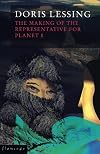
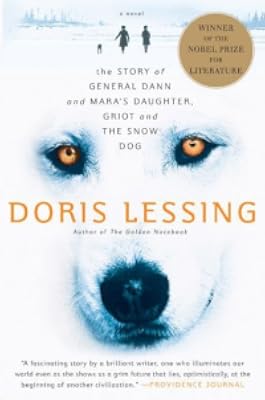
From the winner of the Nobel Prize for Literature, this is the fourth instalment in the visionary novel cycle 'Canopus in Argos: Archives'. The handsome, intelligent people of Planet 8 of the Canopean Empire know only an idyllic existence on their bountiful planet, its weather consistently nurturing, never harsh. They live long, purposeful, untroubled lives. Then one day The Ice begins, and ice and snow cover the planet's surface. Crops and animals die off, and the people must learn to live show more with this new desolation. Their only hope is that, as they have been promised, they will be taken from Planet 8 to a new world. But when the Canopean ambassador, Johor, finally arrives, he has devastating news: they will die along with their planet. Slowly they come to understand that their salvation may lie in the creation of one Representative who can save what is most essential to them. Lessing has written a frightening and, finally, hopeful book, a profound and thought-provoking contribution to the science-fiction genre the novel generally. show lessTags
Recommendations


















Member Reviews
This is the shortest volume of Canopus in Argos, as well as my least favorite. It is about a planet that is freezing over, whose inhabitants are promised resettlement on Shikasta. But when things go wrong on Shikasta, they have to be left where they are as things get worse and worse. It's an interesting premise, but the story is told so disconnectedly that it's almost impossible to care. Johor reappears here, telling the people of Planet 8 that Canopus won't help them after all. I thought he was being a pompous jerk, but they just shrug it off. And the ending is just goofy. (The snow planet made me think of The Left Hand of Darkness, but admittedly that's a bit of a stretch, as snow planets are a dime a dozen in sf.)
The best part of the show more book is the afterword, where Lessing talks about her fascination with Scott's Antarctic expedition. She says their flaw was that they put ideology above human life, and that this is a theme she wanted to explore in this series, especially in this volume and The Sirian Experiments. Though she makes no direct connection to how Canopus often devalues the lives of individuals in pursuit of the "greater good," you can feel that deconstruction of Canopean ideology beginning... show less
The best part of the show more book is the afterword, where Lessing talks about her fascination with Scott's Antarctic expedition. She says their flaw was that they put ideology above human life, and that this is a theme she wanted to explore in this series, especially in this volume and The Sirian Experiments. Though she makes no direct connection to how Canopus often devalues the lives of individuals in pursuit of the "greater good," you can feel that deconstruction of Canopean ideology beginning... show less
This short novel is about stoicism in the face of disaster, and also about the nature of representation. It is told from the p.o.v. of a member of a simple agrarian race under the tutelage of the wise, all-knowing Canopeans, and the crisis of faith they pass through when their mentors and protectors cannot save them from planetary catastrophe. Lessing keeps the prose simple, thus giving it all the more impact. At the end, when the few survivors of Planet 8 undergo a form of transcendence to become Representatives, the simplicity is almost heart-breaking. Lessing appends an afterword about an all-female Antarctic expedition that was her inspiration.
The novel was later adapted into an opera by Philip Glass. That is also show more stunning.
Strangely, I have found this novel significant in developing my own thinking about the nature of representative democracy. I don't think that was Lessing's intention, though. show less
The novel was later adapted into an opera by Philip Glass. That is also show more stunning.
Strangely, I have found this novel significant in developing my own thinking about the nature of representative democracy. I don't think that was Lessing's intention, though. show less
In her afterword to her novel Lessing says:
“Back from the sociological speculation to this little book of mine. I can’t say I enjoyed writing it, for the snow and the ice and cold seemed to get into me and slow my thoughts and processes”
And I have to say I didn’t always enjoy reading it. There is a soporific quality in some of the writing and Lessing occasionally strays into la-la land.
This is the fourth novel in Lessing’s Canopus in Argos: Archives; her science fiction series where her imagined universe is controlled by the Canopians: a benevolent god like race or entities who strive to nurture planets and their populations in their development, however there are other forces at work who strive to disrupt this process. On one show more of these planets: Rohanda, which had all the natural advantages the evil forces of disruption were gaining control and Canopus renamed the planet Shikasta; the broken one. Shikasta of course is another name for our Earth.
Lessing’s Conopus series is written as though the author was dipping into the archives to select certain key events and so the novels do not necessarily follow on from each other and can be read as stand alone books. This is especially true of The Making of the Representative for planet 8, where Lessing imagines a developing world where its human like population is benefiting from the knowledge and wisdom of representatives from Canopus who visit and make suggestions for improvements. On one of these visits Canopus strongly advises the population of planet 8 to build a wall right round the circumference of their planet and supplies the materials. It takes the population a whole year to build their wall and not long after it is finished their planet suffers a climate change resulting in an ice age. The ice and snow is held at bay by the wall and the population relocate behind it, representatives from Canopus tell the people that they expect the ice to eventually cover their planet but Canopus will transport the people to a new planet, the promising Rohanda.
Lessing tells the story from the point of view of one of the planet 8’s representatives; Doeg who is the story teller and historian for his people. Much of the book is about the struggle for survival in an encroaching ice age, but Lessing’s style places the reader a few steps away from the intensity of the action. It is like reading an historical report, albeit one written by an eye witness. Conditions on the planet get worse and the Canopian Johor arrives to live among the planets representatives as they battle for survival. It appears now as though the promised airlift to another planet is not going to happen. Lessing indulges in some speculation on a sort of afterlife or transcendence into another mental state and there are passages in the book such as this:
“While we laboured and fought and exhorted and forced the doomed wretches up and out of their lethargy, we were being changed molecule by molecule, atom by atom. And in the unimaginable vast spaces between the particles of the particles of the particles of the electrons and neutrons and protons - between the particles that danced and flowed and vibrated? Yes, in these faint webs or lattices or grids of pulses, changes went on over which we had no control. Which we could not chart or measure. Thoughts - but where were they, in the empty spaces of our beings? - that once we had regarded tolerently, or with approval, as necessary, were now being rejected by what we had become.”
The vast majority of the people on planet 8 sink into a cold induced lethargy, huddling together in ice block houses waiting to die. It is only the few remaining representatives along with Johor who seek some sort of salvation. If it was Lessing’s intention to impart a feeling of lethargy and hopelessness in the reader then I think she has succeeded. It is a short novel of 161 pages, but feels longer, it is supplemented by the authors afterword of a further 30 pages in which she uses the story of Scott of the Antartica’s disastrous attempts to reach the South Pole as a sort of warning against Nationalism.
The moral of the story; and I suspect there might be one could be that if we rely on God for our salvation then some of us might achieve some transcendence of the spirit, but for most people it would lead to our doom. Interesting to speculate on this theme, but you would need to be motivated by these thoughts and ideas to fully enjoy this novel. This one didn’t quite do it for me, Lessing has lost some of the magic of her previous books in the Canopus series and so 3.5 stars. show less
“Back from the sociological speculation to this little book of mine. I can’t say I enjoyed writing it, for the snow and the ice and cold seemed to get into me and slow my thoughts and processes”
And I have to say I didn’t always enjoy reading it. There is a soporific quality in some of the writing and Lessing occasionally strays into la-la land.
This is the fourth novel in Lessing’s Canopus in Argos: Archives; her science fiction series where her imagined universe is controlled by the Canopians: a benevolent god like race or entities who strive to nurture planets and their populations in their development, however there are other forces at work who strive to disrupt this process. On one show more of these planets: Rohanda, which had all the natural advantages the evil forces of disruption were gaining control and Canopus renamed the planet Shikasta; the broken one. Shikasta of course is another name for our Earth.
Lessing’s Conopus series is written as though the author was dipping into the archives to select certain key events and so the novels do not necessarily follow on from each other and can be read as stand alone books. This is especially true of The Making of the Representative for planet 8, where Lessing imagines a developing world where its human like population is benefiting from the knowledge and wisdom of representatives from Canopus who visit and make suggestions for improvements. On one of these visits Canopus strongly advises the population of planet 8 to build a wall right round the circumference of their planet and supplies the materials. It takes the population a whole year to build their wall and not long after it is finished their planet suffers a climate change resulting in an ice age. The ice and snow is held at bay by the wall and the population relocate behind it, representatives from Canopus tell the people that they expect the ice to eventually cover their planet but Canopus will transport the people to a new planet, the promising Rohanda.
Lessing tells the story from the point of view of one of the planet 8’s representatives; Doeg who is the story teller and historian for his people. Much of the book is about the struggle for survival in an encroaching ice age, but Lessing’s style places the reader a few steps away from the intensity of the action. It is like reading an historical report, albeit one written by an eye witness. Conditions on the planet get worse and the Canopian Johor arrives to live among the planets representatives as they battle for survival. It appears now as though the promised airlift to another planet is not going to happen. Lessing indulges in some speculation on a sort of afterlife or transcendence into another mental state and there are passages in the book such as this:
“While we laboured and fought and exhorted and forced the doomed wretches up and out of their lethargy, we were being changed molecule by molecule, atom by atom. And in the unimaginable vast spaces between the particles of the particles of the particles of the electrons and neutrons and protons - between the particles that danced and flowed and vibrated? Yes, in these faint webs or lattices or grids of pulses, changes went on over which we had no control. Which we could not chart or measure. Thoughts - but where were they, in the empty spaces of our beings? - that once we had regarded tolerently, or with approval, as necessary, were now being rejected by what we had become.”
The vast majority of the people on planet 8 sink into a cold induced lethargy, huddling together in ice block houses waiting to die. It is only the few remaining representatives along with Johor who seek some sort of salvation. If it was Lessing’s intention to impart a feeling of lethargy and hopelessness in the reader then I think she has succeeded. It is a short novel of 161 pages, but feels longer, it is supplemented by the authors afterword of a further 30 pages in which she uses the story of Scott of the Antartica’s disastrous attempts to reach the South Pole as a sort of warning against Nationalism.
The moral of the story; and I suspect there might be one could be that if we rely on God for our salvation then some of us might achieve some transcendence of the spirit, but for most people it would lead to our doom. Interesting to speculate on this theme, but you would need to be motivated by these thoughts and ideas to fully enjoy this novel. This one didn’t quite do it for me, Lessing has lost some of the magic of her previous books in the Canopus series and so 3.5 stars. show less
Within a lifetime the inhabitants of the idyllic Planet 8 find that their planet is plunged into an Ice Age due to an unexpected cosmic alignment, causing them to have to endure social, cultural, and even physical changes while they wait for rescue.
It began well, but the mystical final stages of the inhabitants' ordeal and ending went on for rather too long for my taste.
It began well, but the mystical final stages of the inhabitants' ordeal and ending went on for rather too long for my taste.
I have only read two works by Doris Lessing; the Cleft and this one. Both are described as being of the sci-fi genre and my reaction to them could hardly be more at variance. The Cleft, I found, to be a silly story that added nothing to my knowledge of the human condition, this book held me riveted from beginning to end. I even approve of the afterword: a much superior cousin to the foreword, which tells one what to think of a book before one has read it. The afterword adds to one's enjoyment - I'll freely admit that I had not linked this story to that of Scott but, having Ben told, I can see the link. Were this to have Ben pointed out before I had made my assessment of the tale, I would have spent too much time and effort on looking show more for this link.
In direct contrast with the Cleft,the characters of this book, although ostensibly alien, were so much more human, believable and realistic. I must now find more of Lessing's work so that I may judge which book is the standard, in my humble opinion. show less
In direct contrast with the Cleft,the characters of this book, although ostensibly alien, were so much more human, believable and realistic. I must now find more of Lessing's work so that I may judge which book is the standard, in my humble opinion. show less
When we looked up at that wall, we could see how the ice had come pressing down and over its top. A dirty greyish white shelf projected from our wall: it was the edge of a glacier. If the wall gave, then what could stand between us and the ice and snow of that interminable winter up there, whose shrieking winds and gales kept us awake at nights, while we huddled together under the mounds of thick hides? But the wall would not give. It could not . . . Canopus had prescribed it, Canopus had ordered it. Therefore, it would stand . . .
But where was Canopus?
If we were to be rescued in time for our peoples to be saved, then that time was already past.
Planet 8 in the Canopean Empire was a paradise and its people were happy, until an show more unprecedented snowfall ushers in a dramatic climate change. The Representatives try to keep things going and help their everyone to adapt to the new conditions, but they are fighting a losing battle. Canopus helped them adapt their houses and promised to bring ships to evacuate them to Rohanda, but then the unthinkable happens. They realise that Canopus doesn't have everything under control after all. and there will be no evacuation.
A short, sad book. So sad, in fact, that I may be giving it less stars than it deserves, just because I found it depressing. show less
But where was Canopus?
If we were to be rescued in time for our peoples to be saved, then that time was already past.
Planet 8 in the Canopean Empire was a paradise and its people were happy, until an show more unprecedented snowfall ushers in a dramatic climate change. The Representatives try to keep things going and help their everyone to adapt to the new conditions, but they are fighting a losing battle. Canopus helped them adapt their houses and promised to bring ships to evacuate them to Rohanda, but then the unthinkable happens. They realise that Canopus doesn't have everything under control after all. and there will be no evacuation.
A short, sad book. So sad, in fact, that I may be giving it less stars than it deserves, just because I found it depressing. show less
This is the story of a planet that’s dying due to climate change. It’s basically the tale of a society, with the individuals pretty much interchangeable. There’s very little dialogue, although the characters do raise some philosophical points in long monologues. I wouldn’t really call it a novel, it’s more of a rumination.
Is it worth reading? If you’re in that sort of mood. If you’re tired of ordinary novels, and want to branch out into more experimental fiction. There is something haunting about all these people struggling against the elements, slowly dying as the planet dies, and then carrying on, out-of-body.
Is it worth reading? If you’re in that sort of mood. If you’re tired of ordinary novels, and want to branch out into more experimental fiction. There is something haunting about all these people struggling against the elements, slowly dying as the planet dies, and then carrying on, out-of-body.
Members
- Recently Added By
Lists

Favorite Science Fiction by Women Authors
737 works; 196 members
Author Information

260+ Works 37,068 Members
Doris Lessing was born in Kermanshah, Persia (later Iran) on October 22, 1919 and grew up in Rhodesia (the present-day Zimbabwe). During her two marriages, she submitted short fiction and poetry for publication. After moving to London in 1949, she published her first novel, The Grass Is Singing, in 1950. She is best known for her 1954 Somerset show more Maugham Award-winning experimental novel The Golden Notebook. Her other works include This Was the Old Chief's Country, the Children of Violence series, the Canopus in Argos - Archives series, and Alfred and Emily. She has received numerous awards for her work including the 2001 Prince of Asturias Prize in Literature, the David Cohen British Literature Prize, and the 2007 Nobel Prize for Literature. She died on November 17, 2013 at the age of 94. (Bowker Author Biography) show less
Some Editions
Series

Work Relationships
Is contained in
Has the adaptation
Common Knowledge
- Canonical title
- The Making of the Representative for Planet 8
- Original title
- The Making of the Representative for Planet 8
- Original publication date
- 1982
- People/Characters
- Johar; Doeg; Alsi; Pedug; Bratch
- Important places
- Planet 8; Shikasta
- First words
- You ask how the Canopean Agents seemed to us in the times of The Ice.
- Last words
- (Click to show. Warning: May contain spoilers.)It seems to me that we do not know nearly enough about ourselves; that we do not often enough wonder if our lives, or some events and times in our lives, may not be analogues or metaphors or echoes of evolvements and happenings going on in other people? - or animals? - even forests or oceans or rocks? - in this world of ours or, even, in worlds or dimensions elsewhere.
- Disambiguation notice
- The edition by Dunvagen Music Publishers, Inc. is a libretto from the opera with music by Phillip Glass.
Classifications
Statistics
- Members
- 600
- Popularity
- 48,631
- Reviews
- 16
- Rating
- (3.59)
- Languages
- 10 — Danish, Dutch, English, Finnish, French, German, Greek, Italian, Norwegian (Bokmål), Swedish
- Media
- Paper, Ebook
- ISBNs
- 18
- ASINs
- 7