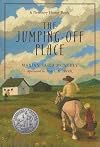
The Jumping-Off Place
by Marian Hurd McNeely
On This Page
Description
In the summer of 1910, four orphans leave their home in Wisconsin to "prove up" their claim to a parcel of land on the South Dakota prairie. Seventeen-year-old Becky Linville and her younger siblings -- Dick, Phil, and Joan -- hadn't intended to move to the newly opened Rosebud Reservation by themselves. But with their Uncle Jim's untimely death, the children are forced to follow up on the claim without adult supervision. Uncle Jim left detailed instructions for his young relatives; but show more right from the start, homesteading turns out to be far more difficult than they expected. A family of ornery squatters have set up a shanty on the Linville claim and vandalized the property. A drought threatens the summer corn crop, and winter brings blizzards, relentless cold, and near-starvation. But prairie life isn't as lonely as it seems, and the Linvilles gradually form strong bonds within their far-flung community. The support of their new neighbors, together with their own growing self-reliance, helps the children rise to each challenge. An exciting tale of adventure, resilience, and triumph over adversity, this 1930 Newbery Honor Book was inspired by author Marian Hurd McNeely's homesteading years. show lessTags
Recommendations


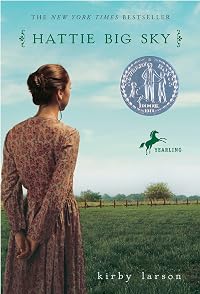

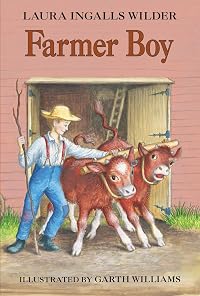

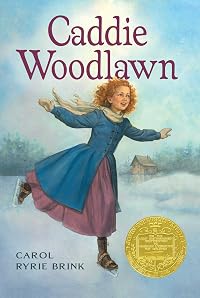


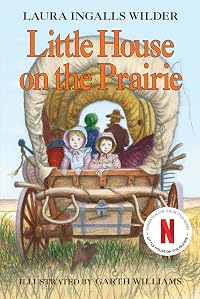
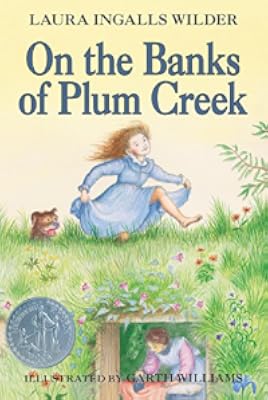


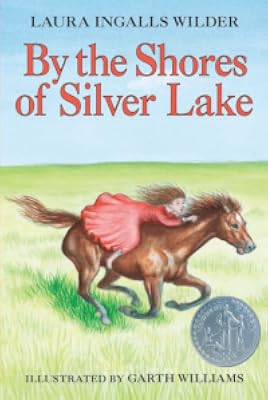


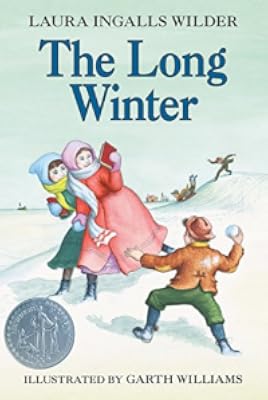


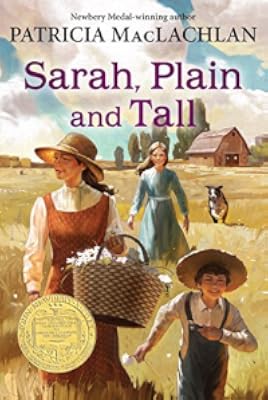







Member Recommendations
by anonymous user, bookel

Member Reviews
The Jumping-Off Place was a Newbery Honor book in 1930, and this lovely new edition is published by the South Dakota State Historical Society Press. I'm glad they have reprinted it, because it's a very well-written story, reminiscient of Laura Ingalls Wilder's Little House books. But as Jean Patrick writes in the afterword, McNeely's book was written in 1929, three years before Wilder started publishing her books. And McNeely's story takes place about thirty years after the time period that Wilder wrote about.
The title is taken from the name of the end of the railroad line where the children get off. It is more than just a place where the track ends; it is where you step off onto the prairie and take responsibility for your own show more survival. Four orphaned siblings — Becky, Dick, Phil, and Joan Linville — had been planning to move out to South Dakota's Tripp County to "prove up" a claim there with their Uncle Jim. But a few months before they were to start, Uncle Jim had a stroke. During the long months of his illness, he never gave up the dream he had for the children to continue with the plan. He filled a notebook with a month-by-month summary of what the children would need to do in order to survive on the prairie for the fourteen months they would have to stay. And then he died.
Becky, age 17, is the head of the little family now, and they decide to carry on with Uncle Jim's plan by themselves. Once there, the Linvilles find that the struggle to survive would be even harder than they thought. There is another family, the Welps, that has laid claim to their land, and the Welps have no compunctions about vandalizing the children's property and even trying to cause Phil's death. This hostility and the harsh conditions of prairie life almost make the children give up. They have a number of unexpected expenses, and it seems like they are going to run out of food during the winter, until Becky is offered the position of schoolteacher for the area's children.
Although she has no formal training, Becky takes on the challenge and becomes well-beloved by all the neighbors for her patience and good sense. On one occasion the children are caught in a prairie blizzard, and Becky keeps them alive by forcing them to march, march, march all night long in the schoolhouse. It is pleasing to see the community appreciate her worth and stand by her in the feud with the low-life Welps. On another occasion, Becky gets to see firsthand the squalor and poverty of some of the prairie settlers, when the Olesons' baby dies of a snakebite. Becky helps to clean the house and lay out the little child, even giving up her one beautiful nightgown to make a burying dress for the little child. This sad chapter is very well-handled by McNeely and is written in a way that does not sugarcoat the reality of death and sorrow. But there is no despair, somehow, and I don't think young readers will be crushed under the weight of the sadness.
I found the writing style very graceful. On the second page, as soon as McNeely wrote that "it was not often that fifteen and seventeen worked together so silently or so soberly," I knew I was in for a lovely read. McNeely has such a spare, apt way of describing the relationships among the children and the way Becky in particular views her neighbors. McNeely's prose never falters. I love the part when Joan is contemplating the beauty of phosphorescence for the first time:
Phosphorescence was a grown-up explanation; it was just as well not to dispute it. But one might have one's own thoughts. And Joan, stumbling over the dusky prairie at Becky's side, knew that she was to live for fourteen months in a wonder world, where fairy lights shone at night and fairy folk danced at the side of a creek.
Lovely.
Some modern readers may claim that the children are too good to be real and that Becky's selfless commitment to the needs of others is too idealistic and unbelievable. I disagree with that assessment. Becky has a rough time dealing with the heat during the prairie summer, and becomes very irritable as she tries to control her emotions. And her assessments of Dick are also telling; before the proving-up forced him to become a man, he was a rather thoughtless boy who was interested in little besides his athletic pursuits and his friends. And right from the beginning McNeely's characterizations are realistic; when their unpleasant Aunt Jule appears to discourage them from carrying out their plan, the children know that she makes a good point when she says they may be able to settle the land, but who will settle their fights? The Linvilles' decision to try to get over the petty things that cause arguments is portrayed as something of a struggle for them. These children aren't too good to be true — they are like us, and they deal with their problems in ways that we could (and should) emulate. It is not that they are too virtuous; it is that we have come to expect too little of ourselves.
I should also mention William Siegel's lovely illustrations. They fit the feel of the story perfectly. The picture of Becky at the Oleson's house was particularly poignant. Overall, this is a wonderful book with believable characters, a good story, and graceful prose to carry it along. I highly recommend it, and I look forward to sharing it with my children someday.
Thank you to the South Dakota State Historical Society Press and the LibraryThing Early Reviewer program for the opportunity to review this book! show less
The title is taken from the name of the end of the railroad line where the children get off. It is more than just a place where the track ends; it is where you step off onto the prairie and take responsibility for your own show more survival. Four orphaned siblings — Becky, Dick, Phil, and Joan Linville — had been planning to move out to South Dakota's Tripp County to "prove up" a claim there with their Uncle Jim. But a few months before they were to start, Uncle Jim had a stroke. During the long months of his illness, he never gave up the dream he had for the children to continue with the plan. He filled a notebook with a month-by-month summary of what the children would need to do in order to survive on the prairie for the fourteen months they would have to stay. And then he died.
Becky, age 17, is the head of the little family now, and they decide to carry on with Uncle Jim's plan by themselves. Once there, the Linvilles find that the struggle to survive would be even harder than they thought. There is another family, the Welps, that has laid claim to their land, and the Welps have no compunctions about vandalizing the children's property and even trying to cause Phil's death. This hostility and the harsh conditions of prairie life almost make the children give up. They have a number of unexpected expenses, and it seems like they are going to run out of food during the winter, until Becky is offered the position of schoolteacher for the area's children.
Although she has no formal training, Becky takes on the challenge and becomes well-beloved by all the neighbors for her patience and good sense. On one occasion the children are caught in a prairie blizzard, and Becky keeps them alive by forcing them to march, march, march all night long in the schoolhouse. It is pleasing to see the community appreciate her worth and stand by her in the feud with the low-life Welps. On another occasion, Becky gets to see firsthand the squalor and poverty of some of the prairie settlers, when the Olesons' baby dies of a snakebite. Becky helps to clean the house and lay out the little child, even giving up her one beautiful nightgown to make a burying dress for the little child. This sad chapter is very well-handled by McNeely and is written in a way that does not sugarcoat the reality of death and sorrow. But there is no despair, somehow, and I don't think young readers will be crushed under the weight of the sadness.
I found the writing style very graceful. On the second page, as soon as McNeely wrote that "it was not often that fifteen and seventeen worked together so silently or so soberly," I knew I was in for a lovely read. McNeely has such a spare, apt way of describing the relationships among the children and the way Becky in particular views her neighbors. McNeely's prose never falters. I love the part when Joan is contemplating the beauty of phosphorescence for the first time:
Phosphorescence was a grown-up explanation; it was just as well not to dispute it. But one might have one's own thoughts. And Joan, stumbling over the dusky prairie at Becky's side, knew that she was to live for fourteen months in a wonder world, where fairy lights shone at night and fairy folk danced at the side of a creek.
Lovely.
Some modern readers may claim that the children are too good to be real and that Becky's selfless commitment to the needs of others is too idealistic and unbelievable. I disagree with that assessment. Becky has a rough time dealing with the heat during the prairie summer, and becomes very irritable as she tries to control her emotions. And her assessments of Dick are also telling; before the proving-up forced him to become a man, he was a rather thoughtless boy who was interested in little besides his athletic pursuits and his friends. And right from the beginning McNeely's characterizations are realistic; when their unpleasant Aunt Jule appears to discourage them from carrying out their plan, the children know that she makes a good point when she says they may be able to settle the land, but who will settle their fights? The Linvilles' decision to try to get over the petty things that cause arguments is portrayed as something of a struggle for them. These children aren't too good to be true — they are like us, and they deal with their problems in ways that we could (and should) emulate. It is not that they are too virtuous; it is that we have come to expect too little of ourselves.
I should also mention William Siegel's lovely illustrations. They fit the feel of the story perfectly. The picture of Becky at the Oleson's house was particularly poignant. Overall, this is a wonderful book with believable characters, a good story, and graceful prose to carry it along. I highly recommend it, and I look forward to sharing it with my children someday.
Thank you to the South Dakota State Historical Society Press and the LibraryThing Early Reviewer program for the opportunity to review this book! show less
 This review was written for LibraryThing Early Reviewers.
First published in 1929, and chosen as one of six Newbery Honor Books in 1930 - along with A Daughter of the Seine, Pran of Albania, The Tangle-Coated Horse and Other Tales, Vaino: A Boy of New Finland, and Little Blacknose - Marian Hurd McNeely's The Jumping-Off Place is an immensely engaging work of historical fiction, which follows the story of four young homesteaders in South Dakota, in the early years of the twentieth century. When their beloved Uncle Jim dies, the four Linville siblings - Becky, Dick, Phil and Joan - decide to follow his plan (elaborately outlined in a notebook left for them) to homestead out west, on South Dakota's newly opened Rosebud Reservation. Leaving behind their home in Platteville, Wisconsin, they head show more for the endless prairie, where they encounter back-breaking work, daunting weather, and a family of hostile claim-jumpers whose many acts of vandalism and intimidation range from broken windows to assault. They also encounter community, a beautiful land, a new sense of purpose (in the case of Becky's school-teaching), and a place they can call their own...
I enjoyed The Jumping-Off Place - named for Dallas, South Dakota, the last "jumping-off" place before heading into the prairie - immensely, gobbling it down in two days! It immediately grabs the reader's attention, and doesn't let go. Some of the incidents - as when Phil and Autie Wubber are hung over the side of a butte by (presumably) the nefarious Welps - are very serious indeed, but the overall feeling is cheerful, with a sense of hope, and of adapting to new circumstances, prevalent throughout. I admired all four Linville children, and the other homesteaders - how hard they worked! - and can understand why the South Dakota State Historical Society reprinted the book, in 2008, as it documents an important aspect of the history of that part of the country. I also understand why this has been compared favorably with Laura Ingalls Wilder's Little House books (McNeely's was published first).
That said, this is not entirely unproblematic, as a story for contemporary children. Teachers, parents and librarians should note that there is mention of "dirty Indians," and "working like a n*gger," in the course of the story. The former appears once, spoken by Aunt Jule, whom the children do not like, and who is a character held up to ridicule by the narrative. Although the children themselves later see Indians, on the train, they themselves do not refer to them, or think of them (as far as the narrative indicates) in this way. The latter also appears once, in a casual remark about working hard, and - in the absence of any African-American characters - does not seem to indicate any specific racial animus on the part of characters or author. Still, thoughtful adults should probably be aware of this, and stand ready to discuss the issue of changing ideas about race and language, with young readers. They might also want to discuss the historical reality behind this story - the theft of treaty land that makes the homesteading possible in the first place - as it is not something that the author references in any way.
Despite these issues, The Jumping-Off Place is worth reading, both for its own story, and for its depiction of a specific place and time, and a specific experience. I understand that McNeely based it upon her own life, and that really shines through in the narrative, which is convincing, and at times moving. show less
I enjoyed The Jumping-Off Place - named for Dallas, South Dakota, the last "jumping-off" place before heading into the prairie - immensely, gobbling it down in two days! It immediately grabs the reader's attention, and doesn't let go. Some of the incidents - as when Phil and Autie Wubber are hung over the side of a butte by (presumably) the nefarious Welps - are very serious indeed, but the overall feeling is cheerful, with a sense of hope, and of adapting to new circumstances, prevalent throughout. I admired all four Linville children, and the other homesteaders - how hard they worked! - and can understand why the South Dakota State Historical Society reprinted the book, in 2008, as it documents an important aspect of the history of that part of the country. I also understand why this has been compared favorably with Laura Ingalls Wilder's Little House books (McNeely's was published first).
That said, this is not entirely unproblematic, as a story for contemporary children. Teachers, parents and librarians should note that there is mention of "dirty Indians," and "working like a n*gger," in the course of the story. The former appears once, spoken by Aunt Jule, whom the children do not like, and who is a character held up to ridicule by the narrative. Although the children themselves later see Indians, on the train, they themselves do not refer to them, or think of them (as far as the narrative indicates) in this way. The latter also appears once, in a casual remark about working hard, and - in the absence of any African-American characters - does not seem to indicate any specific racial animus on the part of characters or author. Still, thoughtful adults should probably be aware of this, and stand ready to discuss the issue of changing ideas about race and language, with young readers. They might also want to discuss the historical reality behind this story - the theft of treaty land that makes the homesteading possible in the first place - as it is not something that the author references in any way.
Despite these issues, The Jumping-Off Place is worth reading, both for its own story, and for its depiction of a specific place and time, and a specific experience. I understand that McNeely based it upon her own life, and that really shines through in the narrative, which is convincing, and at times moving. show less
After the death of their beloved uncle, four orphaned siblings settle a homesteading claim in South Dakota in 1910. Led by their older teen sister, Becky, they spend their first year on the prairie. Originally published in 1929, this is definitely an old fashioned children's book, and it is very reminiscent of the Little House series. The book starts off a little slowly, but Hurd McNeely develops her characters very well-- quietly but quickly--and i found my self pulled deeper into a story that is quiet but consistent-- chronicling events --not adventures, exactly-- that occur during the family's first year on the claim. The story ends when the year finishes, and while the ending is certainly predictable, it is also satisfying-- and in show more keeping with the quiet nature of the work itself. I really enjoyed the book --- it is very well written and full of subtleties that enhance the story without hitting you over the head-- for example, the seasonal weather on the prairie mirrors the mood of the narrative as it progresses. i knew little about South Dakota or the prairie experience before The Jumping-Off Place and i did not expect to like the book anywhere near as much as i did, and i have a new found understanding for the settler experience. When i talk about this book and this period, however, I do feel compelled to point out that this was the last of the large native american land thefts, and this land ----that the Linville kids and other prairie families so loved-- was stolen from native people as part of US policy to decimate the Indian population, separate the people from their ancestral lands and destroy native culture. I believe the book's afterward, by Jean L. S. Patrick, should have made this point more clearly. So....that being said, I clearly liked the book quite a bit, and while it is not for every child, i think that for upper elementary and middle school kids with a taste for the Little House series, or A Tree Grows in Brooklyn, or Secret Garden, etc. I would recommend it. Also, a great Read-A-Loud for a younger group. Recommended-with historical notes-- show less
This review was written for LibraryThing Early Reviewers.Discovering this book was a lovely surprise, and I wish I had read it when I was in my grade-school Laura Ingalls Wilder phase. Homesteading is really the only thing The Jumping-Off Place has in common with the Little House books, besides the location in South Dakota and the centrality of family, and it is written with a slightly older reader in mind. It's a pity that Marian Hurd McNeely died so young, and that this is the only book of hers to be both in print and readily available in libraries and bookstores.
I began to read The Jumping-Off Place by book light in a camp bunk with barely a glance at the cover. There was a lovely old-fashioned quality to the writing and the characters that surprised me, until I looked more closely the next day and realized that the book was written in 1929.
This is a wonderful story, set in one of the last bits of the frontier after the turn of the twentieth century. Four orphans, having just lost their beloved uncle, travel to South Dakota to "prove up" his claim. They face hardships--drought, blizzard, wind, and an adversarial neighbor--with maturity, hard work, generosity, and an unquenchable spirit. In the process they fell in love with the prairie and the community and it with them.
This is an excellent show more book for all ages. It would make a very nice family read aloud, particularly because there is some lovely prose. The original illustrations have been retained and enhance the historical feel of the book. The South Dakota State Historical Society has added an afterword with historical background and author information and a word list, adding to the educational value of the book.
This 1930 Newbery Honor Book was a joy, and I am very glad that the SDSHS Press has decided to return it to print. show less
This is a wonderful story, set in one of the last bits of the frontier after the turn of the twentieth century. Four orphans, having just lost their beloved uncle, travel to South Dakota to "prove up" his claim. They face hardships--drought, blizzard, wind, and an adversarial neighbor--with maturity, hard work, generosity, and an unquenchable spirit. In the process they fell in love with the prairie and the community and it with them.
This is an excellent show more book for all ages. It would make a very nice family read aloud, particularly because there is some lovely prose. The original illustrations have been retained and enhance the historical feel of the book. The South Dakota State Historical Society has added an afterword with historical background and author information and a word list, adding to the educational value of the book.
This 1930 Newbery Honor Book was a joy, and I am very glad that the SDSHS Press has decided to return it to print. show less
This review was written for LibraryThing Early Reviewers.Four orphaned children set off to settle their uncle's claim in South Dakota by living on the land for 14 months. They endure the hardships of the prairie, including a squatter living on the land who does spiteful things to them and their neighbors. Because of the setting and the connection to homesteading, readers are certain to compare the book to the Little House books by Laura Ingalls Wilder, but the time periods of the settlement are different. This book was actually written before the Little House books. One must remember the time period in which this book was written when reading some of the words in the book. As a librarian, my favorite part of the book was when the library was developed. This was a quite pleasant read and show more certainly deserved the Newbery Honor that it was awarded. It is far more readable and will be appreciated more by today's younger readers than many other Newbery Medal and Honor books of that period. show less
Early in the 20th century, four orphaned children from small town Wisconsin carry out their recently deceased uncle's plans for homesteading in South Dakota. Their uncle lingered long enough after a stroke to provide detailed instructions for the children to follow. To fulfill the requirements for homesteaders, they must live on the property for 14 months and cultivate at least 10 acres. Once they gain title to the claim, they can sell it and use the income from the sale to get a good start in life.
Although none of the four children are twins, the book reminded me a lot of the Bobbsey Twins books I loved as a child. The children pair up in the same way as the Bobbsey Twins. Seventeen-year-old Becky and 15-year-old Dick work well as a show more team to manage the family finances and household chores. Preteens Phil and Joan have chores to do, but they also have time for school and play.
The language of the book hasn't aged quite as well as the story. A couple of references to Native Americans and African Americans are typical for that era but wouldn't be used by today's authors for children. This would be a quick and enjoyable way for family historians to learn about homesteaders and homesteading in the early 20th century. show less
Although none of the four children are twins, the book reminded me a lot of the Bobbsey Twins books I loved as a child. The children pair up in the same way as the Bobbsey Twins. Seventeen-year-old Becky and 15-year-old Dick work well as a show more team to manage the family finances and household chores. Preteens Phil and Joan have chores to do, but they also have time for school and play.
The language of the book hasn't aged quite as well as the story. A couple of references to Native Americans and African Americans are typical for that era but wouldn't be used by today's authors for children. This would be a quick and enjoyable way for family historians to learn about homesteaders and homesteading in the early 20th century. show less
Members
- Recently Added By
Lists

Newbery Honor Books By Year - I - 1922-1980
199 works; 3 members

Books Read in 2023
5,547 works; 145 members
Author Information
4+ Works 121 Members
All Editions
Some Editions
Awards and Honors
Awards
Distinctions
Notable Lists
Common Knowledge
- Canonical title
- The Jumping-Off Place
- Original publication date
- 1929
- Important places
- South Dakota, USA
- Important events
- 1910
- First words
- Down on their knees, a boy and girl were taking up the kitchen linoleum.
- Last words
- (Click to show. Warning: May contain spoilers.)He, too, had heard its call to stay, and she knew from his face what his answer would be.
Classifications
- Genres
- Fiction and Literature, Children's Books, Kids
- DDC/MDS
- 813.54 — Literature & rhetoric American literature in English American fiction in English 1900-1999 1945-1999
- LCC
- PZ7 .M2326 .J — Language and Literature Fiction and juvenile belles lettres Fiction and juvenile belles lettres Juvenile belles lettres
- BISAC
Statistics
- Members
- 116
- Popularity
- 280,828
- Reviews
- 20
- Rating
- (4.22)
- Languages
- English
- Media
- Paper, Ebook
- ISBNs
- 5
- UPCs
- 1
- ASINs
- 2