Break It Down
by Lydia Davis
On This Page
Description
The thirty-four stories in this seminal collection powerfully display what have become Lydia Davis's trademarks-dexterity, brevity, understatement, and surprise. Although the certainty of her prose suggests a world of almost clinical reason and clarity, her characters show us that life, thought, and language are full of disorder. Break It Down is Davis at her best. In the words of Jonathan Franzen, she is "a magician of self-consciousness.".Tags
Recommendations











Member Reviews
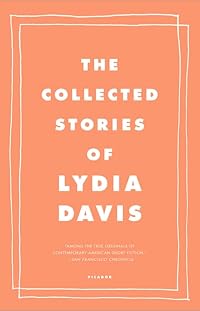
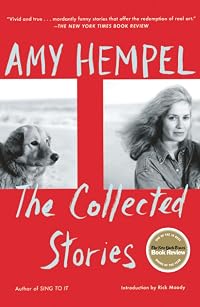
[The Collected Stories of Lydia Davis] contains four previously published books of her short stories and for two reasons, the excellence of the stories themselves and because there is a publication chronology here and possible shifts in themes or emphasis, I want to take each book on its own. The first, published in 1986 is called [Break It Down] - and contains more than thirty stories, but be advised, many of Davis's "stories" are no more than a paragraph. A few are barely more than a sentence or two. And some are of "normal" short story length. Lest you think I am obsessing about a minor detail--let me admit I am inclined to obsess about every aspect of Davis's writing. I read a piece on Davis a few years ago in The New Yorker that show more led me to buy this book whic then languished on my shelves the way a very fat book sometimes will. I am also clinging to minor details because I don't know how to even begin to write about these stories in a sensible way. The truth is I would be only too happy to write at length about every single one. So let me start saying that I think Davis, like many contemporary writers (Karl Ove Knausgaard comes to mind immediately), writes in a clear and stripped down prose, not minimalist, but not prosy. As you read you suspect that what she writes intersects very closely with her own experience, perilously autobiographical. For instance, there are references and two stories devoted to fat men, in one the fat man is stated to be the person the narrator feels lives inside of her and might be her true self, in another we get a portrait of Vassily, who, we gradually realize is fat man/self seen from the outside in. Or there is an older woman who is afraid of everyone and everything. Oh yes. Some of the predicaments are quite humorous, often there is wry self-awareness, but it's not enough to carry that person through whatever is holding them back. (There is a lot of holding back.) The personas are not always obviously autobiographical, rarely would you think their name is Lydia Davis, but often, such as in one story where the narrator talks to her friend/lover about how she will be relieved to be older and just less tormented by everything from sex to ambition and his incredulous response that what you get instead is pain, had she thought of that? Well, no, she hadn't. That story sounds like a conversation. It could be Lydia's internal dialogue. Many stories involve break-ups, difficulties communicating, but all the characters even if they talk to no one else, talk to themselves sometimes so much that they create even internal confusion. I am sure I have, in fact, confused you -- what are these things this person writes? Meditations? Vignettes? Stories? Confessions? I don't know, all I know is that I feel enlarged by reading them! Do I recommend? You know best whether you care for the form. Now and then I encounter a short story writer, Chekhov, Turgenev, V.S. Pritchett, H.E. Bates, Mary Lavin, Edna O'Brien, John Cheever come with no effort at all into mind; all of whmo lift the short story into some sublime place of revelation like a dish that, at the last second, offers an explosion of unexpected flavor. If that happens to you too, you want to read Davis. ***** show less
A really fascinating collection of short stories. Most of them are very short -- a few pages or in some cases even a paragraph (one of these is pasted below). They are all impeccably written, mostly odd, invariably disorienting with their psychological shifts. Most of them are about relationships, many of them failed. All of them are economical with only a minimum of necessary detail.
But better than a description is to read one of them entitled "What She Knew":
"People did not know what she knew, that she was not really a woman but a man, often a fat man, but more often, probably, an old man. The fact that she was an old man made it hard for her to be a young woman. It was hard for her to talk to a young man, for instance, though the show more young man was clearly interested in her. She had to ask herself, Why is this young man flirting with this old man?" show less
But better than a description is to read one of them entitled "What She Knew":
"People did not know what she knew, that she was not really a woman but a man, often a fat man, but more often, probably, an old man. The fact that she was an old man made it hard for her to be a young woman. It was hard for her to talk to a young man, for instance, though the show more young man was clearly interested in her. She had to ask herself, Why is this young man flirting with this old man?" show less
A really fascinating collection of short stories. Most of them are very short -- a few pages or in some cases even a paragraph (one of these is pasted below). They are all impeccably written, mostly odd, invariably disorienting with their psychological shifts. Most of them are about relationships, many of them failed. All of them are economical with only a minimum of necessary detail.
But better than a description is to read one of them entitled "What She Knew":
"People did not know what she knew, that she was not really a woman but a man, often a fat man, but more often, probably, an old man. The fact that she was an old man made it hard for her to be a young woman. It was hard for her to talk to a young man, for instance, though the show more young man was clearly interested in her. She had to ask herself, Why is this young man flirting with this old man?" show less
But better than a description is to read one of them entitled "What She Knew":
"People did not know what she knew, that she was not really a woman but a man, often a fat man, but more often, probably, an old man. The fact that she was an old man made it hard for her to be a young woman. It was hard for her to talk to a young man, for instance, though the show more young man was clearly interested in her. She had to ask herself, Why is this young man flirting with this old man?" show less
Lydia writes short-short fiction. Some of her stories are just a few sentences long. These do not end up being very strong. As many others have noted, some of these "stories" are more like sketches for longer works of fiction - interesting to read, but not emotionally involving. (There is nothing on the level of: "For sale. Baby shoes. Never worn."-style micro-stories.) Her longer-short-short fiction, however, is often breathtaking and made me an instant fan of Lydia Davis. Her economical use of words is awe-inspiring - never a word wasted.
I liked a lot of these short (very short) stories, but overall the collection was a bit abstract for my taste, more like interesting prose poems.
Really a 3.5 star book.
Are you kneeling and putting your hands on the carpet like that. Are you on the carpet and your hands are on it?
Members
- Recently Added By
Author Information

35+ Works 4,957 Members
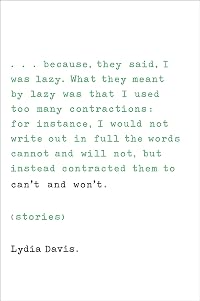
Lydia Davis is the author of several works of fiction. She is also a noted translator. She teaches at Bard College and lives in Port Ewen, New York. (Publisher Provided) Lydia Davis is a writer and translator. She is a professor of creative writing at the University at Albany, SUNY, and was a Lillian Vernon Distinguished Writer-in-Residence at New show more York University in 2012. Davis has published six collections of short stories, including The Thirteenth Woman and Other Stories (1976) and Break It Down (1986), a Finalist for the PEN/Hemingway Award. Her most recent collection was Varieties of Disturbance, published by Farrar, Straus and Giroux in 2007 and a Finalist for the National Book Award. Davis' stories are acclaimed for their brevity and humor. Many are only one or two sentences. Her book Can't and Won't made the New York Times Bestseller List in 2014. She has also translated Proust, Flaubert, Blanchot, Foucault, Michel Leiris, Pierre Jean Jouve and other French writers, as well as the Dutch writer A.L. Snijders. In October 2003 Davis received a MacArthur Fellowship. She was elected a Fellow of the American Academy of Arts and Sciences in 2005. Davis was announced as the winner of the 2013 Man Booker International Prize on 22 May 2013. Davis won £60,000 as part of the biennial award. (Bowker Author Biography) show less
Awards and Honors
Awards
Work Relationships
Is contained in
Common Knowledge
- Canonical title
- Break It Down
Classifications
Statistics
- Members
- 318
- Popularity
- 100,538
- Reviews
- 7
- Rating
- (4.04)
- Languages
- 6 — Danish, English, Estonian, French, Italian, Portuguese
- Media
- Paper, Ebook
- ISBNs
- 9
- ASINs
- 2