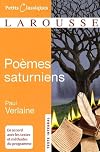
Poèmes saturniens
by Paul Verlaine
On This Page
Description
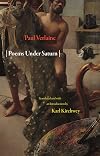
Poems Under Saturn is the first complete English translation of the collection that announced Paul Verlaine (1844-1896) as a poet of promise and originality, one who would come to be regarded as one of the greatest of nineteenth-century writers. This new translation, by respected contemporary poet Karl Kirchwey, faithfully renders the collection's heady mix of classical learning and earthy sensuality in poems whose rhythm and rhyme represent one of the supreme accomplishments of French show more verse. Restoring frequently anthologized poems to the context in which they originally appeared, Poems Under Saturn testifies to the blazing talents for which Verlaine is celebrated. The poems display precocious virtuosity, mingling the attractions of the flesh with the longings of the spirit. Greek and Hindu myth give way to intimate erotic meditations and wickedly satirical society portraits, mythological landscapes alternate with gritty narratives of mid-nineteenth century Paris, visions of happiness yield to nightmarish glimpses of deep alienation, and real and imaginary characters--including Achilles, Valmiki, Charlemagne, and Spain's baleful King Philip II--all figure as the subject matter of a supremely ambitious young poet. Poems Under Saturn presents the extraordinary devotion and intense musicality of an artist for whom poetry remained the one true passion. show lessTags
Recommendations























Member Reviews
Reading behind fabric of these poems, finding lavish synthonies with Saturnine fates, it appears that Verlaine, clearly inspired, was - like most poets that are not magicians - artfully plotting the unsaid, the invisible, the undone in a masterful fashion. What appears to the senses and becomes apparent, profane, or 'touched by human hand' may only be vulgarized, or becomes the subject of philosophy - rarely poetry, unless someone encodes the apparent in reverse to make it concealed for others to discover pure meanings. Alike to spiritual alchymy, it is either reverse-concealed, clear and true, or otherwise it is mere charlatanry. Clearly, muses of mother Rhea were at work and di manes (holy dead) that touched the poets heart, soul and show more mind. Highly commendable to anyone who is willing to breathe this thick eroticism of melancholic death in-between being a prisoner of passing dusks and dawns. show less
Reading behind fabric of these poems, finding lavish synthonies with Saturnine fates, it appears that Verlaine, clearly inspired, was - like most poets that are not magicians - artfully plotting the unsaid, the invisible, the undone in a masterful fashion. What appears to the senses and becomes apparent, profane, or 'touched by human hand' may only be vulgarized, or becomes the subject of philosophy - rarely poetry, unless someone encodes the apparent in reverse to make it concealed for others to discover pure meanings. Alike to spiritual alchymy, it is either reverse-concealed, clear and true, or otherwise it is mere charlatanry. Clearly, muses of mother Rhea were at work and di manes (holy dead) that touched the poets heart, soul and show more mind. Highly commendable to anyone who is willing to breathe this thick eroticism of melancholic death in-between being a prisoner of passing dusks and dawns. show less
Reading behind fabric of these poems, finding lavish synthonies with Saturnine fates, it appears that Verlaine, clearly inspired, was - like most poets that are not magicians - artfully plotting the unsaid, the invisible, the undone in a masterful fashion. What appears to the senses and becomes apparent, profane, or 'touched by human hand' may only be vulgarized, or becomes the subject of philosophy - rarely poetry, unless someone encodes the apparent in reverse to make it concealed for others to discover pure meanings. Alike to spiritual alchymy, it is either reverse-concealed, clear and true, or otherwise it is mere charlatanry. Clearly, muses of mother Rhea were at work and di manes (holy dead) that touched the poets heart, soul and show more mind. Highly commendable to anyone who is willing to breathe this thick eroticism of melancholic death in-between being a prisoner of passing dusks and dawns. show less
Reading behind fabric of these poems, finding lavish synthonies with Saturnine fates, it appears that Verlaine, clearly inspired, was - like most poets that are not magicians - artfully plotting the unsaid, the invisible, the undone in a masterful fashion. What appears to the senses and becomes apparent, profane, or 'touched by human hand' may only be vulgarized, or becomes the subject of philosophy - rarely poetry, unless someone encodes the apparent in reverse to make it concealed for others to discover pure meanings. Alike to spiritual alchymy, it is either reverse-concealed, clear and true, or otherwise it is mere charlatanry. Clearly, muses of mother Rhea were at work and di manes (holy dead) that touched the poets heart, soul and show more mind. Highly commendable to anyone who is willing to breathe this thick eroticism of melancholic death in-between being a prisoner of passing dusks and dawns. show less
This is the first collection of poems by Paul Verlaine. In a fine translation by Karl Kirchwey these poems come alive and provide the reader with a feeling for the soul of the poet. The emotions are visceral and erupt from every page - what a delight!
Not quite what I'd hoped it would be, but not altogether disappointing.
Moi qui ne suis pas très portée sur la poésie, j'adore les poèmes de Verlaine; mélancoliques mais tellement magnifiques!
May 22, 2006French
Members
- Recently Added By
Lists

poetry
15 works; 1 member
Author Information

368+ Works 3,024 Members
The dissolute, erratic leader of the decadents and one of the early symbolists, Verlaine wrote 18 volumes of verse in alternating moods of sensuality and mysticism. He and the Poet Rimbaud, 10 years younger, wandered throughout Europe together, until their relationship ended when Verlaine shot his companion in Brussels in 1873 and was imprisoned show more for two years. Sagesse (1881), his collection of religious poems of great melodic and emotional beauty, is generally considered his finest volume. In his famous poem Art Poetique, Verlaine stressed the primary importance of musicality in poetry over description. Mallarme called the collection in which it appears, Jadis et Naguere (1884), "almost continuously a masterpiece . . . disturbing as a demon's work," and described Verlaine's skill as that of a guitarist. (Bowker Author Biography) show less
Some Editions
Series
Belongs to Publisher Series
Common Knowledge
- Canonical title*
- Poèmes saturniens
- Original title
- Poèmes saturniens
- Original publication date
- 1866
*Some information comes from Common Knowledge in other languages. Click "Edit" for more information.
Classifications
Statistics
- Members
- 202
- Popularity
- 162,370
- Reviews
- 8
- Rating
- (4.11)
- Languages
- Catalan, English, Finnish, French
- Media
- Paper, Ebook
- ISBNs
- 17
- ASINs
- 14