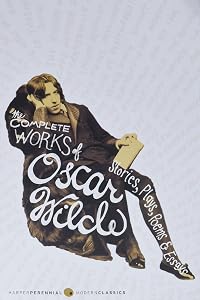
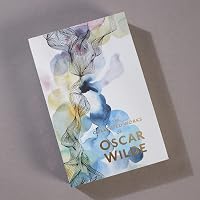
The Complete Works of Oscar Wilde
by Oscar Wilde 
On This Page
Description
This Complete Works of Oscar Wilde is a truly complete and authoritative single-volume edition of Oscar Wilde's works. It contains his only novel, 'The Portrait of Dorian Gray', as well as his plays, stories, poems, essays and letters, all in their most authoritative texts. For easier navigation, there are tables of contents for each section and one for the whole volume. This ebook contains his complete works in a new, easy-to-read and easy-to-navigate format. With this beautiful Collectible show more Edition, you can enjoy Wilde's enduring literary legacy again and again. ABOUT THE AUTHOR: Oscar Wilde was born in Dublin on 16 October 1854 to Sir William Wilde and his wife Jane. Oscar's mother, Lady Jane Francesca Wilde, was a successful poet and journalist. Oscar's father, Sir William Wilde, was a leading ear and eye surgeon, a renowned philanthropist and gifted writer, who wrote books on archaeology and folklore. Oscar had an elder brother, Willie, and a younger sister, Isola Francesca, who died at the early age of 10. He was educated at Portora Royal School, Trinity College, Dublin, and Magdalen College, Oxford. While at Oxford, he became involved in the aesthetic movement and became an advocate for 'Art for Art's Sake'. Whilst at Magdalen, he won the 1878 Newdigate Prize for his poem Ravenna. After he graduated, he moved to Chelsea in London (1879) to establish a literary career. In 1881, he published his first collection of poetry-Poems that received mixed reviews by critics. He worked as an art reviewer (1881), lectured in the United States and Canada (1882), and lived in Paris (1883). He also lectured in Britain and Ireland (1883 - 1884). On May 29, 1884, Oscar married Constance Lloyd (died 1898), daughter of wealthy Queen's Counsel Horace Lloyd. They had two sons, Cyril (1885) and Vyvyan (1886). To support his family, Oscar accepted a job as the editor of Woman's World magazine, where he worked from 1887-1889. In 1888, he published 'The Happy Prince and Other Tales', fairy-stories written for his two sons. His first and only novel, 'The Picture of Dorian Gray', was published in 1891 and received quite a negative response. This had much to do with the novel's homoerotic overtones, which caused something of a sensation amongst Victorian critics. In 1891, Wilde began an affair with Lord Alfred Douglas, nicknamed 'Bosie', who became both the love of his life and his downfall. Wilde's marriage ended in 1893. Wilde's greatest talent was for writing plays. His first successful play, Lady Windermere's Fan, opened in February 1892. He produced a string of extremely popular comedies including 'A Woman of No Importance' (1893), 'An Ideal Husband' (1895), and 'The Importance of Being Earnest' (1895). These plays were all highly acclaimed and firmly established Oscar as a playwright. He spent the rest of his life wandering Europe, staying with friends and living in cheap hotels. He died of cerebral meningitis on November 30, 1900, penniless, in a cheap Paris hotel. show lessTags
Recommendations












Member Reviews
Having skipped my senior year, I never had to read "The Picture of Dorian Gray." Frankly, I'm glad. I enjoyed it much more as a vain, aging 42-year old than I could possibly have as a 17-year old sure of my immortality. An excellent story -- one chapter got way too bogged down in the description of the finer things in life, but other than that, it was a fine piece of writing. The fables are wonderfully witty, biting social commentary thinly disguised as fairy tales. "The Remarkable Rocket" was wonderful in its treatment of idiotic society types. A lovely piece of work.
The poetry, however, was far too bogged down in classical references to hold any attraction for me. His essays, particularly 'De Profundis,' were entirely too show more self-involved and self-congratulatory. His obvious sense of superiority, as well as his blind devotion to a self-involved idiot left me cold. show less
The poetry, however, was far too bogged down in classical references to hold any attraction for me. His essays, particularly 'De Profundis,' were entirely too show more self-involved and self-congratulatory. His obvious sense of superiority, as well as his blind devotion to a self-involved idiot left me cold. show less
I remember discovering Oscar Wilde with 'The Picture of Dorian Gray', a luscious and decadent read which, ironically enough, had not only made his success but also caused his downfall (being quoted ad nauseam during his trial). Well, Oscar Wilde, we know, finally ended up in jail. His work from behind bars is, about, really touching.
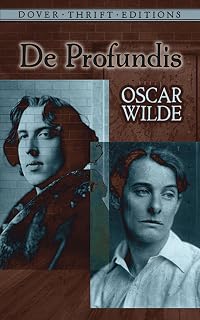
First, 'De Profundis', his letter to his lover, is an insightful take upon his fate - the pain of a man looked upon, ruined and humiliated, who nevertheless has the unforgiving lucidity to don't spare himself for his mistakes. For sure, it reeks of a sad bitterness! It is, nevertheless, quite disarming for its deep honesty.
Then, 'The Ballad of Reading Gaol'. Powerful verses, grim but deeply heartfelt, show more here's one of his most intense text, and surely one of his best work. Well, as far as I am concerned, it certainly stands out from the rest of his poetry, which, I confess, I don't really like.
His 'Poems' indeed are, overall, quite bad. A classicist at heart, Oscar Wilde attempted to follow strict formal rules that are everything but suited to his stylised and flowery language, going over the top and feeling way too rigid. I preferred his 'Prose Poems', where he discarded such strictness to completely unleash himself. In fact, mostly religious (mystic?) his prose displays him at his playful best.
As for the plays... I am not one for theatre; it's just not my cup of tea. I have to say, though, that I absolutely enjoyed reading most of his! 'Lady Windermere's Fan' (my personal favourite), 'The Importance of Being Earnest', 'A Woman of No Importance'… Oscar Wilde is witty, sharp, cynical and sarcastic, always catching the reader off-guard with the unexpected, and, his creativity and bluntness are a delight that takes no prisoner. I just struggled with 'An Ideal Husband', predictable, too long, and tiring for its feel of déja vu. I didn't know he had written a tragedy ('The Duchess of Padua'), which was a nice surprise, especially since it's a really good play overall. My favourite remains, however, 'Salomé' - wonderfully poetic, dark, occult, bathed in bloody moonlight, all here is but foggy vision dancing enthrallingly before our hypnotised eyes.
Noteworthy too are his essays on Art. 'Intentions' and 'The Decay of Lying' may not be ground breaking, but they deserve a read to better understand what he meant by some of his most famous (and misunderstood!) quotes -e.g. 'life imitates art'... His tales are entertaining too, though I disliked the ones he wrote for children (for me -personally- all unsuited and complete failure).
All in all then, here's a great compilation. It can feel unequal (again, some of his work was really bad -most of his poems, a few tales...) but, considering how far ranging, creative, sharp and, above all, so unique such a writer was, it's impossible to don't be in awe. A pure jewel, that deserves to adorn the personal libraries of every lovers of literature. show less
First, 'De Profundis', his letter to his lover, is an insightful take upon his fate - the pain of a man looked upon, ruined and humiliated, who nevertheless has the unforgiving lucidity to don't spare himself for his mistakes. For sure, it reeks of a sad bitterness! It is, nevertheless, quite disarming for its deep honesty.
Then, 'The Ballad of Reading Gaol'. Powerful verses, grim but deeply heartfelt, show more here's one of his most intense text, and surely one of his best work. Well, as far as I am concerned, it certainly stands out from the rest of his poetry, which, I confess, I don't really like.
His 'Poems' indeed are, overall, quite bad. A classicist at heart, Oscar Wilde attempted to follow strict formal rules that are everything but suited to his stylised and flowery language, going over the top and feeling way too rigid. I preferred his 'Prose Poems', where he discarded such strictness to completely unleash himself. In fact, mostly religious (mystic?) his prose displays him at his playful best.
As for the plays... I am not one for theatre; it's just not my cup of tea. I have to say, though, that I absolutely enjoyed reading most of his! 'Lady Windermere's Fan' (my personal favourite), 'The Importance of Being Earnest', 'A Woman of No Importance'… Oscar Wilde is witty, sharp, cynical and sarcastic, always catching the reader off-guard with the unexpected, and, his creativity and bluntness are a delight that takes no prisoner. I just struggled with 'An Ideal Husband', predictable, too long, and tiring for its feel of déja vu. I didn't know he had written a tragedy ('The Duchess of Padua'), which was a nice surprise, especially since it's a really good play overall. My favourite remains, however, 'Salomé' - wonderfully poetic, dark, occult, bathed in bloody moonlight, all here is but foggy vision dancing enthrallingly before our hypnotised eyes.
Noteworthy too are his essays on Art. 'Intentions' and 'The Decay of Lying' may not be ground breaking, but they deserve a read to better understand what he meant by some of his most famous (and misunderstood!) quotes -e.g. 'life imitates art'... His tales are entertaining too, though I disliked the ones he wrote for children (for me -personally- all unsuited and complete failure).
All in all then, here's a great compilation. It can feel unequal (again, some of his work was really bad -most of his poems, a few tales...) but, considering how far ranging, creative, sharp and, above all, so unique such a writer was, it's impossible to don't be in awe. A pure jewel, that deserves to adorn the personal libraries of every lovers of literature. show less
If I’ve learned anything from reading this complete works of Oscar Wilde, it’s that he is a writer of many words, but his talents are best served in small doses. Besides the Importance of Being Earnest, Salome, and a very few of his poems, I can’t say that I enjoyed reading the majority of the pieces in this collection, even though many of them are home to wonderfully pithy quotes that taken on an individual level are wonderful. But I’ve already reviewed the rest of his pieces individually, so I’ll keep this one largely confined to the final section - poetry - which isn’t easily quantified alone. There’s lots of poetry that I do enjoy out in the world, so I figured that with Wilde’s penchant for witty social commentary, show more the occasion fairytale, and excellent verbiage I would devour this last 150-odd pages of the collection. Not true though, as I found myself struggling through grandiose religious obsessions, travel reminiscences that did less to inspire than bore, and an awful overtone of vapid frivolity… In the entire collection there were only two poems which I actually enjoyed, and only “the Ballad of Reading Gaol” is particularly memorable. Wilde’s life obviously changed drastically when he was imprisoned with a sentence of hard labour after being found guilty of indecent (homosexual) acts, and the Ballad aptly describes the scenery and mood of the peniteniary as a man is sentenced to death for murdering his wife. The poem employs a readable and rhythmic cadence which may seem to romanticize the story somewhat, but harkens back to roadside ballads which explore stories of highway robbery, dirty politicians, and dangerous murderers while being easily recalled by travelling troubadors. Usually these ballads are preoccupied with the narrative points in the story, but Wilde moves beyond the medium to explore the character of the sentenced man and how his situation affects the other prisoners. The whole poem invokes a startling picture of prison life during the Victorian period, and gives readers a brief window into Wilde’s personal experiences with the justice system - giving us a more honest view (in my opinion) into his life story than the majority of his other pieces of literature. show less
This review of the works of Oscar Wilde will expand and the overall rating perhaps change, as I work my way through it.
The Picture of Dorian Gray
This is a true classic, a chilling story of moral degradation, though the specifics of quite what he gets up to are mostly vague, reflecting the attitudes of the times towards describing dark aspects of human existence. The language is wonderful and even when you don't understand exactly what Lord Henry's incessant epigrams actually mean, you can appreciate the cleverness. A haunting and in places quite funny tale.
The Canterville Ghost
A very funny story with a sad, tragic twist.
The Happy Prince
An achingly sad story that will have you in tears unless your heart is as leaden as the show more statue's.
Nightingale and the Rose
Another bittersweet story.
The Selfish Giant
A classic morality tale, simply but effectively told.
The Four Plays - Lady Windermere's Fan, A Woman of No Importance, An Ideal Husband, The Importance of Being Earnest
Wilde's four main plays are all very funny and full of witty phrases and delicious quotes. To be savoured by anybody who appreciates good writing.
Haven't tried the poems and essays at the end. show less
The Picture of Dorian Gray
This is a true classic, a chilling story of moral degradation, though the specifics of quite what he gets up to are mostly vague, reflecting the attitudes of the times towards describing dark aspects of human existence. The language is wonderful and even when you don't understand exactly what Lord Henry's incessant epigrams actually mean, you can appreciate the cleverness. A haunting and in places quite funny tale.
The Canterville Ghost
A very funny story with a sad, tragic twist.
The Happy Prince
An achingly sad story that will have you in tears unless your heart is as leaden as the show more statue's.
Nightingale and the Rose
Another bittersweet story.
The Selfish Giant
A classic morality tale, simply but effectively told.
The Four Plays - Lady Windermere's Fan, A Woman of No Importance, An Ideal Husband, The Importance of Being Earnest
Wilde's four main plays are all very funny and full of witty phrases and delicious quotes. To be savoured by anybody who appreciates good writing.
Haven't tried the poems and essays at the end. show less
I'd recommend any or all of Wilde's works to anyone. Easy to read, very accessible, entertaining and hgihly amusing Wilde is, without a doubt, one of the best comedic dramatists of the 19th Century. His stories and poems, though less well known, are also enjoyable and well-written. Warning: The essays at the back can be slow going, but plow through. They're worth it. Another LT reviewer said that Wilde's non-fiction work is the work of a poser but I disagree. Wilde never claimed to agree with or even believe the things he wrote, indeed he came right out and said he didn't. People seemed to see this as just Wilde being wild and didn't take him seriously. I think that's a mistake. Wilde was able to formulate ideas and theories that he show more felt were beautiful or of value on some level but he didn't necsesarily agree with those ideas or theories. He wrote them down because he felt that they were things that needed to be said and not because he was trying to convince people to think how he thought.
He loved contradictions and paradoxes. His primary aim was aestheticism and not sense. Read it, make up your own mind. But don't call Wilde a poser. If you do you're completely missing his point. show less
He loved contradictions and paradoxes. His primary aim was aestheticism and not sense. Read it, make up your own mind. But don't call Wilde a poser. If you do you're completely missing his point. show less
Oscar Wilde, wordsmith extraordinaire, was the king of irony and wit. A testament to his genius is the fact that his works are timeless and can be applied and reread today as much as they were in his days. This anthology contains all his works and my most favorite one, The Picture of Dorian Gray. Actually, I must say that Dorian Gray is so powerful to me that it pervades most of my literary experience outside of Wilde, and I revert back to it many times a year.
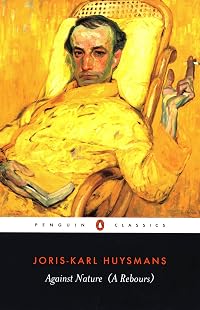
The Picture of Dorian Gray, written by Oscar Wilde, was published in April 1891. The titular Dorian Gray is a decadent dandy of the Victorian era. Concerned with little but appearances, he lives a reckless, nonproductive existence. A crucial event in his life occurs when Dorian meets Lord Henry Wotton in the studio of Basil Hallward, an artist, who has painted a portrait of the breathtakingly beautiful Dorian, now in his early twenties. Lord Wotton intrigues Dorian with his talk of the New Hedonism, which is reflected in the novel by Lord Henry’s giving Dorian a copy of Joris-Karl Huysmans’s À rebours (1884; Against the Grain, 1922), a novel that articulates this philosophy, the basis of which is the achievement of a complete show more realization of one’s nature.
Espousing this new kind of hedonism, Lord Henry suggests that the only things worth pursuing in life are beauty and the fulfilment of the senses. And so Gray, it appears, becomes a sort of Faust, and that evening he goes to the opera with his Mephistopheles, Lord Henry. In the following days, Wotton indeed proves a “bad influence,” for Dorian begins following him in the pursuit of pleasure for the sake of pleasure.
He is busy courting Sybil Vane, a talented young actress, who falls in love with him. Ironically, Sybil’s being in love with Dorian robs her of her ability to act. In time, the very ability that first drew Dorian to Sybil has disappeared, and he rejects her unfeelingly. Having lost Dorian and her acting ability almost simultaneously, Sybil kills herself. Lord Henry, Dorian’s Mephistopheles, convinces Dorian that, in line with the New Hedonism, Sybil’s suicide is an experience that will help him to feel life more intensely and that it can be viewed as nothing but a source of personal growth.
They continue to engage in scandalous activities which erode Dorian’s innocence. Realizing that one day his beauty will fade, Dorian cries out, expressing his desire to sell his soul to ensure that the portrait Basil has painted of him would age rather than himself. Dorian's wish is fulfilled, subsequently plunging him into a series of debauched acts. The portrait serves as a reminder of the effect each act has upon his soul, with each sin being displayed as a disfigurement of his form, or through a sign of aging.
The Picture of Dorian Gray is a classic example of the Victorian novel and one of those books that can effect the reader in a powerful and unique way. The idea of selling your soul to the devil, like the Faust story as related by Marlowe, Goethe and others, is an intriguing image. But there is in Wilde's version a focus on the purity of innocence (as seen in the passage quoted above) that is lost as one lives a life, whether filled with licentiousness or mere everyday experience. Wilde’s novel provoked considerable outrage when it was published. The tenets of the New Hedonism expressed in the book flew in the face of conventional morality to the point that readers were profoundly shocked. Despite these objections, the novel succeeded artistically and attracted many readers. Wilde gave the story his own imprimatur with the artistic twist and thus added to the evidence of his genius that includes the drama, stories, poetry and criticism that he created. show less
Espousing this new kind of hedonism, Lord Henry suggests that the only things worth pursuing in life are beauty and the fulfilment of the senses. And so Gray, it appears, becomes a sort of Faust, and that evening he goes to the opera with his Mephistopheles, Lord Henry. In the following days, Wotton indeed proves a “bad influence,” for Dorian begins following him in the pursuit of pleasure for the sake of pleasure.
He is busy courting Sybil Vane, a talented young actress, who falls in love with him. Ironically, Sybil’s being in love with Dorian robs her of her ability to act. In time, the very ability that first drew Dorian to Sybil has disappeared, and he rejects her unfeelingly. Having lost Dorian and her acting ability almost simultaneously, Sybil kills herself. Lord Henry, Dorian’s Mephistopheles, convinces Dorian that, in line with the New Hedonism, Sybil’s suicide is an experience that will help him to feel life more intensely and that it can be viewed as nothing but a source of personal growth.
They continue to engage in scandalous activities which erode Dorian’s innocence. Realizing that one day his beauty will fade, Dorian cries out, expressing his desire to sell his soul to ensure that the portrait Basil has painted of him would age rather than himself. Dorian's wish is fulfilled, subsequently plunging him into a series of debauched acts. The portrait serves as a reminder of the effect each act has upon his soul, with each sin being displayed as a disfigurement of his form, or through a sign of aging.
The Picture of Dorian Gray is a classic example of the Victorian novel and one of those books that can effect the reader in a powerful and unique way. The idea of selling your soul to the devil, like the Faust story as related by Marlowe, Goethe and others, is an intriguing image. But there is in Wilde's version a focus on the purity of innocence (as seen in the passage quoted above) that is lost as one lives a life, whether filled with licentiousness or mere everyday experience. Wilde’s novel provoked considerable outrage when it was published. The tenets of the New Hedonism expressed in the book flew in the face of conventional morality to the point that readers were profoundly shocked. Despite these objections, the novel succeeded artistically and attracted many readers. Wilde gave the story his own imprimatur with the artistic twist and thus added to the evidence of his genius that includes the drama, stories, poetry and criticism that he created. show less
Members
- Recently Added By
Lists

Unread books
1,063 works; 83 members

Best Satire
188 works; 27 members

Philip Ward's Lifetime Reading Plan
592 works; 22 members
Author Information

1,792+ Works 121,701 Members
Flamboyant man-about-town, Oscar Wilde had a reputation that preceded him, especially in his early career. He was born to a middle-class Irish family (his father was a surgeon) and was trained as a scholarship boy at Trinity College, Dublin. He subsequently won a scholarship to Magdalen College, Oxford, where he was heavily influenced by John show more Ruskin and Walter Pater, whose aestheticism was taken to its radical extreme in Wilde's work. By 1879 he was already known as a wit and a dandy; soon after, in fact, he was satirized in Gilbert and Sullivan's Patience. Largely on the strength of his public persona, Wilde undertook a lecture tour to the United States in 1882, where he saw his play Vera open---unsuccessfully---in New York. His first published volume, Poems, which met with some degree of approbation, appeared at this time. In 1884 he married Constance Lloyd, the daughter of an Irish lawyer, and within two years they had two sons. During this period he wrote, among others, The Picture of Dorian Gray (1891), his only novel, which scandalized many readers and was widely denounced as immoral. Wilde simultaneously dismissed and encouraged such criticism with his statement in the preface, "There is no such thing as a moral or an immoral book. Books are well written or badly written. That is all." In 1891 Wilde published A House of Pomegranates, a collection of fantasy tales, and in 1892 gained commercial and critical success with his play, Lady Windermere's Fan He followed this comedy with A Woman of No Importance (1893), An Ideal Husband (1895), and his most famous play, The Importance of Being Earnest (1895). During this period he also wrote Salome, in French, but was unable to obtain a license for it in England. Performed in Paris in 1896, the play was translated and published in England in 1894 by Lord Alfred Douglas and was illustrated by Aubrey Beardsley. Lord Alfred was the son of the Marquess of Queensbury, who objected to his son's spending so much time with Wilde because of Wilde's flamboyant behavior and homosexual relationships. In 1895, after being publicly insulted by the marquess, Wilde brought an unsuccessful slander suit against the peer. The result of his inability to prove slander was his own trial on charges of sodomy, of which he was found guilty and sentenced to two years of hard labor. During his time in prison, he wrote a scathing rebuke to Lord Alfred, published in 1905 as De Profundis. In it he argues that his conduct was a result of his standing "in symbolic relations to the art and culture" of his time. After his release, Wilde left England for Paris, where he wrote what may be his most famous poem, The Ballad of Reading Gaol (1898), drawn from his prison experiences. Among his other notable writing is The Soul of Man under Socialism (1891), which argues for individualism and freedom of artistic expression. There has been a revived interest in Wilde's work; among the best recent volumes are Richard Ellmann's, Oscar Wilde and Regenia Gagnier's Idylls of the Marketplace , two works that vary widely in their critical assumptions and approach to Wilde but that offer rich insights into his complex character. (Bowker Author Biography) show less
Oscar Wilde has a Legacy Library. Legacy libraries are the personal libraries of famous readers, entered by LibraryThing members from the Legacy Libraries group.
Some Editions
Awards and Honors
Notable Lists
Series
Belongs to Publisher Series
Work Relationships
Common Knowledge
- Canonical title
- The Complete Works of Oscar Wilde
- Original title
- The Complete Stories, Plays and Poems of Oscar Wilde
- Original publication date
- 1880 - 1905
- Related movies
- The Picture of Dorian Gray (1945)
- Original language
- English
- Disambiguation notice
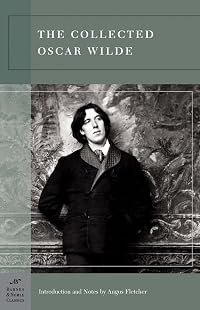
- Please do not combine works of Oscar Wilde with complete works of Oscar Wilde unless you are really really sure they are complete. Also do not combine with The Collected Oscar Wilde from Barnes and Noble Classics... (show all) series as it is not a complete work of Oscar Wilde.
Classifications
Statistics
- Members
- 5,459
- Popularity
- 2,465
- Reviews
- 28
- Rating
- (4.45)
- Languages
- 7 — English, French, German, Italian, Japanese, Portuguese, Spanish
- Media
- Paper, Ebook
- ISBNs
- 116
- ASINs
- 109