
The Discovery of Heaven
by Harry Mulisch
On This Page
Description
"On a cold night in Holland, Max Delius - a hedonist, yet a rhetorically brilliant astronomer who loves fast cars, nice clothes, and women - picks up a hitchhiker, Onno Quist, a cerebral, chaotic philologist who cannot bear the banalities of everyday life. They are like fire and water. But soon after they learn that they were conceived on the same day in 1933, it is clear that something special, even extraordinary, is about to happen." "At the center of their relationship lies the battle show more between humanistic values and technological progress ... and an especially radiant child, Onno's son, Quinten. Quinten's sublimity - in his beauty, intelligence, and demeanor - becomes even more apparent when, after the heavens conspire against Onno and Max, Quinten embarks on a journey that can only be completed by a child with his incredible gifts." "Abounding in philosophical, psychological, and theological inquires, yet laced with humor that is as infectious as it is wilful, The Discovery of Heaven lingers in the mind long after it has been read, offering itself up to many interpretations over time."--BOOK JACKET.Title Summary field provided by Blackwell North America, Inc. All Rights Reserved show lessTags
Recommendations


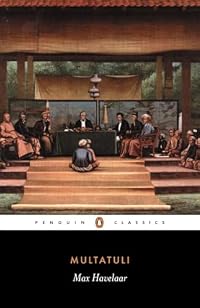




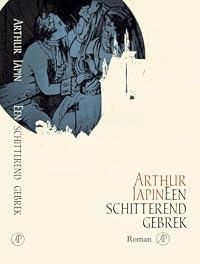


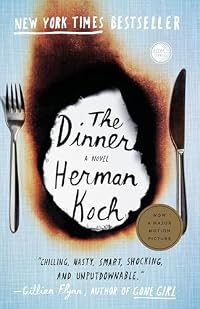


Member Recommendations

MarGup In andere tijd geschreven maar met over een komsten
Member Reviews
The Dutch are still in some ways a Calvinist nation and value industry: short books are given away for nothing in Boekenweek; intolerably long ones are considered masterpieces. The British and Americans, on the other hand, care little for length, but will buy any work of fiction that deals with angels, Solomon's Temple, and the Vatican. Mulisch certainly knew what he was doing when he planned this book as his masterpiece...
Cynicism apart, it is a very impressive read, ranging over practically every topic you can imagine, and absolutely packed with more or less subtle allusions and symbols. Fun for all the family. It does offer a pretty bleak picture of our future (is there such a thing as "pre-apocalyptic literature", I wonder?), and show more Mulisch's treatment of women certainly wouldn't stand up to close scrutiny. One principal female character spends most of the book in a coma; another one is dumped by her boyfriend and then reappears uncomplainingly to resume the relationship 700 pages or so later on; a third has a longstanding and apparently very passionate sexual relationship that is never spoken of or acknowledged in any other way during daylight hours. You get the picture: Het enige recht van de vrouw is het aanrecht. I believe Mulisch (innocently or not) provided quite a bit of employment for feminist critics with this book.
Whilst there is certainly a lot of silliness and petty score-settling, there's also some very thought-provoking stuff, particularly about Mulisch's favourite topic, the effects of the experience of the German occupation and Dutch complicity in the deportation of Jews on the subsequent history of the Netherlands. The story isn't interrupted unduly by all the theorising, and the book rarely stops being entertaining. It also gave me a nudge to listen to some of Janáček's chamber music again, which can't be a bad thing. show less
Cynicism apart, it is a very impressive read, ranging over practically every topic you can imagine, and absolutely packed with more or less subtle allusions and symbols. Fun for all the family. It does offer a pretty bleak picture of our future (is there such a thing as "pre-apocalyptic literature", I wonder?), and show more Mulisch's treatment of women certainly wouldn't stand up to close scrutiny. One principal female character spends most of the book in a coma; another one is dumped by her boyfriend and then reappears uncomplainingly to resume the relationship 700 pages or so later on; a third has a longstanding and apparently very passionate sexual relationship that is never spoken of or acknowledged in any other way during daylight hours. You get the picture: Het enige recht van de vrouw is het aanrecht. I believe Mulisch (innocently or not) provided quite a bit of employment for feminist critics with this book.
Whilst there is certainly a lot of silliness and petty score-settling, there's also some very thought-provoking stuff, particularly about Mulisch's favourite topic, the effects of the experience of the German occupation and Dutch complicity in the deportation of Jews on the subsequent history of the Netherlands. The story isn't interrupted unduly by all the theorising, and the book rarely stops being entertaining. It also gave me a nudge to listen to some of Janáček's chamber music again, which can't be a bad thing. show less
The Discovery of Heaven is a novel of ideas on a large scale, sprawling across science, religion, architecture, politics, philosophy and more. Though intellectual in its preoccupations, it is never didactic: ideas are integrated with the plot and characters and never allowed to get in the way of the story. The overall tone is also light-hearted, though it is not a comic novel. And Mulisch never pushes any of the ideas too far — at least, none of the science was a problem for me, though I'm pretty sensitive to misuse of scientific ideas. I especially appreciated his reflection upon the nature of language and the necessity of words to creation, initiating us into Mulisch’s formally personal world. The book eagerly invites serious show more philosophical questions about the possibility of ever creating anything truly novel. This is one of the few novels that approach the level of Musil or Canetti in my experience. That is as high praise as I can give. show less
Imagine The Da Vinci Code as a novel of ideas, borrowing from Heidegger and Gershom Scholem, weaving together the Holocaust, modern physics, and the history of architecture, bound up in a poignant, laugh-out-loud narrative, so warrantedly providential it would make Henry Fielding weep with envy. That's what you'll discover in The Discovery of Heaven.
Dit boek stond destijds, toen ik nog op de middelbare school zat, op de boekenlijst. Dit boek lezen leverde je 5 punten op. De meeste andere boeken 1, of 2 punten. Ik besloot om die ene student te zijn die het boek zou gaan lezen. Ik was toen...18? De leraar Nederlands was onder de indruk dat het boek op mijn lijstje stond, maar betwijfelde of ik het boek ook daadwerkelijk van begin tot eind had gelezen.
Dat had ik dus wel. Er was niet alles in het boek wat ik begreep, maar juist dat maakte dat ik het boek heerlijk vond om te lezen: stukken lezen, vervolgens stoppen, herlezen, weer stoppen en nadenken. Filosoferen, mijmeren, nadenken. De beschrijvingen, de uitvoerige beschrijvingen en gedachtengangen waren wat me zo aansprak. Ik zou het show more boek, zo'n 15 jaar later, beslist weer eens moeten lezen. show less
Dat had ik dus wel. Er was niet alles in het boek wat ik begreep, maar juist dat maakte dat ik het boek heerlijk vond om te lezen: stukken lezen, vervolgens stoppen, herlezen, weer stoppen en nadenken. Filosoferen, mijmeren, nadenken. De beschrijvingen, de uitvoerige beschrijvingen en gedachtengangen waren wat me zo aansprak. Ik zou het show more boek, zo'n 15 jaar later, beslist weer eens moeten lezen. show less
I was wonderfully enthusiastic about this novel for the first third or so, but by the end I'd decided not to read anything more by Mulisch for a while.
He's chosen to deliver an unredeemedly dark and depressing view of the world, which I have in principle no quarrel with, but he sneaks it up on you in a thoroughly unprincipled manner and then whacks you over the head with it.
The first third of the novel, and the most enjoyable passages for me, mainly concerns the friendship between Onno Quist and Max Delius. This is supposed to be a perfect meeting of minds, and the dialogue between the two crackles and hums and throws off sparks. Unfortunately, it's all downhill from there.
The rest of the book gives, among other things, a litany of show more deaths; minor and major characters alike are moved out of the way as their time is up (one is even hit by a meteorite, I kid you not, although in Mulisch's defence this isn't presented as a coincidence) with a callousness that shouldn't have surprised me, but did. At the same time the friendship between Onno and Max takes a back seat to the upbringing of Onno's son (the mother is one of those casualties I mentioned) and to the slow decline of Max's and Onno's lives and careers.
My major complaint with the novel is the message, the unrelieved antimoral that it delivers, but stylistically the first half is much more satisfying also. Mulisch follows the childhood and youth of Quintin Quist, and devotes a lot of pagespace to the increasingly depressive philosophising of the two friends, but he doesn't present either of these topics particularly convincingly. In Quintin's case the difficulty is basic: Mulisch can't write the world as a child sees it. Quintin is anyway supposed to be a strange child, but the effect Mulisch achieves is of an adult in a tiny body who expresses fully adult thoughts in a stilted parody of childlike language.
A different problem occurs with his adult characters: Mulisch is so eager to present his philosophical ideas that these get in the way of the everyday details of their lives, to the point where the characters become unreal and are left only as puppets or parrots. Since the events they are undergoing are serving only to present a picture of inevitable decline, and the characters' voices are drowned out by Mulisch's, there isn't much left of them at all. (I could make a pretty good case that Mulisch simply dislikes his characters, and isn't willing to give them a life of their own with the dignity that entails.)
Rather a disappointment, then, given the hopes raised by the first couple of hundred pages. show less
He's chosen to deliver an unredeemedly dark and depressing view of the world, which I have in principle no quarrel with, but he sneaks it up on you in a thoroughly unprincipled manner and then whacks you over the head with it.
The first third of the novel, and the most enjoyable passages for me, mainly concerns the friendship between Onno Quist and Max Delius. This is supposed to be a perfect meeting of minds, and the dialogue between the two crackles and hums and throws off sparks. Unfortunately, it's all downhill from there.
The rest of the book gives, among other things, a litany of show more deaths; minor and major characters alike are moved out of the way as their time is up (one is even hit by a meteorite, I kid you not, although in Mulisch's defence this isn't presented as a coincidence) with a callousness that shouldn't have surprised me, but did. At the same time the friendship between Onno and Max takes a back seat to the upbringing of Onno's son (the mother is one of those casualties I mentioned) and to the slow decline of Max's and Onno's lives and careers.
My major complaint with the novel is the message, the unrelieved antimoral that it delivers, but stylistically the first half is much more satisfying also. Mulisch follows the childhood and youth of Quintin Quist, and devotes a lot of pagespace to the increasingly depressive philosophising of the two friends, but he doesn't present either of these topics particularly convincingly. In Quintin's case the difficulty is basic: Mulisch can't write the world as a child sees it. Quintin is anyway supposed to be a strange child, but the effect Mulisch achieves is of an adult in a tiny body who expresses fully adult thoughts in a stilted parody of childlike language.
A different problem occurs with his adult characters: Mulisch is so eager to present his philosophical ideas that these get in the way of the everyday details of their lives, to the point where the characters become unreal and are left only as puppets or parrots. Since the events they are undergoing are serving only to present a picture of inevitable decline, and the characters' voices are drowned out by Mulisch's, there isn't much left of them at all. (I could make a pretty good case that Mulisch simply dislikes his characters, and isn't willing to give them a life of their own with the dignity that entails.)
Rather a disappointment, then, given the hopes raised by the first couple of hundred pages. show less
Hold on to your seat.
Mulisch drives this story across both hemispheres, to the stars and beyond, through multiple generations across the full breadth of the twentieth century, as well as from the beginning of time, between Music and Philosophy, from politics to incest, and all the while maintains a whodunit kind of pacing. Yes, this is a three inch thick cerebral page turner of a book.
The prose just glistens with clarity, yet maintains sufficient intellectual heft to be more than merely amusing. Mulisch draws believeable, charmingly offbeat characters, casts them in complex yet comprehendable situations and runs them through provocative and interesting developments over an extended period, and even lets some of them survive, if more show more than a bit worse for the wear. There are so many authors who really ought to just wish they could do this: I think of Norman Mailer and Ian MacEwan, for example, as decent writers who still pale in comparison.
This is not an overwhelming or heavy work. Discovery of Heaven will not challenge you to truly deep thought and there are few ambiguities to puzzle your way through. While full of cerebration, the choice fruit is all low-hanging. Mulisch's language, while clear and flowing, does not rise (at least in translation) to the truly poetic. This is just a damn good and enjoyable book by a bright and witty storyteller. show less
Mulisch drives this story across both hemispheres, to the stars and beyond, through multiple generations across the full breadth of the twentieth century, as well as from the beginning of time, between Music and Philosophy, from politics to incest, and all the while maintains a whodunit kind of pacing. Yes, this is a three inch thick cerebral page turner of a book.
The prose just glistens with clarity, yet maintains sufficient intellectual heft to be more than merely amusing. Mulisch draws believeable, charmingly offbeat characters, casts them in complex yet comprehendable situations and runs them through provocative and interesting developments over an extended period, and even lets some of them survive, if more show more than a bit worse for the wear. There are so many authors who really ought to just wish they could do this: I think of Norman Mailer and Ian MacEwan, for example, as decent writers who still pale in comparison.
This is not an overwhelming or heavy work. Discovery of Heaven will not challenge you to truly deep thought and there are few ambiguities to puzzle your way through. While full of cerebration, the choice fruit is all low-hanging. Mulisch's language, while clear and flowing, does not rise (at least in translation) to the truly poetic. This is just a damn good and enjoyable book by a bright and witty storyteller. show less
Two Dutch friends, an astronomer and a philologist, each have a relationship with the same woman, leading to dubious parentage for the son she bears. Said son is apparently destined to fulfill a divine mission, as all events are being led by angels for that purpose...
This started quite slowly but once it got going I enjoyed the first half. The dynamic between the friends and the woman they both love is affecting and there's a lot of interesting digressions into one subject or another. But after halfway the focus of the story shifts and I thought it dipped massively, before coming back at the end for the conclusion of the son's mission. Decent, although towards the end I kept thinking that Umberto Eco would have told the last quarter of show more the story far better. show less
This started quite slowly but once it got going I enjoyed the first half. The dynamic between the friends and the woman they both love is affecting and there's a lot of interesting digressions into one subject or another. But after halfway the focus of the story shifts and I thought it dipped massively, before coming back at the end for the conclusion of the son's mission. Decent, although towards the end I kept thinking that Umberto Eco would have told the last quarter of show more the story far better. show less
Members
- Recently Added By
Lists

1001 Books You Must Read Before You Die
1,448 works; 1,132 members

Read the book and saw the movie
1,170 works; 192 members

Favourite Books
1,817 works; 316 members

Recommend the 20 best books you've read in the last five years
2,168 works; 601 members

Favorite Long Books
330 works; 42 members

EU Fiction: 1950-2022
223 works; 70 members

1,001 BYMRBYD Concensus
723 works; 27 members

Canon van de Nederlandse letterkunde
125 works; 5 members

Five star books
1,755 works; 108 members

Books Read in 2017
4,249 works; 129 members
Canon de la narrativa universal del s. XX (cicutadry)
499 works; 3 members

Favorite Books in Translation
320 works; 133 members

Books Read in 2025
4,090 works; 97 members

Best of World Literature
431 works; 51 members
Author Information

124+ Works 11,779 Members
Mulisch's name will go down in history as the writer par excellence of modern myths, and possibly not only in Dutch literary history. Every one of his great novels such as Het Stenen Bruidsbed (The Stone Bridal Bed) (1959), Hoogste Tijd (High Time) (1985), and De Aanslag (The Assault) (1982) is technically based on, or evokes reminiscences of, show more existing classical myths; at the same time, each work is thematically related to the author's own time and experiences, usually World War II. Every one of the more important characters, excluding the main characters who normally serve as narrators or reporters, is an embodiment or personification of an archetype. In The Assault the various characters not only play completely different roles in the killing of a German officer by members of the Dutch Resistance movement, but they also represent distinct types. The action is also much more than an incident. The protagonist, Anton Steenwijk, spends a lifetime trying to solve the puzzle consisting of the various causes and effects relative to the fatal act. He does this not as a detective but as a normal, thinking human being who is interested in knowing where he came from and where he is headed. The puzzle that presents itself to him is as complex, yet as logical, as the waves created by a passing ship, reverberating indefinitely, even when the ship has disappeared from sight. Mulisch is, with Wolkers, Hermans, and Vestdijk, one of the most talented novelists of his generation, but he may be expected to outlive all three others because of the classical nature of his work, classical here meaning "of primary significance for all people of all times." (Bowker Author Biography) Harry Mulisch is the author of such internationally bestselling novels as "The Assault", which was made into the film that won the 1987 Oscar for Best Foreign Film, & "The Discovery of Heaven". He has also published short stories, essays, poetry, plays, & philosophical works. He lives in Amsterdam. (Bowker Author Biography) show less
Some Editions
Awards and Honors
Awards
Notable Lists
Series
Belongs to Publisher Series
Work Relationships
Is contained in
Inspired
Has as a reference guide/companion
Common Knowledge
- Canonical title
- The Discovery of Heaven
- Original title
- De ontdekking van de hemel
- Original publication date
- 1992-10-?? (1e édition originale néerlandaise, Du monde entier, Gallimard) (1e édition originale néerlandaise, Du monde entier, Gallimard); 1999-03-23 (1e traduction et édition française, Du monde entier, Gallimard) (1e traduction et édition française, Du monde entier, Gallimard); 2002-01-30 (Réédition française, Folio, Gallimard) (Réédition française, Folio, Gallimard)
- Important places
- The Netherlands
- Related movies
- De ontdekking van de hemel (2001 | IMDb)
- First words
- Can I have a moment?
Precies om middernacht zorgde ik voor kortsluiting - Quotations
- This has nothing to do with the toasters. It has begun!
- Last words
- (Click to show. Warning: May contain spoilers.)Geef antwoord!
(Click to show. Warning: May contain spoilers.)Answer me! - Original language
- Dutch
Classifications
- Genres
- General Fiction, Fiction and Literature
- DDC/MDS
- 839.31364 — Literature & rhetoric German & related literatures Other Germanic literatures Netherlandish literatures Dutch Dutch fiction 20th Century 1945-1999
- LCC
- PT5860 .M85 .O57 — Language and Literature German, Dutch and Scandinavian literatures Dutch literature Individual authors or works 1800-1960
- BISAC
Statistics
- Members
- 3,282
- Popularity
- 5,153
- Reviews
- 63
- Rating
- (4.11)
- Languages
- 11 — Czech, Dutch, English, French, German, Hungarian, Italian, Korean, Polish, Spanish, Swedish
- Media
- Paper, Audiobook, Ebook
- ISBNs
- 42
- UPCs
- 1
- ASINs
- 12