On This Page
Description
Devoted listeners of Lady Trent's earlier memoirs, A Natural History of Dragons and The Tropic of Serpents, may believe themselves already acquainted with the particulars of her historic voyage aboard the Royal Survey Ship Basilisk, but the true story of that illuminating, harrowing, and scandalous journey has never been revealed-until now. Six years after her perilous exploits in Eriga, Isabella embarks on her most ambitious expedition yet: a two-year trip around the world to study all show more manner of dragons in every place they might be found. From feathered serpents sunning themselves in the ruins of a fallen civilization to the mighty sea serpents of the tropics, these creatures are a source of both endless fascination and frequent peril. Accompanying her is not only her young son, Jake, but a chivalrous foreign archaeologist whose interests converge with Isabella's in ways both professional and personal. Science is, of course, the primary objective of the voyage, but Isabella's life is rarely so simple. She must cope with storms, shipwrecks, intrigue, and warfare, even as she makes a discovery that offers a revolutionary new insight into the ancient history of dragons. show lessTags
Recommendations




























Member Reviews
In the interest of full disclosure, I majored in Anthropology and Evolutionary Biology so these books are like super-strength catnip to me. Written in the form of a memoir by the venerable Lady Trent, these novels are adventurous tales about our protagonist when she was a younger woman, but just as importantly they also explore her lifetime of scientific study and research. As such, I find this series extremely hard to resist. Ethnographic narratives? My heart goes all a-flutter. Taxonomy and biodiversity? Help, I swoon! Throw in dragons to complete the trifecta, and stick a fork in me, I’m done.
Voyage of the Basilisk picks up a few years after the events of the last book, and once again Isabella is making preparations to leave show more Scirland in order to continue her scientific study of dragons. There will be several major differences about this particular expedition, however. Isabella will be leading it, for one; no longer accompanied by her old associate and benefactor Lord Hilford, the majority of all decisions will be falling on her shoulders. Isabella has also decided to bring along her son Jake, who is now old enough to travel. And finally, this upcoming expedition will be her longest and most ambitious one yet: two years aboard the Basilisk, a royal survey ship hired to sail her and her party around the world in order to study all manner of dragonkin.
Dragons are of course what Isabella desires to see the most. But as we’ve already seen in the previous two installments, everywhere Isabella travels, her adventures also put her in contact with the local population. In many cases, she ends up living with them and immersed in their culture. These books are as much about dragons as they are about the world Isabella live in, which I find is one of the most unique aspects about this series. Unlike a lot of other books featuring dragons, the ones in here are not intrinsically magical or preternatural. They, along with the native flora, fauna, and even native peoples in their habitat are all part of the natural living system. For that reason, I’ve told people before not to read this series solely for the dragons, and instead read it for the whole package.
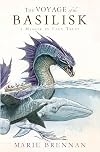
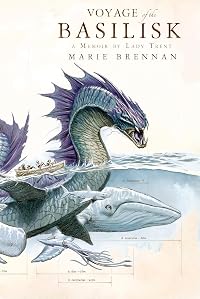
As much as I enjoyed this book, it was not what I’d expected at all. From the description and cover, I immediately thought “Maritime/Nautical Fantasy”. In truth, though Isabella does spend the majority of this book traveling on the high seas, the main story doesn’t really start until halfway when the Basilisk gets shipwrecked in the tropics and the characters find themselves as guests of the local islanders. In contrast, the first half is decidedly lighter on plot as Isabella flits from one place to next, searching for dragons to observe. The overall pacing follows a similar pattern of the first two books, where the beginning was mostly made up of a series of short anecdotes, with the meat of story coming much later. Fans of the previous novels therefore should find Voyage of the Basilisk familiar and to their liking.
Just as Isabella’s dragons evolve, so does her character development. As her confidence in her knowledge and skills increases, she starts taking on greater challenges. Leading the expedition is the first step. This book also sees her having the courage to formulate her own scientific hypotheses, as well as the courage to admit when they’re wrong.
For the first time in this series, Isabella’s son Jake is also a major character. Isabella knows her maternal instincts have never been strong, not something easy for her to admit. But as Jake grows, her feelings toward motherhood begin changing and she starts to see her son as a young man with his own hopes and dreams, and not just a reminder of her late husband. This side plot really touched me, recalling Isabella’s guilt over putting her research ahead of her family in The Tropic of Serpents and comparing that to her relationship with Jake now. I like how amidst the adventure and the science in these books, there’s always an emotional side to the story.
This novel builds significantly on the previous books. First of all, Isabella’s voyage on the Basilisk expanded the scope of the world tremendously, from the luscious jungles of Coyahuac to the volcanic islands of Keonga. We encounter many new species of dragons, including sea serpents, fire lizards, feathered drakes, and more. Aside from Jake, new characters include Aekinitos, the eccentric captain of the Basilisk, and Suhail, an archaeologist specializing in ancient draconic ruins. Isabella befriends the latter and then becomes quite taken with him, and their dynamic is so wonderful that I really hope we’ll see him again someday.
I really love this series, and my fondness only grows with every new adventure. I rarely make such a deep connection to a main character, but three books later, “Lady Trent” feels incredibly real for me. There’s so much about her past that has yet to be revealed, and I can’t wait for the next installment of this series. More expeditions, more science, and of course more dragons! show less
Voyage of the Basilisk picks up a few years after the events of the last book, and once again Isabella is making preparations to leave show more Scirland in order to continue her scientific study of dragons. There will be several major differences about this particular expedition, however. Isabella will be leading it, for one; no longer accompanied by her old associate and benefactor Lord Hilford, the majority of all decisions will be falling on her shoulders. Isabella has also decided to bring along her son Jake, who is now old enough to travel. And finally, this upcoming expedition will be her longest and most ambitious one yet: two years aboard the Basilisk, a royal survey ship hired to sail her and her party around the world in order to study all manner of dragonkin.
Dragons are of course what Isabella desires to see the most. But as we’ve already seen in the previous two installments, everywhere Isabella travels, her adventures also put her in contact with the local population. In many cases, she ends up living with them and immersed in their culture. These books are as much about dragons as they are about the world Isabella live in, which I find is one of the most unique aspects about this series. Unlike a lot of other books featuring dragons, the ones in here are not intrinsically magical or preternatural. They, along with the native flora, fauna, and even native peoples in their habitat are all part of the natural living system. For that reason, I’ve told people before not to read this series solely for the dragons, and instead read it for the whole package.
As much as I enjoyed this book, it was not what I’d expected at all. From the description and cover, I immediately thought “Maritime/Nautical Fantasy”. In truth, though Isabella does spend the majority of this book traveling on the high seas, the main story doesn’t really start until halfway when the Basilisk gets shipwrecked in the tropics and the characters find themselves as guests of the local islanders. In contrast, the first half is decidedly lighter on plot as Isabella flits from one place to next, searching for dragons to observe. The overall pacing follows a similar pattern of the first two books, where the beginning was mostly made up of a series of short anecdotes, with the meat of story coming much later. Fans of the previous novels therefore should find Voyage of the Basilisk familiar and to their liking.
Just as Isabella’s dragons evolve, so does her character development. As her confidence in her knowledge and skills increases, she starts taking on greater challenges. Leading the expedition is the first step. This book also sees her having the courage to formulate her own scientific hypotheses, as well as the courage to admit when they’re wrong.
For the first time in this series, Isabella’s son Jake is also a major character. Isabella knows her maternal instincts have never been strong, not something easy for her to admit. But as Jake grows, her feelings toward motherhood begin changing and she starts to see her son as a young man with his own hopes and dreams, and not just a reminder of her late husband. This side plot really touched me, recalling Isabella’s guilt over putting her research ahead of her family in The Tropic of Serpents and comparing that to her relationship with Jake now. I like how amidst the adventure and the science in these books, there’s always an emotional side to the story.
This novel builds significantly on the previous books. First of all, Isabella’s voyage on the Basilisk expanded the scope of the world tremendously, from the luscious jungles of Coyahuac to the volcanic islands of Keonga. We encounter many new species of dragons, including sea serpents, fire lizards, feathered drakes, and more. Aside from Jake, new characters include Aekinitos, the eccentric captain of the Basilisk, and Suhail, an archaeologist specializing in ancient draconic ruins. Isabella befriends the latter and then becomes quite taken with him, and their dynamic is so wonderful that I really hope we’ll see him again someday.
I really love this series, and my fondness only grows with every new adventure. I rarely make such a deep connection to a main character, but three books later, “Lady Trent” feels incredibly real for me. There’s so much about her past that has yet to be revealed, and I can’t wait for the next installment of this series. More expeditions, more science, and of course more dragons! show less
Six years after their trip to Eriga in The Tropic of Serpents, Isabella Camherst and her colleague Tom Wilker set out on their next expedition -- a two-year voyage to study sea serpents and other draconic creatures.
I liked this one so much, beginning with Isabella’s decision to bring her nine year old son along. I understand why it wasn’t practical to take a then-toddler on her trip to Eriga, and also how Isabella’s upbringing encouraged her to underestimate the value of a child’s bond with their parent(s), but that decision to leave him behind had bothered me.
So I was pleased that Jake was included this time round, and not just because it alleviated my concerns for his emotional wellbeing. It’s interesting to see Isabella show more navigate that personal relationship (and having to take into account how Jake is affected by various circumstances), and satisfying to see her find a positive way to combine motherhood with pursuing her study of dragons. I also liked seeing Jake take to shipboard life so enthusiastically
It didn’t occur to me as I was reading it but having read Voyage of the Dawn Treader when I was young and impressionable undoubtedly predisposed me to finding this sort of adventure appealing. Despite the apparent discomforts and dangers of ocean travel, I really enjoyed the visual experience this story conjured up! Especially after they arrive at the island of Keonga.
I finished this book and immediately embarked on the next one!
I liked this one so much, beginning with Isabella’s decision to bring her nine year old son along. I understand why it wasn’t practical to take a then-toddler on her trip to Eriga, and also how Isabella’s upbringing encouraged her to underestimate the value of a child’s bond with their parent(s), but that decision to leave him behind had bothered me.
So I was pleased that Jake was included this time round, and not just because it alleviated my concerns for his emotional wellbeing. It’s interesting to see Isabella show more navigate that personal relationship (and having to take into account how Jake is affected by various circumstances), and satisfying to see her find a positive way to combine motherhood with pursuing her study of dragons. I also liked seeing Jake take to shipboard life so enthusiastically
It didn’t occur to me as I was reading it but having read Voyage of the Dawn Treader when I was young and impressionable undoubtedly predisposed me to finding this sort of adventure appealing. Despite the apparent discomforts and dangers of ocean travel, I really enjoyed the visual experience this story conjured up! Especially after they arrive at the island of Keonga.
I finished this book and immediately embarked on the next one!
show less
“If you mean, do I believe that I am the reincarnation of an inhuman dragon-creature from a Puian myth -- then no, of course not. But taking the term in its simpler sense… then yes, perhaps I am dragon-spirited.”
Suhail’s eyebrows went up, and I elaborated. “I have been mad for dragons ever since I was a child, and this, they say, is a sign that marks one as ke’anaka’i. Such people also transgress against the norms of society, particularly those which constrain behaviour on the basis of sex; this, too, describes me quite well. And --” I hesitated. “This will sound peculiar, I know. But this love I have for dragons, my compulsion to understand them… I have thought of it before as if there were a dragon within me. A part of my spirit. I do not believe it is true in any mystical sense, of course; I am as human as you are. But in the metaphorical sense, yes. ‘Dragon-spirited’ is as good a term for me as any.”
This was delightful. I haven't read [b:Voyage of the Beagle|183645|Voyage of the Beagle|Charles Darwin|https://images.gr-assets.com/books/1309211714s/183645.jpg|177481] by [a:Charles Darwin|12793|Charles Darwin|https://images.gr-assets.com/authors/1398693802p2/12793.jpg] yet, so I'm not sure if I missed references (and I imagine actual Victorian travelogues are more verbally dense, but then again it might be analogous to her in-world book, Around the World in Search of Dragons).
I'm a fan of natural history, so combining natural history and fantasy means I adore this series. And in the third installment of the memoirs of Lady Trent, we go seaborne: first towards the arctic in search of sea serpents, then to not!South America where we show more meet our new archaeologist friend who happens to own a diving bell, and then through a bit of sailing and political strife end up in not!Hawaii. All the while, Isabella struggles over how dragon taxonomy should work: do the classical bins fit, or are there more subtle gradients, especially given sea serpents and fire lizards have some features but not all? I cannot recall other fiction books that consider their zoology like this and if anyone knows of any, please mention them in the comments!
As in [b:The Tropic of Serpents|17910078|The Tropic of Serpents (The Memoirs of Lady Trent #2)|Marie Brennan|https://images.gr-assets.com/books/1372990377s/17910078.jpg|25095531], analogues to real world cultures are done well, with shades of historical attitudes but without making our heroine either a historically accurate but not fun jerk or out-of-place with modern sensibilities. Gender and roles in not!Hawaii in particular are handled gracefully-a third gender/transgender category exists in the story and is plot relevant, but not dwelled on like a afterschool Very Special Episode and is treated as normal by the not!Hawaiians. show less
I'm a fan of natural history, so combining natural history and fantasy means I adore this series. And in the third installment of the memoirs of Lady Trent, we go seaborne: first towards the arctic in search of sea serpents, then to not!South America where we show more meet our new archaeologist friend who happens to own a diving bell, and then through a bit of sailing and political strife end up in not!Hawaii. All the while, Isabella struggles over how dragon taxonomy should work: do the classical bins fit, or are there more subtle gradients, especially given sea serpents and fire lizards have some features but not all? I cannot recall other fiction books that consider their zoology like this and if anyone knows of any, please mention them in the comments!
As in [b:The Tropic of Serpents|17910078|The Tropic of Serpents (The Memoirs of Lady Trent #2)|Marie Brennan|https://images.gr-assets.com/books/1372990377s/17910078.jpg|25095531], analogues to real world cultures are done well, with shades of historical attitudes but without making our heroine either a historically accurate but not fun jerk or out-of-place with modern sensibilities. Gender and roles in not!Hawaii in particular are handled gracefully-
Nice. Politics and propriety still interrupt the fascinating study of dragons, and I still hate that I can't figure out where anything is - the new names given (what appear to be) approximately the same nations and peoples that we had drive me nuts. Scirling is English, Yelangese is...Chinese? Japanese? Not sure where Suhail is from - Saudi Arabia, Persia, somewhere in that area. I have no idea where they were when she caught dengue fever - Asia? Africa? Is the Broken Sea Indonesia? It leaves me floundering and throws me out of the story at many points. Maybe the paper books have maps, but the ebooks I'm reading don't (or the maps they do have don't correspond to anywhere I'm familiar with - I don't recognize those coastlines). That show more aside, fascinating story, rich characters, settings, and events, next please. show less
I'm good and hooked! The slightly arch style of Isabel Camherst's memoir took a bit of getting used to, but I'm now I'm an avid and awed admirer of hers, just as if I were a Scirling native reading about her fabulous exploits. There is a steampunkish element to this series, as it is a very Victorian era time, but really it is about the dragons that live in this uni. Entirely plausible dragons, I might add. She has permission to write up what really happened on her voyage around the world studying dragons as enough time has passed so that the truth won't hurt diplomatic relations. Isabel loves dragons, but she is racing to save them. Dragonbone, when preserved, is the hardest and strongest and lightest material in existence and she is show more hoping if she can study it enough she can save dragons from being exterminated for use of the bone. She lives in a society where women have few rights, are not regarded as "serious" in any significant way, and are expected to behave with propriety. Isabel doesn't fit, her drive is too strong. These are a lot of fun, very consistent world-building and great character development.! **** show less
Very enjoyable continuation of the series -- I delight in watching this fictional history play out as avidly as any realistic one, and I care deeply about the characters. Lady Trent is so pragmatic, dogged, scientific to her fingernails and yet whimsical that I can't help but love her; not least for her lack of moralistic judgements.
They journey now by boat, tracking sea serpents and ancient cultures across an island nation. Absolutely captivating.
They journey now by boat, tracking sea serpents and ancient cultures across an island nation. Absolutely captivating.
If it weren’t for the fact that Voyage of the Basilisk is the third volume in the Lady Trent series, I’d have to say there’s nothing else out there like it. Instead, I suppose I’ll say there are only two books out there like Voyage of the Basilisk, and both of them are, not coincidentally, also by Marie Brennan.
Lady Trent is a remarkable woman. Living in an alternate universe at a time that seems analogous to the Victorian era, she travels her world as a field biologist, observing the rarest, most imposing creatures: dragons and their relatives in many forms. Some of them are land dwelling, others aquatic—there’s even an ocean-going giant fire turtle. While she has some of the sensibilities of her time, she never allows show more these to get in the way of her scientific pursuits. She dons trousers on expeditions, takes to the sea for years with her young son in tow, and even—gasp!—goes on expedition with groups of male scientists.
Lady Trent is a woman ahead of her time, whatever that time actually is. To give readers a taste of the sort of woman she is, here’s her depiction of the plight of governesses in her era:
I imagine many of my readers are aware of the awkward position in which governesses often find themselves—or rather, the awkward position into which their male employers often put them, for it does no one any service to pretend this happens by some natural and inexorable process, devoid of connection with anyone’s behavior.
Lady Trent approaches science with the same precision she uses in her observations of the mores of her time. She takes field notes, studies carcases, translates ancient glyphs, untangles evolutionary trees. She talks (or writes) of ovipositors, vestigal limbs, artificial synthesis of dragon bones.
If you know a young woman who’s dreaming of a career in the sciences and who enjoys books where women do more (much, much more!) than primp, pout, and stand about waiting to be rescued by men, she needs to meet Lady Trent. The balance of the rational and the fantastic in her travels is positively addictive. show less
Lady Trent is a remarkable woman. Living in an alternate universe at a time that seems analogous to the Victorian era, she travels her world as a field biologist, observing the rarest, most imposing creatures: dragons and their relatives in many forms. Some of them are land dwelling, others aquatic—there’s even an ocean-going giant fire turtle. While she has some of the sensibilities of her time, she never allows show more these to get in the way of her scientific pursuits. She dons trousers on expeditions, takes to the sea for years with her young son in tow, and even—gasp!—goes on expedition with groups of male scientists.
Lady Trent is a woman ahead of her time, whatever that time actually is. To give readers a taste of the sort of woman she is, here’s her depiction of the plight of governesses in her era:
I imagine many of my readers are aware of the awkward position in which governesses often find themselves—or rather, the awkward position into which their male employers often put them, for it does no one any service to pretend this happens by some natural and inexorable process, devoid of connection with anyone’s behavior.
Lady Trent approaches science with the same precision she uses in her observations of the mores of her time. She takes field notes, studies carcases, translates ancient glyphs, untangles evolutionary trees. She talks (or writes) of ovipositors, vestigal limbs, artificial synthesis of dragon bones.
If you know a young woman who’s dreaming of a career in the sciences and who enjoys books where women do more (much, much more!) than primp, pout, and stand about waiting to be rescued by men, she needs to meet Lady Trent. The balance of the rational and the fantastic in her travels is positively addictive. show less
Members
- Recently Added By
Lists

2016 Hugo Eligible Novels
90 works; 31 members

Books Read in 2016
4,666 works; 199 members
Author Information

98+ Works 11,525 Members

Marie Brennan is a LibraryThing Author, an author who lists their personal library on LibraryThing.
Some Editions
Awards and Honors
Awards
Series

Belongs to Publisher Series
Work Relationships
Common Knowledge
- Canonical title
- The Voyage of the Basilisk
- Original publication date
- 2015-03-31
- People/Characters
- Isabella, Lady Trent; Thomas Wilker; Suhail; Capt. Dione Aekinitos; Jacob Camherst; Heali'i (show all 19); Natalie Oscott; Abigail Carew; Frederick Kemble; Wademi n Oforiro Dara; Miriam Farnswood; Feodor Lukovich Gavrilenko; Khüen; Waikango; Pa'oarakiki; Wali; Apoa; Liluakame; Princess Miriam
- Important places
- Scirling; Keonga
- First words
- Depending on your temperament, you may be either pleased or puzzled to see that I have chosen to include my time upon the Basilisk in my memoirs.
- Last words
- (Click to show. Warning: May contain spoilers.)It was that plaster cast, and all of the questions it created.
- Original language
- English
Classifications
Statistics
- Members
- 902
- Popularity
- 29,723
- Reviews
- 43
- Rating
- (4.05)
- Languages
- English, French, German, Polish
- Media
- Paper, Audiobook, Ebook
- ISBNs
- 21
- ASINs
- 7