On This Page
Description
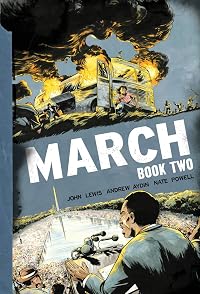
After the success of the Nashville sit-in movement, John Lewis' commitment to change through nonviolence is stronger than ever — but as he and his fellow Freedom Riders board a bus into the vicious heart of the deep south, they will be tested like never before. Faced with beatings, police brutality, imprisonment, arson, and even murder, the movement's young activists place their lives on the line while internal conflicts threaten to tear them apart.But their courage will attract the notice show more of powerful allies, from Martin Luther King, Jr. to Attorney General Robert F. Kennedy... and once Lewis is elected chairman of the Student Nonviolent Coordinating Committee, this 23-year-old will be thrust into the national spotlight, becoming one of the "Big Six" leaders of the civil rights movement and a central figure in the landmark 1963 March on Washington for Jobs and Freedom.. show less
Tags
Recommendations


Member Reviews
So. Very. Good. The whole trilogy is highly recommended.
This graphic novel series recounts civil rights leader and US Representative John Lewis' childhood and involvement in the civil rights movement, from restaurant sit-ins in Nashville all the way to Selma and the passage of the 1965 Voting Rights Act. This moving personal and societal history is framed as memories coming to him on the day of President Obama's inauguration in January 2009.
The courage these people had, it takes my breath away. To know you could be jailed, beaten, or killed. To have your compatriots murdered worked with your cause and for your organization. To face government and police and county registrars actively, loudly, and proudly - and unlawfully - refusing to show more allow you to register to vote, to peacefully assemble; who would stop at nothing to prevent having to share power. In the face of that, to stand up again and again to march and protest, all for the right to vote. These folks are American heroes.
Using the graphic format - stark black and white - was powerful. The artist did an amazing job. An example: the bleak night-of-the-soul moments, where text was white against a mostly black page, the words dripping away into silence. Or the showing the movement of an arm holding a billy club arcing across the page - linear format fallen by the wayside - as it descended towards someone's head.
I was especially moved by stories around the passage of the Voting Rights Act in volume 3 and the quotes from President Johnson's speeches of the time. (This was also my reaction to the movie Selma; also highly recommended). The right to vote, the ability to vote, is the true cornerstone of democracy. African-Americans had that legal right in the US for 100 years at the time of the Civil Rights movement, but most did not have the ability, and systemic forces were bent on keeping that racist status quo for 100 years.
So far we've come and also so far back we've slid. The fierce fight for the right to vote - that people gave their lives for - that right has been chipped away at in so many states (and so many from the South!) that want to suppress some categories of voters, and by the Supreme Court as well. Those 100 years of Jim Crow and voter suppression live on in new waves of voter intimidation and disenfranchisement. And, just like elections when people of color were prevented from registering to vote, elections today are putting people who historically had a lot of power into elected office and silencing the voice of true democracy.
This trilogy is a great way to learn about - or teach - this important part of American history, and the lessons it has for us today. show less
This graphic novel series recounts civil rights leader and US Representative John Lewis' childhood and involvement in the civil rights movement, from restaurant sit-ins in Nashville all the way to Selma and the passage of the 1965 Voting Rights Act. This moving personal and societal history is framed as memories coming to him on the day of President Obama's inauguration in January 2009.
The courage these people had, it takes my breath away. To know you could be jailed, beaten, or killed. To have your compatriots murdered worked with your cause and for your organization. To face government and police and county registrars actively, loudly, and proudly - and unlawfully - refusing to show more allow you to register to vote, to peacefully assemble; who would stop at nothing to prevent having to share power. In the face of that, to stand up again and again to march and protest, all for the right to vote. These folks are American heroes.
Using the graphic format - stark black and white - was powerful. The artist did an amazing job. An example: the bleak night-of-the-soul moments, where text was white against a mostly black page, the words dripping away into silence. Or the showing the movement of an arm holding a billy club arcing across the page - linear format fallen by the wayside - as it descended towards someone's head.
I was especially moved by stories around the passage of the Voting Rights Act in volume 3 and the quotes from President Johnson's speeches of the time. (This was also my reaction to the movie Selma; also highly recommended). The right to vote, the ability to vote, is the true cornerstone of democracy. African-Americans had that legal right in the US for 100 years at the time of the Civil Rights movement, but most did not have the ability, and systemic forces were bent on keeping that racist status quo for 100 years.
So far we've come and also so far back we've slid. The fierce fight for the right to vote - that people gave their lives for - that right has been chipped away at in so many states (and so many from the South!) that want to suppress some categories of voters, and by the Supreme Court as well. Those 100 years of Jim Crow and voter suppression live on in new waves of voter intimidation and disenfranchisement. And, just like elections when people of color were prevented from registering to vote, elections today are putting people who historically had a lot of power into elected office and silencing the voice of true democracy.
This trilogy is a great way to learn about - or teach - this important part of American history, and the lessons it has for us today. show less
John Lewis, noted Civil Rights Activist and Georgia Congressman, can now add another fabulous moniker to his name: National Book Award Winner. On November 16th, 2016, he won the National Book Award (in the Young Readers category) for his book “March: Book 3”, the conclusion to his autobiographical graphic novel series about his time during the Civil Rights Movement. I caught his acceptance speech, and like many other people, cried deeply because I was so happy for him, and it clearly meant so so much on so many levels. By total coincidence, I had just read “March: Book 2” that morning. It had been awhile since I read “Book 1”, and was playing catch up. So then all I had to do was wait for “Book 3” to come in, vowing that show more once it did I was going to review the entire work as a whole. Because that’s what the “March” Trilogy is: it’s one large story about a remarkable man during a tumultuous time, a story about a movement that changed the nation and a movement that seems all the more relevant today. So I waited. And “Book 3” finally came in for me. So now, let me tell you about this fabulous series.
“March: Book 1” starts with Lewis’s childhood as the son of a sharecropper in rural Alabama and goes through the Lunch Counter Protests in Nashville. From a young age Lewis had a drive and a passion to lead and learn, his early aspirations of being a preacher evolving into the leadership and commitment that he put forth while in the Nashville Student Movement, and then into the broader Civil Rights Movement as a whole. “March: Book 2” talks about his time with the Freedom Riders and the violence they faced during their non violent protests and demonstrations, all leading up to the March on Washington and Martin Luther King Jr.’s “I Have A Dream” speech. This book deals more with the growing aggression of the white citizens and government, as well as the Federal Government starting to waffle and teeter and struggle with the role that it should be playing. It’s also the book that shows Lewis and his own inner struggles, as while non violence is always the mission and the goal, his resentment and anger threatens to boil over. “March: Book 3” is the conclusion, and addresses Freedom Summer, Voting Rights, and Selma. And this story is told all within the frame of the Inauguration of President Barack Obama. Stunning framework, absolutely beautiful. There are multiple parallels between things in “Book 1” that come up again in “Book 3”, and there are themes that link all of them together not just with Lewis, but with other prominent figures as well. Lewis sets out to tell all of their stories as best he can, and the result is one of the best damn graphic novel series I have ever read.
This series is so powerful and personal, and it goes to show just how remarkable John Lewis is. He’s one of the ‘Big Six’, aka one of the most influential members of the Civil Rights Movement, and one of the only ones left, as he reminds us in “Book 1”. These books are very straight forward and simple, but they are so honest and personal that the power they have is immense. I found myself crying many times during my reads of all these books, but also laughing, and cheering, and seething. Lewis brought out so many emotions in me with his story, and his immense talent as a storyteller comes through, just as his charisma does. We get to see the story of the Civil Rights Movement through his eyes, and he tells us the stories of those involved within the movement and those who influenced it from the outside as well. Yes, at times these books are violent, and upsetting, but they need to be, because the horrors that fell upon many people during their non violent protests must never be forgotten. I think that the entirety is an accomplishment, but I understand why they gave the National Book Award to “Book 3”. After all, while it is probably symbolic of awarding the whole darn thing, I think that “Book 3” was the most powerful in terms of emotion being served, be it pride, fear, rage, or determination. It certainly was the one that had me weeping from the get go, as the very first moment was the bombing of the 16th Baptist Church that killed four little girls. The violence is absolutely horrifying, but it cannot be forgotten or glossed over. It absolutely cannot. “March: Book 3” also was the one to really address the differences of ideologies within the movement as a whole, not just between King and X, but Lewis and SNCC as well. And Lewis also has no qualms addressing the fact that LBJ, while he did ultimately get things going on a Federal level, was incredibly reluctant to do much in terms of help until he absolutely HAD to. I think that realities get lost in the historical narratives that come in our educations, and that is absolutely why the “March” Trilogy is fundamental reading when it comes to the Civil Rights Movement in this country.
And, like other graphic novels before it, I want to address the artwork in this series. Because it is beautiful in it’s simplicity, and yet powerful in it’s design. It’s all black and white, and stark and striking on every page. Nate Powell brings the story to life on the page, and he did it both with bits of humor to go along with the hope, horror, and courage. There were bits of realism to accompany the distinct style, but it always felt very tangible and very authentic. As I mentioned before, the illustrations do not gloss over the violence that was prevalent during the time, and while it certainly is disturbing, it’s done in a way that could never be dismissed as exploitative or ‘over the top’. It is incredibly honest and upsetting, but it needs to be. The reader needs to be upset and outraged by it. Because it IS upsetting, and it is outrageous.
I cannot stress enough how important the “March”Trilogy is in these uncertain and scary times. John Lewis is a treasure and an inspiration, and I feel that this is required reading. Get this in schools, get this in curriculums, get this in peoples hands. And you, you should likewise go out and get your hands on this series. You will not regret it. You will learn something. And you will be moved. Thank you, John Lewis. Thank you for so much. show less
“March: Book 1” starts with Lewis’s childhood as the son of a sharecropper in rural Alabama and goes through the Lunch Counter Protests in Nashville. From a young age Lewis had a drive and a passion to lead and learn, his early aspirations of being a preacher evolving into the leadership and commitment that he put forth while in the Nashville Student Movement, and then into the broader Civil Rights Movement as a whole. “March: Book 2” talks about his time with the Freedom Riders and the violence they faced during their non violent protests and demonstrations, all leading up to the March on Washington and Martin Luther King Jr.’s “I Have A Dream” speech. This book deals more with the growing aggression of the white citizens and government, as well as the Federal Government starting to waffle and teeter and struggle with the role that it should be playing. It’s also the book that shows Lewis and his own inner struggles, as while non violence is always the mission and the goal, his resentment and anger threatens to boil over. “March: Book 3” is the conclusion, and addresses Freedom Summer, Voting Rights, and Selma. And this story is told all within the frame of the Inauguration of President Barack Obama. Stunning framework, absolutely beautiful. There are multiple parallels between things in “Book 1” that come up again in “Book 3”, and there are themes that link all of them together not just with Lewis, but with other prominent figures as well. Lewis sets out to tell all of their stories as best he can, and the result is one of the best damn graphic novel series I have ever read.
This series is so powerful and personal, and it goes to show just how remarkable John Lewis is. He’s one of the ‘Big Six’, aka one of the most influential members of the Civil Rights Movement, and one of the only ones left, as he reminds us in “Book 1”. These books are very straight forward and simple, but they are so honest and personal that the power they have is immense. I found myself crying many times during my reads of all these books, but also laughing, and cheering, and seething. Lewis brought out so many emotions in me with his story, and his immense talent as a storyteller comes through, just as his charisma does. We get to see the story of the Civil Rights Movement through his eyes, and he tells us the stories of those involved within the movement and those who influenced it from the outside as well. Yes, at times these books are violent, and upsetting, but they need to be, because the horrors that fell upon many people during their non violent protests must never be forgotten. I think that the entirety is an accomplishment, but I understand why they gave the National Book Award to “Book 3”. After all, while it is probably symbolic of awarding the whole darn thing, I think that “Book 3” was the most powerful in terms of emotion being served, be it pride, fear, rage, or determination. It certainly was the one that had me weeping from the get go, as the very first moment was the bombing of the 16th Baptist Church that killed four little girls. The violence is absolutely horrifying, but it cannot be forgotten or glossed over. It absolutely cannot. “March: Book 3” also was the one to really address the differences of ideologies within the movement as a whole, not just between King and X, but Lewis and SNCC as well. And Lewis also has no qualms addressing the fact that LBJ, while he did ultimately get things going on a Federal level, was incredibly reluctant to do much in terms of help until he absolutely HAD to. I think that realities get lost in the historical narratives that come in our educations, and that is absolutely why the “March” Trilogy is fundamental reading when it comes to the Civil Rights Movement in this country.
And, like other graphic novels before it, I want to address the artwork in this series. Because it is beautiful in it’s simplicity, and yet powerful in it’s design. It’s all black and white, and stark and striking on every page. Nate Powell brings the story to life on the page, and he did it both with bits of humor to go along with the hope, horror, and courage. There were bits of realism to accompany the distinct style, but it always felt very tangible and very authentic. As I mentioned before, the illustrations do not gloss over the violence that was prevalent during the time, and while it certainly is disturbing, it’s done in a way that could never be dismissed as exploitative or ‘over the top’. It is incredibly honest and upsetting, but it needs to be. The reader needs to be upset and outraged by it. Because it IS upsetting, and it is outrageous.
I cannot stress enough how important the “March”Trilogy is in these uncertain and scary times. John Lewis is a treasure and an inspiration, and I feel that this is required reading. Get this in schools, get this in curriculums, get this in peoples hands. And you, you should likewise go out and get your hands on this series. You will not regret it. You will learn something. And you will be moved. Thank you, John Lewis. Thank you for so much. show less
Book two of John Lewis's autobiographical graphic novel about the Civil Rights era gets more serious and darker. Where the first had a almost jubilant and hopeful tone, this volume saw some pretty awful and graphic violence happen as Lewis and other Civil Rights leaders moved farther South. Here are the violent mobs greeting the Freedom Riders, and the awful jail conditions, and the police brutality that met children marching in the streets.
It's awful and sickening, and so very very important to see so that we don't forget.
But this volume also included the March on Washington, and it was so interesting to see the interactions and compromise that happened between the different groups within the Civil Rights movement -- or lack of show more compromise, with Malcolm X.
With everything currently happening in the world and in my country right now, reading this collection holds a particularly importance. May this story never be lost, and may we learn from our past. show less
It's awful and sickening, and so very very important to see so that we don't forget.
But this volume also included the March on Washington, and it was so interesting to see the interactions and compromise that happened between the different groups within the Civil Rights movement -- or lack of show more compromise, with Malcolm X.
With everything currently happening in the world and in my country right now, reading this collection holds a particularly importance. May this story never be lost, and may we learn from our past. show less
"Heroism and steadiness of purpose continue to light up Lewis’ frank, harrowing account of the civil rights movement’s climactic days—here, from cafeteria sit-ins in Nashville to the March on Washington.
As in the opener, Powell’s dark, monochrome ink-and-wash scenes add further drama to already-dramatic events. Interspersed in Aydin’s script with flashes forward to President Barack Obama’s 2009 inauguration, Lewis’ first-person account begins with small-scale protests and goes on to cover his experiences as a Freedom Rider amid escalating violence in the South, his many arrests, and his involvement in the Student Nonviolent Coordinating Committee’s formation and later internal strife. With the expectation that readers show more will already have a general grasp of the struggle’s course, he doesn’t try for a comprehensive overview but offers personal memories and insights—recalling, for instance, Martin Luther King Jr.’s weak refusal to join the Freedom Riders and, with respect, dismissing Malcolm X: “I never felt he was a part of the movement.” This middle volume builds to the fiery manifesto the 23-year-old Lewis delivered just before Dr. King’s “I have a dream” speech and closes with the September 1963 bombing of the 16th Street Baptist Church. The contrast between the dignified marchers and the vicious, hate-filled actions and expressions of their tormentors will leave a deep impression on readers. Lewis’ commitment to nonviolent—but far from unimpassioned—protest will leave a deeper one. Backmatter includes the original draft of Lewis’ speech.
“We’re gonna march”—oh, yes. (Graphic memoir. 11 & up)" www.kirkusreviews.com, A Starred Kirkus Review show less
As in the opener, Powell’s dark, monochrome ink-and-wash scenes add further drama to already-dramatic events. Interspersed in Aydin’s script with flashes forward to President Barack Obama’s 2009 inauguration, Lewis’ first-person account begins with small-scale protests and goes on to cover his experiences as a Freedom Rider amid escalating violence in the South, his many arrests, and his involvement in the Student Nonviolent Coordinating Committee’s formation and later internal strife. With the expectation that readers show more will already have a general grasp of the struggle’s course, he doesn’t try for a comprehensive overview but offers personal memories and insights—recalling, for instance, Martin Luther King Jr.’s weak refusal to join the Freedom Riders and, with respect, dismissing Malcolm X: “I never felt he was a part of the movement.” This middle volume builds to the fiery manifesto the 23-year-old Lewis delivered just before Dr. King’s “I have a dream” speech and closes with the September 1963 bombing of the 16th Street Baptist Church. The contrast between the dignified marchers and the vicious, hate-filled actions and expressions of their tormentors will leave a deep impression on readers. Lewis’ commitment to nonviolent—but far from unimpassioned—protest will leave a deeper one. Backmatter includes the original draft of Lewis’ speech.
“We’re gonna march”—oh, yes. (Graphic memoir. 11 & up)" www.kirkusreviews.com, A Starred Kirkus Review show less
Summary: The second part of this graphic non-fiction narrative of the Civil Rights movement from the experiences of further sit-ins and marches to the Freedom Rides, the children’s marches, and the March on Washington.
At the beginning of Book Two of March, John Lewis and the Student Non-violent Coordinating Committee (SNCC) are seeking to extend the gains they made in desegregating downtown Nashville lunch counters. They go to other restaurants and movie theaters, being met again and again with refusals, violence, and prison.
Then the first Freedom Rides of 1961 were organized. The Supreme Court had overturned segregation on buses and bus facilities. But the question was whether southern authorities would uphold or resist the decision. show more The Council on Racial Equality (CORE) invited John to join the efforts to test this decision. Groups of riders leave on buses from Washington, DC to Louisiana. March graphically chronicles the violence and harassment they faced, including the bus John would have been on were it not for a call back to Philadelphia. He had planned to rejoin the bus. He never got a chance. It was firebombed. Later, he is sent to Parchman farm, a former plantation and subjected to all its indignities. During one of the attacks, government agent John Siegenthaler is badly hurt when he tries to intervene.
The account then turns to the confrontation between Birmingham’s children and Bull Connor’s dogs and fire hoses. One senses in the drawings the horror and the terror of the children who face this onslaught, displayed on televisions across the country. This led to a breakthrough with the city taking steps to desegregate. But victories are punctuated with tragic setbacks like the murder of Medgar Evers.
At his time, John was called to an emergency meeting of SNCC in Atlanta, elected as its chairman, and representative among national civil rights (the Big Six) leaders in the March on Washington. The final part of the book narrates the controversy over Lewis’s hard-hitting speech draft, the discussions and edits to tone him down and his unwillingness to compromise. Finally he accedes to Philip Randolph but still gives the hardest hitting speech of the day, overshadowed by King’s “I have a dream.” The book depicts the reception afterwards at the White House and the cool response Lewis received from Kennedy: “I heard your speech.”
As in Book One, the narrative is interleaved with the inauguration ceremonies for Barack Obama including the embrace of the two and the juxtaposition of two moments at opposite ends of the Washington Mall. These inspiring moments are in turn juxtaposed with the terrible violence and hatred Lewis and so many faced.
The strength of this graphic non-fiction is that it captures both the glimpses of the dream and the awful realities of racial hatred. The drawings bring out both the noble and the ignoble. At the same time, the rendering of persons is rough, often only vaguely recognizable as the person being rendered. Nevertheless, the power of graphic portrayals is akin to the original images displayed on our televisions. The violence is set amid the noble aspirations of young marchers, some still children. The moral claim of the marchers stands in stark contrast to the brutal actions of whites who can only resort to force and distortion of the law to resist what is just. This is an effective way to teach this history! show less
At the beginning of Book Two of March, John Lewis and the Student Non-violent Coordinating Committee (SNCC) are seeking to extend the gains they made in desegregating downtown Nashville lunch counters. They go to other restaurants and movie theaters, being met again and again with refusals, violence, and prison.
Then the first Freedom Rides of 1961 were organized. The Supreme Court had overturned segregation on buses and bus facilities. But the question was whether southern authorities would uphold or resist the decision. show more The Council on Racial Equality (CORE) invited John to join the efforts to test this decision. Groups of riders leave on buses from Washington, DC to Louisiana. March graphically chronicles the violence and harassment they faced, including the bus John would have been on were it not for a call back to Philadelphia. He had planned to rejoin the bus. He never got a chance. It was firebombed. Later, he is sent to Parchman farm, a former plantation and subjected to all its indignities. During one of the attacks, government agent John Siegenthaler is badly hurt when he tries to intervene.
The account then turns to the confrontation between Birmingham’s children and Bull Connor’s dogs and fire hoses. One senses in the drawings the horror and the terror of the children who face this onslaught, displayed on televisions across the country. This led to a breakthrough with the city taking steps to desegregate. But victories are punctuated with tragic setbacks like the murder of Medgar Evers.
At his time, John was called to an emergency meeting of SNCC in Atlanta, elected as its chairman, and representative among national civil rights (the Big Six) leaders in the March on Washington. The final part of the book narrates the controversy over Lewis’s hard-hitting speech draft, the discussions and edits to tone him down and his unwillingness to compromise. Finally he accedes to Philip Randolph but still gives the hardest hitting speech of the day, overshadowed by King’s “I have a dream.” The book depicts the reception afterwards at the White House and the cool response Lewis received from Kennedy: “I heard your speech.”
As in Book One, the narrative is interleaved with the inauguration ceremonies for Barack Obama including the embrace of the two and the juxtaposition of two moments at opposite ends of the Washington Mall. These inspiring moments are in turn juxtaposed with the terrible violence and hatred Lewis and so many faced.
The strength of this graphic non-fiction is that it captures both the glimpses of the dream and the awful realities of racial hatred. The drawings bring out both the noble and the ignoble. At the same time, the rendering of persons is rough, often only vaguely recognizable as the person being rendered. Nevertheless, the power of graphic portrayals is akin to the original images displayed on our televisions. The violence is set amid the noble aspirations of young marchers, some still children. The moral claim of the marchers stands in stark contrast to the brutal actions of whites who can only resort to force and distortion of the law to resist what is just. This is an effective way to teach this history! show less
Best for: Anyone who doesn’t know about John Lewis. Also, anyone who does. Also, judging from the latest Pajiba post, Rob Schneider. Ooof.
In a nutshell: This is the second of three graphic novels about the life of John Lewis. It covers the early 60s, focusing on the Freedom Rides and the March on Washington.
Line that sticks with me: “We found out later that [Birmingham Police Chief ‘Bull’ Connor] had promised the Ku Klux Klan fifteen minutes with the bus before he’d make any arrests.”
Why I chose it: I really enjoyed book one and wanted to read the next part of the story.
Review: After I finished this book, I took a minute to wander over to Facebook and was greeted by a whole lot of crap being posted on the Pajiba article show more about Rob Schneider’s ignorant statement about Congressman Lewis and Rev. Dr. Martin Luther King, Jr. It clearly was shared in some cesspool connected to the white supremacist movement, and it brought out some of the worst our country has to offer.
After finishing this book, I have no doubt that some of these same commenters would have thrown rocks and bottles at the Freedom Riders if they had been nearby. The same ones who claim that MLK ‘won’ civil rights, and that ‘reverse’ racism is the real problem, talk as though they would have supported the fight for integration and equal rights. But I see in them the people Congressman Lewis is talking about, who beat peaceful protestors sitting at lunch counters or who scoffed at those marching on Washington D.C. I see in them the same people who were angry that Black people were trying to buy tickets to see a movie in the whites-only theater, as opposed to the people who should have been angry that a whites-only theater even existed. I think I used to buy into the idea that racism would fade away as the old racist whites died off, but the last few months have shown me – a bit late, I know – that the old racist whites are being replaced by young racist whites who are just champing at the bit to spit in the faces of people seeking the equal rights that this country is still denying to so many.
This book was harder to read than Book One, but I also think it was a bit better. In discussing the freedom rides and other actions, it really gets into the discussions and disagreement that can arise when movements have the same goal but different methods. I think it is naïve to believe that everyone who is ostensibly fighting for the same causes and outcomes will agree on how to do that, and it’s inappropriate to judge the efficacy of a movement just because not everyone agrees on how to act. show less
In a nutshell: This is the second of three graphic novels about the life of John Lewis. It covers the early 60s, focusing on the Freedom Rides and the March on Washington.
Line that sticks with me: “We found out later that [Birmingham Police Chief ‘Bull’ Connor] had promised the Ku Klux Klan fifteen minutes with the bus before he’d make any arrests.”
Why I chose it: I really enjoyed book one and wanted to read the next part of the story.
Review: After I finished this book, I took a minute to wander over to Facebook and was greeted by a whole lot of crap being posted on the Pajiba article show more about Rob Schneider’s ignorant statement about Congressman Lewis and Rev. Dr. Martin Luther King, Jr. It clearly was shared in some cesspool connected to the white supremacist movement, and it brought out some of the worst our country has to offer.
After finishing this book, I have no doubt that some of these same commenters would have thrown rocks and bottles at the Freedom Riders if they had been nearby. The same ones who claim that MLK ‘won’ civil rights, and that ‘reverse’ racism is the real problem, talk as though they would have supported the fight for integration and equal rights. But I see in them the people Congressman Lewis is talking about, who beat peaceful protestors sitting at lunch counters or who scoffed at those marching on Washington D.C. I see in them the same people who were angry that Black people were trying to buy tickets to see a movie in the whites-only theater, as opposed to the people who should have been angry that a whites-only theater even existed. I think I used to buy into the idea that racism would fade away as the old racist whites died off, but the last few months have shown me – a bit late, I know – that the old racist whites are being replaced by young racist whites who are just champing at the bit to spit in the faces of people seeking the equal rights that this country is still denying to so many.
This book was harder to read than Book One, but I also think it was a bit better. In discussing the freedom rides and other actions, it really gets into the discussions and disagreement that can arise when movements have the same goal but different methods. I think it is naïve to believe that everyone who is ostensibly fighting for the same causes and outcomes will agree on how to do that, and it’s inappropriate to judge the efficacy of a movement just because not everyone agrees on how to act. show less
It's hard to review these separately when I read them all together! But here goes. Book 2 centers on the Freedom Riders campaign and ends with the March on Washington. Unlike many second books in trilogies, I found this even more powerful than the first volume, as Lewis becomes more active in national campaigns, and things heat up on all sides as racist whites in the south realizer that this isn't just about SITTING next to black people — that much more is at stake.
Somehow the hand drawn style manages to make fresh some of the iconic horrific moments of the civil rights movement that many of us have seen many times in photographs before — so that they can horrify us anew.
Somehow the hand drawn style manages to make fresh some of the iconic horrific moments of the civil rights movement that many of us have seen many times in photographs before — so that they can horrify us anew.
Members
- Recently Added By
Lists

Recommended Comics / Graphic Novels
595 works; 122 members

Books Set in Washington DC
34 works; 7 members

Mensa for Kids Excellence in Reading Award Program (Nonfiction)
54 works; 4 members

Books Read in 2016
4,666 works; 197 members

Books Read in 2017
4,249 works; 130 members

Books Read in 2018
4,360 works; 110 members

Pierce County READS
17 works; 1 member

Five star books
1,767 works; 110 members

Top-Rated Books on LibraryThing
272 works; 117 members

Youth: BLM
265 works; 1 member

Books by Black Men
49 works; 2 members
Author Information

16+ Works 10,081 Members
John Lewis is the U.S. Representative for Georgia's 5th district, a position he has held since 1987. Michael Droso is the author of sixteen books, which include Oceana, Plundering Paradise, and The Cost of Courage. His work has been featured or reviewed in The New Yorker, Time, Newsweek, and Sports Illustrated, among other publications.

14+ Works 8,775 Members

Awards and Honors
Awards
Distinctions
Notable Lists
Series

Work Relationships
Is contained in
Common Knowledge
- Canonical title
- March: Book Two
- Original title
- March: Book Two
- Original publication date
- 2015-01-20
- People/Characters
- John Lewis (John Robert Lewis); Martin Luther King, Jr.; Diane Nash; James Farmer; A. Philip Randolph; Robert F. Kennedy (show all 16); John F. Kennedy; Bayard Rustin; Roy Wilkins; Whitney Young; Bull Connor (Theophilus Eugene "Bull" Connor); Jim Lawson; Stokely Carmichael; Bob Moses; Jim Bevel; George Corley Wallace, Jr.
- Important places
- Nashville, Tennessee, USA; Washington, D.C., USA; Birmingham, Alabama, USA; Jackson, Mississippi, USA; Montgomery, Alabama, USA; Parchman Farm Penitentiary, Mississippi, USA
- Important events
- African-American Civil Rights Movement; March on Washington for Jobs and Freedom
- Dedication
- Dedicated to the memory of John Siegenthaler
July 27th, 1927-July 11th, 2014 - First words
- Brother John--good to see you.
- Last words
- (Click to show. Warning: May contain spoilers.)Denise? Addie?
- Publisher's editor
- Walton, Leigh
- Blurbers
- Burton, LeVar
- Original language
- English
- Canonical DDC/MDS
- 323.092
- Canonical LCC
- E840.8.L43
Classifications
- Genres
- Teen, Graphic Novels & Comics
- DDC/MDS
- 323.092 — Society, government, & culture Political science Civil Rights & Liberties/ Human Rights Civil Rights Biography And History Biography
- LCC
- E840.8 .L43 — History of the United States United States Later twentieth century, 1961-2000 Biography (General)
- BISAC
Statistics
- Members
- 2,094
- Popularity
- 9,847
- Reviews
- 87
- Rating
- (4.56)
- Languages
- English, Portuguese (Portugal)
- Media
- Paper, Ebook
- ISBNs
- 12
- ASINs
- 2