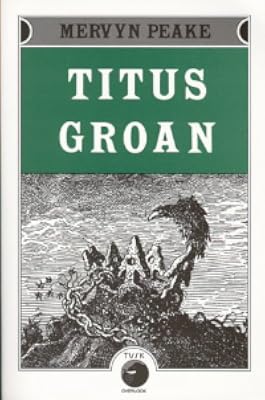
On This Page
Description
As the novel opens, Titus, heir to Lord Sepulchrave, has just been born. He stands to inherit the miles of rambling stone and mortar that form Gormenghast Castle. Meanwhile, far away and in the kitchen, a servant named Steerpike escapes his drudgework and begins an auspicious ascent to power. Inside of Gormenghast, all events are predetermined by complex rituals, the origins of which are lost in time. The castle is peopled by dark characters in half-lit corridors. Dreamlike and macabre, show more Peake's extraordinary novel is one of the most astonishing and fantastic works in modern fiction. show lessTags
Recommendations






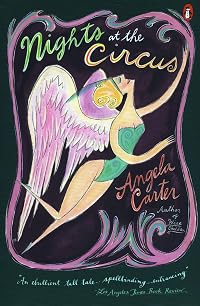

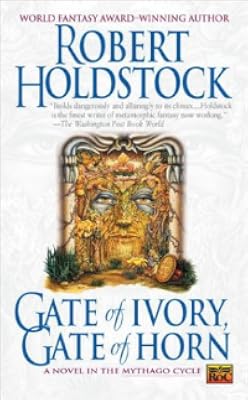
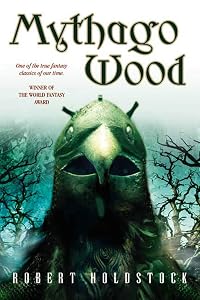
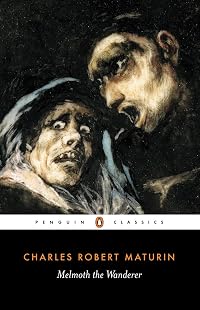











Member Recommendations
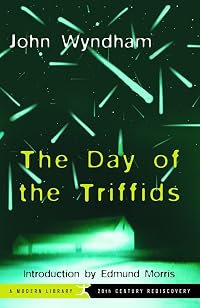
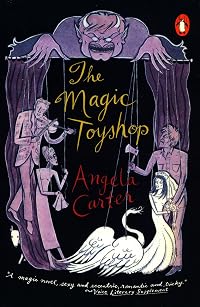
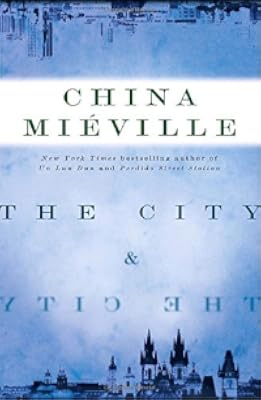
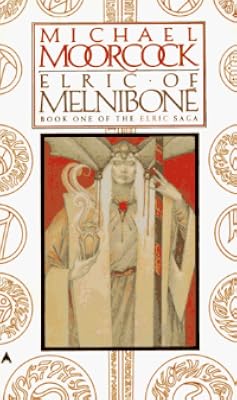
saltmanz Both extrememly atmospheric books, with vivid visuals and memorable characters.
91
Member Reviews
This novel, the first in the Gormenghast trilogy (though a fragment of a fourth volume has recently been completed), details the events of a year in the fantastic castle of Gormenghast, from the birth of Titus, 77th Earl, through to shortly after his first birthday. Gormenghast castle forms a self-contained community, within which members of the Groan dynasty live, die, go mad, commune with birds and act out arcane rituals. They are attended by a retinue of servants and retainers, with their own agendas of ambition, revenge, hate and love. At best, these characters are a little fey, or what my mother would have called "affected"; the worst of them are seriously deranged, hideously deformed grotesques, or both.
The events of the novel show more form a backdrop for the ambitious rise of the kitchen boy Steerpike. He is best described as an anti-hero; he plots and connives to exploit any advantage he can find for his own advancement; though not every misfortune that falls to other occupants of the castle can be laid at his feet.
If that was all there was to 'Titus Groan', then this wouldn't be such a tour de force. This is not a book to read for excitement or unexpected turns of the plot. But the language! Peake's powers of description make this book essential reading. The castle of Gormenghast becomes a character in itself, with halls, stairways, turrets, corridors, high windows, battlements, a Library, a Tower of Flints, a Hall of Spiders, a Great Kitchen, a Room of Cats and a Hall of Bright Carvings, to name but a few. And Peake has no less an apposite turn of phrase when describing his characters; though in case the words were not enough, he also prepared sketches of many of them.
(The edition I read, part of a 1992 omnibus volume, is plagued by misprints and some strange textual contractions: "along corridor" instead of "a long corridor" is a prime example of a common error, repeated so often throughout the novel that I began to wonder if it was a transcription error from manuscript to print. Other errors are also sprinkled liberally through the text.)
The setting is so resonant that I have coined the word 'Gormenghastly' to describe any excessively eccentric stately home, though there are none in real life that can come close to Peake's vision. Many have eccentric contents - a Cabinet of Stones here, a Corridor of Lizards there, perhaps a Courtyard of Dead Poets. But none combine all these things in one place, in one vast structure the size of a small town. Because whatever you have seen in real life, it cannot compare with Gormenghast itself, "the main massing of the original stone". show less
The events of the novel show more form a backdrop for the ambitious rise of the kitchen boy Steerpike. He is best described as an anti-hero; he plots and connives to exploit any advantage he can find for his own advancement; though not every misfortune that falls to other occupants of the castle can be laid at his feet.
If that was all there was to 'Titus Groan', then this wouldn't be such a tour de force. This is not a book to read for excitement or unexpected turns of the plot. But the language! Peake's powers of description make this book essential reading. The castle of Gormenghast becomes a character in itself, with halls, stairways, turrets, corridors, high windows, battlements, a Library, a Tower of Flints, a Hall of Spiders, a Great Kitchen, a Room of Cats and a Hall of Bright Carvings, to name but a few. And Peake has no less an apposite turn of phrase when describing his characters; though in case the words were not enough, he also prepared sketches of many of them.
(The edition I read, part of a 1992 omnibus volume, is plagued by misprints and some strange textual contractions: "along corridor" instead of "a long corridor" is a prime example of a common error, repeated so often throughout the novel that I began to wonder if it was a transcription error from manuscript to print. Other errors are also sprinkled liberally through the text.)
The setting is so resonant that I have coined the word 'Gormenghastly' to describe any excessively eccentric stately home, though there are none in real life that can come close to Peake's vision. Many have eccentric contents - a Cabinet of Stones here, a Corridor of Lizards there, perhaps a Courtyard of Dead Poets. But none combine all these things in one place, in one vast structure the size of a small town. Because whatever you have seen in real life, it cannot compare with Gormenghast itself, "the main massing of the original stone". show less
This is one of those books that I've always meant to read ... this year I swear! I am so glad that it finally made it's way into my active TBR. Titus Groan is most definitely not an easy read, the language itself carries weight. This is the kind of book to be read at a time when you can savour every word, every turn of phrase.
You can feel the corridors closing in around you, feeling the castle itself disapprove of you not being in your destined place. The characters making their way through their quotidian lives until disrupted by one who refuses to stay in his place, who envies what he sees and manipulates those around him for his benefit. I imagine that without Steerpike as a catalyst acting on all the petty grievances that they would show more have just simmered along. That Cora and Clarice would keep resenting Lady Gertrude but never take any action. That Swelter and Flay would cut at each other with words rather than something sharper.
I'm definitely anticipating continuing this series. show less
You can feel the corridors closing in around you, feeling the castle itself disapprove of you not being in your destined place. The characters making their way through their quotidian lives until disrupted by one who refuses to stay in his place, who envies what he sees and manipulates those around him for his benefit. I imagine that without Steerpike as a catalyst acting on all the petty grievances that they would show more have just simmered along. That Cora and Clarice would keep resenting Lady Gertrude but never take any action. That Swelter and Flay would cut at each other with words rather than something sharper.
I'm definitely anticipating continuing this series. show less
A castle populated with a joyously intricate vocabulary that describes characters like no other...Explodes as one reads along with this classic fairy tale told in a new way. And the words alone are so wonderfully florid that it could get you to reading the book another time just to glory in the prose. Peake is obviously in love with the English language and he makes us fall in love with it too. A book that should be allowed to breathe and then sipped at as one allows the words to spin their web.
What a strange, vivid, and thoroughly interesting book ... The writing style is quite unlike anything that I have read before. Some of the best scenes read like you are looking at the pages of a flip book, one at a time, just fast enough that you sense a continuity of action between them, but just slow enough that you see details that you might miss at full speed.
Other reviewers have noted Peake's background as an illustrator, which you certainly see in the attention to visual detail. But there is also poetry in this language which manages to capture points that are larger than what is said or shown , whether through the juxtaposition or images, the rhythm of speech, and even the mouthfeel of the words chosen, which are sometimes show more delightfully obscure or even made up.
I have seen this book described somewhere as "fantasy," but if you picked up the book for that reason, you may be disappointed. There is a castle and there is a brief mention of fantastical beasts, but that is about as close to our modern concept of "fantasy" as it gets. I would describe the book as more like surreal prose poetry with dark, dreary, dolorous atmosphere that somehow manages to be ... witty ... of all things.
People will read different things into this novel, but I was reading strong parallels with mechanization, where the machine is Gormenghast Castle and the pieces of that machine are the inhabitants, particularly the staff. I imagine their odd shapes and dress being allusions to the peculiar shapes and functions of the various die cast components that make up a machine. And the obsessive, rigid adherence to ritual and timing feels like an allusion to the mechanical interactions of these components and perhaps even a prescient comment on the subroutines of computers technologies that would later become more common. show less
Other reviewers have noted Peake's background as an illustrator, which you certainly see in the attention to visual detail. But there is also poetry in this language which manages to capture points that are larger than what is said or shown , whether through the juxtaposition or images, the rhythm of speech, and even the mouthfeel of the words chosen, which are sometimes show more delightfully obscure or even made up.
I have seen this book described somewhere as "fantasy," but if you picked up the book for that reason, you may be disappointed. There is a castle and there is a brief mention of fantastical beasts, but that is about as close to our modern concept of "fantasy" as it gets. I would describe the book as more like surreal prose poetry with dark, dreary, dolorous atmosphere that somehow manages to be ... witty ... of all things.
People will read different things into this novel, but I was reading strong parallels with mechanization, where the machine is Gormenghast Castle and the pieces of that machine are the inhabitants, particularly the staff. I imagine their odd shapes and dress being allusions to the peculiar shapes and functions of the various die cast components that make up a machine. And the obsessive, rigid adherence to ritual and timing feels like an allusion to the mechanical interactions of these components and perhaps even a prescient comment on the subroutines of computers technologies that would later become more common. show less
about halfway through i realized i was reading some of the best prose i ever had. each sentence feels like a handcrafted piece of art. undoubtedly an incredible accomplishment. at the heart it’s a comedy of manners from an omniscient perspective so can sometimes read more like Austen than any modern fantasy—if that excites you—if you enjoy the idea of reading about a ton of silly grubby little guys scuttering around some infinite castle, this is your shit.
it was definitely my shit, i think the only thing that could count against it and makes me hesitate to call it,like, the Best Book Ever is that it’s slowly paced. it takes its time, it wants to show you each silly little dude and their little gross world inside the castle.
so, show more yes, i kind of prefer books that have pacing that blasts along, it in no way does that. does that warrant taking a star away? hell no. this book is a piece of art. show less
it was definitely my shit, i think the only thing that could count against it and makes me hesitate to call it,like, the Best Book Ever is that it’s slowly paced. it takes its time, it wants to show you each silly little dude and their little gross world inside the castle.
so, show more yes, i kind of prefer books that have pacing that blasts along, it in no way does that. does that warrant taking a star away? hell no. this book is a piece of art. show less
The first part of a trilogy about a sprawling castle and the moral and psychological grotesques who live there. An heir to the Earl of Gormenghast is born, upsetting the castle's balance and providing an opportunity for ambitious teenage apprentice cook Steerpike to escape from the kitchens and begin working his way to the top through a series of schemes and murders. It's long, but the book's best quality is that it sustains a mood and world unlike anything else in literature, with every sentence feeling hand-carved and native to it.
How to review this weird and wonderful book? The setting, characters and plot etc are extraordinary, but it is the language that is utterly bewitching. The fact Peake was also an artist is evident in the special care with which he describes light (or absence of), skin and textures. Anthony Burgess wrote that it “has the kind of three dimensional solidity which we often find in pictorial artists who take to words… illustrations would have been supererogatory” – even though Peake sketched in the margins as he wrote, and later editions were published with the pictures.
Peake's illustration of Titus going to his tenth birthday masque
Writing in Tatler, novelist Elizabeth Bowen said:
Genre
It is usually classed as fantasy, but it is more like historical fiction, with a dash of magical realism. Or is it? This first volume has a profound sense of place (Gormenghast castle is arguably the main character and its inhabitants “could not imagine a world outside it”) but a very vague sense of time. They have got to the 77th earl, but electricity, motor vehicles and even guns are unknown.
Plot
The title relates to the birth of Titus, a male heir to the ancient house of Groan. However, it is really a richly imagined story of an enclosed world, suffocating under the weight of detailed and largely pointless arcane ritual: “If, for instance, his Lordship... had been three inches shorter, the costumes, gestures and even the routes would have differed from those described in the first tome.” and “It was not certain what significance the ceremony held... but the formality was no less sacred for it being unintelligible”.
It explains how a clever upstart, Steerpike, quickly goes from orphan kitchen hand, to rebel to opportunist to schemer, plotting his rise to power and influence. There is also a sub plot concerning Keda, a woman from the mud huts outside the castle where the skilled Bright Carvers live.
It is always a page-turner though at times the plot is slow because the descriptions are so rich. Peake sometimes meanders along lengthy diversions (e.g. when likening the cracks in plaster to an ancient map, he goes on to imagine journeys across such a landscape) and conjure strange metaphors,” clean she was... in the sense of a rasher of bacon”! It will certainly improve your vocabulary, though even the unfamiliar words are used so carefully that you can get the gist if you don’t have a dictionary to hand. At other times, Peake conveys a great deal in relatively few words: “Lord Sepulchrave walked with slow strides, his head bowed. Fuchsia mouched. Doctor Prunesquallor minced. The twins propelled themselves forward vacantly. Flay spidered his path. Swelter wallowed his.” which tells you most of what you need to know about almost all the main characters.
There are macabre episodes (Peake is not afraid to kill off significant characters in nasty ways), but also moments of wonder (the sky pavement), mystery (the death owl) and humour (a comic cat-and-mouse fight in almost total darkness, except for occasional flashes of lightning).
An Artist Writes
Peake’s artistic eye is evident in vividly visual descriptions, especially, skin, masonry and candle wax (“His face was very lined, as though it had been made of brown paper that had been crunched by some savage hand before being hastily smoothed out and spread over the tissues.”). Perhaps that is also why carvings are such a big deal in Gormenghast: the annual competition is explained near the beginning of the novel, rivalries are fierce and the carvers’ skill is the only reason the “dwellers” are tolerated so near the castle. Yet what value is really placed on their skill when all but the best three carvings are ceremonially burned, and even those winners are stored in a dusty attic, rather than revered?
For a few chapters, the narrative switches to the present tense, for no obvious reason (“A Change of Colour” to the end of “Here and There”) and Peake is oddly and confusingly inconsistent in how he refers to some people (The Earl of Groan and Lord Sepulchrave are one and the same and his sisters are indeed his sisters, even though they are also referred to as his daughter’s mother’s cousins and his daughter’s cousins).
I love the second volume as well (Gormenghast, reviewed HERE), but be warned that the third (Titus Alone, reviewed HERE), is totally different and harder to appreciate.
Nevertheless, I still think this is one of the best-written books I know and, like all great works, only improves with each rereading.
Quotes
• “Lord Sepulchrave walked with slow strides, his head bowed. Fuchsia mouched. Doctor Prunesquallor minced. The twins propelled themselves forward vacantly. Flay spidered his path. Swelter wallowed his.”
• Swelter’s voice is “like the warm, sick notes of some prodigious mouldering bell”.
• Cracks in the wall “A thousand imaginary journeys might be made along the banks of these rivers of an unexplored world”. (A similar idea in Boy in Darkness, when Titus looks at a mildewed spot on the ceiling.)
• The Countess’s room was “untidy to the extent of being a shambles. Everything had the appearance of being put aside for the moment.”
• “His [Sourdust] face was very lined, as though it had been made of brown paper that had been crunched by some savage hand before being hastily smoothed out and spread over the tissues.”
• The Earl’s life, and to some extent everyone else’s, is governed by detailed and largely pointless arcane ritual. “The second tome was full of blank pages and was entirely symbolic... If, for instance, his Lordship.. had been three inches shorter, the costumes, gestures and even the routes would have differed from those described in the first tome.” “It was not certain what significance the ceremony held... but the formality was no less sacred for it being unintelligible”.
• “She [Fuchisa] appeared to inhabit, rather than to wear her clothes.”
• “as empty as an unremembered heart” (the “stage” in Fuchsia’s attic).
• "Today I saw a great pavement among the clouds made of grey stones, bigger than a meadow. No one goes there. Only a heron. Today I saw a tree growing out of a high wall, and people walking on it far above the ground. Today I saw a poet look out of a narrow window... I saw today... a horse swimming in the top of a tower: I saw a million towers today."
• The twins’ faces “were quite expressionless, as though they were preliminary layouts for faces and were waiting for sentience to be injected”.
• An extraordinary metaphor at the end of this one about Irma Prunesquallor: “more the appearance of having been plucked and peeled than of cleanliness, though clean she was... in the sense of a rasher of bacon”!
• “Treading in a pool of his own midnight”.
• “We are all imprisoned by the dictionary. We choose out of that vast, paper-walled prison our convicts, the little black printed words, when in truth we need fresh sounds to utter, new enfranchised noises which would produce a new effect.”
• Burned books are “the corpses of thought”.
• “lambent darkness” is a good oxymoron.
• Lightning is, “a light like razors. It not only showed to the least minutiae the anatomy of masonry, pillars and towers, trees, grass-blades and pebbles, it conjured these things, it constructed them from nothing... then a creation reigned in a blinding and ghastly glory as a torrent of electric fire coursed across the heavens.”
• “The outpouring of a continent of sky had incarcerated and given a weird hyper-reality of closeness to those who were shielded from all but the sound of the storm.”
All My Peake Reviews
All my Peake/Gormenghast reviews (including biographies/memoirs and books about his art) are on a shelf:
HERE. show less
Peake's illustration of Titus going to his tenth birthday masque
Writing in Tatler, novelist Elizabeth Bowen said:
“It is certainly not a novel; it would be foundshow more
strong meat as a fairy tale… one of those works of pure, violent, self-sufficient imagination… poetry flows through his volcanic writing; the lyrical and the monstrous are inter-knotted… in the arabesque of his prose… I predict for Titus Goran a smallish but prevent public… [that] will probably renew itself, and probably enlarge, with each generation.”
Genre
It is usually classed as fantasy, but it is more like historical fiction, with a dash of magical realism. Or is it? This first volume has a profound sense of place (Gormenghast castle is arguably the main character and its inhabitants “could not imagine a world outside it”) but a very vague sense of time. They have got to the 77th earl, but electricity, motor vehicles and even guns are unknown.
Plot
The title relates to the birth of Titus, a male heir to the ancient house of Groan. However, it is really a richly imagined story of an enclosed world, suffocating under the weight of detailed and largely pointless arcane ritual: “If, for instance, his Lordship... had been three inches shorter, the costumes, gestures and even the routes would have differed from those described in the first tome.” and “It was not certain what significance the ceremony held... but the formality was no less sacred for it being unintelligible”.
It explains how a clever upstart, Steerpike, quickly goes from orphan kitchen hand, to rebel to opportunist to schemer, plotting his rise to power and influence. There is also a sub plot concerning Keda, a woman from the mud huts outside the castle where the skilled Bright Carvers live.
It is always a page-turner though at times the plot is slow because the descriptions are so rich. Peake sometimes meanders along lengthy diversions (e.g. when likening the cracks in plaster to an ancient map, he goes on to imagine journeys across such a landscape) and conjure strange metaphors,” clean she was... in the sense of a rasher of bacon”! It will certainly improve your vocabulary, though even the unfamiliar words are used so carefully that you can get the gist if you don’t have a dictionary to hand. At other times, Peake conveys a great deal in relatively few words: “Lord Sepulchrave walked with slow strides, his head bowed. Fuchsia mouched. Doctor Prunesquallor minced. The twins propelled themselves forward vacantly. Flay spidered his path. Swelter wallowed his.” which tells you most of what you need to know about almost all the main characters.
There are macabre episodes (Peake is not afraid to kill off significant characters in nasty ways), but also moments of wonder (the sky pavement), mystery (the death owl) and humour (a comic cat-and-mouse fight in almost total darkness, except for occasional flashes of lightning).
An Artist Writes
Peake’s artistic eye is evident in vividly visual descriptions, especially, skin, masonry and candle wax (“His face was very lined, as though it had been made of brown paper that had been crunched by some savage hand before being hastily smoothed out and spread over the tissues.”). Perhaps that is also why carvings are such a big deal in Gormenghast: the annual competition is explained near the beginning of the novel, rivalries are fierce and the carvers’ skill is the only reason the “dwellers” are tolerated so near the castle. Yet what value is really placed on their skill when all but the best three carvings are ceremonially burned, and even those winners are stored in a dusty attic, rather than revered?
For a few chapters, the narrative switches to the present tense, for no obvious reason (“A Change of Colour” to the end of “Here and There”) and Peake is oddly and confusingly inconsistent in how he refers to some people (The Earl of Groan and Lord Sepulchrave are one and the same and his sisters are indeed his sisters, even though they are also referred to as his daughter’s mother’s cousins and his daughter’s cousins).
I love the second volume as well (Gormenghast, reviewed HERE), but be warned that the third (Titus Alone, reviewed HERE), is totally different and harder to appreciate.
Nevertheless, I still think this is one of the best-written books I know and, like all great works, only improves with each rereading.
Quotes
• “Lord Sepulchrave walked with slow strides, his head bowed. Fuchsia mouched. Doctor Prunesquallor minced. The twins propelled themselves forward vacantly. Flay spidered his path. Swelter wallowed his.”
• Swelter’s voice is “like the warm, sick notes of some prodigious mouldering bell”.
• Cracks in the wall “A thousand imaginary journeys might be made along the banks of these rivers of an unexplored world”. (A similar idea in Boy in Darkness, when Titus looks at a mildewed spot on the ceiling.)
• The Countess’s room was “untidy to the extent of being a shambles. Everything had the appearance of being put aside for the moment.”
• “His [Sourdust] face was very lined, as though it had been made of brown paper that had been crunched by some savage hand before being hastily smoothed out and spread over the tissues.”
• The Earl’s life, and to some extent everyone else’s, is governed by detailed and largely pointless arcane ritual. “The second tome was full of blank pages and was entirely symbolic... If, for instance, his Lordship.. had been three inches shorter, the costumes, gestures and even the routes would have differed from those described in the first tome.” “It was not certain what significance the ceremony held... but the formality was no less sacred for it being unintelligible”.
• “She [Fuchisa] appeared to inhabit, rather than to wear her clothes.”
• “as empty as an unremembered heart” (the “stage” in Fuchsia’s attic).
• "Today I saw a great pavement among the clouds made of grey stones, bigger than a meadow. No one goes there. Only a heron. Today I saw a tree growing out of a high wall, and people walking on it far above the ground. Today I saw a poet look out of a narrow window... I saw today... a horse swimming in the top of a tower: I saw a million towers today."
• The twins’ faces “were quite expressionless, as though they were preliminary layouts for faces and were waiting for sentience to be injected”.
• An extraordinary metaphor at the end of this one about Irma Prunesquallor: “more the appearance of having been plucked and peeled than of cleanliness, though clean she was... in the sense of a rasher of bacon”!
• “Treading in a pool of his own midnight”.
• “We are all imprisoned by the dictionary. We choose out of that vast, paper-walled prison our convicts, the little black printed words, when in truth we need fresh sounds to utter, new enfranchised noises which would produce a new effect.”
• Burned books are “the corpses of thought”.
• “lambent darkness” is a good oxymoron.
• Lightning is, “a light like razors. It not only showed to the least minutiae the anatomy of masonry, pillars and towers, trees, grass-blades and pebbles, it conjured these things, it constructed them from nothing... then a creation reigned in a blinding and ghastly glory as a torrent of electric fire coursed across the heavens.”
• “The outpouring of a continent of sky had incarcerated and given a weird hyper-reality of closeness to those who were shielded from all but the sound of the storm.”
All My Peake Reviews
All my Peake/Gormenghast reviews (including biographies/memoirs and books about his art) are on a shelf:
HERE. show less
Members
- Recently Added By
Lists

The Guardian's 1000 Novels Everyone Must Read
1,005 works; 547 members

1001 Books You Must Read Before You Die
1,448 works; 1,132 members

Best Fantasy Novels
821 works; 361 members

Favourite Books
1,819 works; 316 members

novels in or about bookshops (or libraries)
59 works; 21 members

Unread books
1,063 works; 86 members

Ballantine Adult Fantasy Series
85 works; 8 members
20th Century Literature
1,161 works; 55 members

Survey of Fantasy Classics
111 works; 23 members

Weird and Weirder Fiction
270 works; 35 members

Top Five Books of 2019
387 works; 111 members

Cawthorn and Moorcock's Fantasy: The 100 Best Books
110 works; 7 members

Top Five Books of 2016
795 works; 228 members

Anthony Burgess 99 Post War Novels
99 works; 7 members

David Pringle's Modern Fantasy: The 100 Best Novels
100 works; 5 members

1,001 BYMRBYD Concensus
723 works; 27 members

75 Books Challenge 2015 Halloween Read long list
45 works; 4 members
Survey of Science Fiction and Fantasy
101 works; 13 members

The Seven-League Shelf
57 works; 3 members

Books Read in 2023
5,547 works; 145 members
Speculative Fiction to Read
706 works; 32 members

Huxley's Reading Log 2020
24 works; 1 member
Overdue Podcast
806 works; 9 members

Books Read in 2019
4,052 works; 110 members
Read These Too
458 works; 9 members

Books Read in 2012
816 works; 31 members

Books Read in 2025
4,091 works; 97 members

Fiction with Men's Given Names in the Title
302 works; 11 members
Talk Discussions
Past Discussions
Group Read: Gormenghast Trilogy - Titus Groan, Gormenghast, Titus Alone in 2013 Category Challenge (October 2013)
Author Information

48+ Works 17,108 Members
Some Editions
Awards and Honors
Distinctions
Notable Lists
Series

Belongs to Publisher Series
Work Relationships
Is contained in
Has the adaptation
Common Knowledge
- Canonical title
- Titus Groan
- Original title
- Titus Groan
- Original publication date
- 1946
- People/Characters
- Steerpike; Titus Groan; Fuchsia Groan; Gertrude Groan; Sepulchrave Groan; Mr Flay (show all 25); Abiatha Swelter; Alfred Prunesquallor; Irma Prunesquallor; Cora Groan; Clarice Groan; Nannie Slagg; Keda; Rottcodd; Sourdust; Barquentine; Nettel; Pentecost; Shrattle; Rantel; Braigon; The Brown Father; Flycrake; Wrenpatch; The Poet
- Important places
- Gormenghast
- Related movies
- Gormenghast (2000 | IMDb)
- Epigraph
- Dost thou love picking meat? Or would'st thou see
A man in the clouds, and have him speak to thee?
BUNYAN - First words
- Gormenghast, that is, the main massing of the original stone, taken by itself would have displayed a certain ponderous quality were it possible to have ignored the circumfusion of those mean dwellings that swarmed like an epi... (show all)demic around its outer walls.
- Quotations
- Swelter's eyes meet those of his enemy, and never was there held between four globes of gristle so sinister a hell of hatred. Had the flesh, the fibres, and the bones of the chef and those of Mr. Flay been conjured away and a... (show all)way down that dark corridor, leaving only their four eyes suspended in mid-air outside the Earl's door, then, surely, they must have reddened to the hue of Mars, reddened and smouldered, and at last broken into flame, so intense was their hatred - broken into flame and and circled about one another in ever-narrowing gyres and in swifter and yet swifter flight until, merged into one sizzling globe of ire they must have surely fled, the four in one, leaving a trail of blood behind them in the cold grey air of the corridor, until, screaming as they fly beneath innumerable arches and down endless passageways of Gormenghast, they found their eyeless bodies once again, and re-entrenched themselves in startled sockets.
It was not often that Flay approved of happiness in others. He saw in happiness the seeds of independence, and in independence the seeds of revolt.
Steerpike had an unusual gift. It was to understand a subject without appreciating it. He was almost entirely cerebral in his approach. But this could not easily be perceived; so shrewdly, so surely he seemed to enter into th... (show all)e heart of whatever he wished, in his words or his deeds, to mimic.
The library appeared to spread outwards from him as from a core. His dejection infected the air about him and diffused its illness upon every side. All thing in the long room absorbed his melancholia. The shadowing galleries ... (show all)brooded with slow anguish; the books receding into the deep corners, tier upon tier, seemed each a separate tragic note in a monumental fugue of volumes. - Last words
- (Click to show. Warning: May contain spoilers.)And there shall be a flame-green daybreak soon. And love itself will cry for insurrection! For tomorrow is also a day -- and Titus has entered his stronghold.
- Blurbers
- Burgess, Anthony; Searles, Baird; Bowen, Elizabeth
- Original language
- English
- Canonical DDC/MDS
- 823.914
Classifications
Statistics
- Members
- 4,577
- Popularity
- 3,170
- Reviews
- 114
- Rating
- (4.05)
- Languages
- 15 — Catalan, Czech, Danish, Dutch, English, French, German, Hebrew, Hungarian, Italian, Polish, Russian, Spanish, Swedish, Turkish
- Media
- Paper, Audiobook, Ebook
- ISBNs
- 61
- ASINs
- 50