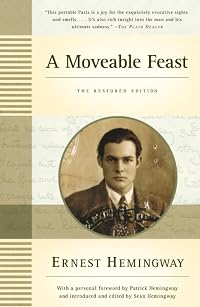
A Moveable Feast: The Restored Edition
by Ernest Hemingway 
On This Page
Description
Published posthumously in 1964, A Moveable Feast remains one of Ernest Hemingway's most beloved works. It is his classic memoir of Paris in the 1920s, filled with irreverent portraits of other expatriate luminaries such as F. Scott Fitzgerald and Gertrude Stein; tender memories of his first wife, Hadley; and insightful recollections of his own early experiments with his craft. It is a literary feast, brilliantly evoking the exuberant mood of Paris after World War I and the youthful spirit, show more unbridled creativity, and unquenchable enthusiasm that Hemingway himself epitomized. show lessTags
Recommendations









Member Reviews
Formerly, I wrote, "I read this right before college and adored it. I wonder what I would think now?" Well, now I know. Hemingway is arrogant. This is like saying, "salt is savory," but his layered arrogance and his ever-evident underlying insecurity are suffused with a deep sensitivity. He pretends not to be sensitive, to the detriment of those around him, but he's a big, gentle softy who can't stand himself. And he's very clever, writing as someone pretending to not be clever. He writes with exquisite rudeness, both insulting Gertrude Stein and lauding her, for example, and all I can do is shake my head and say, "Get over yourself, man." He clearly admires Ezra Pound, Fitzgerald, etc., so he finds fascinating layered ways of putting show more them in their place, making them small by calling them big. But...if Hemingway had ever gotten over himself, would he have written anything? Hemingway had to be the way he was. And maybe we need to be arrogant to create art, at least a little bit. Humble, too, but the humble part needs to be sandwiched between fat slabs of confidence. Maybe you can't pull a loaded brush across a canvas unless you believe you are the god. Oh, also: Hemingway says some great things about writing in A Moveable Feast. The things he wrote are so often quoted that they have become writerly cliches, so as you read them you go, "Oh, here's that cliche about writing," but maybe Hemingway invented it. show less
Summary: Based on the manuscript submitted by Hemingway for publication rather than the posthumously edited version originally published, a memoir of his time in the 1920’s in Paris, his beginnings as a writer, his first marriage, and the circle of writers he worked among, including the previously unpublished “Paris Sketches.“
A Moveable Feast was the last work to come from Ernest Hemingway. He began working on it after recovering two trunks of effects in 1956 that had been stored at the Ritz in Paris in 1928. He wrote his publisher weeks before he took his life (in June 1961) of the difficulties in writing the beginning and ending. The manuscript published posthumously contained edits made after his death that he may not have show more approved. In 1979, Hemingway’s personal papers were released. In 2009, Hemingway’s grandson Sean Hemingway edited the manuscript as it came from Hemingway, restoring the text as it stood before Hemingway died and also including ten “Paris Sketches” not previously published. His son Patrick also contributed the Foreword.
A Moveable Feast, the title of which is explained in Sean’s “Introduction,” is a memoir of Hemingway’s Paris years. We read of the honeymoon years of his first marriage to Hadley, how joyously and inexpensively they lived, especially after Hemingway gave up journalist writing, and then betting on the horses, both of which took him away from the work of writing. In the Paris Sketches there is a wonderful little sketch of how his son accompanied him to the cafe’s as he wrote, and tried to shame Fitzgerald out of drinking. In another Paris Sketch, “The Pilot Fish and the Rich,” Hemingway chronicles the end of his marriage, his inability to love two women, and the remorse he lived in, without recriminations toward Hadley, who eventually, in his words, “married a much finer man.”
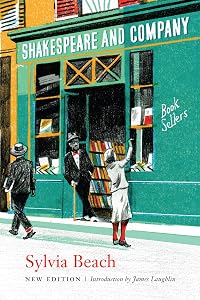
He recounts his beginnings as a writer, trying to get his short stories published, and the support of Sylvia Beach, of the original Shakespeare and Company, the venerable Paris bookstore, that served as a gathering place for the ex-pat writers of this period–Joyce, Hemingway, Stein, Fitzgerald, Eliot, Pound. He recounts the advice of Stein and his falling out with her, the influence of Joyce, and his relationships with a number of others, not always flattering. Hemingway describes Fitzgerald’s problems with drunkenness and Zelda’s jealousy of his writing as she sinks into her own insanity. Ford Madox Ford is portrayed in one of the Sketches as a liar, and Hemingway describes the disagreeable, acrid odor that emanated from him when he lied. On the other hand “Ezra Pound was always a good friend and he was always doing things for people” and was a great encouragement to the young Hemingway.
In contrast to some of the others, notably Fitzgerald, we see a writer increasingly disciplined, who did not treat those who interrupted his work kindly, often getting up early to his writing. Not only did a number of short stories come out of this time, many lost in a stolen suitcase, but also The Sun Also Rises, his first full-length novel. Sadly, he finished the last revisions in December of 1925 during their ski holiday in Schruns, their last together before they separated and divorced.
There is a bittersweetness about this work, it seems to me. One senses a generation trying to escape into the gaiety of Paris after the spectre of war and the wounds, physical and mental it left on so many. We meet the great talents, often thwarted by their own demons as much as anything. We delight in the decision of Ernest and Hadley to both grow their hair to the same length, which will save them the time-consuming social life with disapproving friends. And we wish it could have lasted. Sadly, Hadley would not share him with Pauline and the honeymoon in Paris ended.
One wonders what Hemingway thought as an older man, struggling with this memoir, in his fourth marriage and suffering from depression. One senses both glimpses of the wonder of the memory of these times, and a sadness, that despite the successes that flowed from this time, that he’d not found what he was looking for, that may have seemed so near in those Parisian years. Perhaps that is why he could write neither beginning nor end. Perhaps this was a time that could not be anchored in time–a moveable feast indeed. show less
A Moveable Feast was the last work to come from Ernest Hemingway. He began working on it after recovering two trunks of effects in 1956 that had been stored at the Ritz in Paris in 1928. He wrote his publisher weeks before he took his life (in June 1961) of the difficulties in writing the beginning and ending. The manuscript published posthumously contained edits made after his death that he may not have show more approved. In 1979, Hemingway’s personal papers were released. In 2009, Hemingway’s grandson Sean Hemingway edited the manuscript as it came from Hemingway, restoring the text as it stood before Hemingway died and also including ten “Paris Sketches” not previously published. His son Patrick also contributed the Foreword.
A Moveable Feast, the title of which is explained in Sean’s “Introduction,” is a memoir of Hemingway’s Paris years. We read of the honeymoon years of his first marriage to Hadley, how joyously and inexpensively they lived, especially after Hemingway gave up journalist writing, and then betting on the horses, both of which took him away from the work of writing. In the Paris Sketches there is a wonderful little sketch of how his son accompanied him to the cafe’s as he wrote, and tried to shame Fitzgerald out of drinking. In another Paris Sketch, “The Pilot Fish and the Rich,” Hemingway chronicles the end of his marriage, his inability to love two women, and the remorse he lived in, without recriminations toward Hadley, who eventually, in his words, “married a much finer man.”
He recounts his beginnings as a writer, trying to get his short stories published, and the support of Sylvia Beach, of the original Shakespeare and Company, the venerable Paris bookstore, that served as a gathering place for the ex-pat writers of this period–Joyce, Hemingway, Stein, Fitzgerald, Eliot, Pound. He recounts the advice of Stein and his falling out with her, the influence of Joyce, and his relationships with a number of others, not always flattering. Hemingway describes Fitzgerald’s problems with drunkenness and Zelda’s jealousy of his writing as she sinks into her own insanity. Ford Madox Ford is portrayed in one of the Sketches as a liar, and Hemingway describes the disagreeable, acrid odor that emanated from him when he lied. On the other hand “Ezra Pound was always a good friend and he was always doing things for people” and was a great encouragement to the young Hemingway.
In contrast to some of the others, notably Fitzgerald, we see a writer increasingly disciplined, who did not treat those who interrupted his work kindly, often getting up early to his writing. Not only did a number of short stories come out of this time, many lost in a stolen suitcase, but also The Sun Also Rises, his first full-length novel. Sadly, he finished the last revisions in December of 1925 during their ski holiday in Schruns, their last together before they separated and divorced.
There is a bittersweetness about this work, it seems to me. One senses a generation trying to escape into the gaiety of Paris after the spectre of war and the wounds, physical and mental it left on so many. We meet the great talents, often thwarted by their own demons as much as anything. We delight in the decision of Ernest and Hadley to both grow their hair to the same length, which will save them the time-consuming social life with disapproving friends. And we wish it could have lasted. Sadly, Hadley would not share him with Pauline and the honeymoon in Paris ended.
One wonders what Hemingway thought as an older man, struggling with this memoir, in his fourth marriage and suffering from depression. One senses both glimpses of the wonder of the memory of these times, and a sadness, that despite the successes that flowed from this time, that he’d not found what he was looking for, that may have seemed so near in those Parisian years. Perhaps that is why he could write neither beginning nor end. Perhaps this was a time that could not be anchored in time–a moveable feast indeed. show less
I read A Moveable Feast several years ago and enjoyed it quite a lot. Surprisingly, the restored edition was made even more enjoyable by Sean Hemingway's Introduction to the original text. When the reader looks at each of the nineteen sections of this book as "The Paris Sketches", as Sean suggests, you are able to see not only Hemingway's personality come through but also of those he writes about. The eccentricities of his contemporaries is enlightening and amusing. His love of his wife, Hadley, son, Bumby, skiing and writing are evident. Yet, as A Moveable Feast was written 30+ years after his separation from Hadley, his regret and sadness seem to add a somberness to the book and as an older man he contemplates the fate of his old show more friends and his former self. show less
Published in 1964 after Ernest Hemingway's death, “A Moveable Feast” is itself something of a movable feast. Just as Easter, a movable feast, skips around on the calendar from one year to the next, so this book doesn't stay put. The copy I purchased at Hemingway House in Key West a few years ago is called "the restored edition," supposedly put back the way Hemingway wanted it, except that Hemingway died before deciding what it should contain, or even if it was worth publishing at all.
The title, though a good one, wasn't his idea. Among the titles Hemingway had considered were “The Part Nobody Knows,” “To Hope and Write Well (The Paris Stories),” To Love and Write Well,” “To Write It True,” “How It Began” and “How show more Different It Was When You Were There.” The restored edition includes 19 chapters, plus 10 other Paris "sketches," many of which had clearly been omitted previously for good reason.
In this book, even the truth is something of a movable feast. Although generally regarded as a memoir of his experiences in Paris in the 1920s, Hemingway himself called it fiction, and often it reads like his fiction. When he quotes other people, they all talk like characters in his novels.
Various people have had a hand in shaping “A Moveable Feast” over the years. His last wife, Mary, put the original book together, which may have been a challenge since much of it is about his first wife, Hadley. Later Hemingway's sons had input into its contents. A son (Patrick) writes the foreword for this edition, and a grandson (Sean) writes the introduction.
Hemingway may be at his best in these essays (or stories or sketches or whatever they are) when speaking about writers and writing. Best of all are his pieces on F. Scott Fitzgerald, especially one about the two of them going by train to Lyon to pick up a car and drive it back to Paris. It is a comic tale, fueled by Fitzgerald's hypochondria, his inability to hold his liquor and the fact that the car lacks a top and it rains frequently on the drive home. Elsewhere Fitzgerald is portrayed as a sadder figure because of his drinking, his difficulty in writing and Zelda's (his wife) jealousy whenever he attempts to write rather than spend time drinking with her.
Comments about Gertrude Stein, Ford Madox Ford and Ezra Pound are also fine, as is his short piece on Sylvia Beach, owner of Shakespeare and Company bookstore in Paris (not the same one that exists today along the Seine). At one point Hemingway refers to Pound as a saint, interesting because the poet later moved to Italy and supported the fascists.
There is much to like in “A Moveable Feast,” as well as much that will make one wonder why it was ever included. show less
The title, though a good one, wasn't his idea. Among the titles Hemingway had considered were “The Part Nobody Knows,” “To Hope and Write Well (The Paris Stories),” To Love and Write Well,” “To Write It True,” “How It Began” and “How show more Different It Was When You Were There.” The restored edition includes 19 chapters, plus 10 other Paris "sketches," many of which had clearly been omitted previously for good reason.
In this book, even the truth is something of a movable feast. Although generally regarded as a memoir of his experiences in Paris in the 1920s, Hemingway himself called it fiction, and often it reads like his fiction. When he quotes other people, they all talk like characters in his novels.
Various people have had a hand in shaping “A Moveable Feast” over the years. His last wife, Mary, put the original book together, which may have been a challenge since much of it is about his first wife, Hadley. Later Hemingway's sons had input into its contents. A son (Patrick) writes the foreword for this edition, and a grandson (Sean) writes the introduction.
Hemingway may be at his best in these essays (or stories or sketches or whatever they are) when speaking about writers and writing. Best of all are his pieces on F. Scott Fitzgerald, especially one about the two of them going by train to Lyon to pick up a car and drive it back to Paris. It is a comic tale, fueled by Fitzgerald's hypochondria, his inability to hold his liquor and the fact that the car lacks a top and it rains frequently on the drive home. Elsewhere Fitzgerald is portrayed as a sadder figure because of his drinking, his difficulty in writing and Zelda's (his wife) jealousy whenever he attempts to write rather than spend time drinking with her.
Comments about Gertrude Stein, Ford Madox Ford and Ezra Pound are also fine, as is his short piece on Sylvia Beach, owner of Shakespeare and Company bookstore in Paris (not the same one that exists today along the Seine). At one point Hemingway refers to Pound as a saint, interesting because the poet later moved to Italy and supported the fascists.
There is much to like in “A Moveable Feast,” as well as much that will make one wonder why it was ever included. show less
Me loves. Five stars for this is a little inaccurate, but it reflects what an enormous pleasure I derived from keeping this dead man's company for the duration of this book.
It's certainly not the first or even second thing you should read by Hemingway, but if you are interested in the literary scene of Paris in the twenties, this is indispensable.
Hemingway is big on leaving things out that are still there if you pay attention and the secret word for today is "remorse". There is an overwhelming melancholy and sadness that colors even the most rosy memories of his years there with his first wife and child, and it's a rare, very adult reading experience.
His writings about Gertrude Stein and long time associate F Scott Fitzgerald, are show more strangely scattershot, and occasionally hilarious. Hemingway has a wry, deadpan tone that sets the bar.
Nothing like it.
His ruminations and insights on writing, and consequently ALL creative process, are the kind of things that could be written on your wall if one has any creative inclination.
In this regard he is a true sage. A zen master.
When I complete my reading of all his work, having become smitten with it so late in the game, I'm going to be very sad. show less
It's certainly not the first or even second thing you should read by Hemingway, but if you are interested in the literary scene of Paris in the twenties, this is indispensable.
Hemingway is big on leaving things out that are still there if you pay attention and the secret word for today is "remorse". There is an overwhelming melancholy and sadness that colors even the most rosy memories of his years there with his first wife and child, and it's a rare, very adult reading experience.
His writings about Gertrude Stein and long time associate F Scott Fitzgerald, are show more strangely scattershot, and occasionally hilarious. Hemingway has a wry, deadpan tone that sets the bar.
Nothing like it.
His ruminations and insights on writing, and consequently ALL creative process, are the kind of things that could be written on your wall if one has any creative inclination.
In this regard he is a true sage. A zen master.
When I complete my reading of all his work, having become smitten with it so late in the game, I'm going to be very sad. show less
Review of: A Moveable Feast: The Restored Edition, by Ernest Hemingway
by Stan Prager (8-26-17)
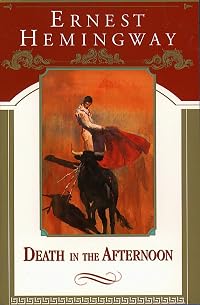
Arguably, Ernest Hemingway was the greatest American writer of the twentieth century. Because it is probably unfair to declare one author greater than another of their contemporaries when their styles and methods varied so much—William Faulkner and F. Scott Fitzgerald spring to mind—such an accolade should probably be qualified by “among the greatest.” But I would still put Hemingway in first place, if only because his style was so unique and his reach so vast: he not only penned a handful of truly great novels—The Sun Also Rises, A Farewell to Arms, For Whom the Bell Tolls—but also dozens of magnificent short stories, including show more “Hills Like White Elephants,” “The Snows of Kilimanjaro,” plus the semi-autobiographical “Nick Adams” tales, as well as the striking vignettes inserted between the stories in the published collections. And that was just his fiction. His roots as a skilled journalist made manifest the staccato bursts of short sentences that became his signature style, and without a doubt served as the basis for his ability to witness people and events and distill it all into captivating prose. Whether you are fascinated or repulsed (or a little of both!) by bull fighting or big game hunting, there are probably no better chronicles of these pursuits than, respectively, Death in the Afternoon and Green Hills of Africa. Hemingway’s genius for nonfiction is again underscored in A Moveable Feast, a memoir first published posthumously in 1964 by his fourth wife Mary, and then controversially re-edited and re-released in this “restored edition,” by his grandson Sean.
"If you are lucky enough to have lived in Paris as a young man,” Hemingway wrote, “then wherever you go for the rest of your life, it stays with you, for Paris is a moveable feast." This marvelous book is a collection of sketches of that “moveable feast” by that talented but penurious young man who lived in Paris in the early 1920s, struggling to earn a living as a foreign correspondent while perfecting his fiction, reading everything he could lay his hands on, skipping meals to finance trips to the race track, skiing in the most primitive conditions, drinking up a storm at cafés, and glorying in a whirlwind of activities with his first wife (Hadley Richardson, with whom here he is very much in love), and a gaggle of literary expatriates whose names read like a catalog of authors from the spines of books on the shelf of a fine personal library: John Dos Passos, F. Scott Fitzgerald, Ezra Pound, Gertrude Stein, James Joyce, Ford Madox Ford, and many others.
Revealed here is a kinetic energy and optimism in the young “Hem,” as well as an admiration and respect for other artists conspicuously absent in his later years. This version of Hemingway is extremely likeable: gregarious, curious, kind, considerate; craving the friendship and attention of both the famous and the little-known characters in his orbit. It was this fecund period that spawned The Sun Also Rises, his first novel and one of his finest. Later in life, his talent for his craft visibly diminished, lost to excessive alcohol, punishing physical injuries, and a kind of vulgar, outsize grandstanding that turned him into something of caricature of himself. He could often be mercurial, violent, boastful, immature; a mean drunk, a lousy husband, frequently a bad friend who was envious and resentful of another’s success, and spiteful enough to conspicuously malign them (as he did Scott Fitzgerald, more than once) in his writings. Thus it is that Hemingway’s episodic account of his early years in this volume is so energizing for the reader—revisiting a lost era of Paris between two devastating world wars, guided by a young man on the very cusp of becoming a great writer who is at once full of love for his lady and his life—yet nevertheless colored by the poignancy of the knowledge of what lies ahead for both Paris and its protagonist.
In 1956, Hemingway rediscovered two small steamer trunks that he had stored and forgotten at the Hotel Ritz Paris nearly three decades before, full of the notebooks he had kept during the 1920s. These were the primary sources for A Moveable Feast, which is why it reads with such freshness and optimism. Hemingway transcribed and edited these as a basis for a memoir he never completed. After his 1961 suicide, his fourth and final wife Mary reworked this manuscript for publication, putting changes to his draft that some have criticized. Also criticized with some greater vehemence is this “restored edition,” reworked yet again by his grandson Sean Hemingway, and containing additional material. As with all posthumous works, we can only wonder what the living author would have wanted us to read. But all of that is of less consequence to the reader than the wonder of this gift to us from that author. Again and again, throughout this volume, I came upon paragraphs written nearly a century ago by a man I consider the finest literary artist of his generation that took my breath away. Paragraphs such as:
The worst thing I remember of that avalanche winter was one man who was dug out. He had squatted down and made a box with his arms in front of his head, as we had been taught to do, so that there would be air to breathe as the snow rose up over you. It was a huge avalanche and it took a long time to dig everyone out, and this man was the last to be found. He had not been dead long and his neck was worn through so that the tendons and the bone were visible. He had been turning his head from side to side against the pressure of the snow. In this avalanche there must have been some old, packed snow mixed in with the new light snow that had slipped. We could not decide whether he had done it on purpose or if he had been out of his head. But there was no problem because he was refused burial in consecrated ground by the local priest anyway; since there was no proof he was a Catholic.
And that is why you read Hemingway! Not because you are impressed by the man he was, or the caricature of the man he came to personify, although both of these are fascinating. Not because of his utilization of the “objective correlative” as a literary device, although he did employ it masterfully. Not because he could tell us stories about wars, and bulls, and illuminated cafés, but he certainly knew such stories and told them well. But because he was truly an outstanding writer who frequently bestowed upon us truly great literature. This is why A Moveable Feast is required reading not only for the Hemingway aficionado, but for anyone who wants to experience such an artist at the height of his form. Paris may have been Hemingway’s moveable feast, but our very own moveable feast might be found in the books of glorious prose he has bequeathed to us. With that in mind, I will let Hemingway conclude this review of his work with his own words rather than that of the reviewer:
Nobody climbs on skis now and almost everybody breaks their legs but maybe it is easier in the end to break your legs than to break your heart although they say that everything breaks now and that sometimes, afterwards, many are stronger at the broken places. I do not know about that now but this is how Paris was in the early days when we were very poor and very happy.
Review of: A Moveable Feast: The Restored Edition, by Ernest Hemingway https://regarp.com/2017/08/26/review-of-a-moveable-feast-the-restored-edition-by... show less
by Stan Prager (8-26-17)
Arguably, Ernest Hemingway was the greatest American writer of the twentieth century. Because it is probably unfair to declare one author greater than another of their contemporaries when their styles and methods varied so much—William Faulkner and F. Scott Fitzgerald spring to mind—such an accolade should probably be qualified by “among the greatest.” But I would still put Hemingway in first place, if only because his style was so unique and his reach so vast: he not only penned a handful of truly great novels—The Sun Also Rises, A Farewell to Arms, For Whom the Bell Tolls—but also dozens of magnificent short stories, including show more “Hills Like White Elephants,” “The Snows of Kilimanjaro,” plus the semi-autobiographical “Nick Adams” tales, as well as the striking vignettes inserted between the stories in the published collections. And that was just his fiction. His roots as a skilled journalist made manifest the staccato bursts of short sentences that became his signature style, and without a doubt served as the basis for his ability to witness people and events and distill it all into captivating prose. Whether you are fascinated or repulsed (or a little of both!) by bull fighting or big game hunting, there are probably no better chronicles of these pursuits than, respectively, Death in the Afternoon and Green Hills of Africa. Hemingway’s genius for nonfiction is again underscored in A Moveable Feast, a memoir first published posthumously in 1964 by his fourth wife Mary, and then controversially re-edited and re-released in this “restored edition,” by his grandson Sean.
"If you are lucky enough to have lived in Paris as a young man,” Hemingway wrote, “then wherever you go for the rest of your life, it stays with you, for Paris is a moveable feast." This marvelous book is a collection of sketches of that “moveable feast” by that talented but penurious young man who lived in Paris in the early 1920s, struggling to earn a living as a foreign correspondent while perfecting his fiction, reading everything he could lay his hands on, skipping meals to finance trips to the race track, skiing in the most primitive conditions, drinking up a storm at cafés, and glorying in a whirlwind of activities with his first wife (Hadley Richardson, with whom here he is very much in love), and a gaggle of literary expatriates whose names read like a catalog of authors from the spines of books on the shelf of a fine personal library: John Dos Passos, F. Scott Fitzgerald, Ezra Pound, Gertrude Stein, James Joyce, Ford Madox Ford, and many others.
Revealed here is a kinetic energy and optimism in the young “Hem,” as well as an admiration and respect for other artists conspicuously absent in his later years. This version of Hemingway is extremely likeable: gregarious, curious, kind, considerate; craving the friendship and attention of both the famous and the little-known characters in his orbit. It was this fecund period that spawned The Sun Also Rises, his first novel and one of his finest. Later in life, his talent for his craft visibly diminished, lost to excessive alcohol, punishing physical injuries, and a kind of vulgar, outsize grandstanding that turned him into something of caricature of himself. He could often be mercurial, violent, boastful, immature; a mean drunk, a lousy husband, frequently a bad friend who was envious and resentful of another’s success, and spiteful enough to conspicuously malign them (as he did Scott Fitzgerald, more than once) in his writings. Thus it is that Hemingway’s episodic account of his early years in this volume is so energizing for the reader—revisiting a lost era of Paris between two devastating world wars, guided by a young man on the very cusp of becoming a great writer who is at once full of love for his lady and his life—yet nevertheless colored by the poignancy of the knowledge of what lies ahead for both Paris and its protagonist.
In 1956, Hemingway rediscovered two small steamer trunks that he had stored and forgotten at the Hotel Ritz Paris nearly three decades before, full of the notebooks he had kept during the 1920s. These were the primary sources for A Moveable Feast, which is why it reads with such freshness and optimism. Hemingway transcribed and edited these as a basis for a memoir he never completed. After his 1961 suicide, his fourth and final wife Mary reworked this manuscript for publication, putting changes to his draft that some have criticized. Also criticized with some greater vehemence is this “restored edition,” reworked yet again by his grandson Sean Hemingway, and containing additional material. As with all posthumous works, we can only wonder what the living author would have wanted us to read. But all of that is of less consequence to the reader than the wonder of this gift to us from that author. Again and again, throughout this volume, I came upon paragraphs written nearly a century ago by a man I consider the finest literary artist of his generation that took my breath away. Paragraphs such as:
The worst thing I remember of that avalanche winter was one man who was dug out. He had squatted down and made a box with his arms in front of his head, as we had been taught to do, so that there would be air to breathe as the snow rose up over you. It was a huge avalanche and it took a long time to dig everyone out, and this man was the last to be found. He had not been dead long and his neck was worn through so that the tendons and the bone were visible. He had been turning his head from side to side against the pressure of the snow. In this avalanche there must have been some old, packed snow mixed in with the new light snow that had slipped. We could not decide whether he had done it on purpose or if he had been out of his head. But there was no problem because he was refused burial in consecrated ground by the local priest anyway; since there was no proof he was a Catholic.
And that is why you read Hemingway! Not because you are impressed by the man he was, or the caricature of the man he came to personify, although both of these are fascinating. Not because of his utilization of the “objective correlative” as a literary device, although he did employ it masterfully. Not because he could tell us stories about wars, and bulls, and illuminated cafés, but he certainly knew such stories and told them well. But because he was truly an outstanding writer who frequently bestowed upon us truly great literature. This is why A Moveable Feast is required reading not only for the Hemingway aficionado, but for anyone who wants to experience such an artist at the height of his form. Paris may have been Hemingway’s moveable feast, but our very own moveable feast might be found in the books of glorious prose he has bequeathed to us. With that in mind, I will let Hemingway conclude this review of his work with his own words rather than that of the reviewer:
Nobody climbs on skis now and almost everybody breaks their legs but maybe it is easier in the end to break your legs than to break your heart although they say that everything breaks now and that sometimes, afterwards, many are stronger at the broken places. I do not know about that now but this is how Paris was in the early days when we were very poor and very happy.
Review of: A Moveable Feast: The Restored Edition, by Ernest Hemingway https://regarp.com/2017/08/26/review-of-a-moveable-feast-the-restored-edition-by... show less
Young Ernest Hemingway slums it in Paris along with other famous writers of his era, dispenses wisdom and funny anecdotes as well as biography of himself and others. Seeing Fitzgerald through his eyes as they wander about the Louvre looking at the cocks of greek statues to cheer him up from having been belittled by his harpy of a wife was laugh out loud funny. Hemingway is still guarded about his own failings, and it's more revealing in how he talks about himself than what he actually chooses to reveal.
Members
- Recently Added By
Lists

Top Five Books of 2014
1,064 works; 397 members
Author Information

664+ Works 174,196 Members
Ernest Miller Hemingway was born in the family home in Oak Park, Ill., on July 21, 1899. In high school, Hemingway enjoyed working on The Trapeze, his school newspaper, where he wrote his first articles. Upon graduation in the spring of 1917, Hemingway took a job as a cub reporter for the Kansas City Star. After a short stint in the U.S. Army as a show more volunteer Red Cross ambulance driver in Italy, Hemingway moved to Paris, and it was here that Hemingway began his well-documented career as a novelist. Hemingway's first collection of short stories and vignettes, entitled In Our Time, was published in 1925. His first major novel, The Sun Also Rises, the story of American and English expatriates in Paris and on excursion to Pamplona, immediately established him as one of the great prose stylists and preeminent writers of his time. In this book, Hemingway quotes Gertrude Stein, "You are all a lost generation," thereby labeling himself and other expatriate writers, including F. Scott Fitzgerald, T.S. Eliot, and Ford Madox Ford. Other novels written by Hemingway include: A Farewell To Arms, the story, based in part on Hemingway's life, of an American ambulance driver on the Italian front and his passion for a beautiful English nurse; For Whom the Bell Tolls, the story of an American who fought, loved, and died with the guerrillas in the mountains of Spain; and To Have and Have Not, about an honest man forced into running contraband between Cuba and Key West. Non-fiction includes Green Hills of Africa, Hemingway's lyrical journal of a month on safari in East Africa; and A Moveable Feast, his recollections of Paris in the Roaring 20s. In 1954, Hemingway won the Nobel Prize in Literature for his novella, The Old Man and the Sea. A year after being hospitalized for uncontrolled high blood pressure, liver disease, diabetes, and depression, Hemingway committed suicide on July 2, 1961, in Ketchum, Idaho. (Bowker Author Biography) show less
Ernest Hemingway has a Legacy Library. Legacy libraries are the personal libraries of famous readers, entered by LibraryThing members from the Legacy Libraries group.
All Editions
Some Editions
Work Relationships
Is an expanded version of
Common Knowledge
- Canonical title
- A Moveable Feast: The Restored Edition
- Original title
- A Moveable Feast
- Original publication date
- 2009-07 (restored edition) (restored edition); LC: 2009017587
- People/Characters
- Ernest Hemingway; F. Scott Fitzgerald; Hadley Hemingway Mowrer (Elizabeth Hadley Richardson Hemingway Mowrer)
- Important places
- Paris, France
- Important events
- Interwar Period
- First words
- Foreword by Patrick Hemingway: A new generation of Hemingway readers (one hopes there will never be a lost generation!) has the opportunity here to read a pblished text that is a less edited and more comprehensive version of ... (show all)the original manuscript material the author intended as a memoir of his young, formative years as a writer in Paris; one of his best moveable feasts. . . .
Introduction by Sean Hemingway: In November 1956, the management of the Ritz Hotel in Paris convinced Ernest Hemingway to repossess two small steamer trunks that he had stored there in March 1928. . . .
First words in text: Then there was the bad weather. . . . - Original language
- English
- Disambiguation notice
- Do not combine The Restored Edition with the 1964 edition of A Moveable Feast. The Restored Edition includes additional chapters, e.g., “A Strange Fight Club", “The Education of Mr. Bumby”, “Scott a... (show all)nd His Parisian Chauffeur,” and “Secret Pleasures.”
Classifications
Statistics
- Members
- 2,185
- Popularity
- 9,315
- Reviews
- 49
- Rating
- (4.01)
- Languages
- Danish, Dutch, English
- Media
- Paper, Audiobook, Ebook
- ISBNs
- 10
- ASINs
- 17