On This Page
Description
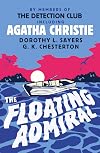
It's "great fun" when a baker's dozen of Golden Age authors collaborate on a whodunit—including Agatha Christie, Dorothy L. Sayers, and G. K. Chesterton (The Guardian).Originally published in 1931, The Floating Admiral is a classic literary collaboration by members of the Detection Club, in which each chapter is written by a different mystery author, with G. K. Chesterton adding a prologue after the novel was completed. Each writer was tasked with building on what the previous writer show more created, without ignoring or avoiding whatever plot points had come before. Although Anthony Berkeley wrote the definitive conclusion to the mystery in his final chapter, the writers all provided their own individual solutions, each in a sealed envelope, which appear in the appendix. In the words of Dorothy L. Sayers in her introduction, the spirit of the project was that of a "detection game," for the amusement of the authors—and their readers.
In the sleepy English seaside village of Whynmouth, an old sailor discovers a corpse floating serenely in a rowboat owned by the local vicar. The victim has been stabbed in the chest. It falls to Inspector Rudge to solve this most baffling mystery, in which not only the identity of the killer but the identity of the victim is called into question.
The Floating Admiral includes contributions by Canon Victor L. Whitechurch, G. D. H. and Margaret Cole, Henry Wade, Agatha Christie, John Rhode, Milward Kennedy, Dorothy L. Sayers, Ronald A. Knox, Freeman Wills Crofts, Edgar Jepson, Clemence Dane, and Anthony Berkeley.
"I was . . . hugely entertained by the virtuoso displays of mental gymnastics, which kept me guessing all the way." —The Guardian
. show less
Tags
Recommendations

















Member Reviews
What an interesting and fun experiment this must have been for the members of the Detection Club to write a mystery - in full compliance with club rules - where one author built on the previous chapters but without having a collective idea about what the plot should be.
As much as I loved seeing each author bringing their individual style to the project, the overall product left me stranded after a few chapters - by the time Ronald Knox summarised all of the clues the preceding chapters had presented to the reader I was lost. After Knox had finished with his list, I had largely lost interest.
However, the solutions that the authors had included in the appendix (not the actual solution to the mystery but the individual solutions that show more each of the authors predicted) made up for the struggle to finish the book.
And I have to say, Dame Agatha's chapter and solution stole the show for me. She clearly had fun writing her parts for this project and clearly did not take herself seriously in this at all. It was so much fun to watch this. show less
As much as I loved seeing each author bringing their individual style to the project, the overall product left me stranded after a few chapters - by the time Ronald Knox summarised all of the clues the preceding chapters had presented to the reader I was lost. After Knox had finished with his list, I had largely lost interest.
However, the solutions that the authors had included in the appendix (not the actual solution to the mystery but the individual solutions that show more each of the authors predicted) made up for the struggle to finish the book.
And I have to say, Dame Agatha's chapter and solution stole the show for me. She clearly had fun writing her parts for this project and clearly did not take herself seriously in this at all. It was so much fun to watch this. show less
I love Dorothy Sayers. I’m fond of G.K. Chesterton and Agatha Christie. This game (they were wise not to call it a story), unfortunately, mixed up their talents (and those of several authors I’m less familiar with) in a way that did justice to none of them.
The puzzle they set for each other hared off in so many directions, it was impossible for even the great fiction writers represented here to stick to a recognizable narrative arc. Neither did the characters always seem to be the same people from segment to segment.
On the other hand, it was interesting to see what these various authors made of each others’ puzzles, and I was impressed enough with the ending Anthony Berkeley came up with that I’m going to see if I can hunt down show more more of his work. For me, finding a new author I like makes it worth the read. show less
The puzzle they set for each other hared off in so many directions, it was impossible for even the great fiction writers represented here to stick to a recognizable narrative arc. Neither did the characters always seem to be the same people from segment to segment.
On the other hand, it was interesting to see what these various authors made of each others’ puzzles, and I was impressed enough with the ending Anthony Berkeley came up with that I’m going to see if I can hunt down show more more of his work. For me, finding a new author I like makes it worth the read. show less
Eh. The mystery, as a mystery, is kind of meh. I didn't particularly like any of the characters, including the detective. And it was a nice police procedural, showing his discoveries step by step - until the last author turned him into a know-it-all, as he lied (ok, implied completely false things) to his superiors in detail. Then tada! accused a completely different person, and claimed he'd never mentioned _who_ it was he was making that detailed case against. At that point I wasn't interested enough to go back and see what he'd actually said. So the more interesting part of the book is the gimmick, where each author got the preceding part of the book and had to decide who'd done what and write their part aiming the reader (and the show more next author) in the direction of that solution. It was interesting reading the solutions in the back. Dorothy Sayers did by far the most complex and complete dissection of the answer - and she got a lot of it right, everything but the actual murder (who was where, motivations, etc). But she got the murder itself completely wrong, far more complicated than it in fact was (or rather, more complicated than the final author let it be). I'm pleased I read it, but I doubt I'll ever reread - not worth the time. show less
The Floating Admiral was a collaborative effort among the members of the Detection Club, which boasted such names as G. K. Chesterton, Dorothy Sayers, and Agatha Christie. I didn't know much about the Detection Club until I read Dorothy Sayers's foreword to this book, which says, "It [the Detection Club] is a private association of writers of detective fiction in Great Britain, existing chiefly for the purpose of eating dinners together at suitable intervals and of talking illimitable shop... If there is any serious aim behind the avowedly frivolous organization of the Detection Club, it is to keep the detective story up to the highest standard that its nature permits, and to free it from the bad legacy of sensationalism, clap-trap and show more jargon with which it was unhappily burdened in the past." It sounds a little like a detective/mystery fiction offshoot of the Inklings to me.
It's clear the authors had good fun writing this mystery. G. K. Chesterton kicked it off with a prologue, and then the manuscript was passed from writer to writer, each adding a chapter in turn. But none of the contributors knew the others' proposed solutions, and at the end each had to provide a consistent solution based on all the clues up to the point of their chapter. It was a mystery novel in which the authors themselves were blindfolded, and I really enjoyed the experience of reading along with them and trying to puzzle it all out. As I read, I could almost sense the slight feeling of competition among the authors. Perhaps competition is not the word I want; it was more that everyone was trying to be at the top of his or her game with this one. It would be so minutely scrutinized and peer-reviewed.
The set-up is this: an old fisherman finds Admiral Penistone floating downstream in a boat, murdered by a wound to the heart. Inspector Rudge is set on the case, and has to hunt down all the people who knew the grumpy old martinet of an admiral. Everyone who knows him seems to scatter when they receive news of his death, and we are led on a merry chase through the technicalities of the river's tides, reticent witnesses, midnight excursions, train schedules, hurried nuptials, ancient scandals, and the provisions of the will. Finally in the last few pages we reach a complete upset of all previous theories, such as any good mystery novel must boast as a matter of course.
Though it seemed to drag a bit in the middle (I suppose that is what comes of everyone having to have a turn writing a chapter), this actually is a quite respectable mystery. Naturally the quality of the writing varied a bit. There was one author in particular whose style I didn't care for, a Freeman Wills Croft. His contributions to the plot were all right, but his style was distinctly clunky.
It was great fun reading everyone's proposed solutions at the end. Agatha Christie's was so laughably ridiculous (and I'm usually a great fan of her stories). Several of the writers admitted they couldn't explain certain facets of the case, and their bewilderment should be a great comfort to any reader who has ever felt quite at sea amidst a perplexing set of clues. It was really interesting to see the different characters brought forward as the murderer in each author's solution. Some of them were the same, but others had viewed the characters in almost opposite ways, and their solutions reflected those differences.
I'd recommend this mystery to anyone who enjoys detective fiction. Because of the nature of the novel's creation, the reader participates in a rather different way than usual. Every time someone came up with a startling new way to view the case, I thought of the person next in line to write a chapter with a feeling of pity, and wondered what the person who wrote the chapter before would think of what the current author had done with his work. I wouldn't like to experience this disjointed game-like feel with every mystery I read, but it was an enjoyable little experiment. If I weren't so shy of their brilliance, I should very much have liked to have attended one of the Detection Club's suitably intervalled dinners. show less
It's clear the authors had good fun writing this mystery. G. K. Chesterton kicked it off with a prologue, and then the manuscript was passed from writer to writer, each adding a chapter in turn. But none of the contributors knew the others' proposed solutions, and at the end each had to provide a consistent solution based on all the clues up to the point of their chapter. It was a mystery novel in which the authors themselves were blindfolded, and I really enjoyed the experience of reading along with them and trying to puzzle it all out. As I read, I could almost sense the slight feeling of competition among the authors. Perhaps competition is not the word I want; it was more that everyone was trying to be at the top of his or her game with this one. It would be so minutely scrutinized and peer-reviewed.
The set-up is this: an old fisherman finds Admiral Penistone floating downstream in a boat, murdered by a wound to the heart. Inspector Rudge is set on the case, and has to hunt down all the people who knew the grumpy old martinet of an admiral. Everyone who knows him seems to scatter when they receive news of his death, and we are led on a merry chase through the technicalities of the river's tides, reticent witnesses, midnight excursions, train schedules, hurried nuptials, ancient scandals, and the provisions of the will. Finally in the last few pages we reach a complete upset of all previous theories, such as any good mystery novel must boast as a matter of course.
Though it seemed to drag a bit in the middle (I suppose that is what comes of everyone having to have a turn writing a chapter), this actually is a quite respectable mystery. Naturally the quality of the writing varied a bit. There was one author in particular whose style I didn't care for, a Freeman Wills Croft. His contributions to the plot were all right, but his style was distinctly clunky.
It was great fun reading everyone's proposed solutions at the end. Agatha Christie's was so laughably ridiculous (and I'm usually a great fan of her stories). Several of the writers admitted they couldn't explain certain facets of the case, and their bewilderment should be a great comfort to any reader who has ever felt quite at sea amidst a perplexing set of clues. It was really interesting to see the different characters brought forward as the murderer in each author's solution. Some of them were the same, but others had viewed the characters in almost opposite ways, and their solutions reflected those differences.
I'd recommend this mystery to anyone who enjoys detective fiction. Because of the nature of the novel's creation, the reader participates in a rather different way than usual. Every time someone came up with a startling new way to view the case, I thought of the person next in line to write a chapter with a feeling of pity, and wondered what the person who wrote the chapter before would think of what the current author had done with his work. I wouldn't like to experience this disjointed game-like feel with every mystery I read, but it was an enjoyable little experiment. If I weren't so shy of their brilliance, I should very much have liked to have attended one of the Detection Club's suitably intervalled dinners. show less
The Floating Admiral is an early (1932) collaborative novel written by a number of different authors, each contributing a chapter to the story and a suggested solution to the crime. A corpse is unexpectedly found in the bottom of a floating rowing boat on a tidal river in a sleepy seaside town, and Inspector Rudge is assigned to investigate. The body turns out to be that of a retired Admiral who has only recently moved to the area, but there seem to be a remarkable number of potential suspects despite the fact that hardly anybody knows him! There's his niece, there's the Vicar, there's a retired seaman, there's the possibly fortune-hunting suitor... The list goes on and on, and only Inspector Rudge can make sense of it all.... The show more Detection Club was formed in England in the late 1920s or early 1930s, existing "chiefly for the purpose of eating dinners together at suitable intervals and of talking illimitable shop" in the words of Simon Brett in the introduction to this 2011 reissue, and at the time of this novel, that club included such luminaries as G.K. Chesterton, Agatha Christie and Dorothy L. Sayers. All contribute to this tale, along with 10 other authors whose names will not be so familiar to today's readers. Each writes a chapter that either illuminates the case further or further confuses it; there is an appendix in which most of the authors also provide the solution that each has decided s/he would use if each were writing the entire novel alone, which is most entertaining. Given that this was written in the early 1930s, there's a bit of casual racism (one "n" word reference, the characterizing of some people in Hong Kong as "coolies") and a good deal of sexism, but if you can get past those sins of past times, this is quite an entertaining read - and I was kept guessing until the very end, always a good sign in a murder mystery! Recommended. show less
An interesting experiment in group writing that rather fails as a detective story. Members of The Detection Club got together in 1931 on a cooperative project to raise fund for the organization. Each athor writes a chapter of a murder mystery, and each one must be consistent with any clues or plot points developed in the previous chapter.
This is a difficult, I might say impossible feat to pull off. That is, the authors liv up to the agreement, but since each in puts their spin on the story, the reader is presented with a messy plot and characters whose motives and actions are wildly incoherent.
All that said, it’s a bit entertaining to see the different writing styles juxtaposed. I felt a distinct sense of relief when reading the show more chapters by Christie and Sayers: here, I thought, are polished, witty professionals at work. The final chapter, “Cleaning Up the Mess,” shows Anthony Berkeley’s amazing way with a plot. Oh, and the chapter by John Rhode was the best of the rest.
I’m not sorry I read it, but it’s only for fanatics of the Golden Age of detection. show less
This is a difficult, I might say impossible feat to pull off. That is, the authors liv up to the agreement, but since each in puts their spin on the story, the reader is presented with a messy plot and characters whose motives and actions are wildly incoherent.
All that said, it’s a bit entertaining to see the different writing styles juxtaposed. I felt a distinct sense of relief when reading the show more chapters by Christie and Sayers: here, I thought, are polished, witty professionals at work. The final chapter, “Cleaning Up the Mess,” shows Anthony Berkeley’s amazing way with a plot. Oh, and the chapter by John Rhode was the best of the rest.
I’m not sorry I read it, but it’s only for fanatics of the Golden Age of detection. show less
The Detection Club is a celebrated group of British mystery writers, formed in 1930 during the so-called ‘Golden Age’. In 1931, 14 members of the club – including Christie, G.K. Chesterton, Canon Victor Whitechurch and Dorothy L. Sayers – wrote this collaborative experiment. Each of the fourteen chapters was written by one of them, after which a suggested solution was sealed in an envelope, and the book was passed on to the next author for the next chapter. It’s far from perfect, but "The Floating Admiral" is a fascinating read: these 14 authors were experts in their field, and – although the sealed solutions show that many had picked up on at least the general direction of the clues – it’s marvelous to see how these show more professionals manage to pick up on the existing elements and weave them into a constantly-changing narrative. "The Floating Admiral" is tough to find these days, but if you can, grab it. (Personally, I recommend dating someone whose father collects such books; it’s a no-fail option.) show less
Members
- Recently Added By
Lists

British Mystery
469 works; 14 members

Agatha Christie
28 works; 3 members

Books Read in 2021
5,361 works; 113 members

Books Read in 2022
5,226 works; 115 members

Books Read in 2024
4,727 works; 128 members
Author Information

10 Works 1,569 Members
All Editions
Some Editions
Series

Belongs to Publisher Series
Work Relationships
Has the (non-series) sequel
Common Knowledge
- Canonical title
- The Floating Admiral
- Original title
- The Floating Admiral
- Alternate titles
- Introduction - Dorothy L. Sayers; Prologue - G.K. Chesterton; Chapter 1 - Canon Victor Whitechurch; Chapter 2 - G. D. H. Cole and Margaret Cole; Chapter 3 - Henry Wade; Chapter 4 - Agatha Christie (show all 15); Chapter 5 - John Rhode; Chapter 6 - Milward Kennedy; Chapter 7 - Dorothy L. Sayers; Chapter 8 - Ronald Knox; Chapter 9 - Freeman Wills Crofts; Chapter 10 - Edgar Jepson; Chapter 11 - Clemence Dane; Chapter 12 - Anthony Berkeley; Appendices - Solutions, Notes on Mooring of Boat, Counsel's Opinion on Fitzgerald's Will
- Original publication date
- 1931-12
- People/Characters
- Inspector Rudge; Admiral Penistone; Elma Fitzgerald; Reverend Mount; Neddy Ware; Wilfred Denny, Sir Wilfrid
- Important places
- Lingham, England, UK
- First words
- (Introduction by Dorothy L. Sayers)
When members of the official police force are invited to express an opinion about the great detectives of fiction, they usually say with a kindly smile: "Well, of course, it's... (show all) not the same for them as it is for us.
(Prologue by G. K. Chesterton)
Three glimpses through the rolling smoke of opium, three stories that still hover about a squalid opium joint in Hong Kong, might very well at this distance of time be dismissed as... (show all) pipe dreams.
Everyone in Lingham knew old Neddy Ware, though he was not a native of the village, having only resided there for the last ten years; which, in the eyes of the older inhabitants who had spent the whole of their lives in that ... (show all)quiet spot, constituted him still a "stranger." - Last words
- (Click to show. Warning: May contain spoilers.)"And he never signed his confession" said the Superintendent disgustedly.
Classifications
Statistics
- Members
- 958
- Popularity
- 27,737
- Reviews
- 26
- Rating
- (3.25)
- Languages
- 10 — Danish, Dutch, English, German, Greek, Italian, Japanese, Portuguese, Russian, Spanish
- Media
- Paper, Audiobook, Ebook
- ISBNs
- 38
- ASINs
- 22