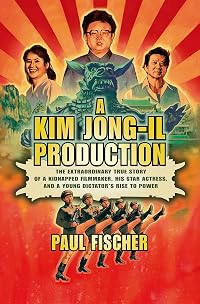
A Kim Jong-Il Production: The Extraordinary True Story of a Kidnapped Filmmaker, His Star Actress, and a Young Dictator's Rise to Power
by Paul Fischer
On This Page
Description
Before becoming the world's most notorious dictator, Kim Jong-Il ran North Korea's Ministry for Propaganda and its film studios. Conceiving every movie made, he acted as producer and screenwriter. Despite this control, he was underwhelmed by the available talent and took drastic steps, ordering the kidnapping of Choi Eun-Hee (Madam Choi), South Korea's most famous actress, and her ex-husband Shin Sang-Ok, the country's most famous filmmaker. Madam Choi vanished first. When Shin went to Hong show more Kong to investigate, he was attacked and woke up wrapped in plastic sheeting aboard a ship bound for North Korea. Madam Choi lived in isolated luxury, allowed only to attend the Dear Leader's dinner parties. Shin, meanwhile, tried to escape, was sent to prison camp, and "re-educated." After four years he cracked, pledging loyalty. Reunited with Choi at the first party he attends, it is announced that the couple will remarry and act as the Dear Leader's film advisors. Together they made seven films, in the process gaining Kim Jong-Il's trust. While pretending to research a film in Vienna, they flee to the U.S. embassy and are swept to safety. A nonfiction thriller packed with tension, passion, and politics, A Kim Jong-Il Production offers a rare glimpse into a secretive world, illuminating a fascinating chapter of North Korea's history that helps explain how it became the hermetically sealed, intensely stage-managed country it remains today. show lessTags
Recommendations
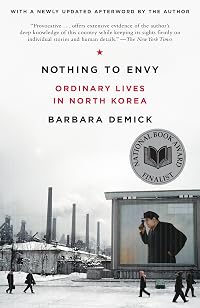
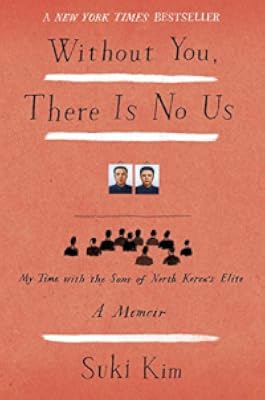
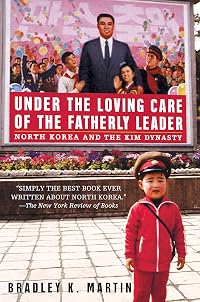
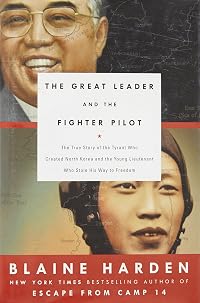







Member Recommendations
Member Reviews
According to filmmaker and North Korea-watcher Paul Fischer, the key to understanding Kim Jong-Il's capriciousness and cruelty is to realize that the dictator was really a frustrated movie producer at heart. The country he inherited from his father was his sound stage, and the people of North Korea were expendable bit players in the his ongoing private epic. That was why the lives of ordinary North Koreans seemed to count for so little during Kim Jong-Il's reign, and whole families were tortured and murdered seemingly on a whim.
Not only was Kim Jong-Il a wannabe movie maker, he was a film connoisseur as well. He amassed a huge private collection of foreign movies, including banned works from the United States and South Korea, and his show more most cherished dream was to turn his impoverished country into a major force in world cinema. To that end, he launched a harebrained scheme inspired by his favorite James Bond movies: he had his operatives kidnap South Korea's most successful filmmaker Shin Sang-Ok (who was in a career slump at the time) and his ex-wife, popular actress Choi Eun-Hee. Once he was convinced that their "re-education" was complete, the dictator installed Shin and Choi as the new leaders of North Korean cinema. During the early 1980's, the remarried couple smiled for the cameras and churned out propaganda pieces for the dictator as they secretly plotted their escape to the West.
Some observers do not believe Shin and Choi's story; rather, they suspect that the couple voluntarily defected to the Communist country in exchange for powerful positions in the North Korean film making industry. When the two grew tired of their obligations to Kim Jong-Il's regime, they recast themselves as kidnapping victims. Fischer, however, believes that Shin and Choi have told the truth about their ordeal.
A Kim Jung-Il Production has it all: a brilliant but flawed hero, a strong, compelling heroine, stunning reversals of fortune, daring escapes, religious conversions, car chases, and even the triumph of true love at the end. If it weren't for the very real suffering endured daily by the North Korean people due to the actions of their government (now under the control of Kim Jong-Il's equally sociopathic son Kim Jong-Un) I'd be tempted to end this review with a flippant statement such as: this book would make a great movie show less
Not only was Kim Jong-Il a wannabe movie maker, he was a film connoisseur as well. He amassed a huge private collection of foreign movies, including banned works from the United States and South Korea, and his show more most cherished dream was to turn his impoverished country into a major force in world cinema. To that end, he launched a harebrained scheme inspired by his favorite James Bond movies: he had his operatives kidnap South Korea's most successful filmmaker Shin Sang-Ok (who was in a career slump at the time) and his ex-wife, popular actress Choi Eun-Hee. Once he was convinced that their "re-education" was complete, the dictator installed Shin and Choi as the new leaders of North Korean cinema. During the early 1980's, the remarried couple smiled for the cameras and churned out propaganda pieces for the dictator as they secretly plotted their escape to the West.
Some observers do not believe Shin and Choi's story; rather, they suspect that the couple voluntarily defected to the Communist country in exchange for powerful positions in the North Korean film making industry. When the two grew tired of their obligations to Kim Jong-Il's regime, they recast themselves as kidnapping victims. Fischer, however, believes that Shin and Choi have told the truth about their ordeal.
A Kim Jung-Il Production has it all: a brilliant but flawed hero, a strong, compelling heroine, stunning reversals of fortune, daring escapes, religious conversions, car chases, and even the triumph of true love at the end. If it weren't for the very real suffering endured daily by the North Korean people due to the actions of their government (now under the control of Kim Jong-Il's equally sociopathic son Kim Jong-Un) I'd be tempted to end this review with a flippant statement such as: this book would make a great movie show less
Together with a history of the Kim dynasty in North Korea, Fischer traces and documents how the second leader of the DPRK used his passion for movies to construct society-transforming propaganda and secure his succession to Kim Il-Sung, grandfather of the present dictator. A major theme of the book is power: the picture of a strong solo performer with an overmastering drive to compel others to live according to his inner vision.
The personal angle, both in focusing on the kidnapped filmmaker and his leading lady and in getting inside the head of Kim Jong-Il to some extent, make this work more dramatic and suspenseful than a straightforward historical narrative--and yet all the more compelling for being true.
If I were to fault the book show more for any one thing, it would be the lack of an index. A book of this sort demands one. show less
The personal angle, both in focusing on the kidnapped filmmaker and his leading lady and in getting inside the head of Kim Jong-Il to some extent, make this work more dramatic and suspenseful than a straightforward historical narrative--and yet all the more compelling for being true.
If I were to fault the book show more for any one thing, it would be the lack of an index. A book of this sort demands one. show less
A Kim Jong-Il Production is remarkable on a number of levels, both in the information it imparts and as an artistic work of nonfiction. I've read a lot of books about North Korea but this is probably one of the best. It will easily make my year end best list.
Although about a kidnapping, Fischer devotes time to North Korea history, a biography of Kim Jong-il and how he came to create a kingdom based on fiction. Rather than a cardboard Hitler-like embodiment of pure evil, Kim Jong-il emerges as a real person. A distasteful one, but multifaceted. This is the book's real strength, to reveal Kim Jong-il (and North Korea) through passion for film, an approach that is both accurate and sharp.
Often the 'thrilling story' a book promises in the show more title is just a thin cover for a regular history. But in this case the title story is the majority of the narrative and really is, well "extraordinary". I had to keep reminding myself this was nonfiction. One might even think "well maybe it is", but Fischer provides convincing evidence at the end. Hopefully the book receives recognition - at the heart is a great love story and adventure. show less
Although about a kidnapping, Fischer devotes time to North Korea history, a biography of Kim Jong-il and how he came to create a kingdom based on fiction. Rather than a cardboard Hitler-like embodiment of pure evil, Kim Jong-il emerges as a real person. A distasteful one, but multifaceted. This is the book's real strength, to reveal Kim Jong-il (and North Korea) through passion for film, an approach that is both accurate and sharp.
Often the 'thrilling story' a book promises in the show more title is just a thin cover for a regular history. But in this case the title story is the majority of the narrative and really is, well "extraordinary". I had to keep reminding myself this was nonfiction. One might even think "well maybe it is", but Fischer provides convincing evidence at the end. Hopefully the book receives recognition - at the heart is a great love story and adventure. show less
This incredible work of creative nonfiction will undoubtedly catch many Asia-watchers by surprise. Facts about North Korea are thin on the ground here in America, but this book blasts open a personal history of Kim Jong-Il with a canny, graceful, and wise commentary that seems far beyond what anyone else has been able to manage. It is an enormous feat of research, but more than that, it is so completely and compulsively readable that we are held captive.
It begins detailing the history of two individuals who were instrumental in the South Korean film industry in the 1940s and 50s. Before you ask how relevant that information is to us today, just remember that the author is a film producer who claims these early films have a cult show more following now, perhaps because of the Gangnam rage that has spread worldwide, and has opened a glimpse into a world never before considered worthy of serious study. We couldn’t have a better introduction to film in South Korea nor have we ever had a more detailed look at the North Korean film fanatic Kim Jong-Il, who kidnapped the two leading lights in the South Korean film industry to bolster his own propaganda machine.
The beautiful and talented South Korean film star Choi Eun-Hee was kidnapped first. Fischer compares her favorably to Marilyn Monroe (with whom she was photographed) in terms of star quality and stage presence. Choi's former husband, the film director and producer Shin Sang-Ok, was taken later, though because he’d tried to escape he was imprisoned in North Korea for a number of years. Eventually they were reunited in Pyongyang and began producing films for Kim Jong-Il’s ailing film industry. This book is partially based on their memoir of their time in captivity and their successful escape to the West.
Perhaps more importantly, we learn a huge amount about the Kim regimes. This material may be out there somewhere, in a hundred escape memoirs, spy reports, or academic papers but I have never seen so much information about Kim Jong-Il and North Korea in one place before. Besides all this great new information, the writing is absolutely first-rate, the story fantastic, and the immersion into film so well-informed that it seems like a trick.
Who is Paul Fischer and how does he know so much about North Korea? The Introduction and Afterword discuss sources, and mostly my concerns about veracity of content were allayed. It may just be possible that no one ever bothered before to gather together the dispersed information in just this way before. I just don’t know. Frankly, it is Fischer’s skill that is simply stunning, besides the vast trove of collected information about the Kim regime and North Korea. The writing is rich and fluent in a way writers only dream of, and the sections pass easily into one another while we readers are led deeper into the intricacies of film lore and the strange and frightening propaganda machine of Kim Jong-Il.
I have no idea whether or not Shin Sang-Ok and his wife Choi Eun-Hee were abducted or if they defected to North Korea. In my mind it is regrettable either way but not particularly relevant now. It is not what I focused on. I have heard some of the details of kidnapping, of prisons, of life in North Korea, but nothing like this detailed look north of the 38th parallel. This book has everything: grandeur, mystery, terror, and a fluency that makes this tremendous storytelling no matter what side of the political spectrum you fall on.
This book must be labelled creative nonfiction because of the conversations recounted verbatim and the reconstructions of scenes so complete you would think Fischer created them. I don’t care. If one-fourth of the information in this is book is true we have made great headway in understanding and demystifying a completely obscure regime. You will recall the splash Truman Capote made with his fictional recreation of the nonfiction event he wrote about in In Cold Blood. Let’s call this in the same vein until we can verify, but remember this man Paul Fischer. He has burst on the literary scene with a truly stupefying and important offering. If he can make films the way he can write we are in for a real treat.
I listened to the Random House Audio production of this book, read beautifully by Stephen Park. I have ordered the print edition to look it over more carefully. As I say, books like this don’t come along very often. To think this was a debut th show less
It begins detailing the history of two individuals who were instrumental in the South Korean film industry in the 1940s and 50s. Before you ask how relevant that information is to us today, just remember that the author is a film producer who claims these early films have a cult show more following now, perhaps because of the Gangnam rage that has spread worldwide, and has opened a glimpse into a world never before considered worthy of serious study. We couldn’t have a better introduction to film in South Korea nor have we ever had a more detailed look at the North Korean film fanatic Kim Jong-Il, who kidnapped the two leading lights in the South Korean film industry to bolster his own propaganda machine.
The beautiful and talented South Korean film star Choi Eun-Hee was kidnapped first. Fischer compares her favorably to Marilyn Monroe (with whom she was photographed) in terms of star quality and stage presence. Choi's former husband, the film director and producer Shin Sang-Ok, was taken later, though because he’d tried to escape he was imprisoned in North Korea for a number of years. Eventually they were reunited in Pyongyang and began producing films for Kim Jong-Il’s ailing film industry. This book is partially based on their memoir of their time in captivity and their successful escape to the West.
Perhaps more importantly, we learn a huge amount about the Kim regimes. This material may be out there somewhere, in a hundred escape memoirs, spy reports, or academic papers but I have never seen so much information about Kim Jong-Il and North Korea in one place before. Besides all this great new information, the writing is absolutely first-rate, the story fantastic, and the immersion into film so well-informed that it seems like a trick.
Who is Paul Fischer and how does he know so much about North Korea? The Introduction and Afterword discuss sources, and mostly my concerns about veracity of content were allayed. It may just be possible that no one ever bothered before to gather together the dispersed information in just this way before. I just don’t know. Frankly, it is Fischer’s skill that is simply stunning, besides the vast trove of collected information about the Kim regime and North Korea. The writing is rich and fluent in a way writers only dream of, and the sections pass easily into one another while we readers are led deeper into the intricacies of film lore and the strange and frightening propaganda machine of Kim Jong-Il.
I have no idea whether or not Shin Sang-Ok and his wife Choi Eun-Hee were abducted or if they defected to North Korea. In my mind it is regrettable either way but not particularly relevant now. It is not what I focused on. I have heard some of the details of kidnapping, of prisons, of life in North Korea, but nothing like this detailed look north of the 38th parallel. This book has everything: grandeur, mystery, terror, and a fluency that makes this tremendous storytelling no matter what side of the political spectrum you fall on.
This book must be labelled creative nonfiction because of the conversations recounted verbatim and the reconstructions of scenes so complete you would think Fischer created them. I don’t care. If one-fourth of the information in this is book is true we have made great headway in understanding and demystifying a completely obscure regime. You will recall the splash Truman Capote made with his fictional recreation of the nonfiction event he wrote about in In Cold Blood. Let’s call this in the same vein until we can verify, but remember this man Paul Fischer. He has burst on the literary scene with a truly stupefying and important offering. If he can make films the way he can write we are in for a real treat.
I listened to the Random House Audio production of this book, read beautifully by Stephen Park. I have ordered the print edition to look it over more carefully. As I say, books like this don’t come along very often. To think this was a debut th show less
This was incredibly interesting because it's a part of history you never, ever, hear about in school or any common history (well, if you're a native US American student). Totally Asian, totally NOT about a world war, and possibly not totally true. So... I don't know know what to think - it was a good story but if it's not totally true, then it might be just a commonly good fictional adventure. It's such a wild story it's kinda hard to think of it being a nonfiction history. Anyway, the descriptions of North Korea life are fascinating, as was the descriptions of interactions between the Koreans with each other and with outsiders.
North Korea is one of my reading obsessions, so I am very much the target audience for this book. And it did not disappoint. The story of how two of South Korea's most famous entertainers were kidnapped in order to invigorate North Korea's film industry is crazy and mesmerizing and tragic and, as best we can tell, pretty much true. (North Korea being what it is, it's nearly impossible to verify everything; but I am willing to give director Shin Sang-Ok and actress Choi Eun-Hee the benefit of the doubt.)
North Korea is one of my reading obsessions, so I am very much the target audience for this book. And it did not disappoint. The story of how two of South Korea's most famous entertainers were kidnapped in order to invigorate North Korea's film industry is crazy and mesmerizing and tragic and, as best we can tell, pretty much true. (North Korea being what it is, it's nearly impossible to verify everything; but I am willing to give director Shin Sang-Ok and actress Choi Eun-Hee the benefit of the doubt.)
Members
- Recently Added By
Lists

North Korea / South Korea
13 works; 1 member
Author Information

Some Editions
Awards and Honors
Awards
Common Knowledge
- Original publication date
- 2015
- People/Characters
- Kim Jong-il; Shin Sang-ok; Choi Eun-hee
- Important places
- North Korea
- Dedication
- For Mom, Dad, and Crosby
- First words
- Introduction: August 1982
The last thing Shin Sang-Ok remembered was sitting in his cell, unable to feel his own heartbeat, to weak to move or stand.
On May 16, 1962, Shin Sang-Ok was standing at the center of a party at the South Korean Presidential Residence. - Last words
- (Click to show. Warning: May contain spoilers.)It would be his last time behind a film camera.
(Click to show. Warning: May contain spoilers.)Epilogue: 2013
Looking at Choi Eun-Hee, there is a lot to be said for that. - Publisher's editor
- Dickerman, Colin; Gianopoulos, Panio; Ricketts, Joel
- Blurbers
- French, Paul; Baglio, Matt; Wallace, Benjamin
Classifications
- Genres
- Nonfiction, History, General Nonfiction, Biography & Memoir
- DDC/MDS
- 791.430951 — Arts & recreation Recreation, sports, and performing arts Public performances Motion pictures, radio, television, podcasting Motion pictures Standard subdivisions History, geographic treatment, biography; description, critical appraisal of specific companies and studios {for specific films see 791.437} Asia
- LCC
- PN1993.5 .K63 .F57 — Language and Literature Literature (General) Literature (General) Drama Motion pictures
- BISAC
Statistics
- Members
- 403
- Popularity
- 77,093
- Reviews
- 16
- Rating
- (4.11)
- Languages
- 11 — Czech, Danish, English, Finnish, French, German, Italian, Polish, Portuguese, Russian, Spanish
- Media
- Paper, Audiobook, Ebook
- ISBNs
- 23
- UPCs
- 1
- ASINs
- 9