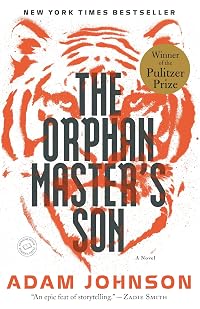
The Orphan Master's Son
by Adam Johnson
On This Page
Description
The son of an influential father who runs an orphan work camp, Pak Jun Do rises to prominence using instinctive talents and eventually becomes a professional kidnapper and romantic rival to Kim Jong Il.Tags
Recommendations


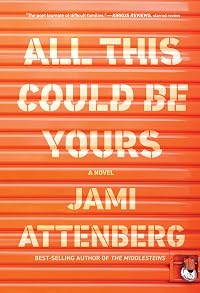
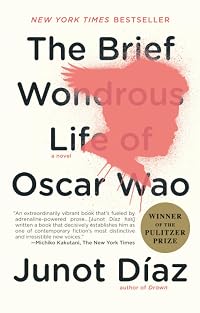
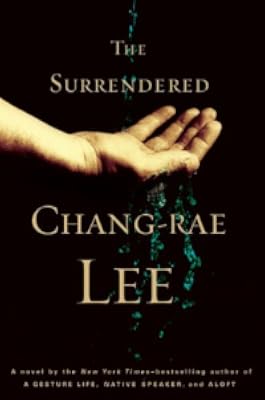
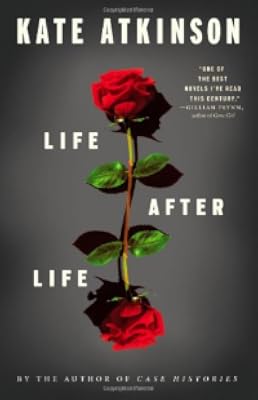
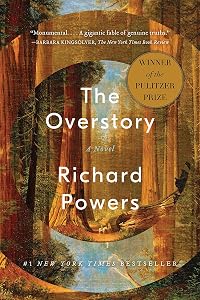
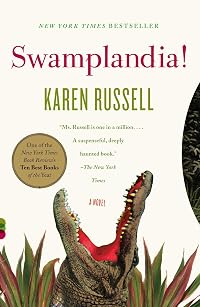
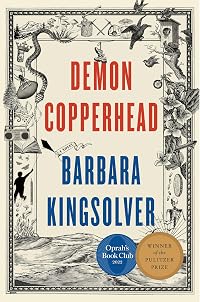
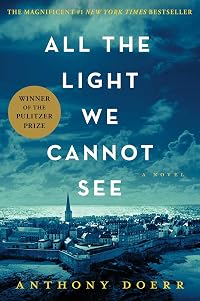
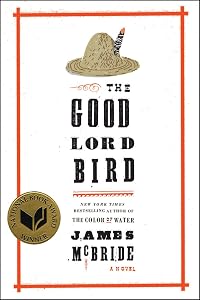
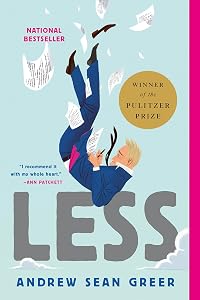
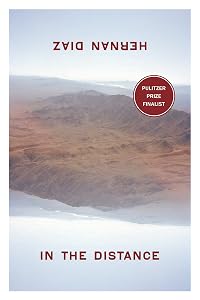
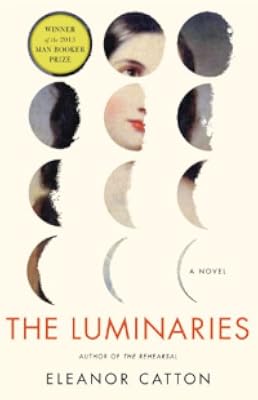


Member Recommendations
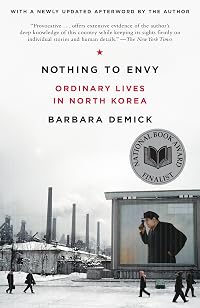
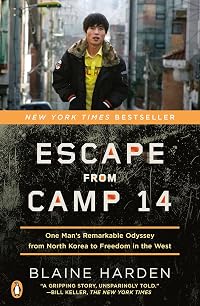
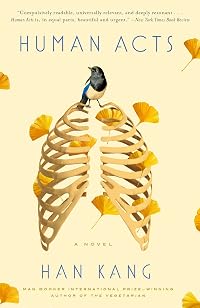
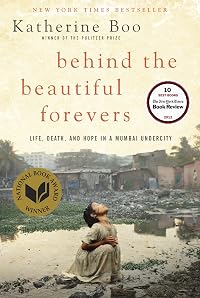
kqueue A non-fiction account of people in North Korea. The hardships they endure at the hands of their government are jaw-dropping. It backs up everything in The Orphan Master's Son.
100
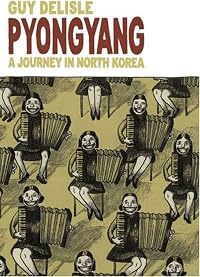
Henrik_Madsen Guy Delisle has based his graphic novel on his own experiences from North Korea - it is definitely also worth a read.
10
booklove2 Main characters have similar personalities, also they both battle regimes.
A Kim Jong-Il Production: The Extraordinary True Story of a Kidnapped Filmmaker, His Star Actress, and a Young Dictator's Rise to Power by Paul Fischer
Meredy When I read The Orphan Master's Son, I sensed that it was telling the truth in a way that only fiction can. This view of the DPRK regime seems to corroborate Johnson's surrealistic narrative to a degree of literalness that I did not anticipate.
clfisha OK not really alike except in tone. A rollicking good adventure and playful narrative structure (Mitchell is more experimental).
02

suniru Although the settings are wildly different,the central figure in both books is the "head boy" in an orphanage. Also, "identity" is central to both books.
15
Member Reviews
This book won the Pulitzer in 2013, deservedly so. This is a fascinating story that provides the reader a glimpse into the bizarro world of North Korea.
I think the story epitomizes the phrase "perception IS reality". The first part tells of the life of Jun Do, who grows up in the orphanage that his father runs. Everyone thinks he's an orphan, because why else would you live in an orphanage, if you weren't. He goes on to become a kidnapper for the state, abducting foreign nationals (mostly Japanese) at the request of DPRK officials (doctors, artists, etc). He then becomes a signal operator on a fishing boat, listening to whatever transmissions from the West he can pickup. Among them, transmissions from the ISS, that he thinks are coming show more from the bottom of the sea (he can't fathom anything flying above the earth). The end of the first part has him being sent to a prison mine because a diplomatic trip to Texas didn't go exactly the way officials wanted.
In the second part, Jun do is no more, he has now taken on the identity of Commander Ga, a national hero, whom he has no resemblance with. But because perception is reality, he is accepted as such. Except by his (or rather Ga's) wife, who is Korea's moth famous film star and the ingenue, of the Dear Leader; Kim Jong-Il
This was a twisted and delightful read. It brought to mind shades of Catch-22 and Dr. Strangelove, as well as a smattering of Walter Mitty. My favorite read so far this year.
Passages that stuck with me...
"The boys stopped at the harbor, it's dark waters ropey with corpses, thousands of them in the throes of the waves, looking like curds of sticky millet that start to flip and toss when the pan heats."
"How to tell the Second Mate that the only way to shake your ghosts, is to find them..."
"To survive in this world, you've got to be many times a coward buy at least once a hero... At least that's what a guy told me one time when I was beating shit out of him"
9/10
S: 5/7/16 - F: 5/22/16 ( 16 Days) show less
I think the story epitomizes the phrase "perception IS reality". The first part tells of the life of Jun Do, who grows up in the orphanage that his father runs. Everyone thinks he's an orphan, because why else would you live in an orphanage, if you weren't. He goes on to become a kidnapper for the state, abducting foreign nationals (mostly Japanese) at the request of DPRK officials (doctors, artists, etc). He then becomes a signal operator on a fishing boat, listening to whatever transmissions from the West he can pickup. Among them, transmissions from the ISS, that he thinks are coming show more from the bottom of the sea (he can't fathom anything flying above the earth). The end of the first part has him being sent to a prison mine because a diplomatic trip to Texas didn't go exactly the way officials wanted.
In the second part, Jun do is no more, he has now taken on the identity of Commander Ga, a national hero, whom he has no resemblance with. But because perception is reality, he is accepted as such. Except by his (or rather Ga's) wife, who is Korea's moth famous film star and the ingenue, of the Dear Leader; Kim Jong-Il
This was a twisted and delightful read. It brought to mind shades of Catch-22 and Dr. Strangelove, as well as a smattering of Walter Mitty. My favorite read so far this year.
Passages that stuck with me...
"The boys stopped at the harbor, it's dark waters ropey with corpses, thousands of them in the throes of the waves, looking like curds of sticky millet that start to flip and toss when the pan heats."
"How to tell the Second Mate that the only way to shake your ghosts, is to find them..."
"To survive in this world, you've got to be many times a coward buy at least once a hero... At least that's what a guy told me one time when I was beating shit out of him"
9/10
S: 5/7/16 - F: 5/22/16 ( 16 Days) show less
I discovered from reading The Orphan Master's Son that I know precious little about North Korea. I can say with a fair amount of confidence that I know a whole lot more after having read this book. (Yes, I know it's fictional but a good majority of it is based on the realities of that country and its people.) I have to admit that it was slow going at the beginning. I didn't feel the push to keep going that I usually do when reading something that is really interesting to me. However, this wasn't because the characters lacked depth. I think it stems from what I mentioned at the top of this post: I was completely in the dark about North Korea and found it hard to connect. I have since done some research into the topic on my own and I am show more blown away by the mastery of Adam Johnson. This is a story of a man without identity. His true self is stripped away again and again by those in power. He is not the master of his own life...and yet...His spirit will not fully submit. For the entirety of this novel, I was waiting for this man's redemption because his suffering was so great and so complete that I felt that it was unfair that he not get his happy ending. I can't say if I was rewarded at the end or not because to do so would rob you of the experience yourself. If you enjoy contemporary historical fiction and/or have an interest in a part of the world that to me has always seemed shrouded in mystery (and really it still is) then this book is for you. show less
The Orphan Master's Son is an uncanny peek behind the North Korean curtain. It centers around an orphan, Jun Do, who starts out dutifully following a series of military and then intelligence tasks. But his encounters with foreign cultures, and particularly America, turn him more independent. In the second part of the novel, he reappears under the identify of Commander Ga--and a series of overlapping versions told through the loudspeaker's run by North Korean state media, a torturer in the secret police, and Jun Do/Ga's perspective itself--fill in his ordeal in the prison camp, escape, and life in paranoid and psychotic Pyongyang.
The depictions of arbitrary despotism, torture and imprisonment are brutal--and remind me somewhat of Mario show more Vargas Llosa's Feast of the Goat and other novels. But The Orphan Master's Son is also very humorous, especially its parodies of North Korean grandiosity ("the longest grained rice in the world!") and paranoia about the rest of the world. And it features a tender love story as well.
Given how little is known about North Korea, a novel written by someone who put a lot of effort into talking to defectors and even visiting the country feels like a reasonable way to get even a tiny insight of a guess into what life is like there. And it is also an entertaining story as well. show less
The depictions of arbitrary despotism, torture and imprisonment are brutal--and remind me somewhat of Mario show more Vargas Llosa's Feast of the Goat and other novels. But The Orphan Master's Son is also very humorous, especially its parodies of North Korean grandiosity ("the longest grained rice in the world!") and paranoia about the rest of the world. And it features a tender love story as well.
Given how little is known about North Korea, a novel written by someone who put a lot of effort into talking to defectors and even visiting the country feels like a reasonable way to get even a tiny insight of a guess into what life is like there. And it is also an entertaining story as well. show less
Riding a crest of enormous praise, this debut novel by an American man about a North Korean citizen is a worthy achievement, and one I couldn't put down for two days straight. Despite twists of plot that in fiction often seem too coincidental, the reader's sympathy and alignment to the protagonist is so rich and deeply felt that these happenstances feel believable, and are forgivable. The book paints a harsh reality of life under Kim Jong Il, and though I think there is much basis for the events portrayed in this novel, it seems still to be a decidedly Western take on those difficult truths. The extremism of the ideology and the brutality of prison camp life and interrogation techniques are undeniable, and feel thoroughly researched. My show more question relates to the premise of the idea of a desire for freedom in the Western sense of freedom, a striving for an unknown entity that is at its core that sense of freedom for this people, who have a long history of oppression and suffering. The book is a page-turning thriller, with gravitas, and an amazing portrait of an exceptional man living under the pressure of exceptional times, undergoing gradual (and therefore believable) changes that challenge his core identity and his pursuit of what it is to be human. Some of his characters, like the Captain and Mongyong, as well as minor incidental characters with mere walk-on roles, like the Japanese girl on the pier, will not soon be forgotten. show less
I finished this book back in April — yes, April! — and trying to gather my thoughts about it gave me a severe case of writer's block that I'm only now fighting through. I find it impossible to be objective about the quality of this book as a work of art, and I still haven't managed to completely unpack all the reasons I experienced such a visceral dislike for it. I should say right up front that this review will probably be useless to anyone who is wondering if this Pulitzer Prize winner is worth reading. All I can do is analyze my own personal reaction, and attempt to understand why I reacted the way I did. So if that's not of interest to you (and for heaven's sake, why would it be?), please skip forward to the next post.
A brief show more summation of the book: Set in North Korea, possibly the most isolated and brutally ruled country left on earth, the title character is Jun Do, a man who somehow finds himself falling ever upward through the hierarchy of his country's totalitarian regime. At various stages in his life he finds himself patrolling the tunnels that connect North and South Korea, trolling the coasts of Japan and China to kidnap innocent citizens to bring back to North Korea, monitoring enemy radio transmissions along the coast, serving hard time in a prison labor camp, and impersonating one of the most powerful military men in the entire country. Throughout the book, events happen to Jun Do almost without his knowledge or active participation, leaving him with a subtle air of bewilderment at his various fates. Some of the things that happen are absurdist in nature, but I found it impossible to laugh at any of it because the rest was so hopelessly bleak.
And that's the crux of my reaction, I think: This book, despite the humor and the ways in which Jun Do occasionally manages to thwart the Dear Leader's plans, is relentlessly without hope. A book about a country subjugated to a madman's iron-fisted rule is unpalatable without some hint of revolution, opposition, or hope for the future. And this book has none that I could discern. The elites in Pyongyang live a sort of high life while the ordinary citizens are caught in the grip of a famine so severe even the threat of being sent to one of the dreaded labor camps isn't enough to stop them from committing the capital crime of stealing — to eat! — the flowers from new graves in the city's cemeteries.
It's rare for me to give such a low rating to a book that suffers none of the usual faults of plotting, writing, or characterization. It is a testament to the strength of Johnson's writing that his book had such an effect on me. This has been a rough spring and summer for me in a lot of ways, and perhaps that's why I had such a strong reaction to The Orphan Master's Son. Caught in professional and personal situations with little hope of improvement, I desperately need my fiction to provide a ray of sunshine right now. And that's just what you won't get from this book. show less
A brief show more summation of the book: Set in North Korea, possibly the most isolated and brutally ruled country left on earth, the title character is Jun Do, a man who somehow finds himself falling ever upward through the hierarchy of his country's totalitarian regime. At various stages in his life he finds himself patrolling the tunnels that connect North and South Korea, trolling the coasts of Japan and China to kidnap innocent citizens to bring back to North Korea, monitoring enemy radio transmissions along the coast, serving hard time in a prison labor camp, and impersonating one of the most powerful military men in the entire country. Throughout the book, events happen to Jun Do almost without his knowledge or active participation, leaving him with a subtle air of bewilderment at his various fates. Some of the things that happen are absurdist in nature, but I found it impossible to laugh at any of it because the rest was so hopelessly bleak.
And that's the crux of my reaction, I think: This book, despite the humor and the ways in which Jun Do occasionally manages to thwart the Dear Leader's plans, is relentlessly without hope. A book about a country subjugated to a madman's iron-fisted rule is unpalatable without some hint of revolution, opposition, or hope for the future. And this book has none that I could discern. The elites in Pyongyang live a sort of high life while the ordinary citizens are caught in the grip of a famine so severe even the threat of being sent to one of the dreaded labor camps isn't enough to stop them from committing the capital crime of stealing — to eat! — the flowers from new graves in the city's cemeteries.
It's rare for me to give such a low rating to a book that suffers none of the usual faults of plotting, writing, or characterization. It is a testament to the strength of Johnson's writing that his book had such an effect on me. This has been a rough spring and summer for me in a lot of ways, and perhaps that's why I had such a strong reaction to The Orphan Master's Son. Caught in professional and personal situations with little hope of improvement, I desperately need my fiction to provide a ray of sunshine right now. And that's just what you won't get from this book. show less
This book. So, Adam Johnson did his research. He read all kinds of first-hand accounts of the lucky people who have escaped from North Korea. Based on those accounts and a lot of imagination, he made a long list of horrible things that could happen in the Democratic People's Republic of Korea, then he figured out how to fit every single one of those atrocities into a novel. The title character is an orphan (or not, depending on who you believe), turned tunnel fighter, turned kidnapper, turned translator/spy, turned hero, turned prisoner, turned... Well, you get the idea, and I don't want to spoil the second half of the book.
The subject matter sounds bleak, and Johnson successfully creates the dark feel that one can only imagine a show more totalitarian state must have. And yet, it's funny. This is dark, dark, politically satirical humor at its best. Part of me wanted to not like this novel, because of the endless list of "atrocities to include" that I mentioned above, but I couldn't help but get sucked in. Johnson managed to make me laugh at the same time that chills were running down my spine. Kim Jong-Il made his job much easier, of course. How many real-life characters could be both utterly ridiculous and terrifying at the same time?
Johnson's plotting is equally as artful as his prose. I found myself flipping backward through the novel and then smacking myself in the forehead as I pieced together the little clues he scattered through-out the second half of the book. I felt the second half was much stronger than the first, with multiple points of view (including a propagandized version of events broadcast through loud-speakers), alternating time-lines, etc., but I don't think it would have been as strong without the more straight-forward narrative of the first half to set the stage. show less
The subject matter sounds bleak, and Johnson successfully creates the dark feel that one can only imagine a show more totalitarian state must have. And yet, it's funny. This is dark, dark, politically satirical humor at its best. Part of me wanted to not like this novel, because of the endless list of "atrocities to include" that I mentioned above, but I couldn't help but get sucked in. Johnson managed to make me laugh at the same time that chills were running down my spine. Kim Jong-Il made his job much easier, of course. How many real-life characters could be both utterly ridiculous and terrifying at the same time?
Johnson's plotting is equally as artful as his prose. I found myself flipping backward through the novel and then smacking myself in the forehead as I pieced together the little clues he scattered through-out the second half of the book. I felt the second half was much stronger than the first, with multiple points of view (including a propagandized version of events broadcast through loud-speakers), alternating time-lines, etc., but I don't think it would have been as strong without the more straight-forward narrative of the first half to set the stage. show less
This is a book I will long remember. It was not easy to read. It is a powerful dystopian novel set in North Korea during Kim Jong Il’s reign. It is a deeply moving love story. It is a wannabe spy story that is not well developed. It is meticulously researched and its details and rich descriptive writing give it a tremendous sense of place. I cared about the characters, particularly Jun Do/Commander Ga and Sun Moon, but also about several of the supporting characters. I had some trouble with 3 different narrators: an omniscient narrator, a first person narrator, and the propaganda narration from the loudspeakers. The structure of the book left me confused at times; I understood it better after reading the interview at the end of the show more Kindle edition I read. The author said, ““But in terms of source material, I felt I had a duty to fashion the book the way I did. I read the narratives of many defectors, all of whom had traumatic stories to tell. To a fiction writer, how these stories are told is just as important as what they contain. Trauma narratives are hallmarked by fragmentation, broken chronology, changing perspectives, shifts in tone, and absented moments. I needed to capture those elements if I was to conduct a true outlet for the experiences of these characters. And North Korea, I believe, is a trauma narrative on a national scale. The real mistake would have been to force this story into a shape that conformed to a Western reader’s expectations—you know, a nice beginning-middle-end kind of thing.” (excerpt from an interview between the author and David Ebershoff, editor of The Orphan Master’s Son) show less
Members
- Recently Added By
Published Reviews
ThingScore 100
"Readers who enjoy a fast-paced political thriller will welcome this wild ride through the amazingly conflicted world that exists within the heavily guarded confines of North Korea. Highly recommended. "
added by Christa_Josh
Lists

Pulitzer Prize Winners for Fiction
102 works; 54 members

Top Five Books of 2013
1,562 works; 721 members

Recommend the 20 best books you've read in the last five years
2,168 works; 606 members

Best Contemporary Literary Fiction (Around the Last 30 Years)
388 works; 124 members

Best 21st Century Books (So Far)
670 works; 86 members
Historical Fiction
889 works; 91 members

2013 Notable Books for Adults
26 works; 5 members

Best Political Fiction
92 works; 12 members

Pulitzer Prize-Winning Books
42 works; 10 members

Top Five Books of 2018
802 works; 265 members
Top Five Books of 2017
757 works; 231 members

Books recommended by Barack Obama
295 works; 28 members

Top Five Books of 2016
795 works; 228 members

Books Read in 2014
2,343 works; 86 members
Contemporary Fiction
109 works; 7 members

Asia
178 works; 7 members

Five star books
1,757 works; 107 members

Books about the ordinary family members of interesting sounding people.
20 works; 2 members
I Can't Finish This Book
189 works; 22 members

Books on my Kindle
162 works; 3 members

Books Read in 2016
4,666 works; 199 members

Books Read in 2017
4,249 works; 130 members

MBL's Top 5 of 2014
5 works; 1 member

Reading Group 2012 Fall
8 works; 1 member

Best Books Read in 2016
12 works; 1 member

Traveling the world in books
24 works; 1 member

Favourite Books by Male Authors
29 works; 2 members

Recommended Reading : 600 Classics Reviewed, Editors of Salem Press, 2015
634 works; 6 members

Top Book of the Year - 2010s
10 works; 1 member

Barack Obama's Favorite Books of 2019
19 works; 3 members

Books Read in 2025
4,091 works; 97 members

Favorite Books Published in 2012
57 works; 17 members

Books With Family Relationships in the Title
44 works; 4 members

Novels featuring Orphans
76 works; 10 members

Books Read in 2018
4,360 works; 110 members

Protagonists - Men
32 works; 2 members

IMPAC Dublin Literary Award 2014 longlist
150 works; 3 members

Global Reads: Books Set in East Asia
139 works; 12 members

Top Five Books of 2025
954 works; 303 members
Talk Discussions
Past Discussions
The Orphan Master's Son in 75 Books Challenge for 2020 (August 2020)
Author Information

10+ Works 6,095 Members
Adam Johnson is currently a Jones Lecturer at Stanford University. He lives in San Francisco. Adam Johnson was born on July 12, 1967 in South Dakota. He received a BA in journalism from Arizona State University in 1992, a MFA from the writing program at McNeese State University in 1996, and a PhD in English from Florida State University in 2000. show more He is a writer and associate professor in creative writing at Stanford University. He founded the Stanford Graphic Novel Project. He is the author of several books including Emporium and Parasites Like Us. He won the Pulitzer Prize for fiction in 2013 for The Orphan Master's Son and National Book Award for Fiction in 2015 for Fortune Smiles: Stories. (Bowker Author Biography) show less
Some Editions
Awards and Honors
Awards
Distinctions
Series
Belongs to Publisher Series
suhrkamp taschenbuch (4522)
Common Knowledge
- Canonical title
- The Orphan Master's Son
- Original title
- The Orphan Master's Son
- Original publication date
- 2012; 2013 (Germany) (Germany)
- People/Characters
- Pak Jun Do; Officer So; Gil; Sun Moon; Commander Ga; Dr. Song (show all 10); Kim Jung Il; The Interrogator; The Captain; The Second Mate
- Important places
- North Korea; Long Tomorrows Camp; Pyongyang, North Korea; Chongjin, North Korea; Songun Base, North Korea; Kinjye, North Korea (show all 8); Japan; Prison 33
- Dedication
- FOR STEPHANIE -
my sun,
my moon,
my star and,
satellite - First words
- Citizens, gather 'round your loudspeakers, for we bring important updates!
- Quotations
- The darkness inside your head is something your imagination fills with stories that have nothing to do with the real darkness around you.
Compared to forgetting, did living really stand a chance? - Last words
- (Click to show. Warning: May contain spoilers.)In this way, you'll live forever
- Publisher's editor
- Ebershoff, David (Random House)
- Blurbers
- Mitchell, David; Egan, Jennifer; Verghese, Abraham; Bock, Charles; Smith, Zadie
- Original language
- English
Classifications
Statistics
- Members
- 4,446
- Popularity
- 3,334
- Reviews
- 300
- Rating
- (4.06)
- Languages
- 12 — Danish, Dutch, English, Finnish, French, German, Hungarian, Italian, Lithuanian, Norwegian (Bokmål), Spanish, Turkish
- Media
- Paper, Audiobook, Ebook
- ISBNs
- 38
- ASINs
- 23
