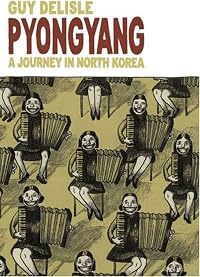
Pyongyang: A Journey in North Korea
by Guy Delisle
On This Page
Description
One of the few Westerners granted access to North Korea documents his observations of the secretive society in this graphic travelogue that depicts the cultural alienation, boredom, and desires of ordinary North Koreans.Tags
Recommendations


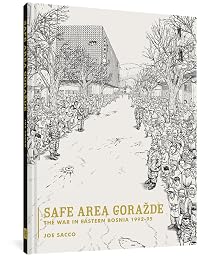




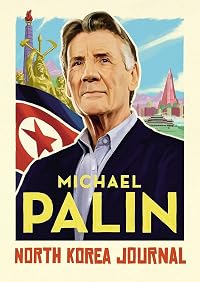



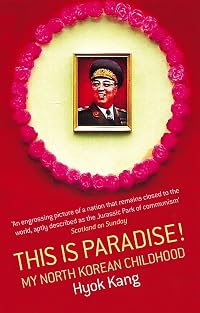

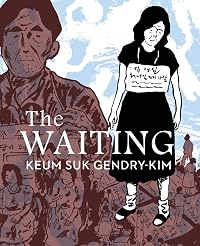
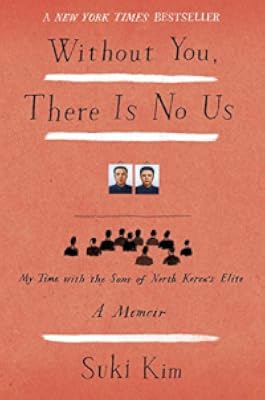
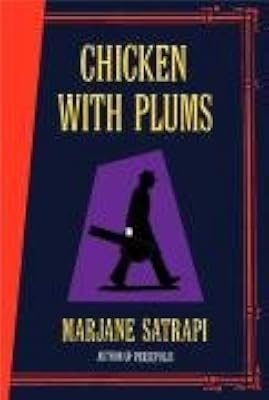
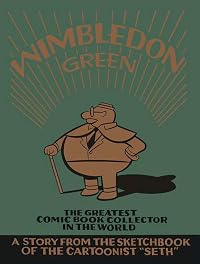
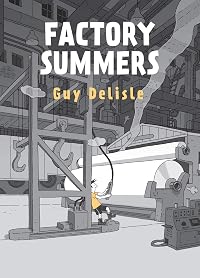
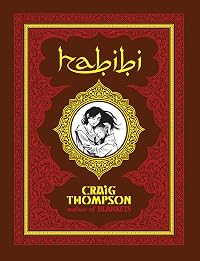

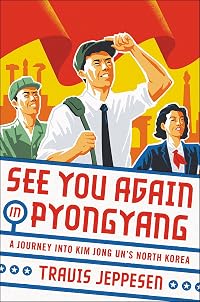
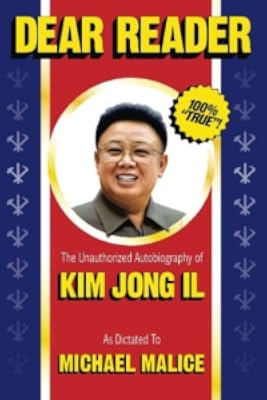

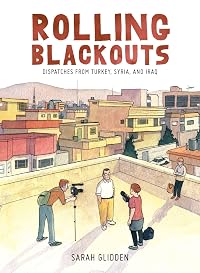
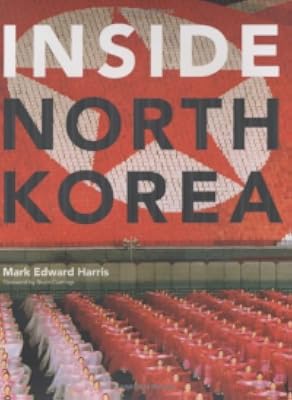
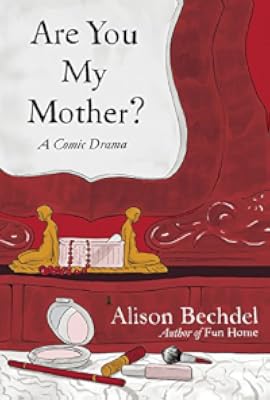



Member Recommendations

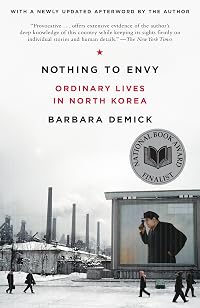
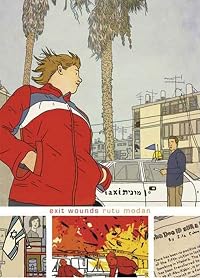
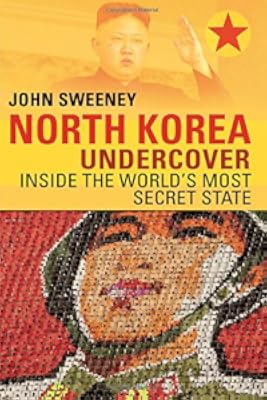
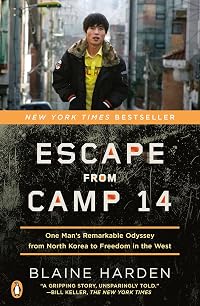
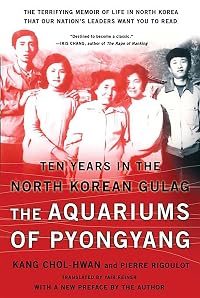
lorax Pyongyang is an outsider's view of the one part of the country where foreigners are generally permitted; Nothing to Envy is an inside look at ordinary life elsewhere in the country where the situation is even grimmer.
123

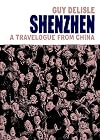
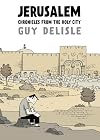
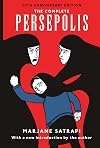


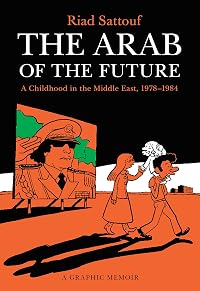
legxleg Both are graphic novel memoirs about trips to foreign countries. Please note that Siberiak is about the author's experiences as a teenager while the narrator of Pyongyang is an adult, and I think that their ages do necessarily inform their experiences.
Member Reviews
It's quite an authorial feat to write about a visit to the authoritarian dystopia of North Korea and to leave the impression that you, the author, are the most unsavoury element in the book!
I'm overstating it, I guess, but Delisle's graphic bio of his two month sojourn to North Korea overseeing an animation sweatshop (little evidence of his awareness of the exploitative nature of this) is characterised by his sneery arrogance and lack of empathy for the oppressed Korean people required to work with him, and then there's the instances of unsavoury sexism 🤢
There is still interest in his depiction of life amongst the Western enclave of corporate employees, diplomats and NGO workers in the North Korean capital, but sadly marred by a show more compassionless, supercilious authorial voice. 2.5⭐ show less
I'm overstating it, I guess, but Delisle's graphic bio of his two month sojourn to North Korea overseeing an animation sweatshop (little evidence of his awareness of the exploitative nature of this) is characterised by his sneery arrogance and lack of empathy for the oppressed Korean people required to work with him, and then there's the instances of unsavoury sexism 🤢
There is still interest in his depiction of life amongst the Western enclave of corporate employees, diplomats and NGO workers in the North Korean capital, but sadly marred by a show more compassionless, supercilious authorial voice. 2.5⭐ show less
Un eccellente reportage su una realtà che per la maggior parte dei suoi aspetti a un occidentale sembra davvero irreale. Scopro Delisle, che ha uno stile di narrazione semplice ed efficace (si vede che è anche animatore) e un umorismo pungente (penso non tanto al riferimento, un po' scontato, a 1984 di Orwell, quanto piuttosto a chicche come la citazione di The prisoner a p. 43).
Delisle's depiction of life as a visitor in North Korea - unable to take photographs, but obviously no one can prevent him from drawing - is unnerving in more than one way.
First, there's what he actually shows us; the empty highways, the empty hotels, the way nobody ever just strolls trough the streets of Pyongyang, the way the Great Leaders are literally everywhere, elevated to godhood status with all outside influences removed. His referencing 1984 several times is on the nose, but still fits: This is a society where Big Brother not only is watching, but has taught (or at least seems to have taught) the people to watch themselves as well.
"You're familiar with Marx? Very good."
"A little... but isn't everyone?"
"No. For a capitalist, show more it's very rare."
"Really...?"
Then, however, there's the fact that as a Westerner, he is completely outside this. He can afford to tell his guides exactly what he thinks, give them subversive literature that could get them in trouble, speculate on what they're actually thinking but aren't allowed to say, portray them as exactly the kind of mindless, humourless drones and tell jokes at their expense. There's an unpleasant sense of Mighty Whitey syndrome, understated but still there; it's not just that he can't get to actually know any North Koreans, but also that he doesn't seem to want to. It's all very Lost In Translation. There's a certain poetry to the fact that he's in North Korea to teach North Koreans how to animate Western cartoons - teach them how to understand how people (or fictional children's versions thereof) actually act - that I sort of wish had been developed.
I see a lot of [drawings depicting] versions of "The triumph of socialism". Always with a wide chest and a square jaw.
Good thing we don't get that over here, huh? show less
First, there's what he actually shows us; the empty highways, the empty hotels, the way nobody ever just strolls trough the streets of Pyongyang, the way the Great Leaders are literally everywhere, elevated to godhood status with all outside influences removed. His referencing 1984 several times is on the nose, but still fits: This is a society where Big Brother not only is watching, but has taught (or at least seems to have taught) the people to watch themselves as well.
"You're familiar with Marx? Very good."
"A little... but isn't everyone?"
"No. For a capitalist, show more it's very rare."
"Really...?"
Then, however, there's the fact that as a Westerner, he is completely outside this. He can afford to tell his guides exactly what he thinks, give them subversive literature that could get them in trouble, speculate on what they're actually thinking but aren't allowed to say, portray them as exactly the kind of mindless, humourless drones and tell jokes at their expense. There's an unpleasant sense of Mighty Whitey syndrome, understated but still there; it's not just that he can't get to actually know any North Koreans, but also that he doesn't seem to want to. It's all very Lost In Translation. There's a certain poetry to the fact that he's in North Korea to teach North Koreans how to animate Western cartoons - teach them how to understand how people (or fictional children's versions thereof) actually act - that I sort of wish had been developed.
I see a lot of [drawings depicting] versions of "The triumph of socialism". Always with a wide chest and a square jaw.
Good thing we don't get that over here, huh? show less
This engaging graphic novel, Pyongyang by Guy Delisle, takes a gently humorous look at North Korea. How unlikely does that sound? This is a graphic memoir of time spent there by French-Canadian Guy. He has a clean, lively graphic style. He is allowed into the country to help an animation studio complete what seems to be a poor quality kiddie cartoon. He's prohibited from going anywhere without a guide. The city has large hotels and theaters from more prosperous times that are now largely empty and becoming rundown. His hotel has no electricity except for a few floors for foreigners, and the few restaurants are also unpopulated, except for a smattering of foreigners. Photos of Kim Jong-Il and his son are everywhere, and he gets to visit show more a ridiculous museum dedicated to Kim, accompanied by an enthusiastic guide.
North Korea may be the world's most isolated country now. There's no Internet (compare South Korea!) There is not much going on in Pyongyang. And yet this book is fascinating. It's an insider's view of a place rarely photographed, visited or reported on. It's a communist dictatorship, with military everywhere. It still has "re-education" camps. However, maybe unsurprisingly, every Korean he meets praises its "Great Leader" Kim and exclaims about the accomplishments of their country compared to the rest of the world. The U.S. and Japan are vilified, capitalism has caused all the world's ills. All in North Korea is for the best in the best of all possible worlds. When, for example, Guy asks why he has seen no handicapped people, he is told: "All North Koreans are born strong, intelligent and healthy."
By all reports there have been some excellent books written about North Korea recently, like Nothing to Envy. I'm now much more interested in reading them. If you're curious about North Korea, this is an improbably fun way to learn more about it, while being amused by Guy's everyman reactions to what he encounters. show less
North Korea may be the world's most isolated country now. There's no Internet (compare South Korea!) There is not much going on in Pyongyang. And yet this book is fascinating. It's an insider's view of a place rarely photographed, visited or reported on. It's a communist dictatorship, with military everywhere. It still has "re-education" camps. However, maybe unsurprisingly, every Korean he meets praises its "Great Leader" Kim and exclaims about the accomplishments of their country compared to the rest of the world. The U.S. and Japan are vilified, capitalism has caused all the world's ills. All in North Korea is for the best in the best of all possible worlds. When, for example, Guy asks why he has seen no handicapped people, he is told: "All North Koreans are born strong, intelligent and healthy."
By all reports there have been some excellent books written about North Korea recently, like Nothing to Envy. I'm now much more interested in reading them. If you're curious about North Korea, this is an improbably fun way to learn more about it, while being amused by Guy's everyman reactions to what he encounters. show less
In 2001, Guy Delisle was allowed into North Korea to work on an animated cartoon. He spent about two months there. This work is a travelogue of his experiences.
His hotel room was located in one of the three hotels meant for foreigners. Although he was only in North Korea for a couple months, he met several people who had been and would continue to be there for years. He was accompanied by a guide and/or translator almost everywhere he went, which included a few sightseeing and museum trips, although there were a few places (the restaurants, I think?) where only foreigners were allowed.
This is a weird work, with Delisle's everyday experiences (and one other animator's), interspersed with research about North Korea. Delisle would show more occasionally see things (a particularly popular spot, for example) that his guide and translator would pretend not to recognize, although he might later find out what he'd really seen from someone else (in that case, a shooting gallery with silhouettes of American and Japanese soldiers for pratice).
He eventually got into the rhythms of the place (diplomats at the hotel meant there would be melon at the restaurant), but it was easy to see why those who were there for years rather than months tended to come across as a bit odd.
One particular bit stuck in my head: the North Korean person who said he was skipping out on watching a movie because North Korean movies are boring, quite possibly the most negative thing Delisle heard any North Koreans say about their country while he was there. I couldn't help but wonder how long after that the guy lasted before he ended up being "disappeared" like the one talented North Korean animator Delisle was told about.
(Original review posted on A Library Girl's Familiar Diversions.) show less
His hotel room was located in one of the three hotels meant for foreigners. Although he was only in North Korea for a couple months, he met several people who had been and would continue to be there for years. He was accompanied by a guide and/or translator almost everywhere he went, which included a few sightseeing and museum trips, although there were a few places (the restaurants, I think?) where only foreigners were allowed.
This is a weird work, with Delisle's everyday experiences (and one other animator's), interspersed with research about North Korea. Delisle would show more occasionally see things (a particularly popular spot, for example) that his guide and translator would pretend not to recognize, although he might later find out what he'd really seen from someone else (in that case, a shooting gallery with silhouettes of American and Japanese soldiers for pratice).
He eventually got into the rhythms of the place (diplomats at the hotel meant there would be melon at the restaurant), but it was easy to see why those who were there for years rather than months tended to come across as a bit odd.
One particular bit stuck in my head: the North Korean person who said he was skipping out on watching a movie because North Korean movies are boring, quite possibly the most negative thing Delisle heard any North Koreans say about their country while he was there. I couldn't help but wonder how long after that the guy lasted before he ended up being "disappeared" like the one talented North Korean animator Delisle was told about.
(Original review posted on A Library Girl's Familiar Diversions.) show less
The drawings and format of ‘Pyongyang: a journey through North Korea’ are amazing and the fact you can ‘see’ Guy Delisle’s experiences through his drawings really adds to the purpose of this genre of writing (In fact if all travelogues were of this ilk it wouldn’t be the worse thing!) Equally, the content of the work - two months in the most guarded and clandestine country of the last century - is captivating. The words and pictures combine to evoke a tangible sense of oppression and delusion of a people which is just what is needed for awareness to develop and increase. A slight blemish I found was that the author seemed a tad petulant and somewhat passive aggressive during his stay, which led to a diminishing respect of show more the customs and people he had to abide. Don’t get me wrong, I think I would’ve found it hard not to react to such a regime and way of life but the way he did it (throwing paper aeroplanes out of windows, running from guides, offering his translator 1984 to read) seemed a little immature. That being said, the fact he took 1984 with him for a reread on the trip was a nice touch. Let’s all hope that books like this ring increasing awareness to what is happening in this cloaked crucible and paves the way for the help of the hundreds of thousands of North Koreans who are impoverished, oppressed or brainwashed to eventually secure a better future which unites them with their global family. show less
Pyongyang is subtitled ‘A Journey in North Korea.’ Journey might be overstating is somewhat: for the most part, Delisle is stationed in Pyongyang, where he is working for a French animation company, occasionally being escorted on day trips further afield. However, his experiences and commentary are fascinating and beautifully illustrated and, occasionally, hilarious. I think it is this humour that made the book special for me: the subject matter is far too depressing otherwise, if I hadn’t been able to laugh every few pages I probably would have abandoned it mid-way. Happily, I was hooked quite early when, immediately after arriving in Pyongyang, Delisle is reading a passage about the thought police from 1984 in his hotel bedroom show more and subsequently becomes somewhat paranoid about his room being tapped. This is also where I first realised the power of images over text, as the episode is conveyed without commentary.
Delisle’s experience is the same of any foreign entering a communist country. He is assigned a translator and a guide, both of whom chaperon all of his excursions outside of the sterile hotel-zone. Like all foreigners, he attempts to get his translator to admit to feeling stifled and scared by the communist regime. Like all foreigners, he fails. He is outraged by the propaganda that pervades throughout the country: his field trips are all to such inspiring sights as The Children’s Palace, the Museum of Imperialist Occupation, and the Pyongyang subway, which foreigners are only allowed to ride from one stop to the next. As Delisle notes in frustration: “there’s a banner on every building, a portrait on every wall, a pin on every chest.” Naïve to be surprised by this perhaps, but his documentation of the various forms of propaganda is fascinating nonetheless. I know so little about North Korea that any glimpse of it is fascinating and Delisle handles the little details exceedingly well – everything from the make-work projects civilians ‘volunteer’ for to the disgusting, soiled tablecloths that can be found in all restaurants.
All in all, an intriguing glimpse into a very private country and a wonderful introduction to a talented illustrator. I’m already eager to get my hands on a copy of Delisle’s The Burma Chronicles.
Full review: http://thecaptivereader.wordpress.com/2010/04/03/pyongyang-guy-delisle/ show less
Delisle’s experience is the same of any foreign entering a communist country. He is assigned a translator and a guide, both of whom chaperon all of his excursions outside of the sterile hotel-zone. Like all foreigners, he attempts to get his translator to admit to feeling stifled and scared by the communist regime. Like all foreigners, he fails. He is outraged by the propaganda that pervades throughout the country: his field trips are all to such inspiring sights as The Children’s Palace, the Museum of Imperialist Occupation, and the Pyongyang subway, which foreigners are only allowed to ride from one stop to the next. As Delisle notes in frustration: “there’s a banner on every building, a portrait on every wall, a pin on every chest.” Naïve to be surprised by this perhaps, but his documentation of the various forms of propaganda is fascinating nonetheless. I know so little about North Korea that any glimpse of it is fascinating and Delisle handles the little details exceedingly well – everything from the make-work projects civilians ‘volunteer’ for to the disgusting, soiled tablecloths that can be found in all restaurants.
All in all, an intriguing glimpse into a very private country and a wonderful introduction to a talented illustrator. I’m already eager to get my hands on a copy of Delisle’s The Burma Chronicles.
Full review: http://thecaptivereader.wordpress.com/2010/04/03/pyongyang-guy-delisle/ show less
Members
- Recently Added By
Published Reviews
ThingScore 75
I appreciated seeing such a personal view of a country I’ll never visit. I love comics that can expand my boundaries this way.
added by lampbane
Delisle's evocative pencil drawings are suited to depicting a colourless, twilight world in which the state is all, with his rudimentary characters inhabiting vast and much more detailed architectural environments. Less well drawn are the inner lives of Pyongyang's citizens.
added by stephmo
North Korea is a country suffering in more ways than the author makes note of and I’m sure any reader could surmise this from his account, but rather than mine the heart of this suffering, Delisle achieves the literary equivalent of hiding a paraplegic’s wheelchair.
added by stephmo
Lists

Recommended Comics / Graphic Novels
595 works; 122 members
Club Read's Graphic Stories Recommendations
127 works; 2 members

Best Travel Narrative
32 works; 20 members

Books Read in 2014
2,343 works; 89 members

Drawn Out: The 50 Best Non-Superhero Graphic Novels
175 works; 8 members
Best Graphic Novel Nonfiction
199 works; 101 members

Books Read in 2025
4,128 works; 98 members
Author Information

32+ Works 6,044 Members
Some Editions
Awards and Honors
Awards
Distinctions
Series
Belongs to Publisher Series
Common Knowledge
- Canonical title
- Pyongyang: A Journey in North Korea
- Original title
- Pyongyang
- Original publication date
- 2003
- People/Characters
- Guy Delisle
- Important places
- Pyongyang, North Korea; North Korea
- First words
- And what's this?
- Last words
- (Click to show. Warning: May contain spoilers.)C'mon! Go!
- Original language
- English
Classifications
- Genre
- Graphic Novels & Comics
- DDC/MDS
- 951.93043 — History & geography History of Asia East Asia: China, Taiwan, Hong Kong, Korea Korean Peninsula North Korea (Democratic People's Republic of Korea)
- LCC
- PN6733 .D44 .P913 — Language and Literature Literature (General) Literature (General) Collections of general literature Comic books, strips, etc.
- BISAC
Statistics
- Members
- 1,982
- Popularity
- 10,673
- Reviews
- 81
- Rating
- (3.91)
- Languages
- 15 — Czech, Danish, Dutch, English, Finnish, French, German, Italian, Norwegian (Bokmål), Norwegian, Polish, Spanish, Swedish, Turkish, Portuguese (Brazil)
- Media
- Paper, Ebook
- ISBNs
- 32
- ASINs
- 10