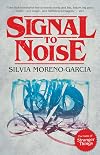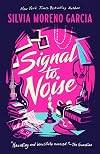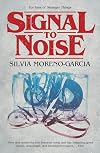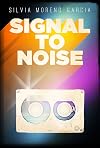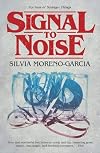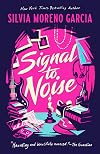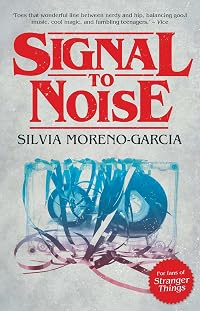
Signal to Noise
by Silvia Moreno-Garcia
On This Page
Description
"Mexico City, 1988: Long before iTunes or MP3s, you said "I love you" with a mixtape. Meche, awkward and fifteen, has two equally unhip friends, Sebastian and Daniela, and a whole lot of vinyl records to keep her company. When she discovers how to cast spells using music, the future looks brighter for the trio. The three friends will piece together their broken families, change their status as non-entities, and maybe even find love. Mexico City, 2009: Two decades after abandoning the show more metropolis, Meche returns for her estranged father's funeral. It's hard enough to cope with her family, but then she runs into Sebastian, reviving memories from her childhood she thought she buried a long time ago. What really happened back then? What precipitated the bitter falling out with her father? Is there any magic left?"--Page [4] of cover. show lessTags
Recommendations


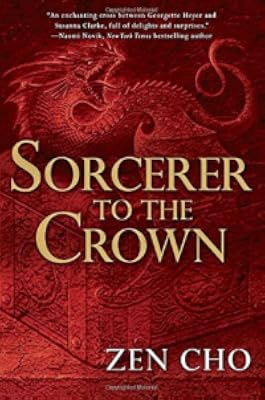
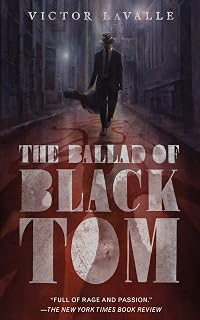



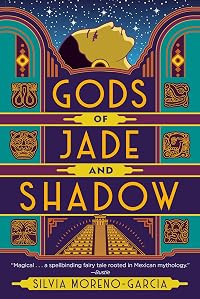

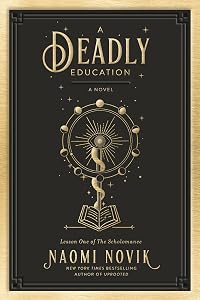




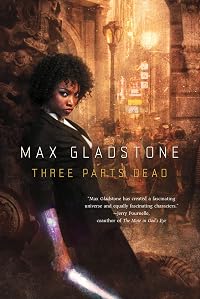
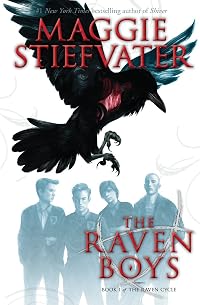
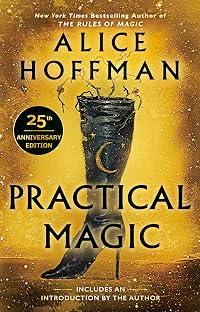
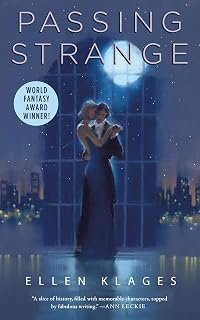










Member Recommendations

Member Reviews
Hold on a moment while I slip into some stirrup pants, a knit sweater from The Limited, and my pink leather flats because we are going back to the 80s. This book takes place in 1989 and 2009, the former when Meche was a teenager and the latter when she returned home to Mexico City for a family event.
The 80s stuff was so great. I was a teenager in the 80s, though I'm a few years older than Meche, and everything was on point. The clothes, the hair, and most especially the music anchor you in place. (I have so many notes about songs I want to listen to.) And it was so very teenager, if you remember how it was back then, so full of the feeling that you were on the brink of something magical. And in Meche's case, she truly was.
The Oughts show more stuff of this novel somehow felt less locked into place than the 80s stuff, and to great effect because even though the Oughts were the "present" of this novel, it's the 80s that were the center of the story.
Meche is so great. When she's a teenager she's... well, she's a teenager. She lets the power she's always been denied go to her head and she is impetuous and sometimes cruel. And she's stubborn and almost humorously cannot share her emotions with anyone. She retains some of that emotional immaturity as an adult, but she's trying to deal with it, and her doing so results in one of the best scenes in the novel.
This is a book of flawed people doing the best they can, about magic and music, and about love.
[I received this book free from NetGalley in exchange for an honest review.] show less
The 80s stuff was so great. I was a teenager in the 80s, though I'm a few years older than Meche, and everything was on point. The clothes, the hair, and most especially the music anchor you in place. (I have so many notes about songs I want to listen to.) And it was so very teenager, if you remember how it was back then, so full of the feeling that you were on the brink of something magical. And in Meche's case, she truly was.
The Oughts show more stuff of this novel somehow felt less locked into place than the 80s stuff, and to great effect because even though the Oughts were the "present" of this novel, it's the 80s that were the center of the story.
Meche is so great. When she's a teenager she's... well, she's a teenager. She lets the power she's always been denied go to her head and she is impetuous and sometimes cruel. And she's stubborn and almost humorously cannot share her emotions with anyone. She retains some of that emotional immaturity as an adult, but she's trying to deal with it, and her doing so results in one of the best scenes in the novel.
This is a book of flawed people doing the best they can, about magic and music, and about love.
[I received this book free from NetGalley in exchange for an honest review.] show less
You probably won't get this novel if you don't remember those times, those situations, where music can be magic. Not just nice to listen to, or even the pure emotional rush of it, but actual honest-to-goodness world-changing magic. And "remember" is indeed a key word here; just like music accesses some part of our brain beyond language, so do memories. Signal To Noise, therefore, takes place in two timelines: in 1989, when three outcasts at a Mexico City high school discover that they can use music to cast actual spells, and twenty years later, when Meche Vega returns home for the first time in 20 years to bury her estranged father and has to start sorting through her memories of what happened.
It's a novel about relationship and show more memories that doubles as playlist, or rather as mix tape; listening to the playlist (Spotify), a mix of old rock and jazz classics and somewhat cheesy, overproduced 80s Mexican pop, is almost necessary. It's not that I hear the magic in all those songs, or even that Moreno-García can always capture it in writing - but it still triggers something in me, a memory that doesn't have to go with that particular song. Our mixtapes are memories of untold histories, to quote a poet.
You might argue that the misunderstood-loner-in-high-school-discovers-magic-powers (though the magic bit is nicely understated, neither solving or spoiling anything by itself) plot is trite. Trite like an 80s pop song, that at one point meant everything and now gathers dust. Sure. You might even argue that it's hard to like (who decided we have to like fictional characters anyway) Meche, I still call her a bizarrely produced but brilliant single, all elbows, too loud drums and sharp notes. And while most of the action takes place in 1989, it's the distance - and the closing of that distance - 20 years later that makes the novel more than just a novelty. Sure it's been done before, sure all those drum machines and DX7s and teenage drama sound a bit silly today, but we lived through them, they changed our world, and it would be a lie to forget it. show less
It's a novel about relationship and show more memories that doubles as playlist, or rather as mix tape; listening to the playlist (Spotify), a mix of old rock and jazz classics and somewhat cheesy, overproduced 80s Mexican pop, is almost necessary. It's not that I hear the magic in all those songs, or even that Moreno-García can always capture it in writing - but it still triggers something in me, a memory that doesn't have to go with that particular song. Our mixtapes are memories of untold histories, to quote a poet.
You might argue that the misunderstood-loner-in-high-school-discovers-magic-powers (though the magic bit is nicely understated, neither solving or spoiling anything by itself) plot is trite. Trite like an 80s pop song, that at one point meant everything and now gathers dust. Sure. You might even argue that it's hard to like (who decided we have to like fictional characters anyway) Meche, I still call her a bizarrely produced but brilliant single, all elbows, too loud drums and sharp notes. And while most of the action takes place in 1989, it's the distance - and the closing of that distance - 20 years later that makes the novel more than just a novelty. Sure it's been done before, sure all those drum machines and DX7s and teenage drama sound a bit silly today, but we lived through them, they changed our world, and it would be a lie to forget it. show less
Signal To Noise by Silvia Moreno-Garcia
is a Historical-Fiction/Sci-Fi Fantasy that begins in a present day timeline. Meche is reluctantly returning to the Mexico City neighborhood of her childhood for her grandfather's funeral. She has nostalgic 1980's flashbacks to good and bad times with her friends Sebastian and Daniela. The trio is creating their own culture of magic using dark story sources from Shakespeare to National Geographic, their favorite grandmother's muddled memories, and any quirky phrase in a book or song that has imaginary possibilities. Oh, and it's the 80's, of course, so the spellbinding musical resources to layer in seem to be everywhere on radios, walkmans, and turntables. In the 80's timeline you will navigate show more street life, school life, and 'strange' family lives. Escaping with friends is the default survival strategy- but the end goal for Meche seems to be experimenting with ways that magic can passive aggressively solve those everyday problems that become more and more overwhelming. The growing power of magic seems to be turning her to the dark side. Yes, her magic is getting out of control.. The storytelling has the YA feel of an easy flow, a quick pace, and plenty of teen coming of age interactions. The undercurrent of a friends vs more than friends relationship straddles both timelines between Mech and Sebastian. So does the mystery of who Mech's father really was and who the friends and their old neighborhood have become. And yes, the hurts that remain from something unspoken that happened…This story confirmed my musical belief that there is a song for everything!
I enjoyed several clever writing strategies in the book, including parallel jumps between up to three ongoing scenes in the same timelines (like movies do), and regular switches from one scene to another for the same character (or different characters) with zero transition but context clues that anchor your location moving you forward in time around in space at a quick pace. Fresh and youthful with a mystical urban feel. I received an ARC of Rebellion Publishing's new edition of the prolific Moreno-Garcia's debut in exchange for this fair review. show less
is a Historical-Fiction/Sci-Fi Fantasy that begins in a present day timeline. Meche is reluctantly returning to the Mexico City neighborhood of her childhood for her grandfather's funeral. She has nostalgic 1980's flashbacks to good and bad times with her friends Sebastian and Daniela. The trio is creating their own culture of magic using dark story sources from Shakespeare to National Geographic, their favorite grandmother's muddled memories, and any quirky phrase in a book or song that has imaginary possibilities. Oh, and it's the 80's, of course, so the spellbinding musical resources to layer in seem to be everywhere on radios, walkmans, and turntables. In the 80's timeline you will navigate show more street life, school life, and 'strange' family lives. Escaping with friends is the default survival strategy- but the end goal for Meche seems to be experimenting with ways that magic can passive aggressively solve those everyday problems that become more and more overwhelming. The growing power of magic seems to be turning her to the dark side. Yes, her magic is getting out of control.. The storytelling has the YA feel of an easy flow, a quick pace, and plenty of teen coming of age interactions. The undercurrent of a friends vs more than friends relationship straddles both timelines between Mech and Sebastian. So does the mystery of who Mech's father really was and who the friends and their old neighborhood have become. And yes, the hurts that remain from something unspoken that happened…This story confirmed my musical belief that there is a song for everything!
I enjoyed several clever writing strategies in the book, including parallel jumps between up to three ongoing scenes in the same timelines (like movies do), and regular switches from one scene to another for the same character (or different characters) with zero transition but context clues that anchor your location moving you forward in time around in space at a quick pace. Fresh and youthful with a mystical urban feel. I received an ARC of Rebellion Publishing's new edition of the prolific Moreno-Garcia's debut in exchange for this fair review. show less
'Why can't music be magic? Aren't spells just words you repeat? And what are songs? Lyrics that play over and over again. The words are like a formula.'
I took so long to download this that the cover image changed in my wishlist, but Silvia Moreno-Garcia's novel was well worth the wait. A YA story set in Mexico, switching between 1984 and 2009, Signal to Noise is a wonderful blend of music and magic. Best friends and fellow misfits Meche (Mercedes) and Sebastian are struggling through school, family life and first love, but will the power of music draw them together or break them apart?
Even though the twin themes of nostalgia and mysticism are far from original in coming of age novels like this, the characters are both believable and show more sympathetic, even prickly Meche, who casually inherits her grandmother's powers but quickly begins to abuse her talents. I identified with her, and Sebastian, and Daniela, the third 'witch' in Meche's coven - anybody who grew up on the fringes of school life, preferring to retreat into the sanctuary of books or headphones couldn't help but like them, and feel for them. Meche and Sebastian's relationship also reminded me of Austen's Emma and Mr Knightley, friends too close to realise how strongly they feel about each other. Oh, and bonus points for mentioning Queen and Freddie Mercury! A fast and youthful read, very enjoyable. show less
I took so long to download this that the cover image changed in my wishlist, but Silvia Moreno-Garcia's novel was well worth the wait. A YA story set in Mexico, switching between 1984 and 2009, Signal to Noise is a wonderful blend of music and magic. Best friends and fellow misfits Meche (Mercedes) and Sebastian are struggling through school, family life and first love, but will the power of music draw them together or break them apart?
Even though the twin themes of nostalgia and mysticism are far from original in coming of age novels like this, the characters are both believable and show more sympathetic, even prickly Meche, who casually inherits her grandmother's powers but quickly begins to abuse her talents. I identified with her, and Sebastian, and Daniela, the third 'witch' in Meche's coven - anybody who grew up on the fringes of school life, preferring to retreat into the sanctuary of books or headphones couldn't help but like them, and feel for them. Meche and Sebastian's relationship also reminded me of Austen's Emma and Mr Knightley, friends too close to realise how strongly they feel about each other. Oh, and bonus points for mentioning Queen and Freddie Mercury! A fast and youthful read, very enjoyable. show less
Much as Jonathan Lethem accomplished with his Fortress of Solitude, the fantasy elements of Signal to Noise, while important, do not drive the narrative; rather, it’s the sensitive and lovely portrayal of childhood ideals mashing up against adult reality that forms the book’s heart. Meche and her friends are realistically flawed beings driven by a combination of childish wishes and adolescent hormones, finding themselves with an avenue into the fantastic and yet unable to reconcile this newfound power with any emotional maturity. Signal to Noise is about magic, but more importantly, it’s concerned with what lies beyond magic, when the fantasy has collapsed and all we can do is pick up the pieces and go on. In other words, magic show more itself isn’t important; it’s how we deal with its absence that proves who we are, or what we may be.
Read more at the Redeblog. show less
Read more at the Redeblog. show less
I received an ebook through NetGalley.
This highly enjoyable novel reminded me of a cross between Charles de Lint's Newford and Rainbow Rowell's Eleanor and Park. Moreno-Garcia evokes magical realism via music in late 1980s Mexico City. Meche is an angry girl--a bitch, quite frankly--who is often the cruelest to her friends Sebastian and Daniela. Meche's life is music and mix tapes. When she realizes she can cast spells via song and pulls her friends into her plot, things escalate in dangerous ways.
The plot thread set in 2009 is just as intriguing. Meche is forced to confront her past when she reluctantly returns home for her father's funeral. Moreno-Garcia does a fabulous job of showing how Meche has changed yet stayed true to herself, show more in both good and bad ways. The back and forth flow is paced just right; it looks effortless, and as a writer awes me a bit because of the work that must have been involved.
It's a deep book. It can be marketed as YA but I really don't think the younger set would "get it" as much as an older reader. (And man, I hated being told that when I was younger, but...) I was able to personally connect withe Meche even though she's unlikeable at times. The period details were spot-on. I knew most of the music--loved it when Steve Perry was mentioned--and at one point, the friends even play the original Castlevania together. Plus, I enjoyed the fresh setting of Mexico City. It's really a great mix of elements, and the more I think on the novel, the more I like it. show less
This highly enjoyable novel reminded me of a cross between Charles de Lint's Newford and Rainbow Rowell's Eleanor and Park. Moreno-Garcia evokes magical realism via music in late 1980s Mexico City. Meche is an angry girl--a bitch, quite frankly--who is often the cruelest to her friends Sebastian and Daniela. Meche's life is music and mix tapes. When she realizes she can cast spells via song and pulls her friends into her plot, things escalate in dangerous ways.
The plot thread set in 2009 is just as intriguing. Meche is forced to confront her past when she reluctantly returns home for her father's funeral. Moreno-Garcia does a fabulous job of showing how Meche has changed yet stayed true to herself, show more in both good and bad ways. The back and forth flow is paced just right; it looks effortless, and as a writer awes me a bit because of the work that must have been involved.
It's a deep book. It can be marketed as YA but I really don't think the younger set would "get it" as much as an older reader. (And man, I hated being told that when I was younger, but...) I was able to personally connect withe Meche even though she's unlikeable at times. The period details were spot-on. I knew most of the music--loved it when Steve Perry was mentioned--and at one point, the friends even play the original Castlevania together. Plus, I enjoyed the fresh setting of Mexico City. It's really a great mix of elements, and the more I think on the novel, the more I like it. show less
"I hate this city," she told the pillow, because she wouldn't tell him.
Music as magic. 1988 and 2009. A story split between two fixed points, a friendship then and what it might be now.
Set in Mexico City, this novel follows a young teen named Meche, a loner who adores music and is friends with two other loners, Sebastian and Daniela. When Meche discovers she can cast spells using records, her life is changed.
Initially, it seems this magical skill can only improve Meche's life, even though Sebastian and Daniela are less convinced. Angry teenagers wielding magic leads right where you can imagine, and I loved every minute of it. Moreno-Garcia beautifully articulates that awful, oppressive, unshakeable frustration one suffers as a teen, and show more the ugly wishes Meche manifests resonated with me so strongly. At times, Meche is so unlikable, but realistically so: you want to shake her as much as hug her.
Interwoven in Meche's story is that of her father, a music lover searching for a magical fix of his own, so to speak. His own happy ending. The journey to find it has costs, like Meche's journey for happiness. The bittersweet realism in this book is what keeps it from being flimsy, soft, or too fantastical.
I could have taken another two hundred pages of this book; I wasn't ready to leave Meche as a teen or adult. Like a great mix that leaves you laying on bed in the dark, not asleep, not awake, Signal to Noise left me satisfied and wanting more. show less
Music as magic. 1988 and 2009. A story split between two fixed points, a friendship then and what it might be now.
Set in Mexico City, this novel follows a young teen named Meche, a loner who adores music and is friends with two other loners, Sebastian and Daniela. When Meche discovers she can cast spells using records, her life is changed.
Initially, it seems this magical skill can only improve Meche's life, even though Sebastian and Daniela are less convinced. Angry teenagers wielding magic leads right where you can imagine, and I loved every minute of it. Moreno-Garcia beautifully articulates that awful, oppressive, unshakeable frustration one suffers as a teen, and show more the ugly wishes Meche manifests resonated with me so strongly. At times, Meche is so unlikable, but realistically so: you want to shake her as much as hug her.
Interwoven in Meche's story is that of her father, a music lover searching for a magical fix of his own, so to speak. His own happy ending. The journey to find it has costs, like Meche's journey for happiness. The bittersweet realism in this book is what keeps it from being flimsy, soft, or too fantastical.
I could have taken another two hundred pages of this book; I wasn't ready to leave Meche as a teen or adult. Like a great mix that leaves you laying on bed in the dark, not asleep, not awake, Signal to Noise left me satisfied and wanting more. show less
Members
- Recently Added By
Lists

Magic Realism
371 works; 52 members

2016 Hugo Eligible Novels
90 works; 32 members

Recommended Speculative Fiction by Women and People of Color
298 works; 45 members

Books for Fans of Stranger Things
84 works; 7 members

Speculative Fiction from around the World
610 works; 18 members

Book Club: There aren’t any [Blank] authors in Sci Fi/Fantasy!
12 works; 1 member
Author Information

69+ Works 20,157 Members
Awards and Honors
Awards
Notable Lists
Common Knowledge
- Original publication date
- 2015-02-10
- People/Characters
- Mercedes "Meche" Vega; Sebastian Soto; Daniela; Vicente Vega; Natalia; Isadora (show all 7); Constantino
- Important places
- Mexico City, Mexico
- First words
- Meche folded the magazine and finally decided to look out the window.
- Last words
- (Click to show. Warning: May contain spoilers.)Deep down they know one fine morning they'll run away together to a place where the sun shines at midnight.
- Original language
- English
Classifications
Statistics
- Members
- 590
- Popularity
- 49,768
- Reviews
- 32
- Rating
- (3.78)
- Languages
- English
- Media
- Paper, Audiobook, Ebook
- ISBNs
- 7
- ASINs
- 5