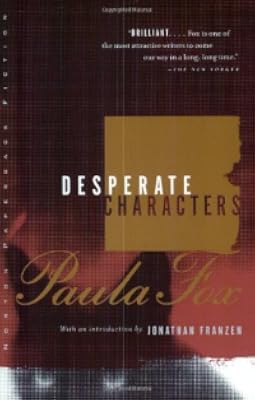
Desperate Characters
by Paula Fox
On This Page
Description
One of The Atlantic's Great American Novels One of the New York Times' 25 Most Significant New York City Novels From the Last 100 Years "A towering landmark of postwar Realism…A sustained work of prose so lucid and fine it seems less written than carved." -David Foster Wallace Otto and Sophie Bentwood live in a changing neighborhood in Brooklyn. Their stainless-steel kitchen is newly installed, and their Mercedes is parked curbside. After Sophie is bitten on the hand while trying to feed a show more stray, perhaps rabies-infected cat, a series of small and ominous disasters begin to plague the Bentwoods' lives, revealing the fault lines and fractures in a marriage-and a society-wrenching itself apart. First published in 1970 to wide acclaim, Desperate Characters stands as one of the most dazzling and rigorous examples of the storyteller's craft in postwar American literature - a novel that, according to Irving Howe, ranks with "Billy Budd, The Great Gatsby, Miss Lonelyhearts, and Seize the Day.". show lessTags
Recommendations











Member Recommendations

Member Reviews
I'm so glad I found my way to this book, and Paula Fox...Desperate Characters is a book of its time, yet timeless, the writing is elegant and brave, the mood feels claustrophobic, but at times hilarious in spite of the tension, the desperation. Otto and Sophie are in that middle-age landscape, the low valley between young and old, feeling a loss as it seems the world moves on in spite of them, their efforts, their frustration with others around them and a chain reaction of events that start with a stray cat biting Sophie's hand threatens to undo the relative peace they thought they had, suffering quietly in their discontent, but they snap with occasional outbursts that momentarily stuns them... silent forgiveness and denial moves them show more onward. It is a mysterious little book, but it's all there...a thin slice of life, pared down to simplicity. It's beautiful, I loved it, and will go back to it many times. show less
"...she was still smiling as the cat reared up on its hind legs, even as at struck at her with extended claws, smiling right up to that second when it sunk its teeth into the back of her left hand and hung from her flesh so that she nearly fell forward, stunned and horrified...."
Otto and Sophie Bentwood live in a gentrifying Brooklyn neighborhood. Otto is in the process of dissolving his longtime law partnership with Charlie Russell. Cracks are beginning to show in Otto and Sophie's marriage, and outside, all around are signs that civil society is falling apart.
One evening after dinner, Sophie gives a saucer of milk to a stray cat on their back porch. As she bends down to pet the cat, it viciously bites her. Over the next three days she show more ponders, Will she get rabies and die? or Will nothing happen? Sophies ambivalence was said, by Jonathan Franzen in the forward to the edition I read, to resemble Hamlet, a "morbidly self-conscious character who receives a disturbing and ambiguous message, undergoes torments while trying to decide what the message means...." Over the three days as Sophie tries to decide what to do, then waits test results, the book builds enormous suspense. I found the writing to be exquisite, and I underlined many phrases. (I will probably put a few at the end of this review). I will definitely be searching for more to read by Paula Fox
4 1/2 stars
Incidentally David Foster Wallace called this book "A towering landmark of postwar Realism." And Jonathan Franzen says this book and Fox are better than her contemporaries Updike, Roth, and Bellow.
First line: "Mr. and Mrs. Otto Bentwood drew out their chairs simultaneously."
Last lines: "The voice from the telephone went on and on like gas leaking from a pipe. Sophie and Otto had ceased to listen. Her arms fell away from his shoulders as they both turned slowly to the wall, turned until they could both see the ink running down to the floor in black lines...."
Here are a few more quotes:
"What the owners on the street lusted after was recognition of their superior comprehension of what counted in this world, and their strategy for getting it combined restraint and direction."
"All around them were official buildings, with the peculiarly threatening character. of large carnivorous animals momentarily asleep."
Otto and Charlie were like "smiling people in a swimming pool, kicking each other under water."
"She had only recently realized that one was old for a very ong time." show less
Otto and Sophie Bentwood live in a gentrifying Brooklyn neighborhood. Otto is in the process of dissolving his longtime law partnership with Charlie Russell. Cracks are beginning to show in Otto and Sophie's marriage, and outside, all around are signs that civil society is falling apart.
One evening after dinner, Sophie gives a saucer of milk to a stray cat on their back porch. As she bends down to pet the cat, it viciously bites her. Over the next three days she show more ponders, Will she get rabies and die? or Will nothing happen? Sophies ambivalence was said, by Jonathan Franzen in the forward to the edition I read, to resemble Hamlet, a "morbidly self-conscious character who receives a disturbing and ambiguous message, undergoes torments while trying to decide what the message means...." Over the three days as Sophie tries to decide what to do, then waits test results, the book builds enormous suspense. I found the writing to be exquisite, and I underlined many phrases. (I will probably put a few at the end of this review). I will definitely be searching for more to read by Paula Fox
4 1/2 stars
Incidentally David Foster Wallace called this book "A towering landmark of postwar Realism." And Jonathan Franzen says this book and Fox are better than her contemporaries Updike, Roth, and Bellow.
First line: "Mr. and Mrs. Otto Bentwood drew out their chairs simultaneously."
Last lines: "The voice from the telephone went on and on like gas leaking from a pipe. Sophie and Otto had ceased to listen. Her arms fell away from his shoulders as they both turned slowly to the wall, turned until they could both see the ink running down to the floor in black lines...."
Here are a few more quotes:
"What the owners on the street lusted after was recognition of their superior comprehension of what counted in this world, and their strategy for getting it combined restraint and direction."
"All around them were official buildings, with the peculiarly threatening character. of large carnivorous animals momentarily asleep."
Otto and Charlie were like "smiling people in a swimming pool, kicking each other under water."
"She had only recently realized that one was old for a very ong time." show less
This was a dark and foreboding read about a comfortably well-off New York couple and the seeping uncontrollable infiltration of the ugly side of the world into their lives. At the beginning the wife is bitten by a stray cat, and as the bite gets steadily worse she sees it as an ominous omen about all that's becoming unhinged in their lives, from the encroachment of the poorer part of their Brooklyn neighbourhood on their home to the collapse of her husband's business partnership and a sense of unexplained destabilisation between the couple.
The writing was cleverly unsettling which I enjoyed; you're not sure where Fox is ultimately taking you, but you know that it's not going to be somewhere pink and fluffy. There's the sense that the show more couple themselves can't get a grip on their own emotions, which leaves us discombobulated and unsure as readers.
This isn't a novel that particularly goes anywhere plot-wise, but it's stylishly written quicksand and a dark snapshot of an elitist white middle-class marriage in an evolving 1960s New York.
I appreciated and enjoyed this novel, and can see how it would be a great novel for literary criticism, but I doubt I'll spend too much time looking back on it.
3.5 stars - a short, dark and unsettling ride. show less
The writing was cleverly unsettling which I enjoyed; you're not sure where Fox is ultimately taking you, but you know that it's not going to be somewhere pink and fluffy. There's the sense that the show more couple themselves can't get a grip on their own emotions, which leaves us discombobulated and unsure as readers.
This isn't a novel that particularly goes anywhere plot-wise, but it's stylishly written quicksand and a dark snapshot of an elitist white middle-class marriage in an evolving 1960s New York.
I appreciated and enjoyed this novel, and can see how it would be a great novel for literary criticism, but I doubt I'll spend too much time looking back on it.
3.5 stars - a short, dark and unsettling ride. show less
Wow! Because I don't pay attention to Jonathan Franzen, I had not heard of Paula Fox until I watched the TV show You. What a shame that the book is still not better known.
Fox is a writer's writer. Her language is concise and revealing. Her metaphors are witty. A couple that I particularly liked:
"He wasn't a seducer. He was remote. He was like a man preceded into a room by acrobats."
"A nurse with a face that looked as if it had been drawn by a child with a pink crayon."
Nothing much happens, but the suffocation, claustrophobia, and unhappiness are palpable all the way through. These lives have already been chosen, and there's seemingly no way out, no way to change them. The affair fizzles, the discussed adoption of a child will never take show more place, and on and on. The couple is stuck with each other, stationary, in a world that is changing rapidly around them. Their misery culminates in a scene that Fox writes as both shocking and fairly mundane.
It's a book that's hard to describe. You'll just have to read it. show less
Fox is a writer's writer. Her language is concise and revealing. Her metaphors are witty. A couple that I particularly liked:
"He wasn't a seducer. He was remote. He was like a man preceded into a room by acrobats."
"A nurse with a face that looked as if it had been drawn by a child with a pink crayon."
Nothing much happens, but the suffocation, claustrophobia, and unhappiness are palpable all the way through. These lives have already been chosen, and there's seemingly no way out, no way to change them. The affair fizzles, the discussed adoption of a child will never take show more place, and on and on. The couple is stuck with each other, stationary, in a world that is changing rapidly around them. Their misery culminates in a scene that Fox writes as both shocking and fairly mundane.
It's a book that's hard to describe. You'll just have to read it. show less
Psychogramm einer Ehe: Seit fünfzehn Jahren verheiratet, beruflich erfolgreich, kinderlos, wohlsituiert, sind Sophie und Otto Bentwood der Inbegriff eines arrivierten Ehepaars der gehobenen Mittelschicht New Yorks. Unausgesprochen, und doch in jedem Satz spürbar, sind die unterschwelligen Spannungen, die unter der glatten Oberfläche der scheinbar harmonischen Beziehung arbeiten. Erste Risse werden sichtbar, als Ottos Geschäftspartner im Streit aus der gemeinsamen Anwaltskanzlei ausscheidet. Obgleich Otto den Vorfall herunterzuspielen versucht, greift die berufliche Krise mehr und mehr auf seine Ehe über. Sophies Unbehagen, ihre vage Angst vor einem Erstarren der Beziehung wie vor möglicherweise einschneidenden Veränderungen, show more verdichtet sich zu einem akuten Gefühl der Bedrohung. Mehrere halbherzige Ausbruchversuche enden in der Sackgasse, die Situation bleibt auf beklemmende Weise in der Schwebe. Ob die Krise eine rasch überwundene Episode sein wird, oder ob sie droht, die berufliche und private Existenz des Paares zu zerstören, bleibt offen.
Die Wiederentdeckung von Paula Fox' 1971 zuerst erschienenem Roman war in den USA eine literarische Sensation. Das Buch wurde als eines der wichtigsten amerikanischen Werke des 20. Jahrhunderts gefeiert. show less
Die Wiederentdeckung von Paula Fox' 1971 zuerst erschienenem Roman war in den USA eine literarische Sensation. Das Buch wurde als eines der wichtigsten amerikanischen Werke des 20. Jahrhunderts gefeiert. show less
Pretty great story of a modern (circa 1970) NYC marriage, bookended by a feral cat bit and whether or not the wife has rabies. In the course of the short book, we have a window, mostly into the wife, her affair, her ennui, her discomfort with her unhappy husband. Wondering if there is any more- but both wife and husband are so empty ... just trying to go on and this is so well portrayed. The lack of connection between them is finally broken with the husband's outrage at his former law partner (yelling into the phone and the world) and he sees an ink bottle and throws it violently against the wall. The wife flung her arms around him so tightly that for a moment he could not move. Pretty beautiful. I heard about this because of the tv show more show called You. show less
Talk about a Bad Weekend
In her 1970 novel, Paula Fox gives readers an intimate view of a 15-year-old marriage that has devolved into nearly unspoken rancor. Layered on that is the split-up of two legal associates, and even broader two worlds, one of privilege, the other poor, colliding into each other, sending seismic shudders through the former. These themes of martial and social discontentment expressed often as feelings of desperation in the novel ring as true today as they did in one of America’s most tumultuous periods encompassing the upheavals of the mid to late 1960s, which is probably a large part of the reason the novel has been enjoying renewed popularity.
Fox sets the novel in a Brooklyn undergoing gentrification. This puts show more two classes of residents next to each other, the more privileged professionals like the Bentwoods and a variety of poorer immigrants and African-Americans. Otto Bentwood practices law in a small two-person firm with his partner Charlie Russel. Otto and Charlie are men of contrasts, Otto more restrained and bound by a certain strict decorum and literal reading of the law, Charlie more given to helping the downtrodden, a bleeding heart, if you will. Otto thinks of him as a showman. After years of partnership, they have agreed to breakup, but parting has proven to be embittering. Sophie Bentwood works as a French-English translator. Lately, however, she hasn’t taken on work and lacks any desire to do so anytime soon. She spends most of her time ruminating over her relationship with Otto, for she feels they have reached a point in their marriage where they are simply going through the motions. A few years before the weekend of the novel, she engaged in an affair with one of Otto’s clients and she thinks often of the man, Francis, and how she felt during the affair; that is, that she felt something. At the outset of the novel, Sophie is bitten by a stray cat she has been feeding at their backdoor, and this sets off moments of sharp exchanges between Otto and her, indecision on her part and fear of consequences, and further thoughts each of them have toward each other, to associates and friends, and to those in their neighborhood. These might be summed as those you reach out to bitting your extended hand.
Fox uses terse prose that moves the story along quickly and focuses on Sophie and Otto. You get the sense that not only have they moved beyond each other but that the world has left them behind as it changes rapidly. They feel their frustration with their personal relationship and their relationship with everything surrounding them, Otto at the office, Sophie with her friends, and both with the neighborhood and their second home on the Island. No amount of words or piercing introspection provides answers and they are left silent and angry at the end.
Classify this as a penetrating examination of a moment in the lives of a middle-aged couple in transition without much clue how to deal with it. show less
In her 1970 novel, Paula Fox gives readers an intimate view of a 15-year-old marriage that has devolved into nearly unspoken rancor. Layered on that is the split-up of two legal associates, and even broader two worlds, one of privilege, the other poor, colliding into each other, sending seismic shudders through the former. These themes of martial and social discontentment expressed often as feelings of desperation in the novel ring as true today as they did in one of America’s most tumultuous periods encompassing the upheavals of the mid to late 1960s, which is probably a large part of the reason the novel has been enjoying renewed popularity.
Fox sets the novel in a Brooklyn undergoing gentrification. This puts show more two classes of residents next to each other, the more privileged professionals like the Bentwoods and a variety of poorer immigrants and African-Americans. Otto Bentwood practices law in a small two-person firm with his partner Charlie Russel. Otto and Charlie are men of contrasts, Otto more restrained and bound by a certain strict decorum and literal reading of the law, Charlie more given to helping the downtrodden, a bleeding heart, if you will. Otto thinks of him as a showman. After years of partnership, they have agreed to breakup, but parting has proven to be embittering. Sophie Bentwood works as a French-English translator. Lately, however, she hasn’t taken on work and lacks any desire to do so anytime soon. She spends most of her time ruminating over her relationship with Otto, for she feels they have reached a point in their marriage where they are simply going through the motions. A few years before the weekend of the novel, she engaged in an affair with one of Otto’s clients and she thinks often of the man, Francis, and how she felt during the affair; that is, that she felt something. At the outset of the novel, Sophie is bitten by a stray cat she has been feeding at their backdoor, and this sets off moments of sharp exchanges between Otto and her, indecision on her part and fear of consequences, and further thoughts each of them have toward each other, to associates and friends, and to those in their neighborhood. These might be summed as those you reach out to bitting your extended hand.
Fox uses terse prose that moves the story along quickly and focuses on Sophie and Otto. You get the sense that not only have they moved beyond each other but that the world has left them behind as it changes rapidly. They feel their frustration with their personal relationship and their relationship with everything surrounding them, Otto at the office, Sophie with her friends, and both with the neighborhood and their second home on the Island. No amount of words or piercing introspection provides answers and they are left silent and angry at the end.
Classify this as a penetrating examination of a moment in the lives of a middle-aged couple in transition without much clue how to deal with it. show less
Members
- Recently Added By
Published Reviews
ThingScore 50
Die moderne amerikanische Kultur lässt sich nicht mehr auf Comics und Kaugummi reduzieren, seit die Klassiker der neueren amerikanischen Literatur ins Deutsche übertragen wurden; nach Raymond Carver nun auch Paula Fox. Deren inzwischen weltberühmter Roman "Was am Ende bleibt", 1971 mit Shirley MacLaine erfolgreich verfilmt, kam in den USA und in Deutschland neu heraus. Ob es sich dabei um show more eine grundlegende Neuübersetzung handelt, bleibt unklar.
Dabei wäre eine solche dringend notwendig. Zumindest die vorliegende Version erfüllt allein den Zweck einer Übertragung ins Deutsche. Künstlerische und sprachlich-gestalterische Kriterien bleiben vernachlässigt. Die detaillierten Beschreibungen verlieren an Stringenz, die Sätze verknoten sich. Dies ist sehr bedauerlich, denn die Autorin versteht es in ihrer Muttersprache meisterhaft, Stimmungen und Seelenlandschaften zu erfassen. show less
Dabei wäre eine solche dringend notwendig. Zumindest die vorliegende Version erfüllt allein den Zweck einer Übertragung ins Deutsche. Künstlerische und sprachlich-gestalterische Kriterien bleiben vernachlässigt. Die detaillierten Beschreibungen verlieren an Stringenz, die Sätze verknoten sich. Dies ist sehr bedauerlich, denn die Autorin versteht es in ihrer Muttersprache meisterhaft, Stimmungen und Seelenlandschaften zu erfassen. show less
added by Indy133
Lists

Backlisted
109 works; 9 members

Top Five Books of 2020
982 works; 348 members

50 Books by Women Authors
50 works; 10 members

Lithub: The 50 Best Contemporary Novels Under 200 Pages
50 works; 4 members

Books Read in 2020
4,379 works; 124 members

Undiscovered Classics to Read
70 works; 15 members

Published in 1970
58 works; 7 members
Backlisted Podcast
65 works; 3 members

The Atlantic's The Great American Novel
136 works; 12 members

Slightly Foxed 1
21 works; 1 member
Author Information

Paula Fox was born in Manhattan, New York on April 22, 1923. She briefly studied piano at the Juilliard School and spent 3 years at Columbia University but didn't graduate. Before becoming a writer, she worked as a salesgirl, a model, a worker in a rivet-sorting shop, a lathe operator at Bethlehem Steel, and a teacher of troubled children. She show more wrote books for children and adults. Her children's books included Maurice's Room, Traces, Blowfish Live in the Sea, One-Eyed Cat, and The Eagle Kite. She received the Newbery Medal for The Slave Dancer in 1974 and the Hans Christian Andersen Award for her body of children's work in 1978. Her books for adults include Poor George, The Widow's Children, A Servant's Tale, and The God of Nightmares. Desperate Characters was adapted into a film starring Shirley MacLaine and Kenneth Mars. She also wrote two memoirs entitled Borrowed Finery and The Coldest Winter: A Stringer in Liberated Europe. She died on March 1, 2017 at the age of 93. (Bowker Author Biography) show less
Some Editions
Awards and Honors
Distinctions
Notable Lists
Series
Belongs to Publisher Series
Gallimard, Folio (4657)
Work Relationships
Has the adaptation
Has as a student's study guide
Common Knowledge
- Canonical title
- Desperate Characters
- Original title
- Desperate Characters
- Original publication date
- 1970
- People/Characters
- Sophie Bentwood; Otto Bentwood
- Important places
- Brooklyn, New York, New York, USA
- Important events*
- Sophie blir biten av en katt
- First words
- On a first reading, Desperate Characters is a novel of suspense. Sophie Bentwood, a forty-year-old Brooklynite, is bitten by a stray cat to which she's given milk, and for the next three days she wonders what the bit... (show all)e is going to bring to her: death of rabies? shots in the belly? nothing at all? The engine of the book is Sophie's cold-sweat dread. As in more conventional suspense novels, the stakes are life and death and, perhaps, the fate of the Free World. -Introduction, No End to It: Rereading Desperate Characters, Jonathan Franzen
Mr. and Mrs. Otto Bentwood drew out their chairs simultaneously. As he sat down, Otto regarding the straw basket which held slices of French bread, an earthenware casserole filled with sauteed chicken livers, peeled and slice... (show all)d tomatoes on an oval willowware platter Sophie had found in a Brooklyn Heights antique shop, and risotto Milanese in a green ceramic bowl. A strong light, somewhat softened by the stained glass of a Tiffany shade, fell upon this repast. -Chapter One - Last words
- (Click to show. Warning: May contain spoilers.)Rereading the novel for the sixth or seventh time, I feel a cresting rage and frustration with its mysteries and with the paradoxes of civilization and with the insufficiency of my own brain and then, as if out of nowhere, I do get the ending - I feel what Otto Bentwood feels when he smashes the ink bottle against the wall - and suddenly I'm in love all over again. (Introduction)
(Click to show. Warning: May contain spoilers.)Her arms fell away from his shoulders as they both turned slowly toward the wall, turned until they could both see the ink running down to the floor in black lines. - Original language
- English
- Canonical DDC/MDS
- 813.54
- Canonical LCC
- PS3556.O94
*Some information comes from Common Knowledge in other languages. Click "Edit" for more information.
Classifications
Statistics
- Members
- 1,080
- Popularity
- 23,644
- Reviews
- 43
- Rating
- (3.69)
- Languages
- 10 — Danish, Dutch, English, French, German, Italian, Norwegian (Nynorsk), Portuguese, Spanish, Swedish
- Media
- Paper, Audiobook, Ebook
- ISBNs
- 33
- ASINs
- 11