
Plain Tales from the Hills
by Rudyard Kipling 
On This Page
Description
Plain Tales from the Hills contains 40 stories written by Rudyard Kipling, the author of The Jungle Book and Kim. Published in 1888, this was the first short story collection by Kipling. With the geographical meaning of "Plain" contrasted with "Hills", the title's pun hints at both the cleverly simple narrative style of the stories, and that many of the them are situated in the Hill Station of Simla, which served as the British Raj's capital during the hot months..
Tags
Recommendations









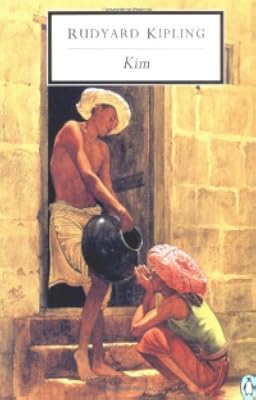










Member Recommendations


Member Reviews
"A rich portrait of Anglo-Indian society"
By sally tarbox on 17 January 2017
Format: Paperback
Kipling writes these highly entertaining and readable little tales in a gossipy fashion, as if he's talking to you - "there was a case once... But that is another story."
Set in the hill stations of late 19th century India, some characters surface more than once - good-natured femme fatale Mrs Haukbee and Irish soldier Private Mulvaney. There are stories on every aspect of life: romance, high-jinks among the soldiers, men falling prey to drink and opium, horse racing, ghosts... The white contingent are prevalent, but the 'native' locals also feature.
I was particularly struck by the touching 'Story of Muhammed Din', where the author recollects a show more servant's child; and by the humour of "Pig." In the latter tale, a man who's been cheated in his purchase of a horse, avenges himself by applying - constantly - to the seller, a government official - for pages of advice on a pretended plan to raise swine.
A total mixture of stories, which I really enjoyed. show less
By sally tarbox on 17 January 2017
Format: Paperback
Kipling writes these highly entertaining and readable little tales in a gossipy fashion, as if he's talking to you - "there was a case once... But that is another story."
Set in the hill stations of late 19th century India, some characters surface more than once - good-natured femme fatale Mrs Haukbee and Irish soldier Private Mulvaney. There are stories on every aspect of life: romance, high-jinks among the soldiers, men falling prey to drink and opium, horse racing, ghosts... The white contingent are prevalent, but the 'native' locals also feature.
I was particularly struck by the touching 'Story of Muhammed Din', where the author recollects a show more servant's child; and by the humour of "Pig." In the latter tale, a man who's been cheated in his purchase of a horse, avenges himself by applying - constantly - to the seller, a government official - for pages of advice on a pretended plan to raise swine.
A total mixture of stories, which I really enjoyed. show less
This collection of stories from Rudyard Kipling is a mixed bag--some are really good, and some are meandering, and some are outright unintelligible, in the case of the few that are written in the dialect of some of the soldiers. I tried to read those few out loud, which helped to a certain extent. I am a fan of Kipling--I liked Kim, and the Jungle Book, and some other, longer short stories, so I came to it with positive feelings. I enjoy the way he seems to be tongue-in-cheek poking fun at the British aristocrats and military in India. The unfortunate thing about Kipling is that, well, he lived in colonial India, and the underlying racism and otherizing of native Indians is cringingly evident, and can make a couple of the stories, not show more hard to read, but I feel like I am embarrassed for him, and the fact that the culture he lived in will make him increasingly unpalatable for modern readers. There are some gems though, and those who enjoy his writing will find a few stories in this collection that reflect what we love about Kipling. show less
Rudyard Kipling's Kim is one of my favorite books in the world. For the few hours every year that I spend re-reading it, I'm in a magical world. And the ending never fails to leave me with tears in my eyes and a lump in my throat.
I've read and deeply enjoyed Kipling's Jungle Books as well. So when I heard, around fifteen years ago, that Kipling had written many more stories set in the India of his youth, and that some of them even featured Strickland Sahib from Kim, I immediately headed over to Wordsworth in Harvard Square (Cambridge, MA) to get a copy of Plain Tales from the Hills.
I didn't enjoy it, and after a story or two I stopped reading. It seemed dark and depressing to me. It lacked the essential sense of wonder and joy that show more colors all of Kim. Without young Kimball O'Hara and his delight in discovering the world, Kipling's India seemed a cynical and gloomy place.
And it is, in large measure. But when I picked up the book again recently, I found it far better than my first impression. Kipling was, after all, a master storyteller. His view of human nature was penetrating, and he had an eye for the tragedy and comedy of life. His experience as a child in India gave him a rich cultural palette to use in his writing, albeit it from an ultimately colonialist viewpoint. The stories in PTftH, some of the earliest he published, tend to be short, insightful, and gripping. Quite a few are extremely funny, as well. Since most of these stories were published the Lahore Civil and Military Gazette, Kipling had no literary pretensions (not that he was noted for such, anyway); he was young, and writing in an impermanent medium to entertain paying customers. I should note that years later he edited many of stories in the collection, and added several new ones.
The language has not dated badly, even after 120 years. Readers of Kim will not find Plain Tales from the Hills more difficult than that book. The Penguin Classics edition is annotated, as I presume all modern editions must be, so the Indian words and phrases that Kipling uses may be deciphered when the meaning can't be gleaned from the context.
There are four stories about a group of three Irish privates in the Army which deserve special note. Kipling represents the lower-class dialect of those soldiers in nearly impenetrable spelling - as Kipling himself notes in one of the stories, dialect is not his strongest suit. I found myself repeatedly puzzling over the language, repeating it aloud to try and sound out the meaning of the apparently meaningless words.
Comprehension finally dawned in almost every case, but the process slowed my progress through the stories to a crawl. That's a pity, because they include some of the most lively, interesting, and exciting passages in the collection.
Two more specifics:
"The Gate of the Hundred Sorrows" - I don't want to spoil this one, but it stuck in my mind very strongly - this may have been the strongest and most memorable story in the book. Kipling captured a state of mind and an essential despair beyond despair that is quite haunting.
"Beyond the Pale" is the most horrific story in the collection, I think. The fate of the young girl at the end was quite disturbing and sad. It bothered me, frankly, and I don't think I'll read it again.
I wasn't particularly impressed with the annotation in this edition, however. The annotations are, at times, a bit terse and cryptic. I also find it particularly annoying that when Kipling makes a reference to Shakespeare or the Bible, the annotation simply lists a reference in the most terse format possible, i.e. "Matthew 10, 16" or "Hamlet, III, iv, 205-7". I'm better read than the average American; I've read the King James Bible several times, as well as the complete works of Shakespeare. I've even performed in a local production of Romeo and Juliet. Nonetheless, I cannot recall verses and passages from these references (with certain exceptions, of course), and I don't think that most other modern readers can, either. This sort of arrogance simply serves to further alienate the public from classic literature.
The annotator, David Trotter, also wrote the introduction to this edition. I earnestly advise the reader to skip that introduction until you've finished reading the book. Trotter commits the unforgivable sin of explaining too much, "spoiling" some of the stories. He sucks all the juice out of Kipling with his academic approach, or tries to. The introduction does include some interesting information, though, so it's worth reading after completing the book.
Of course, since the book is no longer under copyright, it is also available freely online: http://www.gutenberg.org/etext/1858
Plain Tales from the Hills lacks the warmth and delight of Kim. Nonetheless, it's well-written (naturally!), exciting, at times very funny, and presents some rare insights into human nature. What more can a reader expect? show less
I've read and deeply enjoyed Kipling's Jungle Books as well. So when I heard, around fifteen years ago, that Kipling had written many more stories set in the India of his youth, and that some of them even featured Strickland Sahib from Kim, I immediately headed over to Wordsworth in Harvard Square (Cambridge, MA) to get a copy of Plain Tales from the Hills.
I didn't enjoy it, and after a story or two I stopped reading. It seemed dark and depressing to me. It lacked the essential sense of wonder and joy that show more colors all of Kim. Without young Kimball O'Hara and his delight in discovering the world, Kipling's India seemed a cynical and gloomy place.
And it is, in large measure. But when I picked up the book again recently, I found it far better than my first impression. Kipling was, after all, a master storyteller. His view of human nature was penetrating, and he had an eye for the tragedy and comedy of life. His experience as a child in India gave him a rich cultural palette to use in his writing, albeit it from an ultimately colonialist viewpoint. The stories in PTftH, some of the earliest he published, tend to be short, insightful, and gripping. Quite a few are extremely funny, as well. Since most of these stories were published the Lahore Civil and Military Gazette, Kipling had no literary pretensions (not that he was noted for such, anyway); he was young, and writing in an impermanent medium to entertain paying customers. I should note that years later he edited many of stories in the collection, and added several new ones.
The language has not dated badly, even after 120 years. Readers of Kim will not find Plain Tales from the Hills more difficult than that book. The Penguin Classics edition is annotated, as I presume all modern editions must be, so the Indian words and phrases that Kipling uses may be deciphered when the meaning can't be gleaned from the context.
There are four stories about a group of three Irish privates in the Army which deserve special note. Kipling represents the lower-class dialect of those soldiers in nearly impenetrable spelling - as Kipling himself notes in one of the stories, dialect is not his strongest suit. I found myself repeatedly puzzling over the language, repeating it aloud to try and sound out the meaning of the apparently meaningless words.
Comprehension finally dawned in almost every case, but the process slowed my progress through the stories to a crawl. That's a pity, because they include some of the most lively, interesting, and exciting passages in the collection.
Two more specifics:
"The Gate of the Hundred Sorrows" - I don't want to spoil this one, but it stuck in my mind very strongly - this may have been the strongest and most memorable story in the book. Kipling captured a state of mind and an essential despair beyond despair that is quite haunting.
"Beyond the Pale" is the most horrific story in the collection, I think. The fate of the young girl at the end was quite disturbing and sad. It bothered me, frankly, and I don't think I'll read it again.
I wasn't particularly impressed with the annotation in this edition, however. The annotations are, at times, a bit terse and cryptic. I also find it particularly annoying that when Kipling makes a reference to Shakespeare or the Bible, the annotation simply lists a reference in the most terse format possible, i.e. "Matthew 10, 16" or "Hamlet, III, iv, 205-7". I'm better read than the average American; I've read the King James Bible several times, as well as the complete works of Shakespeare. I've even performed in a local production of Romeo and Juliet. Nonetheless, I cannot recall verses and passages from these references (with certain exceptions, of course), and I don't think that most other modern readers can, either. This sort of arrogance simply serves to further alienate the public from classic literature.
The annotator, David Trotter, also wrote the introduction to this edition. I earnestly advise the reader to skip that introduction until you've finished reading the book. Trotter commits the unforgivable sin of explaining too much, "spoiling" some of the stories. He sucks all the juice out of Kipling with his academic approach, or tries to. The introduction does include some interesting information, though, so it's worth reading after completing the book.
Of course, since the book is no longer under copyright, it is also available freely online: http://www.gutenberg.org/etext/1858
Plain Tales from the Hills lacks the warmth and delight of Kim. Nonetheless, it's well-written (naturally!), exciting, at times very funny, and presents some rare insights into human nature. What more can a reader expect? show less
Probably my absolute favourite collection of Kipling stories. Say what you like about the imperialism and period racism (although Kipling respects other races) they are an extremely good read written by a master of the writing craft.
Recommended.
Recommended.
Winding through this slow-moving book of thankfully short short boring and redundant stories
of the English experience with the natives of British India, I tried to find a favorite.
The "object-letters" in "Beyond the Pale" were intriguing, then came the horror story ending.
Instead, there was this:
"A man should, whatever happens,
keep to his own caste, race, and breed.
Let the White go to the White, and the Black to the Black."
Worse still, on pages 254 and 255, ever so casually appear the N-words.
Geez, even from the expected taint of Mr. White Man's Burden, this was unexpected.
The book is valuable only for the illustrations of Howard Mueller.
of the English experience with the natives of British India, I tried to find a favorite.
The "object-letters" in "Beyond the Pale" were intriguing, then came the horror story ending.
Instead, there was this:
"A man should, whatever happens,
keep to his own caste, race, and breed.
Let the White go to the White, and the Black to the Black."
Worse still, on pages 254 and 255, ever so casually appear the N-words.
Geez, even from the expected taint of Mr. White Man's Burden, this was unexpected.
The book is valuable only for the illustrations of Howard Mueller.
A collection of stories from Kipling written in the 1890s, all of which are set in the India of the Imperial Raj. They're of varying quality. The ones rendered in the argot of the soldiers can be quite difficult to parse, owing to the thickness of the accent, which lessens their effect. Others simply meander. But there are a half-dozen stories in the collection that are definite winners, including a hilarious sort-of ghost story involving a beloved horse of a regiment, and an affecting story of employee management where the truth is kept from a recalcitrant and critical employee. Might not be for everyone, this collection, especially given the odour in which Kipling is held by some.
Astonishingly good. I had no idea how good Kipling was, knowing him mostly only second-hand via Rikki-Tiki Tavi and Jungle Book adapatations.
Members
- Recently Added By
Lists

SomethingAwful TBB BOTM
66 works; 2 members

Trinity College Booklist (1951): Class Ten, English Literature
358 works; 5 members
Author Information

2,480+ Works 91,667 Members
Kipling, who as a novelist dramatized the ambivalence of the British colonial experience, was born of English parents in Bombay and as a child knew Hindustani better than English. He spent an unhappy period of exile from his parents (and the Indian heat) with a harsh aunt in England, followed by the public schooling that inspired his "Stalky" show more stories. He returned to India at 18 to work on the staff of the Lahore Civil and Military Gazette and rapidly became a prolific writer. His mildly satirical work won him a reputation in England, and he returned there in 1889. Shortly after, his first novel, The Light That Failed (1890) was published, but it was not altogether successful. In the early 1890s, Kipling met and married Caroline Balestier and moved with her to her family's estate in Brattleboro, Vermont. While there he wrote Many Inventions (1893), The Jungle Book (1894-95), and Captains Courageous (1897). He became dissatisfied with life in America, however, and moved back to England, returning to America only when his daughter died of pneumonia. Kipling never again returned to the United States, despite his great popularity there. Short stories form the greater portion of Kipling's work and are of several distinct types. Some of his best are stories of the supernatural, the eerie and unearthly, such as "The Phantom Rickshaw," "The Brushwood Boy," and "They." His tales of gruesome horror include "The Mark of the Beast" and "The Return of Imray." "William the Conqueror" and "The Head of the District" are among his political tales of English rule in India. The "Soldiers Three" group deals with Kipling's three musketeers: an Irishman, a Cockney, and a Yorkshireman. The Anglo-Indian Tales, of social life in Simla, make up the larger part of his first four books. Kipling wrote equally well for children and adults. His best-known children's books are Just So Stories (1902), The Jungle Books (1894-95), and Kim (1901). His short stories, although their understanding of the Indian is often moving, became minor hymns to the glory of Queen Victoria's empire and the civil servants and soldiers who staffed her outposts. Kim, an Irish boy in India who becomes the companion of a Tibetan lama, at length joins the British Secret Service, without, says Wilson, any sense of the betrayal of his friend this actually meant. Nevertheless, Kipling has left a vivid panorama of the India of his day. In 1907, Kipling became England's first Nobel Prize winner in literature and the only nineteenth-century English poet to win the Prize. He won not only on the basis of his short stories, which more closely mirror the ambiguities of the declining Edwardian world than has commonly been recognized, but also on the basis of his tremendous ability as a popular poet. His reputation was first made with Barrack Room Ballads (1892), and in "Recessional" he captured a side of Queen Victoria's final jubilee that no one else dared to address. (Bowker Author Biography) show less
Rudyard Kipling has a Legacy Library. Legacy libraries are the personal libraries of famous readers, entered by LibraryThing members from the Legacy Libraries group.
Some Editions
Awards and Honors
Series
Belongs to Publisher Series
Work Relationships
Is contained in
Contains
Is abridged in
Inspired
Common Knowledge
- Canonical title
- Plain Tales from the Hills
- Original title
- Plain Tales from the Hills
- Original publication date
- 1888
- People/Characters
- John Learoyd (Private); Terence Mulvaney (Private); Stanley Ortheris (Private)
- Important places
- Simla, Himachal Pradesh, India
- Dedication
- To the wittiest woman in India I dedicate this book.
- First words
- She was the daughter of Sonnoo, a Hill-man of the Himalayas, and Jadeh his wife.
Classifications
Statistics
- Members
- 1,511
- Popularity
- 15,313
- Reviews
- 16
- Rating
- (3.63)
- Languages
- 7 — Danish, English, French, German, Russian, Spanish, Swedish
- Media
- Paper, Audiobook, Ebook
- ISBNs
- 125
- ASINs
- 108