On This Page
Description
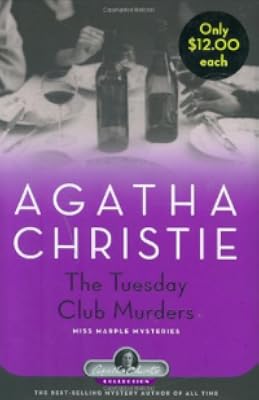
In The Thirteen Problems, Agatha Christie presents a delightful collection of interconnected short stories featuring her beloved amateur sleuth, Miss Jane Marple. Set in the cozy village of St. Mary Mead, the stories revolve around a social gathering known as the "Tuesday Night Club," where Miss Marple and her friends share baffling, unsolved mysteries, each taking turns to present a case for discussion. While her companions-policemen, lawyers, and others-often overlook Miss Marple's quiet show more demeanor, she consistently outsmarts them with her deep understanding of human nature and her sharp deductive reasoning. Through her seemingly simple observations about village life, Miss Marple solves each of the thirteen perplexing cases, from murder and blackmail to deception and theft. With Christie's signature blend of clever plotting, engaging characters, and surprising twists, The Thirteen Problems is a must-read for fans of classic detective fiction. This collection not only showcases Miss Marple's wit and insight but also solidifies her place as one of the most astute detectives in the world of mystery. show lessTags
Recommendations









Member Reviews
I (re)read this book for two reasons: I belong to a group reading Agatha Christie's oeuvre in order of publication, and it fit a Halloween Bingo prompt - 13. Either one of those reasons would have been a good enough excuse to read this charming little collection of Miss Marple showing everyone up.
13 short stories: the first 6 of which share a common tie of being stories told at the Tuesday Night Club, an impromptu gathering where each person tells the tale of a mystery that went unsolved at the time. The next 6 stories are tied together in a similar way, as stories all told around the dining table one evening. The last story is a 'stand-alone' although it relies on the friendship established in the previous stories between Miss Marple show more and Sir Henry Clithering.
Without exception, each story is excellent. Some are more excellent than others; in my opinion, The Blue Geranium is the absolute stand-out, though Motive vs Opportunity comes close. The weakest was probably the last, for me, Death by Drowning. It's solid, but in comparison, duller than the previous 12 stories.
I have a confession to make about Agatha Christie's books: I dislike both Miss Marple and Hercule Poirot. I find that in the longer books Miss Marple tends to natter on a bit too much and plays the "old spinster" and "aww shucks" hands a little too strongly. Hercule Poirot is just ... an amalgamation of the worst traits of Holmes and Dupin is as close I can come to a description. I don't find him as comical as most.
However, these short stories offer the perfect dose of Miss Marple: for almost all the stories, her participation is relegated to the end, so the simpering is contained. I also really tried, while reading these, to re-imagine Miss Marple in my mind by remembering the subjectivity of the descriptor 'old' and the stereotype of 'spinster'. Yes, Miss Marple has white hair and knits, but I know many a 50-60 year old that has white hair and knits. I don't recall her age ever being mentioned in the books I've read so far, so perhaps I dislike Miss Marple because of popular portrayals, combined with current attitudes about the adjectives that Christie used 100 years ago, when they covered broader spectrums.
I was partially successful; it was a struggle. Ingrained conceptions die hard. Fortunately I have a lot of books ahead of me to use for mental re-programming. Now if only I could figure out a way to like Poirot... show less
13 short stories: the first 6 of which share a common tie of being stories told at the Tuesday Night Club, an impromptu gathering where each person tells the tale of a mystery that went unsolved at the time. The next 6 stories are tied together in a similar way, as stories all told around the dining table one evening. The last story is a 'stand-alone' although it relies on the friendship established in the previous stories between Miss Marple show more and Sir Henry Clithering.
Without exception, each story is excellent. Some are more excellent than others; in my opinion, The Blue Geranium is the absolute stand-out, though Motive vs Opportunity comes close. The weakest was probably the last, for me, Death by Drowning. It's solid, but in comparison, duller than the previous 12 stories.
I have a confession to make about Agatha Christie's books: I dislike both Miss Marple and Hercule Poirot. I find that in the longer books Miss Marple tends to natter on a bit too much and plays the "old spinster" and "aww shucks" hands a little too strongly. Hercule Poirot is just ... an amalgamation of the worst traits of Holmes and Dupin is as close I can come to a description. I don't find him as comical as most.
However, these short stories offer the perfect dose of Miss Marple: for almost all the stories, her participation is relegated to the end, so the simpering is contained. I also really tried, while reading these, to re-imagine Miss Marple in my mind by remembering the subjectivity of the descriptor 'old' and the stereotype of 'spinster'. Yes, Miss Marple has white hair and knits, but I know many a 50-60 year old that has white hair and knits. I don't recall her age ever being mentioned in the books I've read so far, so perhaps I dislike Miss Marple because of popular portrayals, combined with current attitudes about the adjectives that Christie used 100 years ago, when they covered broader spectrums.
I was partially successful; it was a struggle. Ingrained conceptions die hard. Fortunately I have a lot of books ahead of me to use for mental re-programming. Now if only I could figure out a way to like Poirot... show less
Miss Marple shows off her amazing deductive skills in thirteen vignettes that are a hybrid between a novel and interconnected stories. In a couple of different English drawing rooms, Miss Marple takes part in a sort of game where each person tells the story of a peculiar mystery. Without fail, Miss Marple always discovers the correct answer, even though most everyone seems to think the 'elderly spinster' knows so little of the world.
Despite Miss Marple's protestations that human nature is essentially the same everywhere, there is quite a bit of classism and nationalism exhibited in all the characters. Even though I know it's the point of the stories, it gets a bit tiresome of hearing Miss Marple make a remarkable pronouncement at the show more end of each story, despite how increasingly absurd the stories get -- and even more so the solutions. Miss Marple can untangle an entire story based on what day the washing or gardening gets done, which is making a whole lot of leaps and assumptions. It always works out because this is fiction, but its connection to reality is tenuous. Still, the problems do pull the reader in as you try to spot the logic / possibly outwit Miss Marple yourself. show less
Despite Miss Marple's protestations that human nature is essentially the same everywhere, there is quite a bit of classism and nationalism exhibited in all the characters. Even though I know it's the point of the stories, it gets a bit tiresome of hearing Miss Marple make a remarkable pronouncement at the show more end of each story, despite how increasingly absurd the stories get -- and even more so the solutions. Miss Marple can untangle an entire story based on what day the washing or gardening gets done, which is making a whole lot of leaps and assumptions. It always works out because this is fiction, but its connection to reality is tenuous. Still, the problems do pull the reader in as you try to spot the logic / possibly outwit Miss Marple yourself. show less
«Miss Marple si intrufolò così silenziosamente nella mia vita che quasi non mi accorsi del suo arrivo. Scrissi una serie di racconti per una rivista, immaginando che in un villaggio sei persone si riunissero per raccontare qualche caso rimasto insoluto.»
È la stessa Agatha Christie a parlare così della prima apparizione di Miss Marple nella sua autobiografia. E questi “casi insoluti” sono proprio i “13 problemi” raccontati in questo libro. Per ogni morte misteriosa, per ogni efferato delitto, per ogni enigma insolubile, la dolce e mite vecchietta ha un aneddoto di paese che glielo ricorda, e questo le permette di arrivare alla soluzione. Perché la natura umana è sempre la stessa, e in un piccolo paesino la si può show more osservare come al microscopio.
Adoro Agatha Christie, e sinceramente non so dire quale dei suoi due investigatori più famosi sia il mio preferito, se Poirot e appunto Miss Marple. Certo è che questo, tra i suoi, è uno dei miei libri preferiti, che ho letto più di una volta, e ho proprio in questi giorni riletto col solito piacere, nonostante purtroppo mi ricordassi benissimo di tutti gli assassini! ;)
http://www.naufragio.it/iltempodileggere/165 show less
È la stessa Agatha Christie a parlare così della prima apparizione di Miss Marple nella sua autobiografia. E questi “casi insoluti” sono proprio i “13 problemi” raccontati in questo libro. Per ogni morte misteriosa, per ogni efferato delitto, per ogni enigma insolubile, la dolce e mite vecchietta ha un aneddoto di paese che glielo ricorda, e questo le permette di arrivare alla soluzione. Perché la natura umana è sempre la stessa, e in un piccolo paesino la si può show more osservare come al microscopio.
Adoro Agatha Christie, e sinceramente non so dire quale dei suoi due investigatori più famosi sia il mio preferito, se Poirot e appunto Miss Marple. Certo è che questo, tra i suoi, è uno dei miei libri preferiti, che ho letto più di una volta, e ho proprio in questi giorni riletto col solito piacere, nonostante purtroppo mi ricordassi benissimo di tutti gli assassini! ;)
http://www.naufragio.it/iltempodileggere/165 show less
Nel mio viaggio estivo di conoscenza dei lavori di Agatha Christie non poteva mancare Miss Marple: come primo approccio non sono rimasta troppo impressionata. Come nel primo romanzo dedicato a Poirot, anche qui la penna di Christie non mi è sembrata all’altezza del suo talento: evidentemente doveva ancora prendere le misure del suo personaggio.
Miss Marple non mi è sembrata un mostro di simpatia: piuttosto saccente, di quelle che aspettano che tuttə abbiano detto la loro e poi – sdeng! – calano l’asso nella manica, prendendola pure alla larga! È proprio una di quelle vecchie comari che popolano la provincia, quelle che siedono tutte insieme, ti salutano amabilmente quando passi loro lavanti e poi spettegolano a tutta randa. show more Non sono sicura di apprezzare il genere – almeno per qualche altro decennio.
La scusa che dà il via a questa raccolta di storie è un gioco che sa molto di provincia annoiata: giochiamo a risolvere misteri! E in questo gioco non c’è trippa per gatti, né per il commissario, né per il pastore, non per l’avvocato e nemmeno per lo scrittore, la pittrice o il dottore: è Miss Marple, che ha una conoscenza enciclopedica dei fatti (e dei pettegolezzi) della provincia, ad avere il database mentale di casi umani più vasto dal quale attingere per fare le sue ipotesi. O forse è meglio dire, per spiegare i fatti.
Non tutti i racconti mi sono sembrati ben riusciti allo stesso modo (il primo, per esempio, mi ha indotto a chiedermi se in epoca vittoriana facessero sempre le torte con i cosini di zucchero candito sopra), ma nondimeno è stata una lettura estiva piacevole e capisco perfettamente perché vada forte in questa stagione. show less
Miss Marple non mi è sembrata un mostro di simpatia: piuttosto saccente, di quelle che aspettano che tuttə abbiano detto la loro e poi – sdeng! – calano l’asso nella manica, prendendola pure alla larga! È proprio una di quelle vecchie comari che popolano la provincia, quelle che siedono tutte insieme, ti salutano amabilmente quando passi loro lavanti e poi spettegolano a tutta randa. show more Non sono sicura di apprezzare il genere – almeno per qualche altro decennio.
La scusa che dà il via a questa raccolta di storie è un gioco che sa molto di provincia annoiata: giochiamo a risolvere misteri! E in questo gioco non c’è trippa per gatti, né per il commissario, né per il pastore, non per l’avvocato e nemmeno per lo scrittore, la pittrice o il dottore: è Miss Marple, che ha una conoscenza enciclopedica dei fatti (e dei pettegolezzi) della provincia, ad avere il database mentale di casi umani più vasto dal quale attingere per fare le sue ipotesi. O forse è meglio dire, per spiegare i fatti.
Non tutti i racconti mi sono sembrati ben riusciti allo stesso modo (il primo, per esempio, mi ha indotto a chiedermi se in epoca vittoriana facessero sempre le torte con i cosini di zucchero candito sopra), ma nondimeno è stata una lettura estiva piacevole e capisco perfettamente perché vada forte in questa stagione. show less
This is a set of thirteen short stories set within a framing device of Miss Marple talking with some of her local friends in St Mary Mead, including her author nephew Raymond West, and later to different guests at a dinner party. Needless to say, she is able to solve every crime without getting out of her chair. In her Foreword, Christie says that Miss Marple "is at her best in the solving of short problems; they suit her more intimate style", whereas "Poirot...insists on a full length book to display his talents". I think this is right, and in her full length novels, Miss Marple often gets lost in the plot driven action of the other characters, whereas I thought these stories are pretty much all good, tight pieces of writing, with the show more exception of the rather confusing Affair at the Bungalow (though that was probably partly due to the nature of the character narrating it). These stories were originally published in magazines in the late 20s/early 30s and collected in this book in 1932. show less
The Thirteen Problems is the first short story collection featuring Miss Marple and introduce an interesting cast of characters that all come together to test their wits for solving crime. The first six stories are set at a dinner party where each guest presents a crime and the others take turns guessing who did it. The next six are set at a different dinner party with some new guests, following the same format of each guest presenting their crime. And the final story sees Miss Marple seek out one of the guests, Sir Henry, a former Scotland Yard Commissioner to relay her fears about a local murder and ask for his help to pass the information on to the police.
I was surprised to find I quite enjoyed the short stories - short stories can show more often be pretty hit or miss, but the dinner party format worked really well to allow readers to get to know the characters while still keeping it interesting and fast paced.
Miss Marple is hilarious. I loved reading Christie's foreword;
Miss Marple has some faint affinity with my own grandmother, also a pink and white pretty old lady who, although having led the most sheltered and Victorian of lives, nevertheless always appeared to be intimately acquainted with all the depths of human depravity. One could be made to feel incredibly naïve and credulous by her reproachful remark: “But did you believe what they said to you? You shouldn’t do that. I never do!”
Christie, Agatha. Miss Marple: The Complete Short Stories (Miss Marple Mysteries) . HarperCollins. Kindle Edition.
But I liked the other characters too - Jane Helier, Mrs Bantry and Sir Henry were my favourites. Not all the plots were fantastic but overall they were pretty good and I had fun trying to solve the crime myself.
My favourites were 1.10: The Christmas Tragedy and 1.12: The Affair at the Bungalow. Least enjoyable, 1.2: The House of Astarte.
Full reviews are below with individual story rating. For the whole collection though, 4 stars.
1.1: THE TUESDAY NIGHT CLUB ****
The first Miss Marple short story begins with Raymond West (Miss Marple's nephew) hosting a gathering of friends consisting of; artist Joyce Lempriere, former Scotland Yard commissioner, Sir Henry Clithering, local clergyman, Dr Pender and solicitor, Mr Petherick. While discussing the concept of unsolved murders and who would be best at solving them, Joyce suggests they start a club - a Tuesday Night Club where they will discuss a crime and offer their opinions of who did it and why.
The first crime is offered up by Sir Henry who recounts a case of a husband and wife who sit down for dinner with their housekeeper, only to have one member of the party wind up dead.
I really enjoyed this. I love the idea of the club and I loved how Miss Marple operates.
Miss Marple is clearly a total troll.
“One moment,” said Sir Henry. “Miss Marple has not yet spoken.” Miss Marple was shaking her head sadly. “Dear, dear,” she said. “I have dropped another stitch. I have been so interested in the story. A sad case, a very sad case. It reminds me of old Mr. Hargraves who lived up at the Mount.
Christie, Agatha. Miss Marple: The Complete Short Stories (Miss Marple Mysteries) (p. 13). HarperCollins. Kindle Edition.
Total troll for sure. She's as sharp as a tack - there's no way she's not playing them. I loved it. I also rated Sir Henry's pun. I love a good pun.
“I know just the sort of thing you mean, dear,” said Miss Marple. “For instance Mrs. Carruthers had a very strange experience yesterday morning. She bought two gills of picked shrimps at Elliot’s. She called at two other shops and when she got home she found she had not got the shrimps with her. She went back to the two shops she had visited but these shrimps had completely disappeared. Now that seems to me very remarkable.” “A very fishy story,” said Sir Henry Clithering gravely.
Christie, Agatha. Miss Marple: The Complete Short Stories (Miss Marple Mysteries) (p. 3). HarperCollins. Kindle Edition.
I can't say I guessed the culprit but I look forward to future Miss Marple stories. 4 stars.
1.2: THE IDOL HOUSE OF ASTARTE **
I didn't like this one much. Dr Pender recounts a house party he attended in his youth where his host was stabbed to death - even though no one was near him. I did like that Miss Marple is showing everyone up though. 2 stars.
1.3: INGOTS OF GOLD ****
This time, it's Raymond's turn to tell a story. He recounts a trip to Cornwell where he met a new friend, John Newman - who was planning an expedition to a shipwreck for Spanish gold. But things take a turn for the worst when they get mixed up in an ongoing case of stolen gold bullion.
I enjoyed this one. I only guessed some of the answers (I totally guessed that Newman was a fraud and stole the gold bullion. I just also thought he was actually working with Kelvin - not just framing him.) but I had fun finding out the rest. I was pretty impressed by the idea of the tyre! Using it to frame Kelvin by taking it off one lorry and then putting it on the other to drive with and then taking it back. That was some extra level genius right there.
Raymond reminds me of Hastings. Too confident in his own opinions. On the other hand at least his isn't mean to his elderly aunt. But I do love Miss Marple. She's a total troll. I love how she gets caught up in her knitting - like oh I'm not paying attention dear but if you were, you'd totally know the answer like I do. It's especially amusing to see her and Raymond interact.
“Well, go on, Aunt Jane; haven’t you got anything to say?”
“In a minute, dear,” said Miss Marple. “I am afraid I have counted wrong. Two purl, three plain, slip one, two purl—yes, that’s right. What did you say, dear?”
“What is your opinion?”
“You wouldn’t like my opinion, dear. Young people never do, I notice. It is better to say nothing.”
“Nonsense, Aunt Jane; out with it.”
Christie, Agatha. Miss Marple: The Complete Short Stories (Miss Marple Mysteries) (p. 47). HarperCollins. Kindle Edition.
But I also really love how she relates everything back to her experiences or gossip to explain how she knows stuff. Overall a very enjoyable story. 4 stars.
1.4: THE BLOODSTAINED PAVEMENT ***
The artist, Joyce is up next. One day while painting, she overhears a conversation between a man, Denis, his wife, Margery and an old friend, Carol who decide to go bathing to refresh themselves of the heat. Later after the couple return, Joyce believes she sees bloodstains on the pavement. And then a few days later she reads a curious article in the newspaper of a woman named Margery who was married to a Denis who was killed while bathing just a little further down the coast.
Like the last story, I guessed parts and missed others. I guessed that Denis and Carol were on together and killed Margery - and that Carol changed into Margery's clothes. I didn't guess that they were serial killers. Or that the benefit of killing the wives was the insurance money rather than the wives being rich or something of the sort. I didn't understand the bit about the bloodstains though. The bathing suit having blood made sense. The bloodstains disappearing didn't. If it was raining or something maybe. But since it was hot and dry how did they disappear? Or how the Captain fitted into things. Did he play a part I missed? Or was he just there?
I liked that Miss Marple caught the bit about the changing outfits. But the whole thing was left feeling somewhat unfinished. 3 stars.
1.5: MOTIVE V. OPPORTUNITY ****
Mr Petherick tells of a rich client who was devastated by the loss of his son and then granddaughter. He takes in his nieces and nephew and loves them but never gets over the heartbreak of losing the rest of his family. He writes a will to leave his estate equally to all three but comes to rethink that when he makes the acquaintance of a medium Mrs Spragg and her husband. But although Mr Petherick witnesses the client sign a new will, when it's read, he can only find a blank piece of paper.
Hey I totally guessed this one. Disappearing ink indeed! Except the guilty party. I thought it would've been the niece, Mary, rather than the brother in law via the housekeeper. Miss Marple does it again. Leaving the other participants to bite her dust. Poor things, they can't catch a break. 4 stars.
1.6: THE THUMBMARK OF ST. PETER ***
It's Miss Marple's turn to lay out a crime. She doesn't give them much time to deliberate though because I don't think anyone else could've gotten it without medical knowledge.
So Miss Marple goes to visit her niece, Mabel whose husband just died. But although there's no proof, the town in under the belief Mabel killed him, so Miss Marple undertakes an investigation to find out what really happened.
I guessed none of this. Nothing at all. Too technical. But I did enjoy how Miss Marple recounted her investigation and came to her conclusions. 3 stars.
1.7: THE BLUE GERANIUM ****
Miss Marple is invited by Sir Henry to dinner with Colonel Bantry and his wife. Having heard of Miss Marple's problem solving abilities, Colonel Bantry relates his ghost story - the murder of the wife of a friend.
I liked this one. Like most of the Miss Marple stories, I guessed parts and completely missed others. I more or less figured out that the primroses were being turned blue - but not how that was accomplished. I completely missed the smelling salts as the weapon of choice. I guessed the fortune teller was a fraud - but got the person behind the fraud wrong - I thought it was Jean or the other nurse, Nurse Carstairs - not the current sensible one, Nurse Copling. I love how Miss Marple interacts with others, it's quite amusing. Fun story, 4 stars.
1.8: THE COMPANION ****
Wow I'm good. I guessed all of this. The drowning, the change of identities, the change of clothes, the faking of her own death and being the next of kin to inherit. Go me.
Dr Lloyd remembers moving overseas and coming across two women, one of whom dies while out swimming one day. I like this the best so far - because it's always a winner when I can pick the who, the how and the why. 4 stars.
1.9: THE FOUR SUSPECTS ****
Sir Henry discusses a case that haunts him - the murder of an old German spy and the four people he suspects of murdering him. I was only slightly on the right track with this one. I was kind of thinking the daughter but not with any conviction. I did guess there was something off about the letter and the fact that Honesty has a capital H but I didn't actually see DEATH written there.
There were heaps of good quotes in this one. This gem.
“Of course,” said Miss Marple, “a lot of people are stupid. And stupid people get found out, whatever they do. But there are quite a number of people who aren’t stupid, and one shudders to think of what they might accomplish unless they had very strongly rooted principles.”
Christie, Agatha. Miss Marple: The Complete Short Stories (Miss Marple Mysteries) (p. 135). HarperCollins. Kindle Edition.
Miss Marple is rather brutal for such a kindly old lady. I totally rate it. And I love how low Miss Marple's opinion is of humanity. I'm also rather fond of Sir Henry ribbing Miss Marple for her crime solving prowess. It reminds me of Inspector Jape needling Poirot. It's hilarious.
And this. Seriously the woman's a troll.
Well written and very enjoyable. 4.5 stars, rounded up.
1.10: A CHRISTMAS TRAGEDY *****
Miss Marple comes to the party with another story, this time about the Sanders. Marple was positive that Mr Sanders was going to kill his wife, but upon her death, Marple finds Sanders has an alibi that not even she can disprove.
Ooh this was good. I like Marple's crimes because they always lay out her reasoning and her reasoning is sublime. I guessed none of this. I bow to Marple's smarts. 5 stars.
1.11: THE HERB OF DEATH ***
Mrs Bantry's turn to tell a story. Her and the Colonel were staying at a friend's house with a group. After dinner one night, all of the guests ended up ill and one person dies.
I like Mrs Bantry. (I'm looking forward to reading a Body in the Library if she's in it.) And I loved the way she told it and then let everyone ask questions to reach their conclusions. 3 stars.
1.12: THE AFFAIR AT THE BUNGALOW *****
Jane Helier, the famous actress, takes to the stage to recount a crime that happened to a "friend". I loved that the whole dinner party believe Jane to friend in question. And then the crime. A mistresses' house is robbed and her precious jewellery is stolen.
This one was hilarious. Jane. Jane is perfection. She's so utterly ridiculous but surprisingly shrewd at times.
“Jane!” gasped Mrs. Bantry. “Did you engineer this story you’ve been telling us?” Jane nodded.
Christie, Agatha. Miss Marple: The Complete Short Stories (Miss Marple Mysteries) (pp. 208-209). HarperCollins. Kindle Edition.
Mrs. Bantry sat down and groaned. “Oh! my poor head. And all the time—Jane Helier, you deceitful girl! Telling us that story the way you did!” “I am a good actress,” said Jane complacently. “I always have been, whatever people choose to say. I didn’t give myself away once, did I?”
Christie, Agatha. Miss Marple: The Complete Short Stories (Miss Marple Mysteries) (p. 209). HarperCollins. Kindle Edition.
And I loved that she gets to the end and is just like hmm.
“So you all give it up,” said Jane thoughtfully. “That’s very interesting.” She leaned back in her chair and began to polish her nails rather absentmindedly. “Well,” said Mrs. Bantry. “Come on, Jane. What is the solution?” “The solution?” “Yes. What really happened?” Jane stared at her. “I haven’t the least idea.” “What?” “I’ve always wondered. I thought you were all so clever one of you would be able to tell me.”
Christie, Agatha. Miss Marple: The Complete Short Stories (Miss Marple Mysteries) (pp. 204-205). HarperCollins. Kindle Edition.
Lmfao.
Ah Jane. The only thing better was Miss Marple's conclusion and her insistence that women should stick together. Or perhaps Jane's thought that she better not go into a life of crime because you never know when you're going to run into a Miss Marple.
My favourite Miss Marple story so far. 5 stars.
1.13: DEATH BY DROWNING ***
When local girl, Rose Emmott, is found drowned, the whole town is in an uproar. Rose was having relations with out of towner, Rex Sandford and had recently discovered she was pregnant. Except Rex was already engaged and while willing to pay, he was not willing to marry her. So he becomes the number one suspect.
But Miss Marple has a feeling she knows who did it - and it's not Rex Sandford. Unwilling to talk directly to the police for fear of being dismissed as a delusional woman - she instead takes her fears to Sir Henry Clithering who is more than willing to back a Marple feeling.
I liked this one, but I didn't love it. My favourite part was Sir Henry deciding to back his belief in Miss Marple. I did like that Sir Henry took point, but the crime itself was bland. And I guessed none of it which was another point against. It was alright, just nothing special. 3 stars. show less
I was surprised to find I quite enjoyed the short stories - short stories can show more often be pretty hit or miss, but the dinner party format worked really well to allow readers to get to know the characters while still keeping it interesting and fast paced.
Miss Marple is hilarious. I loved reading Christie's foreword;
Miss Marple has some faint affinity with my own grandmother, also a pink and white pretty old lady who, although having led the most sheltered and Victorian of lives, nevertheless always appeared to be intimately acquainted with all the depths of human depravity. One could be made to feel incredibly naïve and credulous by her reproachful remark: “But did you believe what they said to you? You shouldn’t do that. I never do!”
Christie, Agatha. Miss Marple: The Complete Short Stories (Miss Marple Mysteries) . HarperCollins. Kindle Edition.
But I liked the other characters too - Jane Helier, Mrs Bantry and Sir Henry were my favourites. Not all the plots were fantastic but overall they were pretty good and I had fun trying to solve the crime myself.
My favourites were 1.10: The Christmas Tragedy and 1.12: The Affair at the Bungalow. Least enjoyable, 1.2: The House of Astarte.
Full reviews are below with individual story rating. For the whole collection though, 4 stars.
1.1: THE TUESDAY NIGHT CLUB ****
The first Miss Marple short story begins with Raymond West (Miss Marple's nephew) hosting a gathering of friends consisting of; artist Joyce Lempriere, former Scotland Yard commissioner, Sir Henry Clithering, local clergyman, Dr Pender and solicitor, Mr Petherick. While discussing the concept of unsolved murders and who would be best at solving them, Joyce suggests they start a club - a Tuesday Night Club where they will discuss a crime and offer their opinions of who did it and why.
The first crime is offered up by Sir Henry who recounts a case of a husband and wife who sit down for dinner with their housekeeper, only to have one member of the party wind up dead.
I really enjoyed this. I love the idea of the club and I loved how Miss Marple operates.
Miss Marple is clearly a total troll.
“One moment,” said Sir Henry. “Miss Marple has not yet spoken.” Miss Marple was shaking her head sadly. “Dear, dear,” she said. “I have dropped another stitch. I have been so interested in the story. A sad case, a very sad case. It reminds me of old Mr. Hargraves who lived up at the Mount.
Christie, Agatha. Miss Marple: The Complete Short Stories (Miss Marple Mysteries) (p. 13). HarperCollins. Kindle Edition.
Total troll for sure. She's as sharp as a tack - there's no way she's not playing them. I loved it. I also rated Sir Henry's pun. I love a good pun.
“I know just the sort of thing you mean, dear,” said Miss Marple. “For instance Mrs. Carruthers had a very strange experience yesterday morning. She bought two gills of picked shrimps at Elliot’s. She called at two other shops and when she got home she found she had not got the shrimps with her. She went back to the two shops she had visited but these shrimps had completely disappeared. Now that seems to me very remarkable.” “A very fishy story,” said Sir Henry Clithering gravely.
Christie, Agatha. Miss Marple: The Complete Short Stories (Miss Marple Mysteries) (p. 3). HarperCollins. Kindle Edition.
I can't say I guessed the culprit but I look forward to future Miss Marple stories. 4 stars.
1.2: THE IDOL HOUSE OF ASTARTE **
I didn't like this one much. Dr Pender recounts a house party he attended in his youth where his host was stabbed to death - even though no one was near him. I did like that Miss Marple is showing everyone up though. 2 stars.
1.3: INGOTS OF GOLD ****
This time, it's Raymond's turn to tell a story. He recounts a trip to Cornwell where he met a new friend, John Newman - who was planning an expedition to a shipwreck for Spanish gold. But things take a turn for the worst when they get mixed up in an ongoing case of stolen gold bullion.
I enjoyed this one. I only guessed some of the answers
Raymond reminds me of Hastings. Too confident in his own opinions. On the other hand at least his isn't mean to his elderly aunt. But I do love Miss Marple. She's a total troll. I love how she gets caught up in her knitting - like oh I'm not paying attention dear but if you were, you'd totally know the answer like I do. It's especially amusing to see her and Raymond interact.
“Well, go on, Aunt Jane; haven’t you got anything to say?”
“In a minute, dear,” said Miss Marple. “I am afraid I have counted wrong. Two purl, three plain, slip one, two purl—yes, that’s right. What did you say, dear?”
“What is your opinion?”
“You wouldn’t like my opinion, dear. Young people never do, I notice. It is better to say nothing.”
“Nonsense, Aunt Jane; out with it.”
Christie, Agatha. Miss Marple: The Complete Short Stories (Miss Marple Mysteries) (p. 47). HarperCollins. Kindle Edition.
But I also really love how she relates everything back to her experiences or gossip to explain how she knows stuff. Overall a very enjoyable story. 4 stars.
1.4: THE BLOODSTAINED PAVEMENT ***
The artist, Joyce is up next. One day while painting, she overhears a conversation between a man, Denis, his wife, Margery and an old friend, Carol who decide to go bathing to refresh themselves of the heat. Later after the couple return, Joyce believes she sees bloodstains on the pavement. And then a few days later she reads a curious article in the newspaper of a woman named Margery who was married to a Denis who was killed while bathing just a little further down the coast.
Like the last story, I guessed parts and missed others. I guessed
I liked that Miss Marple caught the bit about
1.5: MOTIVE V. OPPORTUNITY ****
Mr Petherick tells of a rich client who was devastated by the loss of his son and then granddaughter. He takes in his nieces and nephew and loves them but never gets over the heartbreak of losing the rest of his family. He writes a will to leave his estate equally to all three but comes to rethink that when he makes the acquaintance of a medium Mrs Spragg and her husband. But although Mr Petherick witnesses the client sign a new will, when it's read, he can only find a blank piece of paper.
Hey I totally guessed this one.
1.6: THE THUMBMARK OF ST. PETER ***
It's Miss Marple's turn to lay out a crime. She doesn't give them much time to deliberate though because I don't think anyone else could've gotten it without medical knowledge.
So Miss Marple goes to visit her niece, Mabel whose husband just died. But although there's no proof, the town in under the belief Mabel killed him, so Miss Marple undertakes an investigation to find out what really happened.
I guessed none of this. Nothing at all. Too technical. But I did enjoy how Miss Marple recounted her investigation and came to her conclusions. 3 stars.
1.7: THE BLUE GERANIUM ****
Miss Marple is invited by Sir Henry to dinner with Colonel Bantry and his wife. Having heard of Miss Marple's problem solving abilities, Colonel Bantry relates his ghost story - the murder of the wife of a friend.
I liked this one. Like most of the Miss Marple stories, I guessed parts and completely missed others. I more or less figured out that
1.8: THE COMPANION ****
Wow I'm good. I guessed all of this.
Dr Lloyd remembers moving overseas and coming across two women, one of whom dies while out swimming one day. I like this the best so far - because it's always a winner when I can pick the who, the how and the why. 4 stars.
1.9: THE FOUR SUSPECTS ****
Sir Henry discusses a case that haunts him - the murder of an old German spy and the four people he suspects of murdering him. I was only slightly on the right track with this one.
There were heaps of good quotes in this one. This gem.
“Of course,” said Miss Marple, “a lot of people are stupid. And stupid people get found out, whatever they do. But there are quite a number of people who aren’t stupid, and one shudders to think of what they might accomplish unless they had very strongly rooted principles.”
Christie, Agatha. Miss Marple: The Complete Short Stories (Miss Marple Mysteries) (p. 135). HarperCollins. Kindle Edition.
Miss Marple is rather brutal for such a kindly old lady. I totally rate it. And I love how low Miss Marple's opinion is of humanity. I'm also rather fond of Sir Henry ribbing Miss Marple for her crime solving prowess. It reminds me of Inspector Jape needling Poirot. It's hilarious.
And this. Seriously the woman's a troll.
Well written and very enjoyable. 4.5 stars, rounded up.
1.10: A CHRISTMAS TRAGEDY *****
Miss Marple comes to the party with another story, this time about the Sanders. Marple was positive that Mr Sanders was going to kill his wife, but upon her death, Marple finds Sanders has an alibi that not even she can disprove.
Ooh this was good. I like Marple's crimes because they always lay out her reasoning and her reasoning is sublime. I guessed none of this. I bow to Marple's smarts. 5 stars.
1.11: THE HERB OF DEATH ***
Mrs Bantry's turn to tell a story. Her and the Colonel were staying at a friend's house with a group. After dinner one night, all of the guests ended up ill and one person dies.
I like Mrs Bantry. (I'm looking forward to reading a Body in the Library if she's in it.) And I loved the way she told it and then let everyone ask questions to reach their conclusions. 3 stars.
1.12: THE AFFAIR AT THE BUNGALOW *****
Jane Helier, the famous actress, takes to the stage to recount a crime that happened to a "friend". I loved that the whole dinner party believe Jane to friend in question. And then the crime. A mistresses' house is robbed and her precious jewellery is stolen.
This one was hilarious. Jane. Jane is perfection. She's so utterly ridiculous but
“Jane!” gasped Mrs. Bantry. “Did you engineer this story you’ve been telling us?” Jane nodded.
Christie, Agatha. Miss Marple: The Complete Short Stories (Miss Marple Mysteries) (pp. 208-209). HarperCollins. Kindle Edition.
Mrs. Bantry sat down and groaned. “Oh! my poor head. And all the time—Jane Helier, you deceitful girl! Telling us that story the way you did!” “I am a good actress,” said Jane complacently. “I always have been, whatever people choose to say. I didn’t give myself away once, did I?”
Christie, Agatha. Miss Marple: The Complete Short Stories (Miss Marple Mysteries) (p. 209). HarperCollins. Kindle Edition.
And I loved that she gets to the end and is just like hmm.
“So you all give it up,” said Jane thoughtfully. “That’s very interesting.” She leaned back in her chair and began to polish her nails rather absentmindedly. “Well,” said Mrs. Bantry. “Come on, Jane. What is the solution?” “The solution?” “Yes. What really happened?” Jane stared at her. “I haven’t the least idea.” “What?” “I’ve always wondered. I thought you were all so clever one of you would be able to tell me.”
Christie, Agatha. Miss Marple: The Complete Short Stories (Miss Marple Mysteries) (pp. 204-205). HarperCollins. Kindle Edition.
Lmfao.
My favourite Miss Marple story so far. 5 stars.
1.13: DEATH BY DROWNING ***
When local girl, Rose Emmott, is found drowned, the whole town is in an uproar. Rose was having relations with out of towner, Rex Sandford and had recently discovered she was pregnant. Except Rex was already engaged and while willing to pay, he was not willing to marry her. So he becomes the number one suspect.
But Miss Marple has a feeling she knows who did it - and it's not Rex Sandford. Unwilling to talk directly to the police for fear of being dismissed as a delusional woman - she instead takes her fears to Sir Henry Clithering who is more than willing to back a Marple feeling.
I liked this one, but I didn't love it. My favourite part was Sir Henry deciding to back his belief in Miss Marple. I did like that Sir Henry took point, but the crime itself was bland. And I guessed none of it which was another point against. It was alright, just nothing special. 3 stars. show less
When I was young and suffering from an abnormally voracious appetite for books, I would gobble through the kids' room at the local library like the shelves were stocked with bags of potato chips and not books. I read at such a rapid rate, my fingers were constantly bandaged from the paper cuts I sustained when turning pages. The books crawled in, the books crawled out. The Hardy Boys, Nancy Drew, the Black Stallion, Little House on the Prairie, Tom Swift adventures, Jim Kjelgaard's dog stories.
Some of my favorite books at the time, however, were those featuring Encyclopedia Brown, Boy Detective. If you never visited Idaville, Florida, and spent some time with Encyclopedia, I pity you. Sit down with the books by Donald J. Sobol for a show more few minutes and you'll gain a real appreciation for the term "brain teaser."
And a few minutes are all you would need to watch the boy wonder solve petty crimes in his Idaville neighborhood. The books were divided into "cases," or short stories, and always allowed the reader to solve the mystery before Encyclopedia Brown stepped back in to reveal whodunit.
Today, more than 30 years later, I cannot recall any of the specific "crimes" in the books, but surely they couldn't have been more earth-shaking than a missing cat or trying to prove it was the local bully who was stealing kids' lunch money.
The attractive thing about the Encyclopedia Brown books was the way in which they presented their cases quickly and efficiently, building to that point where Sobol would break the fourth wall and ask the reader to help solve the mystery. To get the answer, you'd have to flip to the end of the book. Six times out of ten, I could guess the right answer....but it was always those other four cases which stumped me and kept me coming back for more Encyclopedia. There is nothing so refreshing as doing mental gymnastics with a fellow ten-year-old....unless you're matching wits with an equally-spry seventy-year-old spinster by the last name of Marple.
I never read The Tuesday Club Murders when I was a book-hungry kid, but if I had I would have noticed the Encyclopedia Brown similarities right away. Of course, Agatha Christie's 1932 book of short stories came out three decades before the first Encyclopedia Brown, and there is considerably more blood and strangulation in the St. Mary Mead tales. But other than that, E.B. and M.M. could have been partners in a detective agency.
In twelve of The Tuesday Club Murders' thirteen stories, Miss Marple and her friends sit around after a dinner party telling stories and challenging the others to guess the solution to the crimes. For fans of Agatha's novels, it's like spending a cozy evening with old friends—-Raymond West, Colonel and Mrs. Bantry, Mr. Petherick, et al. As they smoke and drink and knit (Miss Marple's clicking needles are like a steady metronome throughout the book), the party guests offer up tales of murder, smuggling and poltergeists. In the final story, "Death by Drowning," we get to see the murder investigation unfold before our eyes (though Miss Marple provides the solution, it's her friend, Sir Henry Clithering the ex-commissioner of Scotland Yard, who does the legwork on the case).
Because the stories are so short and tightly-plotted, they're over and done with before you know it—-rather like getting a hypodermic injection at the doctor's office or a quick ride on a roller coaster. If you've come looking for the usual full-bodied Agatha Christie tale plump with character development, complicated alibis, and red herrings, this is probably not the book for you. The Tuesday Club Murders, also known as The Thirteen Problems, are just that: problems. Like a crossword puzzle or sudoku in the Sunday newspaper, these stories put your brain through a vigorous workout session, but they ask very little beyond figuring out the solution. In all likelihood, you won't remember the characters or cases a week after you've set the book aside and moved on to something else.
In the same way I can't recall the details of the Encyclopedia Brown books, very little lingers in my mind after I turned the final page of The Tuesday Club Murders.
Which is not to say that I didn't enjoy the book. Indeed, I always relish the moments I spend with Miss Jane Marple. Here, she's exceedingly delightful and Agatha does a good job of bringing out the dual ironies in the detective's character. On the one hand, she's a sweet, placid spinster with an encyclopedic knowledge of gardening; on the other hand, she's a tart old gossip keenly aware of the dark side of humanity.
Here's a short passage which perfectly illustrates Miss Marple's character:
"Aunt Jane," said Raymond, looking at her curiously, "how do you do it? You have lived such a peaceful life and yet nothing seems to surprise you."
"I always find one thing very like another in this world," said Miss Marple. "There was Mrs. Green, you know, she buried five children-—and every one of them insured. Well, naturally, one began to get suspicious."
She shook her head.
"There is a great deal of wickedness in village life. I hope you dear young people will never realize how very wicked the world is."
It's that keen eye for sin that enables Miss Marple to see the truth behind the fog of lies, alibis, bits of evidence and stray clues in all these cases. As Sir Henry notes, she always goes "straight to the truth like a homing pigeon." It's often the smallest details which trigger her mind and help her to ferret out the culprit. She knows, for instance, that gardeners don't work on Whit Monday, that pens can be filled with disappearing ink, or that nurses always carry litmus paper. It's the little things in life which always trip up the murderers who populate Miss Marple's world. show less
Some of my favorite books at the time, however, were those featuring Encyclopedia Brown, Boy Detective. If you never visited Idaville, Florida, and spent some time with Encyclopedia, I pity you. Sit down with the books by Donald J. Sobol for a show more few minutes and you'll gain a real appreciation for the term "brain teaser."
And a few minutes are all you would need to watch the boy wonder solve petty crimes in his Idaville neighborhood. The books were divided into "cases," or short stories, and always allowed the reader to solve the mystery before Encyclopedia Brown stepped back in to reveal whodunit.
Today, more than 30 years later, I cannot recall any of the specific "crimes" in the books, but surely they couldn't have been more earth-shaking than a missing cat or trying to prove it was the local bully who was stealing kids' lunch money.
The attractive thing about the Encyclopedia Brown books was the way in which they presented their cases quickly and efficiently, building to that point where Sobol would break the fourth wall and ask the reader to help solve the mystery. To get the answer, you'd have to flip to the end of the book. Six times out of ten, I could guess the right answer....but it was always those other four cases which stumped me and kept me coming back for more Encyclopedia. There is nothing so refreshing as doing mental gymnastics with a fellow ten-year-old....unless you're matching wits with an equally-spry seventy-year-old spinster by the last name of Marple.
I never read The Tuesday Club Murders when I was a book-hungry kid, but if I had I would have noticed the Encyclopedia Brown similarities right away. Of course, Agatha Christie's 1932 book of short stories came out three decades before the first Encyclopedia Brown, and there is considerably more blood and strangulation in the St. Mary Mead tales. But other than that, E.B. and M.M. could have been partners in a detective agency.
In twelve of The Tuesday Club Murders' thirteen stories, Miss Marple and her friends sit around after a dinner party telling stories and challenging the others to guess the solution to the crimes. For fans of Agatha's novels, it's like spending a cozy evening with old friends—-Raymond West, Colonel and Mrs. Bantry, Mr. Petherick, et al. As they smoke and drink and knit (Miss Marple's clicking needles are like a steady metronome throughout the book), the party guests offer up tales of murder, smuggling and poltergeists. In the final story, "Death by Drowning," we get to see the murder investigation unfold before our eyes (though Miss Marple provides the solution, it's her friend, Sir Henry Clithering the ex-commissioner of Scotland Yard, who does the legwork on the case).
Because the stories are so short and tightly-plotted, they're over and done with before you know it—-rather like getting a hypodermic injection at the doctor's office or a quick ride on a roller coaster. If you've come looking for the usual full-bodied Agatha Christie tale plump with character development, complicated alibis, and red herrings, this is probably not the book for you. The Tuesday Club Murders, also known as The Thirteen Problems, are just that: problems. Like a crossword puzzle or sudoku in the Sunday newspaper, these stories put your brain through a vigorous workout session, but they ask very little beyond figuring out the solution. In all likelihood, you won't remember the characters or cases a week after you've set the book aside and moved on to something else.
In the same way I can't recall the details of the Encyclopedia Brown books, very little lingers in my mind after I turned the final page of The Tuesday Club Murders.
Which is not to say that I didn't enjoy the book. Indeed, I always relish the moments I spend with Miss Jane Marple. Here, she's exceedingly delightful and Agatha does a good job of bringing out the dual ironies in the detective's character. On the one hand, she's a sweet, placid spinster with an encyclopedic knowledge of gardening; on the other hand, she's a tart old gossip keenly aware of the dark side of humanity.
Here's a short passage which perfectly illustrates Miss Marple's character:
"Aunt Jane," said Raymond, looking at her curiously, "how do you do it? You have lived such a peaceful life and yet nothing seems to surprise you."
"I always find one thing very like another in this world," said Miss Marple. "There was Mrs. Green, you know, she buried five children-—and every one of them insured. Well, naturally, one began to get suspicious."
She shook her head.
"There is a great deal of wickedness in village life. I hope you dear young people will never realize how very wicked the world is."
It's that keen eye for sin that enables Miss Marple to see the truth behind the fog of lies, alibis, bits of evidence and stray clues in all these cases. As Sir Henry notes, she always goes "straight to the truth like a homing pigeon." It's often the smallest details which trigger her mind and help her to ferret out the culprit. She knows, for instance, that gardeners don't work on Whit Monday, that pens can be filled with disappearing ink, or that nurses always carry litmus paper. It's the little things in life which always trip up the murderers who populate Miss Marple's world. show less
Members
- Recently Added By
Lists

British Mystery
469 works; 14 members

Crime and Mysteries to Read
746 works; 31 members

Agatha Christie story collections
19 works; 1 member

Detective Stories
343 works; 5 members

Books About Murder
313 works; 7 members

Agatha Christie Chronology
93 works; 1 member

Books We Want To Read Again For The First Time
384 works; 160 members
Our Favorite Comfort Reads
334 works; 200 members

Books We Love to Reread
688 works; 296 members

Best Mysteries With a Historical Setting
292 works; 160 members

Books Read in 2020
4,379 works; 124 members

Books Read in 2023
5,547 works; 145 members

Books Read in 2014
2,343 works; 89 members

Books Read in 2010
631 works; 11 members

Books Read in 2018
4,360 works; 110 members

Short Story Collections and Anthologies
261 works; 42 members

Books Read in 2017
4,249 works; 130 members

Books Read in 2026
1,964 works; 66 members
Author Information

2,159+ Works 440,953 Members
One of the most successful and beloved writer of mystery stories, Agatha Mary Clarissa Christie was born in 1890 in Torquay, County Devon, England. She wrote her first novel, The Mysterious Affair at Styles, in 1920, launching a literary career that spanned decades. In her lifetime, she authored 79 crime novels and a short story collection, 19 show more plays, and six novels written under the name of Mary Westmacott. Her books have sold over a billion copies in the English language with another billion in 44 foreign languages. Some of her most famous titles include Murder on the Orient Express, Mystery of the Blue Train, And Then There Were None, 13 at Dinner and The Sittaford Mystery. Noted for clever and surprising twists of plot, many of Christie's mysteries feature two unconventional fictional detectives named Hercule Poirot and Miss Jane Marple. Poirot, in particular, plays the hero of many of her works, including the classic, The Murder of Roger Ackroyd (1926), and Curtain (1975), one of her last works in which the famed detective dies. Over the years, her travels took her to the Middle East where she met noted English archaeologist Sir Max Mallowan. They married in 1930. Christie accompanied Mallowan on annual expeditions to Iraq and Syria, which served as material for Murder in Mesopotamia (1930), Death on the Nile (1937), and Appointment with Death (1938). Christie's credits also include the plays, The Mousetrap and Witness for the Prosecution (1953; film 1957). Christie received the New York Drama Critics' Circle Award for 1954-1955 for Witness. She was also named Dame Commander of the Order of the British Empire in 1971. Christie died in 1976. (Bowker Author Biography) show less
Some Editions
Series

Belongs to Publisher Series
Ullstein (1584)
Dell Mystery (8)
Work Relationships
Is contained in
Contains
Is abridged in
Common Knowledge
- Canonical title
- The Thirteen Problems; The Tuesday Club Murders
- Original title
- The Thirteen Problems
- Alternate titles
- The Tuesday Club Murders; Miss Marple and the Thirteen Problems
- Original publication date
- 1932-06-01
- People/Characters
- Jane Marple; Raymond West; Joyce Lampiere; Sir Henry Clithering; Dolly Bantry; Arthur Bantry (Colonel) (show all 8); Jane Helier; Dr. Pender
- Important places
- St. Mary Mead, England, UK; Cornwall, England, UK
- Related movies*
- Agatha Christie Marple: The Blue Geranium (2010 | IMDb)
- Dedication
- To Leonard and Katharine Woolley
- First words
- 'Unsolved mysteries.' (The Tuesday Night Club)
- Last words
- (Click to show. Warning: May contain spoilers.)Miss Marple had been right again. (Death by Drowning)
- Blurbers
- James, P.D.; Coben, Harlan
- Original language
- English
- Disambiguation notice
- The Thirteen Problems has also been published as Miss Marple and the Thirteen Problems and The Tuesday Club Murders
BUT Thirteen Clues has different text from the Problems/Tuesday
*Some information comes from Common Knowledge in other languages. Click "Edit" for more information.
Classifications
Statistics
- Members
- 3,811
- Popularity
- 4,164
- Reviews
- 86
- Rating
- (3.74)
- Languages
- 26 — Bulgarian, Czech, Danish, Dutch, English, Estonian, Finnish, French, German, Greek, Hungarian, Indonesian, Italian, Japanese, Lithuanian, Norwegian (Bokmål), Norwegian, Polish, Romanian, Serbian, Croatian, Slovak, Spanish, Swedish, Turkish, Portuguese (Portugal)
- Media
- Paper, Audiobook, Ebook
- ISBNs
- 144
- UPCs
- 3
- ASINs
- 90