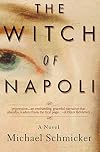
The Witch of Napoli
by Michael Schmicker 
On This Page
Description
Italy, 1899: Fiery-tempered, seductive medium Alessandra Poverelli levitates a table at a Spiritualist seance in Naples. A reporter photographs the miracle, and wealthy, skeptical psychiatrist Camillo Lombardi arrives in Naples to investigate. When she materializes the ghost of his dead mother, he risks his reputation and fortune to finance a tour of the Continent, challenging the scientific and academic elite of Europe to test Alessandra's mysterious powers. She will help him rewrite show more science. His fee will help her escape her sadistic husband, Pigotti, and start a new life in Rome. Newspapers across Europe trumpet her Cinderella story and baffling successes, and the public demands to know: Does the "Queen of Spirits" really have supernatural powers? Nigel Huxley is convinced that she's simply another vulgar Italian trickster. The icy, aristocratic detective for England's Society for the Investigation of Mediums launches a plot to trap and expose her. Inspired by the true-life story of celebrated Italian medium Eusapia Palladino (1854-1918), The Witch of Napoli masterfully resurrects the bitter nineteenth-century battle between science and religion over the possibility of an afterlife. show lessTags
Recommendations









































Member Recommendations
by anonymous user
Member Reviews
All of the characters present stood out three-dimensionally; however, it’s the two leads, Alessandra and Tommaso, which shined the brightest. Alessandra is an indomitable figure filled with grit and strength. The horrors and pain of her past would have toppled anyone of a lesser stature or with less of a will. Yet, she finds the guts to re-direct her life in a way that is amazing to read. On the other hand, she also displayed an incredible vulnerability in her dealings with men and highly volatile situations where people doubted her ability. The doubts and fear all balanced out her strength to create a well-rounded individual.
I loved reading Tommaso! That phrase pretty much sums it up. He had such a thirst for adventure and ambition show more to better his life that when he achieved his goals, the reader felt his triumph as much as he. He’s a courageous young man who’s immensely loyal to those he loves, But, there are also moments where his youth really shines through. He’s definitely a randy guy, more than once fantasizing about Alessandra or trying to get into the britches of the young ladies of England. He also, at times, would drift away and focus on his own goals when his friends needed him the most. But all of this made for a fascinating character to tell the story through.
The descriptions in the novel were jaw-dropping. A great example of this was the séances and study session themselves. The different phenomena, like the glowing ectoplasm hand and Lombardi’s mother’s spirit, were vividly portrayed in such a way that I could see them in my mind’s eye, no problem. I was in the dark rooms with the scientists, kept spellbound as Alessandra did her schtick. The boulevards of late 19th century Italy were also lovingly portrayed for the reader to enjoy and gasp over in their impressive details. Schmiker has a real gift for portraying his settings for the reader.
Now the drama…. Dang, but the story portrayed in this novel was amazing. Based on the life of a real individual, it’s a story that needs to be made into a movie and could be adapted with no need to spice it up or add stuff for dramatic flair. Alessandra’s struggles to overcome adversity and make a life for herself after all the tragedy is spell-binding. And then there’s all the incredible details and information on the study of spirituality in late Victorian Europe… It was amazing to see the different viewpoints, how the scientific method was exercised in regards to spirituality study, and how all of that affected our characters and their lives.
Michael Schmiker has found an incredible story in history and relayed it for us with deft skill. He conveyed a suspenseful story filled with dramatic turns, wonderful characters, and enough historical details to make any lover of history drool. His style of writing is smooth, sucking you in from paragraph one. I enjoyed this exploration of late Victorian Europe and the craze that was spirituality. Highly recommended for any lover of historical fiction and very deserving of that five star rating!
Note: Book received for free from the author in exchange for an honest review. show less
I loved reading Tommaso! That phrase pretty much sums it up. He had such a thirst for adventure and ambition show more to better his life that when he achieved his goals, the reader felt his triumph as much as he. He’s a courageous young man who’s immensely loyal to those he loves, But, there are also moments where his youth really shines through. He’s definitely a randy guy, more than once fantasizing about Alessandra or trying to get into the britches of the young ladies of England. He also, at times, would drift away and focus on his own goals when his friends needed him the most. But all of this made for a fascinating character to tell the story through.
The descriptions in the novel were jaw-dropping. A great example of this was the séances and study session themselves. The different phenomena, like the glowing ectoplasm hand and Lombardi’s mother’s spirit, were vividly portrayed in such a way that I could see them in my mind’s eye, no problem. I was in the dark rooms with the scientists, kept spellbound as Alessandra did her schtick. The boulevards of late 19th century Italy were also lovingly portrayed for the reader to enjoy and gasp over in their impressive details. Schmiker has a real gift for portraying his settings for the reader.
Now the drama…. Dang, but the story portrayed in this novel was amazing. Based on the life of a real individual, it’s a story that needs to be made into a movie and could be adapted with no need to spice it up or add stuff for dramatic flair. Alessandra’s struggles to overcome adversity and make a life for herself after all the tragedy is spell-binding. And then there’s all the incredible details and information on the study of spirituality in late Victorian Europe… It was amazing to see the different viewpoints, how the scientific method was exercised in regards to spirituality study, and how all of that affected our characters and their lives.
Michael Schmiker has found an incredible story in history and relayed it for us with deft skill. He conveyed a suspenseful story filled with dramatic turns, wonderful characters, and enough historical details to make any lover of history drool. His style of writing is smooth, sucking you in from paragraph one. I enjoyed this exploration of late Victorian Europe and the craze that was spirituality. Highly recommended for any lover of historical fiction and very deserving of that five star rating!
Note: Book received for free from the author in exchange for an honest review. show less
Books that have a paranormal or spiritualism focus to the story tend to catch my eye, especially when they are set in the Victorian time period when spiritualism was in its heyday, with rich and famous clamouring to participate in parlour room séances while other equally well connected individuals made it their life work to discredit the mediums who claimed to be able to communicate with the dead. Add in a church that wants these activities discredited and the fourth estate - the press - that can smell a story that will sell their rag sheets to the demanding public and something interesting is bound to happen.
Schmicker has taken all of these elements and, inspired by the true-life story of Eusapia Palladino, has given readers a show more wonderful story with a vibrant, explosive character in Alessandra. Alessandra is life and energy personified and not as straightforward as one might initially think. As the story progresses, the reader continues to be exposed to more and more layers of Alessandra, her hopes, her dreams, her fears, her insecurities and her horrifying past. Having the story communicated by a much older Tomaso as he reminisces about that eventful year works well for me as a reader as it provides a clean, linear storyline from one vantage point. It is also a great mechanism for keeping the reader somewhat in the dark as we only know and experience what Tomaso knows and experiences. A strategy that works well with this story as the pressure mounts and even Tomaso starts to question what he should believe as events unfold. As much as I appreciate the character development of Alessandra and the way Schmicker captures turn of the century Europe, it is the presentation of the debates within the scientific and academic communities as they try to explain the unusual events that occur during Alessandra's various spiritualism sittings that fueled my fully engaged, page-turning read of this story.
Overall, a well crafted story that captures the age of Spiritualism. If you are like me and enjoy reading books set in the Victorian era with a focus on scientific investigation of spiritualism, like Joseph Gangemi's Inamorata, or are just fascinated by stories of that kind - which are usually set in England or America - you may enjoy this story with its Italian setting. show less
Schmicker has taken all of these elements and, inspired by the true-life story of Eusapia Palladino, has given readers a show more wonderful story with a vibrant, explosive character in Alessandra. Alessandra is life and energy personified and not as straightforward as one might initially think. As the story progresses, the reader continues to be exposed to more and more layers of Alessandra, her hopes, her dreams, her fears, her insecurities and her horrifying past. Having the story communicated by a much older Tomaso as he reminisces about that eventful year works well for me as a reader as it provides a clean, linear storyline from one vantage point. It is also a great mechanism for keeping the reader somewhat in the dark as we only know and experience what Tomaso knows and experiences. A strategy that works well with this story as the pressure mounts and even Tomaso starts to question what he should believe as events unfold. As much as I appreciate the character development of Alessandra and the way Schmicker captures turn of the century Europe, it is the presentation of the debates within the scientific and academic communities as they try to explain the unusual events that occur during Alessandra's various spiritualism sittings that fueled my fully engaged, page-turning read of this story.
Overall, a well crafted story that captures the age of Spiritualism. If you are like me and enjoy reading books set in the Victorian era with a focus on scientific investigation of spiritualism, like Joseph Gangemi's Inamorata, or are just fascinated by stories of that kind - which are usually set in England or America - you may enjoy this story with its Italian setting. show less
Captivating from start to finish, The Witch of Napoli is an unforgettable historical tale based on real life controversial Italian medium, Eusapia Palladino (1854 – 1918).
If you enjoy the paranormal and the attempts to apply psychoanalytic theory to supernatural phenomena, I cannot recommend this book strongly enough. If it were a film, it would be a formidable blend of The Exorcist, Woody Allen’s Magic in the Moonlight and David Cronenberg’s thought provoking, A Dangerous Method. Here though, the subject of psychological experiment is not the post-traumatic Sabina Spielrein but rather a fiery, Neapolitan woman with a mysterious past and some uncanny supernatural abilities.
Her name is Alessandra Poverelli, a superstitious, forty show more year old peasant raised in the coastal village of Bari who since demonstrating several medium feats in Naples, has attracted the eye of Dr. Ercole Rossi – a professor of philosophy at the University of Naples and head of Spiritualist Society of Naples. When this one organises photographs with a local newspaper, Alessandra becomes the infatuation of sixteen year old photographer and narrator, Tomaso Labella.
Over the years, Tomaso finds success as a journalist, meanwhile chronicling Alessandra’s rise to fame and her dramatic life. Tomaso is an observant and warm narrator who delights with his insights into the characters and the Italian culture. It is through his eyes that the reader is kept enthralled and always entertained.
The main story focuses on the mystery of Alessandra, a mystery that remains poignant right to the end, and haunts both characters and reader. Is she a hoax? Are her psychic manifestations at all a sign of paranormal activity, or are they symptoms of something else? This question becomes an obsession for all, save for Alessandra who doesn’t try to understand her psychic powers and Tomaso, who, having placed Alessandra on a romantic pedestal, seems ever ready to believe in her occult powers.
Championed by her academic believers, Alessandra is swept first into an asylum for parapsychological assessment, and then onto a fantastic European tour where she encounters illustrious names in science and philosophy. One by one, these academics will either challenge her powers or seek to observe her in carefully controlled experiments. It is through these detailed séance passages and the intriguing scientific observations applied to Alessandra that Michael Schmicker shines as researcher and as a highly credible author for this subject.
Over several suspenseful séances, Alessandra’s feats astounds disbelievers and paranormal adepts alike, each time delivering more surprises and increasing the reader’s curiosity. Michael Schmicker keeps his reader guessing, drawing out the mystery of Alessandra which culminates into a powerful and haunting climax where the astounding truth is revealed.
One would think there is a dominating cerebral aspect of this novel but that would be untrue. There is much heart in it. Alessandra for one, is fascinating and touching in her self-sufficiency and humility. She is an unrelenting worker, a battered woman, a survivor, and by the end of the novel, one truly has a feel for all that she has been through and the unshakable nature of her spirit.
There was much to enjoy in The Witch of Napoli but one of my favorite passages, was staged in England, where Alessandra is confronted with her disbelieving nemesis, Professor Nigel Huxley. Huxley is determined to show the world what she really is: a fake. During her visit to England, Alessandra is soon rendered emotionally vulnerable in her English speaking surroundings. Michael Schmicker is a crafty novelist who adeptly draws out a reader’s anxiety for the plight of the main protagonist. In England, Alessandra encounters symbols of rejection at every turn which perhaps as a result of her disagreeable upbringing by an English couple, achieve to disempower her and make her doubt her abilities. To make matters worse, the once devoted Tomaso finds himself newly smitten by an English rose, spending most of his time away from Alessandra. During the time when she most needs him for emotional support, he comes instead to bring her down from her pedestal, seeing the forty year old in a more clouded light. In his fall out of infatuation, Tomaso’s unromantic gaze upon Alessandra both haunts and saddens the reader who is very much aware of Alessandra’s vulnerability at this moment.
The turn of events in England will cast a shadow on Alessandra in the eyes of Tomaso, who begins to lose faith in her. This is evident when he expresses his doubts during her subsequent séances.
Tomaso’s vision of Alessandra Poverelli will never be the same, even when her dark secret is revealed. One of the messages I took away from this story is that infatuation, more than magic, is the grandest illusion. show less
If you enjoy the paranormal and the attempts to apply psychoanalytic theory to supernatural phenomena, I cannot recommend this book strongly enough. If it were a film, it would be a formidable blend of The Exorcist, Woody Allen’s Magic in the Moonlight and David Cronenberg’s thought provoking, A Dangerous Method. Here though, the subject of psychological experiment is not the post-traumatic Sabina Spielrein but rather a fiery, Neapolitan woman with a mysterious past and some uncanny supernatural abilities.
Her name is Alessandra Poverelli, a superstitious, forty show more year old peasant raised in the coastal village of Bari who since demonstrating several medium feats in Naples, has attracted the eye of Dr. Ercole Rossi – a professor of philosophy at the University of Naples and head of Spiritualist Society of Naples. When this one organises photographs with a local newspaper, Alessandra becomes the infatuation of sixteen year old photographer and narrator, Tomaso Labella.
Over the years, Tomaso finds success as a journalist, meanwhile chronicling Alessandra’s rise to fame and her dramatic life. Tomaso is an observant and warm narrator who delights with his insights into the characters and the Italian culture. It is through his eyes that the reader is kept enthralled and always entertained.
The main story focuses on the mystery of Alessandra, a mystery that remains poignant right to the end, and haunts both characters and reader. Is she a hoax? Are her psychic manifestations at all a sign of paranormal activity, or are they symptoms of something else? This question becomes an obsession for all, save for Alessandra who doesn’t try to understand her psychic powers and Tomaso, who, having placed Alessandra on a romantic pedestal, seems ever ready to believe in her occult powers.
Championed by her academic believers, Alessandra is swept first into an asylum for parapsychological assessment, and then onto a fantastic European tour where she encounters illustrious names in science and philosophy. One by one, these academics will either challenge her powers or seek to observe her in carefully controlled experiments. It is through these detailed séance passages and the intriguing scientific observations applied to Alessandra that Michael Schmicker shines as researcher and as a highly credible author for this subject.
Over several suspenseful séances, Alessandra’s feats astounds disbelievers and paranormal adepts alike, each time delivering more surprises and increasing the reader’s curiosity. Michael Schmicker keeps his reader guessing, drawing out the mystery of Alessandra which culminates into a powerful and haunting climax where the astounding truth is revealed.
One would think there is a dominating cerebral aspect of this novel but that would be untrue. There is much heart in it. Alessandra for one, is fascinating and touching in her self-sufficiency and humility. She is an unrelenting worker, a battered woman, a survivor, and by the end of the novel, one truly has a feel for all that she has been through and the unshakable nature of her spirit.
There was much to enjoy in The Witch of Napoli but one of my favorite passages, was staged in England, where Alessandra is confronted with her disbelieving nemesis, Professor Nigel Huxley. Huxley is determined to show the world what she really is: a fake. During her visit to England, Alessandra is soon rendered emotionally vulnerable in her English speaking surroundings. Michael Schmicker is a crafty novelist who adeptly draws out a reader’s anxiety for the plight of the main protagonist. In England, Alessandra encounters symbols of rejection at every turn which perhaps as a result of her disagreeable upbringing by an English couple, achieve to disempower her and make her doubt her abilities. To make matters worse, the once devoted Tomaso finds himself newly smitten by an English rose, spending most of his time away from Alessandra. During the time when she most needs him for emotional support, he comes instead to bring her down from her pedestal, seeing the forty year old in a more clouded light. In his fall out of infatuation, Tomaso’s unromantic gaze upon Alessandra both haunts and saddens the reader who is very much aware of Alessandra’s vulnerability at this moment.
The turn of events in England will cast a shadow on Alessandra in the eyes of Tomaso, who begins to lose faith in her. This is evident when he expresses his doubts during her subsequent séances.
Tomaso’s vision of Alessandra Poverelli will never be the same, even when her dark secret is revealed. One of the messages I took away from this story is that infatuation, more than magic, is the grandest illusion. show less
I really enjoyed this book, so much so I was disappointed when it ended. Captivating, heart wrenching it snagged my attention from the very first sentence.
I was smitten with the two main protagonists Alessandra Poverelli and Tomaso Labella. Alessandra is a spitfire, born a peasant she is as tough as nails. Tomaso, a young budding photographer is instantly taken by Alessandra, together they deal with numerous trials and tribulations, highs and lows as Alessandra’s career launches.
Alessandra is a compelling character serving as the cog of the narrative. Quick temper, hardness overshadowing her softness. As her story unfolds life hasn’t been kind to this formidable woman, downright cruel. She is flawed, she makes a major mistake paying show more a heavy price. Her gift is scrutinized, is she a fraud or is her gift authentic? The pressure is on to discover if she levitates tables without props, is she really a medium? You can’t help rooting for Alessandra, and you truly hope she’s for real, her unfiltered mouth leaves you shocked as well as laughing as she freely speaks her mind, her hair trigger temper often unleashed.
The narrative possesses just enough paranormal element to ignite interest adding plausibility as you are thoroughly entertained. Heavy scenarios are tempered by comical insertions. Male oppression rears its ugly head as the era holds women under the microscope facing harsh judgment and criticism, praise and credibility undoubtedly earned at a heavy price. Tomaso is Alessandra’s life ring, her rock and as time passes their forever friendship is cemented. Tomaso is clearly Alessandra’s champion good or bad, a crackerjack or fraud, their bond rock solid. Tomaso pulls at your heart as his devotion and love anchors Alessandra. One exciting read you won’t want to miss, highly recommend. show less
I was smitten with the two main protagonists Alessandra Poverelli and Tomaso Labella. Alessandra is a spitfire, born a peasant she is as tough as nails. Tomaso, a young budding photographer is instantly taken by Alessandra, together they deal with numerous trials and tribulations, highs and lows as Alessandra’s career launches.
Alessandra is a compelling character serving as the cog of the narrative. Quick temper, hardness overshadowing her softness. As her story unfolds life hasn’t been kind to this formidable woman, downright cruel. She is flawed, she makes a major mistake paying show more a heavy price. Her gift is scrutinized, is she a fraud or is her gift authentic? The pressure is on to discover if she levitates tables without props, is she really a medium? You can’t help rooting for Alessandra, and you truly hope she’s for real, her unfiltered mouth leaves you shocked as well as laughing as she freely speaks her mind, her hair trigger temper often unleashed.
The narrative possesses just enough paranormal element to ignite interest adding plausibility as you are thoroughly entertained. Heavy scenarios are tempered by comical insertions. Male oppression rears its ugly head as the era holds women under the microscope facing harsh judgment and criticism, praise and credibility undoubtedly earned at a heavy price. Tomaso is Alessandra’s life ring, her rock and as time passes their forever friendship is cemented. Tomaso is clearly Alessandra’s champion good or bad, a crackerjack or fraud, their bond rock solid. Tomaso pulls at your heart as his devotion and love anchors Alessandra. One exciting read you won’t want to miss, highly recommend. show less
The Witch of Napoli is a work of fiction but it is based on the life of a real woman. I’ve read a couple of book about Spiritualism in the United States but not in Europe so this book was intriguing. I’m sure many of us wonder what happens after we die and whether those that pass can communicate through certain individuals. The protagonist of this tale, Alessandra Poverelli experiences a raft of different phenomena around her including materializing dead people. Soon she is off touring her abilities. But it wasn’t a time of great acceptance for thoughts of life after death other than those preached by the Church.
This was a really fascinating read about a very unusual woman in a challenging time. It’s not your typical historical show more fiction tale as it is more driven by this little known character than events. I think that is what made it so interesting for me to read. It wasn’t rehashing the same old history – not that I don’t love usual reads- this was just a great departure. I found Alessandra to be a woman torn between not completely understanding why she was as she was and pressure to be even more.
The plot was one that kept me intrigued and the characters were well drawn. A great read about a little known woman. show less
This was a really fascinating read about a very unusual woman in a challenging time. It’s not your typical historical show more fiction tale as it is more driven by this little known character than events. I think that is what made it so interesting for me to read. It wasn’t rehashing the same old history – not that I don’t love usual reads- this was just a great departure. I found Alessandra to be a woman torn between not completely understanding why she was as she was and pressure to be even more.
The plot was one that kept me intrigued and the characters were well drawn. A great read about a little known woman. show less
The Witch of Napoli was very elementarily written and also predictable. It is the story of Alessandra Poverelli who can levitate tables and channel the ghost of Savonarola. Everybody is out to discredit Alessandra, even the Church. This novel is loosely based on the controversial Italian medium Eusapia Palladino and pits the church and science against the possibility of an afterlife. Might have been a better story with a better writer/storyteller! 350 pages 2 1/2 stars
The cover of this book didn't draw me in, although the description of the book left me intrigued, so I was unsure whether or not I would like this but from page one I was riveted. Alessandra and Tomaso really keep you interested and moving the story along in this well written novel about the relationship between religion, science and the paranormal.
Lombardi wants to study Alessandra since she is the first spiritualist who he believes may be real, his nemesis Huxley is shamed by Alessandra and makes it his mission to discredit and ruin her. Both men's reputations hinge on them being right and Alessandra being either real or a fake. Meanwhile the vatican is upset with her "powers" and also want to discredit her but not in the name of show more science but in the name of religion, in order to keep and bring people to church they feel they have to discredit anyone who shows any paranormal power believing that only the church has access to the teachings of the spiritual.
Michael Schmicker does a great job of keeping you interested, allowing the mystery of whether or not Alessandra really does have powers or if she is what everyone believes her to be, just a talented trickster. Just when you think you have made your mind up about her the story shifts just a bit and leads you down another path, which leads to a genuinely intriguing story.
Tomaso's observations and genuine care of Alessandra no matter, what bring a source of humanity, innocence and compassion to a story that is filled with characters who you aren't really sure about. Are they good, are they bad, what is their agenda? And everyone seems to have an agenda. Even eventually Tomaso seems to have an agenda but it doesn't take stepping on someone else to achieve it which is what makes him one of the truly likable characters in this novel. show less
Lombardi wants to study Alessandra since she is the first spiritualist who he believes may be real, his nemesis Huxley is shamed by Alessandra and makes it his mission to discredit and ruin her. Both men's reputations hinge on them being right and Alessandra being either real or a fake. Meanwhile the vatican is upset with her "powers" and also want to discredit her but not in the name of show more science but in the name of religion, in order to keep and bring people to church they feel they have to discredit anyone who shows any paranormal power believing that only the church has access to the teachings of the spiritual.
Michael Schmicker does a great job of keeping you interested, allowing the mystery of whether or not Alessandra really does have powers or if she is what everyone believes her to be, just a talented trickster. Just when you think you have made your mind up about her the story shifts just a bit and leads you down another path, which leads to a genuinely intriguing story.
Tomaso's observations and genuine care of Alessandra no matter, what bring a source of humanity, innocence and compassion to a story that is filled with characters who you aren't really sure about. Are they good, are they bad, what is their agenda? And everyone seems to have an agenda. Even eventually Tomaso seems to have an agenda but it doesn't take stepping on someone else to achieve it which is what makes him one of the truly likable characters in this novel. show less
Members
- Recently Added By
Author Information

5 Works 229 Members
Michael Schmicker is a LibraryThing Author, an author who lists their personal library on LibraryThing.
Awards and Honors
Common Knowledge
- Original publication date
- 2015
Classifications
Statistics
- Members
- 191
- Popularity
- 170,620
- Reviews
- 23
- Rating
- (3.79)
- Languages
- English
- Media
- Paper, Audiobook, Ebook
- ISBNs
- 5
- ASINs
- 2