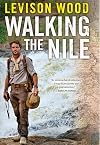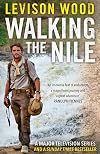
Walking the Nile
by Levison Wood
On This Page
Description
His journey is 4,250 miles long.He is walking every step of the way, camping in the wild, foraging for food, fending for himself against multiple dangers.He is passing through rainforest, savannah, swamp, desert and lush delta oasis.He will cross seven, very different countries.No one has ever made this journey on foot.In this detailed, thoughtful, inspiring and dramatic book, recounting Levison Wood's walk the length of the Nile, he will uncover the history of the Nile, yet through the show more people he meets and who will help him with his journey, he will come face to face with the great story of a modern Africa emerging out of the past. Exploration and Africa are two of his great passions - they drive him on and motivate his inquisitiveness and resolution not to fail, yet the challenges of the terrain, the climate, the animals, the people and his own psychological resolution will throw at him are immense.The dangers are very real, but so is the motivation for this ex-army officer. If he can overcome the mental and physical challenges, he will be walking into history ... show lessTags
Recommendations






















Member Reviews
Wood walked through some pretty serious terrain (the Sahara) and came this close to dying of thirst, dangerous lands (South Sudan), and paranoid lands (Egypt). What I loved most were his conversations with Boston, Wood‘s Congolese guide who lived in Uganda, which consumed a lengthy part of his walk. Boston provided a unique perspective about so many things, but mostly from the experiences of the destitute who do what they can to survive, even if it means clearing forests to grow crops or catching and selling baby monkeys 😭 to feed their families. Climate change be damned when you have to feed your family. Such a horrible but enlightening truth—one we‘ve got to realize if we are to help create incentives NOT to clear habitats show more and kidnap baby animals. We‘ve got to listen & understand, or as my parents used to say, “walk a mile in their shoes.” I learned a lot. Highly recommended. show less
At one point, Levison Wood says that “exploration has always been about more than pure discovery or of being the first to do something." His travelogue, WALKING THE NILE, speaks to that thought. Despite his obvious admiration for the explorers who preceded him, his focus on this 4,000+ mile, 9-month adventure is about much more than geography. In fact geography seems to be incidental in the age of Google Earth. Instead he gives us a fascinating collection of stories about the history, culture, climate, terrain, fauna, and especially the people of the region.
There is much to admire about the people Wood met on his journey. They are struggling under incredibly adverse conditions including kleptocracies, civil strife, disease and show more poverty. Yet one can’t help but agree with Wood’s sentiment about their hospitality and concern for his welfare. "I also saw how incredibly hospitable they were to a man walking through Africa.” Villagers offered to build him a house and find him a wife. On the last Saturday of every month, the people of Kigali perform service to maintain their city. Refugees from the Sudanese civil war do more than just make due. As one porter tells Wood, "Life goes on." Wood’s journey would not have been possible without the assistance of several pretty amazing guides and porters, the most notable being Boston Beka. In addition to providing the services for which he was paid, Boston welcomed Wood to his home and became a dear friend. He clearly wanted to travel with Wood to the Mediterranean, but was sent home for his own safety.
Of course not all that Wood encountered was pleasant. The death of the American journalist, Matt Power, from heat exhaustion was indeed tragic. It shook Levison’s resolve to its core. “I wanted to be anywhere but here, thinking of the man who had died so that he could write about me on my indulgent, pointless, selfish trek.” Other bad experiences can be viewed as minor by comparison, but seen together, they demonstrate a level of commitment to adventure that few could match. Trekking in the Sahara with little water, camping in an abandoned prison that was a massacre site, bypassing the Sudd swamp because of the obvious danger from a very hot war, the need to bribe corrupt officials just to walk in Egypt, and interrogation at every border crossing by secret police or child soldiers serve as examples of hardships that exceed the challenges of just walking 25-30 miles a day through some of the most inhospitable terrain on the planet.
The narrative is simple and often too matter-of-fact. Levison, after all, is not a seasoned writer but an ex-soldier. He still manages to convey a sense of adventure few would want to miss. show less
There is much to admire about the people Wood met on his journey. They are struggling under incredibly adverse conditions including kleptocracies, civil strife, disease and show more poverty. Yet one can’t help but agree with Wood’s sentiment about their hospitality and concern for his welfare. "I also saw how incredibly hospitable they were to a man walking through Africa.” Villagers offered to build him a house and find him a wife. On the last Saturday of every month, the people of Kigali perform service to maintain their city. Refugees from the Sudanese civil war do more than just make due. As one porter tells Wood, "Life goes on." Wood’s journey would not have been possible without the assistance of several pretty amazing guides and porters, the most notable being Boston Beka. In addition to providing the services for which he was paid, Boston welcomed Wood to his home and became a dear friend. He clearly wanted to travel with Wood to the Mediterranean, but was sent home for his own safety.
Of course not all that Wood encountered was pleasant. The death of the American journalist, Matt Power, from heat exhaustion was indeed tragic. It shook Levison’s resolve to its core. “I wanted to be anywhere but here, thinking of the man who had died so that he could write about me on my indulgent, pointless, selfish trek.” Other bad experiences can be viewed as minor by comparison, but seen together, they demonstrate a level of commitment to adventure that few could match. Trekking in the Sahara with little water, camping in an abandoned prison that was a massacre site, bypassing the Sudd swamp because of the obvious danger from a very hot war, the need to bribe corrupt officials just to walk in Egypt, and interrogation at every border crossing by secret police or child soldiers serve as examples of hardships that exceed the challenges of just walking 25-30 miles a day through some of the most inhospitable terrain on the planet.
The narrative is simple and often too matter-of-fact. Levison, after all, is not a seasoned writer but an ex-soldier. He still manages to convey a sense of adventure few would want to miss. show less
Levison Wood, right at the beginning of his travelogue, echoing the mountaineer George Mallory's raison d'être for climbing Mt. Everest, states that he wanted to walk the length of the Nile "Because it's there." He then amends that statement, saying that he wanted to follow in a great tradition, to achieve something unusual and inspire others, but that much of his motivation was selfish - to go on a great adventure, to test himself. (Kindle location 67) Later he further refines those objectives to a more external, less personal, focus: "to see how [the Nile] shaped lives from the ground, day by day and mile by mile." (Kindle location 137)
He starts his story not at the beginning of his trek, but in the middle as he encounters the front show more lines of the Sudanese civil war, where he witnesses rocket fire and an angry mob who wants to kill anyone who may be associated with the United Nations (and, as a white Britisher, he could easily be mistaken for one and shot on sight!) The story then moves back in time to the beginning of the trek, in December, 2013, in the Nyungwe Forest in Rwanda, to a tiny spring sprouting a trickle of water from a hole in a rock, claimed by an agent of the National Tourist Board of Rwanda to be the source of the furthest tributary of the Nile. Wood provides a bit of history, linking his forthcoming journey to Alexander the Great and the Roman Emperor Nero, to Stanley and Livingston and Speke, and rooting it in historical and geographic controversy (Lake Victoria is the commonly accepted origin of the White Nile.)
And so, Wood sets off, determined to walk every step of the entire 4,250 mile length of the Nile (measured from the Rwandan spring.) We learn quite a bit about the guides and friends who accompany him through different stages of the trek, and the history and details of the living conditions of the villagers and inn-keepers whom he encounters. We learn about the physical difficulties he and his compatriots face - searing heat, blisters, thirst - but actually little about his own personal discomfort. In the manner of the notable British explorers who preceded him, he soldiers on.
That doesn't mean that he isn't affected by those travails. After all, the group faces many dangerous circumstances, from single-minded crocodiles and hippos in the deep jungle to heat exhaustion in the Sahara Desert to AIDS in the villages to war. Indeed, death does overtake the party, causing some soul-searching in Woods. He wonders if continuing the pursuit of his goal at the risk of the lives of his compatriots is too selfish.
While the physical difficulties of the trek are discussed, the majority of the focus is on the societal difficulties Wood faces and that the people met along the way endure - the problems at the borders as he passes through Rwanda, Tanzania, Uganda, South Sudan, Sudan and Egypt, the collapsing economies and infrastructure, famine, war, and the greed of the police and military personnel.
On the 30th of August, 2014, after 271 days of trekking, he reaches the Mediterranean port of Rashid (the place where the Rosetta Stone was discovered), in Egypt. Here the Nile waters complete their long journey and a changed Wood realizes, in contrast to his attitude at the beginning of the venture, that he had only gotten through his journey due to the kindness of strangers, the normal people that he had met day to day - a most unselfish understanding born out from all of the events experienced in his story.
I received a free copy of this book from the publisher in exchange for an honest review. show less
He starts his story not at the beginning of his trek, but in the middle as he encounters the front show more lines of the Sudanese civil war, where he witnesses rocket fire and an angry mob who wants to kill anyone who may be associated with the United Nations (and, as a white Britisher, he could easily be mistaken for one and shot on sight!) The story then moves back in time to the beginning of the trek, in December, 2013, in the Nyungwe Forest in Rwanda, to a tiny spring sprouting a trickle of water from a hole in a rock, claimed by an agent of the National Tourist Board of Rwanda to be the source of the furthest tributary of the Nile. Wood provides a bit of history, linking his forthcoming journey to Alexander the Great and the Roman Emperor Nero, to Stanley and Livingston and Speke, and rooting it in historical and geographic controversy (Lake Victoria is the commonly accepted origin of the White Nile.)
And so, Wood sets off, determined to walk every step of the entire 4,250 mile length of the Nile (measured from the Rwandan spring.) We learn quite a bit about the guides and friends who accompany him through different stages of the trek, and the history and details of the living conditions of the villagers and inn-keepers whom he encounters. We learn about the physical difficulties he and his compatriots face - searing heat, blisters, thirst - but actually little about his own personal discomfort. In the manner of the notable British explorers who preceded him, he soldiers on.
That doesn't mean that he isn't affected by those travails. After all, the group faces many dangerous circumstances, from single-minded crocodiles and hippos in the deep jungle to heat exhaustion in the Sahara Desert to AIDS in the villages to war. Indeed, death does overtake the party, causing some soul-searching in Woods. He wonders if continuing the pursuit of his goal at the risk of the lives of his compatriots is too selfish.
While the physical difficulties of the trek are discussed, the majority of the focus is on the societal difficulties Wood faces and that the people met along the way endure - the problems at the borders as he passes through Rwanda, Tanzania, Uganda, South Sudan, Sudan and Egypt, the collapsing economies and infrastructure, famine, war, and the greed of the police and military personnel.
On the 30th of August, 2014, after 271 days of trekking, he reaches the Mediterranean port of Rashid (the place where the Rosetta Stone was discovered), in Egypt. Here the Nile waters complete their long journey and a changed Wood realizes, in contrast to his attitude at the beginning of the venture, that he had only gotten through his journey due to the kindness of strangers, the normal people that he had met day to day - a most unselfish understanding born out from all of the events experienced in his story.
I received a free copy of this book from the publisher in exchange for an honest review. show less
At 2 o'clock this morning I flipped the last page of this incredibly enlightening armchair travel book. The author Levison Wood embarks on an incredible journey to walk the entire Nile river. Starting in Rwanda traveling North all the way to Egypt, he walks for 261 days through hell. Part Indiana Jones true adventure story, part war-time news journalism, the author encounters much more than he ever expected. Being chased by hippos and giant crocodiles, traversing the great Sahara sand dunes with camels getting lost and about to run out of water, were just a few of the adventure parts of this story. Fleeing wars, trudging through swamps and hacking his way through snake infested sweltering jungles, dodging AK47 gunfire, being arrested show more and being placed under surveillance by local military, is where current affairs news reporting came in to play. This eye-opening journey was scary, horrifying, and nothing but a misery. I have never read about Rwanda, Uganda, or the Sudan before so I learned an aweful lot. It's sad, terrifying, heartbreaking, and interesting, yet still a really good read! I award the book 5 stars for darn good writing and for being a riveting page-turner. I just ordered another of Wood's books; Walking the Himalayas. Can't wait! show less
There are a handful of rivers that are globally known, the Amazon which spans the continent of South America and the Nile which reaches deep into Africa. It is a river that has continually challenged explorers who have dared to take it on, not all of whom have mastered it, it is 4250 miles long after all. Levison Wood decided to walk its length. Not only is it an epic challenge in its own right but he would have to pass through jungles, savannahs, crocodile infested swamps, and one of the world’s hottest deserts, some of the most hostile environments in Africa as he walked north to the Mediterranean. Not only that but the seven countries that he would walk through are some of the most troubled and dangerous places on the planet. show more
Thankfully Wood as an ex-army officer is a tough character and he was going to need all the skills that he learnt there to keep the physical and mental strength up. As he walks we get a commentary on the state of modern Africa as seen from the people making a living there, rather than the sanitised reports that you will read here. He doesn’t walk alone as he has guides and is joined by friends at various points of the journey.
The rest of me was scattered, back across Africa, back along the river from which I had come
Wood is an amiable bloke who can make friends quickly and has a knack of diffusing tensions when they do arise. It is an unbelievably tough journey that took no prisoners full of euphoric moments and tragedy. He took a huge personal risk in undertaking this walk, the threats were real and present every single day, but all the way though the book he shows grit, determination and resilience with all the challenges that Africa throws at him. A genuine tough guy and a great adventure book. 4.5 stars show less
Thankfully Wood as an ex-army officer is a tough character and he was going to need all the skills that he learnt there to keep the physical and mental strength up. As he walks we get a commentary on the state of modern Africa as seen from the people making a living there, rather than the sanitised reports that you will read here. He doesn’t walk alone as he has guides and is joined by friends at various points of the journey.
The rest of me was scattered, back across Africa, back along the river from which I had come
Wood is an amiable bloke who can make friends quickly and has a knack of diffusing tensions when they do arise. It is an unbelievably tough journey that took no prisoners full of euphoric moments and tragedy. He took a huge personal risk in undertaking this walk, the threats were real and present every single day, but all the way though the book he shows grit, determination and resilience with all the challenges that Africa throws at him. A genuine tough guy and a great adventure book. 4.5 stars show less
Levison Wood, a British writer, documents his trek from source to sea of the Nile River, and, in the process, provides detailed accounts of the people, politics, history, recent struggles, and ways of life in Rwanda, Uganda, Tanzania, South Sudan, Sudan, and Egypt. This book is perfect for an armchair traveler (like me) who will never go to these areas but wants to know what this part of the world is like.
Wood encounters many challenges, such as being chased by a hippo, dodging crocodiles, literally walking into a warzone, being detained by one country’s secret police, crossing a stretch of desert in search of water, navigating border crossings, finding guides, buying camels, evading smugglers, and viewing ruins of ancient show more civilizations. As he travels, he touches on topics related to the areas he travels – he visits the Rwandan genocide museum, talks to the leader of an orphanage dealing with the ongoing AIDS crisis, and discusses the many regional civil wars with their associated displaced populations. He views the changes brought by dams and deforestations.
I was impressed by the hospitality of the people. They enabled him to complete the journey, providing food and shelter despite having few resources. It is well-written, engrossing, and relates a wealth of information. The photos at the back give the reader a picture to go with the written word. Those who enjoy travel memoirs or learning about current-day challenges in Africa will want to read this book.
Memorable quotes:
“The strangest thing was, this wasn’t even the most extreme hospitality we had seen since leaving the desert two days before. In one dusty little shanty, where we had stopped to buy soda and water the camels, a shopkeeper – within ten minutes of discovering I was English – had offered to give me some land, build me a house, and find me a wife.”
“What we were walking through, I realised, was nothing less than the history of the world – not just the history of Sudan or its peoples, the Ancient Nubians, or even the prehistoric people who had come before. Everywhere we looked, there were reminders of how recent mankind’s appearance on this planet has been – and of how the earth has been transformed and transformed again across its lifetime.”
“It gives me great pleasure to think that in a small way my expedition has inspired others to travel and hopefully brought to attention a more positive and unseen side to Africa.” show less
Wood encounters many challenges, such as being chased by a hippo, dodging crocodiles, literally walking into a warzone, being detained by one country’s secret police, crossing a stretch of desert in search of water, navigating border crossings, finding guides, buying camels, evading smugglers, and viewing ruins of ancient show more civilizations. As he travels, he touches on topics related to the areas he travels – he visits the Rwandan genocide museum, talks to the leader of an orphanage dealing with the ongoing AIDS crisis, and discusses the many regional civil wars with their associated displaced populations. He views the changes brought by dams and deforestations.
I was impressed by the hospitality of the people. They enabled him to complete the journey, providing food and shelter despite having few resources. It is well-written, engrossing, and relates a wealth of information. The photos at the back give the reader a picture to go with the written word. Those who enjoy travel memoirs or learning about current-day challenges in Africa will want to read this book.
Memorable quotes:
“The strangest thing was, this wasn’t even the most extreme hospitality we had seen since leaving the desert two days before. In one dusty little shanty, where we had stopped to buy soda and water the camels, a shopkeeper – within ten minutes of discovering I was English – had offered to give me some land, build me a house, and find me a wife.”
“What we were walking through, I realised, was nothing less than the history of the world – not just the history of Sudan or its peoples, the Ancient Nubians, or even the prehistoric people who had come before. Everywhere we looked, there were reminders of how recent mankind’s appearance on this planet has been – and of how the earth has been transformed and transformed again across its lifetime.”
“It gives me great pleasure to think that in a small way my expedition has inspired others to travel and hopefully brought to attention a more positive and unseen side to Africa.” show less
Levison Wood, a British writer, documents his trek from source to sea of the Nile River, and, in the process, provides detailed accounts of the people, politics, history, recent struggles, and ways of life in Rwanda, Uganda, Tanzania, South Sudan, Sudan, and Egypt. This book is perfect for an armchair traveler (like me) who will never go to these areas but wants to know what this part of the world is like.
Wood encounters many challenges, such as being chased by a hippo, dodging crocodiles, literally walking into a warzone, being detained by one country’s secret police, crossing a stretch of desert in search of water, navigating border crossings, finding guides, buying camels, evading smugglers, and viewing ruins of ancient show more civilizations. As he travels, he touches on topics related to the areas he travels – he visits the Rwandan genocide museum, talks to the leader of an orphanage dealing with the ongoing AIDS crisis, and discusses the many regional civil wars with their associated displaced populations. He views the changes brought by dams and deforestations.
I was impressed by the hospitality of the people. They enabled him to complete the journey, providing food and shelter despite having few resources. It is well-written, engrossing, and relates a wealth of information. The photos at the back give the reader a picture to go with the written word. Those who enjoy travel memoirs or learning about current-day challenges in Africa will want to read this book.
Memorable quotes:
“The strangest thing was, this wasn’t even the most extreme hospitality we had seen since leaving the desert two days before. In one dusty little shanty, where we had stopped to buy soda and water the camels, a shopkeeper – within ten minutes of discovering I was English – had offered to give me some land, build me a house, and find me a wife.”
“What we were walking through, I realised, was nothing less than the history of the world – not just the history of Sudan or its peoples, the Ancient Nubians, or even the prehistoric people who had come before. Everywhere we looked, there were reminders of how recent mankind’s appearance on this planet has been – and of how the earth has been transformed and transformed again across its lifetime.”
“It gives me great pleasure to think that in a small way my expedition has inspired others to travel and hopefully brought to attention a more positive and unseen side to Africa.” show less
Wood encounters many challenges, such as being chased by a hippo, dodging crocodiles, literally walking into a warzone, being detained by one country’s secret police, crossing a stretch of desert in search of water, navigating border crossings, finding guides, buying camels, evading smugglers, and viewing ruins of ancient show more civilizations. As he travels, he touches on topics related to the areas he travels – he visits the Rwandan genocide museum, talks to the leader of an orphanage dealing with the ongoing AIDS crisis, and discusses the many regional civil wars with their associated displaced populations. He views the changes brought by dams and deforestations.
I was impressed by the hospitality of the people. They enabled him to complete the journey, providing food and shelter despite having few resources. It is well-written, engrossing, and relates a wealth of information. The photos at the back give the reader a picture to go with the written word. Those who enjoy travel memoirs or learning about current-day challenges in Africa will want to read this book.
Memorable quotes:
“The strangest thing was, this wasn’t even the most extreme hospitality we had seen since leaving the desert two days before. In one dusty little shanty, where we had stopped to buy soda and water the camels, a shopkeeper – within ten minutes of discovering I was English – had offered to give me some land, build me a house, and find me a wife.”
“What we were walking through, I realised, was nothing less than the history of the world – not just the history of Sudan or its peoples, the Ancient Nubians, or even the prehistoric people who had come before. Everywhere we looked, there were reminders of how recent mankind’s appearance on this planet has been – and of how the earth has been transformed and transformed again across its lifetime.”
“It gives me great pleasure to think that in a small way my expedition has inspired others to travel and hopefully brought to attention a more positive and unseen side to Africa.” show less
Members
- Recently Added By
Lists

Adventure Travel & Exploration In Africa
13 works; 4 members
Author Information

15+ Works 800 Members
Levison Wood is a writer, photographer, and explorer. He is the author of six previous books, including An Arabian Journey, Walking the Nile, and Walking the Americas, which won the 2016 Edward Stanford Adventure Travel Book of the Year Award. He served in Afghanistan as an officer in the British Army Parachute Regiment and is a fellow of the show more Royal Geographical Society. When not abroad, he lives in London. show less
Awards and Honors
Distinctions
Common Knowledge
- Important places
- Nile River, Egypt
- Dedication
- For the people of the Nile.
In memory of Matthew Power. - First words
- The moment we entered the compound, I knew things were bad.
- Last words
- (Click to show. Warning: May contain spoilers.)It was a very strange end to a very strange journey.
Classifications
- Genres
- Travel, Nonfiction, General Nonfiction, Biography & Memoir
- DDC/MDS
- 916.2 — History & geography Geography & travel Geography of and travel in Africa Egypt; Sudan; South Sudan
- LCC
- DT115 .W58 — History of Europe, Asia, Africa and Oceania Africa History of Africa Egypt Local history and description
- BISAC
Statistics
- Members
- 231
- Popularity
- 141,591
- Reviews
- 14
- Rating
- (4.09)
- Languages
- English
- Media
- Paper, Audiobook, Ebook
- ISBNs
- 16
- ASINs
- 6